This Rustic Connecticut Campground Has No Running Water But Fall Campers Still Book It Solid
No running water is usually the sort of detail that makes people reconsider their weekend plans. Here, it apparently does very little to cool anyone’s enthusiasm.
Campers know exactly what they are signing up for. The setup is rustic, conveniences are limited and autumn somehow makes that simplicity seem far more appealing.
When the leaves begin changing, this Connecticut campground becomes the sort of place people are surprisingly eager to sleep outdoors.
Maybe disconnecting feels more convincing when the campground does not try to recreate home in the woods. You settle for fewer comforts and get a much closer relationship with the outdoors in return.
Cool fall nights certainly help the mood. So does waking up surrounded by seasonal scenery rather than the usual bedroom walls.
The lack of running water might sound like the headline. Yet the real story is that plenty of campers hear that detail and apparently think, “Fine by me.”
1. Rustic Camping Keeps The Experience Refreshingly Simple
Twenty-one sites. That’s it. Camping here feels refreshingly simple, with a small wooded loop and none of the extras that turn an outdoor escape into a resort stay.
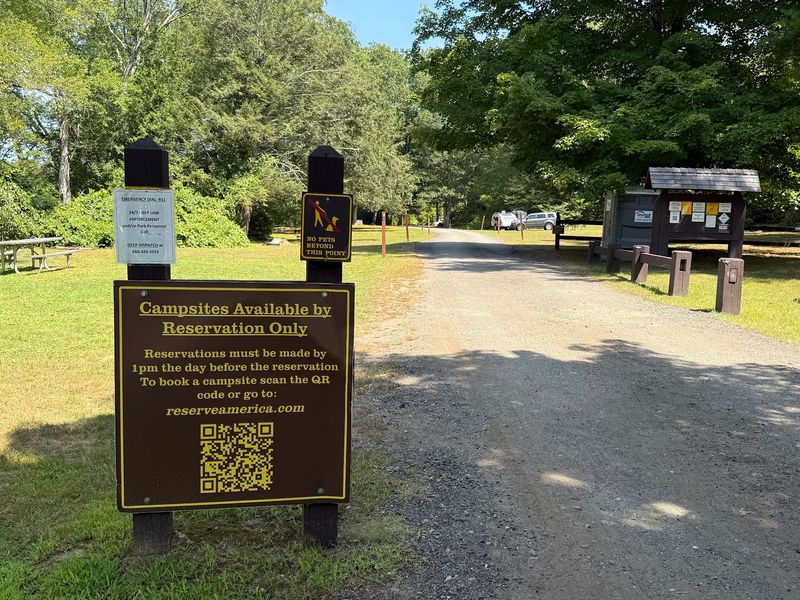
Devil’s Hopyard State Park Campground keeps things decidedly rustic. Every campsite is non-electric, and campers need to bring their own water because the park’s water is unsafe for drinking.
Picnic tables, cooking grills, and portable toilets provide the basics.
Tents are an easy fit, although several sites accommodate equipment up to 35 feet long. With only 21 campsites available, the campground stays much smaller than many state park alternatives.
Pets are not permitted within the campground.
Spontaneous arrivals require some planning. Reservations are mandatory, with no walk-in camping allowed, and bookings can be made up to 11 months ahead.
Advance reservations normally require at least two nights, while one-night stays become available within three days of arrival. Stays are capped at 14 consecutive days.
For 2026, the campground remains open through October 12 at noon, making early fall a particularly appealing time to experience the woods.
Bring water, pack simply, and expect the basics. That stripped-back setup is exactly what gives this tiny campground its old-school appeal.
2. Hopyard Road Leads Deep Into The Wooded Park
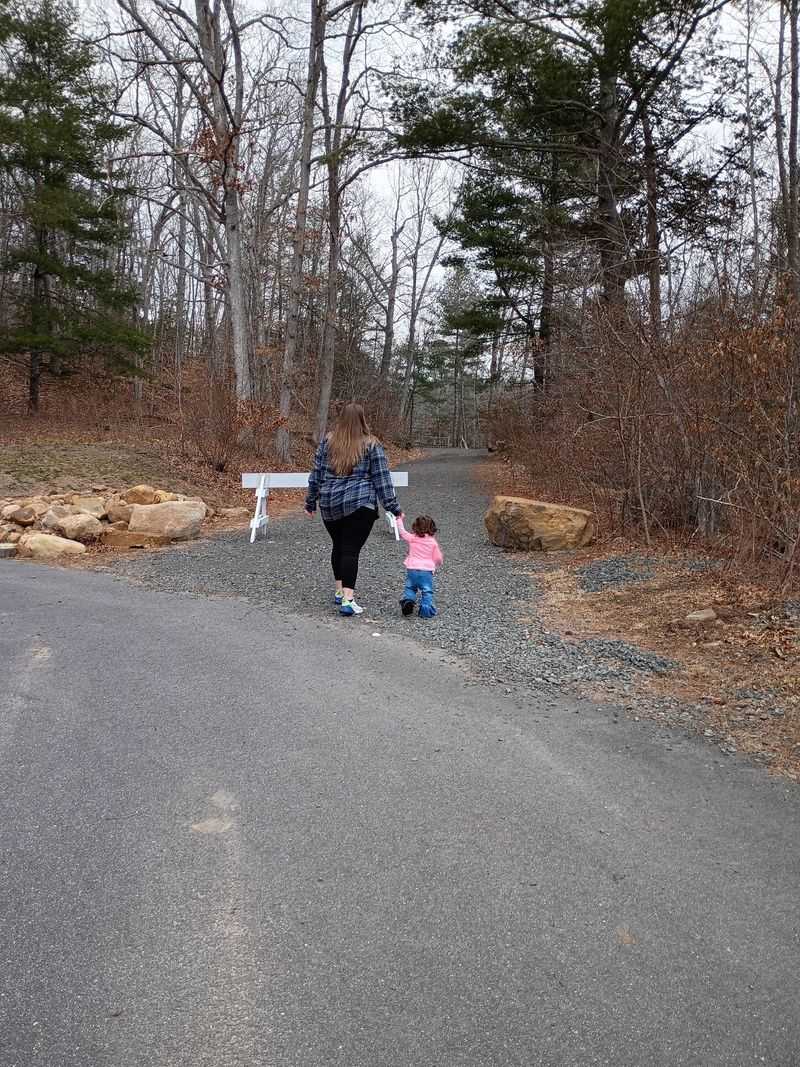
The road gets quieter fast. Trees crowd closer. Soon, the busy world feels considerably farther away than the map suggests.
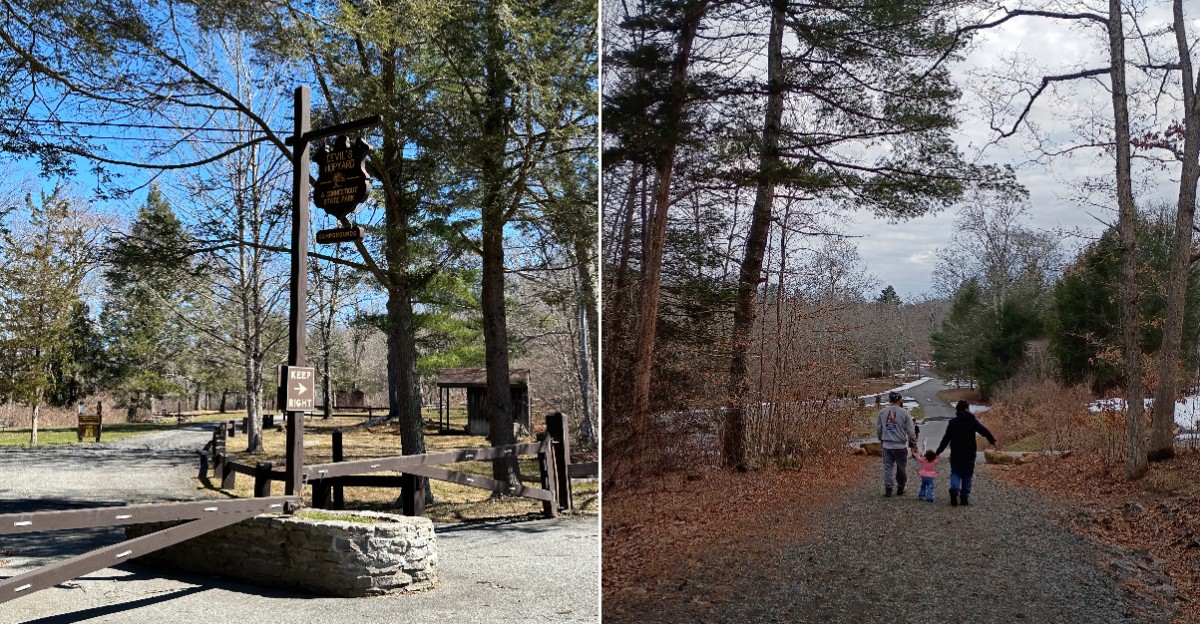
The approach to Devil’s Hopyard State Park leaves Route 82 for Hopyard Road, where the surroundings become increasingly wooded. The main park area is only a short drive from central East Haddam, yet the thick forest gives it a much more secluded feel.
Driving inside is straightforward. Primary park roads are paved, while the campground loop changes to gravel and naturally keeps vehicles moving slowly.
That softer crunch beneath the tires suits a campground designed around simple, low-key stays rather than lots of modern extras.
And the campground occupies only a tiny portion of the property. Devil’s Hopyard covers about 1,000 acres, leaving plenty of forest beyond those 21 campsites.
Trails lead deeper into the park, while Chapman Falls remains its best-known natural attraction.
Most exploring begins once the car is parked. The main entrance is at 366 Hopyard Road in East Haddam, surrounded by the wooded landscape that defines this part of the state.
With limited cell service possible in rural areas, saving directions before leaving can be useful. After that, trade the gravel loop for a trail and see just how quickly those 21 campsites disappear behind the trees.
3. No Running Water Means Coming Prepared Matters
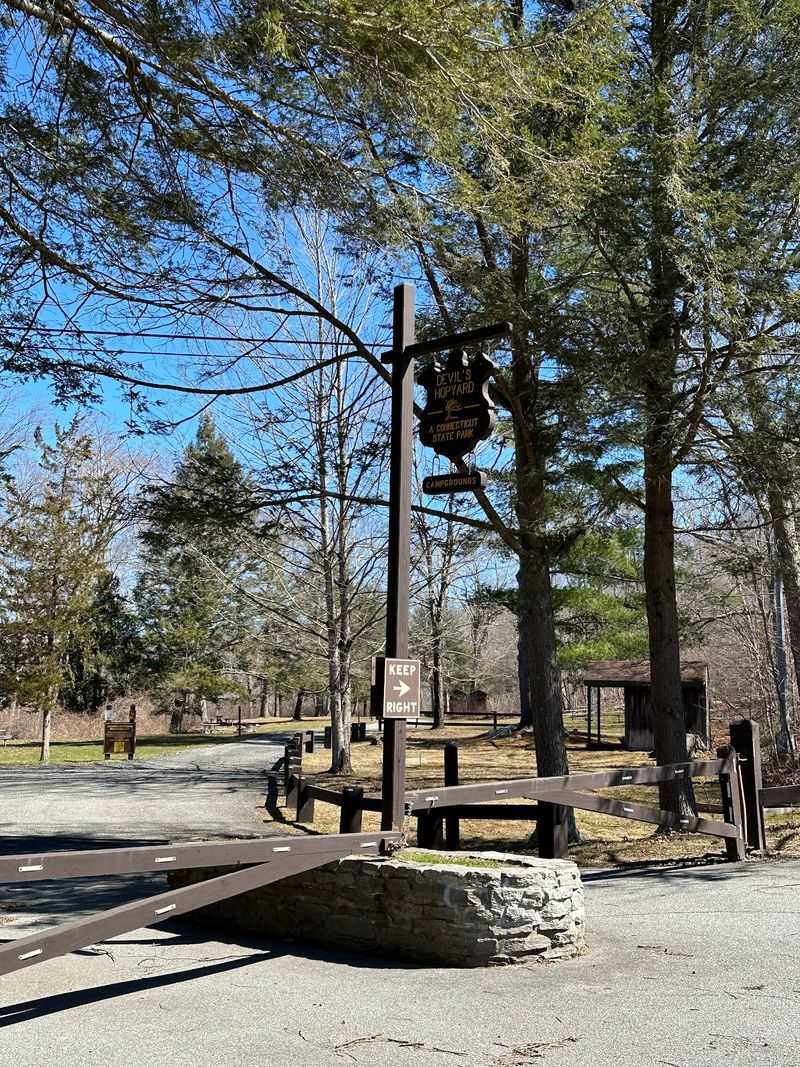
Pack the water first. Seriously, don’t forget it. Camping at Devil’s Hopyard comes with an old-school setup, and preparing for that simplicity makes the whole stay much easier.
Potable water is not available at the campground, so campers need to bring enough for drinking, cooking, and basic cleanup. Rather than relying on a single container, packing water in sturdy jugs can make storing and carrying it around the campsite more manageable.
How much you need depends on the weather, length of stay, and number of campers. Planning roughly a gallon of drinking water per person each day provides a useful starting point, with additional water needed for cooking and washing.
The facilities are equally basic. Portable toilets serve the campground, and showers are not among the listed amenities, so packing hand sanitizer, wipes, and simple washing supplies can make a noticeable difference.
This is one campground where preparing carefully pays off. Once enough water is packed, the lack of hookups and modern facilities becomes much less important.
Instead, the small wooded loop can stay focused on what rustic camping does best. Expect simple campsites, fewer distractions, and plenty of time outdoors.
It takes more preparation than pulling into a campground loaded with amenities, but that stripped-down style is a big part of the experience.
4. Chapman Falls Roars Just Beyond The Campground
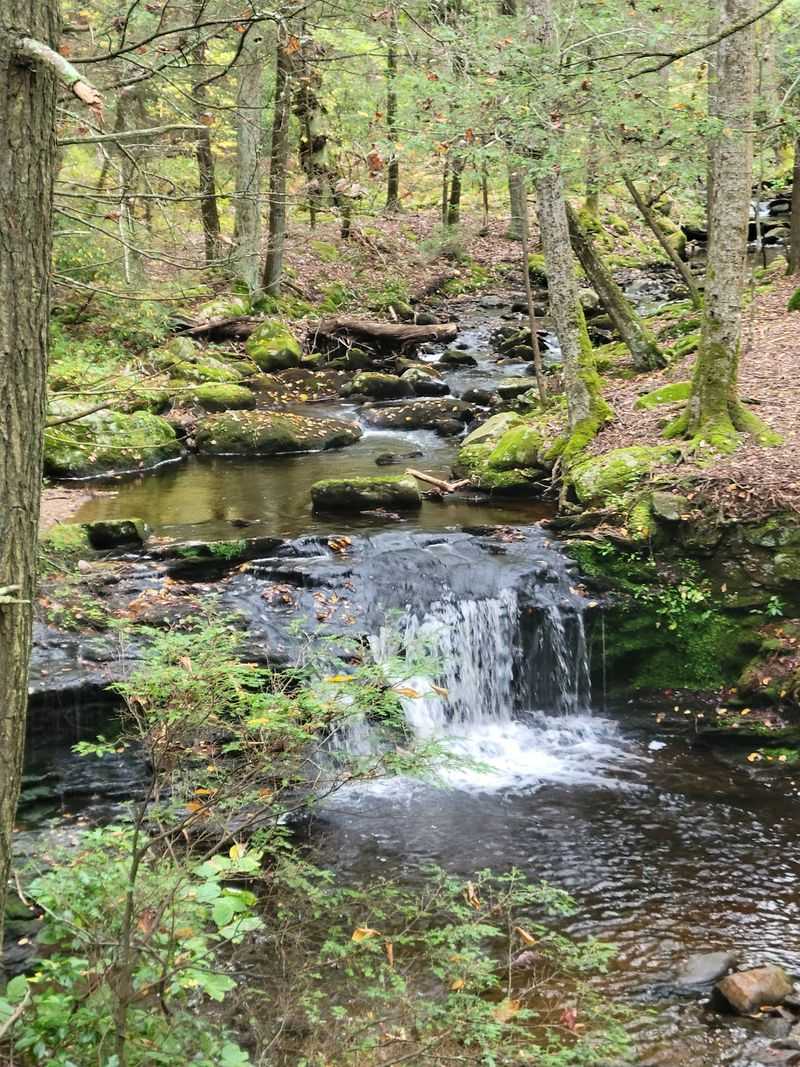
You hear it before you see it. Chapman Falls drops more than sixty feet across a staircase of Scotland Schist ledges, and the sound carries through the trees toward the campsites.
The water gathers in a splash pool at the base, and from there the Eightmile River begins its run through the park. That river holds a federal designation as a National Scenic and Wild River, which says something about the quality of the watershed around it.
The falls once did real work. Water power here ran Beebe’s Mills until the late nineteenth century, and the industrial chapter ended long ago, leaving the ledges to the river.
Swimming at the falls themselves is not allowed, for good safety reasons given the rock and the drop. Wading in the shallower stretches downstream is a common and much gentler way to cool off.
Fall is arguably the best time to see it. Autumn rain tends to boost the flow while cooler air keeps the mist bracing rather than muggy.
Photographers gather at the viewing areas near the top and along the rocks below, where the layered stone frames the water beautifully.
5. Forest Trails Begin Close To The Campsites
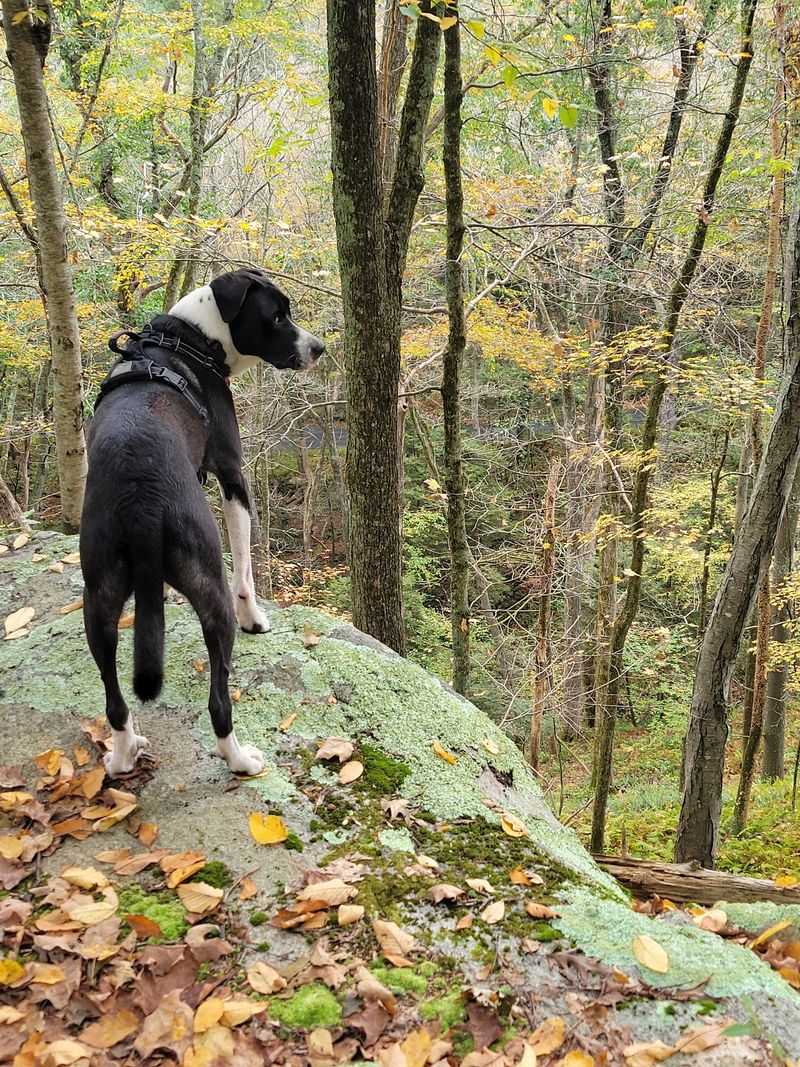
Campers here repeatedly mention one convenience above all others: the trails start practically at the tent flap. Some trailheads are a short walk from the loop, others a brief drive with their own parking.
The network covers a range of abilities. Easy riverside strolls suit families, while longer routes climb through rocky terrain and reward the effort with elevation and quiet.
The Orange Trail leads to a small cave known as Devil’s Oven, which is exactly the kind of destination that turns a hike into an adventure for kids. The Vista Trail climbs to an overlook with wide views across the surrounding valley.
For a fuller day, the Blue-Blazed Main Loop threads past rock outcrops, along streams, and through changing woodland habitats. Sturdy shoes matter more than mileage here, since roots and stone dominate the footing.
Strollers generally do not work on most of these paths, so a child carrier is the better call for very young hikers.
Birders consider the park one of state’s standout spots, thanks to the mix of river corridor, wetland, and upland forest. Early mornings in fall bring migrating songbirds through the canopy, so pack binoculars alongside the trail snacks.
6. Stone Potholes Add Mystery Below The Falls
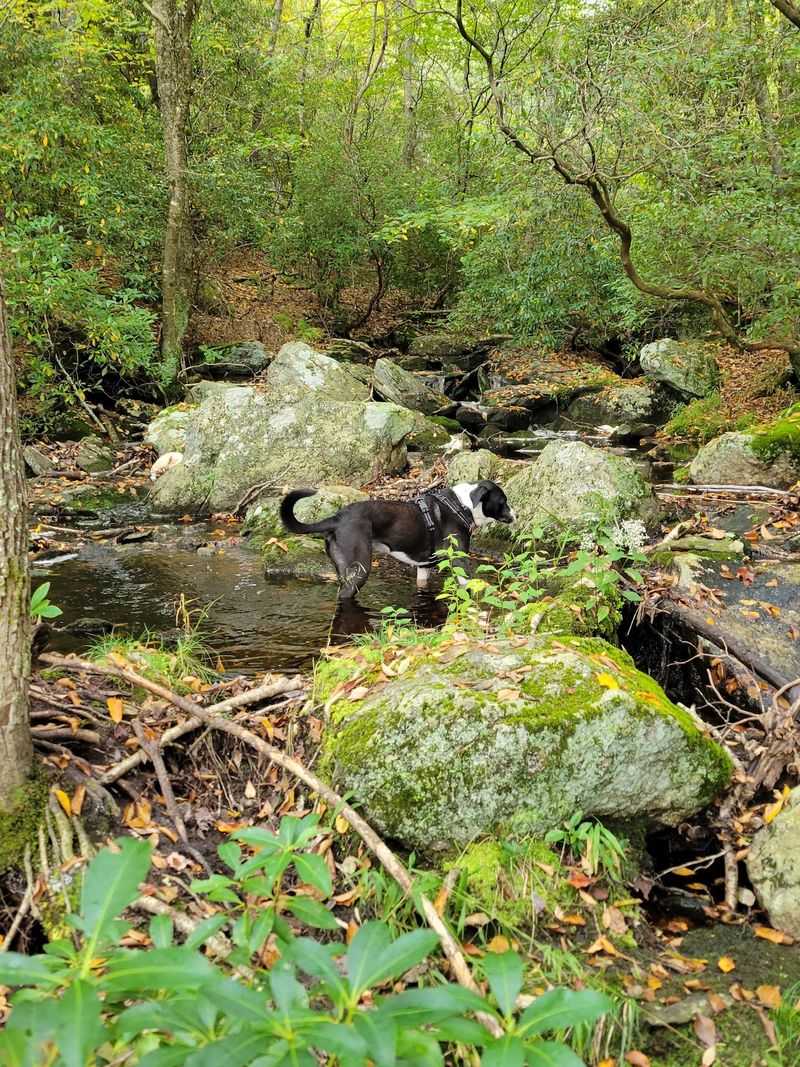
Legend says the Devil got his tail wet at the falls, lost his temper, and went bounding away across the rocks, scorching a hoofprint into the stone with every furious leap. That is one explanation for the holes.
The other version involves geology. Stones swept downstream got caught in swirling eddies and spun in place for years, grinding neat cylinders into the bedrock.
As each spinning stone wore itself down, a new one dropped into the same cavity and kept the drilling going.
Either way, the results are strange and worth crouching down to examine. The potholes range from a few inches to several feet across and equally deep, with walls so smooth and round they look machined.
Older folklore added another layer, describing witches stirring brew inside these natural stone cauldrons. The park’s unusual name has kept that mythology alive for generations.
Autumn leaves collecting inside the hollows make them especially photogenic, and the low angle of October light picks out the curves in the rock.
Wet stone near moving water is slippery, so admire the formations from stable footing rather than climbing around the edges of the streambed.
7. Autumn Color Transforms The Surrounding Woods
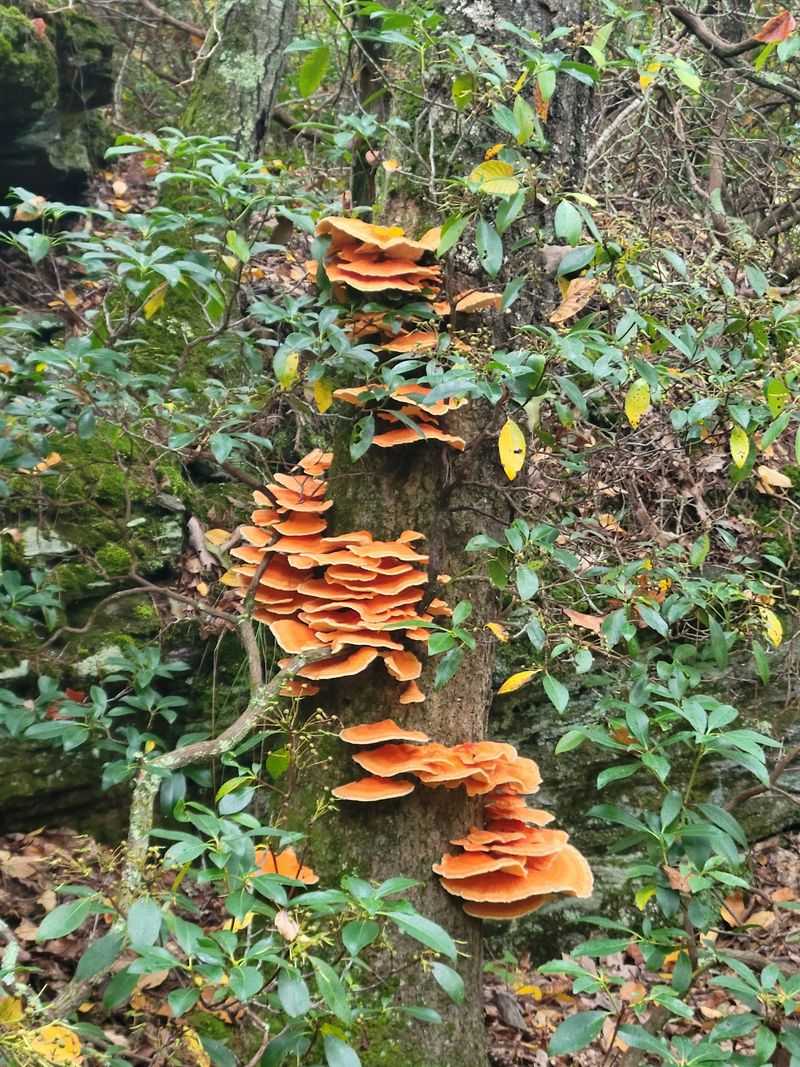
The park’s mix of trees does something wonderful once the nights turn cool. Maples flare red, hickories and birches go gold, and oaks hold their deep russet tones long after the flashier leaves have dropped.
Because different species turn at different speeds, the show stretches out rather than peaking and vanishing in a weekend. Leaf peepers often return two or three times through October to catch new stages.
September gets high marks from campers who want comfortable temperatures alongside the earliest color. Early October usually brings stronger reds, along with the crowds that come with them.
The Connecticut River Valley surrounding the park is known for scenic autumn driving, so the trip in and out becomes part of the experience rather than just transit.
Views from the Vista Trail overlook put the whole patchwork on display, valley, ridgelines, and treetops all at once. Morning light tends to be softest for photos.
Down at stream level the effect is different but just as good, with leaves riding the current and collecting against rocks below the falls.
Since the campground closes for the season in early to mid-October, booking early is the practical move for peak color weekends.
8. Cool Nights Make Fall Camping Especially Memorable
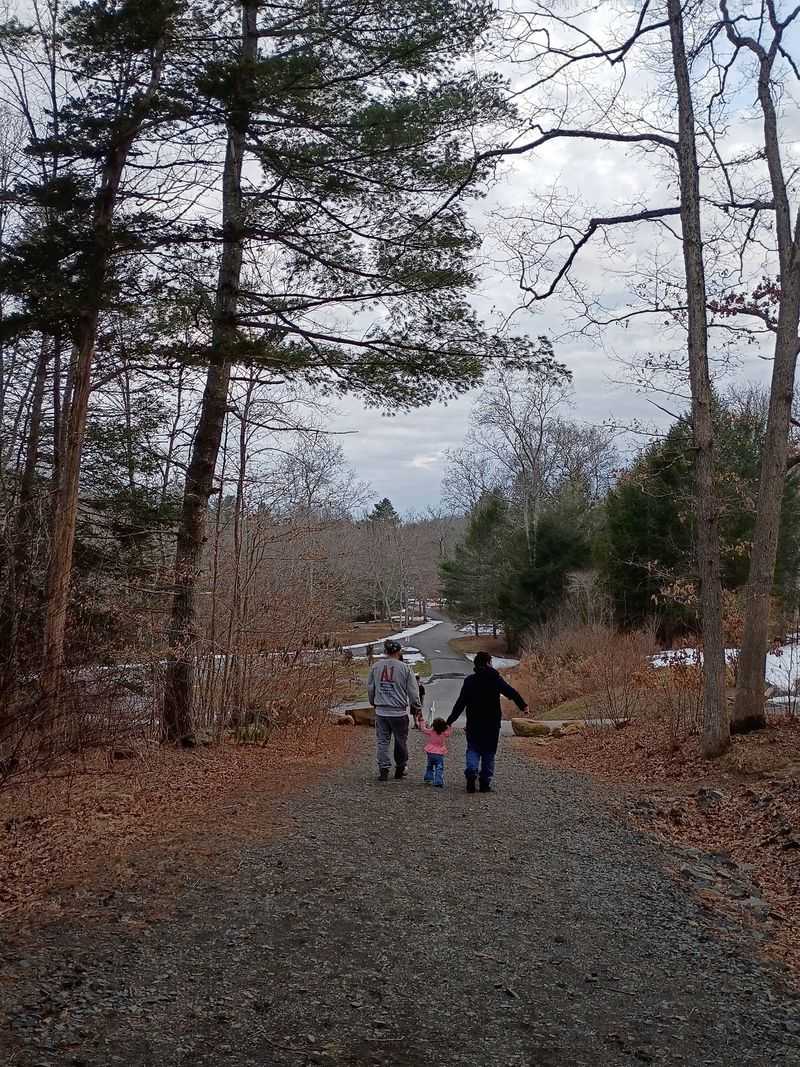
September changes everything. The air feels lighter. Suddenly, spending an entire day outside sounds much better than hiding from summer heat.
Early fall at Devil’s Hopyard brings cooler conditions that can make hiking and camping more comfortable. Warm afternoons can give way to noticeably colder nights, so the temperature difference becomes an important part of planning a stay.
Those cooler evenings are part of the seasonal appeal. A campfire feels especially welcome once darkness arrives, and crawling into a warm sleeping bag can be far more comfortable than trying to sleep through a humid summer night.
Layers are the smart move. A warm hat, insulating sleeping pad, and sleeping bag appropriate for the forecast can help when temperatures drop after sunset.
Lighter clothing can handle warmer afternoons without filling the camping bag with unnecessary extras.
The surrounding forest changes too. Leaves begin turning, evenings arrive earlier, and sounds from the woods become much easier to notice after the campground settles down.
Fall camping here does come with a deadline. The campground operates seasonally and closes in October, leaving a relatively short window to catch those crisp nights.
That limited season adds to the attraction. Cool air, changing leaves, and a small wooded campground make September feel particularly well suited to this rustic escape.