You Hike Across Prairie Hills Where Ancient Rhino Bones Were Dug Up In Nebraska
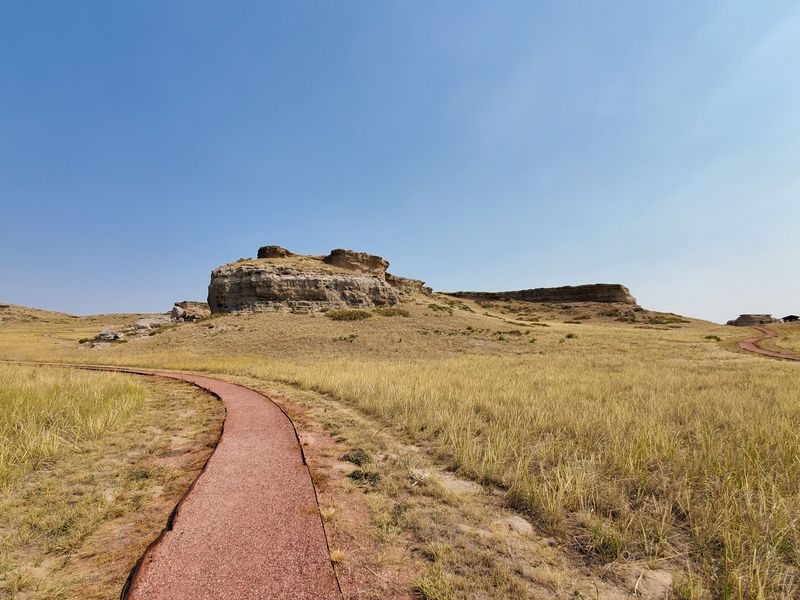
The last stretch of road turns to dirt, and you start wondering if the map is playing a trick on you. Then the grass opens up, two low hills rise out of nowhere, and there is a small building with a flag snapping in the wind.
Inside sit the bones of animals that walked this corner of Nebraska roughly twenty million years ago, including rhinos that looked more like barrel-chested hippos than anything in a zoo today. It is one of the strangest and quietest places in the state, and almost nobody is ever there.
A Monument at the End of the Dirt Road
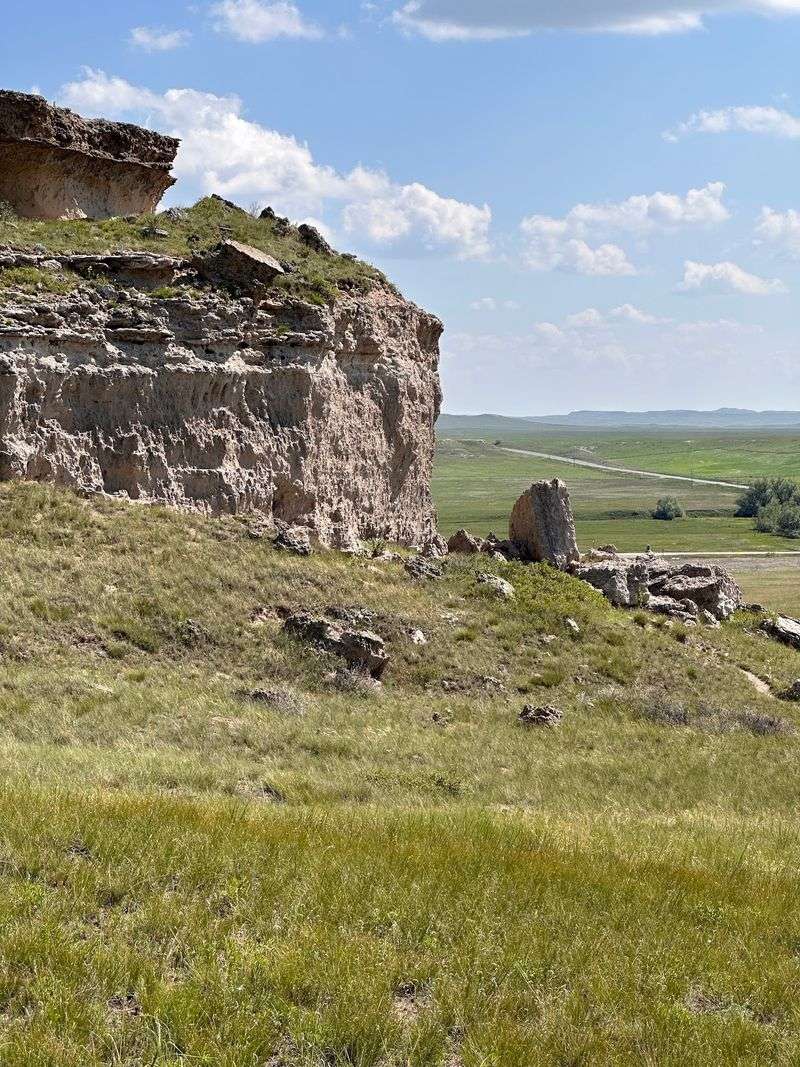
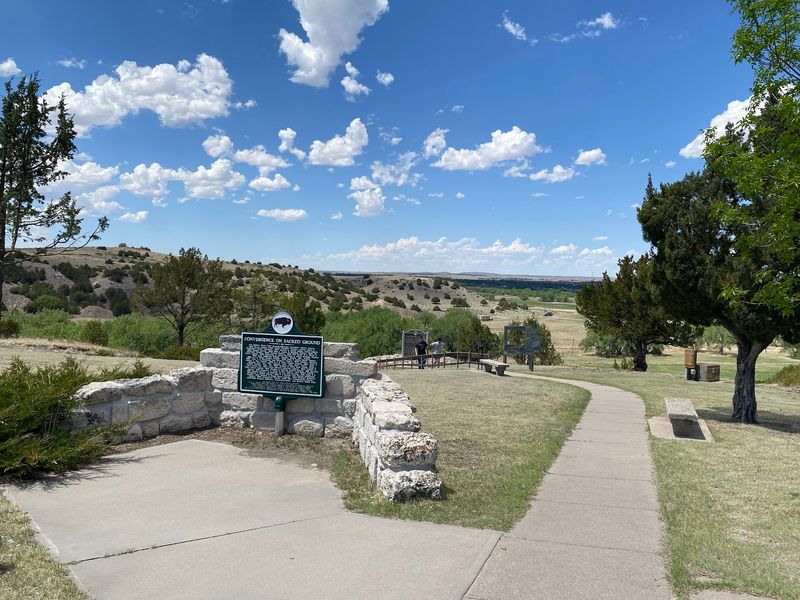
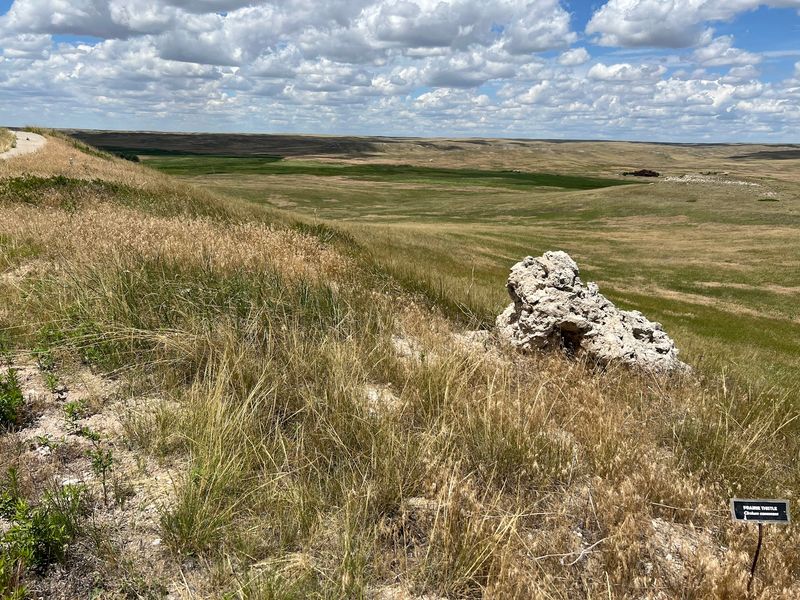
Two flat-topped hills, University Hill and Carnegie Hill, sit above a stretch of short-grass prairie in Sioux County, way out in Nebraska’s Panhandle near Harrison. Agate Fossil Beds National Monument protects them, along with the slow green line of the Niobrara River running through the valley floor.
Calling it remote undersells things. The nearest services sit roughly thirty to forty miles off, and the final approach involves dirt road, so a full gas tank and a cooler of snacks count as basic planning rather than overpreparation.
What waits at the end is a compact visitor center, two walking trails, and a landscape with almost no trees to interrupt the view. The scale of the open ground does something odd to your sense of distance.
Deer become specks, and the hills look closer than they are.
Bones came out of those two rises by the crateful in the early 1900s, shipped to museums across the country. Standing in the parking lot, with wind pushing the grass flat, the whole thing feels less like a tourist stop and more like showing up somewhere the world forgot.
Bones Beneath the Grass and How They Got There
Picture a waterhole shrinking during a long dry spell about twenty million years ago, with animals crowding in from every direction. That is the working explanation for the tangle of bones packed into these hills, layer upon layer of skeletons pressed together in a single dense seam.
Paleontologists began serious digging here in the early twentieth century, and crews from major museums hauled away enormous quantities of material. The bone bed itself is thin but astonishingly crowded, which is exactly what made the site scientifically famous rather than just locally interesting.
Among the finds were Menoceras, a small two-horned rhinoceros that traveled in herds, plus Moropus, a strange clawed relative of horses, and the bear dog Daphoenodon. Rangers happily explain bear dogs to anyone who asks, and most people leave repeating the name.
Dinosaur seekers sometimes arrive expecting something else entirely. Fossil mammals are the whole story here, and the change of subject turns out to be refreshing.
These were warm-blooded animals living on grassland not so different from what your boots are crossing.
Inside the Visitor Center
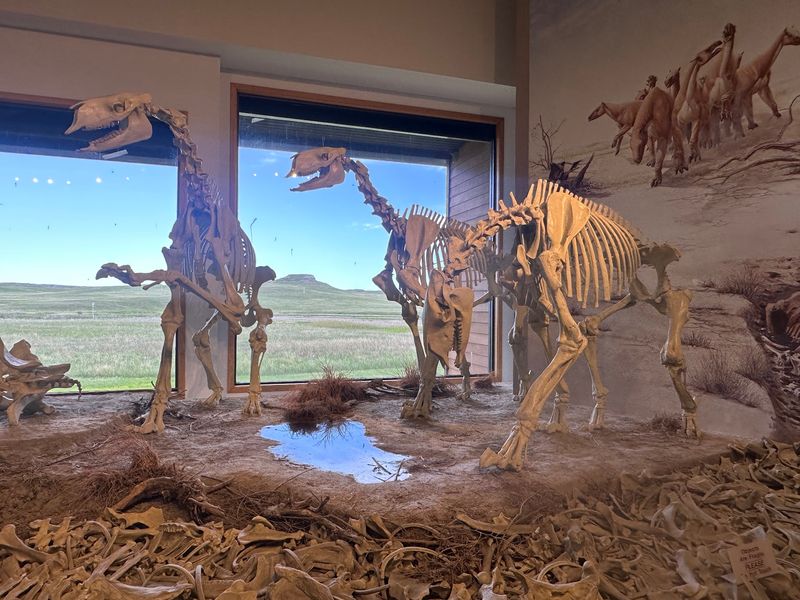
Cool air, polished floors, and the low hum of a theater running a short film: the visitor center is small, and every square foot of it earns its keep. Glass cases hold fossils pulled from the hills a few hundred yards outside the window.
Reconstructions show what those animals looked like with muscle and hide attached, which helps enormously when you are staring at a jumble of bone. Interpretive panels walk through the waterhole theory step by step, and a slab of the actual bone bed is displayed so you can see the density for yourself.
There is a gift shop, restrooms, and usually a ranger or volunteer within easy reach. Staff here tend to have time, and that changes the visit.
Children get handed fossils to touch, questions get real answers, and nobody rushes you along.
Most people budget twenty minutes and end up staying well over an hour. Between the film, the exhibits, and the second collection upstairs from the fossils, the building holds far more than its footprint suggests.
The Cook Collection and Its Lakota Story
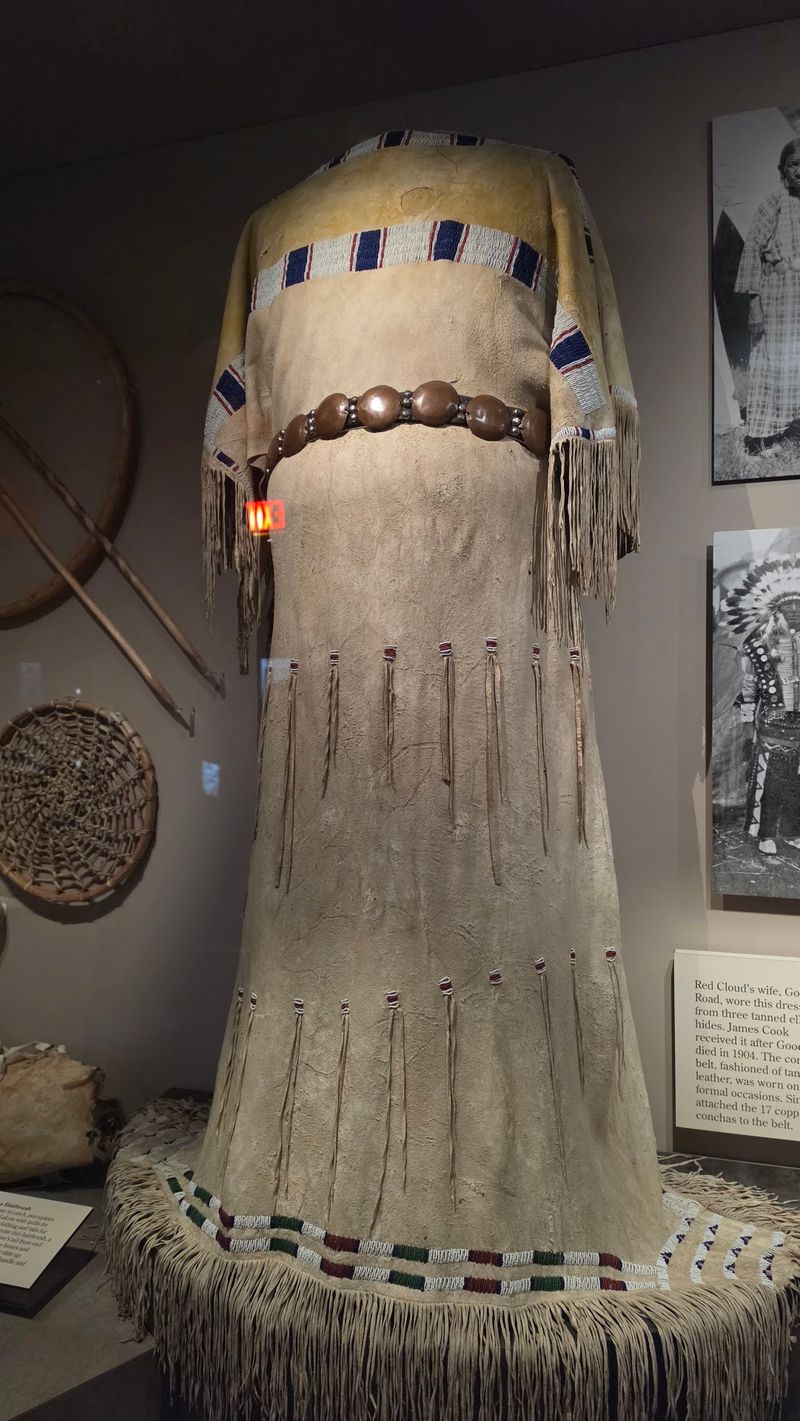
Half of this museum has nothing to do with fossils at all, and it catches a lot of people off guard. James Cook ran the Agate Springs Ranch on this land, and his friendship with Chief Red Cloud and other Lakota leaders spanned decades.
Gifts exchanged during that friendship now fill a gallery: beadwork, tanned hide garments, pipes, and personal items, presented with care and good lighting. The quality of the quillwork and beading stops people mid-stride.
Several pieces connect directly to Red Cloud himself.
Cook’s own belongings sit nearby, giving the ranch era a human face. You move from deep geologic time to roughly a century and a half ago within a few steps, and the jump is part of what makes the building memorable.
Plenty of people arrive for rhino bones and walk out talking about the hide clothing instead. Both collections are genuine draws, and together they turn a small museum in far western Nebraska into something considerably deeper than a roadside stop.
Walking the Fossil Hills Trail
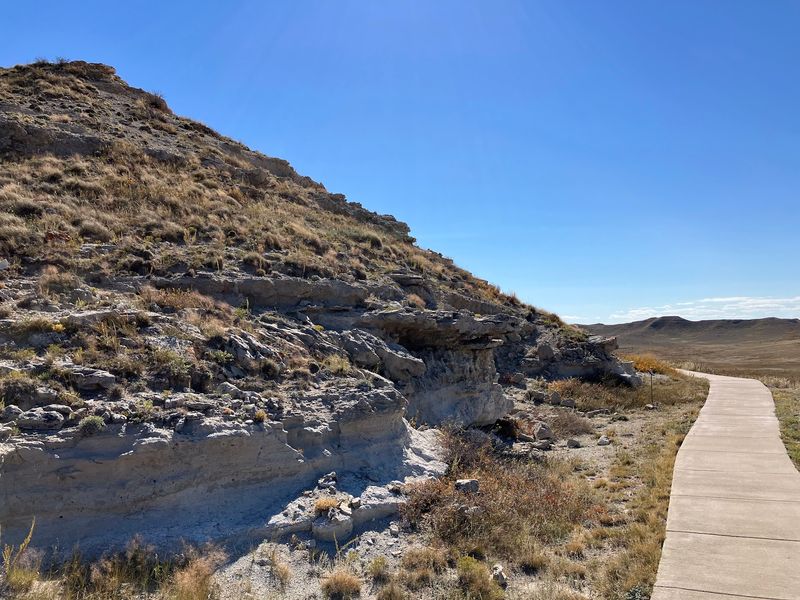
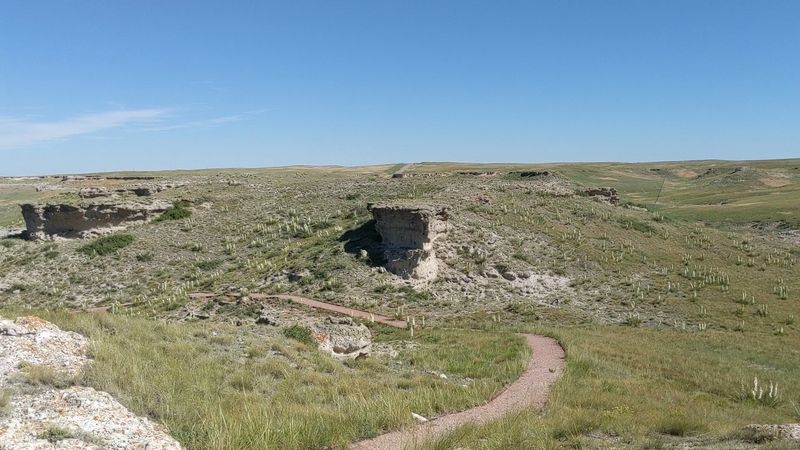
Concrete slabs laid end to end carry you out of the parking lot, across a bridge over the Niobrara, and up toward the buttes. Roughly two and a half miles round trip, with a loop at the far end that circles the old quarry sites.
Plaques along the route explain what came out of which hill, and taking time to read them stretches the walk to about an hour. The grade stays gentle.
Wheelchairs can manage most of it, though a few slabs have heaved up an inch or so over the years.
Shade is essentially nonexistent. Three benches with small shade structures are spaced along the path, and on a hot afternoon you will be grateful for every one of them.
What makes the hike work is standing at the quarry face and realizing the bones came out of the ground right under your feet. Wildflowers hang on into late September, meadowlarks call from fence posts, and the wind rarely quits.
The Shorter Loop and the Daemonelix Burrows
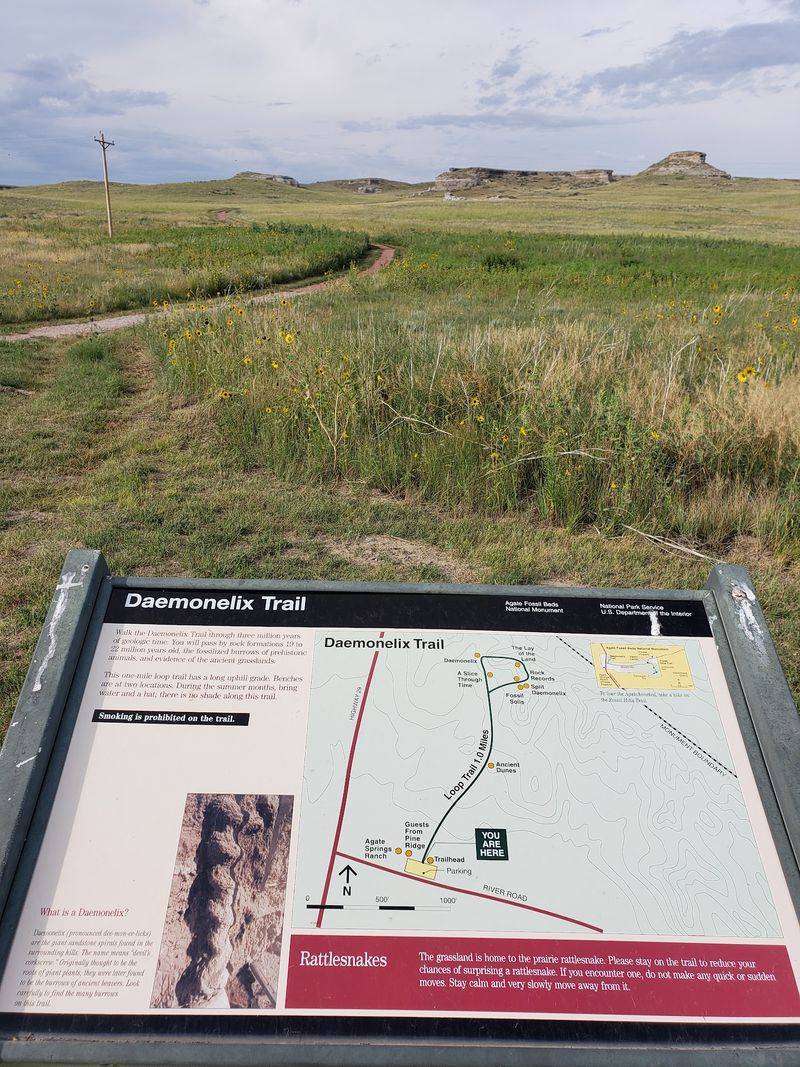
Want something quicker? A second, shorter trail runs about a mile and takes roughly half an hour at an unhurried pace, which makes it the easy choice for families with small legs or anyone arriving late in the day.
Its payoff is genuinely bizarre. Spiral shapes twist down through the sandstone, corkscrews taller than a person, once such a puzzle that early scientists argued over whether they were plants or animals.
They turned out to be the burrows of an ancient land beaver called Palaeocastor, which dug helical tunnels and then lived at the bottom. The nickname Devil’s Corkscrew stuck, and once you see one you understand why.
Sunset light hits this side of the monument beautifully, turning the buttes orange and throwing long shadows across the grass. Coyotes start up after dark, which is either unsettling or wonderful depending on your temperament.
Short as it is, the loop delivers one of the odder geologic sights in the state, and you can pair it with the longer hike in the same visit.
Prairie, River, and the Animals Still Here
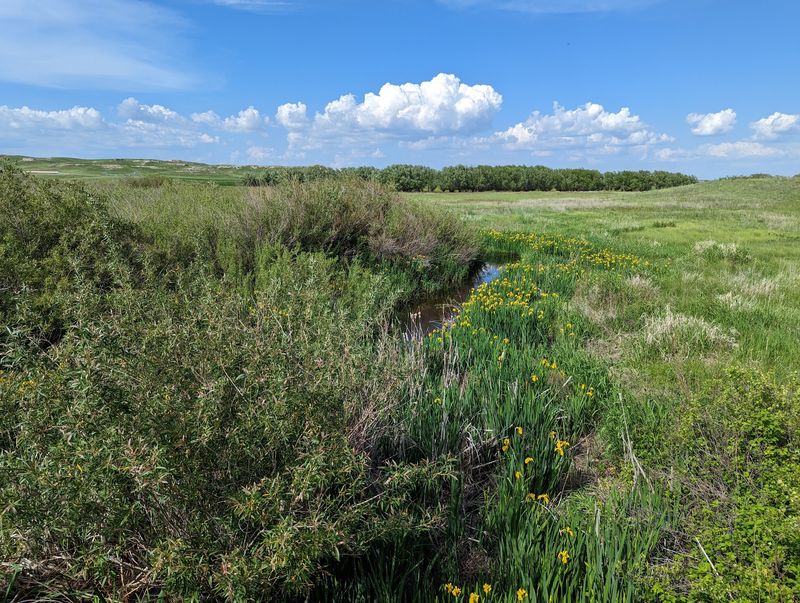
A bald eagle working the waterway is not an unusual sighting here, and neither are mule deer bounding off across the flats. The Niobrara is narrow at this point, more creek than river, but it pulls wildlife toward it all the same.
Short-grass prairie surrounds everything, studded with yucca and seasonal wildflowers that hold color well into fall. Horned lizards, the little flat ones sometimes called horny toads, turn up on the trails if you watch where you step.
Rattlesnakes live here too, which the park makes no secret of. Staying on the paved path and keeping dogs leashed handles most of the concern, and the trails are dog friendly, a rarity among National Park Service sites.
Birdsong, wind, and very little else fills the soundtrack. There are no crowds to speak of, even on holidays, and that emptiness is a large part of the appeal.
Picnic tables near the visitor center make a decent lunch stop, useful given how far away the nearest restaurant sits.
From Working Ranch to National Monument
Cattle grazed this ground long before the National Park Service arrived. The Agate Springs Ranch belonged to the Cook family, and it was Cook who encouraged scientists to come dig once fossils started turning up in the hills.
That sequence matters. Without a rancher willing to open his land to paleontologists, the bone bed might have stayed anonymous ground under grass for another century.
Congress established the monument in 1965, and the transition from private ranch to federal site preserved both the fossil quarries and the family’s collection of Lakota gifts in one place. The two stories stayed together instead of being split between institutions.
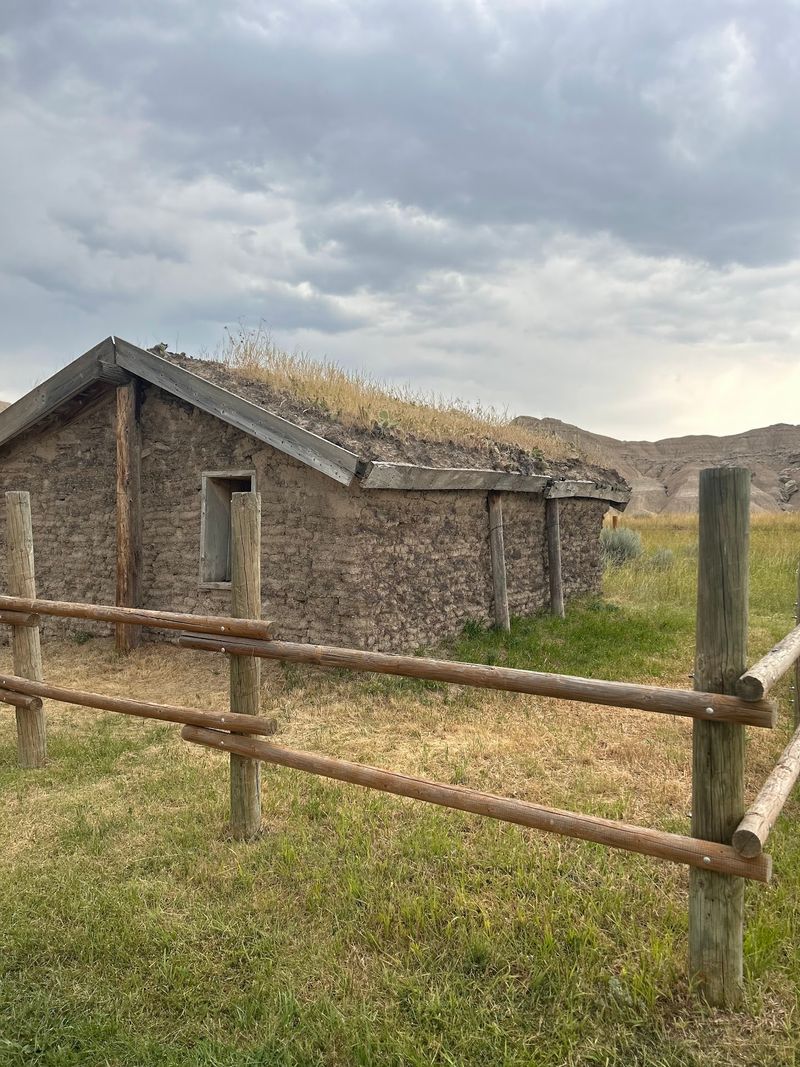
A cabin still stands out on the property, and it sets the imagination going. Living out here before paved roads, before the visitor center, before any of it, with the nearest neighbor a long ride away.
Ranching continues all around the monument boundary today, so the setting has not changed as much as you might expect. Fence lines, windmills, and cattle remain part of the view in every direction.
Junior Rangers and Younger Visitors
Kids get taken seriously at this monument, which is not true everywhere. Rangers and volunteers pull out fossils for small hands to hold, answer the fifteenth question as patiently as the first, and walk children through the activity booklets.
The Junior Ranger program runs here, and earning the badge gives a young visitor a reason to slow down and actually look at the exhibits rather than sprinting past them.
Both trails suit shorter legs. The one-mile loop is manageable for most grade-schoolers, and the longer paved route works fine for anyone who can handle a flat hour outdoors with water in hand.
Spotting things becomes the game: a horned lizard on the concrete, deer in the distance, prairie dogs, hawks overhead. There is no playground and no gimmick, just space and things to find.
Bring sun hats and more water than seems necessary. Heat is the main obstacle for families in midsummer, and an early start makes the difference between a good outing and a short one.
Best Seasons for a Panhandle Visit
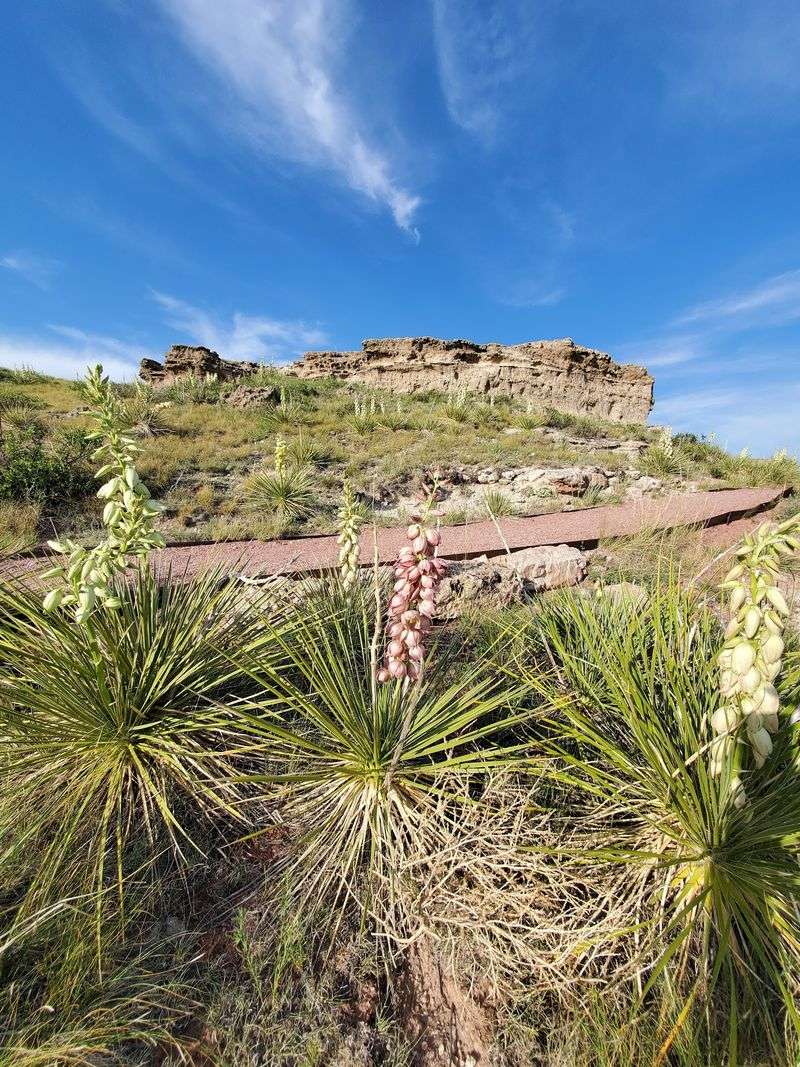
Late September might be the sweet spot. Wildflowers still hold on, temperatures drop into hiking range, and the low sun turns the grass gold across the whole valley.
Summer brings the opposite problem. With zero shade on either trail and heat radiating off the concrete, midday hikes get uncomfortable fast, and plenty of people cut their walk short because of it.
Spring works well, with green prairie and cooler air, though wind out here can be fierce enough to make conversation difficult. Nobody exaggerates about Panhandle wind.
Winter visits are possible but demand checking conditions first, since the access road is partly dirt and weather changes the equation quickly. Snow across open grassland has its own stark appeal for those willing to make the drive.
Evening light deserves a mention regardless of season. The buttes catch color at sunset in a way that photographs never quite capture, and with the visitor center closed by then, the place empties out completely.
Just plan your fuel and food accordingly.
Getting There and What to Pack
The address is 301 River Rd, Harrison, NE 69346, sitting between Harrison and Mitchell in the far northwest corner of the state. Highway 29 gets you close, and the last portion involves unpaved road that is manageable in a regular car when dry.
RVs and towed trailers park easily near the visitor center, which is a relief given how few turnarounds exist out this way. Admission is free.
Doors open mid-morning and the building closes in late afternoon, seven days a week, but seasonal changes and federal closures happen, so a quick check before leaving saves a wasted drive.
Fill the tank first. Nearest fuel and food sit roughly thirty to forty miles out, and there is no cell service safety net to fall back on.
Pack water, sunscreen, a hat, and sturdy shoes. Water inside the center is available while it is open, but nothing outside it.
Budget two hours minimum, more if you plan on both trails and the full museum.
Why the Drive Pays Off
Two trails and one small museum does not sound like much on paper. That is the honest measure of the place, and anyone expecting a major park experience will find it modest.
What the numbers miss is the combination. Twenty-million-year-old rhino bones, corkscrew burrows dug by ancient beavers, a Lakota collection of real significance, and prairie so open it feels like another planet, all in one spot nobody else is visiting.
Rangers here do the heavy lifting. Conversations with staff and volunteers regularly turn a quick stop into an afternoon, and that is not something you can schedule.
For Nebraskans making a Panhandle loop with Scotts Bluff or Toadstool Geologic Park, this fits naturally into the route. As a standalone destination it asks a lot of driving, and you should go in knowing that.
Wind, grass, bone, and silence. Stand at the base of Carnegie Hill and think about what was crowded into that ground, and the miles behind you stop mattering much.