Almost Nobody Outside Nebraska Knows About This Massive Inland Beach Escape
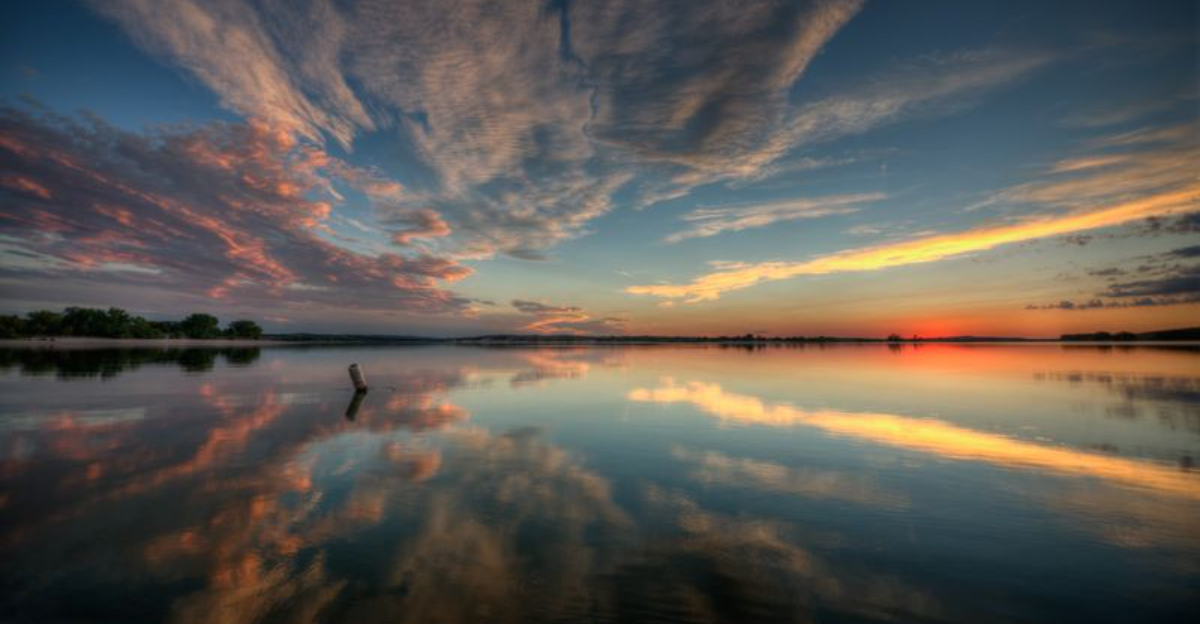
The first surprise is the sand.
Not a tiny strip beside the water, but broad shoreline where you can spread out, kick off your shoes, and spend an afternoon pretending the nearest coast is much closer than it really is.
Western Nebraska hides a beach escape that feels wildly out of place in the best possible way.
Bring the cooler. Claim a spot near the water. Swim when the heat builds, wander farther down the shore when you want quiet.
The open setting gives the whole place a bigger, breezier feeling than most inland recreation areas manage.
There is room here for a full summer day without much fuss. No boardwalk. No crowded resort strip. No need to keep moving.
Just water, sand, and enough space to make doing almost nothing feel like a very good plan.
Real Sand Underfoot, Not A Tiny Swim Patch
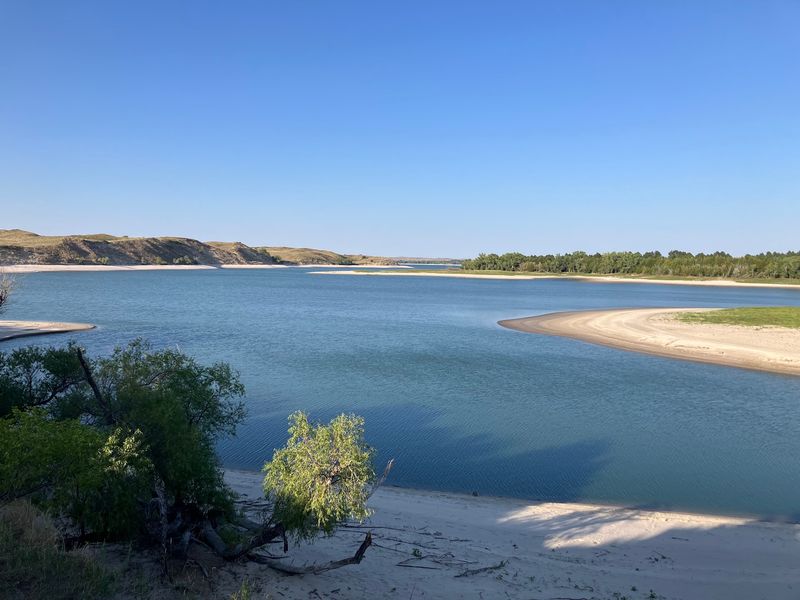
Soft, pale sand along the water’s edge is the first thing that surprises visitors who expected a muddy prairie lake.
The shoreline at Merritt Reservoir has a pure-sand and sugar-sand composition, which is exactly why the inland beach comparison holds up.
Sand comes naturally with the territory here, since the entire region sits on stabilized dunes.
Barefoot walking feels comfortable in most spots, though sand does heat up quickly on afternoons above 90 degrees.
Water shoes help when wading over shallow areas, and a beach mat keeps gear cleaner than setting it directly on the ground.
Access to the sand is easiest near the developed recreation areas and boat launch zones. Some stretches of shoreline sit below steeper banks, so scouting a spot before unloading chairs and coolers saves effort.
Sand burrs grow in the grassy areas near campsites and parking, and they cling to shoes, towels, and pet paws.
Closed shoes for the walk down and a quick shake-out of blankets before packing up handle the problem well enough.
Water clarity and algae levels change through the season depending on heat and wind, so swimming conditions are not identical every week.
Nearly 3,000 Acres Of Open Water
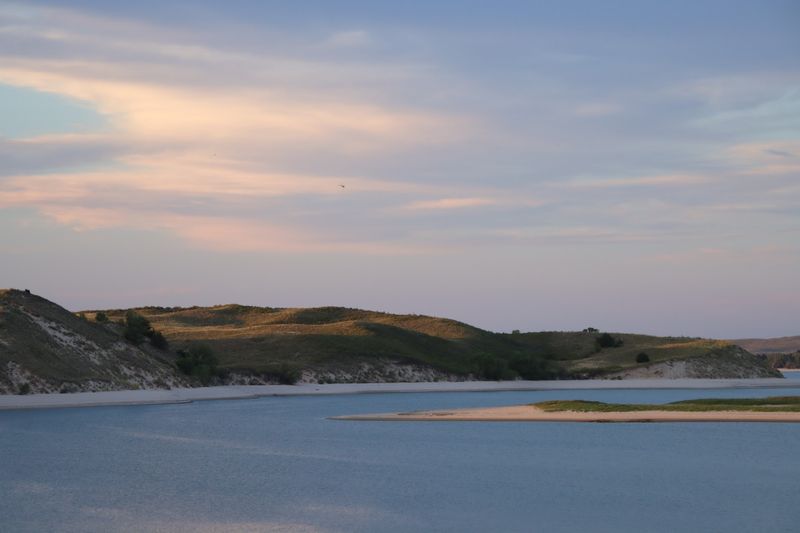
Scale changes everything about how a lake feels, and this one covers roughly 2,906 surface acres. Numbers that big mean the water does not feel crowded even on a busy holiday weekend.
Boats spread across the main body while paddlers stick to sheltered arms, and swimmers rarely compete for space along the sand.
Standing at the shoreline, the far bank looks distant enough that the view resembles a coastal bay more than a farm pond.
Wind picks up across that much open surface, so small watercraft users benefit from checking the forecast in the morning.
Water levels rise and fall from year to year based on precipitation and irrigation demand.
Beaches may look wider during lower years and narrower when the reservoir sits closer to full, which is worth keeping in mind when planning around a specific launch or swim area.
Distances between recreation areas matter too. Driving from one campground to another can take several minutes on sand and gravel roads, so bringing what is needed rather than making repeat trips keeps the day simpler.
Forty-Four Miles Of Shoreline Worth Wandering
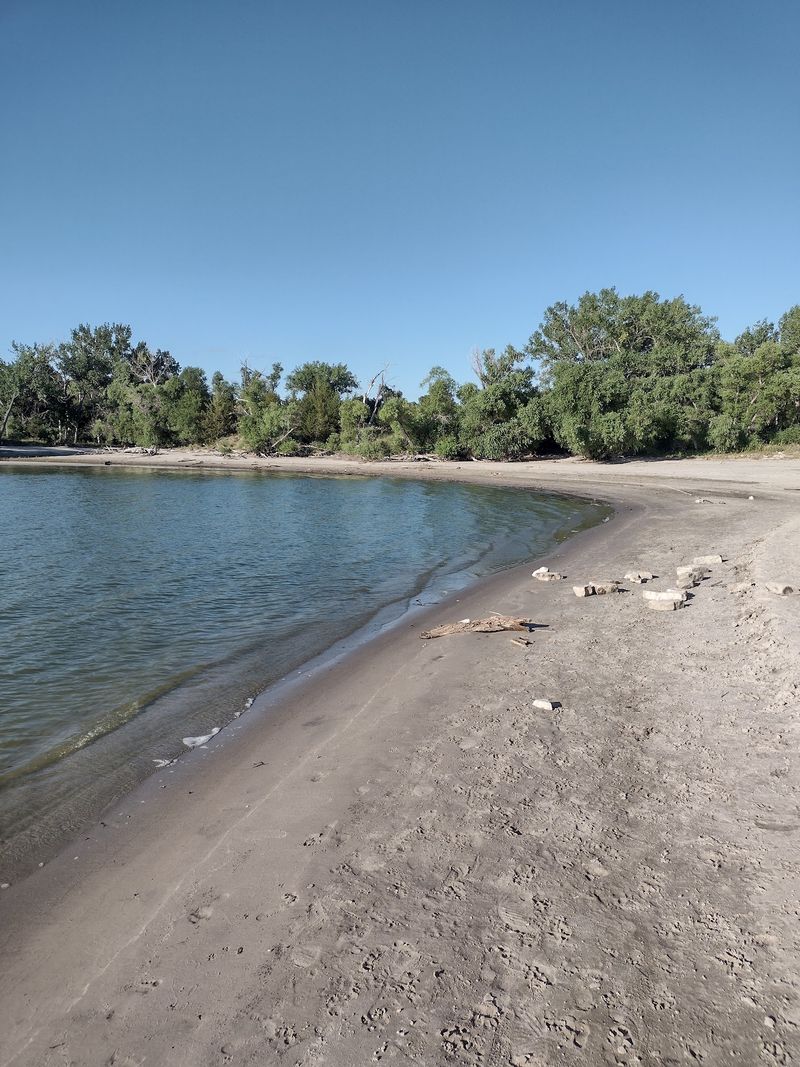
Forty-four miles is a lot of edge for one body of water, and Merritt’s shoreline twists into arms, points, and coves the whole way around.
Irregular outlines like that create pockets of quiet. Popular launch areas can hum with activity on Saturday afternoons while a cove two bends away stays nearly silent.
Kayakers and canoeists get the most out of the shape, since paddling into narrow arms opens up shallow water and sheltered banks that motorboats generally skip.
Calm early mornings usually offer the flattest water for that kind of trip.
Shoreline access is not continuous or fully developed, and there are no formal walking or biking trail systems circling the reservoir.
Reaching the water is simplest at boat launch areas and near campgrounds, so exploring often means driving between points rather than hiking the perimeter.
Footwear matters when poking around the edges, because sandy slopes and grassy banks hide burrs and uneven footing. Long pants also help when moving through taller prairie grass.
Anyone hoping for solitude should try weekdays outside major holidays.
It Is Deep In The Nebraska Sandhills
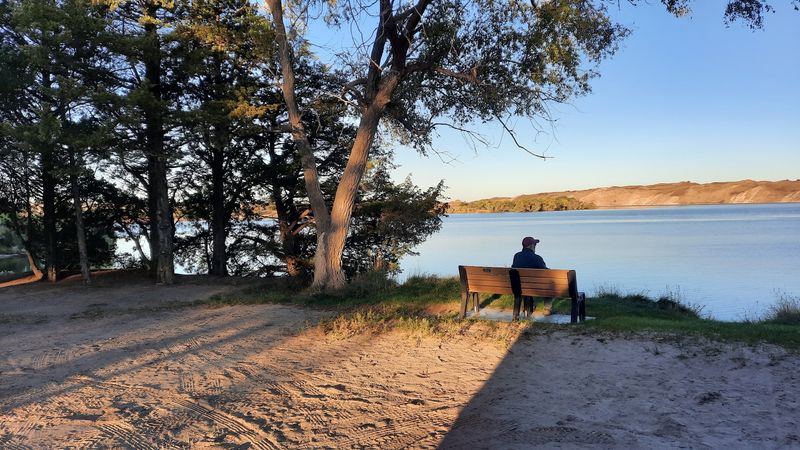
Getting here involves driving through one of the largest grass-stabilized dune regions on the planet.
The Sandhills roll in soft waves of grass rather than jagged ridges, and the highway rises and dips through them on the way southwest from Valentine.
The drive covers about 26 miles and offers little in the way of services along the route.
Development around the reservoir stays minimal, which means the view from the water is mostly prairie and sky. Instead of houses and docks lining the banks, there are grassy hills and open horizon.
Wildflowers bloom through summer across those hills, and mid-August visitors often find plenty of color in the grass. Morning and evening light makes the contours of the dunes much easier to see.
Cell service can be surprisingly usable in parts of the recreation area, though no Wi-Fi is provided. Downloading maps ahead of time remains the safer approach for anyone unfamiliar with the roads.
Fuel up in Valentine before heading out. Groceries, ice, and any forgotten camping items are far easier to buy in town than to find once the pavement gives way to sandy park roads.
Swimming Season Turns It Into A Beach Day
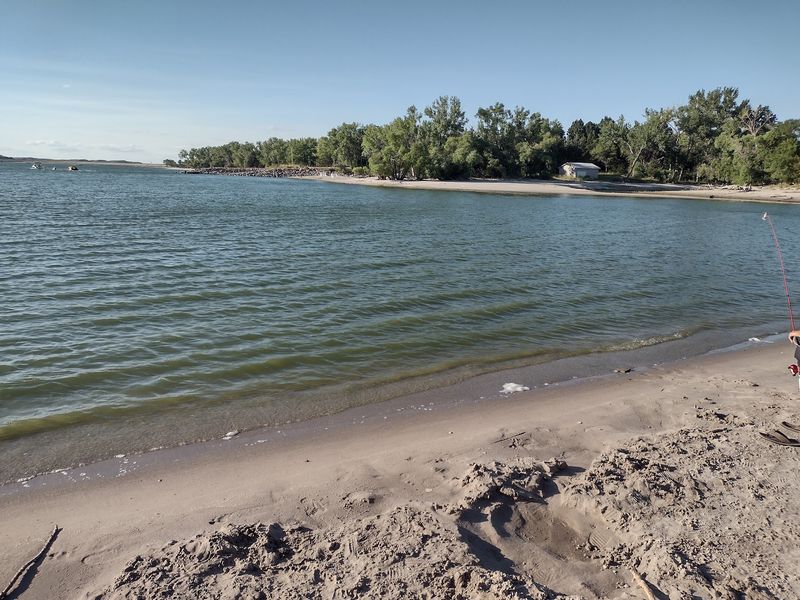
Cooling off is a genuine reason people come here, not an afterthought tacked onto a fishing trip.
Sandy beaches at the reservoir are promoted for swimming during the warm months, and on days pushing past 90 degrees the water becomes the main attraction.
Shallow entry areas near the sand suit waders and younger kids reasonably well.
There are no lifeguards, so supervision falls entirely on visitors. Life jackets for weaker swimmers are a sensible precaution, especially since wind can push small waves across the open water.
Shade is scarce along the beach areas. A pop-up canopy or a large umbrella makes a long afternoon far more comfortable, and plenty of drinking water matters in dry Sandhills heat.
Algae blooms sometimes appear during hot stretches with little wind, which can affect whether swimming feels appealing on a given day.
Conditions change, so a quick call to the park office at 402-376-3320 before a long drive is a practical move.
Showers are available at the campground bathhouse for a small coin fee, which helps after a sandy day. Rinsing gear before loading the car cuts down on the amount of sand that travels home.
Certified Dark Skies Overhead
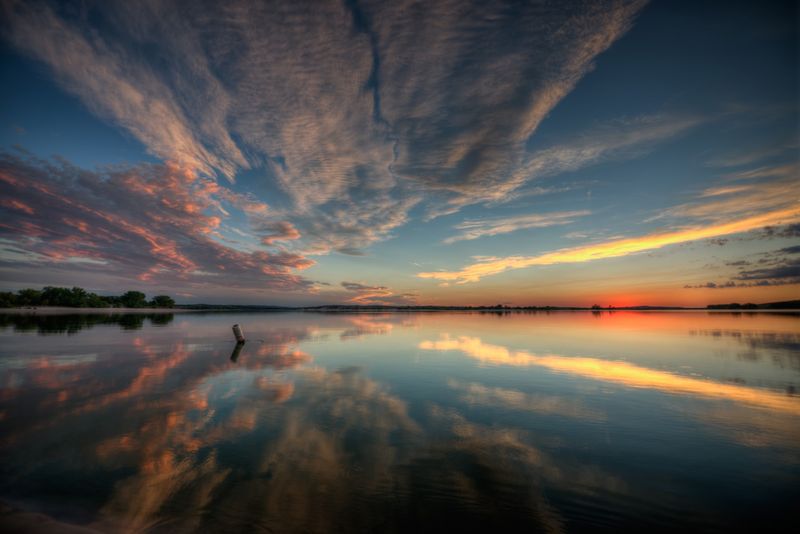
Sunset is where most lake days end, and here it is closer to a halfway point.
Merritt earned International Dark Sky Park status in 2022, becoming the first location in Nebraska to receive that certification. Low light pollution across the surrounding Sandhills is what makes the designation possible.
On clear nights near a new moon, the Milky Way becomes plainly visible without any equipment. Letting eyes adjust for twenty minutes or more, with phone screens off, makes an enormous difference in what can be seen.
Red flashlights or headlamps with a red mode help preserve night vision for everyone nearby. Bright white lights at a campsite affect neighbors well beyond the immediate area.
Beaches and open areas away from campground lighting offer the widest views. The point on the west side of the dam is a commonly mentioned spot for taking in both the lake and the sky.
Timing around the moon phase matters more than almost anything else. A full moon washes out faint detail, while nights close to a new moon deliver the darkest conditions.
Warm layers help even in summer, since temperatures drop noticeably after dark in open prairie country. A blanket and a reclining chair turn stargazing into something genuinely comfortable.
Three Decades Of The Nebraska Star Party
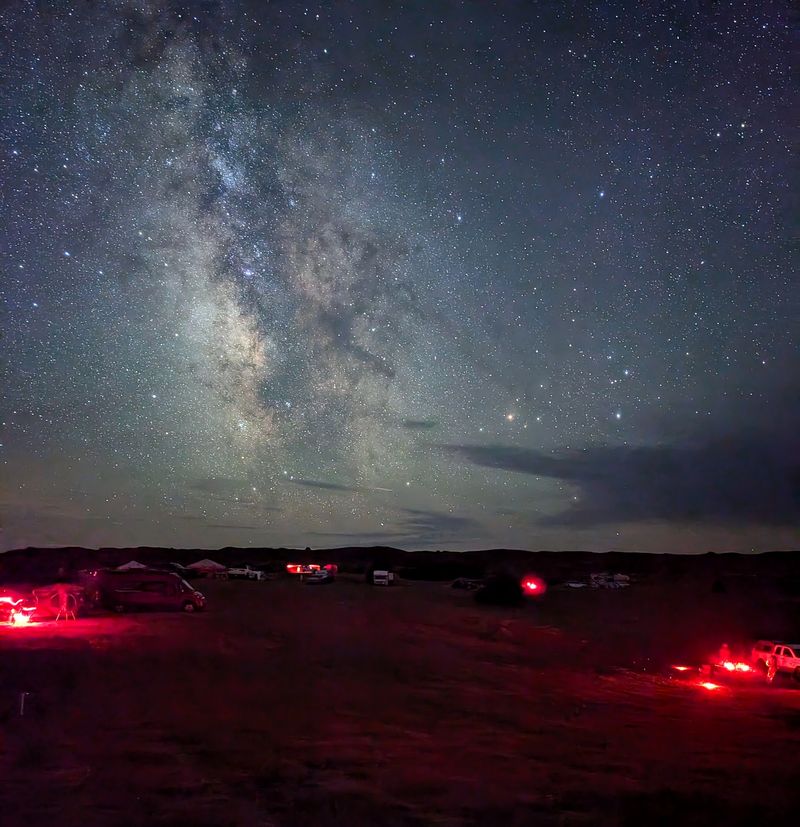
Telescopes have been arriving at this reservoir every summer for close to thirty years.
The annual Nebraska Star Party has made Merritt its home for roughly three decades, pulling in both newcomers and veteran observers.
Exceptionally dark skies are the reason the event keeps returning to the same stretch of Sandhills.
Attendees range from people with modest binoculars to those hauling large mounted instruments. The mix tends to make the gathering approachable rather than intimidating for anyone curious about astronomy.
Dates shift from year to year and are announced by the event organizers, so checking their official information before planning travel is essential. Camping demand rises considerably during that week.
Visitors who prefer quieter conditions might schedule around the event instead. Plenty of other new moon periods through the summer offer similar darkness without the added crowd.
Star party attendance usually involves stricter light discipline across the area, which means fewer stray beams and better viewing for everyone present.
Even without formal participation, a casual camper can enjoy the same skies. Sitting on the sand after dark with a simple star chart or an offline sky app covers most of what a first-timer needs.
Prairie Wildlife And A Reservoir Built In 1964
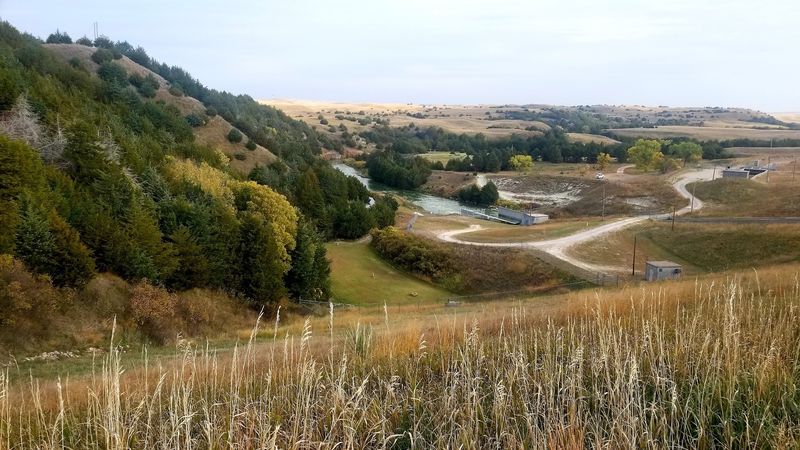
Grassland surrounding the water supports more life than a first glance suggests.
Mule deer, sharp-tailed grouse, and greater prairie-chickens all use the recreation and wildlife lands here. Turkeys and eagles also turn up around the shoreline and campgrounds, often early or late in the day.
A habitat restoration project around the reservoir focuses on removing invasive eastern red cedar and juniper while preserving important shelterbelts and native Sandhills prairie.
Work like that keeps grassland species from losing ground to encroaching trees.
The broader Sandhills region is also recognized as a significant resource for migratory birds. Binoculars earn their place in the bag for anyone with an interest in birdlife.
Wildlife should be observed from a distance, and food stored securely at camp. Keeping a clean site reduces unwanted visitors overnight.
History adds another layer to the visit. The reservoir was constructed by the U.S.
Bureau of Reclamation and completed in 1964 as part of a federal irrigation project meant to supply water for regional agriculture.
Today the Nebraska Game and Parks Commission manages the reservoir and adjacent lands for recreation and wildlife.
A beach, boat ramps, and dark sky camping all grew out of infrastructure built for farming decades ago.