This Nebraska Powwow Fills The Same Grounds With Dancing Under A Bronze Standing Bear
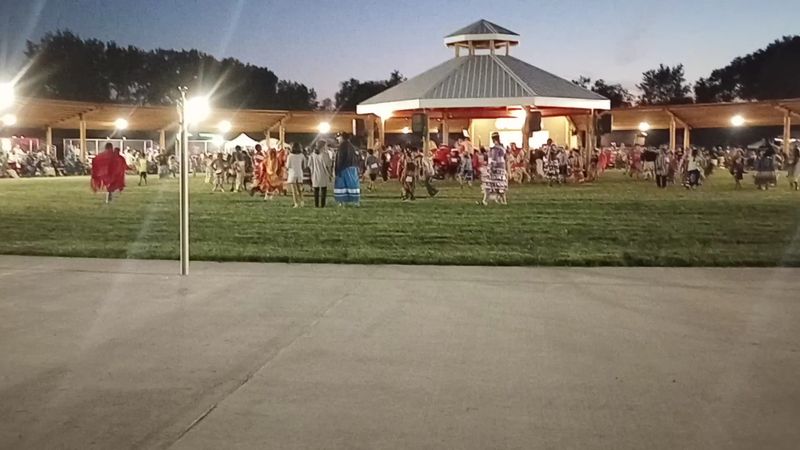
I pulled off a two-lane highway in northern Nebraska expecting a quiet historical marker and a stretch of my legs. Instead I found an open arena, a walking trail lined with sculpted stories, and a ten-foot bronze figure with one hand raised on a hill above it all.
Once a year, that same ground fills with drums, singing, and dancers in full regalia, and the whole place changes character. It is one of those stops where history is not sitting behind glass but moving in front of you.
Where The Grounds Sit Along The Niobrara
Knox County, in the far north of the state, holds a stretch of river country where the Niobrara meets the Missouri. The Ponca Tribe of Nebraska keeps its agency, museum, and powwow arena on this ground at 88911 521st Avenue in Niobrara.
Getting here means committing to a drive. There is no interstate exit, no chain signage, no cluster of motels announcing that something important is nearby.
You come over a rise, spot a hilltop figure in bronze, and realize you have arrived.
The campus itself is compact but layered. A museum building anchors one side, an educational trail loops through the grass, a cemetery rests under the watch of the statue, and the dance arena sits at the center of it all.
Google lists the location as a museum, which undersells it considerably. The property functions as a tribal headquarters, a gathering space, a burial ground, and an outdoor classroom at the same time.
Most days it is quiet enough to hear wind moving through the grass, and once a year it is anything but.
A Tribe Written Off The Map And Back On It
Federal paperwork can erase a nation. In 1877, a government error folded Ponca land into territory assigned to the Sioux, and the Ponca were forced south to Indian Territory in what is now Oklahoma.
The journey cost the tribe dearly.
Decades later, another round of federal policy stripped the Ponca Tribe of Nebraska of its recognized status entirely. On paper, the tribe no longer existed.
That changed in 1990, when federal recognition was restored. The gathering you can attend today grew directly out of that reinstatement, with the first powwow held in 1994 and repeated every year since.
Knowing that sequence reframes everything on the property. The arena is not a themed attraction built for tourism.
It is a place a community rebuilt for itself after two separate attempts to remove it from the record.
The museum sits deliberately beside the arena so the history and the celebration share a single address. Walk the ground with that in mind and the layout stops feeling incidental and starts feeling like an argument made in grass and gravel.
The Ten-Foot Bronze On The Hill
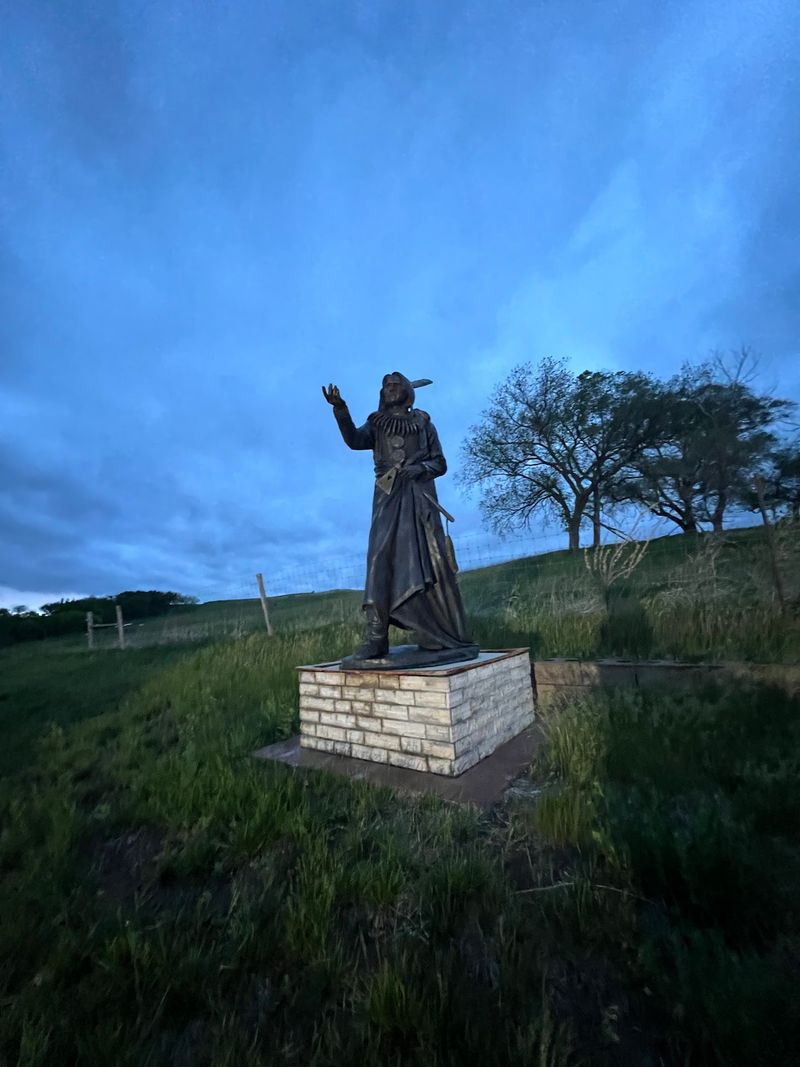
One raised hand. That is the detail that stays with you after you leave, because the entire sculpture builds toward it.
Artist Benjamin Victor created the ten-foot bronze of Chief Standing Bear that overlooks the powwow grounds, and it was dedicated during the tribe’s twenty-fifth annual powwow in 2018. The pose captures the chief mid-testimony at his 1879 trial, hand extended, making the statement that would follow him through American history: I am a Man.
Placement does a lot of work here. The statue crowns a rise, so it takes in the arena, the museum, the trail, and the cemetery below in a single sweep.
From most points on the property you can look up and find it.
Photographs of the sculpture circulate widely, but scale is the thing screens flatten. Standing at the base changes the proportions and the mood.
At dusk, with the sky going orange behind it, the silhouette reads from a surprising distance down the county road.
The Trial That Changed Who Counted As A Person
Chief Standing Bear was born near the Niobrara River, on the land his descendants now gather on each summer. After the forced removal to Indian Territory, he made the decision to bring his son home for burial, and he set out north with about thirty tribal members.
They were arrested near Omaha. The case that followed, Standing Bear v.
Crook, landed in federal court in 1879 and asked a question the country had avoided answering.
Judge Elmer S. Dundy ruled that Native Americans are persons within the meaning of the law, a finding that carried civil rights consequences far past one man and one tribe.
Standing Bear and others were permitted to return to their homeland along the river.
Hold that outcome next to the arena and the connection is immediate. The ground hosting the drum and the dancers is the ground he argued his way back to.
School groups across Nebraska learn this story from a page. Here it has an address, a river, and a hilltop marker you can stand beside.
Drums, Regalia, And The Dance Arena
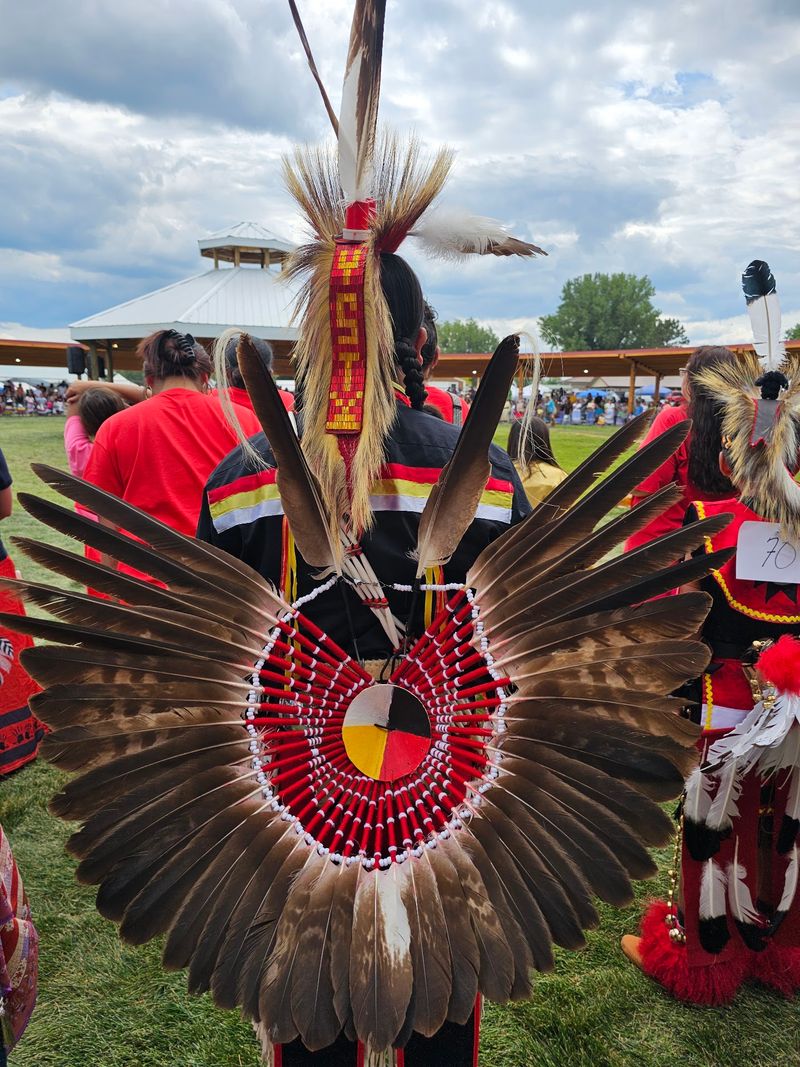
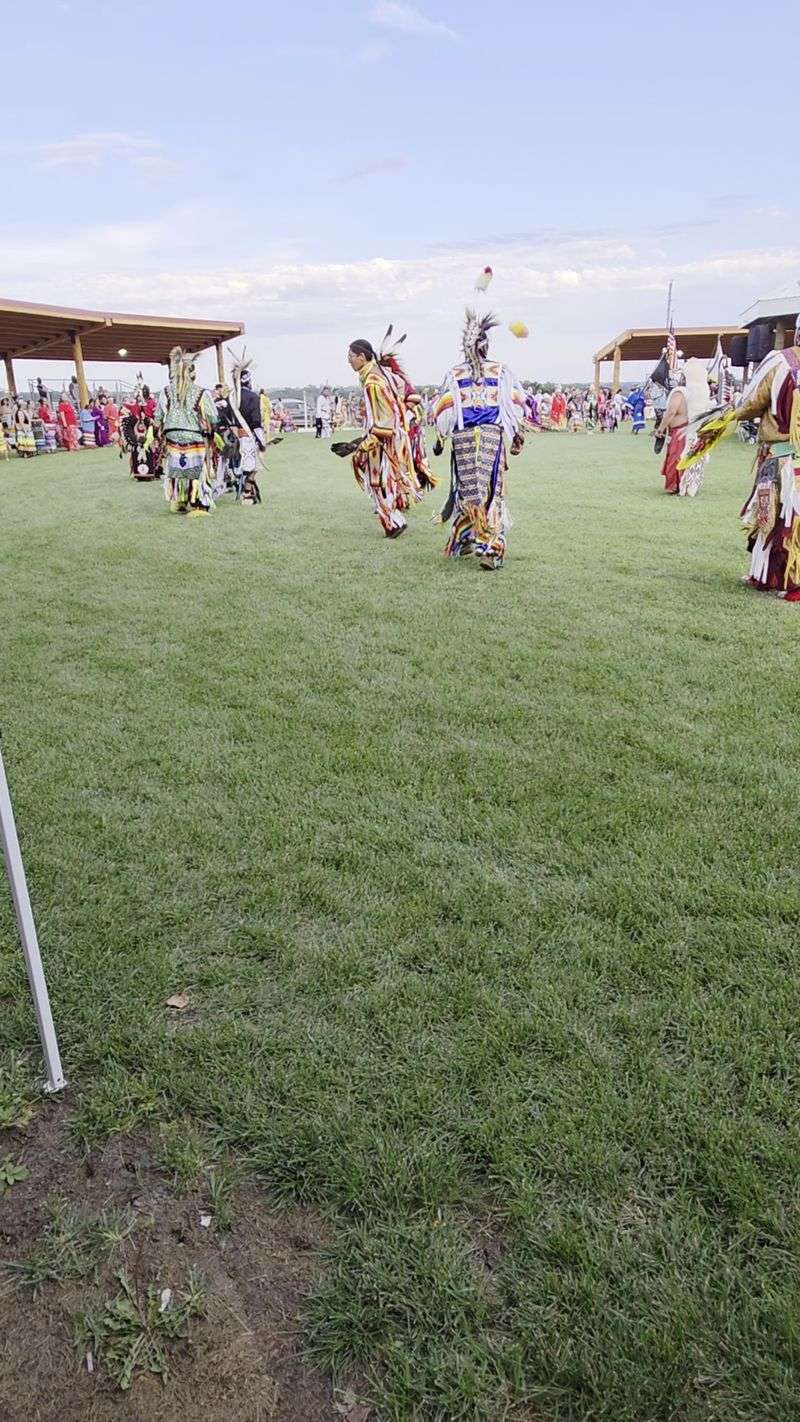
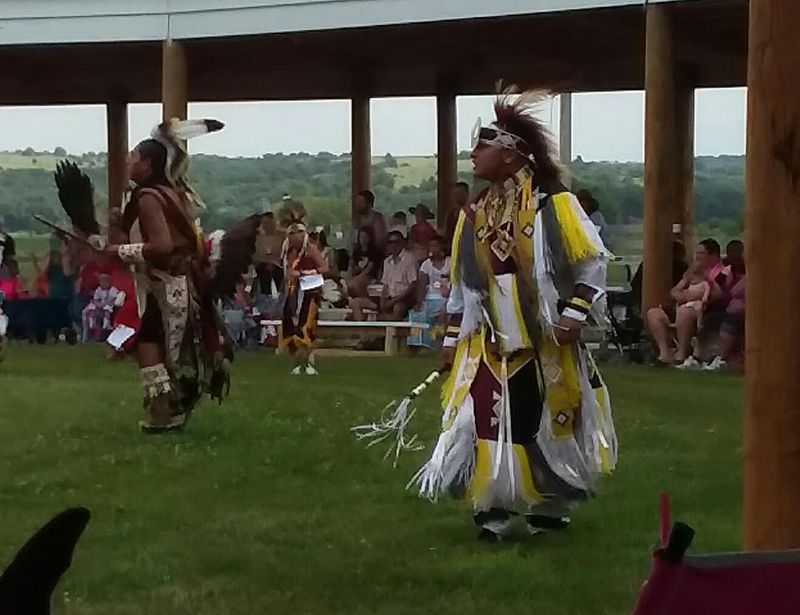
Sound arrives before anything else. A drum group starts, singers layer over it, and bells on the dancers pick up the rhythm as the arena fills with color and motion.
Powwows among the Ponca historically marked successful hunts, fall harvests, and the milestones of family life. The modern annual gathering carries that purpose forward, drawing tribal members back to the homeland from across the region.
Regalia is the visual centerpiece. Beadwork, feathers, ribbon, and shawls move differently with every dance style, and the arena gives you a full circle of vantage points to watch from.
What makes it distinct from a staged performance is who it is for. Elders pass knowledge to younger dancers, families are honored by name, and the event functions as a working piece of cultural transmission rather than a show with an audience.
Visitors are welcome to watch respectfully, and the atmosphere stays friendly and accessible throughout. People who attend regularly return to dance, not simply to spectate, and the arena stays busy through the weekend.
The Educational Trail And Earth Lodge
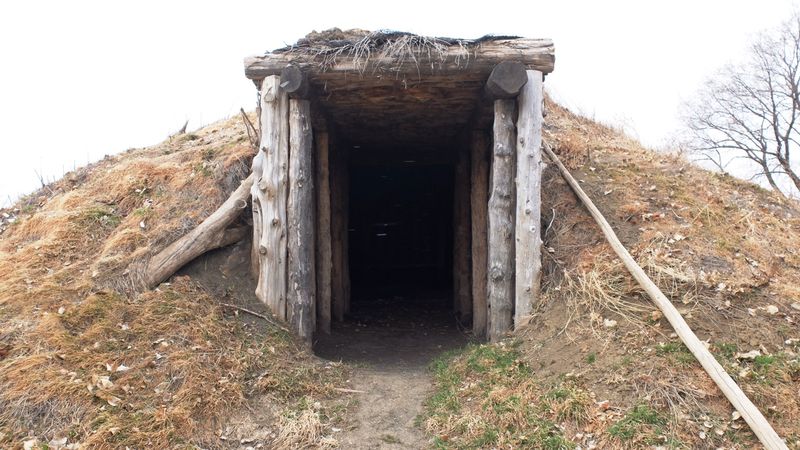
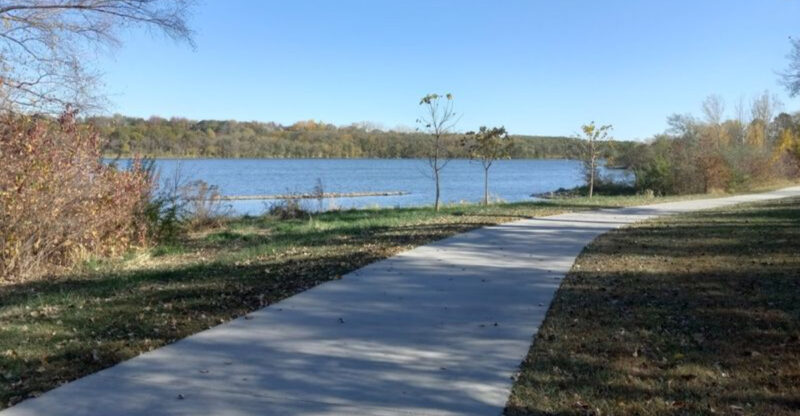
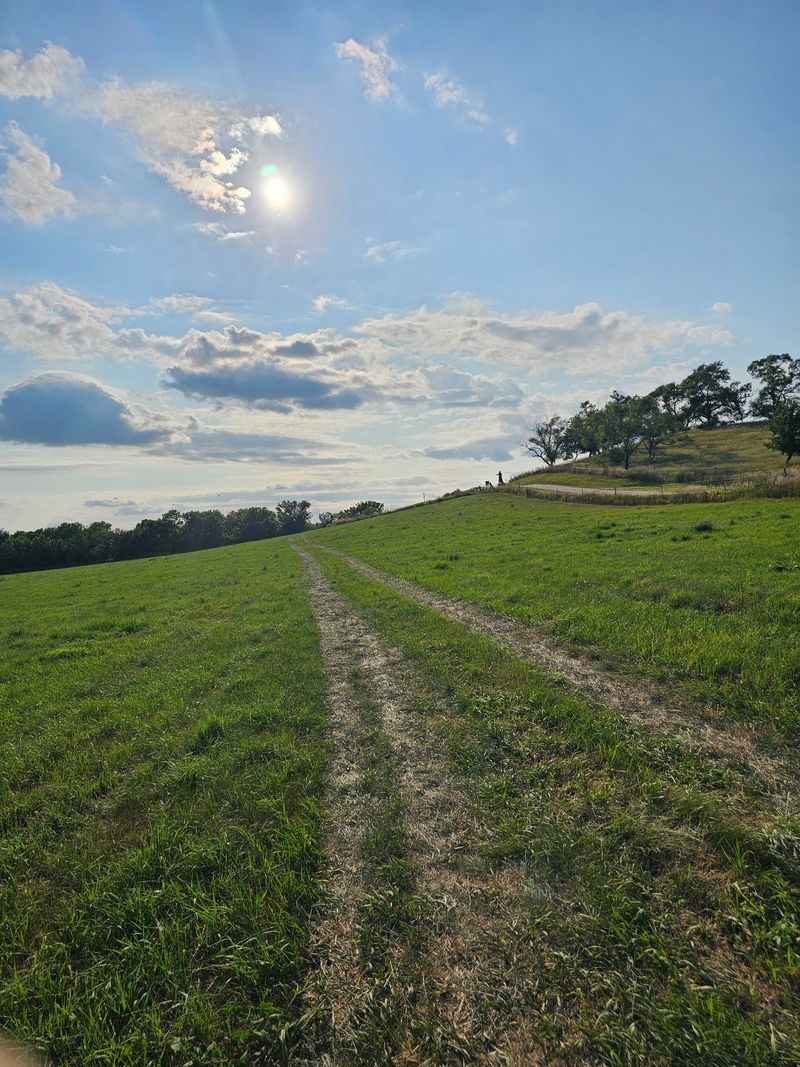
Walking shoes earn their keep here. A trail loops through the grounds, and instead of plain signage it uses statues that illustrate traditional Ponca stories along the route.
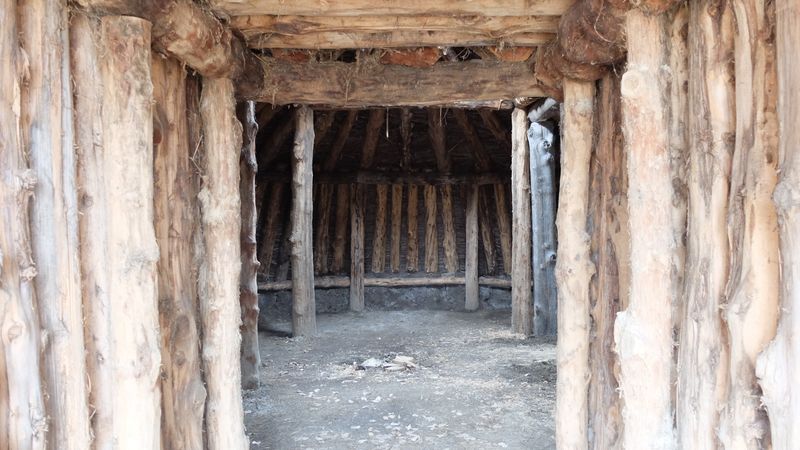
A recreated earth lodge sits along the path, giving shape to how Ponca families lived on this landscape long before county roads carved it into squares. Standing inside a structure does more for understanding than any diagram.
The pacing suits almost anyone. It is flat, open, and short enough that grandparents and grade-schoolers can cover it together without anybody complaining.
Quiet is part of the appeal on non-event days. Wind, grass, and birds make up most of the soundtrack, and the trail tends to slow people down rather than hurry them through.
Interpretive detail along the way covers history, traditions, and daily life, so the walk doubles as the tour. Families who come for the statue frequently end up spending far longer on the trail than planned.
The tribe has kept adding to the property over the years, so repeat trips often turn up something that was not there before.
Camping, Cook Shack, And Tournament Games
Cornhole boards, horseshoe pits, and an archery setup turn powwow weekend into something closer to a family reunion than a formal event. The competitive side runs alongside the arena action rather than competing with it.
Camping is part of the tradition. People pitch tents and park campers on the grounds for the weekend, and the shower facilities have been a genuinely appreciated upgrade for anyone staying overnight.
Then there is the cook shack. An improved kitchen building keeps everyone fed, and the cooks who run it have built a reputation that does not need embellishing.
The powwow committee handles logistics with a level of care that shows in small things: clean grounds, organized parking, people who make sure newcomers know where to go.
Improvements arrive nearly every year. Facilities that existed five years ago have been expanded or replaced, and the tribe keeps investing in the site.
For families weighing a weekend trip, the combination of camping, food, games, and dancing in one place makes the drive north do a lot of work at once.
The Small Museum Beside The Arena
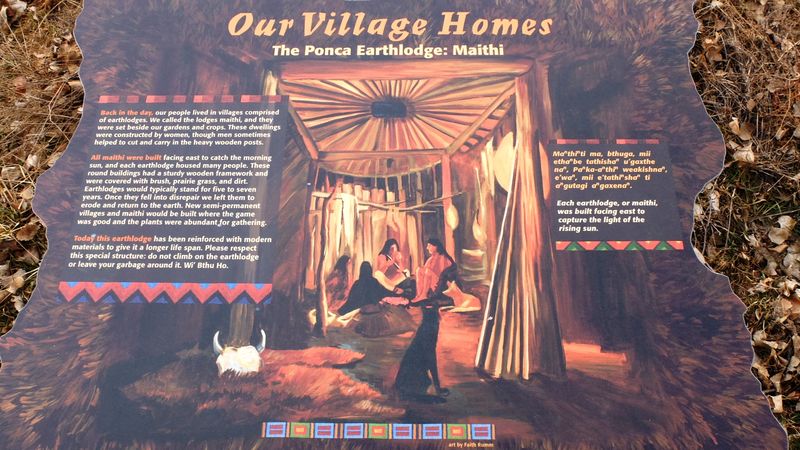
Modest square footage, considerable substance. The Ponca Tribe’s museum shares the property with the arena by design, so the history and the living practice stay within sight of each other.
Exhibits cover tribal history, culture, and the removal and return that shaped the modern tribe. Illustrations throughout the displays do a lot of the explaining, which makes the content approachable for younger readers.
Budget forty-five minutes and you will have seen it properly. That compact scale is a feature if you are traveling with kids whose museum tolerance has limits.
Access varies. The grounds themselves are open landscape, but the museum building operates on tribal schedules, and arriving unannounced on a random weekday can mean finding the doors locked with maintenance crews working outside.
Calling ahead through the tribe’s official channels saves disappointment, especially in the weeks before the powwow when staff attention shifts to event preparation.
For anyone who has only encountered Standing Bear in a textbook paragraph, the museum fills in the surrounding story with context that the statue alone cannot deliver.
The Cemetery Under The Statue’s Gaze
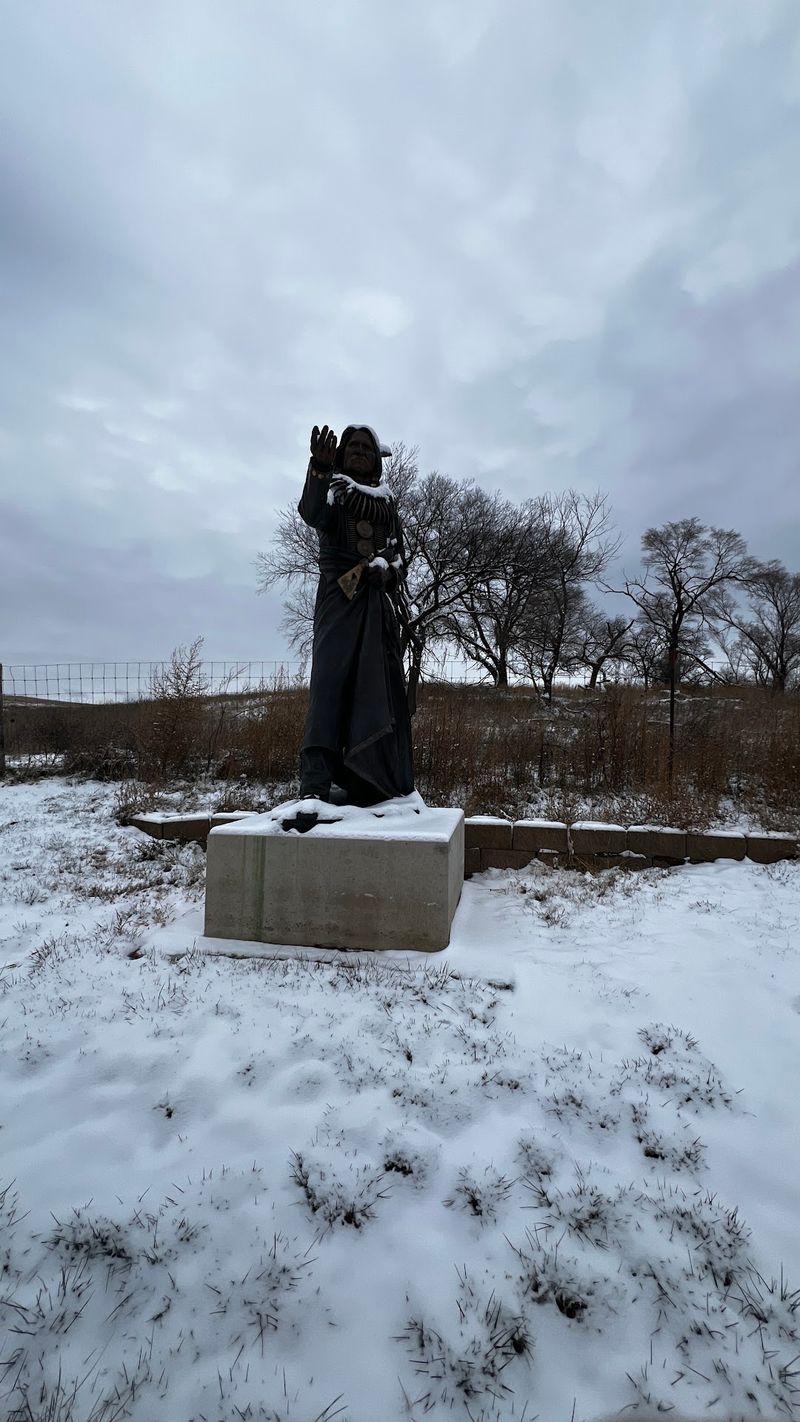
Below the hilltop bronze, a Ponca cemetery rests on the slope. The statue faces out over it, which turns the monument into something more personal than a roadside landmark.
Respect is the operating principle here. The area is part of the working life of the tribe rather than an exhibit, and quiet observation from the path is the appropriate approach.
Seeing the graves and the arena within the same view explains why the annual gathering matters so much. Standing Bear’s journey north began because his son’s final wish was to be buried in the homeland, and this hillside is the answer to that wish.
Light plays across the slope differently through the day, and mornings tend to be the stillest stretch.
People who spend time on the grounds often describe a sense of calm settling in, and this corner of the property is where that feeling concentrates.
It is also the clearest reminder that the site is not primarily a destination. Families come here for reasons that have nothing to do with tourism, and the grounds hold space for both.
Who This Nebraska Stop Suits Best
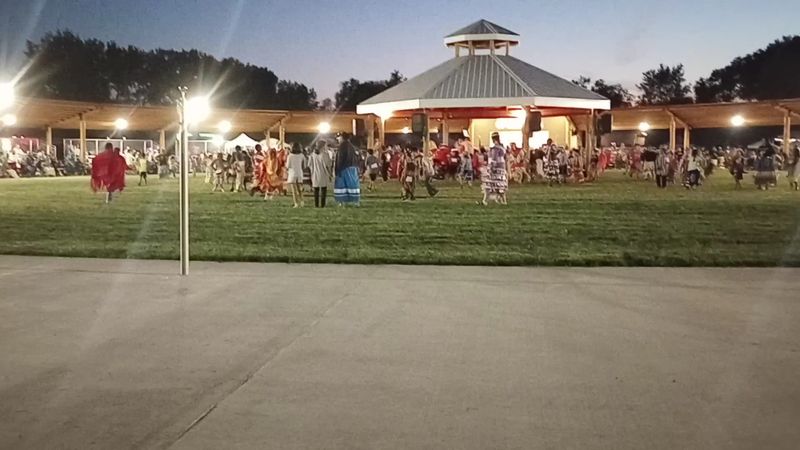
History teachers, road-trippers, and anyone raising kids in Nebraska will get the most out of this one. The Standing Bear story appears in state curriculum, and walking the actual ground converts an abstract lesson into something concrete.
Photographers do well here too. Open sky, a hilltop bronze, prairie grass, and very little visual clutter add up to clean compositions in almost any season.
Travelers who need constant stimulation may find the quiet days too quiet. There is no gift shop strip, no café row, no packed schedule of activities outside powwow weekend.
Retirees and couples looking for an unhurried afternoon fit the place perfectly. The trail is easy, benches and shade exist, and nothing demands rushing.
Families with teenagers should aim for powwow weekend, when drumming, dancing, tournament games, and food give the visit momentum.
One repeat visitor drove more than five hundred miles for it and considered the distance well spent, which says something about the pull the grounds exert on people who come once.
Bring water. Shade is limited on the open stretches.
Planning The Drive And Timing Your Visit
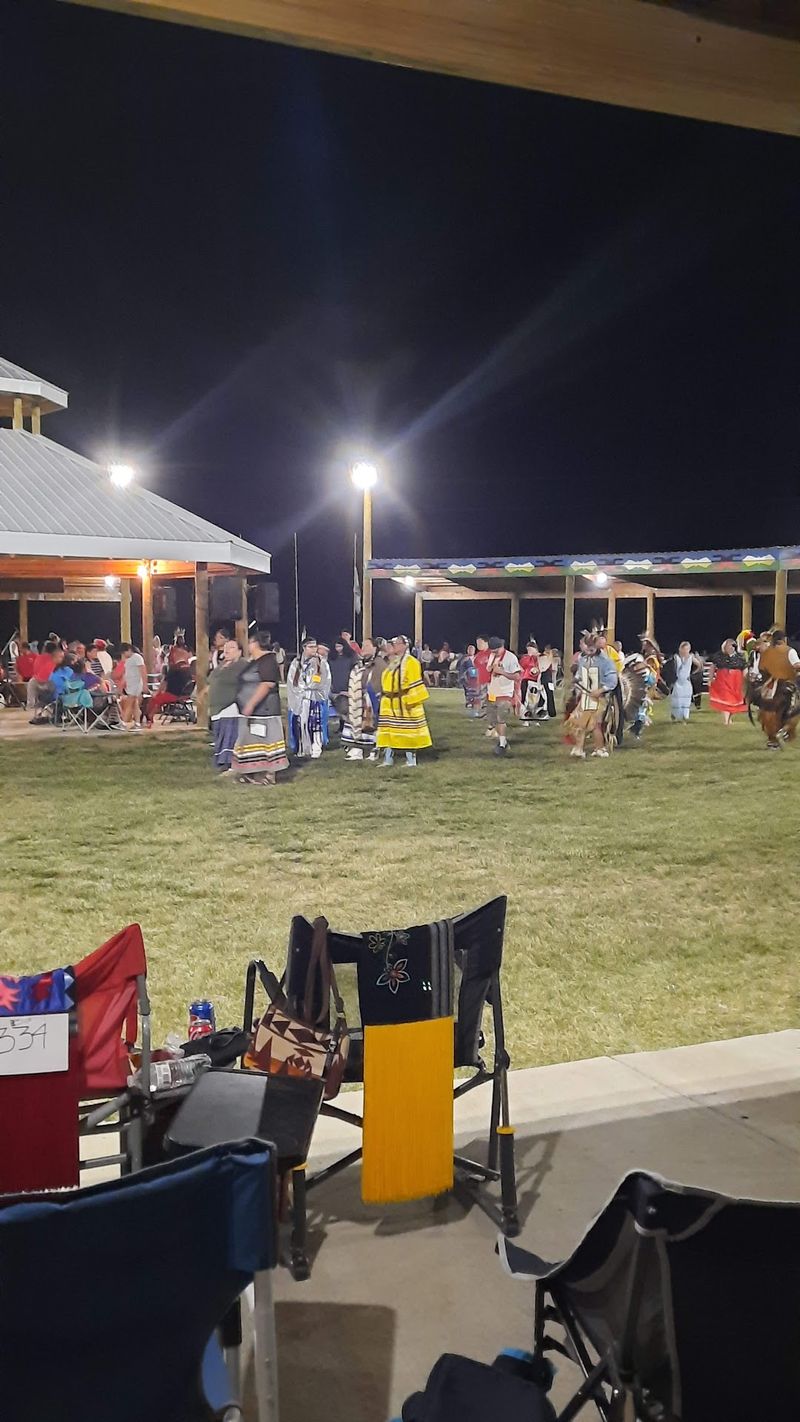
Late summer is the window that matters. The annual powwow lands in the warm months, and the tribe’s official channels post exact dates each year, so confirm before you load the car.
Getting there means highway driving through northern Nebraska toward Knox County, with the final approach on county roads. From Omaha or Lincoln, expect a solid half-day round trip with stops.
The grounds sit near the Niobrara and Missouri river confluence, which makes it easy to build a longer loop with Niobrara State Park or a river overlook on the same outing.
Outdoor access to the trail and statue is straightforward, and the property itself is welcoming to visitors who show up respectfully. Museum access depends on staffing.
Camping on the grounds is tied to powwow weekend rather than available year-round.
Fall brings color to the river bluffs and thinner crowds, while winter strips the landscape down to bronze, grass, and sky. Spring can be muddy on the trail after heavy rain, so check conditions and pick footwear accordingly.
A Quiet Verdict On An Extraordinary Patch Of Ground
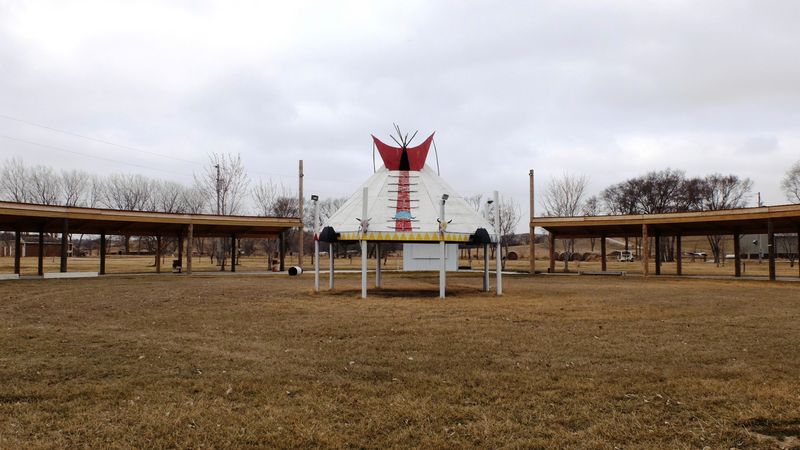
Few places in Nebraska manage to be a monument, a classroom, a cemetery, and a dance floor at once. This one does, and it does it without asking for much attention.
The 4.8-star average across nearly sixty reviews tells you how the experience lands. Peaceful grounds, the walking trail, and the dancing come up again and again in what people write afterward.
Timing shapes the day dramatically. Show up on a random Tuesday and you get stillness, a trail, and a bronze figure against open sky.
Show up during powwow weekend and the same acres hum with drums, regalia, cooking, and competition.
Both versions are worth the gas. The quiet visit lets the history settle; the loud one shows you the history is still being lived.
What stays with you is the continuity. A man walked home to this river country and argued in federal court for the right to be counted as a person, and his descendants gather on that exact ground every year to dance.
Point the car north and see it for yourself.