A Tennessee Couple Left Their Remarkable Estate To The Public, And Visiting Is Now Free
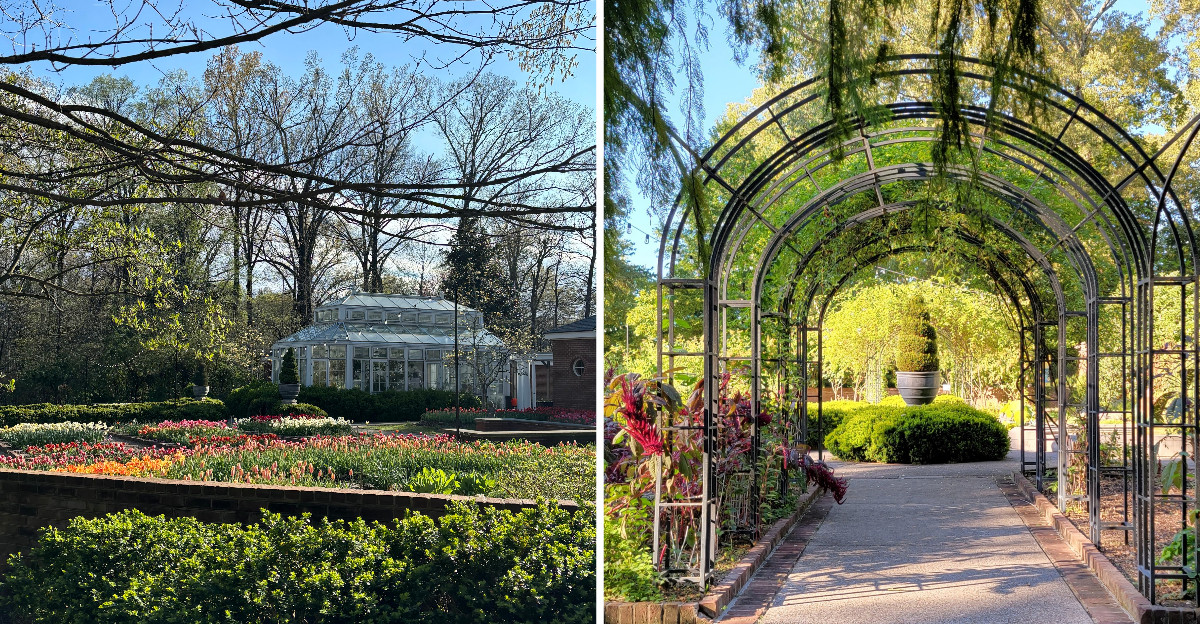
A private estate became a public museum after a couple left their home, gardens, and art collection to the community.
Tennessee visitors can now wander through art-filled rooms and landscaped grounds without paying to enter. That generosity changes the mood of the whole visit.
There is no pressure to squeeze value from a ticket. You can spend ten minutes with one painting or disappear into the gardens for an hour.
The property feels less like an attraction and more like a place someone genuinely wanted others to enjoy.
Seasonal color keeps the outdoor spaces changing, while the galleries offer a quieter pace indoors. Free rarely feels this polished.
The Couple Behind The Gift
Back in 1939, Hugo and Margaret Dixon bought seventeen acres on the eastern edge of Memphis.
They had married in 1926 and moved to Tennessee thirteen years later.
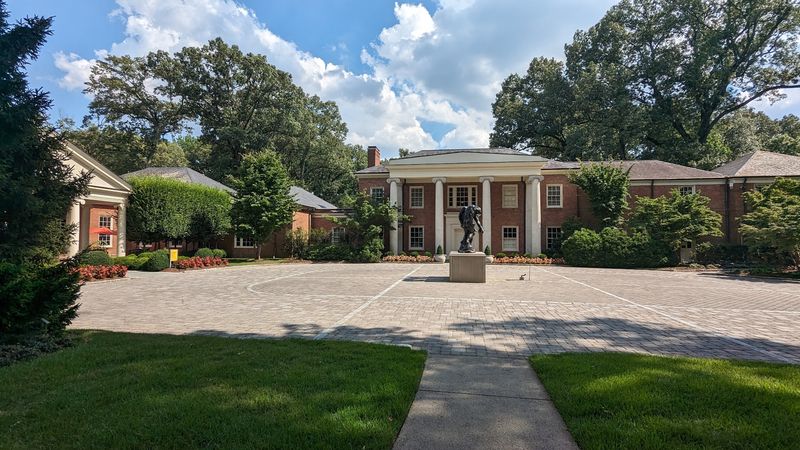
Hugo built his fortune in the cotton industry, and that trade left its mark on the house itself. He asked architect John Staub to use old brick salvaged from a cotton warehouse.
The Georgian-style residence went up in 1941. The residence is a rare Memphis example of work by noted Houston architect John Staub.
For nearly thirty-five years, the couple shaped the grounds and filled the rooms with art. Their early taste ran toward English portraits and landscapes, a nod to Hugo’s English roots.
Then something shifted. Their collecting widened, and the foundations of a serious museum collection quietly took shape inside a private home.
After both Dixons died in 1974, their bequest transferred the home, gardens, and founding art collection to a charitable foundation.
The Dixon Gallery and Gardens opened to the public in 1976, but free general admission did not become permanent until 2025.
You can find the whole story waiting at 4339 Park Ave in Memphis.
Impressionist Treasures Inside The Walls
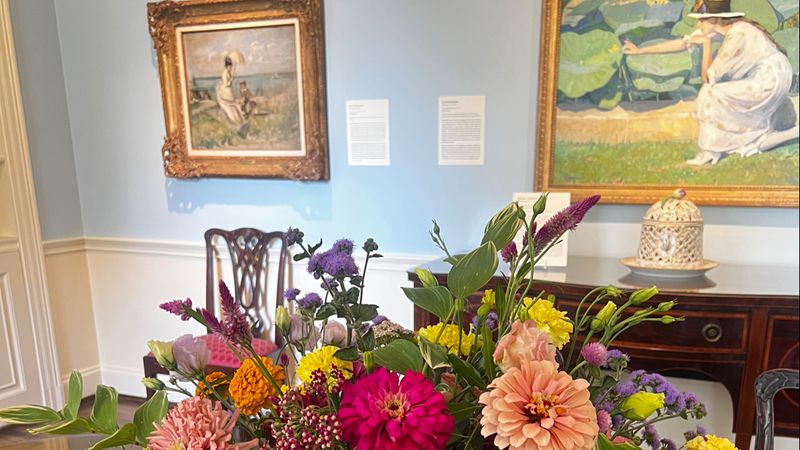
More than 2,000 objects make up the permanent holdings here, and the focus is sharp rather than scattered.
European and American art from the late 1800s and early 1900s dominates the rooms.
French Impressionism and Post-Impressionism form the backbone. Claude Monet, Edgar Degas, Pierre-Auguste Renoir, and Mary Cassatt all appear on these walls.
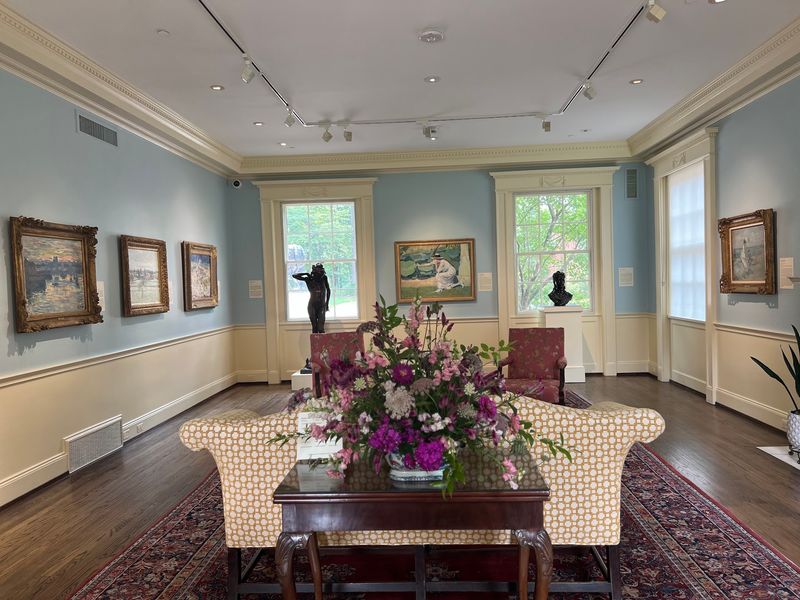
Seeing paintings like these inside a former family residence changes the experience completely. Later gallery additions were designed to retain that domestic sense of scale.
Porcelain lovers get their own reward. The Warda Stevens Stout Collection holds nearly 600 pieces of eighteenth-century German porcelain.
Meissen tableware and figures anchor that group, joined by work from other major German manufactories. The Charlotte Stout Hooker Collection adds English and Continental ceramics to the mix.
Rotating exhibitions keep things fresh for repeat visitors. Past shows have covered everything from historic sporting fashion to collections borrowed from other American museums.
The Dixon also maintains interactive and family-focused spaces alongside its collection displays. These provide hands-on options for younger visitors without changing the pace of the main galleries.
Seventeen Acres Of Designed Beauty
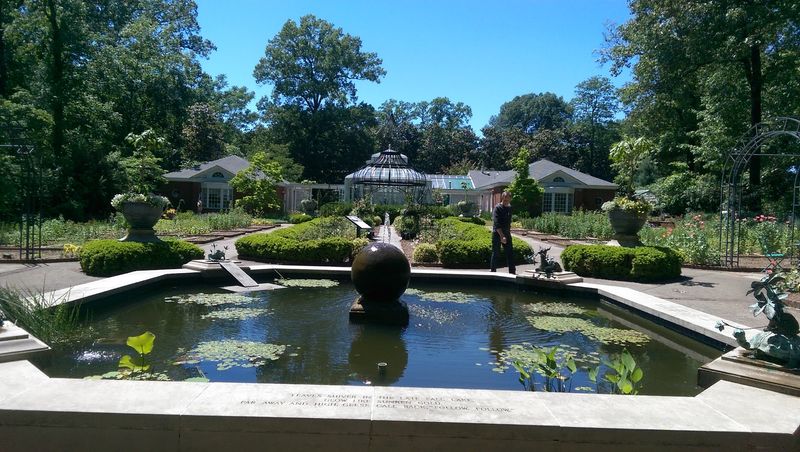
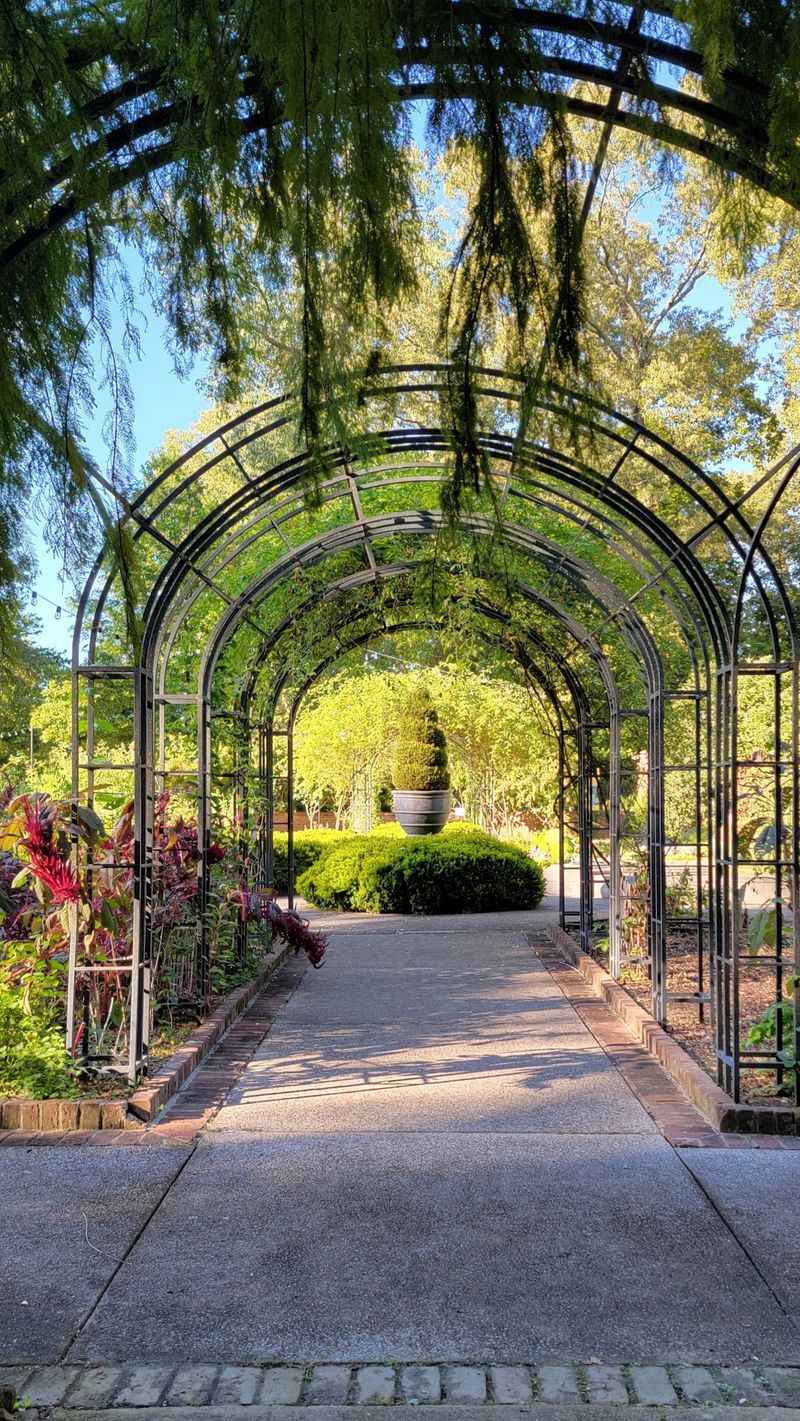
English park design guided the layout of these grounds, and the influence shows immediately.
Wide open lawns give way to tucked-away formal rooms surrounded by hedges.
Linking pathways connect one garden area to the next. Each stretch carries its own mood, so the walk never feels repetitive.
The Liz Keljik Manugian Woodland Garden covers two acres, making it the largest space on the property. Oaks and hickories form the canopy overhead.
Below them grow dogwoods, ferns, and wildflowers typical of a Mid-South forest. A water feature built from three interlocking rings sits among the plantings.
Those rings carry meaning. They represent the relationship between people, plants, and water quality.
The Suzanne Mallory Formal Gardens hide behind four species of boxwood. Designs there borrow from ancient Persian sacred geometry and split into three separate chambers.
One chamber bursts with seasonal color, another holds a bronze planter the Dixons brought home from their travels, and a third shelters old Camellia japonicas.
The Memphis Garden Club Cutting Garden operates like a working flower farm. Roses, annuals, and perennials bloom there almost all year in this corner of Tennessee.
Four Seasons, Four Different Visits
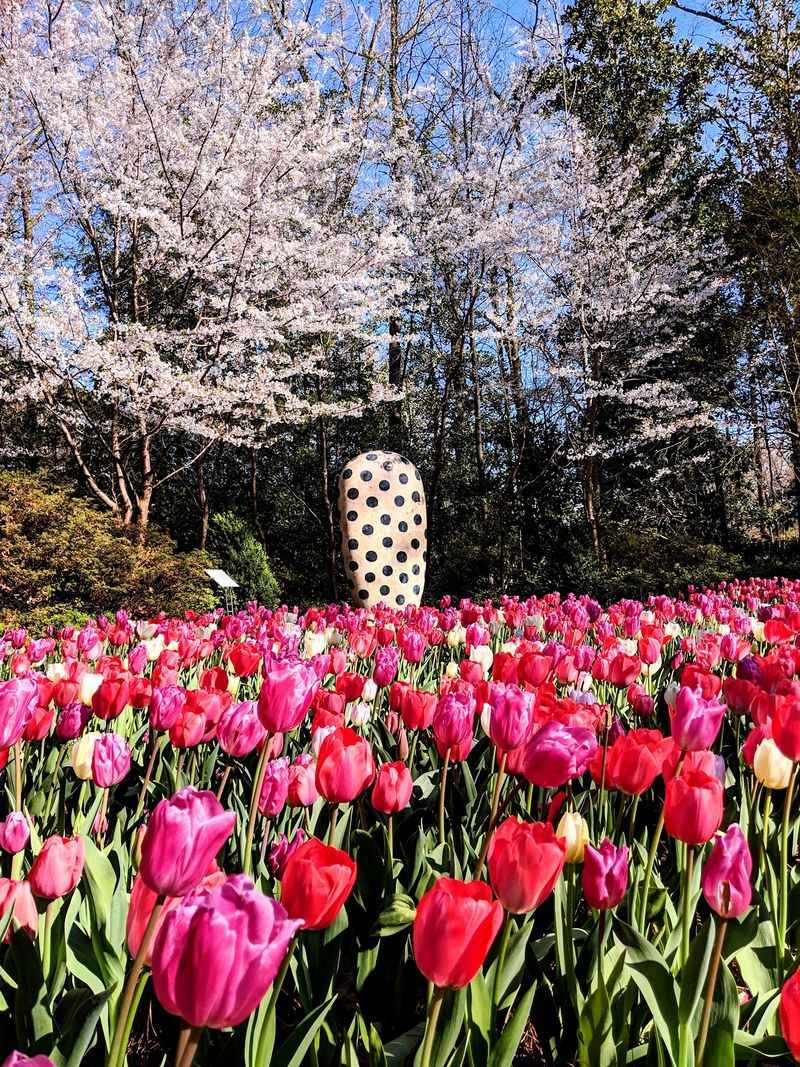
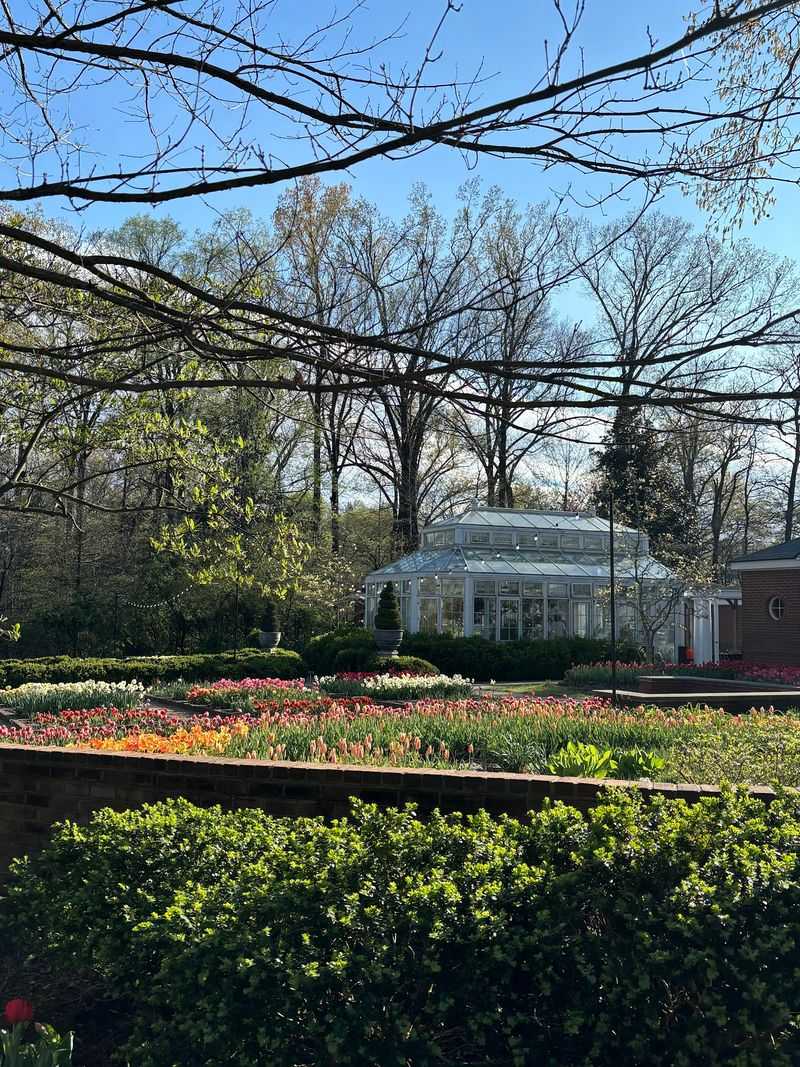
Tulips are the headline act. Every spring, more than half a million tulips fill coordinated beds throughout the gardens.
Daffodils, hyacinths, and flowering trees join the show. Peak bloom typically falls between mid-March and early April, depending on weather.
Summer swaps color for shade. Hydrangeas take over, perennials fill in, and the tree-lined walks become genuinely comfortable on warm afternoons.
Autumn brings ornamental grasses and late bloomers. Foliage adds another layer of color across the acreage as the season advances.
Winter gets overlooked, which is a shame. Bare branches reveal the bones of the garden design, and the structure of the plantings becomes obvious.
That seasonal rhythm means one visit never tells the whole story. The museum’s rotating exhibitions add another reason to return between seasons.
Bring a blanket if the weather cooperates. Picnics are welcome, and the south lawn makes an easy spot to spread out.
Children are welcome in the gardens when supervised by an adult. Family scavenger hunts and seasonal programs add structured ways to explore the property.
Free Classes And Weekly Programs
Learning programs run throughout the week, with many recurring activities offered free of charge.
Some workshops and special events require registration or a ticket, so the current calendar is worth checking before a visit.
Free yoga runs weekly on Thursdays, with the location varying by session.
Recorded guided meditations remain available for visitors who want a quieter wellness option in the gardens.
The Munch and Learn series brings weekly noon talks from artists, scholars, staff members, and other speakers, with guests free to bring or purchase lunch.
Taijiquan classes add another wellness option. Movement and mindfulness fit naturally into a setting like this one.
Families get their own track of programming. The Ann and Steve Reynolds Learning Gardens host hands-on sessions in basic gardening and art.
Family Garden Studio lets kids plant seasonal crops or tackle art projects. Dirty hands are part of the point.
Quarterly Community Days bring larger celebrations. Expect live performances, themed activities, and a cheerful crowd spread across the grounds.
Other free programs rotate through the calendar alongside the recurring weekly schedule.
Architecture With A Cotton Warehouse Past
Architect John Staub completed the residence in 1941, and his choices still impress.
He looked to historical designs for inspiration, including work by nineteenth-century American architect Robert Mills.
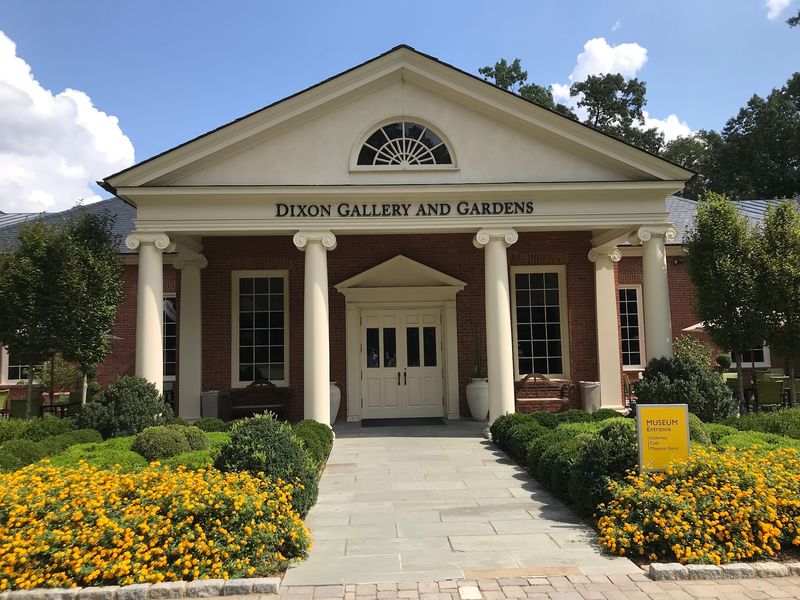
The result is dignified without being cold. A hipped roof, carefully placed windows, and classic porticoes give the building its formal posture.
Salvaged brick from a demolished cotton warehouse covers the exterior. Hugo Dixon requested that material specifically, tying his business life directly to his home.
Look closely at the brickwork on your way in. The weathered texture tells you these blocks had a previous life.
Staub designed the house to sit comfortably with the gardens rather than compete with them. The transition from indoors to outdoors feels seamless.
The original residence remains part of the museum alongside gallery additions built after the Dixon opened.
That arrangement gives the art a domestic scale. Ceilings, doorways, and windows all keep human proportions.
The house remains a notable Memphis example of John Staub’s residential work. Architecture fans should budget extra time indoors.
Planning An Easy Visit
Admission stays free year-round for everyone, no membership or reservation required. Visitors check in with the admissions team upon arrival.
Free on-site parking sits just inside the Park Avenue entrance. Large special events may use alternate parking or shuttle arrangements announced in advance.
Hours are 10 a.m. to 5 p.m. Tuesday through Saturday, with extended hours until 8 p.m. on third Thursdays and Sunday hours from 1 to 5 p.m.
Accessibility is handled well throughout. The galleries, café, shop, and many garden areas are wheelchair accessible, and complimentary wheelchairs are available at the front desk.
Accessible parking spaces sit near the entrance. Main garden paths accommodate strollers and mobility devices, although some natural areas can have uneven terrain.
Allow between ninety minutes and two and a half hours to see both halves properly. A café stop or a slower garden visit can extend that schedule.
Park and Cherry, the on-site cafe, serves seasonal lunches, light bites, pastries, and coffee. Indoor café seating is in the museum shop, with outdoor seating overlooking the gardens.
Free For Good, City Wide
In 2025, the Dixon formally adopted Free for Good, making general admission free year-round. That promise is the clearest expression of what the original gift intended.
Outreach stretches well past the property lines, too. Art and horticulture travel out into neighborhoods across the city.
Art to Grow delivers free art and horticulture lessons to students from Pre-K through twelfth grade at eligible schools and organizations within the program area. Young minds get exposure to both painting and planting.
Colorcopia serves seniors with free art classes held at local libraries and community centers. Themes change from session to session.
Teens. Art. Gardens., shortened to T.A.G., reaches adolescents aged thirteen to eighteen through after-school organizations.
Creative outlets matter enormously at that age.
Weddings and private events also take place on the grounds. Ceremony spots scatter across the gardens, with reception areas tucked among the plantings.
A Tennessee conservatory filled with tropical plants and rotating exhibitions add smaller discoveries around the property. Sculptures and a fountain punctuate the winding paths.
Every one of these efforts traces back to a single decision made decades ago. The Dixon Gallery & Gardens keeps proving that generosity compounds over time.