This Huge California Weekend Market Is The Kind Of Place You Visit For One Thing And Leave With Ten
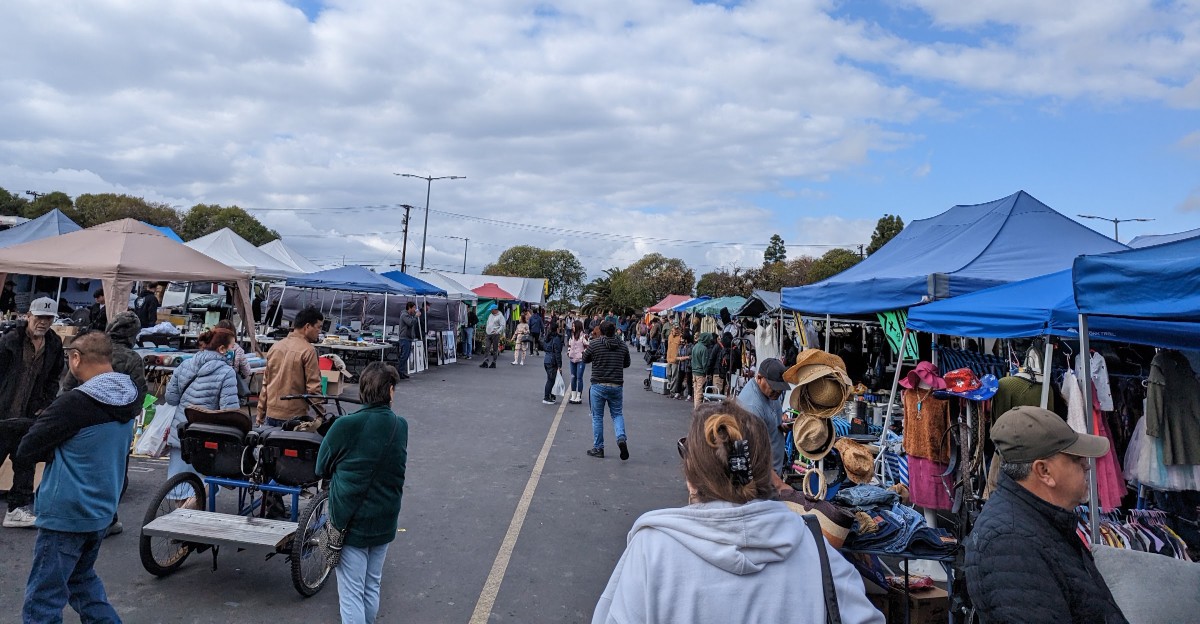
Weekend markets have a special talent for destroying perfectly sensible shopping plans.
You arrive needing one specific item, wander past a few tables, and find yourself negotiating over something you did not know existed ten minutes ago.
At one huge market, that temptation comes aisle after aisle.
The fun is never quite knowing what might appear next, especially when practical purchases share space with the wonderfully random finds.
A shopping list can become completely useless after about five minutes at the right California weekend market.
That unpredictability is a big part of the appeal. One booth might solve a problem you actually came to fix, while the next introduces you to something entirely unnecessary.
Going home with exactly what you planned would almost seem like missing the point.
Roughly 680 Vendor Spaces Fill The Lots Each Day
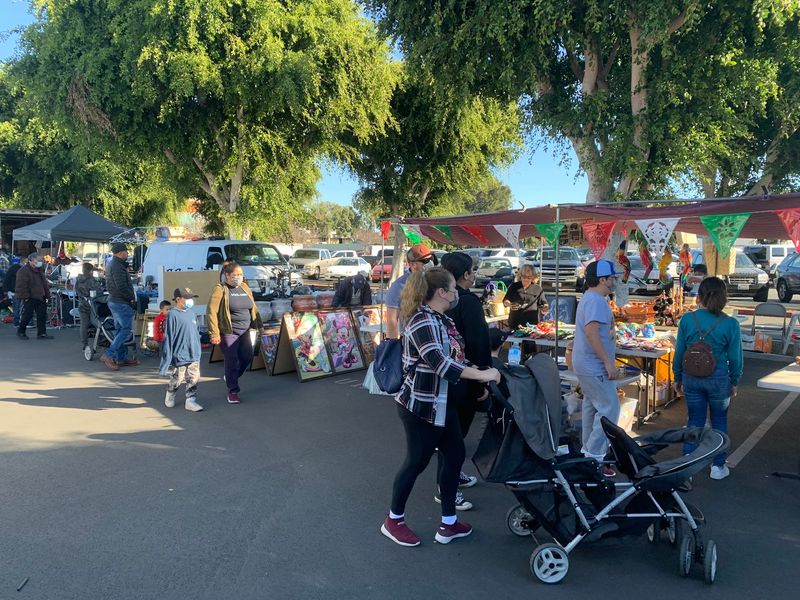
Hundreds of canopies stretching across asphalt is the first thing that registers when arriving here.
Golden West College reports that the Saturday and Sunday swap meet now features approximately 680 vendor spaces per day. That number explains why a quick stop rarely stays quick.
Rows run in long lines, and walking every aisle at a comfortable pace can easily fill two or three hours.
Shoppers who only have an hour may want to pick a section and accept that the rest will go unseen. The layout rewards patience more than speed.
Vendors set up close together, so the visual change from one table to the next can be sharp.
A booth stacked with power tools might sit beside one selling baby clothes, and the table after that could hold vinyl records.
There is no strict organization by category, which is part of what makes the browsing feel like a hunt.
The surface is flat parking lot pavement, which helps with strollers and wheeled carts, but the distance adds up quickly.
Bringing a tote bag or a small folding cart saves a lot of trips back to the car.
Crowd levels at 15744 Goldenwest Street, Huntington Beach, CA 92647 shift through the day and by season, so the walking experience is not identical every weekend.
Running Since 1979 With Deep Local Roots
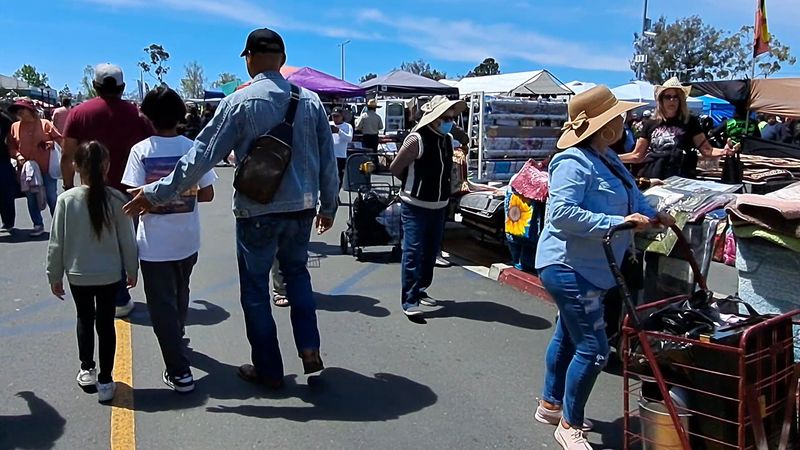
Back when the market opened, it held about 100 vendors and took up a fraction of the space it uses now.
The swap meet began in 1979 on the Golden West College campus and has grown steadily into the sprawling weekend operation shoppers see today.
Four and a half decades is a long run for any outdoor market. Longevity like that tends to shape the atmosphere in ways a newer market cannot copy.
Families have been coming for generations, and some sellers have held the same general area for years.
Regular shoppers often know which corner holds the produce and which side has the tool sellers.
The growth from 100 tables to hundreds of spaces also changed the pace of a visit. What was once a morning errand became something closer to a half-day outing for people who like to look at everything.
The scale grew, but the basic format stayed simple: sellers with tables, shoppers with cash, and no fancy staging.
Knowing the history helps set expectations before arriving. The market is not a curated vintage fair with styled displays and matching signage.
It is a working swap meet with roots in the classic Southern California weekend tradition, and the unpolished feel is exactly why many people keep returning.
Open Every Saturday And Sunday, Rain Or Shine
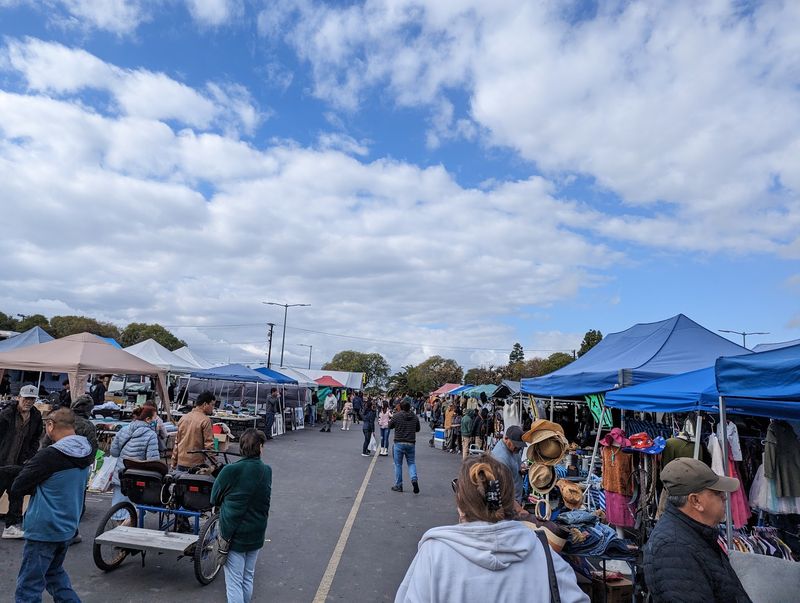
Plenty of flea markets happen once a month, which makes planning a chore.
Not the case here, since the market runs every Saturday and Sunday from 8 a.m. to 3 p.m., rain or shine.
Two full days a week means a missed Saturday is not a missed month.
Early arrival has real advantages for anyone hunting specific items. Sellers finish setting up around opening time, and the first shoppers get first look at whatever came out of a garage that week.
Later hours can bring softer pricing as vendors think about packing up, though nothing about that is guaranteed.
The 3 p.m. close arrives sooner than it sounds when there are hundreds of tables to see. Some sellers begin breaking down before the official end time, especially on slower days or when weather turns.
Arriving after 1 p.m. may mean a thinner selection in certain sections.
Since the market operates rain or shine, wet weekends still happen, and vendor turnout on those days can be lighter than usual.
Free Admission Keeps The Casual Visit Easy
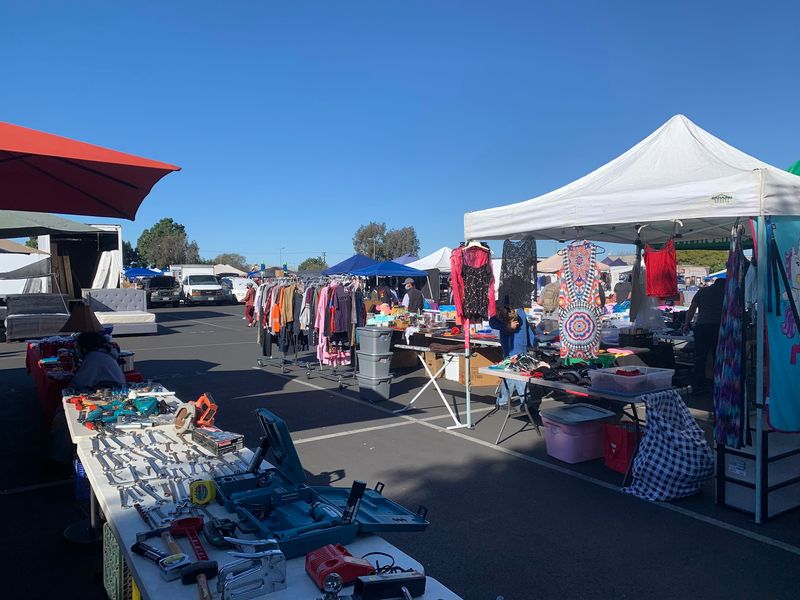
Nothing ruins a spontaneous browse faster than a ticket booth at the entrance. Admission to the swap meet is free, so stopping in for fifteen minutes carries no cost beyond the gas to get there.
That small detail changes how people use the place.
Because there is no entry fee, the market works well as a low-pressure stop rather than a planned event.
Someone can swing by, look for a specific tool or a houseplant, and leave without feeling like the trip needed to justify itself.
Families with restless kids appreciate the freedom to leave whenever the mood shifts.
Free entry also makes repeat visits practical. Since the vendor mix changes from weekend to weekend, coming back two Saturdays in a row can produce completely different finds.
Regulars often treat it as a rotating errand rather than a special occasion.
Cash remains the smart thing to carry. Many sellers at outdoor swap meets prefer cash, and card acceptance varies from booth to booth with no guarantee either way.
Bringing small bills in a mix of denominations makes transactions smoother and helps when negotiating politely on a price.
Parking Costs Nothing In Campus Lots C And D
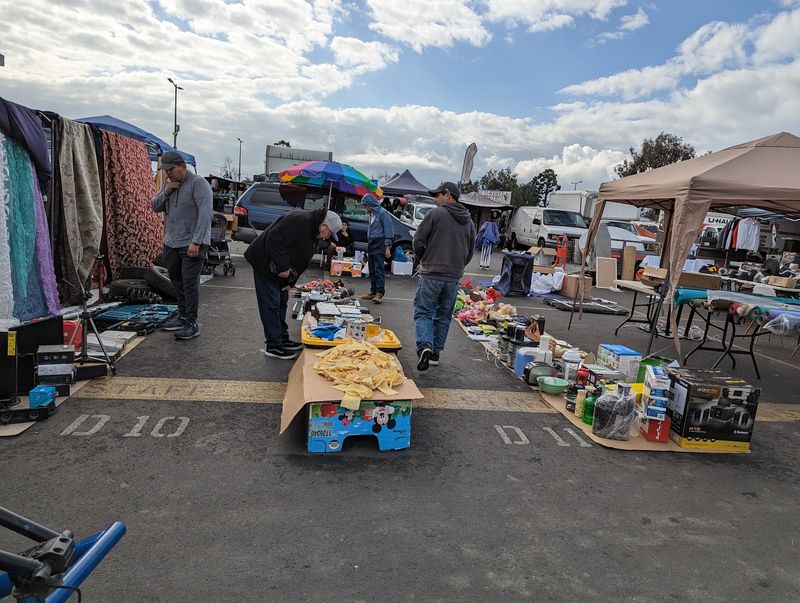
Free parking alongside free admission is an unusual combination for a market this size.
Golden West College provides free parking for swap meet visitors on Saturdays and Sundays, with the market primarily occupying campus Lots C and D on the west and south sides of the grounds.
That setup puts the cars and the canopies in the same general area.
Midday parking can get tight as the crowd builds. Arriving closer to the 8 a.m. opening usually means a shorter walk from the car to the first row of tables.
Later arrivals sometimes end up circling or parking farther out along the campus edges.
There are no stairs or uneven trails between the lot and the vendor rows, which makes loading heavy purchases fairly simple.
Buyers picking up furniture or large items can usually bring the car reasonably close.
A practical trick is to note the row and aisle where the car sits. Rows of identical canopies and parked vehicles start to look alike after a couple of hours of browsing.
New Merchandise Sits Right Beside Secondhand Finds
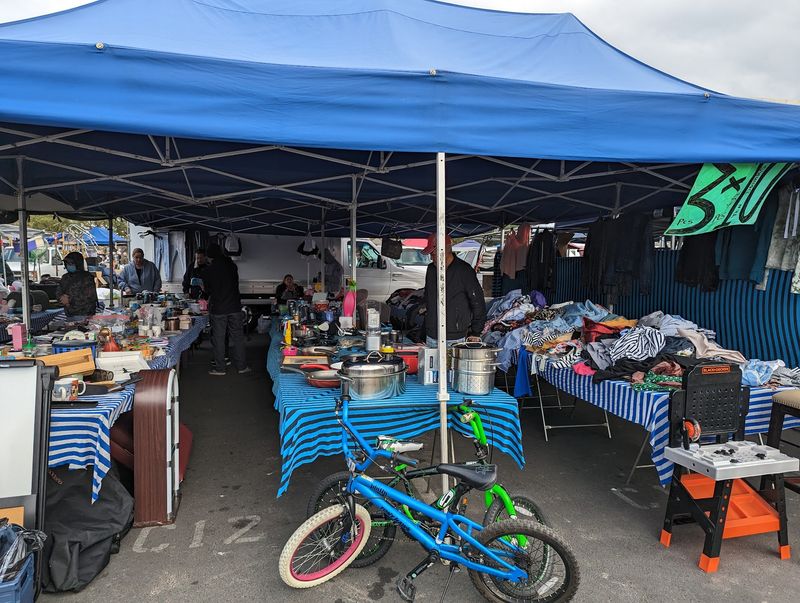
Anyone expecting a strictly antique market will be surprised within the first few aisles.
Offerings here include new merchandise, secondhand items, surplus and overstock goods, handmade pieces and plenty of garage-sale-style finds.
The blend is the whole point. A table of brand-new socks and phone cases might sit across from a spread of used kitchen gear and old paperbacks.
That variety means two people with completely different shopping goals can walk the same aisle and both come away happy.
Practical household items show up as often as novelty ones. Shoppers regularly report finding books, clothing, tools, plants and household goods across the rows.
Hats, backpacks, kitchen supplies and small hardware are common sights.
Condition varies widely from table to table, so inspecting items closely before buying is simply good practice. Pricing follows the same unpredictable pattern.
Some vendors mark clear prices, others quote on the spot, and polite negotiation is a normal part of swap meet culture.
Checking that electronics power on and that tools are not badly rusted takes only a moment and prevents disappointment later.
Antiques And Collectibles Reward Slow Browsing
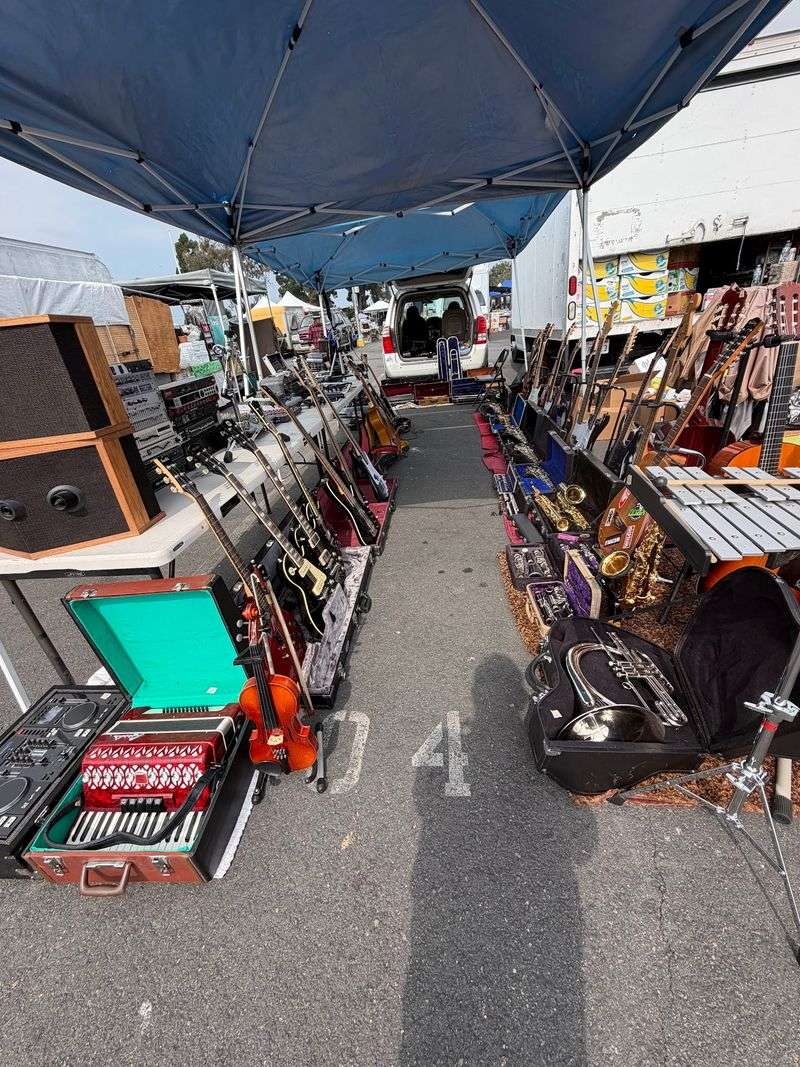
Treasure hunters have a genuine reason to show up early.
Antiques and collectibles are specifically listed among the market’s offerings, alongside records and music memorabilia that draw a steady crowd of diggers.
Those categories are scattered rather than grouped in one aisle. Finding the good stuff usually takes actual effort here.
Boxes often need to be lifted, crates flipped through and stacks moved aside before anything interesting surfaces.
Shoppers who enjoy that process tend to describe the market as satisfying, while people hoping for tidy displays may find it messy.
Knowledge helps more than luck with vintage items.
Looking up a maker’s mark or a record pressing on a phone before buying is easy and can prevent overpaying.
Sellers vary in how much they know about what they are offering, which cuts both ways for a buyer.
Bringing a small flashlight sounds excessive until peering into a shadowed box under a canopy at 9 a.m.
A tape measure also earns its keep when sizing up furniture or frames.
Because the vendor lineup shifts between weekends, a collector who strikes out one Saturday might find exactly the right thing the following Sunday.
Fresh Produce And Flowers Turn Browsing Into Grocery Shopping
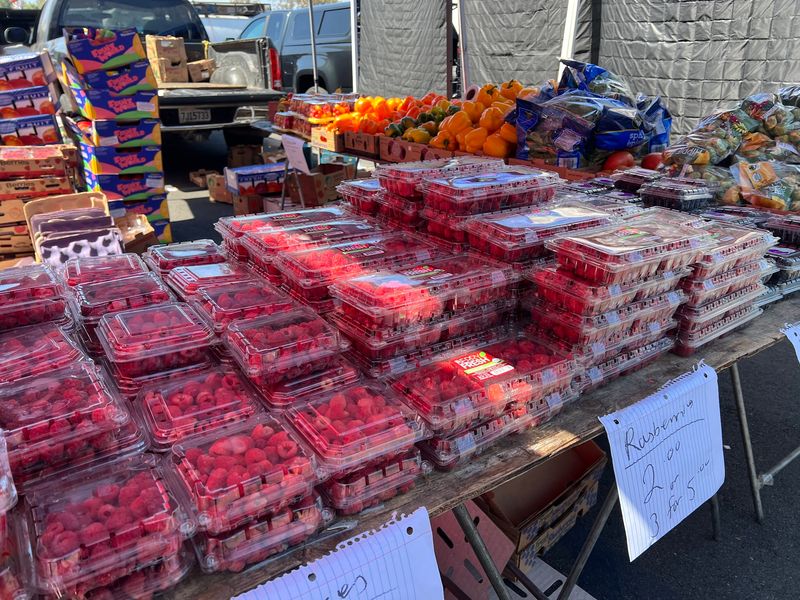
Walking in for a vintage lamp and walking out with strawberries and a bouquet is a very real outcome here.
Fresh produce and flowers are part of the merchandise mix, sitting alongside the secondhand goods and new items. Plants draw a particularly loyal following.
Produce stands tend to cluster in certain sections, and selection depends on what is in season.
Shoppers often bring reusable bags specifically because fruit and vegetable buys are hard to resist once spotted.
Prices and availability change week to week, so nothing about a particular item is guaranteed on a given weekend.
Potted plants and cut flowers show up in good numbers too. Succulents, houseplants and starter pots are common finds, and the plant sellers are among the most mentioned parts of the market.
Carrying a plant through hundreds of vendor rows takes some planning, so many people save that purchase for the end of the walk.
A smart approach is to scout the produce and flower area first, note what looks good, then circle back before heading to the car.
Handmade Artwork, Ceramics And Jewelry Add Another Layer
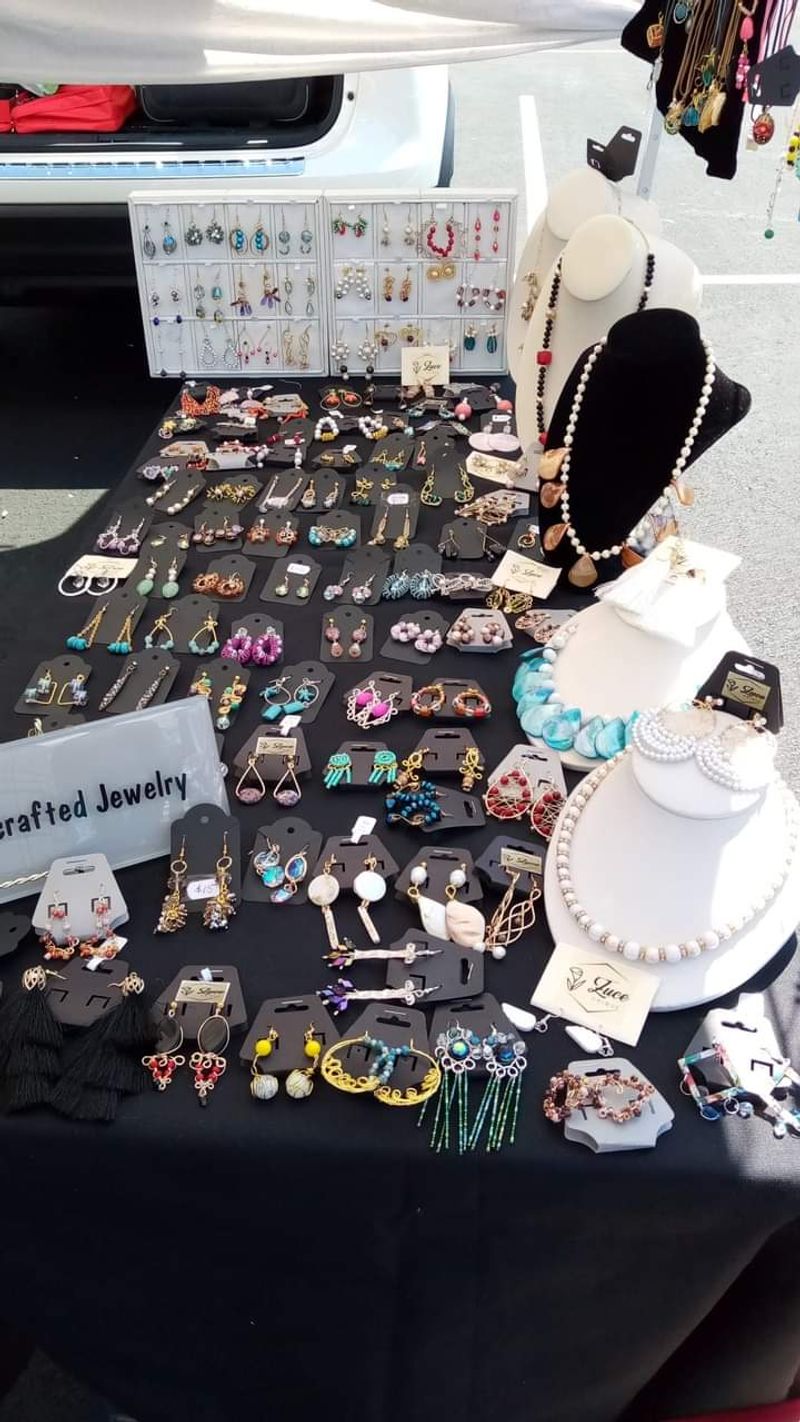
Craft sellers give the market a dimension most swap meets skip entirely.
Vendors may sell handcrafted artwork, ceramics, jewelry and other qualifying homemade items, which widens the merchandise well beyond resale goods.
Those booths often stand out visually from the surrounding tables.
Handmade sections tend to look more arranged than the rest of the market.
Cloth-covered tables, small display stands and organized trays are common signs that a maker rather than a reseller is behind the booth.
Talking with the person who made the work often produces the best information about materials and care.
Some booths carry tools and components useful for people who make their own pieces at home, which is a nice bonus for hobbyists.
Finding those specialty tables takes a full walk of the aisles since there is no dedicated craft zone.
Buying handmade here supports someone working at a small scale rather than a large operation.