Michelle Obama, Oprah And Madonna Have All Worn Hats From This Kentucky Shop
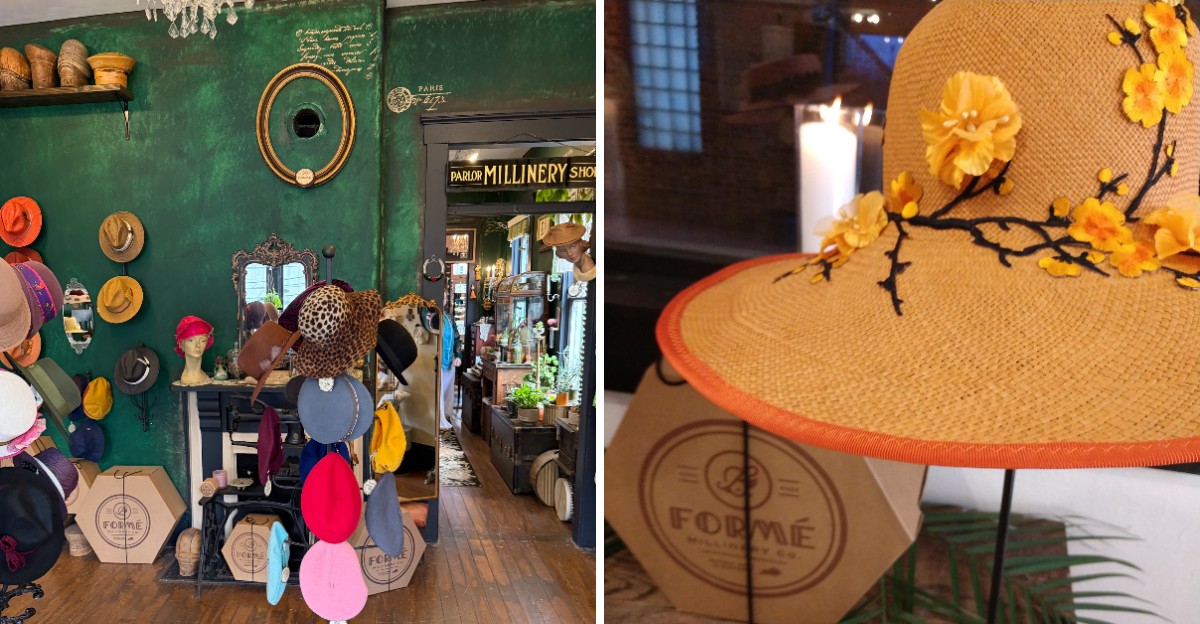
Kentucky is famous for a horse race that lasts about two minutes. The hats attached to that race last much longer in everyone’s memory.
One Louisville shop has been shaping those hats by hand for years. The work happens on wooden blocks that are older than anyone in the building.
There is a braiding machine from the eighteen hundreds still doing its job. None of it is mass produced, and the maker will tell you so.
Her hats have landed on the heads of a former First Lady, a talk show icon, and a pop star with one name. You can visit the same shop and try things on yourself.
Nobody will rush you, and the mirrors are plentiful. The pieces range from quiet and elegant to gloriously unreasonable.
Bring an open mind. You may arrive thinking you are not a hat person.
That opinion rarely survives the first fitting.
A Storefront On East Main With A Celebrity Client List

Formé Millinery Hat Shop sits in a converted industrial building, and the brick tells you nothing about what waits inside.
Michelle Obama, Oprah Winfrey, and Madonna have all worn her designs. That is a client list most fashion houses would frame and hang by the register.
The roster keeps going. Barbara Corcoran of Shark Tank, Neil Diamond, Nikki Sixx of Mötley Crüe, and actress Regina Taylor have worn her work too.
You might expect velvet ropes and attitude. Instead you get a working atelier where the hats are made in the same room you shop in.
Louisville has plenty of places to spend an afternoon. Few let you stand a few feet from the tools that shaped a hat seen by millions.
The shop is described as the world headquarters for Pfanenstiel’s work. That sounds grand until you realize the description is accurate.
Walk in curious and you will leave with a new appreciation for headwear. Walk in with an occasion in mind and you may leave with an heirloom.
Either way, the address is worth saving in your phone. East Main rewards anyone willing to open the door.
Master Milliner Jenny Pfanenstiel runs the whole operation from 1009 E Main St, Louisville, Kentucky.
Meet The Master Milliner Behind Every Stitch
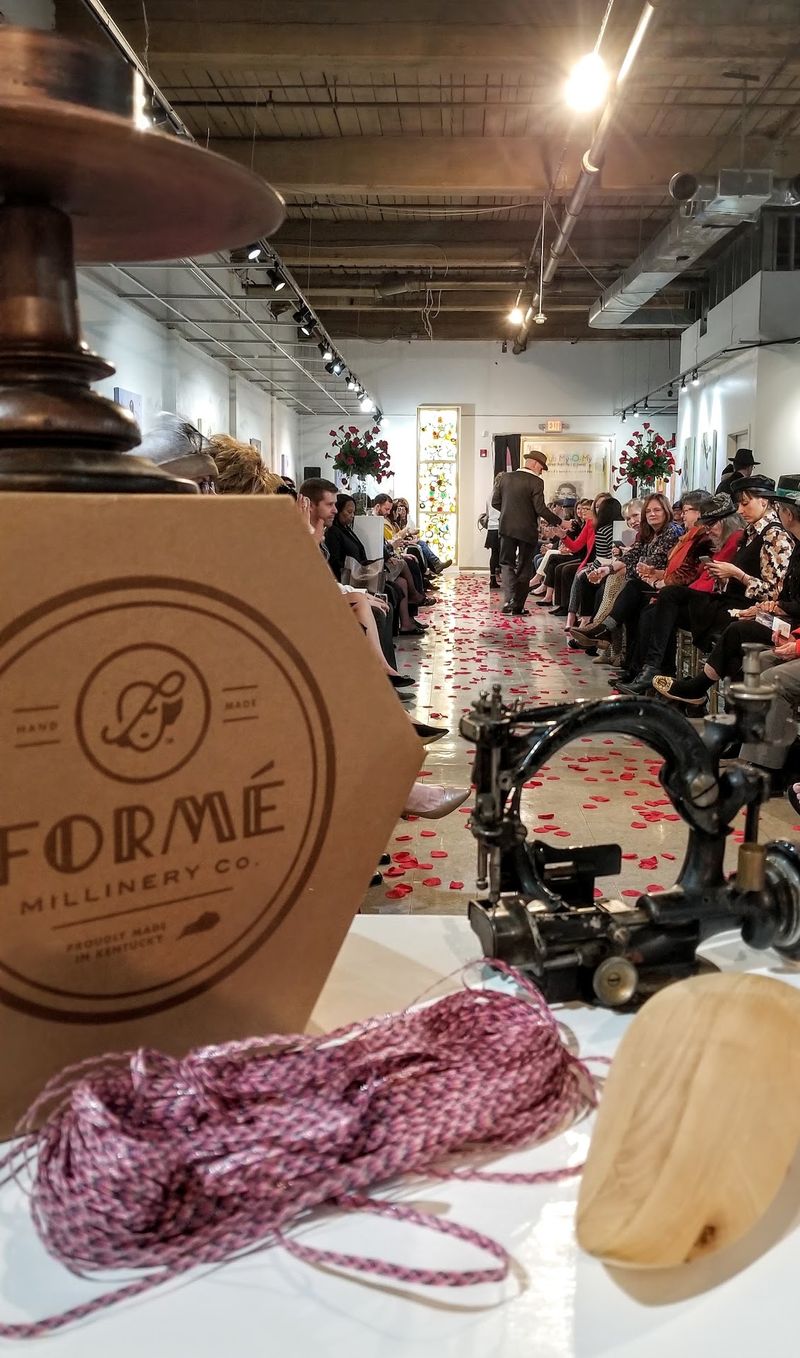
Titles like Master Milliner are not handed out with a coupon. Jenny Pfanenstiel earned hers through years of traditional couture millinery technique, passed down across generations.
She is the Official Milliner of the Kentucky Derby Museum, with a plaque at Churchill Downs. Seven times she has served as a Featured Milliner for the Kentucky Derby.
Her résumé stretches further than most people expect. She was selected as a Tory Burch Foundation Fellow, which recognizes women building serious businesses.
She also wrote a book called The Making of a Milliner. If you want to understand the craft before visiting, that is a fine place to start.
Visitors consistently mention how approachable she is. Talent that size could easily come with distance, and it does not here.
Millinery is a shrinking art, and she treats preserving it as part of the job. Every hat that leaves the shop keeps the tradition breathing.
Brands have noticed. Collaborations include Vineyard Vines, Swarovski, and Woodford Reserve.
You do not need a famous name to get her attention. Regulars will tell you she treats a first-time customer with the same focus as a longtime client.
That balance of skill and warmth is rare. It is also the reason people keep coming back.
Antique Wooden Hat Blocks And Vintage Tools On Display
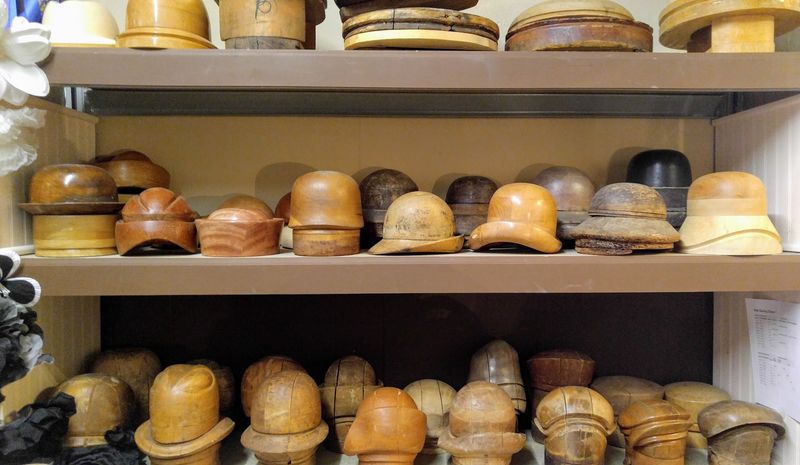
Shelves of carved wooden hat blocks turn the workroom into something close to a museum. Each block is a mold, and each mold shapes a different silhouette.
These are antiques, not reproductions. Some have been shaping felt and straw longer than anyone currently in the building.
Steam does the heavy lifting. Fibers soften, stretch over the wood, and slowly learn a new shape.
Vintage tools sit alongside the blocks. Pins, irons, and small implements that look like they belong in a watchmaker’s drawer.
Watching the setup explains why handmade hats cost what they cost. Nothing about the process is fast, and speed was never the goal.
Craftsmanship here is measured by patience. That phrase shows up often in descriptions of the atelier, and the room backs it up.
Customers frequently mention that seeing the traditional wooden forms changed how they viewed hats entirely. A hat stops being an accessory and becomes a built object.
You are welcome to look. The shop does not hide the process behind a curtain.
Ask about a particular block and you will likely get a story. The older tools tend to come with the best ones.
Bring your curiosity. The room rewards people who actually pay attention to details.
The Rare 1800s Braid Machine That Shapes The Unexpected
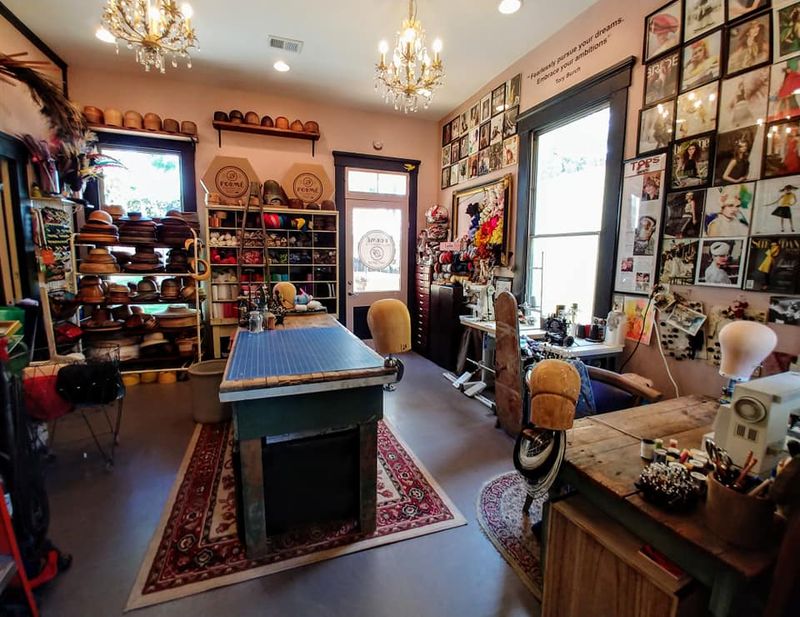
Tucked among the tools sits a braid machine from the 1800s. Machines like it are rare, and working ones are rarer still.
It stitches braid in spirals, building a hat shape row by row. The result is sculptural in a way flat fabric cannot match.
Textures come out intricate and slightly unpredictable. That unpredictability is exactly what makes the pieces interesting.
Longtime customers often name the braid machine hats as their favorites. They also tend to mention the wide-brim designs in the same breath.
Modern factories cannot replicate the effect. The machine’s age is the whole point, not a marketing detail.
Using it requires skill nobody teaches in a weekend course. Feed the braid wrong and the shape collapses.
Pfanenstiel has spent years learning its habits. Old machines have personalities, and this one apparently has opinions.
Here is a fun detail worth knowing. Braid hats were once a massive industry, and most of those machines vanished decades ago.
Seeing one still working is a small piece of fashion history in motion. The hats it produces carry that history forward.
If you visit, ask whether anything on the floor came from it. The answer usually leads somewhere fascinating.
Rare Materials Gathered From Around The World
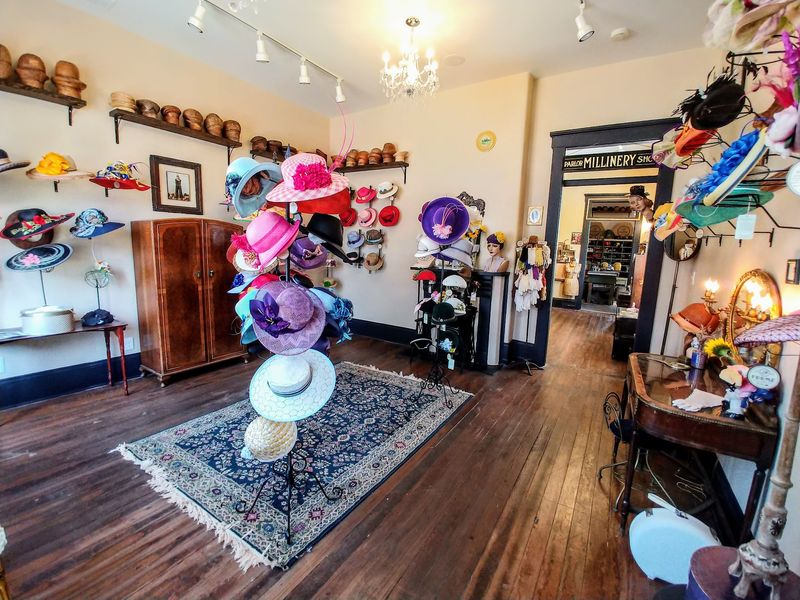
Materials make or break a handmade hat, and the sourcing here goes global. Pfanenstiel hunts down the finest and rarest options she can find.
Natural fibers form the backbone of most pieces. Horsehair shows up too, prized for structure and a subtle shimmer.
Feather flowers get crafted individually by hand. No two petals end up identical, which is the charm.
Vintage treasures work their way in as well. Bakelite pieces and antique hat pins appear on designs where they belong.
Those older elements carry their own history. A single hat pin might be a century old before it ever reaches your brim.
Luxury here is not about a logo. It comes from materials chosen one at a time for a specific design.
Shoppers consistently describe the finished pieces as works of art. Handle one and the description stops sounding dramatic.
Ready-to-wear hats line the shop for people who want something immediately. Custom work uses the same caliber of material.
Colors range widely, and so do silhouettes. There is something for a bold statement and something for a quiet one.
Take your time browsing. The details reveal themselves slowly, which is exactly how they were made.
A Custom Consultation That Feels Like An Event
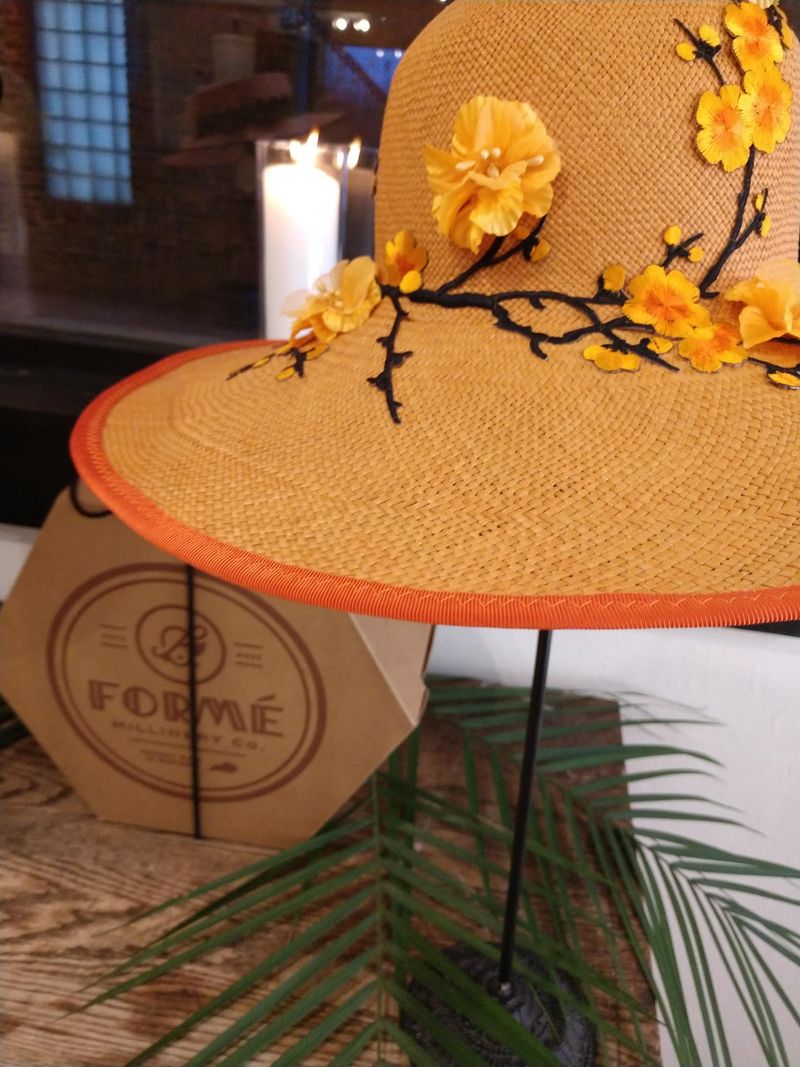
Ordering a custom hat here is not a transaction with a form. The consultation is treated as an experience, and it starts with conversation.
Measurements come first, since fit decides everything. Head size, proportions, and how the shape sits against your face all matter.
Then come the bigger questions. Your personality, lifestyle, the occasion, and your personal style all shape the final design.
You choose from silhouettes, luxurious materials, colors, and handcrafted embellishments. The options are wide without being overwhelming.
Customers often arrive with a dress, a photo, or just a vague idea. Pfanenstiel takes that starting point and builds something real.
Nothing is guessed at. Every detail is thoughtfully designed and entirely handmade, with each stitch placed on purpose.
If you want a Derby hat, plan far ahead. Regulars will tell you the spring calendar fills quickly, and waiting rarely works out.
Custom pricing surprises people in a good direction. Several visitors have noted the options felt more reasonable than expected.
The process is collaborative rather than prescriptive. You are part of the design, not a spectator.
Come with an open mind and a rough vision. The rest gets figured out together.
Hat Making Classes And Group Experiences
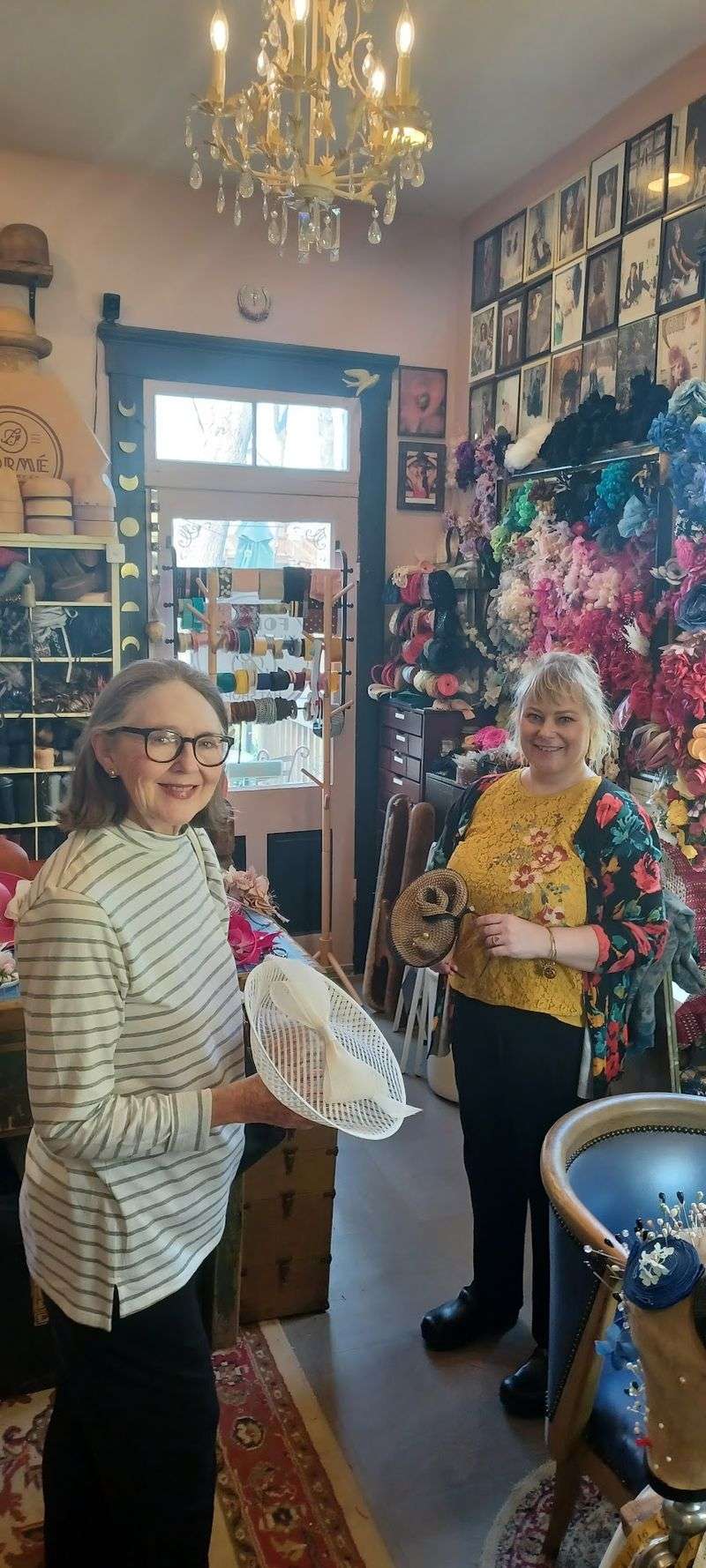
Shopping is fun. Making your own hat is a different kind of fun entirely.
The shop hosts hat making experiences for groups. Participants leave with a keepsake they built themselves.
Visitors describe these sessions as a genuine good time. Nobody expects to walk out holding something they actually want to wear.
Beginners are welcome. The point is not perfection, it is understanding how a hat comes together.
You handle materials, learn a few techniques, and see the tools up close. Suddenly the craft stops being mysterious.
Groups book these for celebrations and get-togethers. It beats another night doing the same old thing.
Pfanenstiel has also designed hat patterns for McCalls on several occasions. Teaching is clearly part of how she thinks about the trade.
Preserving millinery means passing it along. Every class does a small piece of that work.
Expect to use your hands and make a few mistakes. Expect to laugh about them too.
Even if you never make another hat, you will never look at one the same way. That shift alone makes the session worthwhile.
Reach out ahead of time to arrange a group. These experiences are planned, not walk-in.
Why A Hat From Here Becomes An Heirloom
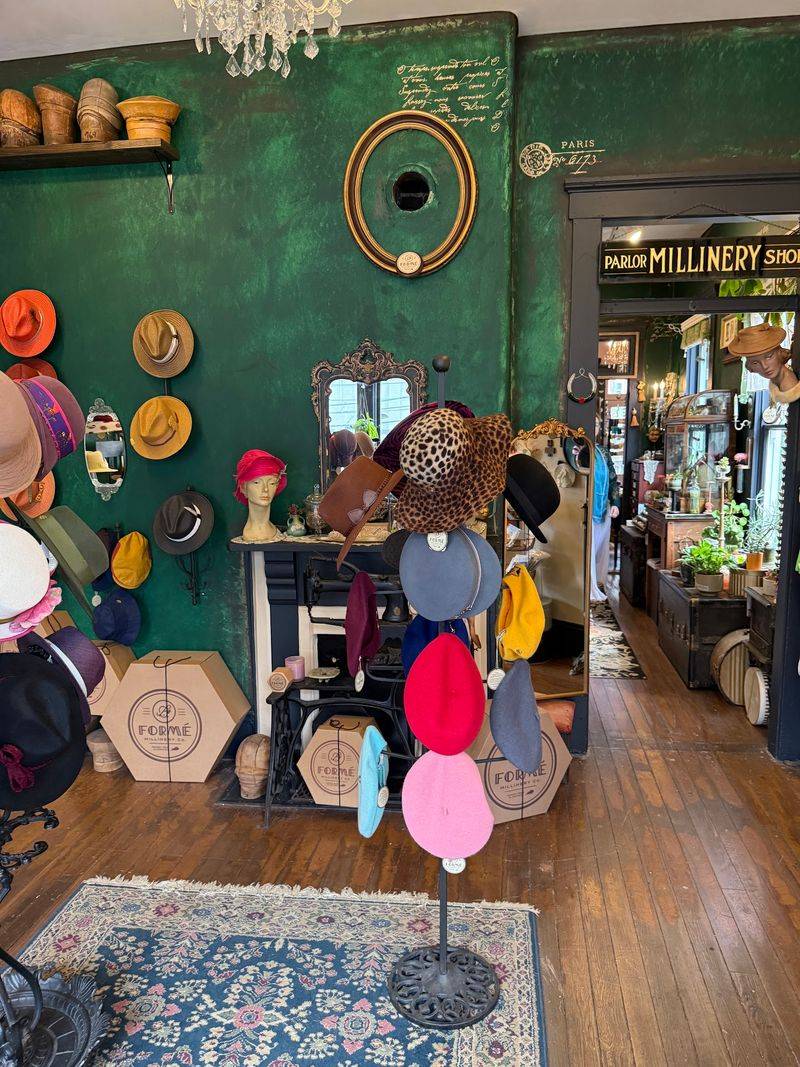
Pfanenstiel believes a hat can change your day and even your life. Big claim, but the people wearing her work tend to agree.
Her stated goal is simple. She wants you to feel sensational and transformed the moment it goes on your head.
These are not mass-produced pieces headed for a donation bin. They are designed to be treasured, restored, and handed down.
Restoration matters more than most shoppers realize. A well-made hat can be repaired for decades rather than replaced.
The shop also handles repairs and resizing. Vintage caps and old fedoras have been brought back to life here.
Men’s hats share the floor with women’s designs. This is not a Derby-only destination, despite the city’s reputation.
Collectors exist, and they are loyal. Some customers own several pieces and treat them like a growing archive.
The shop holds a perfect rating across its reviews. Craftsmanship, customization, and the staff come up again and again.
Louisville is full of good stops, but few feel this singular. A working atelier open to the public is genuinely uncommon.
Go try one on. Worst case, you learn something about a vanishing art and leave grinning.