This Nebraska Drive-In Shows Movies Under The Stars On Old Speakers That Still Actually Work
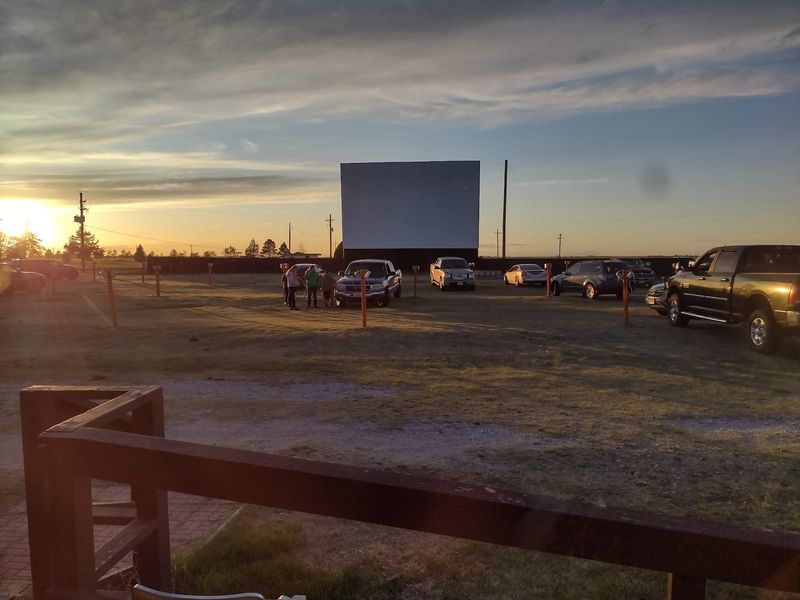
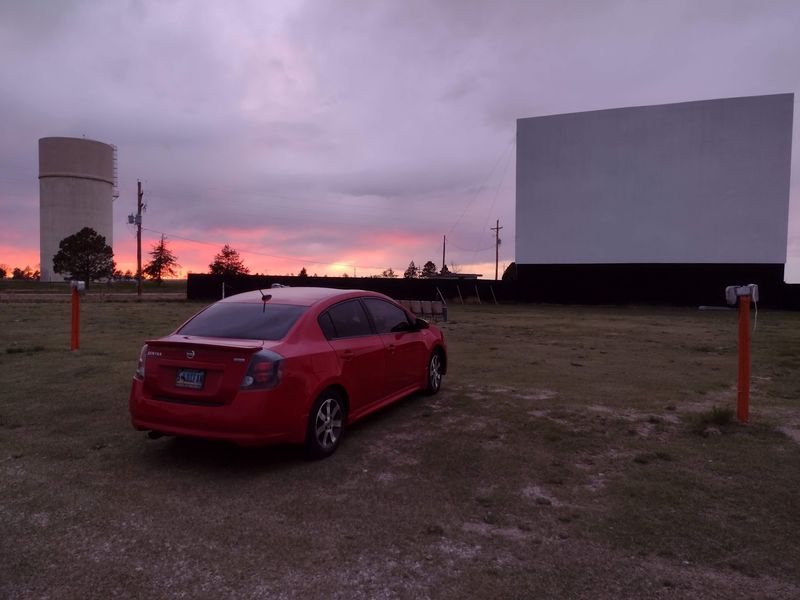
Somewhere out in western Nebraska, past the last streetlight and a whole lot of grass, there’s a big white screen standing in a field like it wandered off from 1960 and never found its way back. Rows of metal poles stand between the parking spaces, each one holding a speaker you can actually hook on your window.
Most places like this stripped those out decades ago and switched to radio only. Here they still carry sound, and the sky above them fills with more stars than the movie has.
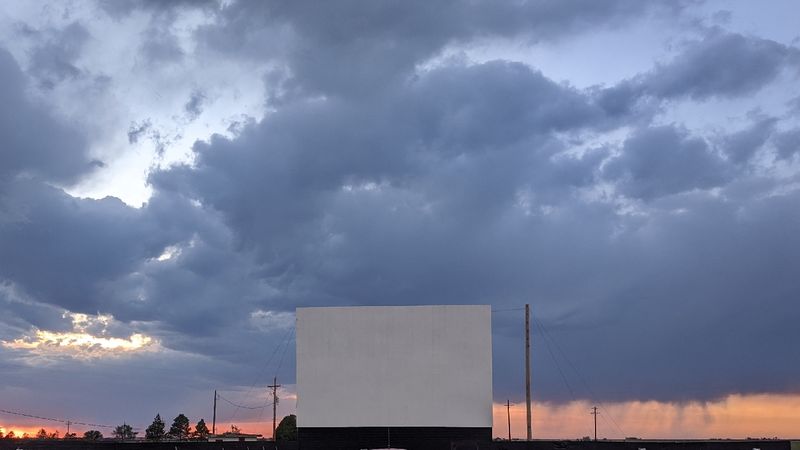
A Screen Standing Alone in Box Butte County
Gravel crunches under the tires before you see anything else. The lot sits east of Alliance in Box Butte County, out where the grass runs long and the horizon does almost nothing to interrupt the sky.
One screen. One field.
Rows marked by low ridges of earth so your front end tips up at the right angle.
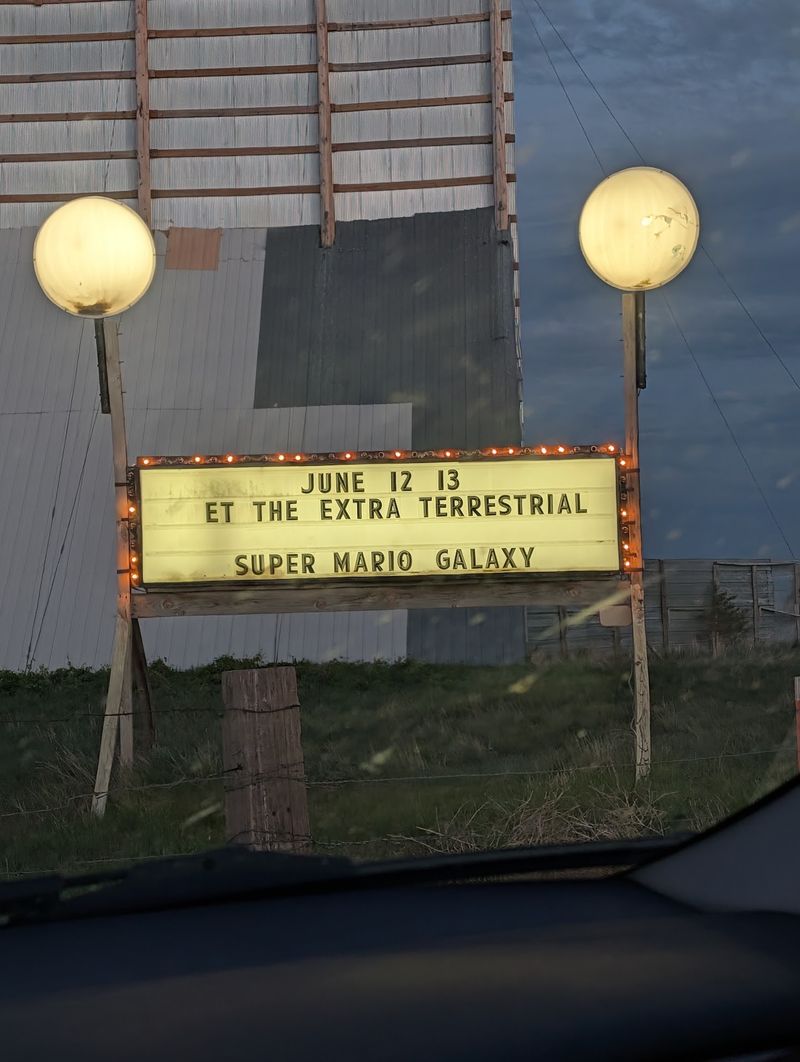
Sandhills Drive-In is the name on the marquee, and it does exactly what a drive-in is supposed to do, with almost nothing added. There’s a concession building, a projection room, an arcade, restrooms, and a whole lot of open ground around it all.
Skyview Golf Course sits nearby, which is about the only landmark out that way. The rest is the Nebraska Panhandle doing what it does best, which is give you room.
What catches people first isn’t the screen. It’s the poles.
Short metal posts scattered through the lot, each topped with a boxy speaker, most of them still working the way they did when this kind of theater was everywhere instead of nearly gone.
Speakers That Never Got Retired
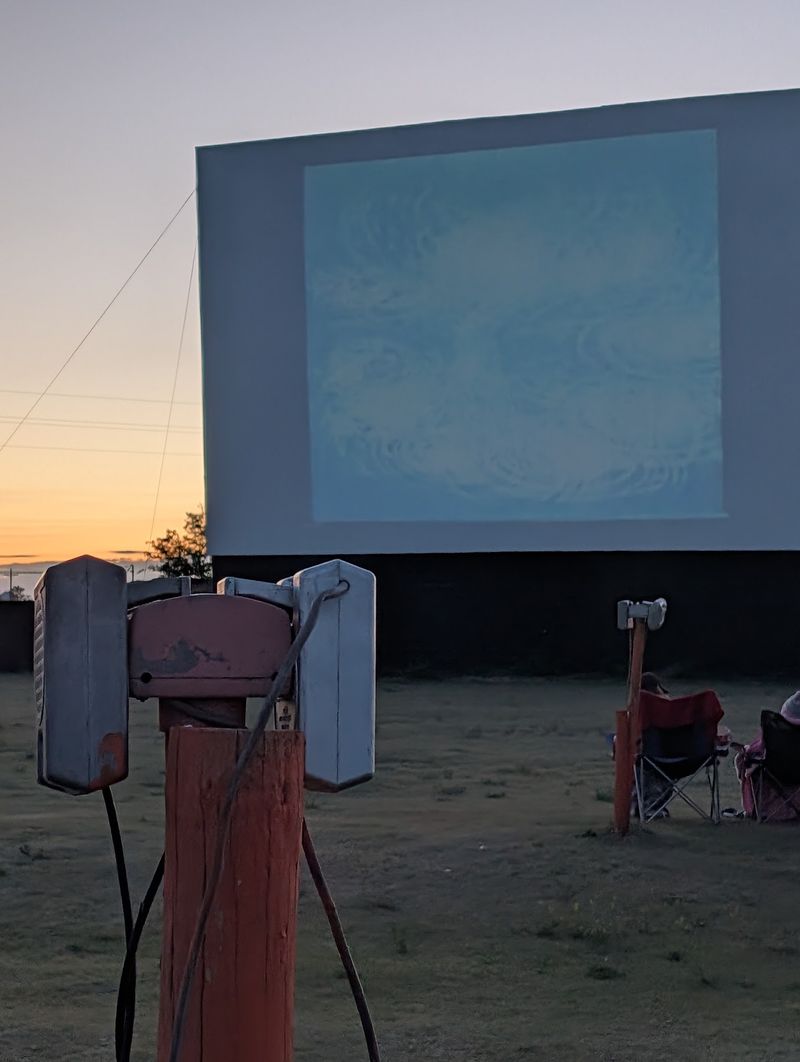
Hook one on the glass and roll the window up a few inches to hold it. That motion is muscle memory for anyone who grew up with drive-ins, and completely new to kids who’ve only ever tuned a car radio to a station number.
Co-owner Courtney Red Nest has said she believes this is the only drive-in in the region with outdoor speakers that still function.
The sound has a specific quality to it. Slightly boxy, a little warm, filling the space between cars instead of staying sealed inside them.
Walk to the concession stand mid-movie and the dialogue follows you across the gravel.
FM transmission runs at the same time, so anyone who prefers their own stereo can use it. Plenty of people run both, the speaker on the window for atmosphere and the radio for bass.
Maintaining working speaker posts is unglamorous work involving buried wire, weather, and decades of corrosion. That someone bothers is the whole reason this place stands out.
From 1994 to a Quiet Closure and Back
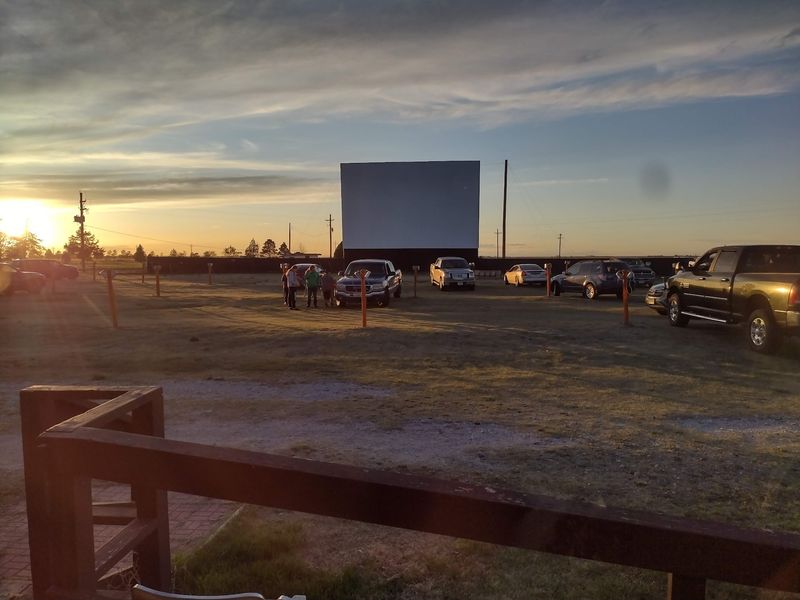
Nineteen ninety-four is a late birthday for a drive-in. By then most American screens had already come down, sold for the land or left to fall apart in a pasture.
Alliance got one anyway, and it ran until it didn’t.
There was a stretch when the place sat closed, screen blank, lot empty. That gap is the part people around Box Butte County remember clearly, because a dark drive-in in a small town reads as one more thing gone.
New owners took it on in 2019 and reopened that September. The early plan leaned on second-run titles, with first-run films folded in as later seasons came together.
Reopening a drive-in means rebuilding almost everything at once. Projection, sound, concessions, restrooms, signage, and the long list of small repairs a season outdoors demands.
Families who had come here with grandparents started showing up again with their own kids. That handoff, from one generation of the same lot to the next, is the thing that makes this more than a novelty screen in a field.
Film and Digital, Side by Side
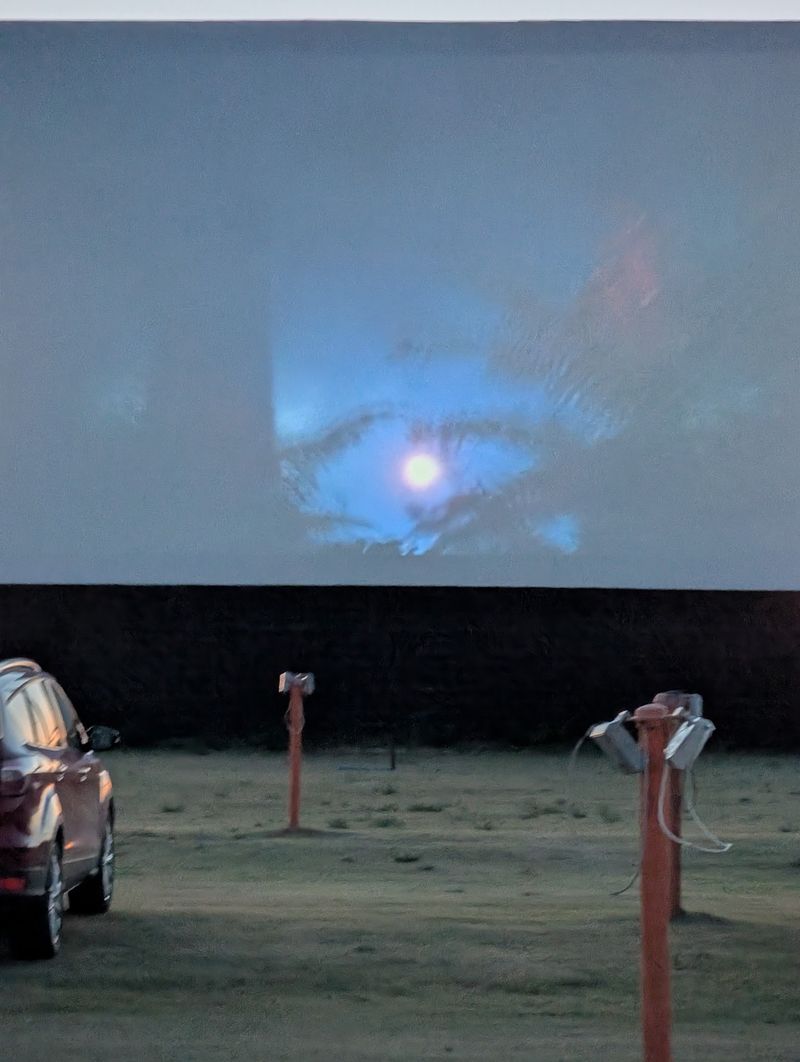
Two projection systems live in that little building at the back of the lot. Digital handles most of what screens on a given night, clean and bright and easy to program.
Then there’s the 35mm rig, reels and all, which still gets used.
Running actual film requires someone who knows how to thread it, splice it, and babysit it through a feature. The difference shows on screen in ways that are hard to describe and easy to notice, a softer grain that digital reproduces but never quite matches.
Programming mixes newer releases with classic and iconic titles, which means a night out here might be a current family movie or something that first played when these speaker poles were brand new equipment.
The owner has been known to walk people through the projection room. Getting to stand next to a working film projector is not a thing that happens at a multiplex, and it turns a movie night into something closer to a tour.
Picture quality holds up across the whole lot, front row to back.
Chili Cheese Dogs, Pizza, and an Old Popcorn Machine
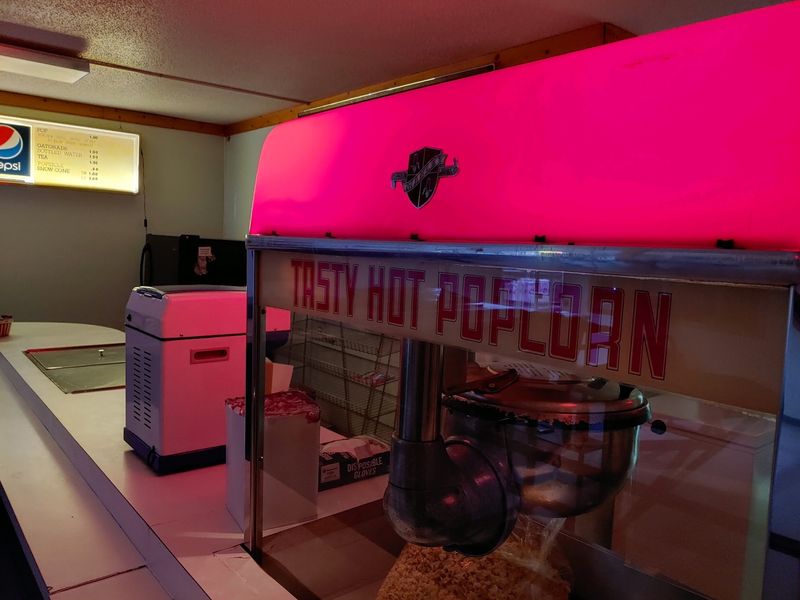
The popcorn machine is the old-fashioned kind, the sort with a kettle you can watch work. That alone pulls people to the counter before the first trailer rolls.
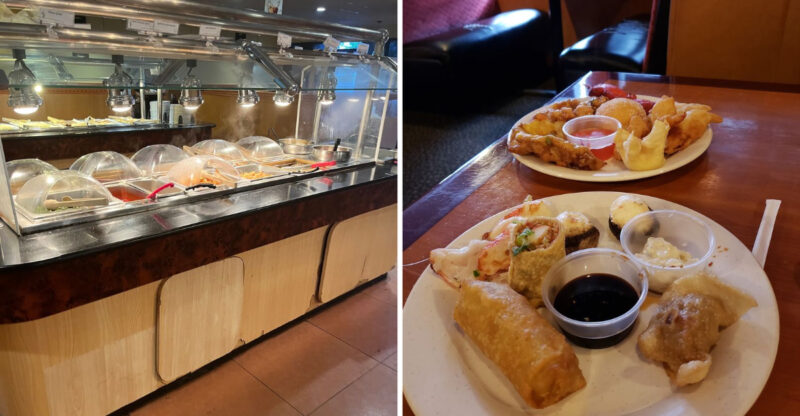
Beyond popcorn, the menu covers hot dogs, chili cheese dogs, loaded fries, nachos, pizza, soft pretzels, and drinks to wash it all down.
Portions run generous and prices stay modest, which matters a lot when you’re feeding a back seat full of kids. A family can eat here without doing math first.
The stand stays open through the end of the final feature, so a late craving during the second movie isn’t a lost cause. Nobody’s flipping chairs on tables while the credits still roll.
Staff behind the counter have a reputation for being quick and friendly, and the building itself is kept clean, restrooms included, with accessible and well-lit facilities.
Not every single item lands for every single person, and the owners respond directly when something misses. Mostly, though, the food does its job: hot, salty, fast, and eaten in a car.
Sunsets, Stars, and the Sandhills Sky
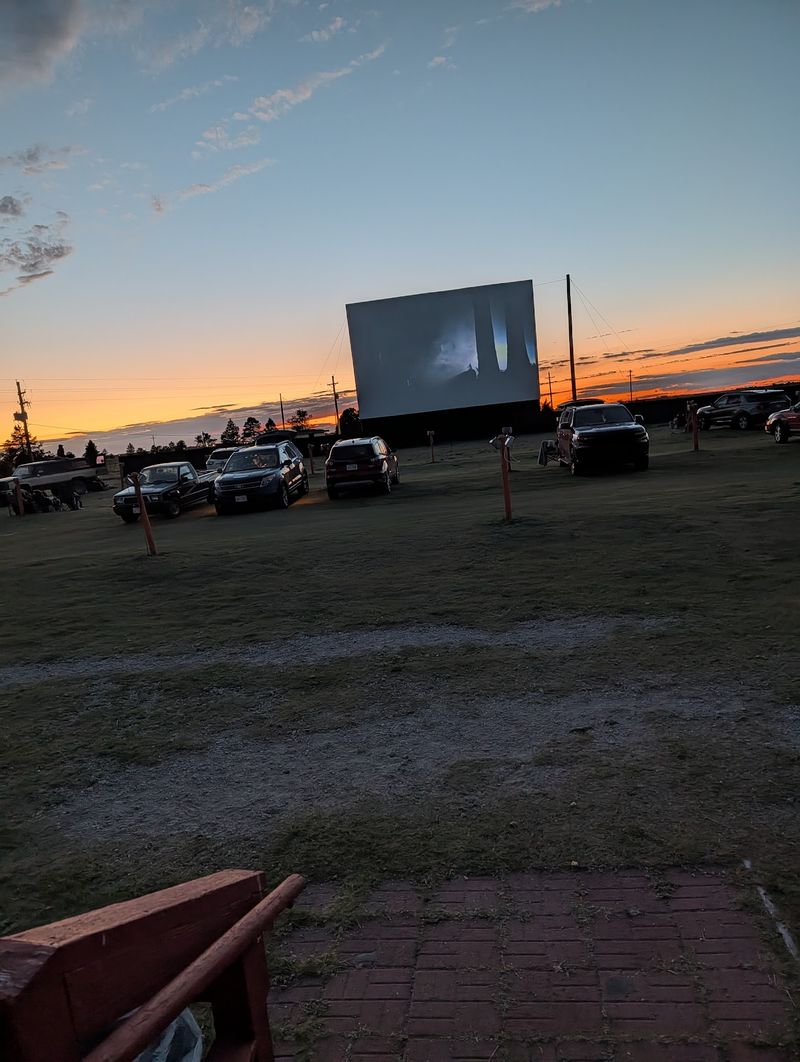
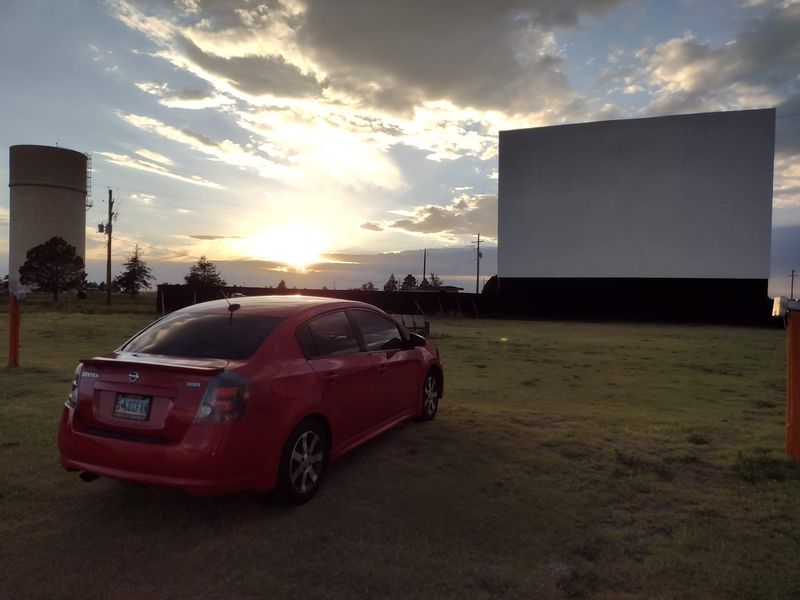
Before the projector fires, there’s a show nobody charges for. Western Nebraska sunsets go orange to pink to deep purple across a sky with nothing tall enough to block it.
Cars fill in during that window, headlights off, windows down, everybody watching the west.
Then the dark arrives properly. Alliance is small, the lot sits outside town, and there’s very little light pollution to wash out what’s overhead.
The Milky Way shows up on clear nights while the feature plays below it.
Kids end up splitting their attention between the screen and the sky, which is not the worst way to spend an evening.
Sitting in the open air in the Sandhills has a temperature curve to it. Warm at showtime, cooler by the second feature, genuinely chilly by the time you drive home.
Blankets earn their keep.
The combination of a lit screen and an unlit horizon is the reason this experience can’t be replicated indoors. You’re watching a movie inside a landscape, and the landscape keeps showing off.
Pajamas, Lawn Chairs, and Leashed Dogs
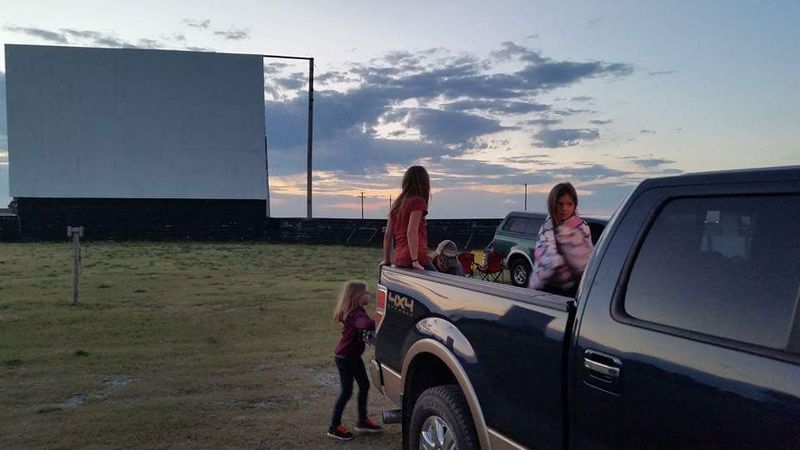
Kids in pajamas is basically standard dress code. Parents load the back of the SUV with pillows and blankets, park backward, pop the hatch, and let everyone sprawl.
By the second feature, at least one child in every other vehicle has fallen asleep, which most families consider a successful evening.
Dogs are welcome as long as they’re leashed and behave themselves. A well-mannered dog with its head out the window is a normal sight in this lot.
The parking layout gives enough room that nobody feels boxed in, and sightlines work whether you’re in a compact car or a pickup. Lawn chairs beside the vehicle work fine too, especially on warm nights.
Couples use it as a date night, families use it as the cheap outing that actually entertains everyone, and older folks come back for a format they grew up inside.
An arcade rounds things out for kids who need to burn energy between features. It gives them somewhere to go that isn’t the back seat.
Summer Season, Weekend Nights
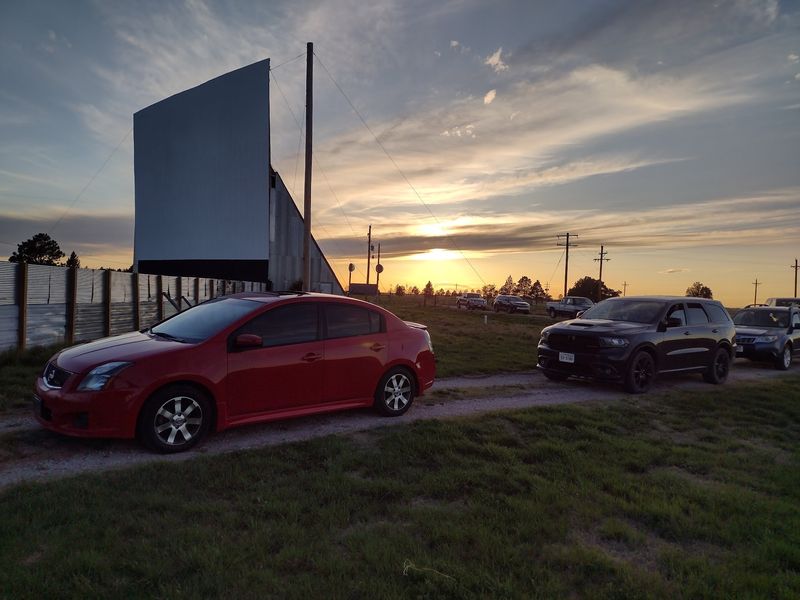
Winter closes this place down, and there’s no way around that. Operations run seasonally, generally from June into September, which puts a real deadline on the whole idea.
Miss the window and you’re waiting until next summer.
Showings cluster around weekends, and start times follow the sun rather than a clock, meaning July screenings begin noticeably later than September ones. Late-season shows start earlier and get colder faster.
Because programming shifts week to week and the calendar depends on weather and film availability, checking ahead before making the drive is the smart move. A schedule pinned to the season can change quickly.
Arriving early is worth doing for reasons beyond parking. You get the sunset, first crack at the concession line, and time for the kids to hit the arcade before anything starts.
September nights carry a particular feel out here. Grass going gold, air sharp enough to need a jacket, and the knowledge that the screen goes dark for months soon after.
That last weekend of a season is a different kind of show.
Getting There From Highway 2
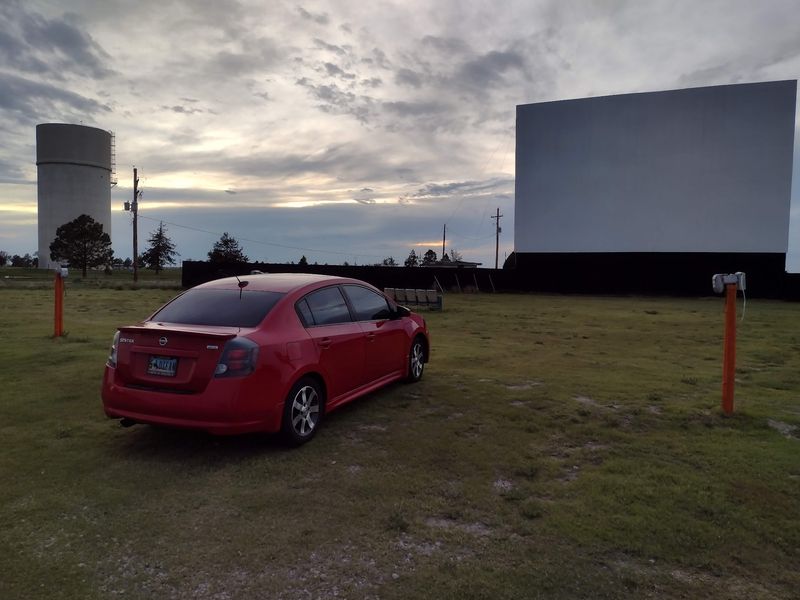
Alliance sits in the Panhandle, and the drive to it is half the appeal. The Sandhills Journey National Scenic Byway runs along Highway 2, rolling dune country covered in grass, cattle, and very few buildings.
Driving that stretch with the sun low is one of the better road experiences in the state.
The address is 2617 Co Rd 57, Alliance, NE 69301, out east of town near Skyview Golf Course. County road signage is sparse, so have directions loaded before you lose signal.
From Scottsbluff or Chadron it’s an easy evening run. From Kearney or North Platte it’s a longer haul, and people do make it, treating the byway as part of the outing rather than a chore.
Gas up in town. Services thin out fast once you leave the city limits, and the drive home happens in full dark on roads where deer are a real consideration.
Give yourself margin. Nothing about this night works well when you’re rushing to beat the first trailer.
Carhenge and Dobby’s Frontier Town Nearby
A ring of gray-painted automobiles planted upright in a field, arranged like Stonehenge. That’s Carhenge, it’s just north of Alliance, and it’s one of the most photographed oddities in Nebraska.
Free to visit, weird in the best way, and about ten minutes from the drive-in lot.
Dobby’s Frontier Town sits nearby too, a collection of relocated and rebuilt old buildings assembled into a walkable pioneer street. Between the two, an afternoon in Alliance fills itself without much planning.
Stacking them makes the trip make sense for anyone driving in from a distance. Carhenge in daylight, supper in town, then out to the field for the movie once the sun drops.
Alliance itself is a railroad town with a working rail yard and a downtown worth a slow lap on foot.
The combination is unusual: concrete-free prairie, a monument built from scrap cars, a frontier street, and a drive-in with functioning speaker posts. Not many towns of this size offer that many distinct things to look at in one day.
What to Pack Before You Drive Out
Blankets first. The temperature drop between showtime and the end of the second feature is significant out on open ground, and nobody regrets bringing too many.
Pillows help, especially if kids are riding home asleep.
Folding chairs give you the option of sitting outside the car, which is the better way to watch on a warm night. Bug spray belongs in the same bag.
Cash is useful even where cards work, and a little planning for the concession line saves time. The stand handles the food end well, so there’s no need to haul in a full cooler.
Battery matters. Running a car stereo for a double feature can drain it, which is one more argument for hooking the window speaker instead.
If you do use the radio, crack the engine between films.
Back into a spot if you plan to open the hatch, and check that your parking lights aren’t stuck on.
A flashlight for the walk to the restroom rounds out the list. It gets properly dark out there.
Why the Panhandle Screen Still Earns the Drive
Fewer than a few hundred drive-ins are still operating anywhere in the country, and the number of those with working in-car speakers is smaller still. Keeping both the poles and a 35mm projector alive is a choice somebody makes on purpose, season after season.
That effort is the story here more than any single movie on the schedule.
Prices stay reasonable, the staff are easy to deal with, and the lot is kept clean. People drive hours to sit in it, which says something about how rare the format has become.
It’s not a big operation. One screen, a modest concession building, an arcade, and a field.
Anyone expecting a polished entertainment complex is looking at the wrong thing entirely.
What it offers instead is a Nebraska summer evening with a movie attached: sunset, stars, popcorn, a speaker hooked on the glass, and kids asleep in the back by the time the credits run.
The season is short. When the grass turns gold out along Highway 2, the countdown has already started.