Wild Horses Roam Free At This Lesser-Known Arizona Recreation Area Most People Pass By
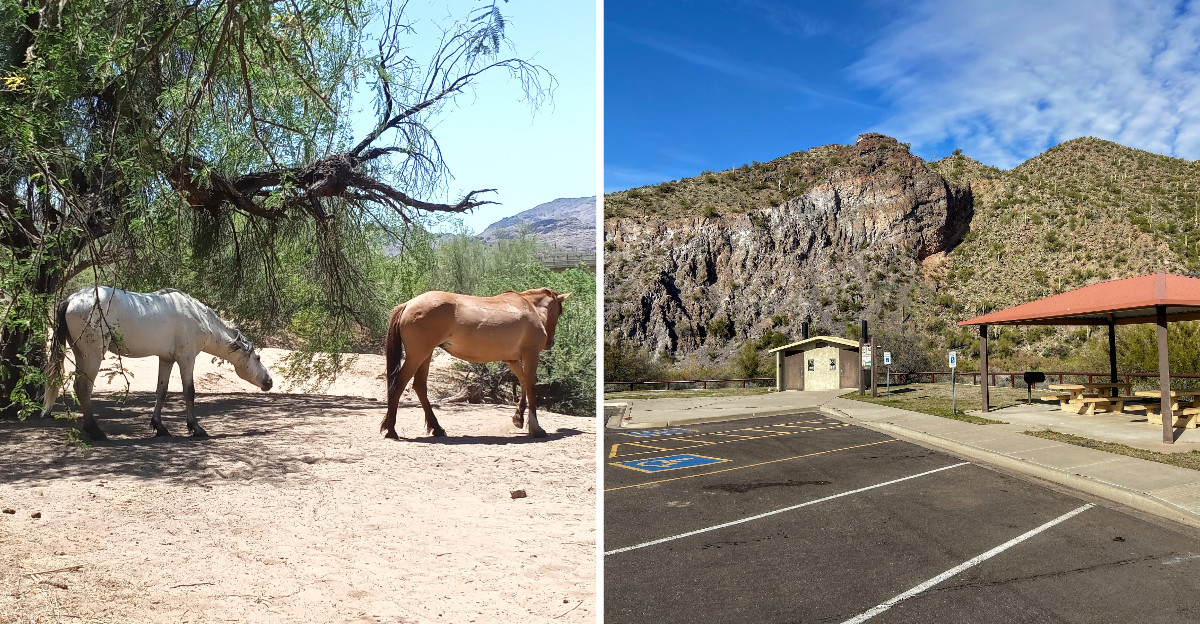
You are watching the river, minding your own business, and then a wild horse walks into the picture. Seriously, what do you do with that?
Arizona keeps this lesser-known recreation area surprisingly quiet, which makes a herd sighting feel even more unreal. Nothing arrives on schedule.
The horses may graze near the water, disappear into brush, or never show at all. That uncertainty gives the afternoon its magic.
Even the waiting feels good with desert hills and moving water around you. Then, if the herd appears, every other plan suddenly becomes irrelevant.
Good luck putting the camera down after that.
Meet The Salt River Mustangs
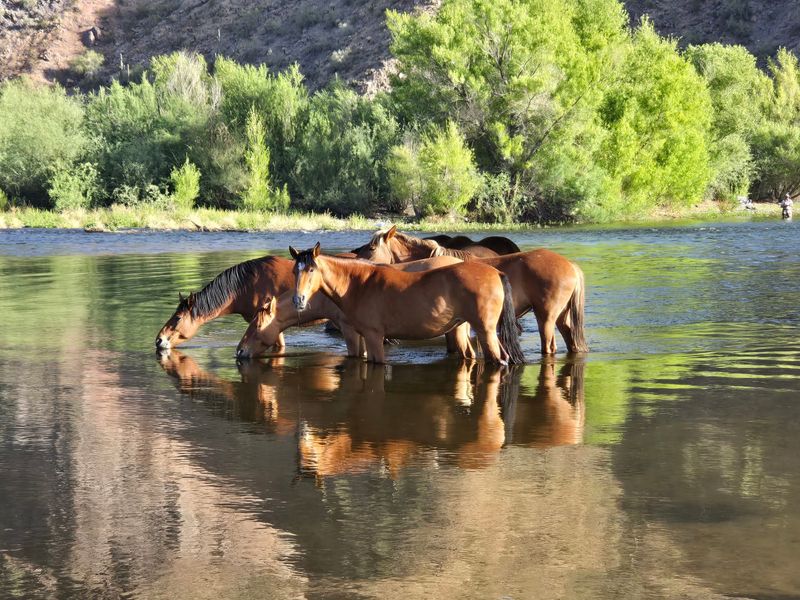
The horses along the Lower Salt River belong to the state-protected Salt River horse herd.
Arizona law defines them as unbranded horses that inhabit and have historically lived around the Lower Salt River and Saguaro Lake areas of Tonto National Forest.
They are not managed under the federal Wild Free-Roaming Horses and Burros Act.
Their deeper origin is more complicated than many popular accounts suggest.
The Forest Service says it has not found historical documentation proving that the current herd descends from horses that roamed this area for centuries.
Agency research instead connects the modern population to livestock that wandered onto Forest Service land from neighboring tribal lands.
The horses live in family groups called bands, although no single arrangement applies to all of them. A band generally includes a lead stallion and lead mare, while some groups also contain additional stallions, mares, and young horses.
Visitors may occasionally see horses wading into the river to feed on aquatic vegetation. The management group has documented eelgrass as an important food source when river conditions support its growth.
Riverside Scenery Worth Slowing Down For
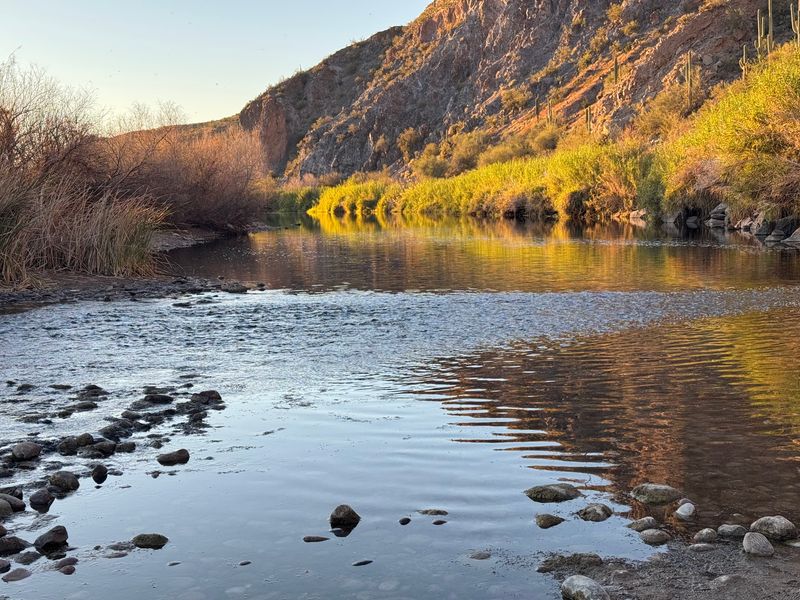
Blue Point sits along Bush Highway near the Blue Point Bridge in the Mesa Ranger District of Tonto National Forest.
The recreation site provides quick access to the river, where sand, gravel, reeds, mesquite, and other riparian vegetation create a sharp contrast with the surrounding Sonoran Desert.
The Lower Salt River is heavily influenced by water released from Stewart Mountain Dam upstream.
Those controlled releases help maintain the river corridor below Saguaro Lake, although conditions can change as water-management needs shift throughout the year.
The scenery extends well beyond the shoreline. Bush Highway crosses a landscape of rocky slopes, desert scrub, saguaros, and mountain profiles, while nearby Bulldog Canyon opens toward the Goldfield Mountains.
The wider Blue Point area also has ecological importance. Forest Service planning documents identify the Blue Point Cottonwoods area for its riparian vegetation and diversity of plants and animals.
Blue Point is better approached as a desert outing with water than as a conventional developed beach. Water shoes, sun protection, and plenty of drinking water make the day much easier.
Floating, Paddling, And Casting Lines
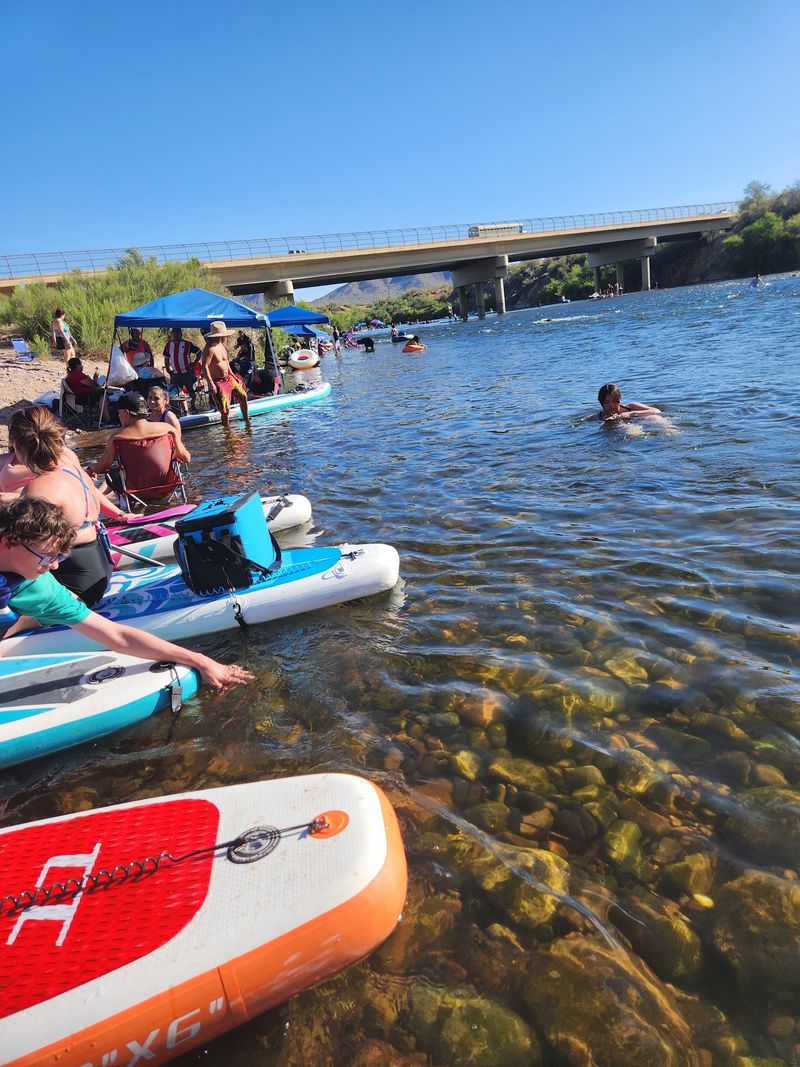
The Lower Salt River is one of the Phoenix area’s best-known warm-weather recreation corridors.
Tubers, kayakers, paddleboarders, anglers, and swimmers use different access points along Bush Highway, placing Blue Point inside a much larger river-recreation network.
Salt River Tubing operates seasonally under a Forest Service permit. Its 2026 season opened April 25 and is scheduled to continue through the end of September, subject to changing conditions.
Anyone floating independently needs to think about the take-out before entering the water. The river carries visitors downstream, so returning to the original vehicle may require a shuttle or second car.
Water levels and current depend partly on releases from Stewart Mountain Dam.
SRP adjusts those releases according to water demand, reservoir operations, weather, and other conditions, so checking current information is more useful than expecting the same river every visit.
Arizona Game and Fish lists largemouth bass, smallmouth bass, and catfish among the Lower Salt River’s angling opportunities.
The water can feel surprisingly cool compared with the surrounding desert air. A properly fitted life jacket is a sensible choice for floating and paddling, especially where currents strengthen away from shore.
Timing Your Horse-Spotting Mission
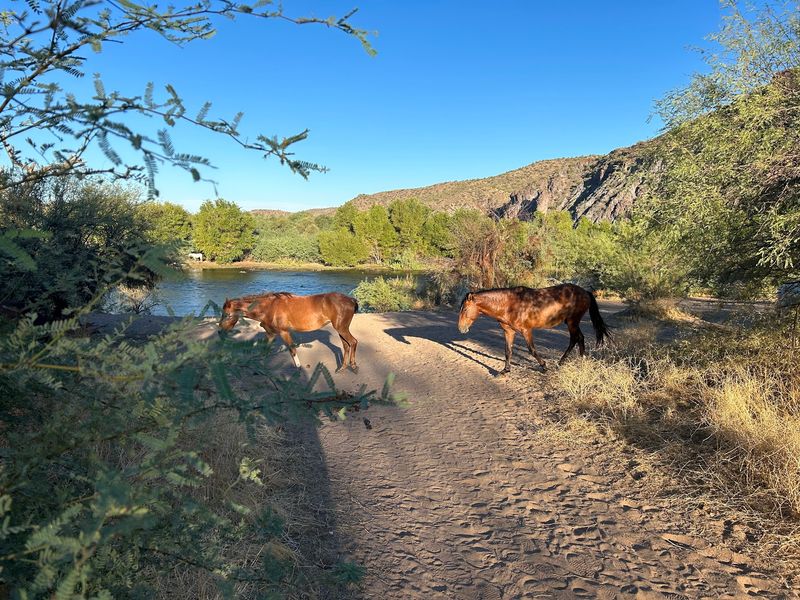
There is no official hour when the horses reliably appear at Blue Point.
The management group specifically warns visitors that there is no single guaranteed viewing location because the animals move freely through their habitat.
Flexibility works better than building the day around a precise schedule.
Morning and evening temperatures are often more comfortable for visitors, while summer afternoons and weekends can bring substantially more tubing, paddling, and swimming activity to the Lower Salt River.
Parking is another reason to have a backup plan. Blue Point and the other Bush Highway recreation areas can become busy during popular recreation periods.
A valid recreation pass and knowledge of another legal river-access point can prevent the day from becoming a search for parking.
Weather deserves equal attention.
Monsoon storms can produce lightning, runoff, debris, and rapidly changing water conditions. Tonto National Forest recommends checking alerts and individual recreation-site conditions because public-safety closures can change quickly.
The simplest approach is to treat the horses as a possible bonus instead of a scheduled attraction. Blue Point remains a scenic river stop even when every horse stays out of sight.
Feathered Neighbors Along The Shore
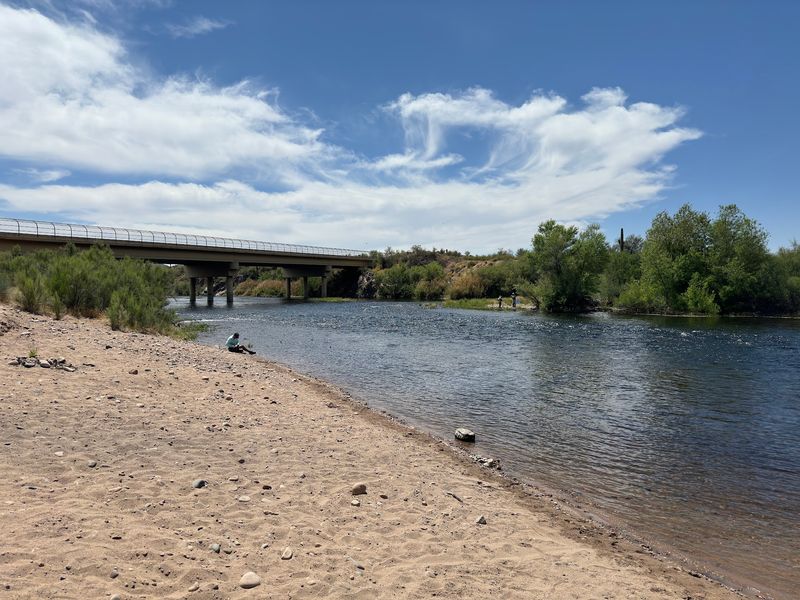
The horses receive most of the attention, but the Lower Salt River is also an important wildlife corridor.
Forest Service documents identify the river as habitat for species including bald eagles, Lucy’s warblers, yellow-billed cuckoos, grebes, and other birds associated with desert waterways.
Bald eagles are especially important here.
Tonto National Forest periodically establishes seasonal closures around active Lower Salt River nesting areas to reduce disturbance during breeding season.
Mesquite, reeds, marsh vegetation, cottonwoods, and open water create habitat dramatically different from the dry desert slopes nearby.
The Salt and Verde riparian ecosystem is recognized as an Important Bird Area, reinforcing how valuable these desert river habitats are to resident and migratory birds.
A pair of binoculars therefore serves two purposes. It can bring a distant horse band into view while also making the birdlife much easier to appreciate.
Wildlife viewing works best without pushing closer.
Respecting closures, staying out of sensitive areas, and avoiding unnecessary disturbance help protect a river corridor that already receives substantial recreation traffic.
A Herd Saved By Its Fans
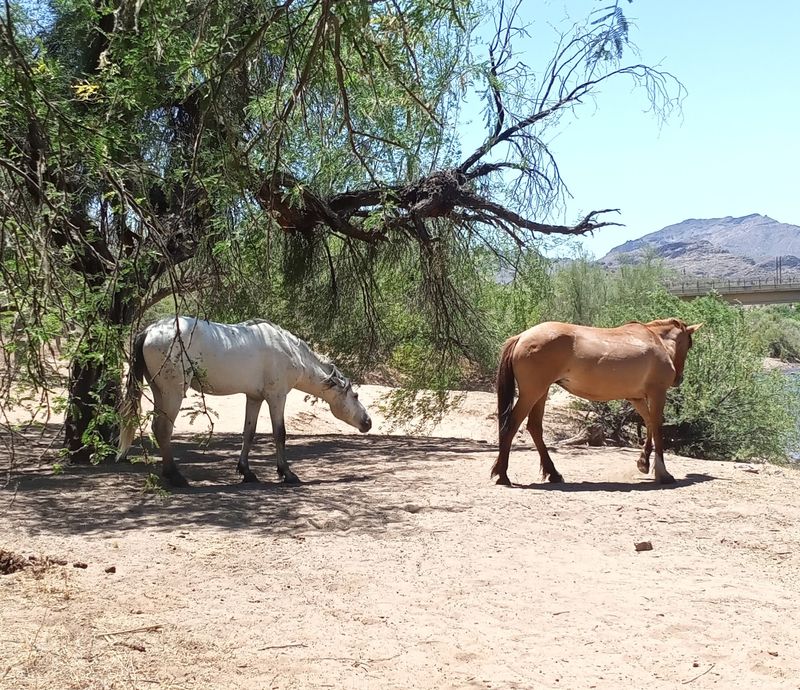
The modern protection story took a major turn in 2015.
That year, the Forest Service described the horses as unauthorized livestock and announced an intent to impound about 100 animals.
The notice was later canceled after strong opposition from elected officials and members of the public.
Arizona lawmakers responded with legislation protecting the Salt River horse herd.
State law now prohibits harassing, shooting, injuring, killing, taking, chasing, or capturing herd members without appropriate authorization.
Management has continued to evolve since then.
In February 2026, the Arizona Department of Agriculture awarded a multi-year management contract to the Salt River Wild Horse Management Group.
The current plan includes fertility control, monitoring, natural attrition, and managed relocation to approved sanctuaries.
Tonto National Forest also established a dedicated Salt River Horse Management Area of roughly 19,665 acres.
The goal is not simply to create a viewing attraction. Managers must balance the herd, recreation, public safety, vegetation, soil conditions, and wildlife habitat within the same landscape.
Indigenous communities have relied on central Arizona’s rivers for millennia, and nearby tribal nations remain closely connected to this region today.
Parking Passes And Packing Smarts
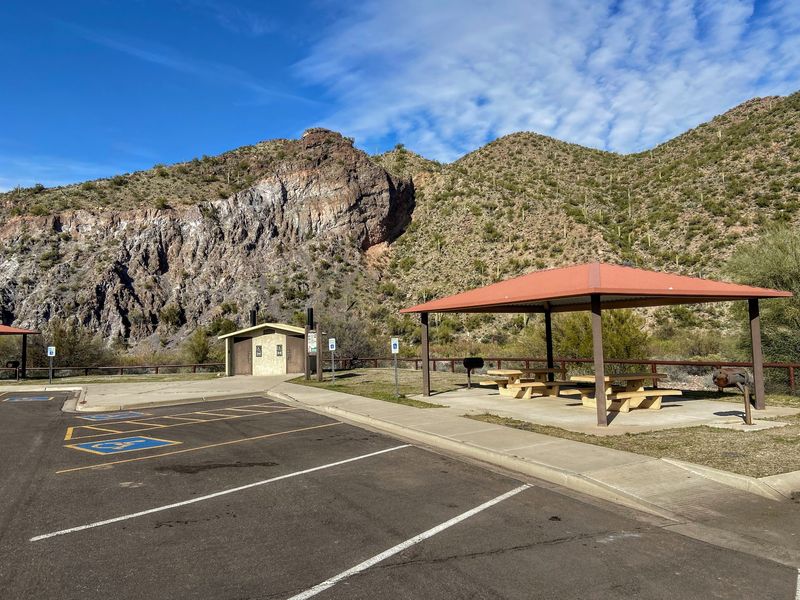
Blue Point is a fee recreation site, so visitors should arrive with the appropriate Tonto National Forest recreation pass.
The Salt River Wild Horse Management Group’s current 2026 viewing guidance specifically notes that a Tonto Day Pass is needed when using Blue Point, Goldfield, or Coon Bluff as horse-viewing access points.
Blue Point has basic developed-site amenities, including designated parking, picnic tables, trash service, and restrooms.
Drinking water should still be brought from home rather than relying on the site, particularly during hot weather. This is best planned as a day outing.
Camping restrictions apply around the nearby Blue Point access area, including a two-mile restriction from the Blue Point Bulldog Canyon access gate. Visitors wanting an overnight stay should use legal camping areas elsewhere in the forest.
Water shoes help on gravel and uneven shoreline surfaces, while sunscreen, a hat, and a dry bag are useful for anyone spending hours near the river.
Before leaving home, check Tonto National Forest alerts for closures, fire restrictions, weather hazards, and temporary changes.
Keeping The Wild Truly Wild
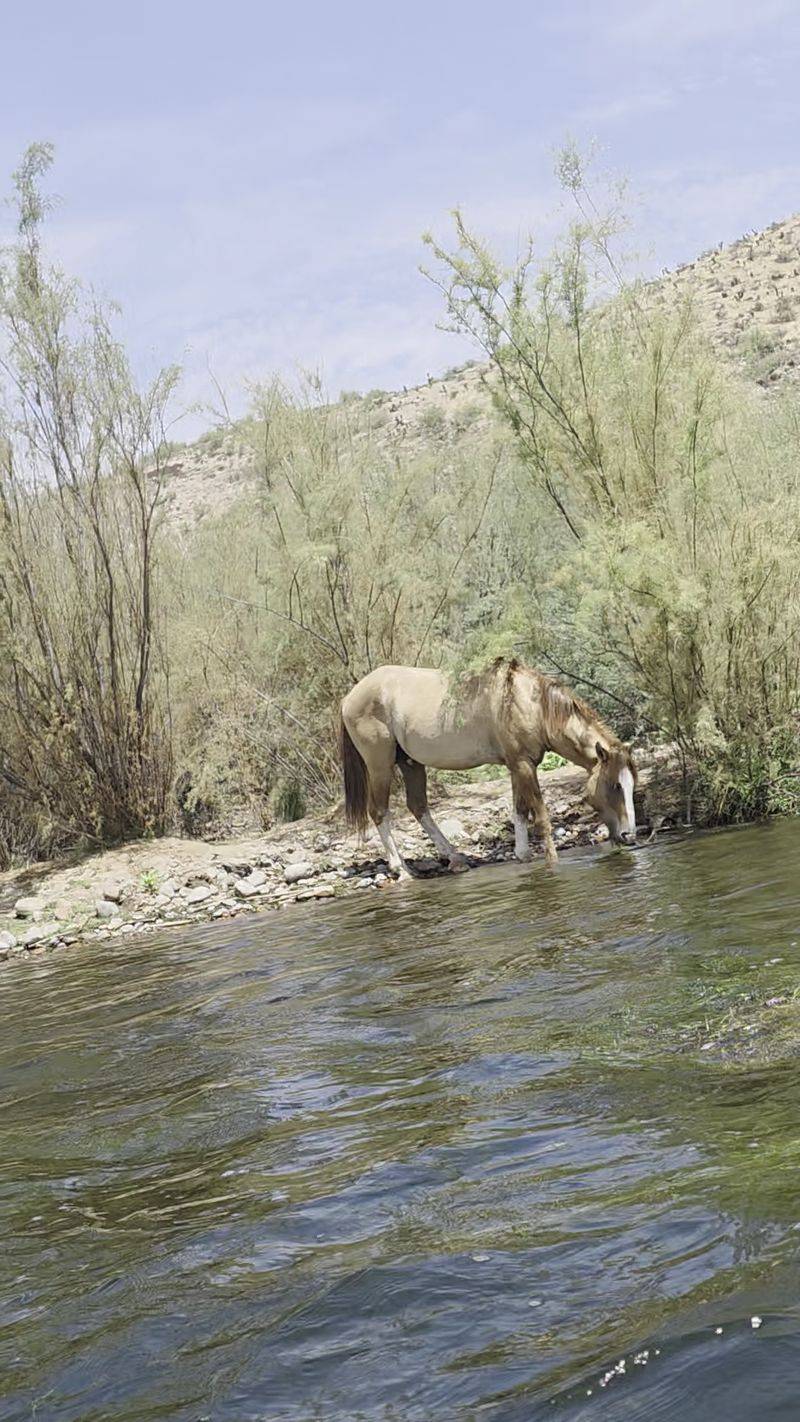
Responsible viewing matters because the Salt River horses remain free-roaming animals.
The management group asks visitors to stay at least 50 feet away at all times. If horses approach, people should calmly move aside rather than allowing the distance to close.
Feeding, touching, chasing, or trying to pose beside the horses should be avoided.
Arizona law prohibits harassment and unauthorized interference, while feeding can change natural behavior and create serious digestive problems.
Dogs should remain leashed around the river.
The management group specifically warns that encounters between dogs and horses can become dangerous for both animals. The same courtesy applies on the water.
Kayakers and paddleboarders who encounter horses crossing the river should slow down, give the band plenty of room, and wait for the animals to pass without interference.
Trash matters too. Heavy recreation means food wrappers, fishing debris, and other waste can become hazards along the shoreline.