This Magical North Carolina Fall Phenomenon Only Appears For A Few Weeks Each Year
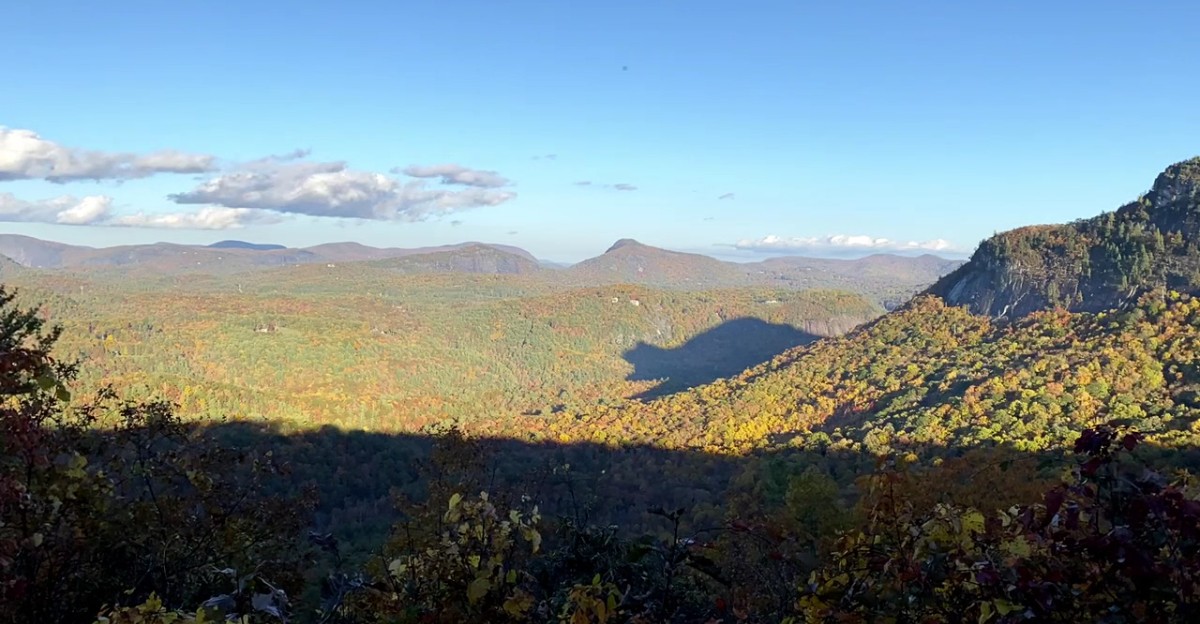
For a few weeks each fall, the mountains pull off a trick that sounds almost too good to be real.
As sunset slips lower, a giant bear slowly appears across the valley without moving a single paw.
No fur, no roar, no picnic basket drama.
Just light and shadow doing something wildly convincing over one of North Carolina’s most storybook-worthy views.
The whole scene feels like a fairy tale decided to borrow a mountain for the evening.
People gather quietly and wait for the shape to sharpen. Then suddenly, there it is. Call it nature showing off.
The bear may only be a shadow, but the view has absolutely no business being this magical.
The Bear Slowly Appears Across The Valley As The Sun Starts To Drop
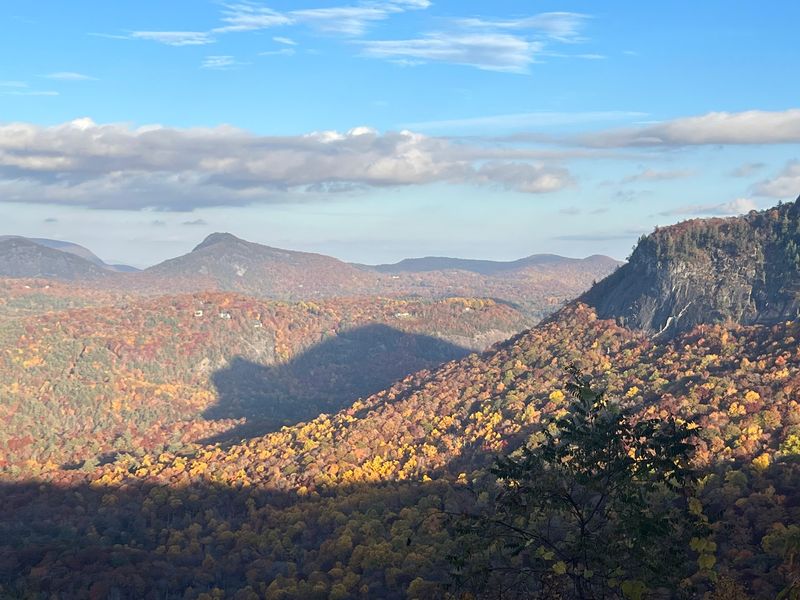
For a few weeks each fall, sunlight hits the mountain at just the right angle to create a giant shadow across the landscape.
As evening settles over the Blue Ridge, the sun sinks behind the rocky crown of Whiteside Mountain, and its outline spills across the wooded valley below.
Bit by bit, that spreading patch of darkness begins to take on the rounded head, sturdy back, and stubby snout of a bear.
The best seat for this show is Big View Scenic Overlook, a simple roadside pull-off along Highway 64 roughly four miles from Cashiers and about five miles from Highlands.
It sits right near the line between Jackson and Macon counties, facing the sheer granite walls of Whiteside head-on. Nothing about the moment feels rushed at first.
Light turns honey gold on the cliffs, cool air drifts up from the shady hollows below, and the forest hums quietly while the shape grows.
Pack a warm jacket and a thermos of hot cocoa from a cafe in Highlands, because mountain evenings cool off quickly once the sun dips.
Arrive early, find a safe spot well off the pavement, and let the valley slowly reveal its famous visitor.
You can find it at US-64, Highlands, NC 28741.
You Only Get About 30 Minutes To Watch The Full Shape Take Form
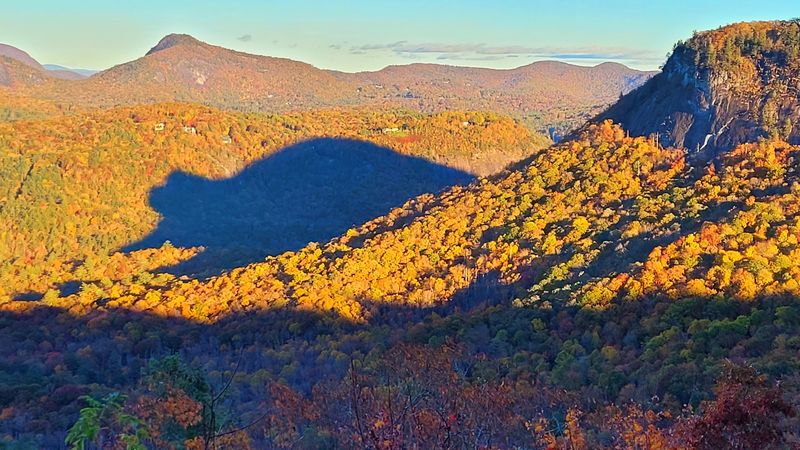
Blink, scroll through your phone, or wander back to the car for a snack, and the bear could slip right past you.
From the first dark smudge to the moment it melts back into the evening shade, the whole performance lasts roughly half an hour. That short span is what makes the experience feel so thrilling.
The bear shape itself holds steady for only a slice of that time, and before and after it forms, the shadow morphs through other odd outlines.
Once the viewing window passes its middle point, the bear begins blending into the larger shadow of the ridge behind the overlook. So how do you make every minute count?
Settle in about fifteen minutes before the predicted start time, snap a few test photos, and keep your eyes on the valley floor rather than the sky.
Photographers often set up a small tripod and take a picture every minute or two.
Stitched together later, those images create a fun time-lapse that shows the bear growing from cub to full-sized giant, a keepsake kids especially love.
Most of all, leave the rush of the day behind.
Half an hour of quiet watching in the mountains of North Carolina can feel surprisingly rich.
Mid-October Through Early November Is The Fall Window To Catch It
Mark your calendar with a bright orange pen.
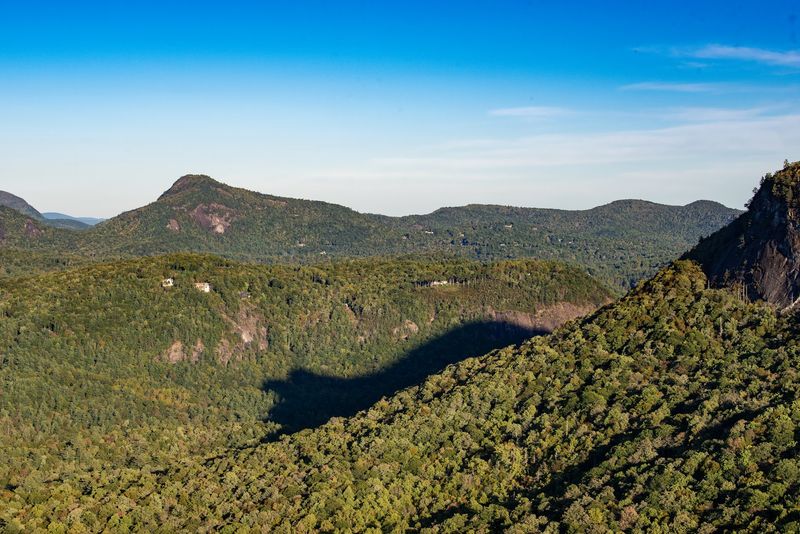
The sun’s path across the sky shifts a little each day, and only during certain weeks does it line up just right with Whiteside Mountain to paint the bear onto the valley.
In autumn, that alignment runs from about the middle of October into the first days of November.
Outside those dates, the sun sets at a different angle, and the shadow simply does not form the familiar shape. Because the window is narrow, weekends can get busy at the small pull-offs along Highway 64.
Parking is limited along the heavily traveled roadside, and Jackson County tourism recommends visiting on a weekday when possible.
Planning a longer trip makes the timing easier.
Highlands and nearby Cashiers both sit within a short drive, offering cozy inns, mountain cabins, and small-town main streets filled with bakeries, candy shops, and farm-to-table dining.
Spend the afternoon browsing shops or hiking, then head to the overlook before sunset.
Checking the forecast a few days ahead lets you pick the clearest evening.
With a little flexibility, one of those golden fall nights will likely line up for you.
Clear Skies Can Make The Difference Between Magic And Seeing Nothing At All
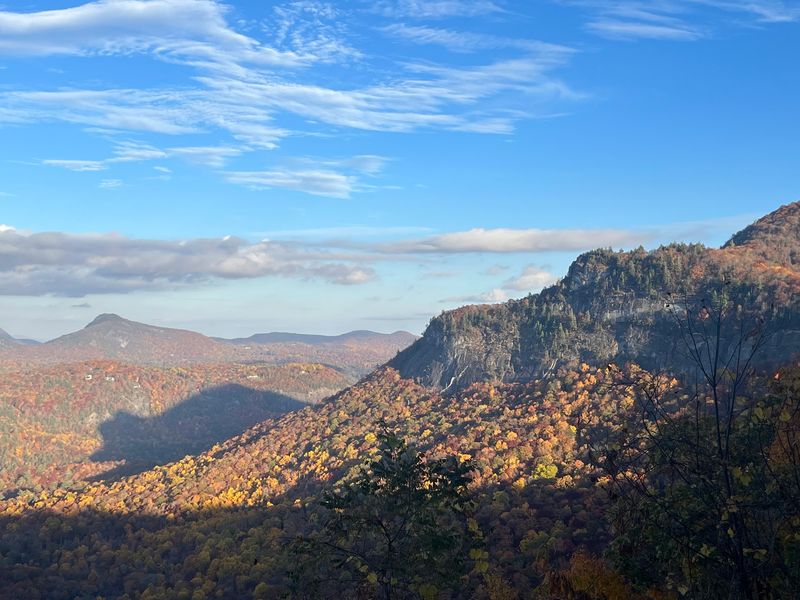
Mountain weather has a mind of its own.
One hour the peaks glow in sharp detail, and the next, a gray blanket of fog rolls in and swallows the whole valley in minutes.
The bear depends completely on direct sunlight.
Clouds can block the direct sunlight needed to form the shadow, while haze and rain can make the phenomenon harder to see clearly.
Southern Appalachian haze is a real factor here.
On humid days, moisture and natural compounds released by the forest create that famous soft blue tint across the hills, which looks lovely in photos but can blur the shadow’s edges. A few simple habits improve your odds.
Check a detailed hourly forecast for Highlands before you leave, and watch for days following a cold front, when the air in western North Carolina often turns crisp and clear.
Keep a backup evening in mind in case the first try fizzles.
Even a cloudy visit holds rewards, though.
Watching mist curl around the granite cliffs of Whiteside has its own quiet beauty, and it gives you a great excuse to come back another clear autumn night.
The Shadow Starts Tiny Before Growing Into An Unmistakable Bear Silhouette
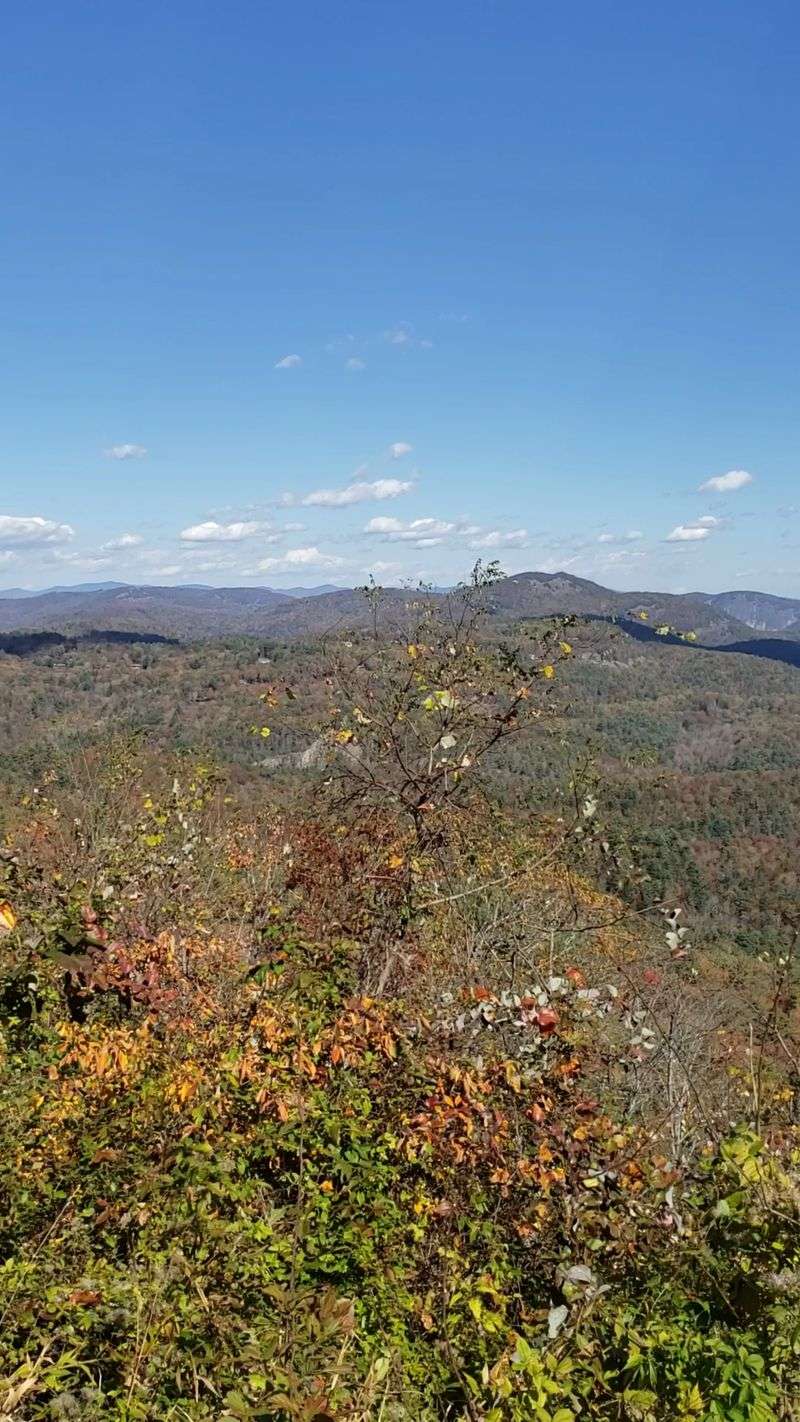
Kids usually spot it first.
Down at the base of the valley, a small dark blot appears among the trees, looking like nothing more than a patch of shade. Then something curious happens.
The blot stretches, swells, and creeps up the far slopes, gaining a humped back here and a pointed nose there, until a full bear seems to stroll across the treetops. Did you know?
Whiteside Mountain rises to 4,930 feet and features some of the tallest sheer rock cliffs in the eastern United States.
Those massive granite faces and the rounded ridge above them are what give the shadow its surprisingly animal-like outline.
Part of the fun is the guessing game along the way.
Before the bear settles into shape, the shadow may resemble a rabbit, a dog, or a lumpy cloud, depending on who is looking.
Turn it into a family challenge and see who names the most shapes before the real star arrives. Keep your camera zoomed slightly wide for this stage.
Capturing the surrounding ridgelines helps viewers back home understand just how enormous this mountain-sized bear truly is.
A snug fleece and a bag of trail mix make the wait even sweeter.
Around 5:30 P.M. Is When The Mountains Begin Putting On The Show
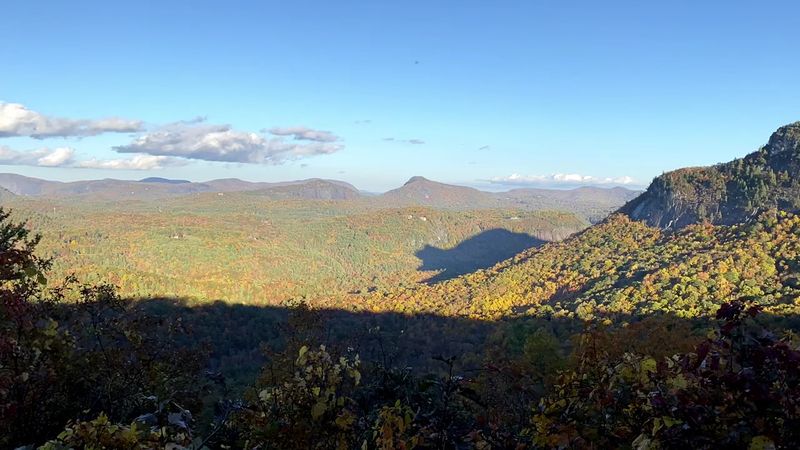
Late afternoon in the Highlands area has a rhythm all its own.
Shadows lengthen across Main Street, shopkeepers flip their signs, and the air picks up the earthy scent of fallen leaves.
That is your cue to start driving.
Tourism sources generally place the fall viewing window around 5:30 p.m. on clear October days, but visitors should check current sunset timing because the clock changes on November 1, 2026.
The trip from downtown Highlands to the overlook covers about five miles of winding Highway 64, while Cashiers sits roughly four miles away in the opposite direction. Give yourself at least twenty minutes to drive, park, and settle in.
Rhodes Big View is easy to miss, and parking is limited along the roadside, so use extra caution as you approach the overlook.
Safety deserves extra attention at this hour. Traffic moves quickly around the bend, and there is no footpath, so hold hands with little ones and cross the two-lane road with care.
Afterward, a warm supper back in town rounds out the evening nicely.
Many visitors head to Highlands for comforting mountain fare like trout, hearty soups, and fresh-baked pie while the stars come out.
Peak Fall Color Makes This Already-Rare Sight Even More Dramatic
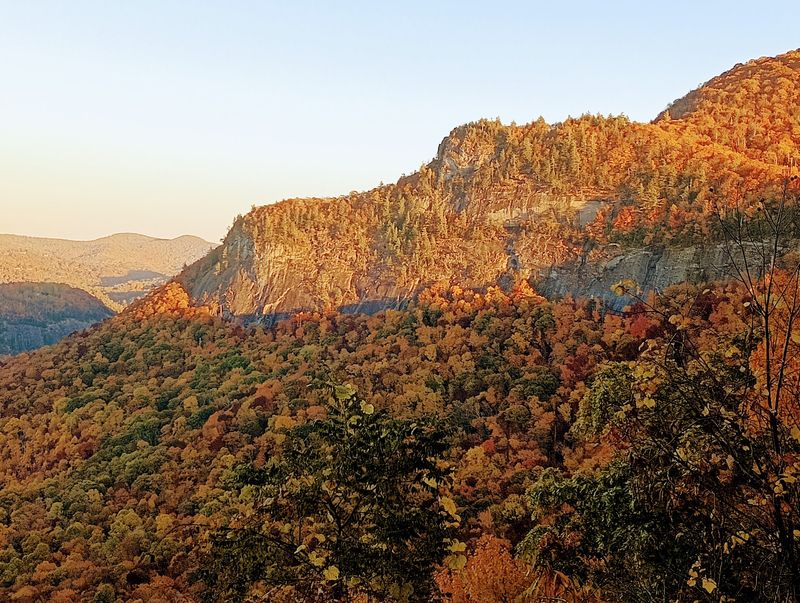
Imagine a bear made of shadow padding across a quilt of scarlet, amber, and gold.
That is the scene autumn creates here, and it turns a clever trick of light into something closer to a painting.
The forests around Whiteside Mountain are packed with hardwoods that blaze each October. Red maples flash crimson, hickories glow butter yellow, sourwoods turn deep ruby, and oaks settle into rusty bronze.
Against that bright backdrop, the dark silhouette stands out with striking contrast.
Color in the higher elevations of North Carolina usually peaks in mid to late October, lining up neatly with the bear’s autumn appearance. That overlap happens only once a year, which is why so many travelers circle these weeks on their calendars.
Bring your senses along, not just your camera.
You may notice the crunch of leaves under your boots, the sweet, woody smell of the forest floor, and the cool breeze that nips at your cheeks as the sun fades.
For richer photos, shoot a few frames before the shadow forms.
The low golden light makes the foliage glow, and comparing those shots with later ones shows how dramatically the valley changes in just minutes.
Miss It In Autumn And You’ll Have To Wait Months For Another Chance
Seasons move on whether we are ready or not.
Once early November passes, the sun’s angle slides out of alignment, and the bear quietly disappears from the valley for the rest of the year.
The good news is that it does return.
From about mid-February through early March, the same shadow forms again as the sun swings back into position behind Whiteside Mountain, once again in the early evening. Winter viewing feels completely different, though.
Bare branches replace the fiery leaves, frost may cling to the rocks, and the valley takes on soft shades of brown, gray, and silver. Crowds are thinner, which gives the overlook a peaceful, almost private mood.
The fall appearance has the added backdrop of changing leaves, while the winter version offers a very different landscape.
Winter travelers can continue into Highlands or Cashiers for dining and other indoor stops after the overlook.
Whichever season you choose, bundle up, check the sky, and arrive with time to spare.
Few sunsets in North Carolina offer a surprise quite like watching a giant bear rise from the treetops.