An Idaho Riverfront Trail Leads You To Ancient Petroglyphs On Volcanic Rock
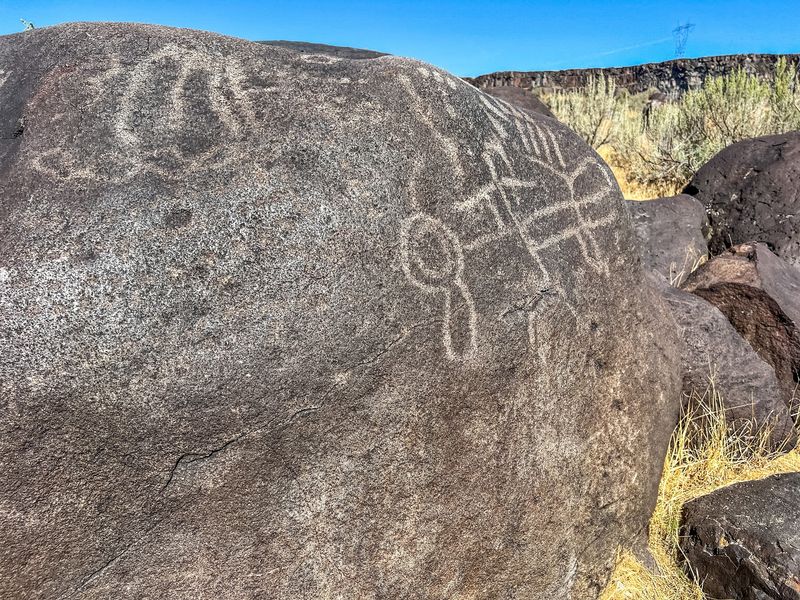
Dark, rounded boulders sit along the Snake River in southwest Idaho, and at first they look like leftovers from some old rockslide. Get closer, and you will spot circles, dots, and figures carved into their surfaces by people who lived here thousands of years ago.
A riverside trail and a century-old railroad bridge lead you right through this outdoor gallery. It is one of the few places in Idaho where you can walk among ancient art for the price of a few coins.
Idaho’s Lone Archaeological Park
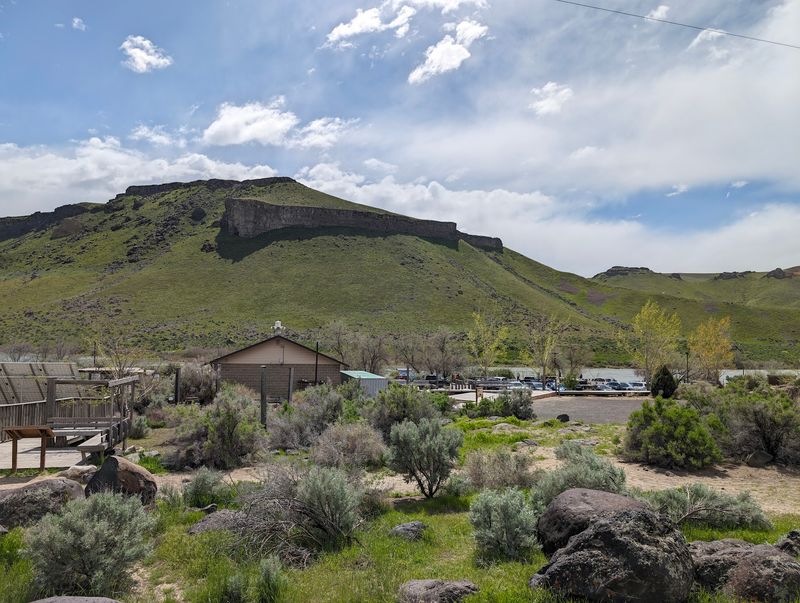
Only one park in Idaho carries the official label of archaeological park, and it sits right on the Snake River in Canyon County, a short drive south of the farm town of Melba. Celebration Park looks modest at first glance, with a parking area, a few low buildings, and a scatter of dark boulders along the water.
Look closer at those boulders, though, and faint shapes start appearing on their surfaces. Circles, lines, dots, and figures were pecked into the volcanic rock by people who lived along this river thousands of years before anyone drew a county line.
Hundreds of these carvings are spread across the park, making it one of the easiest places in southwest Idaho to see ancient rock art up close.
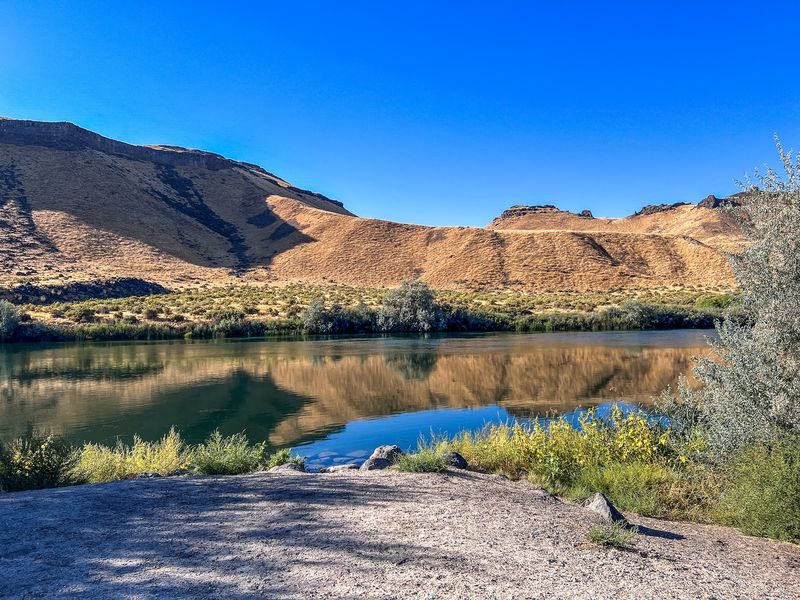
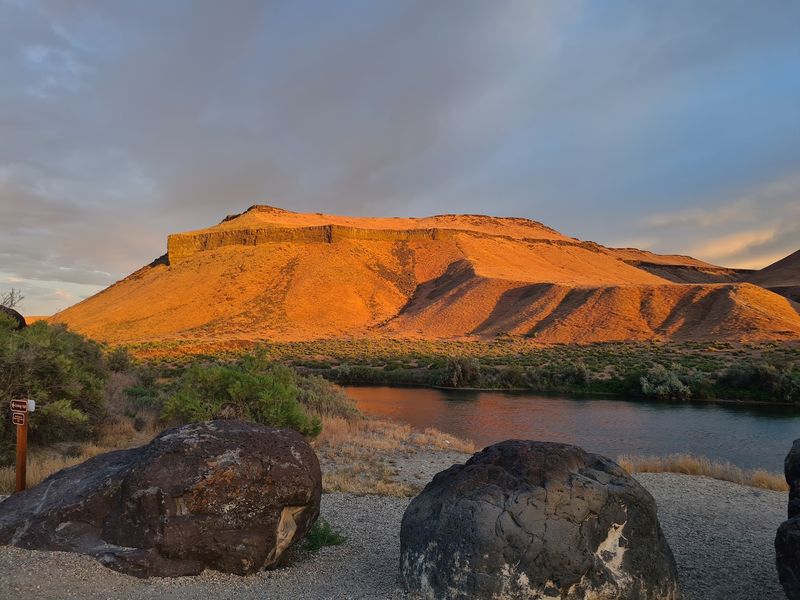
The setting adds plenty to the experience. Tall canyon walls frame the river, an old railroad bridge stretches across the current, and trails wind through high desert and basalt on both banks.
Visitors come for different reasons. Some arrive with fishing poles, others with cameras, and plenty show up simply curious about what those strange marks on the rocks might mean.
Nearly everyone leaves with at least one favorite boulder in mind.
The Road Down To Victory Lane
Directions here are refreshingly simple. The park’s address is 5000 Victory Lane in Melba, and the final stretch takes you off the farm roads and down toward the river canyon.
Pavement carries you most of the way in. Near the campsites the surface gets a little rougher, but visitors driving rental RVs report that most rigs handle it without trouble.
Plenty of parking waits at the bottom, which matters on busy weekends when families, anglers, and campers all arrive at once. The lot sits close to the visitor center and the first cluster of carved boulders, so you can be looking at rock art within minutes of shutting off the engine.
Melba itself is a small agricultural community, and the drive shows it. Fields and farms line the approach, and a few visitors mention catching a whiff of nearby farms on warm days, a reminder that this is working Treasure Valley country.
Supplies are best handled before you leave town. Pack water, snacks, sunscreen, and some cash, then settle in for a slow drive where the canyon reveals itself bit by bit as the road drops toward the Snake.
Boulders Rolled By An Ancient Flood
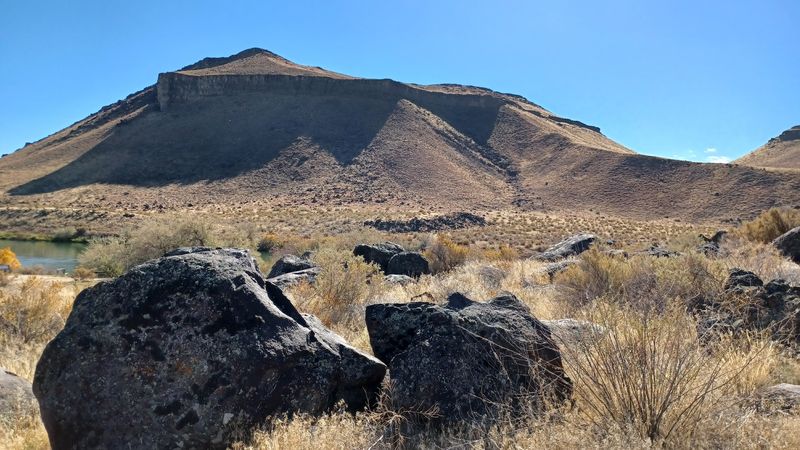
Around 15,000 years ago, a massive body of water called Lake Bonneville broke through a natural barrier far to the southeast. The Bonneville Flood that followed tore down the Snake River Canyon with a force hard to imagine today.
Chunks of basalt were ripped from the canyon walls and tumbled along in the rushing water. Over miles of travel, their sharp edges wore away until they became rounded, polished stones that geologists call melon gravel.
Celebration Park is covered with these melon boulders. Some are massive, others closer to the size of a footstool, and all of them share the same smooth, dark skin that makes them look almost sculpted.
That dark coating turned out to be important. Over time, weathering left the outer surface of the basalt nearly black, while the stone underneath stayed lighter in color.
Early people along the river noticed the contrast and put it to use. By chipping through the dark skin, they could make marks that stood out clearly, turning the flood’s leftovers into a giant outdoor canvas.
Every carving here rests on a stone delivered by one of the largest floods in North American history.
Carvings Spanning Twelve Millennia
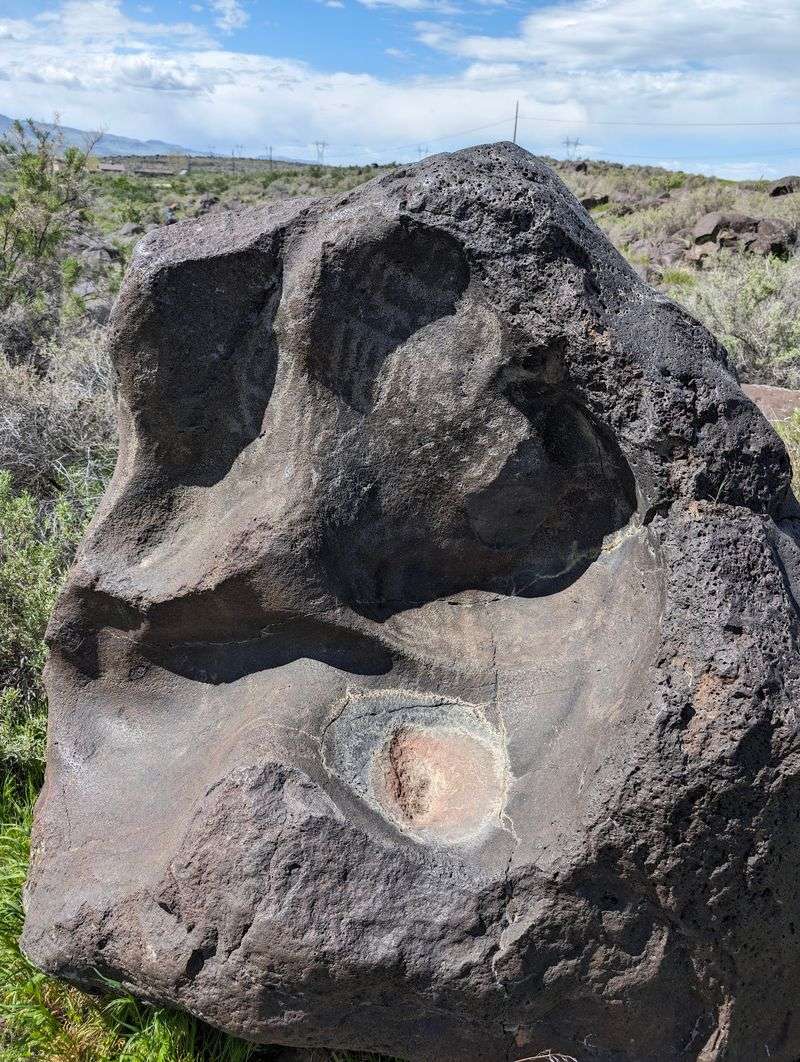
Some of the petroglyphs at this park may be around 12,000 years old. Others were made as recently as about 400 years ago, which means people returned to these same boulders to leave their marks across an enormous stretch of time.
Consider what that range covers. The oldest designs could date back close to the time humans first lived on the Snake River Plain, while the newest were carved only a few centuries before Idaho became a territory.
The technique stayed fairly consistent. Artists pecked or scraped away the darkened outer layer of the basalt to expose the lighter stone beneath, creating images that still read clearly under the right light.
Hundreds of carvings fill the park. You will find circles, rows of dots, lines, and shapes that look like people or animals, often grouped together on a single stone.
Timing your visit helps. Low morning or late afternoon sun throws shadows across the grooves, making faint designs pop, while harsh midday glare can wash them out.
Take your time at each boulder. Walking slowly and circling the larger rocks often reveals a carving you missed on the first pass.
Symbols With No Answer Key
Visitors often ask the same question: what do the carvings actually mean? The honest answer is that nobody holds a word-for-word translation, and archaeologists treat the designs as open to interpretation.
Some images may have carried ceremonial or spiritual meaning. Others might have marked important places, recorded events, or simply expressed an artist’s creativity, the same way people doodle or decorate today.
Location offers a few clues. Rock art across the Snake River Plain often appears near game trails, fishing spots, and plant gathering areas, suggesting the carvers spent time here because the river provided so much of what they needed.
Rangers can add depth to the mystery. Stop by the visitor center, and if the timing works out, a ranger may lead a guided walk through the boulders, pointing out designs that are easy to overlook and sharing what is known about the people who made them.
Visitors who have taken the tour describe it as well worth the time, since a knowledgeable guide turns a field of rocks into a story. A printed map also makes a self-guided loop easy if no tour is running.
An 1897 Bridge Built For Silver
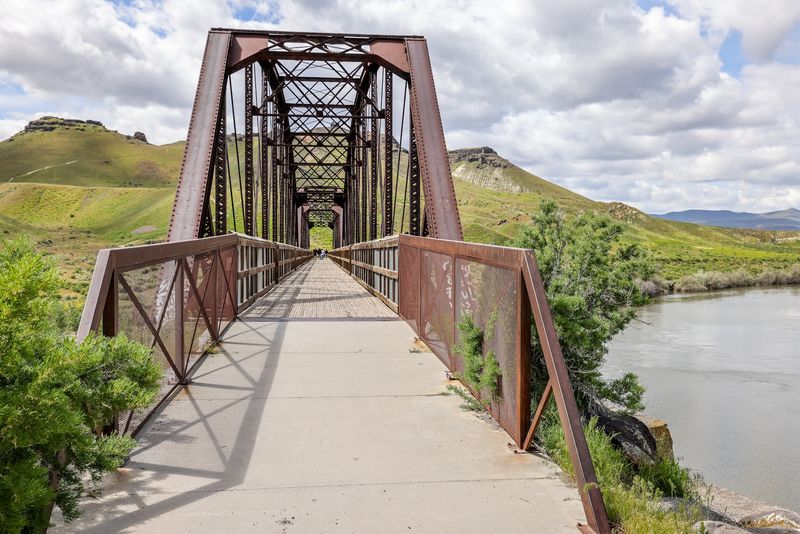
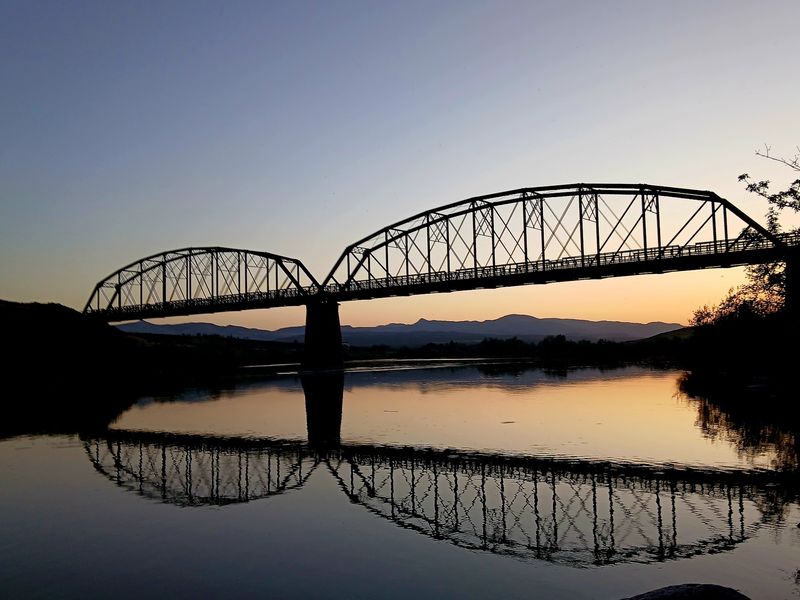
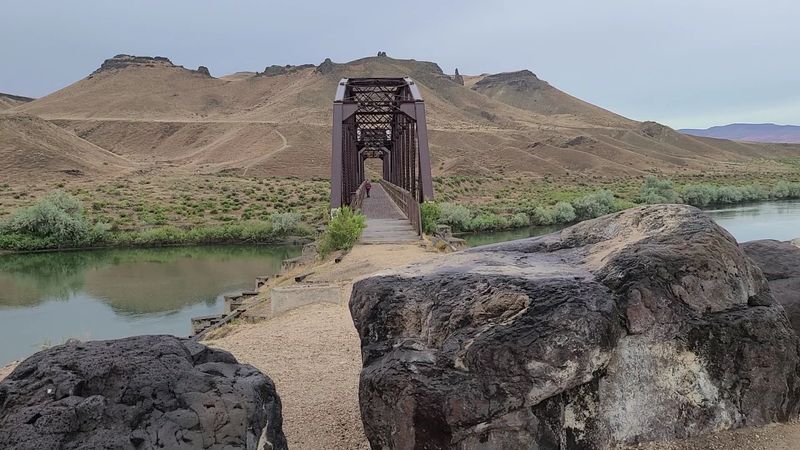
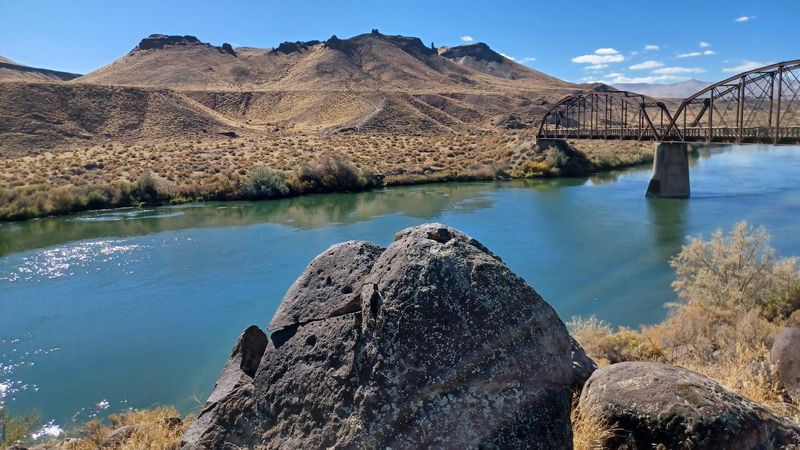
An old railroad bridge spans the Snake River just beyond the petroglyph area, and it carries a story from Idaho’s mining days. The Guffey Railroad Bridge went up in 1897 to haul precious metals from the Silver City mines toward Nampa for processing.
Trains no longer rumble across it. Today the historic bridge serves as a pedestrian crossing, linking the main park to trails on the far bank.
Walking it feels a little like stepping into an old photograph. The river slides beneath your feet, the canyon walls rise on both sides, and the long rows of rivets and beams hint at the effort it took to build something this sturdy more than a century ago.
Photographers love the angles here. The bridge frames the water nicely from the shore, and the middle of the span offers wide views up and down the canyon.
Many visitors name the bridge among their favorite parts of the park. It also marks a clear before and after for your visit, since the quieter trails wait on the other side for anyone willing to keep walking.
Footpaths On Both Riverbanks
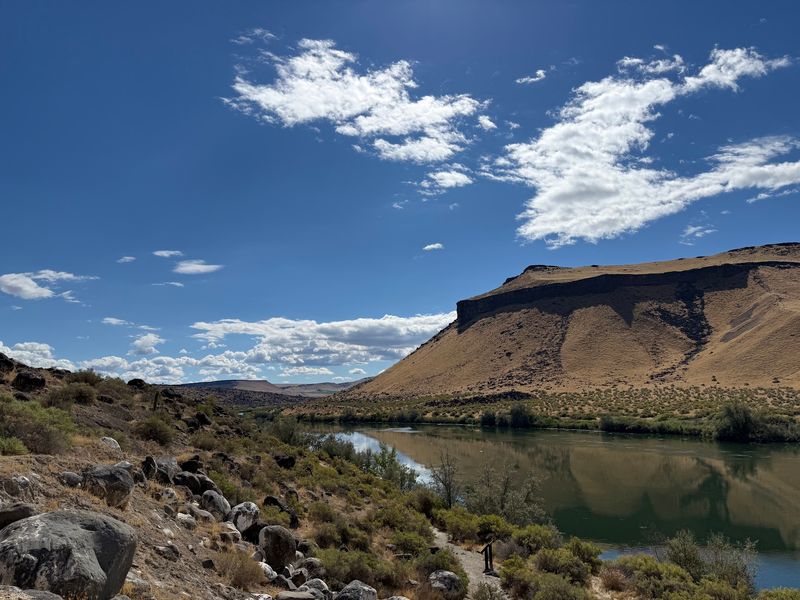
Hiking comes up again and again when people describe this park, and for good reason. A short petroglyph walk loops through the boulder field near the visitor center, while longer trails stretch along the Snake River in both directions.
Crossing the old bridge opens up even more ground. The far bank feels quieter, with paths that wander through basalt and high desert scrub where the only sounds might be the wind and the river.
Most of the terrain is manageable for casual walkers. One couple mentioned their two small chihuahuas handled the trails just fine, which gives a good sense of the pace.
A quick visit to the carvings might take around 45 minutes. Add the bridge and the far-side trails, and you can easily fill half a day without repeating a step.
Not far from the park, Dedication Point offers a lookout over the Snake River cutting through its canyon. Pairing the two makes a satisfying afternoon for anyone who enjoys big views after a close look at small details.
Good shoes help on the dusty, uneven ground, and extra water is a smart idea.
Raptors, Pheasants, And River Swimmers
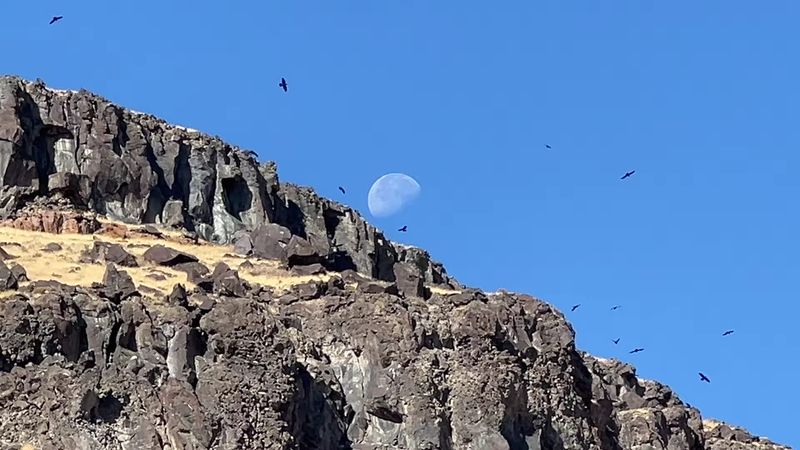
Keep your eyes up. The canyon near the park draws various raptors, and birdwatchers often spot species they have never seen before, alongside familiar Idaho faces like pheasants.
The ground holds its own residents. Western fence lizards dart across warm rocks, sometimes scrambling right over the carved boulders as if showing off their own piece of history.
Down by the water, one visitor spotted what looked like muskrats paddling along the bank. The Snake River supports plenty of life, and quiet mornings tend to reward patient watchers.
Birding fits naturally with a petroglyph walk. A pair of binoculars makes a big difference, whether you are scanning cliff edges for hawks or watching smaller birds flit through the brush.
Early hours tend to be best. Animals stay more active before the heat builds, and the light is softer for photos.
Respect goes a long way here. Give wildlife plenty of space, stay on marked paths, and keep dogs close so nests and burrows remain undisturbed.
Kids especially enjoy this side of the park. Counting lizards or keeping a bird list turns a walk into a game and gives younger visitors something to look for between the carvings.
Bass, Catfish, And A Rebuilt Ramp
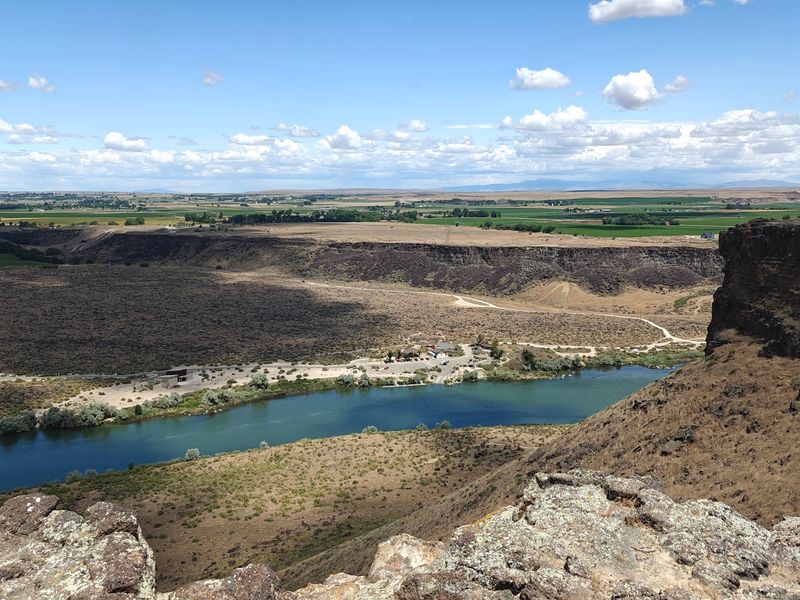
Grab a fishing pole before you leave home. Fishing ranks among the most popular activities at the park, and anglers report good bass action in the Snake River here, along with the occasional impressive catfish.
One family visit turned memorable when an uncle landed a big catfish, the kind of story that gets retold at every holiday dinner afterward. Moments like that explain why so many locals return with tackle boxes in hand.
A few rules apply. State regulations prohibit fishing directly off the boat dock, so plan to cast a short distance away from it, and make sure your Idaho fishing license is current.
The boat ramp has been under reconstruction, and at least one recent visitor found it closed. Anyone planning to launch a boat should check with Canyon County before towing a trailer all the way down.
Reaching the shoreline can take a little effort. Some visitors mention dusty banks and crowded spots near the water, so arriving early gives you a better chance at a good place to stand.
Swimming is a different story. The park has no designated swimming area, and the river’s strong currents make wading in a poor idea.
A Small Visitor Center With Friendly Faces
Small but mighty describes the visitor center well. Friendly staff greet guests, hand out maps, and answer questions about the carvings, the flood, and the history of the canyon.
Inside you will find a modest museum area and a gift shop. Several visitors say they arrived too late in the day and missed it entirely, so plan to stop in early if you want the full experience.
Practical perks sit nearby too. Flush restrooms, a bottle filling station, and potable water for containers make the building a handy base, especially for campers without hookups.
Hands-on history adds some fun. The park has an atlatl range where visitors can try the ancient throwing tool early hunters used, giving a real feel for the skill people once needed along this river.
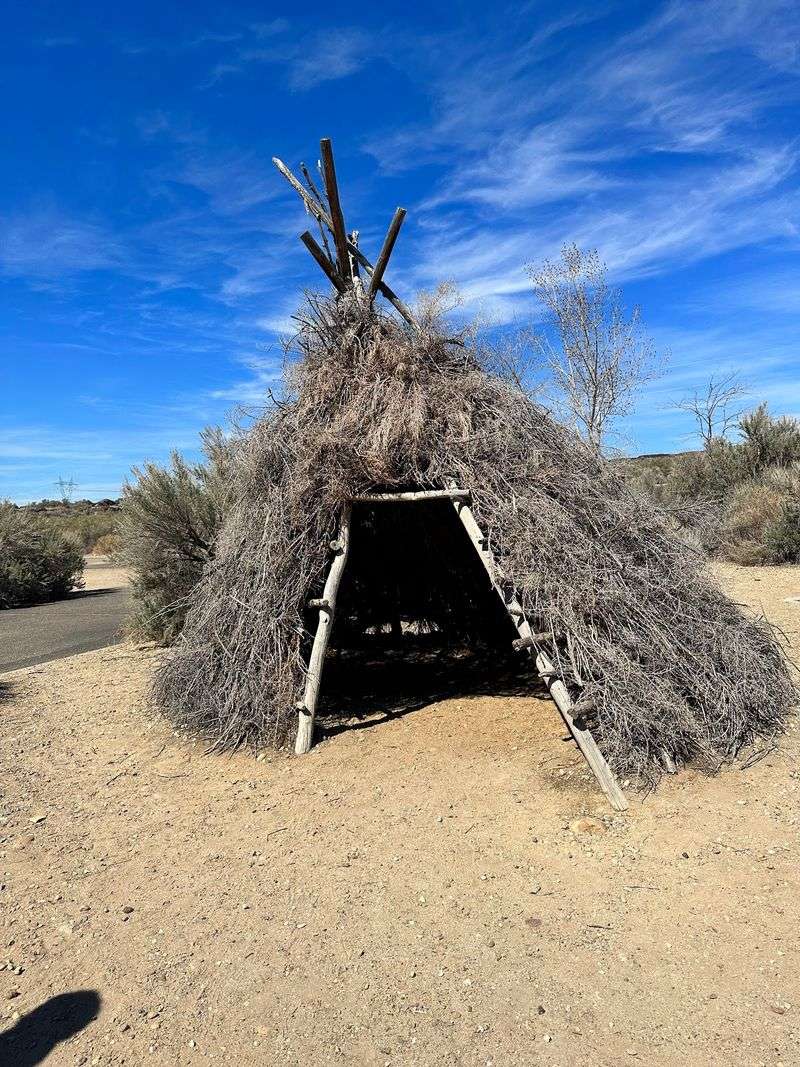
A teepee on the grounds also catches the attention of younger guests. It offers a playful photo stop and a starting point for conversations about the people who lived here long ago.
Seasonal schedules apply. The center typically operates from spring into fall, roughly April through October, and keeps limited daytime hours, so checking ahead saves disappointment.
Primitive Campsites Under Bright Stars
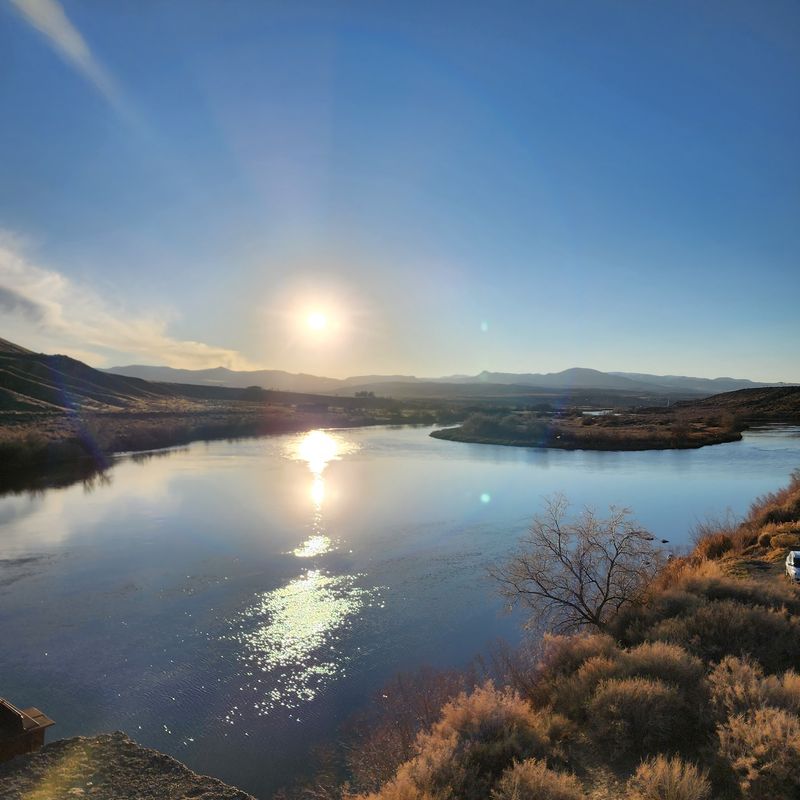
Night falls differently along this stretch of the Snake. Stars shine sharp above the canyon, the river hums in the dark, and visitors who stay late describe a calm that is hard to find closer to town.
Camping here is simple and affordable. Sites cost just a few dollars a night through a self-pay envelope system, and they are strictly first-come, first-served with no advance reservations.
Expect a primitive setup. There are no RV hookups, water, or dump station at the sites, though fire pits, picnic tables, and clean pit toilets are available, with flush toilets a longer walk away.
Layout matters when choosing a spot. East side campsites are spread out fairly well, while the west end feels tighter, and larger tents may struggle to find room.
Weekend nights can get loud near the boat launch, with some groups staying up well past quiet hours. Campers who value sleep tend to pick sites farther from that area.
Wind picks up at night, and shade is scarce during the day. Check posted fire rules on arrival, pack out every scrap of trash, and leave the canyon as peaceful as you found it.
Best Suited To Curious Explorers
Parents hoping for swings and slides should know upfront: there is no playground here. What the park offers instead is a riverbank full of carved boulders, open trails, and room to wonder.
School groups visit often, and it is easy to see why. Few classrooms can compete with standing beside a stone shaped by an ancient flood and spotting a design carved long before anyone wrote history books.
Out-of-town guests are another great match. Bringing visitors here shows off a side of the Treasure Valley that surprises even people who have lived in Idaho for years.
Outdoor lovers of all kinds find something. Anglers, birders, photographers, hikers, and motorcycle riders all mention the park fondly, and small dogs seem to enjoy the trails as much as their owners.
Crowds come with the popularity. Busy days can feel packed near the water, so anyone seeking solitude should aim for weekday mornings or cross the bridge where foot traffic thins out.
Families with older kids tend to get the most from a visit. Children who enjoy puzzles and mysteries usually love hunting for carvings, especially with a ranger or map guiding the search.
Fees, Seasons, And Sun Smarts
Gates stay open around the clock, which gives early risers and stargazers plenty of flexibility. The visitor center runs on a separate, seasonal schedule, so confirm current details with Canyon County before driving out.
Day use costs only a couple of dollars, paid through self-pay envelopes. Bring small bills, since visitors recommend having cash on hand.
Shade is the biggest planning factor. The canyon terrain offers almost none, so summer afternoons can feel scorching on the exposed trails.
Morning visits solve most problems. Temperatures stay friendlier, wildlife is more active, and you will have a better chance of catching the visitor center while it is open.
Pack with purpose. Hats, sunscreen, sturdy shoes, and plenty of water belong in every bag, and a light jacket helps if the wind kicks up in the evening.
Spring and fall often bring the most pleasant conditions for walking, lining up nicely with the visitor center season. Summer still works, but plan outings around the heat.
A few final notes help too. Stay clear of the archery range while it is in use, stay out of the river, and keep an eye on children near the water.
A Canyon Worth Returning To
Plenty of first-time visitors leave with unfinished business. They ran out of time before crossing the bridge, missed the visitor center, or simply wanted another look at a boulder that caught their eye.
That pull to return says a lot about the place. Celebration Park rewards slow exploring, whether you spend 45 minutes on the petroglyph walk or a whole weekend camping by the river.
The combination is hard to match anywhere else in Idaho. Ancient carvings, flood-polished basalt, a mining-era bridge, and a working river all share the same patch of canyon.
It is not a fancy destination, and that is part of the appeal. Primitive campsites, dusty trails, and a small visitor center keep the focus on the land and its long human story.
Respect keeps it special. Many who love this spot ask others to visit thoughtfully, clean up after themselves, and treat the carvings as the irreplaceable cultural treasures they are.
For a day trip that mixes history, nature, and a little adventure, few Treasure Valley outings deliver more for a couple of dollars. Pack water, arrive early, and let the boulders do the talking.