This Free Florida Museum In Sarasota Holds An Incredible Collection Of Circus Treasures
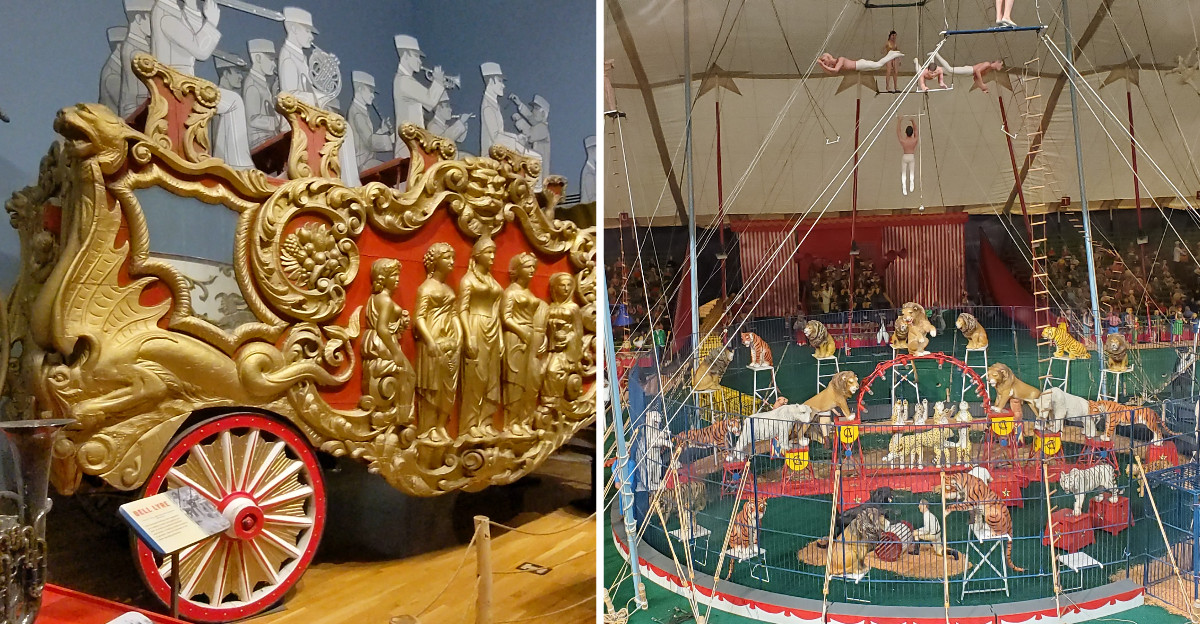
Tiny tents, painted wagons, glittering costumes, and an entire traveling world squeezed into astonishing detail.
Boring history does not stand a chance here!
Florida’s circus past comes alive through objects showing what happened both under the big top and behind it.
The miniature scenes practically pull you closer, with train yards, work tents, crowds, and tiny surprises hiding everywhere.
Then the full-size pieces remind you just how enormous the real operation was. It is playful, detailed, and unexpectedly absorbing.
One important note: before counting on free admission, current ticket information is worth checking first.
A Story Worth Saving
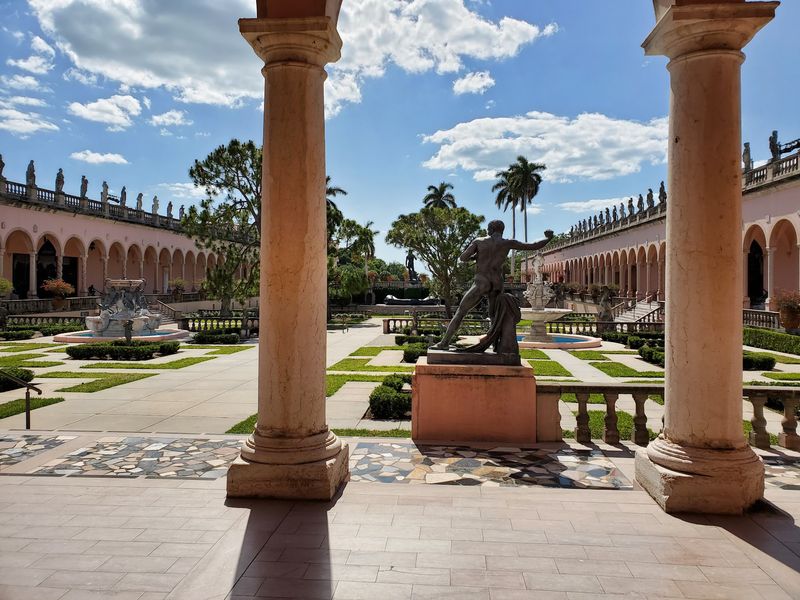
The Circus Museum began with a larger purpose than displaying bright costumes and decorated wagons.
Its collection was created to preserve the history of the American circus and the people who made the shows possible.
The museum opened in 1948, becoming the first museum in the country devoted to documenting American circus history.
Early holdings included props, costumes, posters, and other material donated by circus families connected to Sarasota.
Today, the Circus Museum includes both the Historic Circus Galleries and the Tibbals Learning Center. Together, they cover performance, advertising, transportation, logistics, and everyday life behind a traveling show.
A colorful poster may advertise spectacle, while a ticket wagon, photograph, or piece of equipment reveals the work required before an audience ever took its seat.
The collection reaches beyond one company. Materials document different shows, performers, designers, workers, transportation systems, and changing approaches to circus entertainment.
The Circus Museum is part of The Ringling at 5401 Bay Shore Road in Sarasota.
The Tiny Circus City
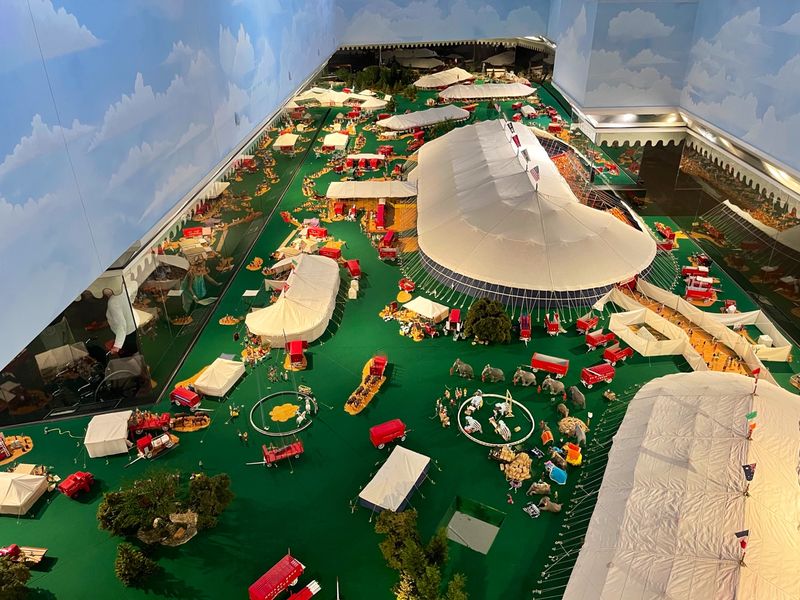
The smallest circus here may require the longest look.
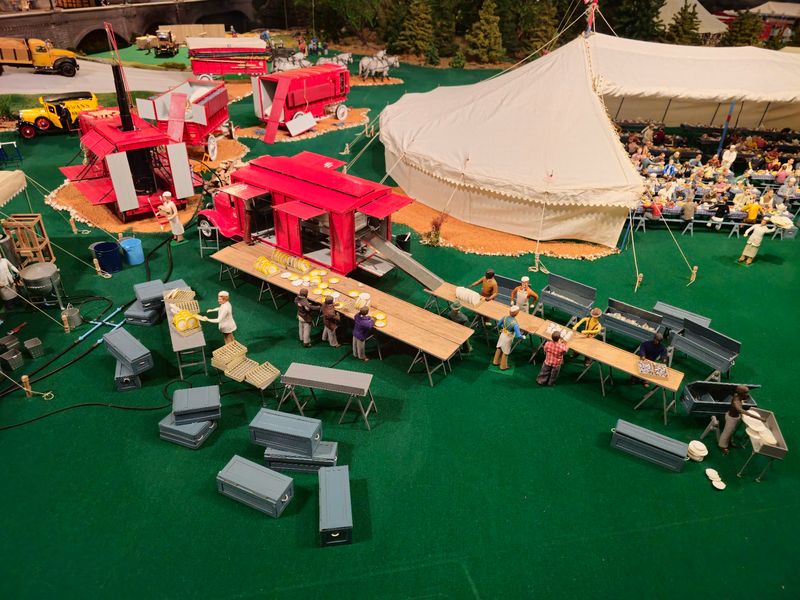
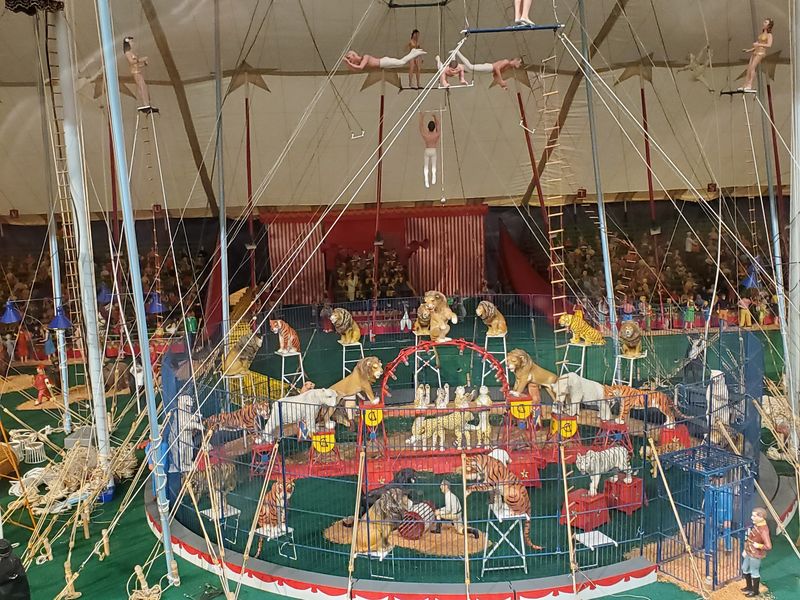
The Howard Bros. Circus Model is packed with tents, wagons, rail equipment, performers, workers, animals, and scenes of everyday activity.
The model recreates a traveling American tent circus at one-sixteenth scale. Instead of focusing only on the performance ring, it follows the workings of an entire circus day.
Train areas show how the show arrived in town, while work spaces reveal what had to happen before the public entered. Dining and dressing areas add another layer to the story.
Thousands of miniature details make the size of the real operation easier to understand. Each worker and wagon connects to the larger system required to move, assemble, operate, and dismantle the show.
Howard Tibbals began building the model as a teenager and continued researching and expanding it for decades. That long commitment produced one of the Circus Museum’s most recognizable displays.
The gallery is arranged as a continuous experience around the model, allowing visitors to follow the circus from arrival through setup, performance, and departure.
Costumes With Stage Presence
Circus costumes had to accomplish more than looking dramatic under bright lights. They also needed to allow performers to move safely and withstand repeated use.
The Ringling’s circus collection includes costumes as well as extensive costume-design material in its archives.
These records show how designers balanced appearance, movement, durability, and the demands of different acts.
Sequins, feathers, fabric, braid, and other decorative materials helped performers stand out from a distance. Construction still had to suit the movements required by the performance.
Different acts created different design problems. Clothing for an acrobat, equestrian performer, clown, or parade participant could not be approached in exactly the same way.
Costume drawings also reveal how an idea developed before it became a finished garment. Designers considered color, shape, materials, safety, and the way the costume would look in motion.
Because Florida museum displays can rotate, not every costume or design is guaranteed to be visible during every visit. Current labels provide the most reliable information about dates, performers, and intended uses.
Wagons Built For Travel
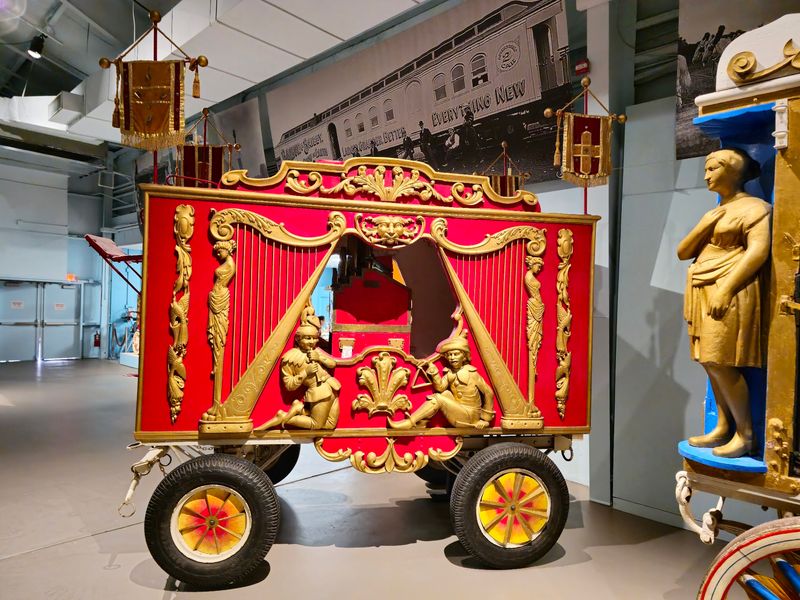
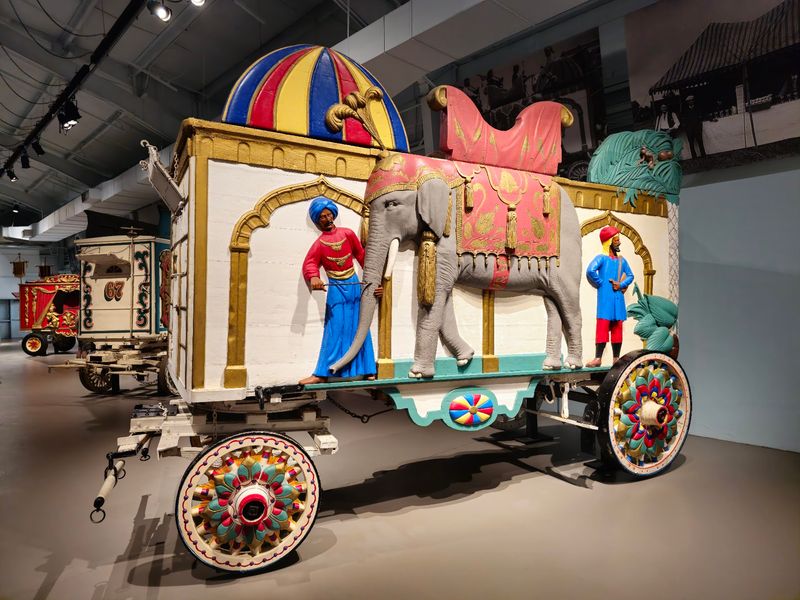
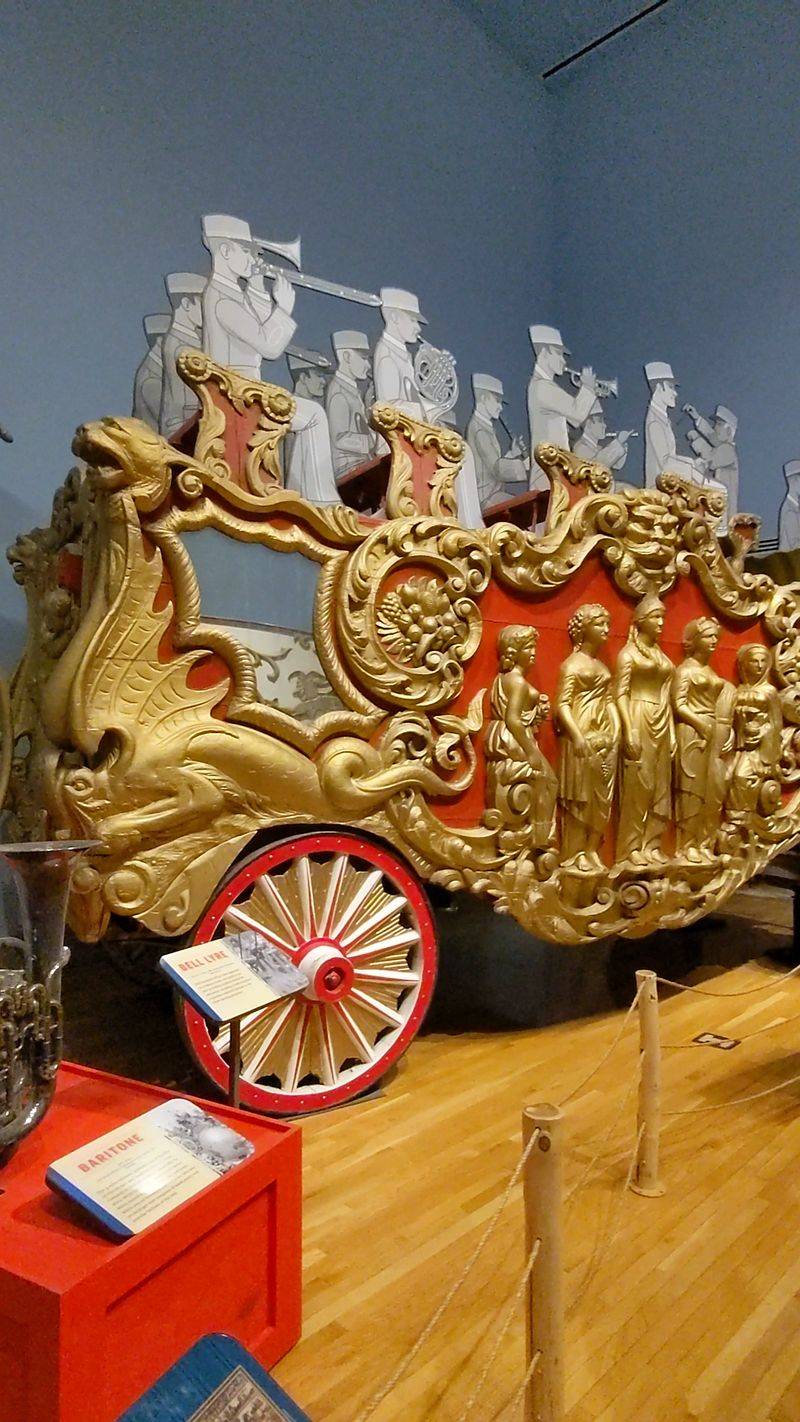
Decorated circus wagons show how a practical vehicle could also function as moving advertising.
Bright paint, carved details, lettering, and elaborate wheels helped announce that a circus had arrived.
The Historic Circus Galleries contain more than a dozen circus wagons and vehicles. The collection includes parade wagons, working vehicles, a historic ticket wagon, and the Wisconsin railroad car.
One wooden ticket wagon dates to 1911 and traveled with the circus for decades. Visitors once approached wagons like this to purchase tickets before entering the show grounds.
The larger Wagon Room makes transportation impossible to overlook. Wagons carried equipment, sold tickets, supported concessions, appeared in parades, and handled other jobs necessary to a traveling circus.
Some brightly decorated parade wagons were designed to carry performers or musicians through town. Others served practical functions away from the parade route.
The painted wheels deserve attention as well. Their patterns and colors turned basic working components into another part of the circus’s visual identity.
Photographs displayed with historic objects can show how a wagon looked while surrounded by crowds, horses, performers, or other circus equipment.
Posters That Built Excitement
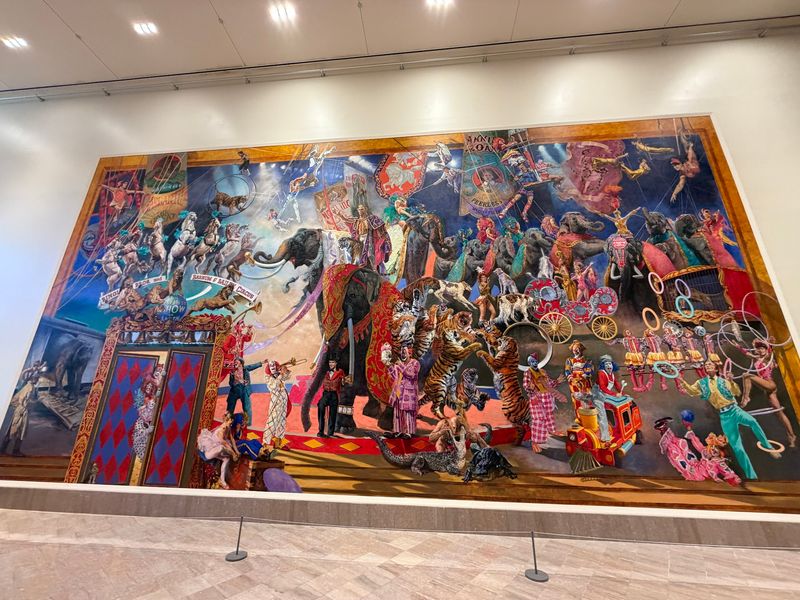
Before the performance began, printed advertising had to convince people that the circus was worth seeing.
This Florida museum’s circus collection includes posters, handbills, tickets, booklets, photographs, and other forms of advertising and printed ephemera.
Large lettering and dramatic images were designed to catch attention quickly. Performers, animals, unusual acts, and spectacle often dominated the page.
Smaller text can reveal just as much. Dates, locations, act names, ticket information, and printing details help place an advertisement within a specific moment in circus history.
Posters show what a circus wanted the public to notice first. Photographs, business records, equipment, and other objects can reveal a different side of the same operation.
Comparing those materials helps separate promotion from day-to-day work. One object sells excitement while another documents the systems that kept the show moving.
Costume drawings and other archival records can add still another layer by showing how visual ideas moved from planning stages into public performance.
For younger visitors, simply finding the largest word or most prominent image on a poster can open a conversation about how advertising was designed to attract an audience.
A Closer Look Backstage
The circus depended on far more than what happened inside the performance ring.
Transportation, ticketing, food service, equipment, setup, maintenance, and scheduling all had to work together.
The Howard Bros. Circus Model makes that organization visible on a miniature scale. Full-size artifacts in the Historic Circus Galleries show what some of those systems looked like in actual use.
Ticket wagons handled crowds before the show. Railroad cars and other vehicles moved people and equipment between towns.
The model also shows dining, dressing, working, and service areas that audiences might never have considered while watching a performance.
That contrast between spectacle and logistics is one of the museum’s strongest themes. A traveling circus could employ more than a thousand people who had to build, operate, and dismantle the show repeatedly.
Historic photographs help connect surviving objects to the environments where they were once used. They can show a wagon or piece of equipment surrounded by the much larger operation.
Exhibit labels are especially useful in this part of the museum because an object’s appearance does not always make its original purpose obvious.
Hands-On Circus Moments
The Tibbals Learning Center adds interactive activities to the historical displays.
Its first-floor Interactive Gallery introduces visitors to different circus disciplines through hands-on stations, multimedia, objects, and stories about performers.
Current activities include opportunities connected with ringmasters, clowning, acrobatics, tightrope balance, equestrian performance, and the physics behind the human cannonball.
The clown-car station lets visitors explore one of the circus’s most familiar comic traditions. Other stations focus more directly on balance and performance skills.
A tightrope-style activity gives visitors a simplified sense of the concentration involved in balancing above the ground.
The miniature cannon demonstration approaches another famous circus act through basic physics rather than asking anyone to attempt the real stunt.
These activities are intended for adults and children, although the gallery can become busy and noisy during crowded periods.
Moving between hands-on stations and quieter historical displays creates useful variety. Anyone who needs a break can continue through the surrounding galleries and return to the interactive area later.
Plan A Longer Visit
The Howard Bros. Circus Model alone can take considerable time if every section is examined closely. The Historic Circus Galleries and interactive areas add much more beyond the miniature display.
The Ringling is currently open daily from 10 a.m. to 5 p.m., although holiday closures and special operating changes can occur.
Museum admission is required for the Circus Museum. Free Monday access applies to the Museum of Art and Bayfront Gardens rather than the Circus Museum.
Starting with the model provides an overview of how a traveling circus operated. Seeing the full-size wagons and other artifacts afterward can make their scale and purpose easier to understand.
Florida visitors who prefer the reverse order can begin with the historic objects and use the model later to place them within a complete circus environment.
Personal photography is permitted in the Circus Museum unless signage states otherwise. Flash photography, selfie sticks, tripods, and lighting equipment are not allowed.
Food and drinks are not permitted inside the galleries. Accessible restrooms are available in the Tibbals Learning Center, although the original Historic Circus Galleries do not contain wheelchair-accessible restrooms.