Few People Know This Gorgeous Hindu Temple Exists Right Here In Florida
You can drive through an ordinary neighborhood and suddenly find architecture that makes you forget where you were going.
One Hindu temple in Florida brings intricate carvings, sacred traditions, and a striking entrance tower into a setting many travelers would never expect.
The beauty grabs your attention first. Then the atmosphere changes things.
This is an active place of worship, not simply another sightseeing stop, and that gives every detail more meaning.
A respectful visit becomes a chance to notice the art while learning about the community behind it.
Quiet curiosity feels right here. Sometimes the most memorable discovery is the one you never expected to find.
A Community Built It
The story began in December 1983, when Hindu families across the Tampa Bay area organized around a shared goal.
Before a permanent temple existed, worship took place in private homes where families gathered for prayers, festivals, and ceremonies. The community purchased the present property in 1989.
An older house already standing there became a temporary place of worship while plans for something larger moved forward. That house served as the Balalaya, a temporary shrine used while a permanent temple is being prepared.
Construction on the main temple began in 1994 and reached completion two years later.
A major consecration followed in May 1996, marking the installation of the principal deities and the beginning of regular worship inside the completed building.
The ceremony, known as the Maha Kumbhabhishekam, is performed when a new temple is formally dedicated.
Growth continued well beyond opening day. Cultural programs, community services, and new architectural details gradually expanded what the site could offer.
That original neighborhood effort now fills a much larger role for Hindu families throughout the Tampa Bay area.
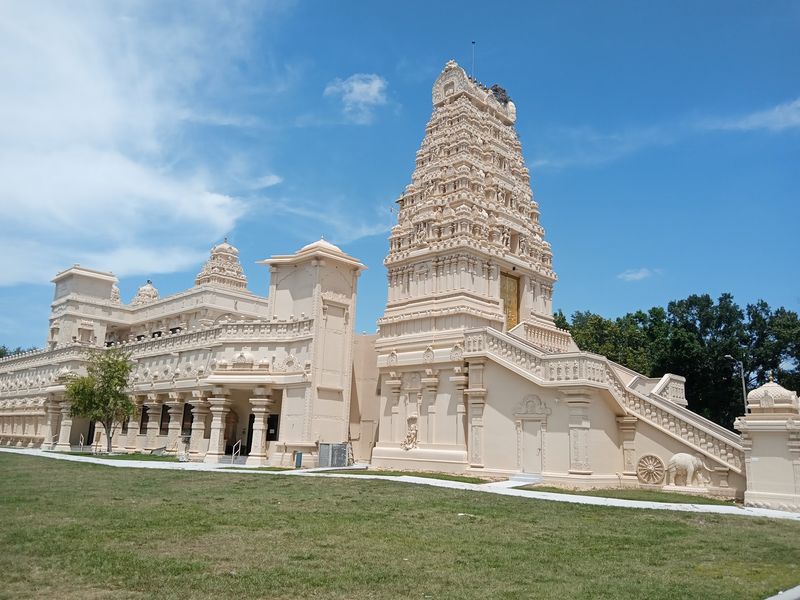
The Hindu Temple of Florida stands at 5509 Lynn Road in Tampa.
Look Up At The Towers
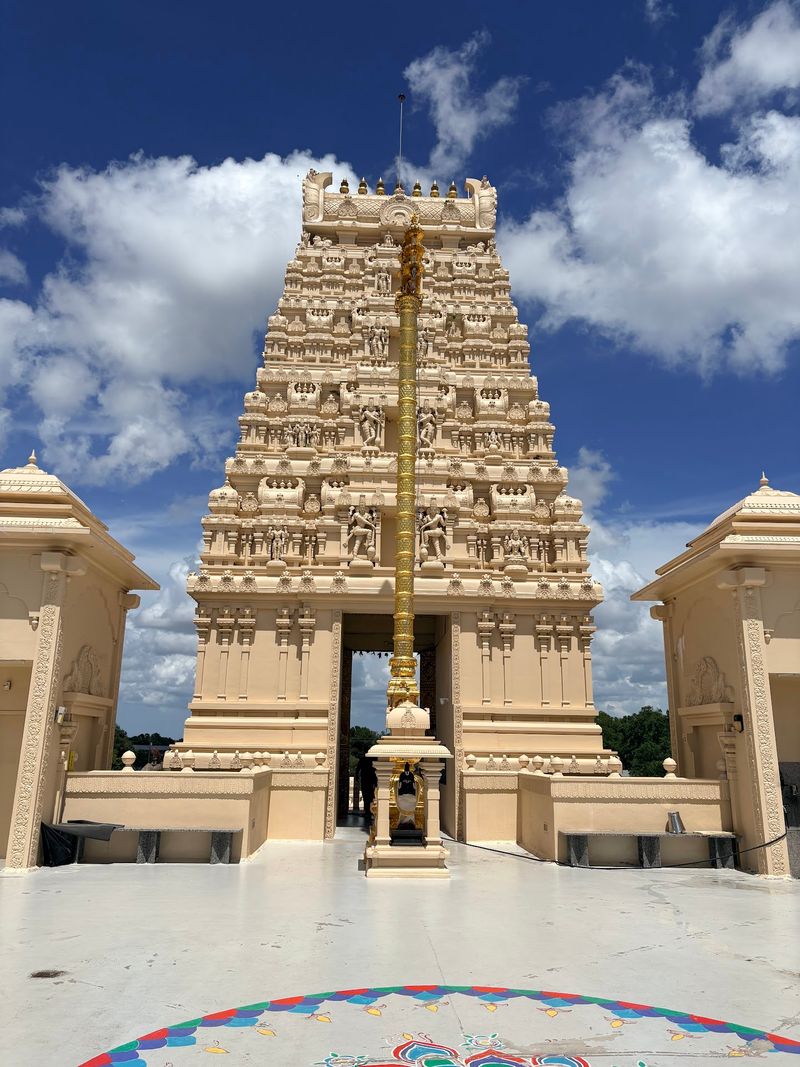
The entrance pulls your eyes upward before you ever reach the doors.
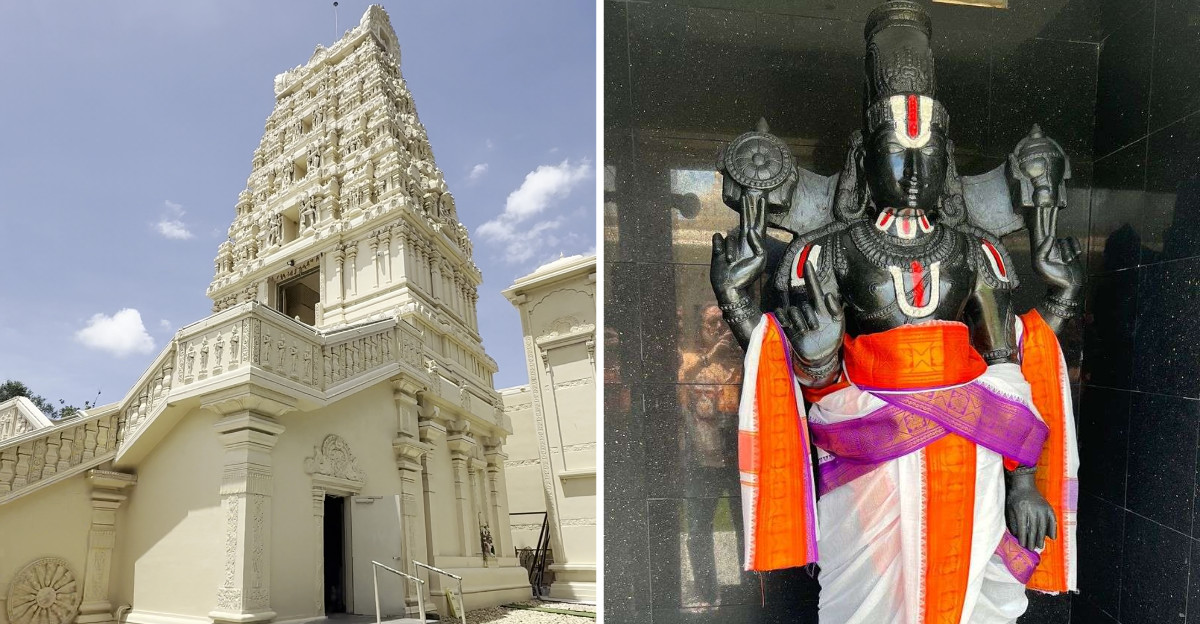
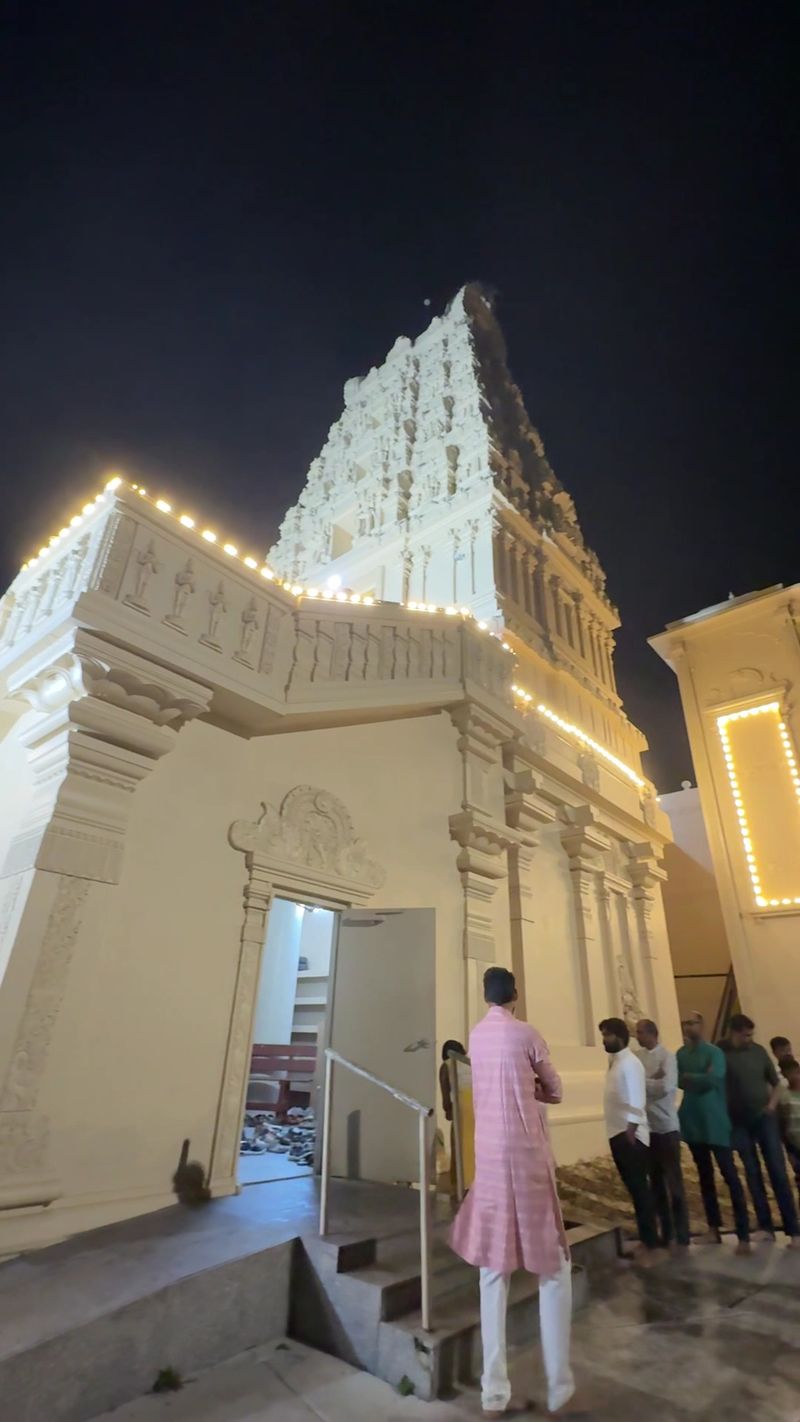
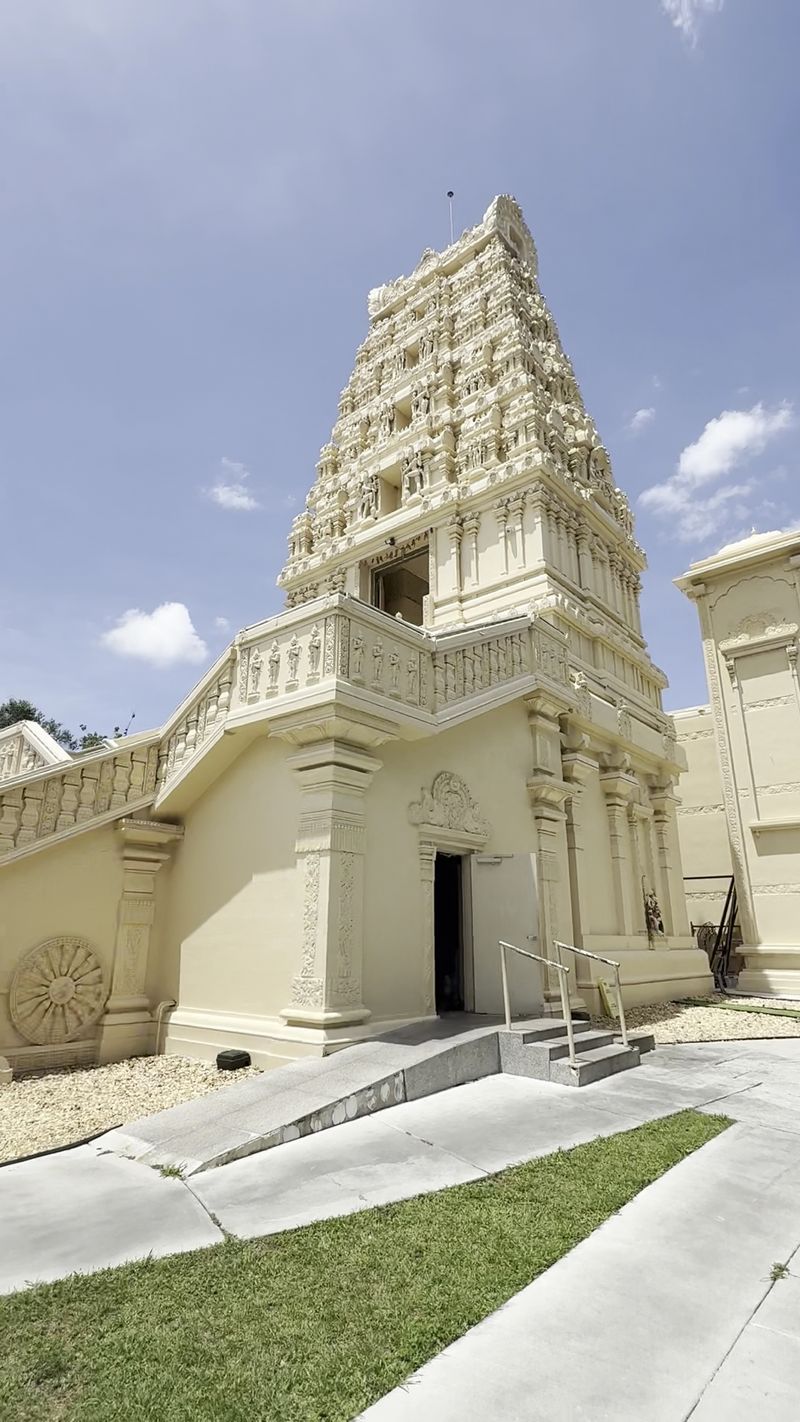
The Raja Gopuram creates the temple’s most recognizable silhouette, rising above the entrance with layers of sculptural detail.
Tampa’s Raja Gopuram was designed and created by a traditional temple architect working with artists from Chennai, India.
Smaller Vimana Gopurams crown shrine areas around the complex and add even more movement to the roofline.
None of that elaborate exterior appeared overnight.
The temple began an architectural expansion phase in 2000 that added more traditional plasterwork, sculpture, towers, and ornamental features.
By 2006, the main entrance tower and shrine towers had been completed and formally consecrated. Today, the temple stands about 70 feet tall and covers more than 14,500 square feet.
The closer you stand, the easier it becomes to notice individual figures, repeating patterns, and tiny details tucked between larger forms.
Photography is permitted in many areas, although flash is restricted in the main sanctum and special ceremonies may bring additional limits.
Stories Across The Walls
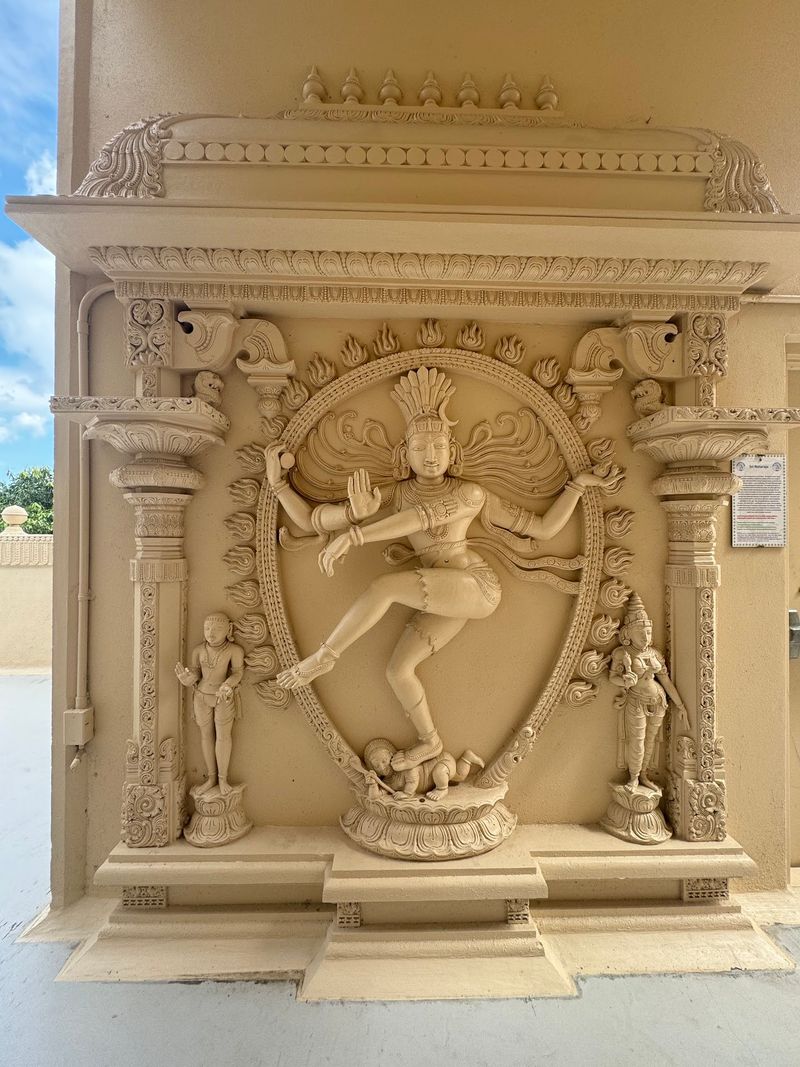
The entrance pulls your eyes upward before you ever reach the doors.
Many of the carved figures represent deities honored inside, so the exterior works almost like a visual introduction to the shrines.
The Raja Gopuram creates the temple’s most recognizable silhouette, rising above the entrance with layers of sculptural detail.
Smaller Vimana Gopurams crown shrine areas around the complex and add even more movement to the roofline. None of that elaborate exterior appeared overnight.
The temple began an architectural expansion phase in 2000 that added more traditional plasterwork, sculpture, towers, and ornamental features.
Work on the exterior carvings and sculptures continued for about six years after the temple opened.
By 2006, the main entrance tower and shrine towers had been completed and formally consecrated.
The closer you stand, the easier it becomes to notice individual figures, repeating patterns, and tiny details tucked between larger forms.
Photography is permitted in many areas, although flash is restricted in the main sanctum and special ceremonies may bring additional limits.
Many Shrines, One Space
The entrance pulls your eyes upward before you ever reach the doors.
The Raja Gopuram creates the temple’s most recognizable silhouette, rising above the entrance with layers of sculptural detail.
Smaller Vimana Gopurams crown shrine areas around the complex and add even more movement to the roofline.
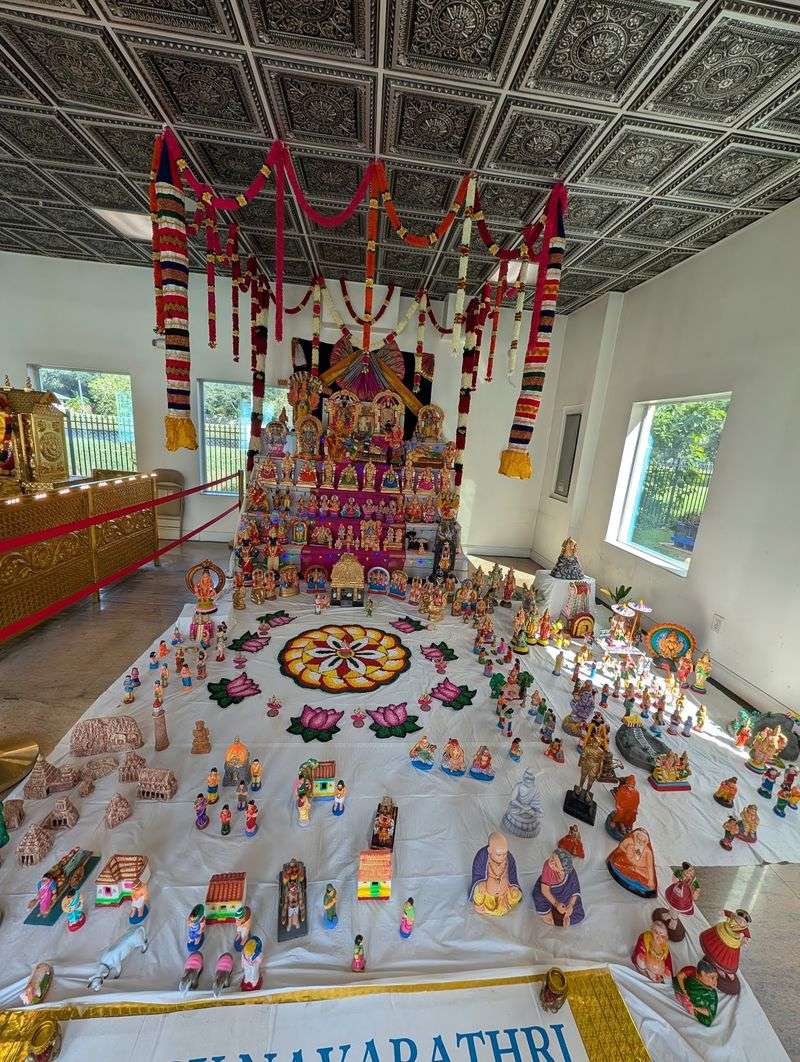
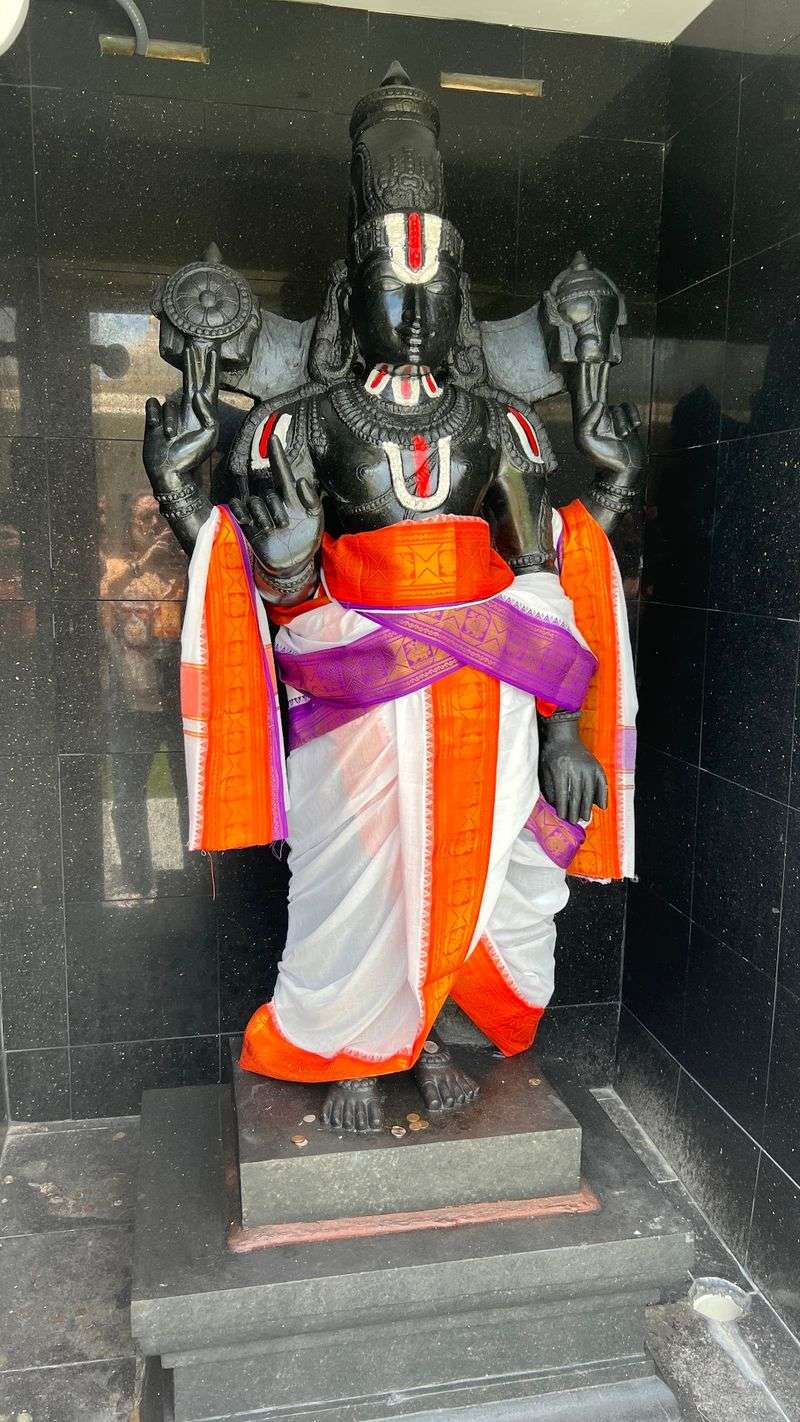
Shiva, Anjaneya, Subramanya, and Guru Raghavendra are among the many figures honored here. None of that elaborate exterior appeared overnight.
The temple began an architectural expansion phase in 2000 that added more traditional plasterwork, sculpture, towers, and ornamental features.
By 2006, the main entrance tower and shrine towers had been completed and formally consecrated. In March 2015, new shrines for Panchamukhi Anjaneya and Sai Baba were consecrated during a three-day festival around Ugadi.
The closer you stand, the easier it becomes to notice individual figures, repeating patterns, and tiny details tucked between larger forms.
Photography is permitted in many areas, although flash is restricted in the main sanctum and special ceremonies may bring additional limits.
Traditions Kept In Practice
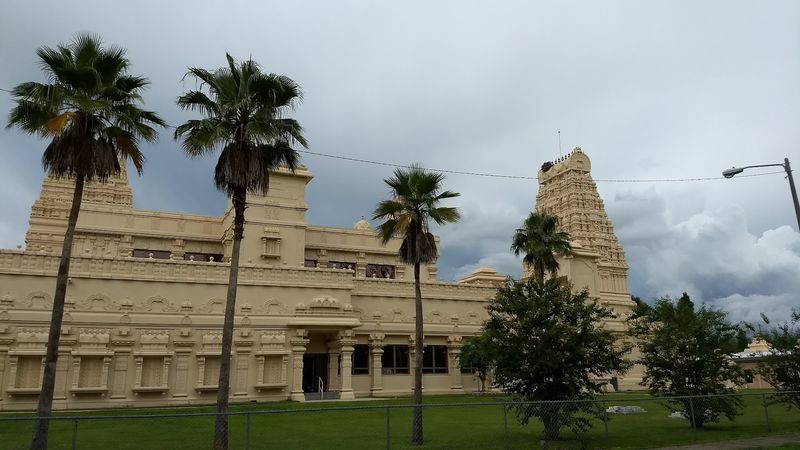
This is not architecture preserved only for people to admire.
Prayer and ritual continue throughout the week, giving the building a purpose that goes far beyond sightseeing.
Regular poojas, arathi, abhishekam, and other ceremonies keep different shrine areas active at different times. Monthly observances such as Pradosham and Poornima add even more occasions for worship.
Families also come here for important life events and religious observances rather than simply major annual festivals. Devotees can also arrange private poojas, either at the temple or at home with a temple priest.
Weddings, naming ceremonies, traditional rites, and private prayers all remain part of temple life.
Volunteer service adds another layer, with community members helping during celebrations, educational programs, food service, and daily operations.
Children and adults can also take part in cultural and religious learning connected to language, music, dance, yoga, and Hindu traditions.
The temple feels most understandable when you remember that the traditions represented in its artwork are still being practiced inside it.
A Calendar Full Of Meaning
The calendar gives this temple a different rhythm throughout the year. Because Hindu festivals follow a lunisolar calendar, most dates shift from one year to the next.
Daily worship continues, but special occasions bring larger gatherings, extended hours, and ceremonies that can transform an ordinary visit. Maha Shivaratri is among the most significant, with worship of Shiva continuing through the night.
Festivals, traditional poojas, spiritual programs, and community celebrations all appear on the schedule. Diwali, Navaratri, and Janmashtami are among the celebrations observed here throughout the year.
Some observances focus closely on particular deities, while others bring prayer, music, food, and cultural traditions together. Ganesh Chaturthi, for example, honors Lord Ganesha, who is traditionally worshipped at the start of new undertakings.
Classical music and dance performances add another dimension during selected programs.
Youth activities and educational events help younger generations stay connected to traditions practiced by their families.
Visitors may find the atmosphere completely different depending on the day they arrive.
Dates and schedules change, so checking the current calendar before visiting is especially important around major observances.
Plan A Respectful Visit
A little preparation makes visiting far more comfortable for everyone.
Guests of all faiths and backgrounds are welcome, but the temple asks visitors to dress modestly and remember that worship may be happening around them.
Shoulders should remain covered, and longer pants, skirts, or dresses are the safest choice. The dress code applies to everyone ages 12 and older, and knees should be covered too, so shorts are not appropriate.
Shoes come off before entering temple halls, with racks available near the entrances.
Photography for personal use is allowed in most areas, but flash should not be used inside the main sanctum.
Special ceremonies may come with additional photography restrictions, so following posted guidance matters.
Scheduled tours are available for anyone who wants more explanation, while larger groups can arrange custom visits in advance. Individuals and groups of up to 10 can sign up for a guided tour through the temple’s website.
The simplest rule is also the best one: observe first, move calmly, and give worshippers the space they need.
Stay For The Quiet
A little preparation makes visiting far more comfortable for everyone. Weekday hours are split between 9:30 to 11:30 a.m. and 6 to 9 p.m., while weekends run from 9:30 a.m. to 9 p.m.
Guests of all faiths and backgrounds are welcome, but the temple asks visitors to dress modestly and remember that worship may be happening around them.
Shoulders should remain covered, and longer pants, skirts, or dresses are the safest choice. Shoes come off before entering temple halls, with racks available near the entrances.
Photography for personal use is allowed in most areas, but flash should not be used inside the main sanctum.
Special ceremonies may come with additional photography restrictions, so following posted guidance matters.
Scheduled tours are available for anyone who wants more explanation, while larger groups can arrange custom visits in advance.
The simplest rule is also the best one: observe first, move calmly, and give worshippers the space they need. Taking a few minutes to sit and simply watch the rhythm of worship can be the most memorable part of a visit.