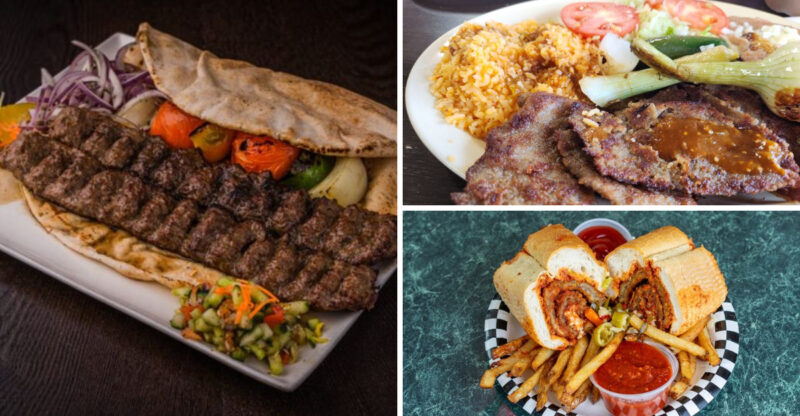
This Beloved Illinois Hot Dog Spot Still Feels Like A Delicious Step Back To The 1940s
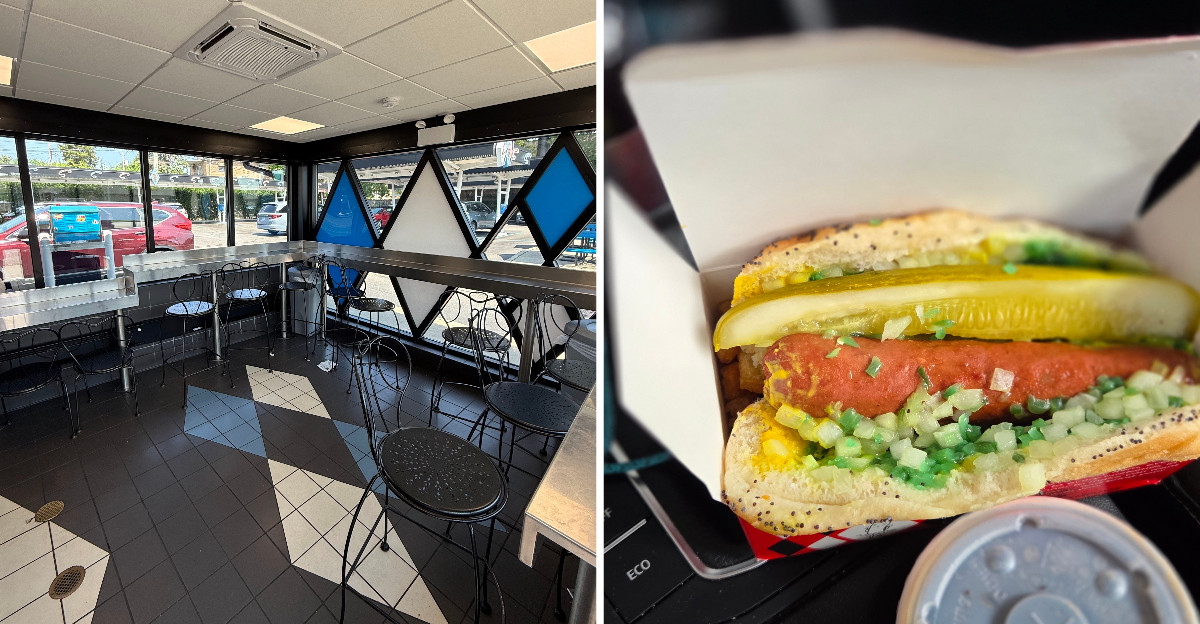
Neon glowing. Carhops moving. Two rooftop mascots watching the whole scene like they own the joint.
This Illinois hot dog stop feels like somebody left the 1940s running and forgot to turn it off!
The food is part of the fun, but the atmosphere makes the meal impossible to confuse with an ordinary drive-through.
Old-school roadside details and bright food boxes keep the whole experience playful without turning it into a museum piece. That is the trick.
The nostalgia still feels alive. One hot dog later, a quick meal has somehow become a tiny time-travel experiment with fries on the side.
A Corner With History
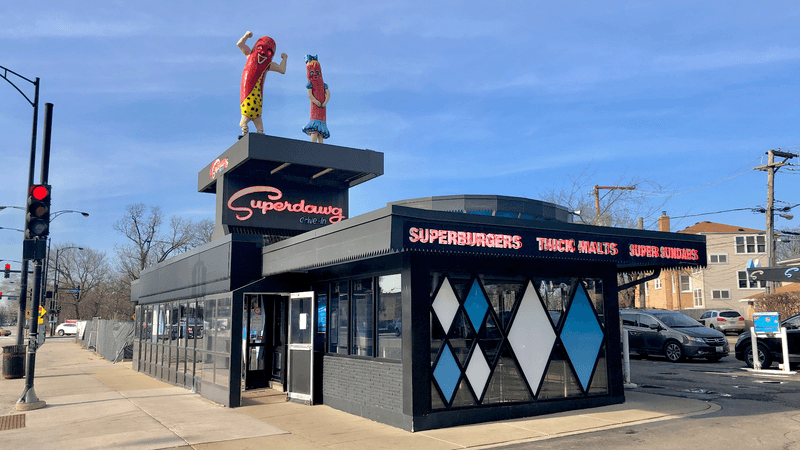
Some corners have a way of keeping their stories alive. Superdawg Drive-In has served this Chicago intersection since May 1948.
The original stand began as a summer project for a young married couple. One was a public-school teacher, while the other was studying accounting at Northwestern University.
They chose a spot at the end of a streetcar line. A forest preserve and Whealan Pool were directly across the street, bringing families and young drivers through the area.
That setting helped make the stand a practical stop after swimming or an afternoon outing. The location quickly connected the new business with traffic already moving through the neighborhood.
Business eventually grew beyond the summer months. In 1950, the owners decided to operate Superdawg throughout the year.
Today, the intersection remains part of the experience. Milwaukee, Devon, and Nagle meet beside a restaurant designed from the start to catch attention.
The original Chicago location is at 6363 N Milwaukee Ave, Chicago. It remains the same corner where the business began.
Meet The Rooftop Stars
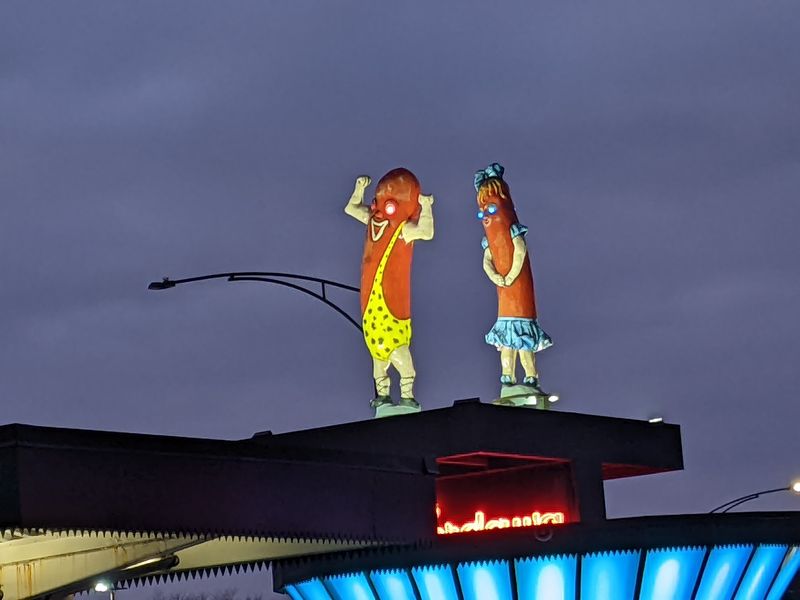
Two giant hot dog figures watch over the restaurant, and their names honor the couple who founded Superdawg Drive-In.
One figure flexes in a leopard-patterned strongman outfit. The other wears a blue skirt and a large bow.
They stand about twelve feet tall above the building. Their size helped make the small original stand visible from the surrounding roads.
Their illuminated eyes blink, with the inward-facing eyes designed to wink toward each other. The playful expressions have been part of the drive-in’s identity since its earliest years.
The figures turn the roof into more than advertising. They function as recognizable pieces of roadside architecture at the busy intersection.
Their long history has also required upkeep. The figures were refurbished during the 1999 renovation and underwent another major restoration in 2024.
During daylight, their outfits and poses are easy to study. After sunset, the surrounding signs and lighting change the appearance of the entire corner.
Neon After Sunset
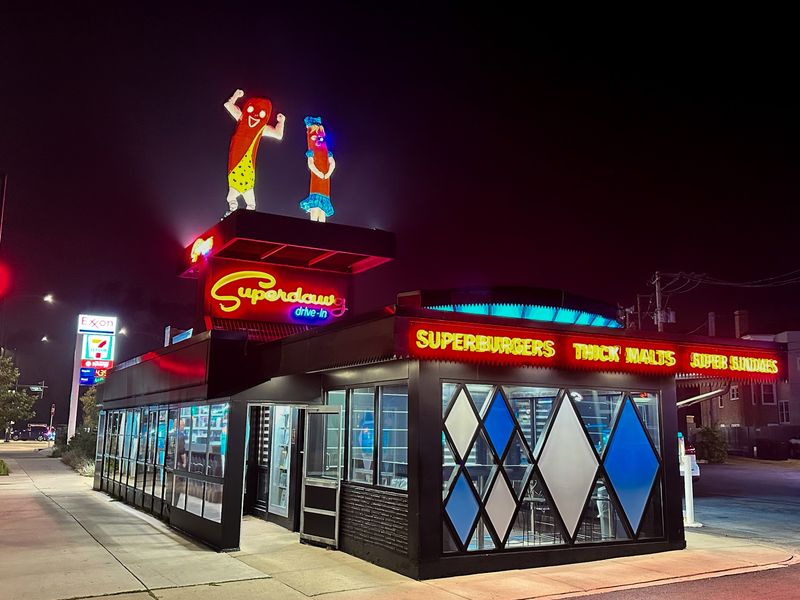
Sunset gives Superdawg Drive-In a second look. Neon brightens the building while the familiar diamond patterns stand out below.
Not every illuminated feature dates to 1948. The original building and rooftop figures do, while neon-studded parking canopies and a new speaker system were added during the 1999 makeover.
The founder designed the first 20-by-12-foot building to stand apart from the roadside food stands appearing around Chicago after World War II.
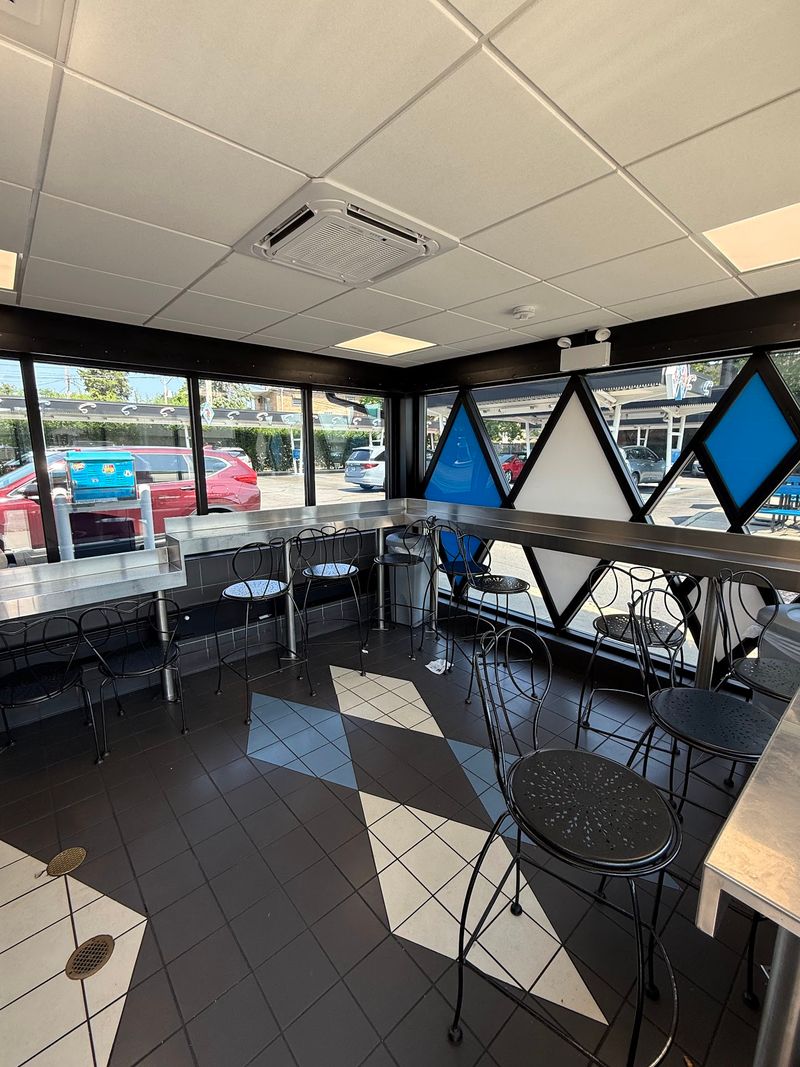
Later additions kept that distinctive character visible rather than covering it. The 1999 work also added an indoor dining room while retaining the original structure.
One feature worth spotting is the glowing blue control tower. It was added with the electronic ordering system in the early 1950s and became part of the drive-in’s nighttime silhouette.
The lighting makes the operating restaurant feel connected to several eras at once. Original elements sit beside later updates that continued the same visual theme.
Arriving near dusk makes those layers especially easy to notice. Daylight reveals the shapes and patterns before the illuminated signs become more prominent.
Dinner From Your Dashboard
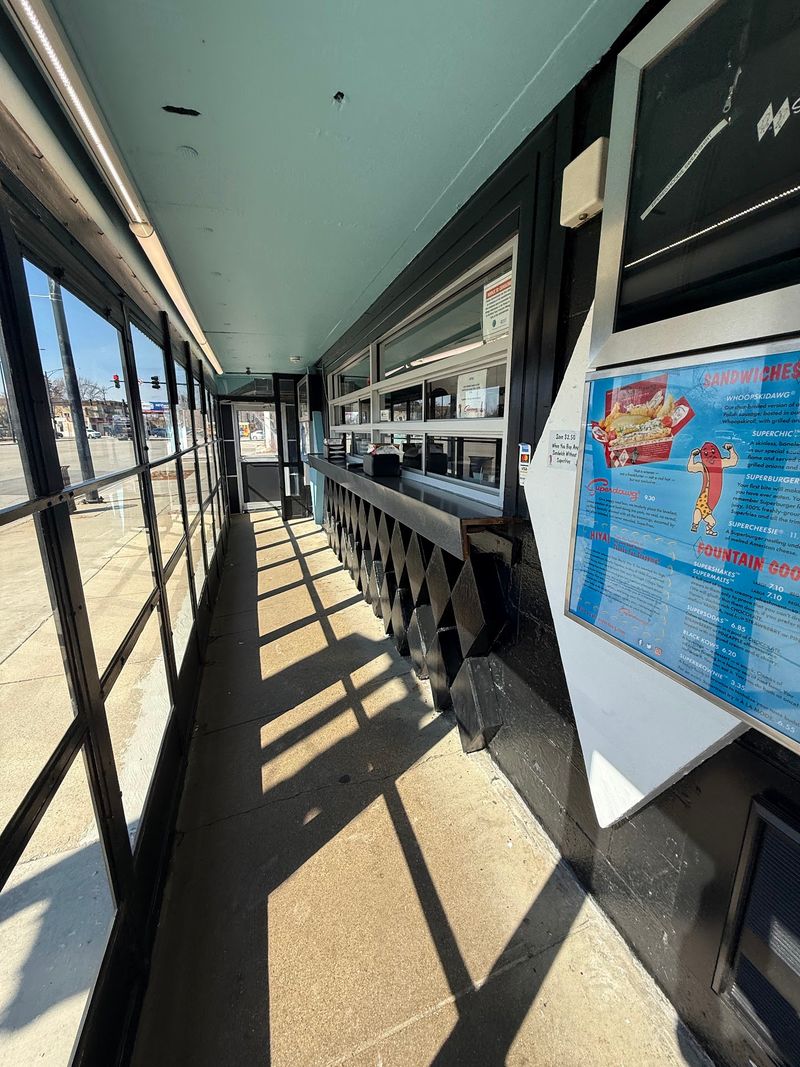
At Superdawg Drive-In, the car is still part of the dining setup.
Pull into a marked stall and use the speaker box to place an order. The system allows carhop service without leaving the vehicle.
That electronic speaker system arrived in the early 1950s. Before then, carhops walked directly to parked cars to take orders.
An employee handles incoming orders from the blue control tower. Once the meal is ready, a carhop carries it out to the vehicle.
The serving tray hooks onto a partly opened car window. Leaving the window area clear gives the tray enough room to sit securely.
The stall equipment keeps the process straightforward even for visitors who have never used traditional carhop service.
The tray, box, and speaker create a routine that differs from both counter service and a modern drive-through.
When the meal is finished, the stall system can be used to signal that the tray is ready for collection.
Drive-ins with traditional carhop service have become uncommon. Here in Illinois, the format remains a practical part of the restaurant rather than a display.
The Dog With Extras
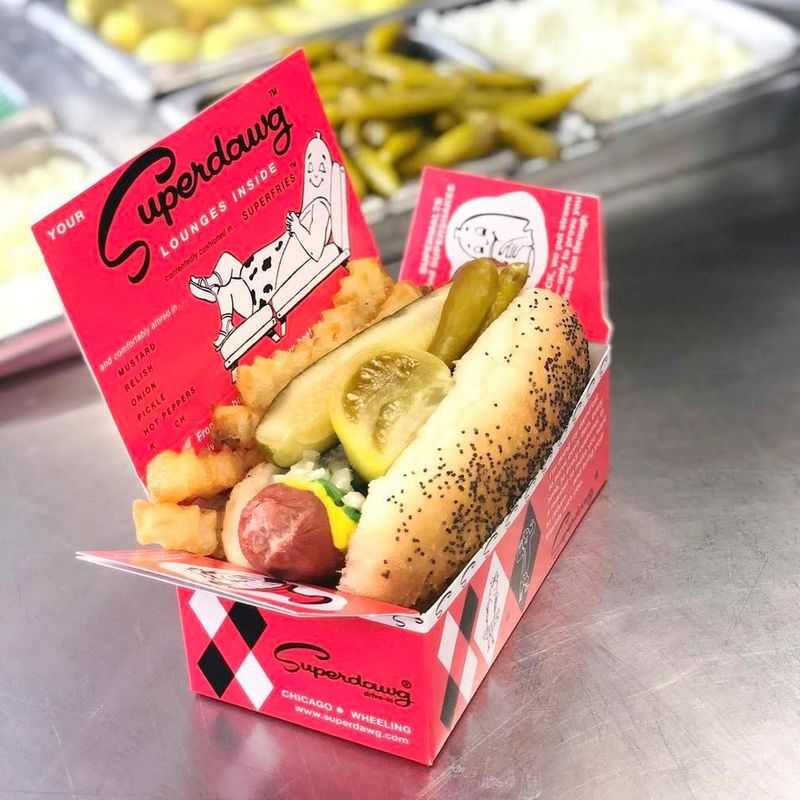
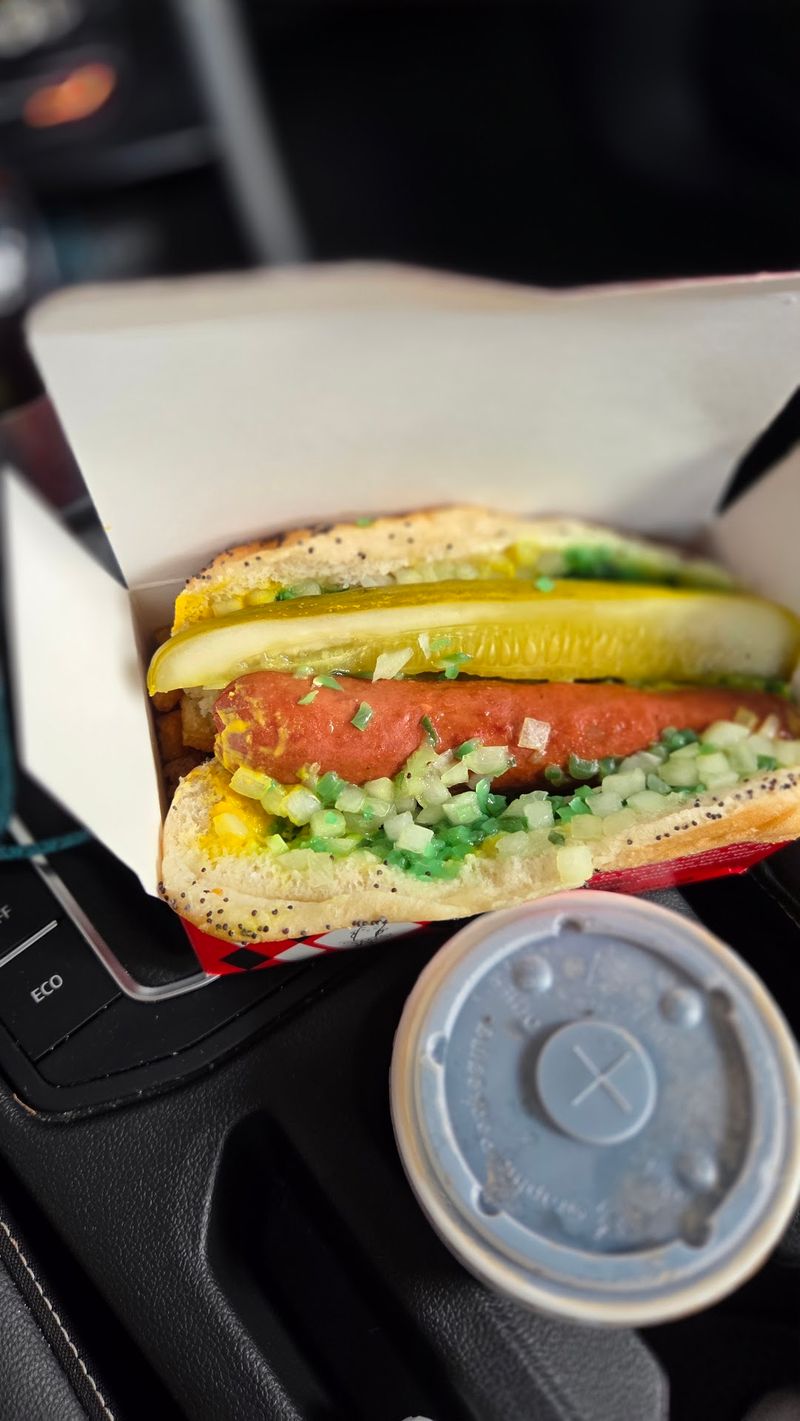
The namesake sandwich does not travel light. Superdawg Drive-In in Illinois serves its proprietary pure-beef hot dog on a poppy seed bun.
Golden mustard and tangy piccalilli add the first layer of flavor. Chopped Spanish onions bring another sharp element to the combination.
A kosher dill pickle and hot pepper complete the current standard trimmings. One additional detail helps distinguish the order from a typical Chicago-style dog.
A pickled green tomato arrives with the Superdawg, usually nestled beside it among the fries. The founders chose that substitution in place of the more familiar red tomato.
The full combination puts several strong flavors into one compact meal. The green tomato, pickle, piccalilli, onions, and pepper each add a different acidic or spicy note.
The sandwich arrives with Superfries in Superdawg’s signature ventilated cardboard box. The founders developed the box instead of using ordinary wax-paper wrapping.
That packaging is still close to the original design. Vents allow steam to escape while the sandwich and fries remain together.
Toppings can be adjusted when ordering. Otherwise, the standard version shows how the restaurant has kept its signature combination largely unchanged.
Fries Worth Their Box
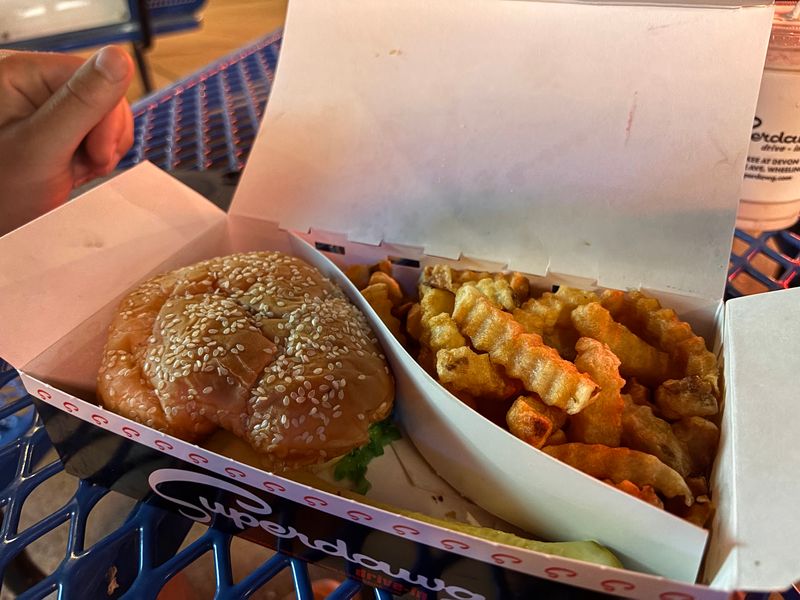
Open the box, and the fries are easy to recognize by their deep crinkle cut.
Superfries are made from potatoes delivered fresh and cut each day. A founder designed a custom cutter for the restaurant to create the distinctive ridges.
That equipment concept remains part of the kitchen story. It links the current side dish to systems developed during the restaurant’s early years.
The crinkles create more edges across each fry and give the finished potatoes their recognizable shape.
A Superdawg order already includes Superfries, while additional portions remain available separately on the current menu.
Cheese is another current option for anyone who wants a different version of the side. The underlying crinkle-cut fries remain the same.
The cardboard box keeps the sandwich and potatoes together while allowing some steam to escape through its vents.
Because the fries arrive with the main sandwich, they remain part of the Superdawg presentation rather than a separate afterthought.
More Than One Craving
Not every visit has to follow the same order. Superdawg Drive-In still offers several substantial alternatives to its namesake sandwich.
The Whoopskidawg is a char-broiled sausage inspired by Romanian, Hungarian, and Polish styles and basted in special sauce. Grilled onion and a pickle join it on its own roll.
For a different main dish, the Superchic uses a marinated, skinless chicken breast char-broiled over an open flame. It comes with grilled onions and a pickle.
Beef burgers fill another part of the menu. The Supercheesie adds melted American cheese to a freshly ground beef patty.
Superonionchips offer a change from the usual potato side. The restaurant describes them as chip-shaped pieces of battered onion.
Thick shakes and malts remain part of the fountain menu. Current flavors include chocolate, vanilla, strawberry, and pineapple.
The menu keeps the playful naming style that has long been part of the restaurant’s identity without depending on the Superdawg alone.
For groups, the range makes it possible to order different sandwiches, sides, and fountain items while keeping the same carhop experience.
A Tradition That Sticks
A long history means little if the present loses its connection to the original idea. Superdawg Drive-In remains family owned and operated.
The founding couple began with a summer business in 1948. The restaurant grew into a year-round Chicago institution without leaving its original corner.
That continuity gives the old details a practical purpose. The rooftop figures, ordering stalls, control tower, carhops, and signature box still operate as parts of an actual meal.
Nothing requires pretending the calendar has moved backward. The restaurant simply continues to use traditions that survived while other dining formats changed.
Quality, made-to-order food, and attentive service were central goals from the beginning. The family still presents those ideas as part of the business today.
Before heading over, check the restaurant’s website for current hours. The Chicago location currently keeps late hours, especially on Friday and Saturday.
Allow enough time to park, order, and eat without rushing. The slower rhythm is part of what separates carhop dining from a standard drive-through.
For an Illinois outing, the location offers a clear story. A temporary summer idea became a restaurant that has remained on the same corner for more than seven decades.