Idaho’s Big Springs Pours Out Water So Clear You Count The Trout From The Bridge
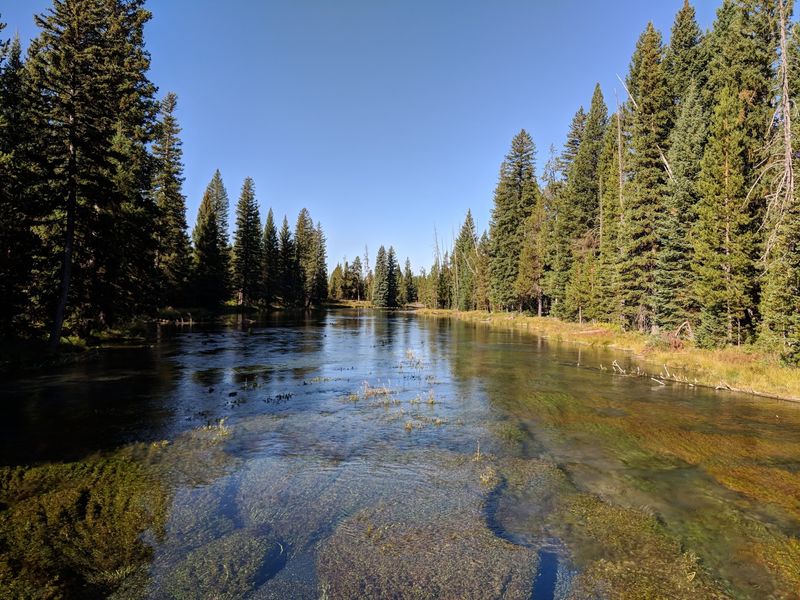
A short wooden bridge in eastern Idaho does not look like much from the parking lot. Walk out to the middle, though, and you will find yourself staring straight down at fat trout finning in water so clear it barely seems to be there.
Families lean on the rails, kids start counting, and nobody wants to leave. It is one of the simplest, most rewarding stops in the whole state, and it costs almost nothing but a little time.
A Spring Near The Montana Line
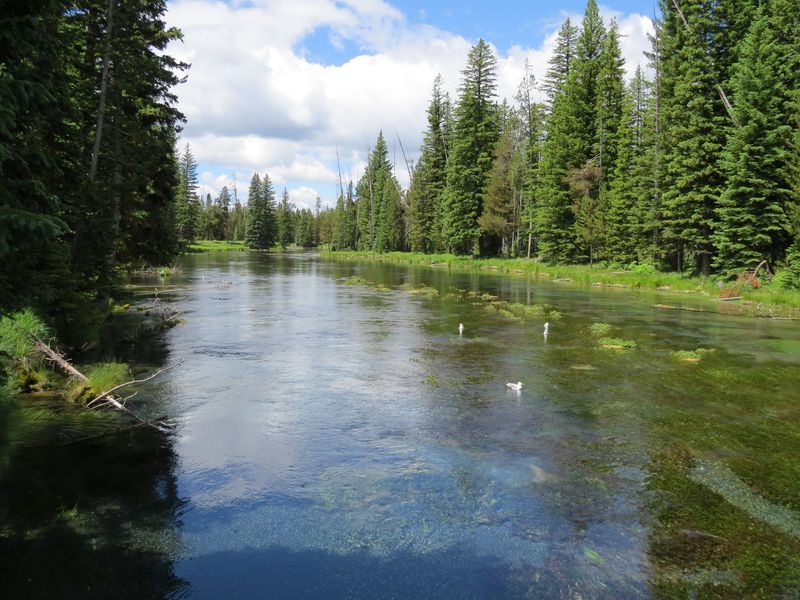
Far up in Fremont County, just a short drive from where Idaho meets Montana and Wyoming, the ground quietly releases a river. Big Springs sits in the Island Park area, tucked inside the Caribou-Targhee National Forest and managed by the National Forest Service.
Mailing records place it in the 83429 zip code, which covers Island Park. The site itself is a cluster of springs feeding a wide, glassy channel, with a bridge, a walking path, and a historic log cabin close by.
Most people arrive expecting a quick stretch break. Instead, they find a spot that has earned national recognition and a steady following among eastern Idaho families.
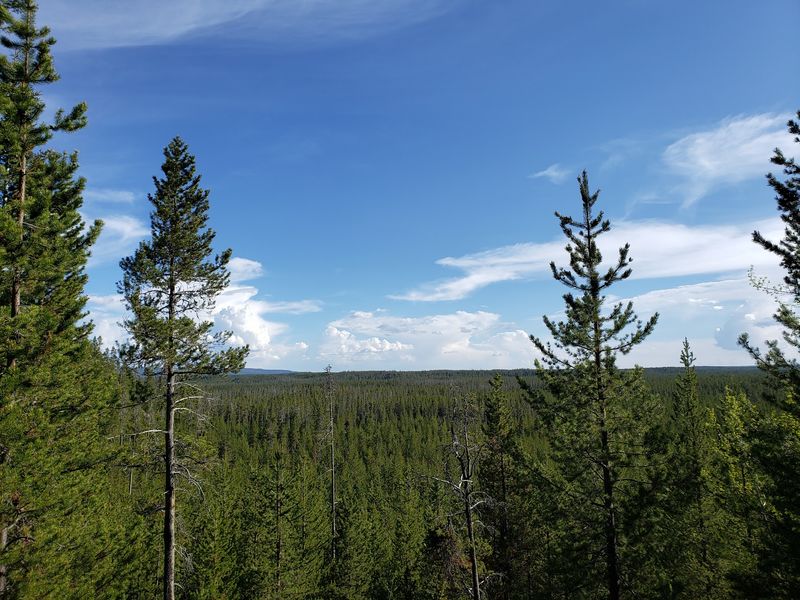
Getting there means heading into high country, where lodgepole pine forests roll out in every direction and meadows open up between the trees. The air feels cooler, the pace slows, and the sound of traffic fades fast.
For anyone living in Idaho Falls, Rexburg, or St. Anthony, it makes a realistic day out. Travelers passing toward West Yellowstone often stumble onto it by accident and end up staying far longer than planned, which says plenty about how easily the place wins people over.
120 Million Gallons Every Day
Numbers help explain the scale here. Big Springs pushes out more than 120 million gallons of water every single day, placing it among the 40 largest springs in the United States.
Scientists call it a first-magnitude spring, a label reserved for the heaviest flows. What makes it truly unusual is its source rock.
Big Springs is the only first-magnitude spring known to rise from rhyolite lava flows, the volcanic stone left behind by ancient eruptions across this corner of Idaho.
Rain and snowmelt soak into that porous rock, travel underground, and then surge back to the surface here. The result is water that has been naturally filtered on a long journey through stone.
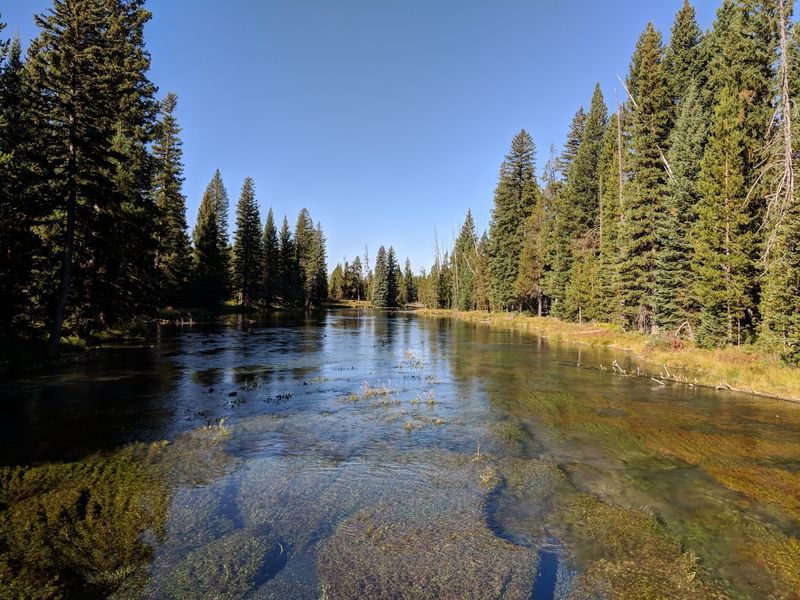
You would never guess the power involved just by looking. The surface stays calm and smooth, with only gentle ripples showing where fresh water keeps arriving from below.
Standing beside it, many visitors are struck by how quiet such a massive flow can be. No roaring falls, no crashing rapids, just a steady, silent outpouring that has been going on for thousands of years and shows no sign of slowing.
Birthplace Of The Henry’s Fork
Rivers have to start somewhere, and one of Idaho’s most famous gets a major boost right here. Big Springs serves as a significant source for the North Fork of the Snake River, better known to anglers and paddlers as the Henry’s Fork.
Downstream, that river becomes a legend among fly fishers and a favorite for summer floating. Up here, though, it is still young, clear, and gentle, sliding away from the springs through grassy banks.
Watching the water leave the springs gives you a real sense of connection. Every drop flowing past might eventually travel through Island Park, past farm country near St. Anthony, and on into the Snake River Plain.
Tubing, canoeing, kayaking, and rafting are all popular on the Henry’s Fork below the springs. Paddlers often mention how peaceful the upper stretches feel, with wildlife along the edges and very little noise besides the dip of a paddle.
For kids, the idea that a big river begins at a spot they can walk around tends to spark real curiosity. It turns a simple visit into a small geography lesson they will actually remember.
Trout You Can Count From Above
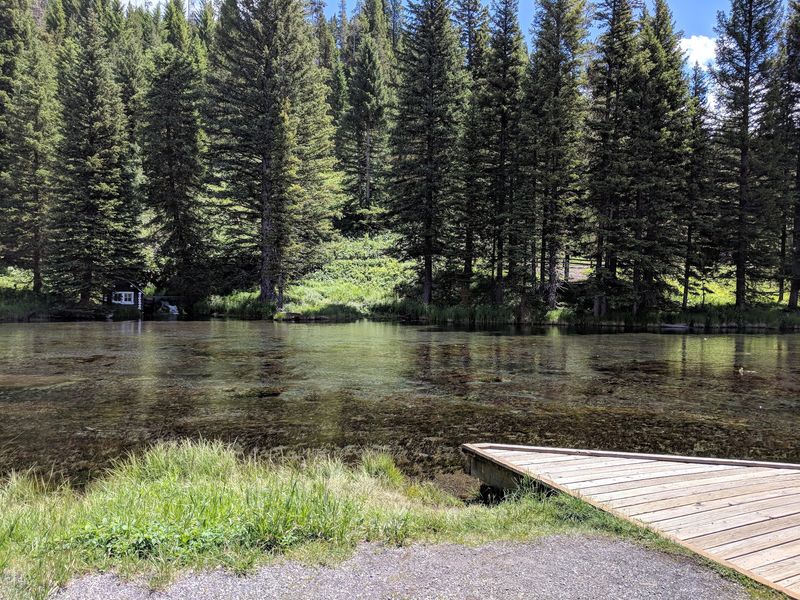
Lean over the railing and start counting. Dozens of rainbow and brook trout gather beneath the bridge, hovering in water so transparent that every spot and fin stays in view.
Some of these fish are impressively large, cruising slowly over the gravel and weeds. Because the water holds a steady 52 degrees all year, the springs create an ideal home that keeps them comfortable through every season.
Fishing is not allowed in this area, which is exactly why the trout feel so relaxed. They have little reason to scatter, so they linger close to the bridge where people gather.
Coin-operated dispensers are often available, letting visitors toss a handful of fish food into the water. The moment pellets hit the surface, the calm scene erupts into splashing, swirling action that makes young kids squeal.
Grandparents seem to enjoy it just as much. It is the kind of simple pleasure that needs no instructions, no gear, and no special skill, only a few coins and a willingness to watch.
Photographers love it too, since the clarity lets cameras capture fish almost as if they were floating in air.
Johnny Sack’s Handmade Cabin
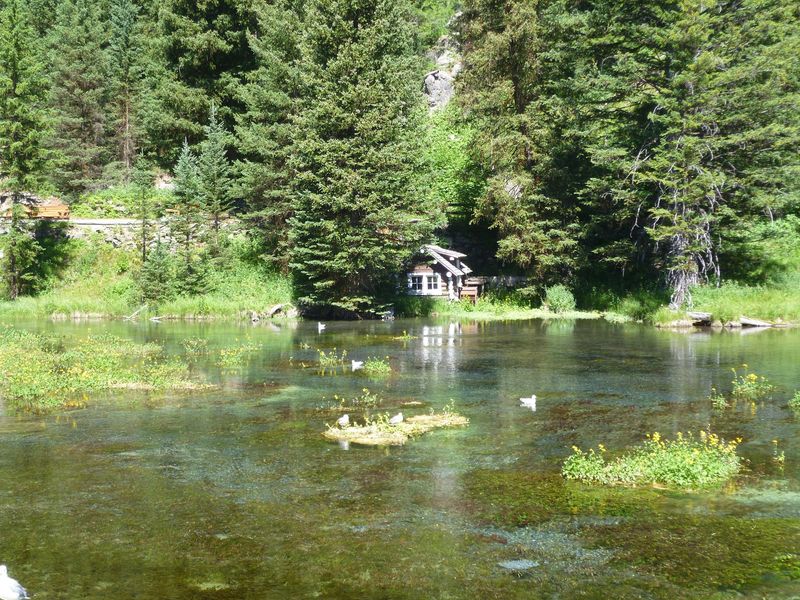
Back in 1929, a man named Johnny Sack built himself a log cabin right beside the springs. Nearly a century later, it still stands, and it remains one of the most photographed structures in Island Park.
The cabin shows careful craftsmanship, with detailed woodwork that reflects a time when people built by hand and made things last. Its setting beside the clear water makes it feel almost like a storybook scene.
Visitors can typically step inside from mid-June through Labor Day, though schedules can shift, so it helps to check before driving up. Outside those months, you can still admire the exterior from the path.
History buffs appreciate seeing how early residents lived in this remote corner of Idaho. Long winters, deep snow, and few neighbors meant self-reliance was a necessity, not a hobby.
The cabin also adds a human story to a place otherwise defined by nature. Standing where Johnny Sack once did, looking at the same springs, gives the visit a quiet, reflective moment that many people carry home with them long after the trip ends.
Half A Mile Of Easy Trail
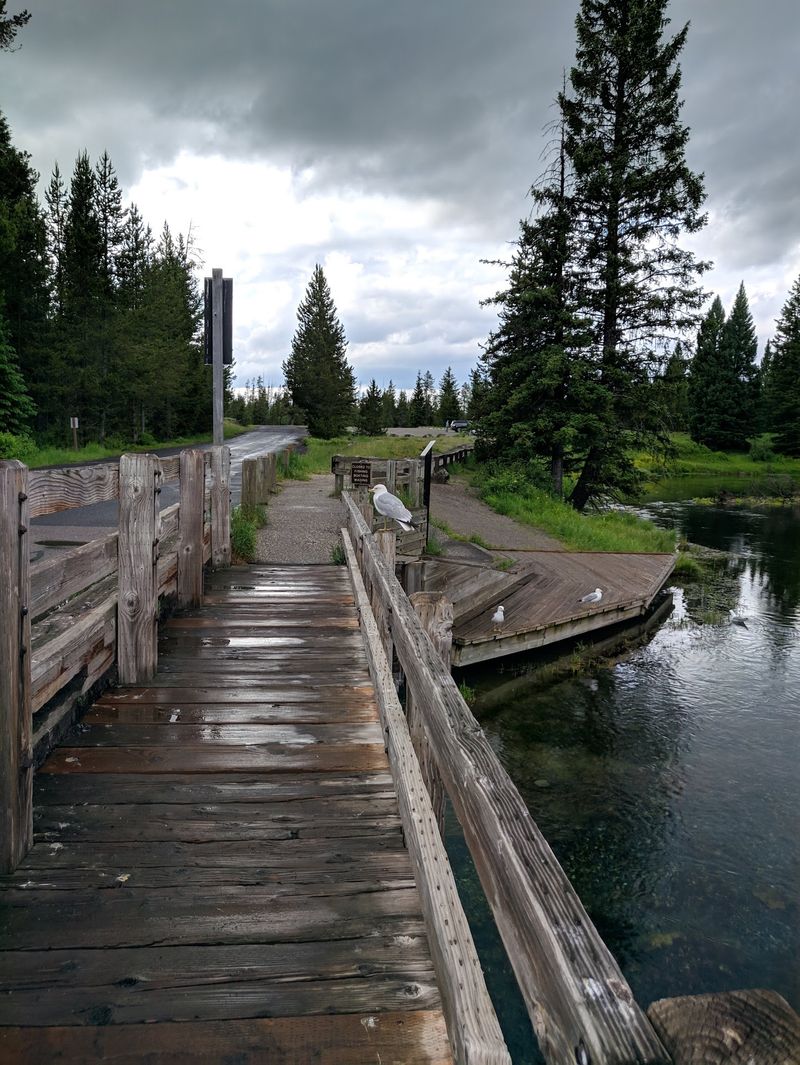
Not every scenic walk in the mountains is friendly to strollers, wheelchairs, or tired knees. Here, the Forest Service offers a half-mile trail designed to be handicap accessible, following the water through forest and meadow.
The route stays gentle, making it a comfortable choice for families with small children or older relatives who want the scenery without a strenuous climb. Benches and viewpoints give chances to pause.
Along the way, the channel widens and narrows, showing off bright green water plants swaying in the current. The clarity continues the entire length, so trout sightings are not limited to the bridge.
In summer, wildflowers splash color across the meadows beside the path. Lodgepole pines rise tall and straight along the edges, filling the air with a clean, woodsy scent.
The trail is short enough to finish in well under an hour, even at a slow stroll. Many visitors walk it twice, once heading out and once more after feeding the fish, simply because the scenery feels different from each direction.
It is proof that a meaningful outdoor experience does not need to be long or difficult.
Moose, Ospreys, And Muskrats
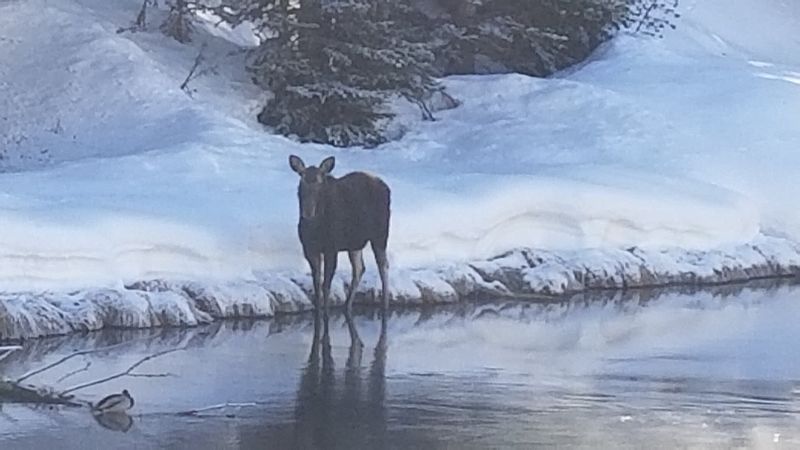
Keep your eyes moving, because the fish are only the beginning. The land and sky around Big Springs support a surprising variety of wildlife.
Ospreys and bald eagles patrol overhead, sometimes diving toward the river downstream. Waterfowl paddle through the calmer stretches, and patient watchers may spot a muskrat gliding along the bank with only its head showing.
Bigger animals make appearances too. Moose wander through the meadows and willows, and white-tailed deer step out from the trees, especially in the quieter morning and evening hours.
Always give wildlife plenty of space. A moose can look calm and slow, but it deserves respect, and binoculars or a zoom lens are the best way to enjoy a close view.
Birders often bring field guides and linger for hours. Casual visitors, meanwhile, love the thrill of an unexpected sighting while walking back to the car.
Early risers have the best luck overall. Arriving soon after sunrise often means softer light, fewer people, and animals that are more active before the day warms up, turning a short stop into a genuine wildlife outing.
A National Natural Landmark Since 1980
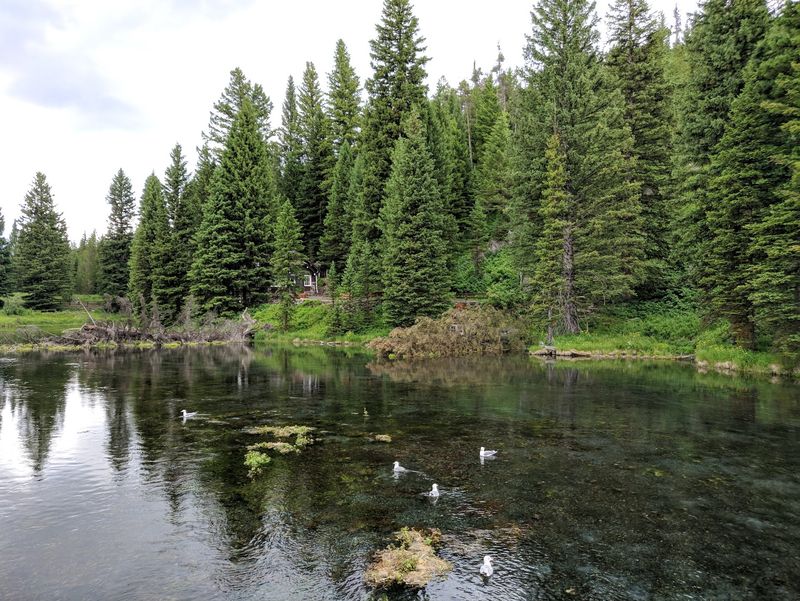
August 1980 marked a proud moment for this corner of Fremont County. That year, Big Springs was designated a National Natural Landmark, joining a select list of sites recognized for outstanding natural features.
The honor reflects exactly what visitors see today: a massive spring with rare geology, exceptional water clarity, and a healthy ecosystem supporting fish and wildlife. It is recognition that this spot matters well beyond Idaho.
Locals who grew up visiting often speak about the place with genuine affection. For many eastern Idaho families, a trip to feed the trout is a childhood memory now being passed along to grandkids.
That continuity is part of the appeal. While towns across Idaho keep changing, Big Springs looks much the same as it did decades ago, still quiet, still clear, still full of fish.
The landmark status also helps protect it. Careful management by the Forest Service keeps the setting natural, with facilities that serve visitors without overwhelming the springs.
Knowing its official standing adds a little weight to the experience. You are not just visiting a pretty pond but a site the nation has chosen to celebrate.
Who Loves It Most
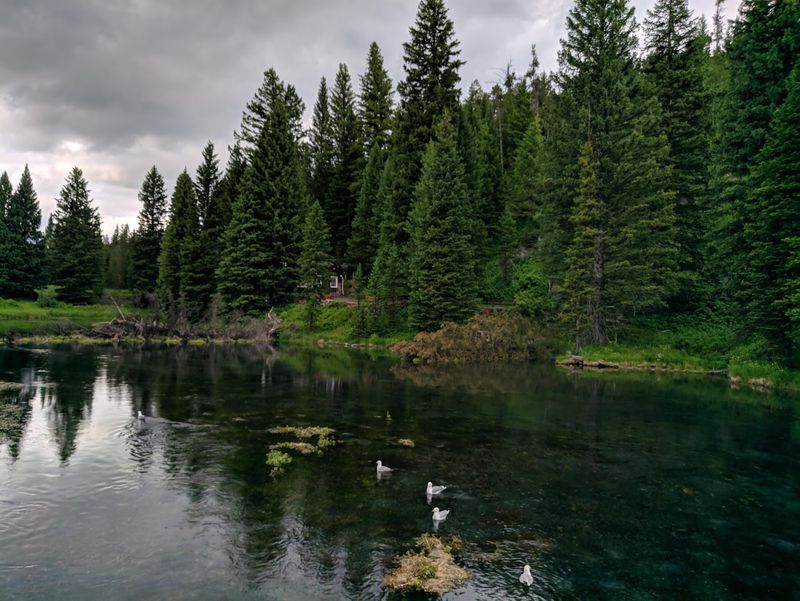
Families with young kids might be the happiest crowd here. Between counting fish, tossing food, and spotting ducks, children stay busy and entertained without screens or ticket lines.
Near-retirees and older travelers appreciate the easy access. Short walks, a flat trail, and plenty of places to pause make it a relaxed outing where nobody feels rushed.
Photographers find endless material. The clear water, the log cabin, reflections of pines, and wildlife all offer subjects that look great in every season the road stays open.
Anglers passing through Island Park often stop even though they cannot cast here. Seeing big trout up close gives them a sense of what the Henry’s Fork holds downstream.
Paddlers and tubers use it as a starting point for river days, combining a morning at the springs with an afternoon floating.
Even road-trippers headed toward Yellowstone benefit from the break. Stretching legs beside such calm, clean water resets the mood before the next long drive.
The atmosphere stays peaceful. Voices are soft, kids are delighted, and the steady sound of water makes everyone slow down a little.
Timing Your Trip North
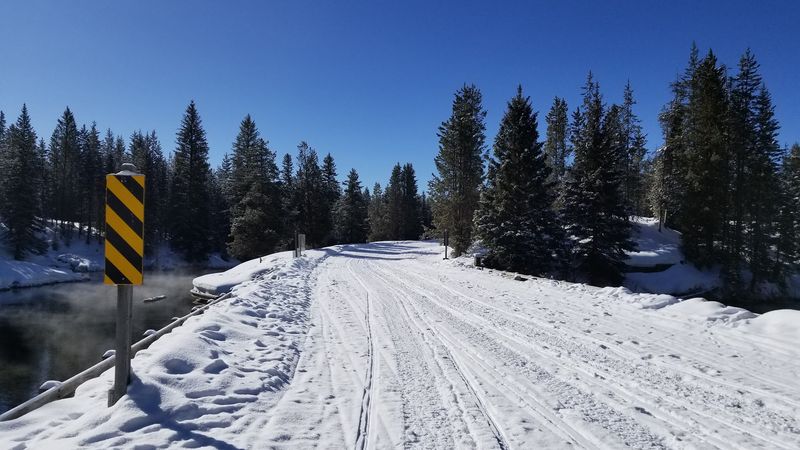
Summer is the sweet spot. From mid-June through Labor Day, the cabin is typically open, wildflowers fill the meadows, and the roads are clear.
Winter tells a different story. Deep snow in Island Park can limit access to Big Springs, so anyone planning a cold-weather visit should check road conditions first.
The water keeps flowing at 52 degrees regardless, but reaching it is the challenge.
The site is managed by the National Forest Service within the Caribou-Targhee National Forest. Details such as hours or any fees can change, so it makes sense to confirm before driving.
Bring a few coins if you want to use the fish food dispensers, since they are often available near the bridge. A light jacket helps too, as mornings at this elevation can feel chilly even in July.
Plan at least an hour, though many people spend half a day once they add the trail, the cabin, and some wildlife watching.
Pairing the springs with other Island Park stops or a Henry’s Fork float turns it into a full, satisfying Idaho day out.
Worth Every Mile Of The Drive
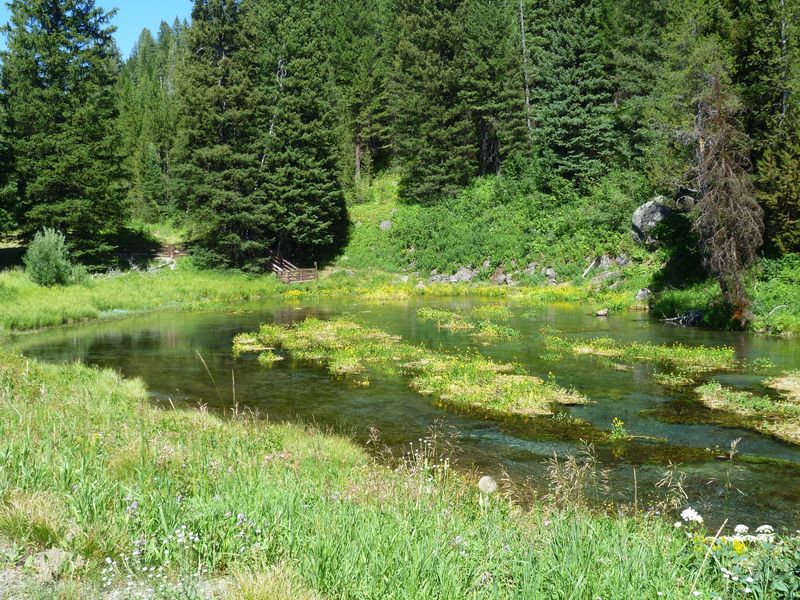
Simple places are often the ones that stick. Big Springs has no rides, no gift-shop fanfare, and no crowds pushing you along, yet people keep returning year after year.
Part of the pull is the water itself. Watching 120 million gallons a day rise quietly from volcanic rock, clear enough to count trout, feels almost unreal the first time.
Then come the smaller rewards: a moose in the meadow, an osprey overhead, a child laughing as fish swirl for food, and a 1929 log cabin that still stands by the bank.
For Idahoans, it is a reminder of how much natural wonder sits within reach of an ordinary weekend. For visitors, it is a surprise worth bragging about back home.
The drive into Fremont County is part of the charm, winding through lodgepole forest into cooler air. By the time you reach the bridge, the rest of the week already feels far away.
Go in summer, bring a few coins, and give yourself time to linger. Chances are good you will leave planning your next trip before the car even leaves the lot.