Sewists Fill Their Carts With Fabric By The Bolt At Florida’s Busy Lakeland Warehouse
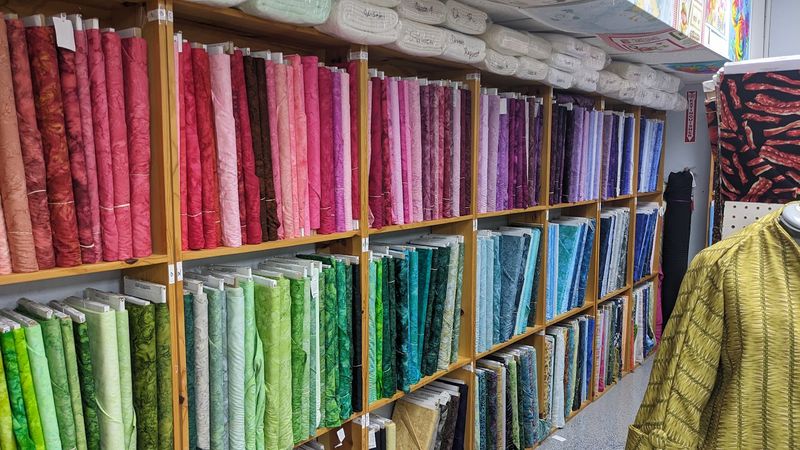
I walked in for one spool of navy thread and walked out holding a bag so full it needed two hands. Florida has plenty of big craft chains, but this plain building on a busy road packs bolts from the front door to the back wall.
New fabric rolls in often, and the sewing machines out front are a treat to see even if you only came for thread. Bring a project list, a little patience, and room in the trunk.
First Glimpse From North Florida Avenue
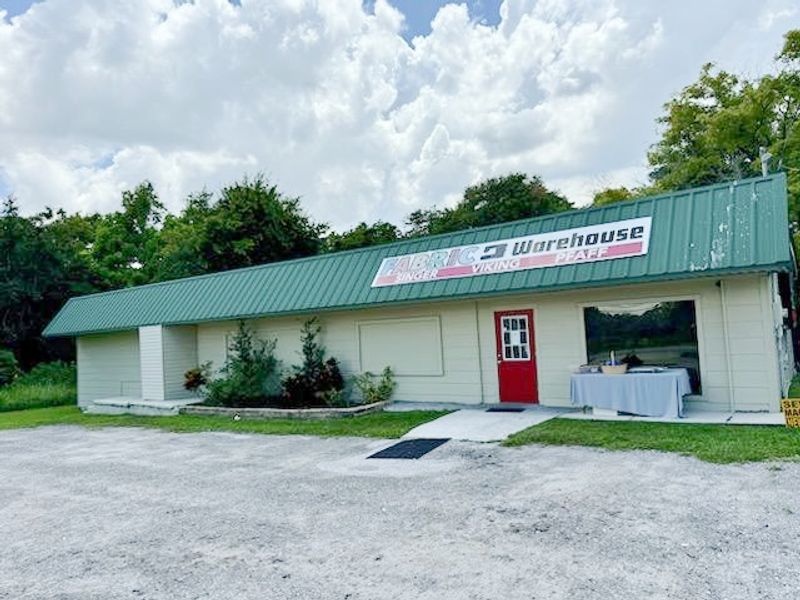
Traffic hums along North Florida Avenue, and the building beside it gives almost nothing away. A simple sign, a small lot, and a plain storefront are all you get from the curb.
Step through the door, though, and the view changes fast. Bolts of cotton stand shoulder to shoulder in long rows, spools glow on pegboard, and a white and purple sewing machine greets you right at the entrance like a store mascot.
The shop is Fabric Warehouse, a family-owned fabric store that has become a regular stop for quilters, garment makers, and hobbyists across central Florida.
Lakeland sits roughly halfway between Tampa and Orlando, so the drive is a short hop off I-4 from either direction. The store lives on the north side of town, a few minutes from downtown and the lakes that give the city its name.
Parking is right out front, which helps when you are carrying a heavy armload of fabric back to the car.
Give yourself a moment in the doorway to take it all in. It is a lot of color for such a quiet exterior.
Address: 3030 N Florida Ave, Lakeland, Florida 33805.
Roots in a Mother-Daughter Partnership
Before it filled a warehouse, the business started small, as a partnership between a mother and her daughter. That origin still shapes the place today, from the way staff talk shop at the cutting table to the family-run rhythm of the day.
How does a tiny venture grow into a building stacked with thousands of yards? Slowly, one bolt and one loyal sewist at a time.
The shop expanded its stock, added sewing machines, took on repair work, and started hosting classes, all while staying independent in a market crowded with national chains.
Independence matters more now than it did a few years ago. When a major chain closed its stores across the country, plenty of Florida sewists went looking for new places to buy fabric, and a family shop in Lakeland suddenly had new faces wandering its aisles.
The staff kept doing what they had always done: helping people find the right cotton, matching thread, and answering questions.
The owners still work the floor, which is part of the draw. Ask where something is and there is a good chance the person answering helped choose it for the shelves in the first place.
Thousands of Yards Under One Roof
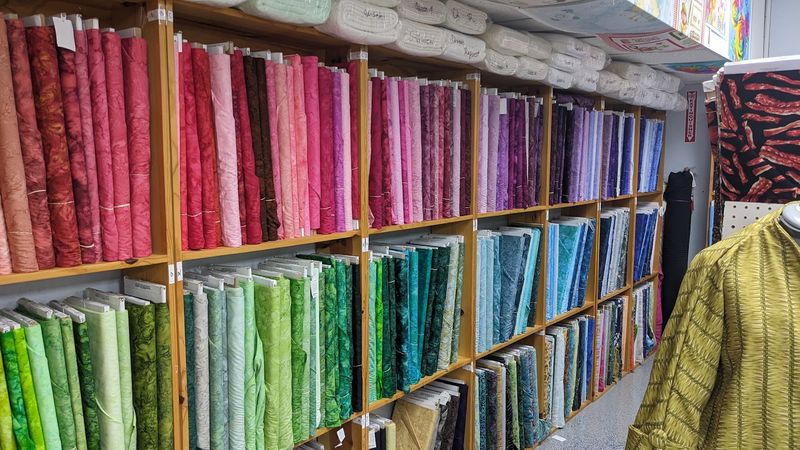
Bolts lean against bolts, stacked high on metal shelving and tucked into bins along every wall. The sheer volume is the first thing that hits you, and it is the reason the word warehouse on the sign is not just marketing.
Thousands of yards of fabric fill the space. You will find florals, geometrics, solids, novelty prints, batiks, and seasonal themes, plus materials that rarely show up on the shelves of larger chain stores.
That last part is the fun one. Plenty of the prints here are the kind you do not stumble across just anywhere, which makes browsing feel more like a hunt than a chore.
Here is a tactic that saves time. Walk every aisle once before pulling anything, snap phone photos of the bolts that catch your eye, then circle back and decide.
Otherwise the cart fills up by the third row and your budget gives out by the fifth.
New shipments arrive frequently, bringing fresh styles, textures, and colors. A bolt you loved last month may be gone, and something better may have taken its spot.
Buy the fabric you cannot live without on the day you see it.
Quilting Cotton Heaven
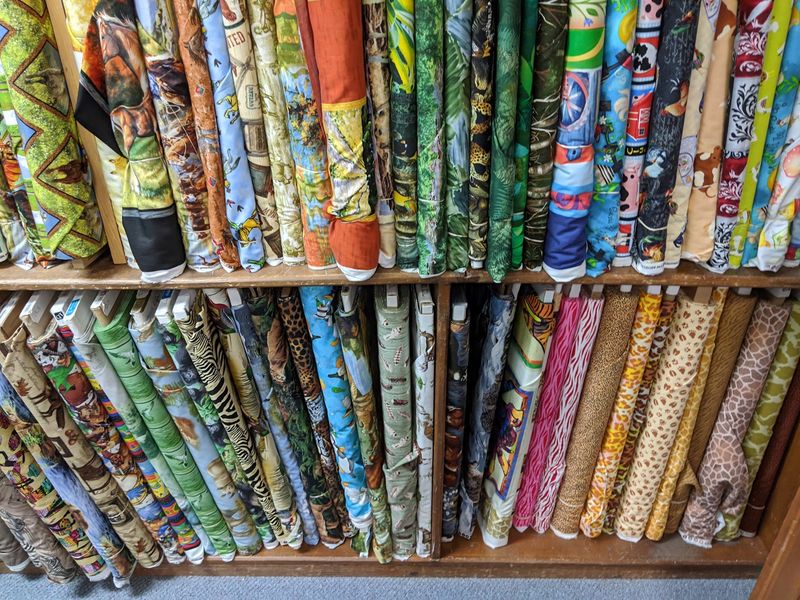
Quilters, this is your row. Quilting fabric makes up a big share of the stock, and it is the section that pulls the most attention from the moment the doors open.
Imagine lining up six blues side by side, holding a coral print against them, and realizing the whole palette for your next quilt just came together in an aisle. Cotton prints come in coordinated families, which makes planning a block pattern much easier than hunting across several stores.
Tone-on-tone blenders, bold focal prints, and backing options sit close enough to compare without much walking.
Quilting supplies round out the corner. Rotary cutters, rulers, pins, marking tools, and batting all live within reach, so a first-time quilter can leave with a full starter kit and a veteran can restock the basics without a second stop.
A small suggestion from experience: bring a swatch or a finished block from your current project. Matching a color from memory rarely works, and fabric looks different under store lights than it does on your sewing table at home.
The cutting counter can measure your yardage, so know roughly how much you need before you get in line. Your wallet will thank you later.
A Rainbow of Spools
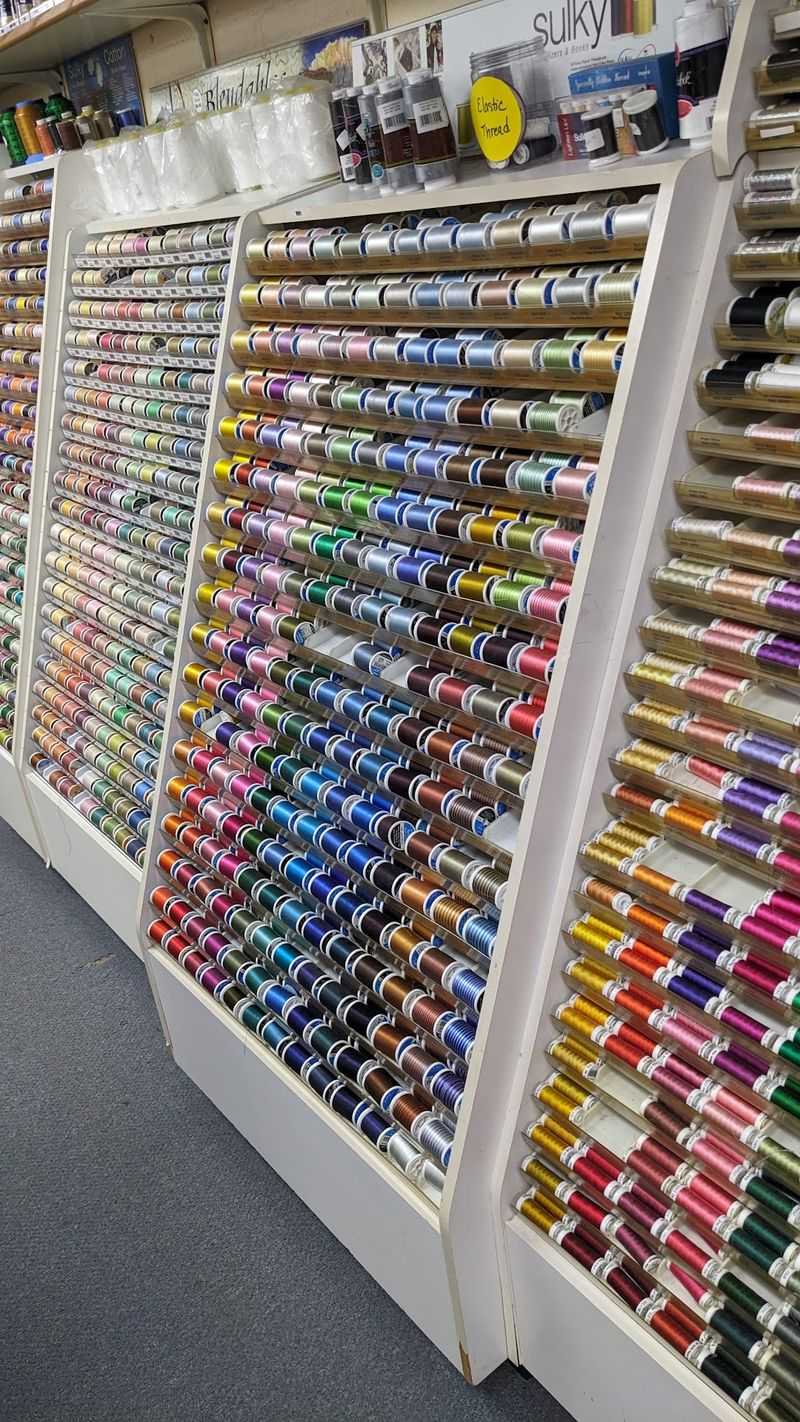
Red fades into orange, orange into gold, gold into a dozen shades of green. The thread display is one of the prettiest spots in the building, a wall of spools lined up in gradients that almost look like paint chips.
Thread selection gets serious attention here, and for good reason. The right spool can make a seam vanish or make decorative stitching pop, and a wide range means you are less likely to settle for a shade that is close but not quite right.
Garment thread, quilting thread, and embroidery thread each have their own place, so it helps to know which kind your project calls for before you start pulling spools.
Can you have too much thread? Plenty of sewists would argue no. It is easy to grab a handful of extras while you are standing there, and honestly the store makes that very tempting.
For matching, pull the spool off the rack and lay a single strand across your fabric instead of holding the whole spool against it. The color on a full spool always reads darker than the thread will look stitched.
Staff can also point you toward the right weight and fiber if the options feel overwhelming.
The Fill-a-Bag Scrap Bin
Somewhere near the front, a bin overflows with remnants, offcuts, and odd little pieces of cotton in every color imaginable. It is the fill-a-bag scrap bin, and it may be the most entertaining corner of the store.
The idea is simple. Grab a bag, stuff it with as many scraps as you can fit, and pay one price for the whole thing.
Scrappy quilters, applique fans, doll-clothes makers, and teachers stocking a classroom craft closet all get something out of it. Kids love digging through it, too.
Pack smart. Fold pieces flat rather than wadding them up, and slide smaller bits into the gaps between larger ones.
You would be surprised how much fits once you treat it like a puzzle.
The shop also accepts fabric scrap donations, which keeps usable material out of the trash and back in circulation. If your own sewing room has a pile of leftovers you will never touch, bring them along on your next trip.
It feels good to drop off a bag of castoffs and walk out with someone else’s castoffs that happen to be exactly what you needed. Sewing has always been a little bit about sharing, and this bin proves it.
Husqvarna Viking Machines on Display
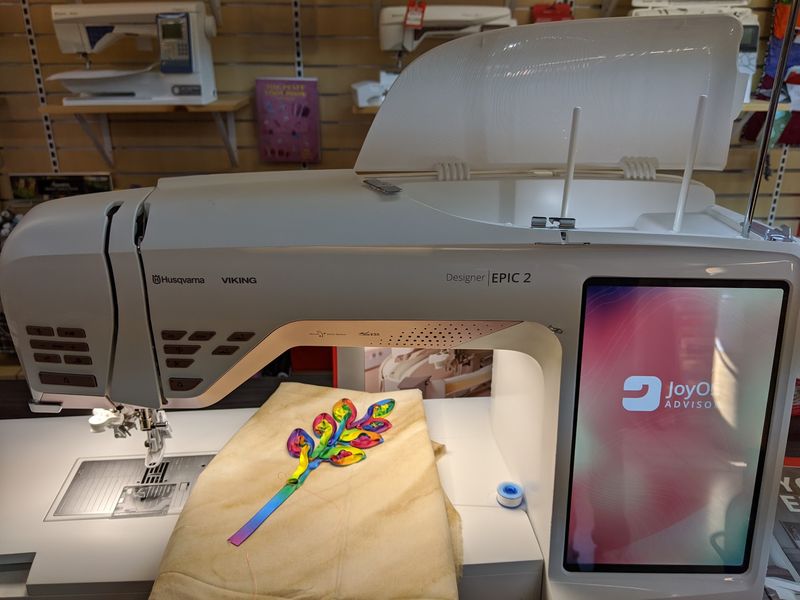
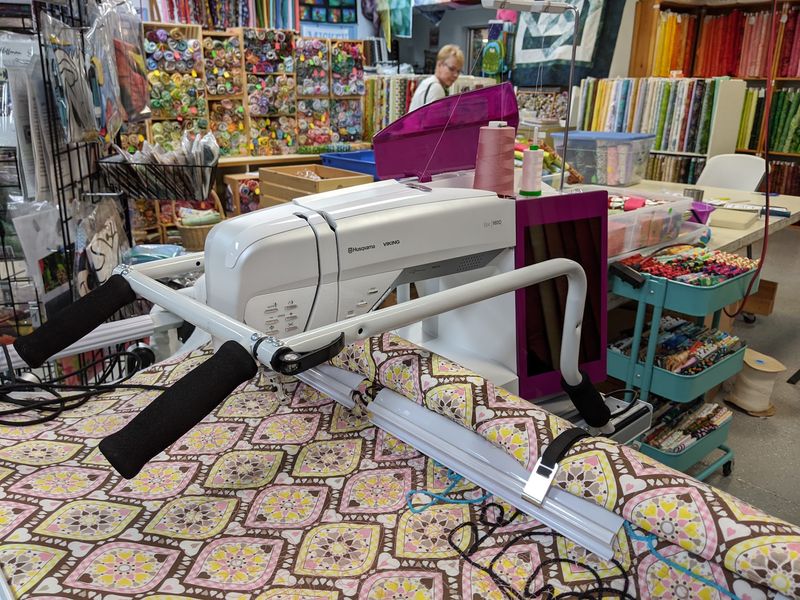
That white and purple beauty by the door is not just decoration. Fabric Warehouse is an authorized Husqvarna Viking dealer, and the machines on display range from dependable everyday models to high-end sewing and embroidery setups.
Here is a quick bit of trivia. Husqvarna started out in Sweden centuries ago, and its sewing machine line eventually became one of the best-known names in home sewing.
Seeing those machines lined up in a Lakeland shop is a fun reminder of how far a good tool can travel.
Buying a sewing machine from a dealer is different from clicking a button online. You can sit down, try the stitches, ask about bobbins and presser feet, and get a feel for how the machine handles before committing.
The staff can walk you through features in plain language, which is a relief if the spec sheet reads like a foreign manual.
Irons and other accessories sit nearby, so a new machine purchase can turn into a full sewing station upgrade in one visit. Browsing costs nothing, and even if you are not ready to buy, testing a top-tier machine for a few minutes is a treat.
Repair Help and Machine Triage
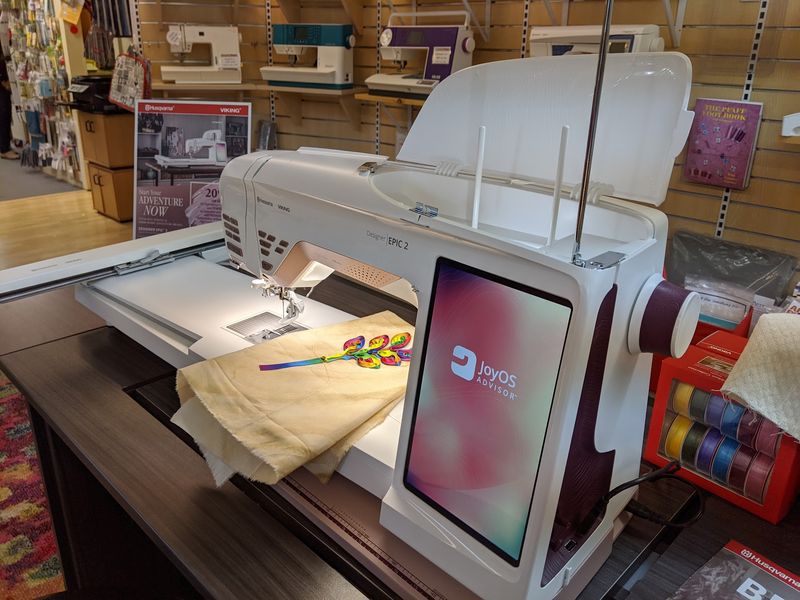
A jammed bobbin, a skipped stitch, an embroidery arm that suddenly refuses to cooperate. Every sewist has hit that wall, and it helps to know a shop with repair service on-site.
Repairs happen right here, and the owner has a knack for what could be called machine triage: listening to the problem, testing the stitches, and figuring out whether the fix is a new needle, a cleaning, or a replacement part. Sometimes the answer is as simple as switching to fresh needles and the right thread weight, and you leave with a quick lesson on top of the fix.
People drive more than an hour for this kind of help. Old catalogs and manuals for older Viking models sometimes turn up behind the counter too, which is gold if your machine is a few decades old and the paperwork vanished long ago.
Plan for repairs to take some time, and describe the problem as clearly as you can when you drop the machine off. Bring the power cord, the foot pedal, and a scrap of the fabric you were sewing when the trouble started.
That sample can help pin down whether the issue is the machine or the material.
Embroidery Hoops and Serger Seams
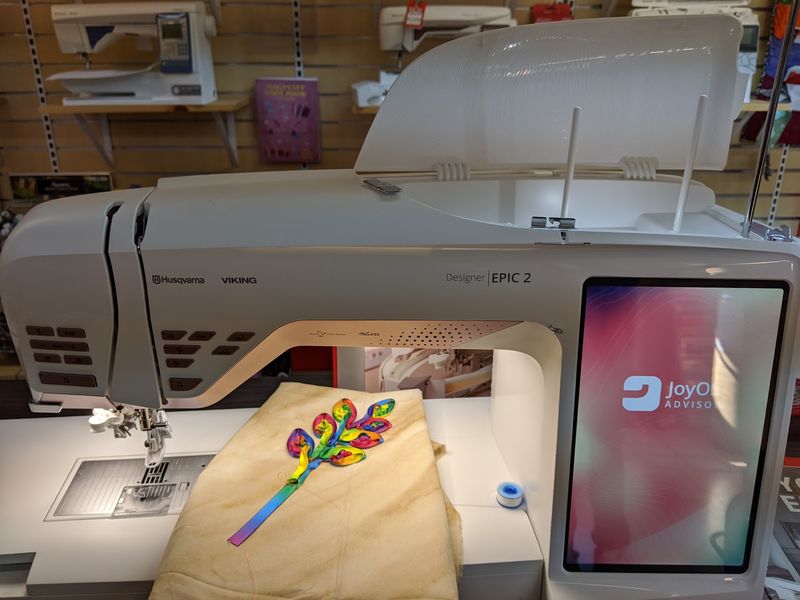
Watching an embroidery machine stitch a floral design, one color layer at a time, is oddly hypnotic. The needle moves on its own, the hoop glides, and a flat square of cotton slowly turns into a tiny garden.
Embroidery is a big part of what this shop supports, from machines with dedicated embroidery units to the specialty thread and stabilizers the craft requires. If you are curious about adding monograms to towels or designs to baby blankets, this is a good place to see the process up close and ask what it takes to get started.
Sergers get their own attention as well. For anyone who sews knits, activewear, or garments that need tidy interior seams, a serger trims, stitches, and finishes an edge in one pass.
The four thread cones can look intimidating at first, but a short demonstration clears up most of the mystery.
Pair either machine with the right supplies and you can take on projects that look store-bought. Stock up on stabilizer and serger cones while you are here, since they run out faster than you expect once you start experimenting.
Classes, Sew Days, and a Good Cause
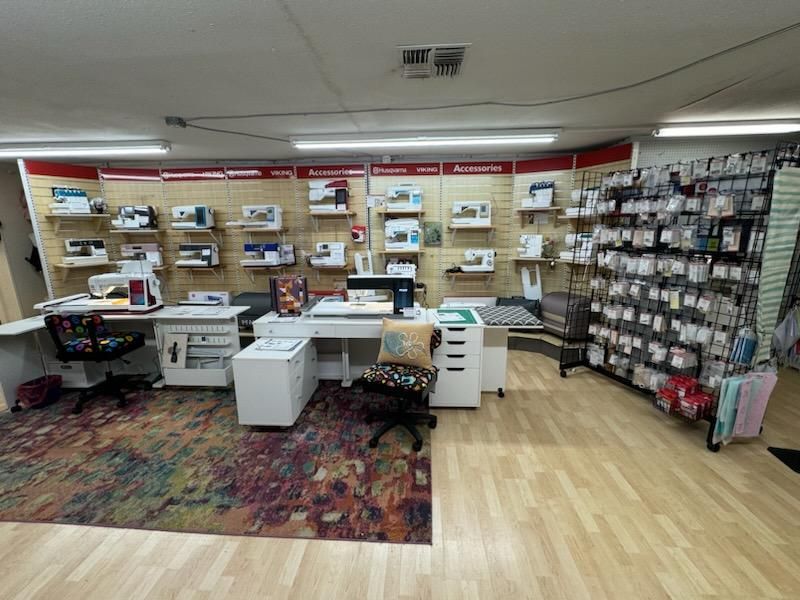
Want to learn to quilt, or finally figure out that tricky zipper? Sewing classes run here, taught by people who clearly love the craft.
They fill up, so checking the schedule early is a smart move.
Classes give beginners a safe place to make mistakes and experienced sewists a chance to pick up new techniques. Quilting is the most requested subject, which fits a store stocked so heavily with quilting cotton.
Sew days bring a different energy. The shop has hosted community sessions for Ryan’s Case for Smiles, a nonprofit that provides cheerful handmade pillowcases to children in hospitals.
Tables fill with volunteers, machines hum, and stacks of bright pillowcases grow by the hour. It is a lovely example of how a fabric store can be more than a place to shop.
That community spirit is part of what keeps the store feeling like a hub for crafters around Lakeland. You come to learn, you leave with a new friend or two, and you probably buy a little fabric on the way out.
Ask at the counter about upcoming classes and events, since the calendar changes throughout the year.
Tight Aisles With a Family Feel
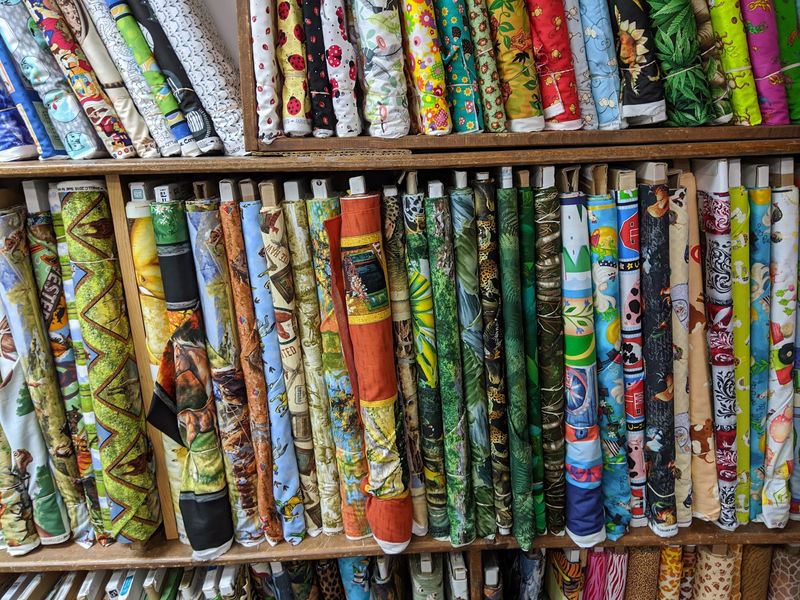
Space is snug. The aisles are narrow, the shelves are tall, and you will occasionally do the polite sidestep with another shopper reaching for the same bolt of gingham.
That closeness is part of the charm, though. It feels less like a big-box store and more like a well-stocked sewing room that happens to be open to the public.
Lines stay short, checkout moves easily, and the pace never feels rushed or frantic.
Staff are mostly women who sew themselves, and the conversation at the counter often drifts toward patterns, projects, and what everyone is working on this week. The family-owned atmosphere shows in small ways, like a staffer stopping mid-task to help diagnose a machine problem or pulling out a manual from the back.
Service can vary from day to day, as it does anywhere, so a little patience goes a long way during busy stretches. Leave the giant tote at home if you can, and keep your elbows close when turning corners.
A shopping cart or basket helps, but maneuvering one takes some care. Slow browsing is the name of the game here, which honestly suits fabric shopping perfectly.
Who Leaves Happiest
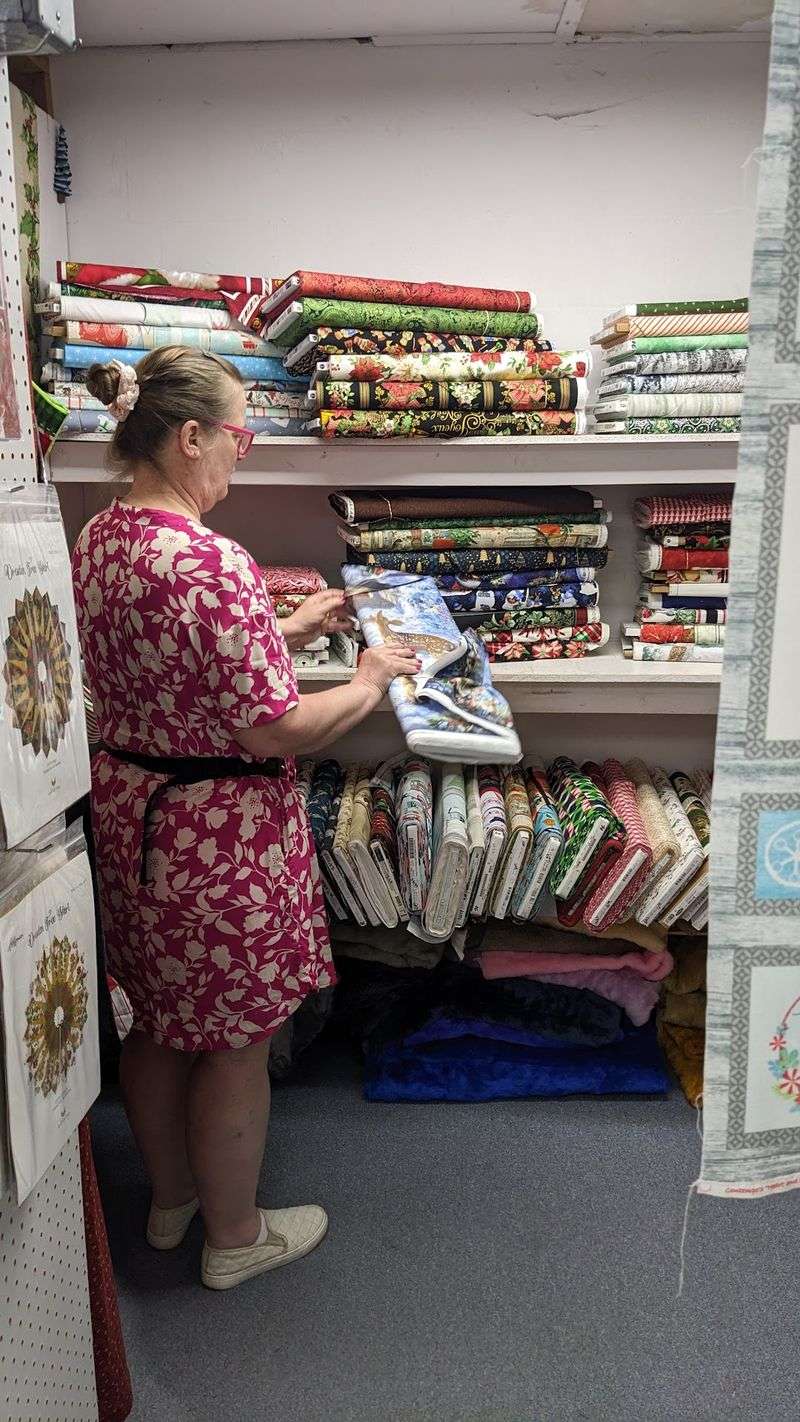
A mother and daughter comparing two floral prints. A retiree restocking thread for a winter quilt.
A first-time sewist holding a pattern and looking a little lost. All of them fit right in here.
Quilters get the most out of a trip, thanks to the depth of cotton and supplies. Embroidery fans and anyone shopping for a new machine come next, since dealer support and repair help are hard to find.
Beginners do well too, because the staff can explain yardage, fabric weight, and needle choice without making anyone feel silly.
Families on a Saturday outing can make it a fun stop, especially if the kids are old enough to dig through the scrap bin. Snowbirds spending the winter in central Florida will find it an easy detour from I-4 on a cool morning.
Budget shoppers should know that quality cotton is not cheap anywhere these days, and prices here reflect that. Sales help, and the scrap bin is a smart way to stretch a dollar.
If upholstery or specialty vinyl is on your list, call ahead, since the stock leans heavily toward quilting and apparel fabrics.
Planning Your Lakeland Fabric Run
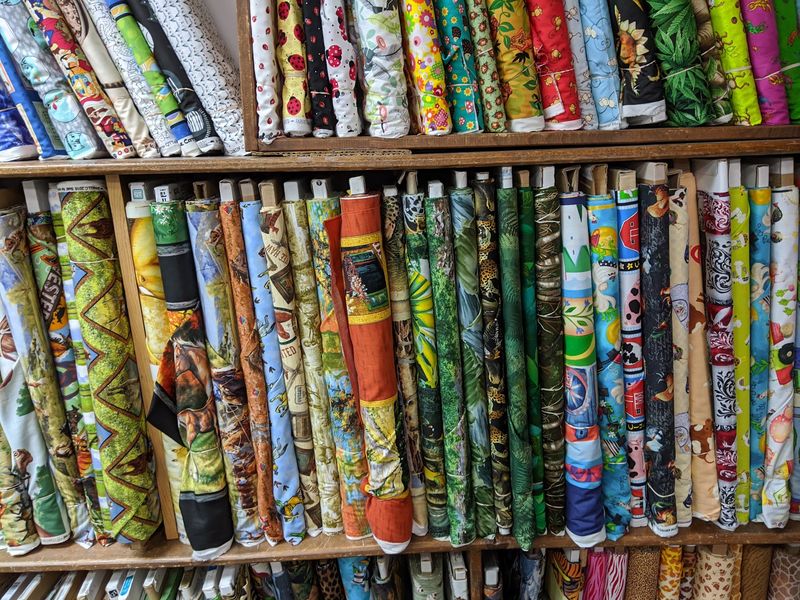
Morning is prime time. The store opens early and closes by midafternoon, so this is not an after-work errand.
It also stays closed one day a week, so check current hours before driving out.
From Tampa, figure on about forty-five minutes east along I-4, and from Orlando, closer to an hour heading west. Take the exit for North Florida Avenue and head south into town.
Parking is right at the building, and the lot is easy to navigate.
Grab the monthly flyer, either at the counter or by signing up, since it lists the current sales and specials. Timing a big fabric haul around a sale can make a noticeable difference in the final total.
Bring these on your trip:
Measurements for every project, swatches or photos of fabric you are matching, a tote or two, and a bag of scrap donations if you have them. If you are dropping off a machine for repair, pack all its parts together.
Once the trunk is full, swing by downtown Lakeland afterward. Lake Mirror and Lake Morton, with its famous swans, are only a few minutes away and make a relaxing place to stretch your legs.
A Soft Verdict on a Busy Little Shop
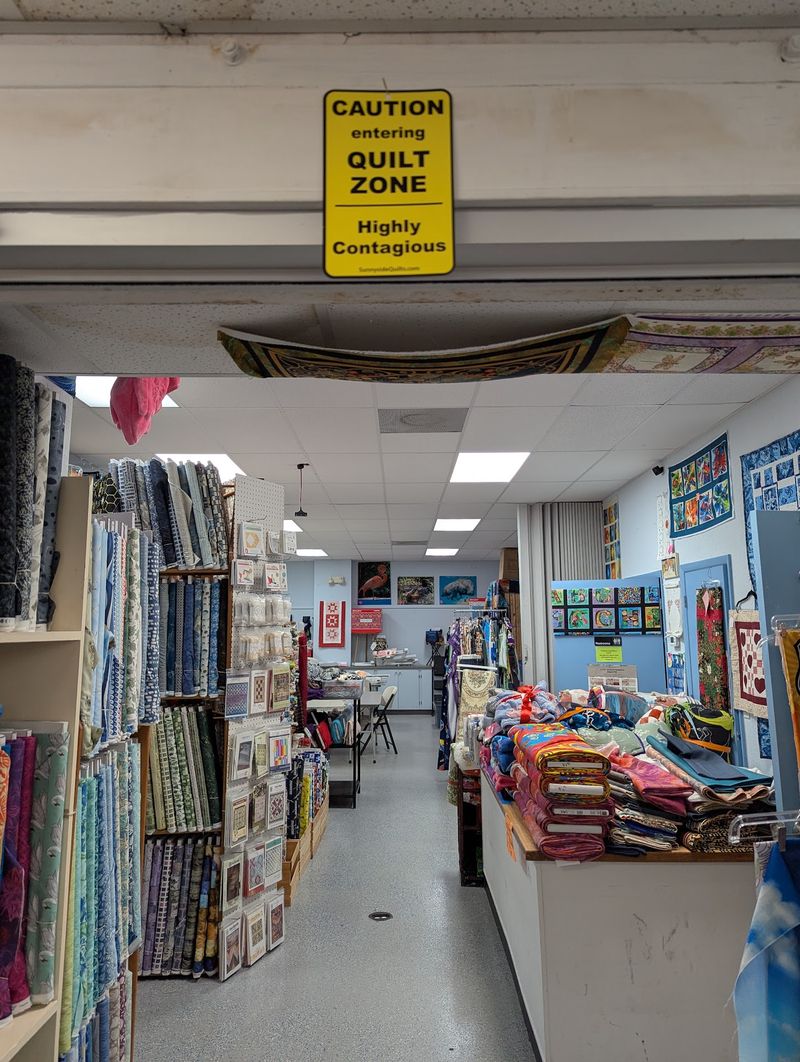
Leaving with a full bag and a list of projects longer than when you arrived is pretty much the expected outcome here. The shop does not look like much from the road, but the inside tells a completely different story.
What makes it special is the combination. Deep quilting stock, a bright thread wall, a scrap bin full of surprises, machines you can test in person, and repair help all under one roof.
Add classes, community sew days, and owners who still work the floor, and it becomes more than a place to buy fabric.
Is it the cheapest fabric in Florida? Probably not, and it does not try to be.
It is a place built for sewists who care about selection, want help picking the right materials, and would rather talk to a person than scroll a website.
Plan a morning, bring your swatches, and leave room in the car. Make it part of a Lakeland day with a stroll by the lakes afterward.
Chances are good that the next time you need thread, you will find a reason to make the drive again, and you will probably not stop at just one spool.