This North Carolina Museum Tells 13,000 Years Of Cherokee History In A Way Most People Have Never Seen
Thirteen thousand years is a very long time for a story to keep unfolding.
Inside one North Carolina museum, that history is not treated like something finished and filed away.
Cherokee voices carry the past forward while making it clear that the story is still being written today.
The deeper you go, the more the surrounding mountains start to feel different too. Places that once looked like scenery suddenly carry memory, meaning, and connection.
That shift can be surprisingly powerful.
You may walk in expecting to learn about history.
You leave realizing the land outside the doors has been telling part of the story all along.
Travel Through 13,000 Years Of History Told From A Cherokee Perspective
Some timelines feel like a long list of dates.
Here, the journey has a voice: Cherokee people help tell their own history through exhibits shaped by elders, scholars, and community members.
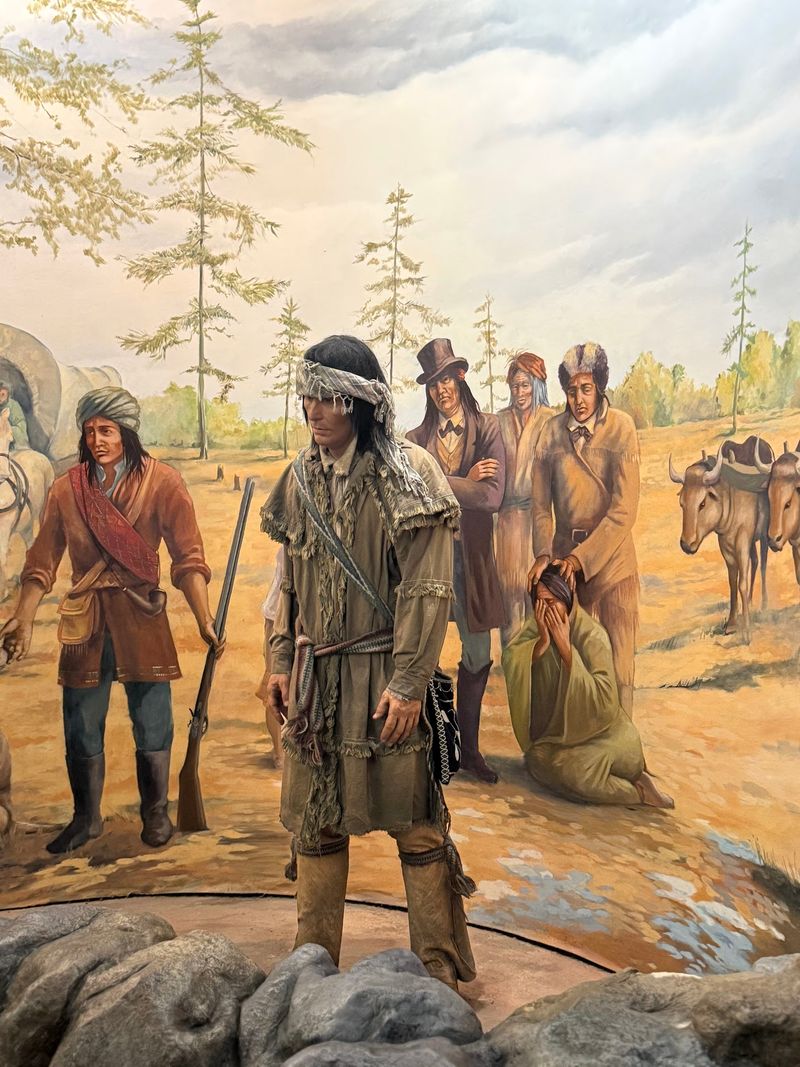
The current main galleries combine refreshed portions of earlier exhibits with new interpretation as the museum rethinks how it presents the Cherokee story. As you walk, watch how stories about daily life and community sit beside major events.
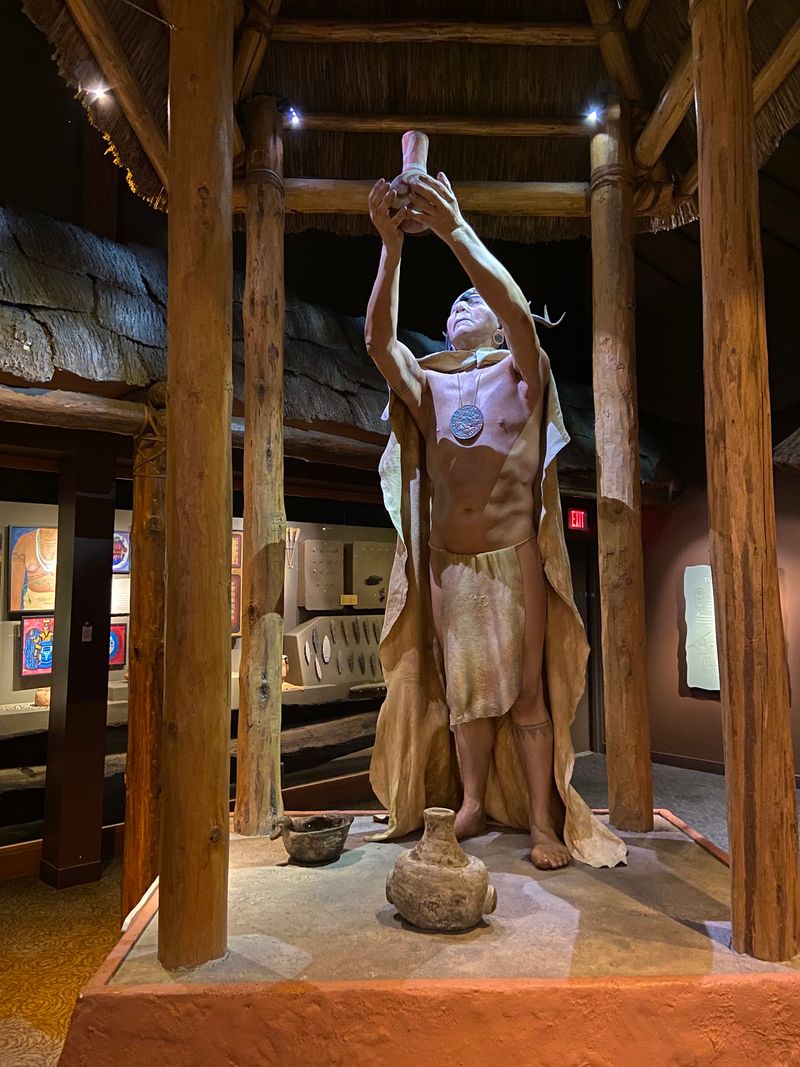
Artifacts, audio, animation, life-size figures, and other immersive elements remain part of the gallery experience.
Community members served as models for some figures, and tribal members contributed voices heard in the museum.
Try reading one display before moving to the next instead of rushing ahead. Ask yourself whose words you are hearing and how the objects nearby add to that account.
Families can pause to talk about what has changed across generations and what has remained.
The route also introduces difficult chapters, so younger visitors may appreciate a quiet moment to ask questions.
The museum opened in 1948 and today operates as an independent 501(c)(3) nonprofit serving as the tribal museum of the Eastern Band of Cherokee Indians.
That connection matters: the story comes from the community whose history you came to understand, not just from an outside narrator.
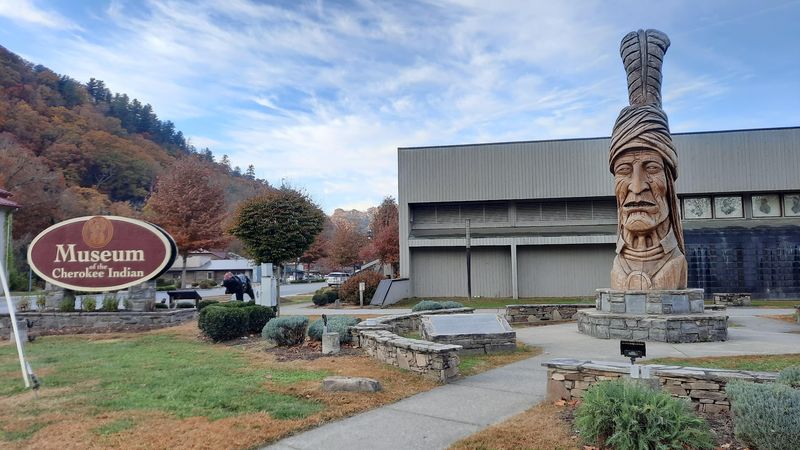
The Museum of the Cherokee People welcomes visitors at 589 Tsali Blvd, Cherokee, NC 28719.
See Artifacts That Connect Ancient Traditions With Life Today
A small object can hold a surprisingly large story.
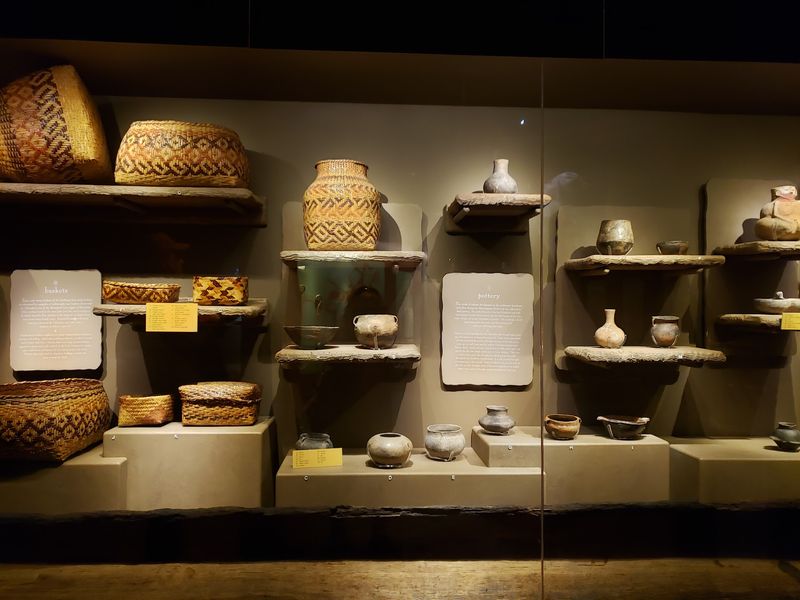
In the galleries, older tools and carefully made objects offer clues about how people worked, learned, and shared knowledge.
Rather than treating every piece as a relic from a vanished world, the museum connects long histories with Cherokee culture today. Look at a stone tool and consider the patient skill needed to shape it.
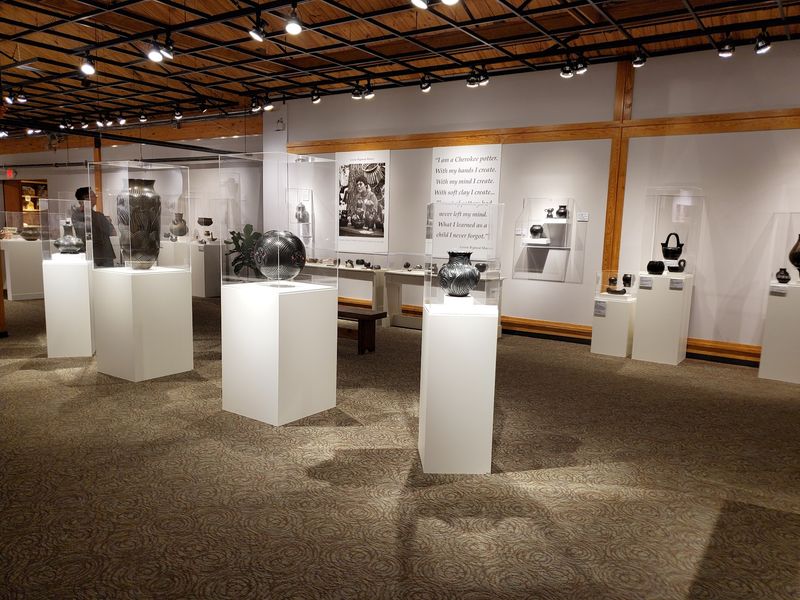
Then notice pottery and other handmade work, where patterns and materials carry their own meaning.
Displays also point toward continuing practices, including Cherokee pottery.
The museum has worked with the Cherokee Potters Guild to support the revival of stamped pottery, showing how learning a technique can link one generation to another.
If you visit with children, choose two objects made from different materials and compare them. What might each material allow its maker to do?
Let the exhibit labels guide the answer rather than guessing what an object was used for.
Some pieces may have meanings that are not fully explained in a short label.
North Carolina travelers may arrive expecting only a tour of the distant past. Give the present-day parts equal attention.
They show that keeping a tradition alive takes artists, teachers, and learners, not simply a case full of beautiful things.
Meet Cultural Specialists Sharing Storytelling, Weaving, And Traditional Crafts
Watch someone work with rivercane, and the meaning of a handmade basket becomes clearer.
On scheduled dates, the museum’s Atsila Anotasgi Cultural Specialists share practices such as weaving, storytelling, and wood carving.
A demonstration lets you notice the choices, practice, and care behind an object that might otherwise take only seconds to pass in a gallery.
Finger-weaving and basket making use different materials and methods, so pay attention to how a maker handles each strand. If a specialist is speaking with visitors, listen before asking a question.
Thoughtful questions about a process or a material can open a conversation, while giving the person room to guide what they share.
Programs vary by date, and a specialist may not be demonstrating during every visit.
Check the museum’s current events calendar before making a special trip. The museum also sponsors the Cherokee Voices Festival, traditionally held on the second Saturday in June, with cultural presentations and craft demonstrations.
There is a difference between seeing a finished piece and learning about the hands and knowledge that shape it.
Whether you catch a live demonstration or study the gallery displays, remember that these skills are practiced by people now.
That makes the experience about living makers as much as the works they create.
Discover Why This Is Much More Than A Traditional History Museum
Old objects are only part of what a museum can care for.
This institution is also a cultural and educational center, with archives, research, and programs that support the sharing of Cherokee knowledge. As the tribal museum of the Eastern Band of Cherokee Indians, the institution places Cherokee voices and community input at the center of its work.
Notice the range of ways those stories reach you.
A photograph may invite a close look, while a recorded voice or film gives another kind of detail.
Exhibits draw on contributions from Cherokee elders and scholars, helping visitors move beyond simple labels and broad ideas about the past.
Contemporary work matters here, too; Cherokee culture is not something the museum places behind glass and leaves there.
Before entering a new gallery, read its opening text.
It can tell you whose perspective shapes the displays and what questions the section explores.
Then compare that message with what you see in the cases and on screen.
This small habit makes a visit more rewarding than racing from one striking object to the next.
For families traveling through North Carolina, the museum offers a chance to practice careful listening together. You can leave with more than facts and dates: you can better understand why the person telling a story matters.
Learn How Cherokee Culture Continued Through Centuries Of Change
History does not stop when a timeline reaches a painful chapter.
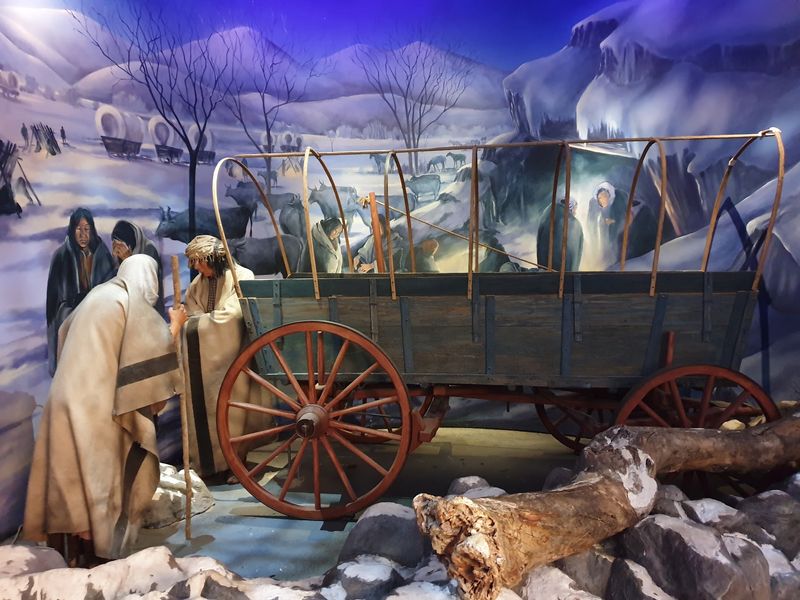
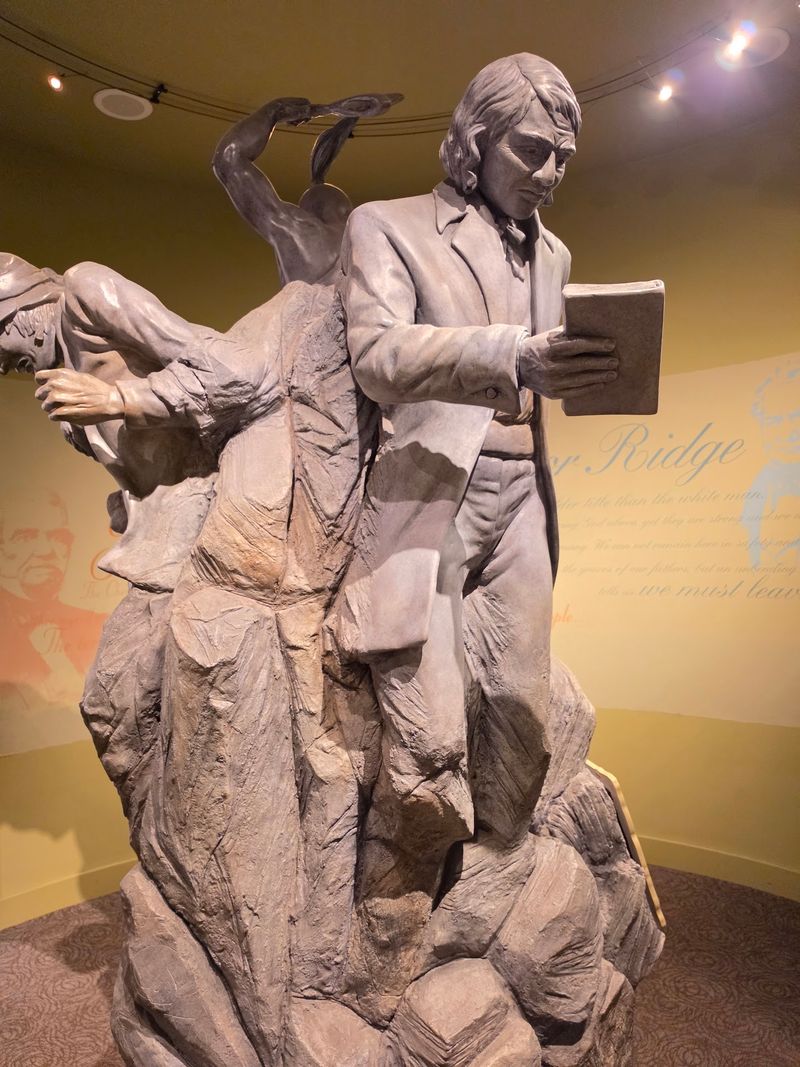
The museum explains profound changes in Cherokee life, including displacement during the Trail of Tears, while also showing how Cherokee communities endured. Firsthand accounts help give that history a human scale.
Read them slowly, and allow space for younger visitors to talk about what they have learned.
Other displays introduce earlier encounters and decisions that shaped the centuries that followed.
The current 2026 exhibition Unrelenting: Cherokee People and the American Revolution examines Cherokee experiences surrounding the Revolution through historic objects and contemporary art.
The exhibition centers Native voices while exploring changes to Cherokee sovereignty, land, community, and family structure.
Unrelenting remains on view through December 30, 2026, alongside the museum’s continuing emphasis on living Cherokee culture.
Language learning, art, and community life belong in the story alongside historical records.
The shift can be striking: you move from accounts of upheaval to evidence that knowledge is still being taught, made, and shared.
A helpful way to explore is to notice one thread across several eras, such as language or the passing down of skills. Ask how people kept it going and how its form may have changed.
That question respects both the losses recorded in the galleries and the Cherokee people shaping their culture today.
Look Closely At The Art, Clothing, Tools, And Objects Filling The Galleries
Details reward a slower walk through the galleries.
Study the shape of a stone tool, the surface of a pot, or the pattern in a piece of clothing before reading its label. Then see whether the explanation changes what you noticed first.
It is a simple way to turn looking into learning.
The museum’s displays bring together objects and images from different periods of Cherokee history. You may find tools, ornaments, pottery, historic dress, and photographs.
Each type answers a different question: what people made, what materials they used, how they expressed style, and what they chose to record.
Avoid assuming that one object represents every Cherokee person or every era.
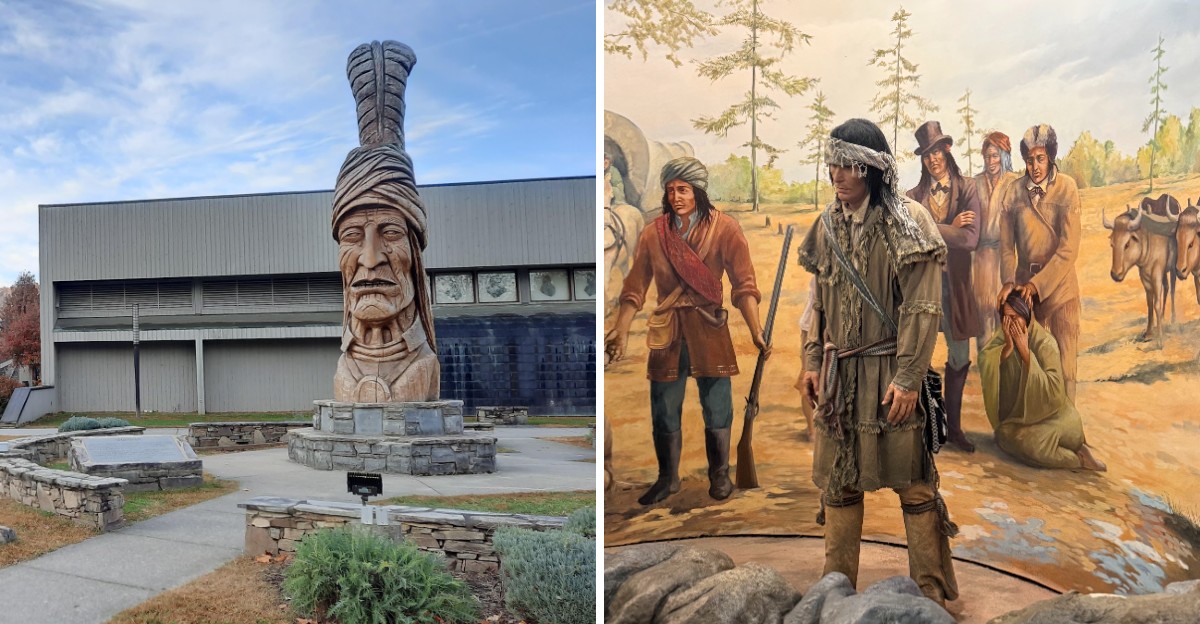
Near the entrance, a large hand-carved statue of Sequoyah offers another point of interest.
Sequoyah created the Cherokee syllabary, a writing system that made it possible to write the Cherokee language.
Inside, follow that curiosity wherever the gallery’s explanations lead.
Save a little time for the museum store, where work by Cherokee makers may include baskets, pottery, carvings, and beadwork.
If you are choosing a keepsake, read the maker information where available.
Knowing who created an item adds meaning to its colors and textures, and a careful purchase can support the artists whose work you admire.
Take Time To Understand The Stories Behind The Qualla Boundary
Step outside after your visit, and the setting may feel different.
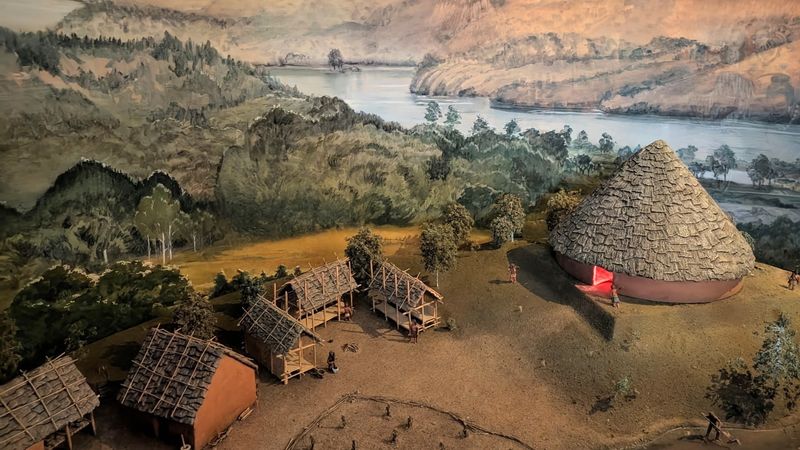
The museum stands on the Qualla Boundary, the sovereign land of the Eastern Band of Cherokee Indians.
It is a living community, not merely a historic stop on a mountain trip. Keeping that in mind gives the stories inside a clearer connection to the ground beneath your feet.
The Qualla Boundary is in western North Carolina, where Cherokee people maintain deep ties to their homeland.
The museum’s accounts of the past are therefore also accounts of place.
When an exhibit mentions community life or the continuation of a tradition, consider that these are not distant ideas. People carry them forward here today.
Allow a moment to notice the mountains around Cherokee before you enter or as you leave.
The view cannot explain a culture on its own, but it can help you understand why geography matters in the story.
If you plan to explore the surrounding cultural district, start at the museum so you have context for what you see next.
Travel thoughtfully, especially when a destination is someone’s home.
Read signs, follow visitor guidance, and treat cultural spaces with care.
You will gain more from the visit by listening to how Cherokee people describe the Qualla Boundary than by relying on an old map or a quick photograph.
Plan About An Hour To Experience The Museum At An Easy Pace
An hour gives you a useful starting point for a self-guided visit.
You can move through the main exhibits without hurrying past every case, though first-time visitors who like to read closely may want two hours.
Leave a little extra room in your day if you hope to watch a film, talk through a display with family, or browse the museum store. The museum lists daily hours of 9 a.m. to 5 p.m., with final tickets sold at 4 p.m.
Major holidays can bring closures, so check its official website before leaving.
Admission details can change as well; confirming current prices and any available discounts will make arrival simpler.
Visiting earlier in the day gives you more freedom to linger. Plan your pace around the people with you.
Children may enjoy choosing one object to study in each gallery, while readers may prefer to pause at every story panel.
The museum provides accessible routes through its exhibits, restrooms, store, and Education Wing.
If you need specific accommodations, review the museum’s current visitor information before your trip. When you finish, resist the urge to measure the experience by how much you saw.
A short visit can be meaningful if you give the voices, objects, and stories your full attention.