This Under-The-Radar Michigan Museum Turns Firefighting History Into A Fascinating Visit
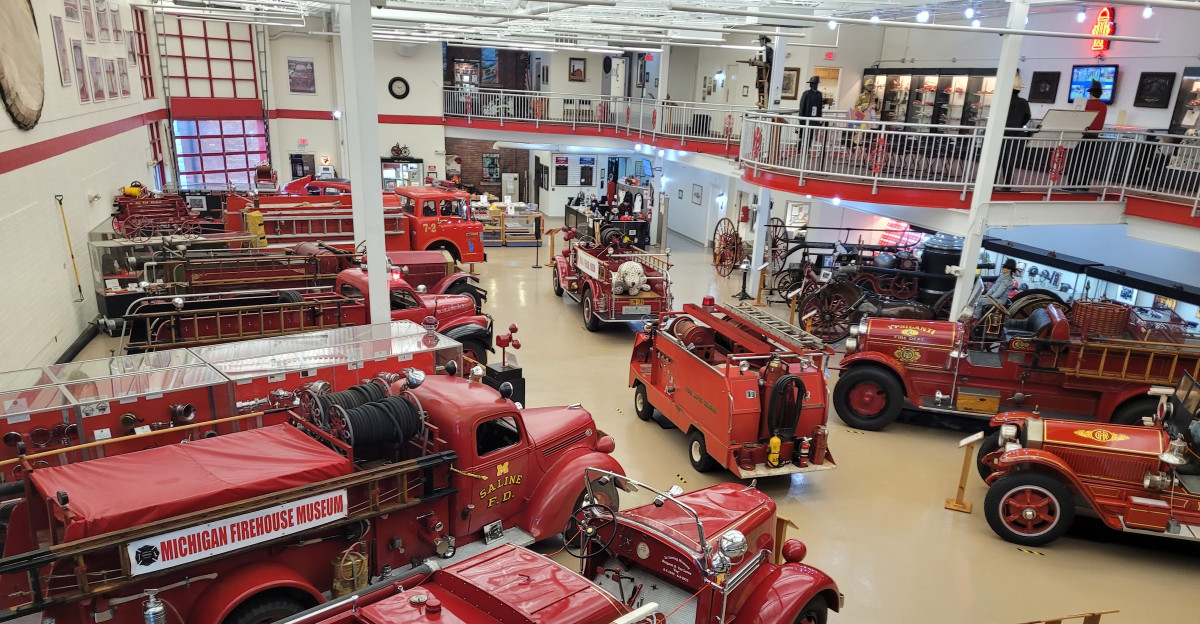
Old fire trucks have one unfair advantage over most museum exhibits: they are almost impossible not to look at.
In Michigan, an under-the-radar museum puts vintage vehicles, equipment, and firefighting history inside a setting that already feels authentic.
Suddenly, the past is not sitting behind a tiny label. It is big, shiny, and right in front of you!
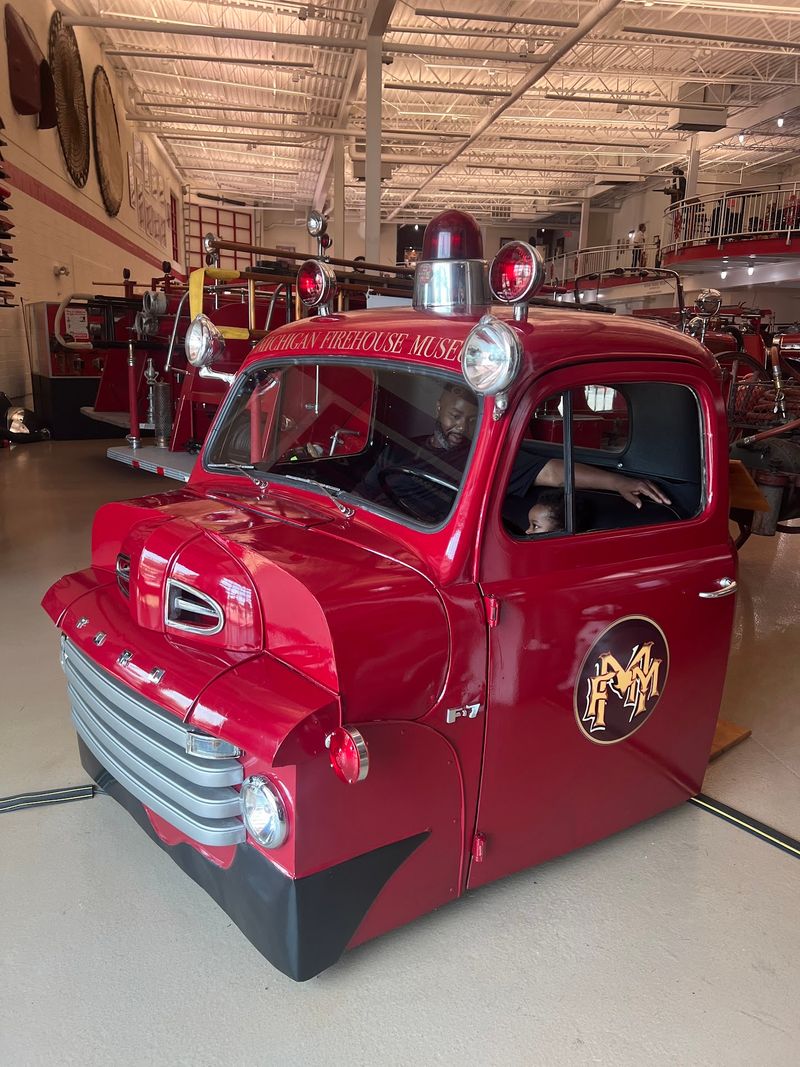
Some displays bring visitors even closer, making the whole experience feel more hands-on than expected.
The old station atmosphere helps too. You can almost imagine the doors opening and the trucks rolling out.
History gets much more exciting when it still looks ready for action.
An Old Firehouse Still Stands
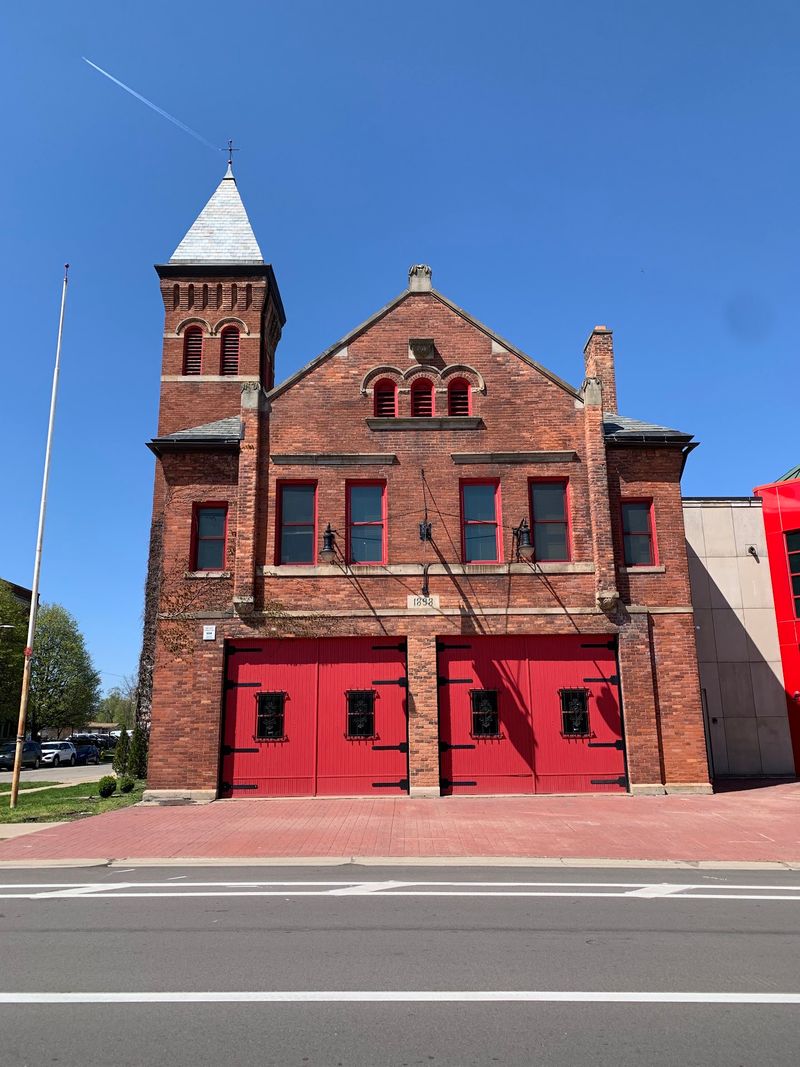
The building catches attention before any truck does. Its brick walls belong to an actual firehouse built in 1898.
The station served Ypsilanti until 1975, giving the building decades of working history before it eventually became a museum.
Its Chateauesque design makes the outside interesting, too. A slate roof, brick walls, and a square tower give the structure a distinctive late-19th-century appearance.
That exterior provides an important part of the visit. The building itself is an exhibit, not simply a shelter for displays.
The original station once included horse stalls, an apparatus room, firefighter sleeping quarters, and a tower used for the fire bell and drying hoses.
Those details make the preserved spaces easier to understand before moving into the vehicle galleries.
Young visitors can compare the old station with the firehouses they know today. Adults can see how working spaces changed as horse-drawn equipment gave way to motorized apparatus.
Slowing down around the historic rooms reveals details that can disappear beside the larger vehicles.
For anyone finding their way there, the address is straightforward. It is 110 W Cross St, Ypsilanti.
Vintage Trucks Up Close
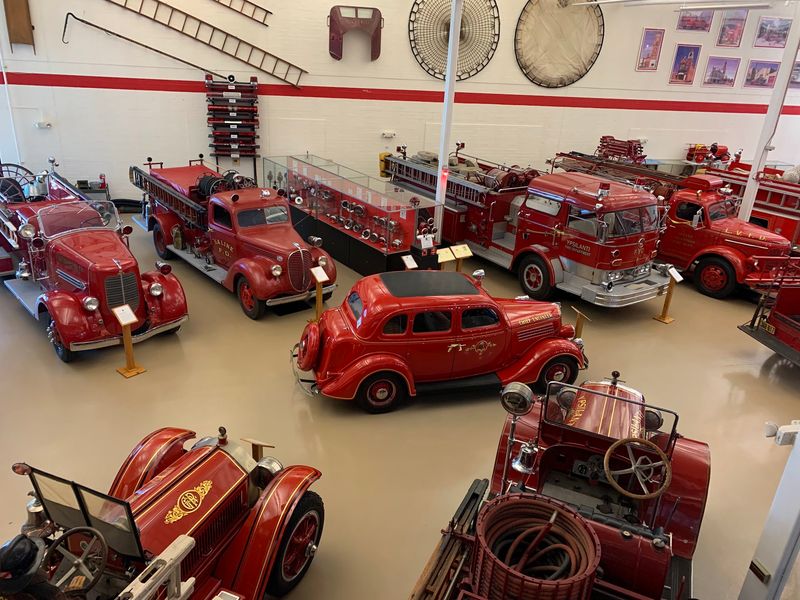
A row of old fire trucks can stop almost anyone mid-step. Here, they offer more than a good photograph.
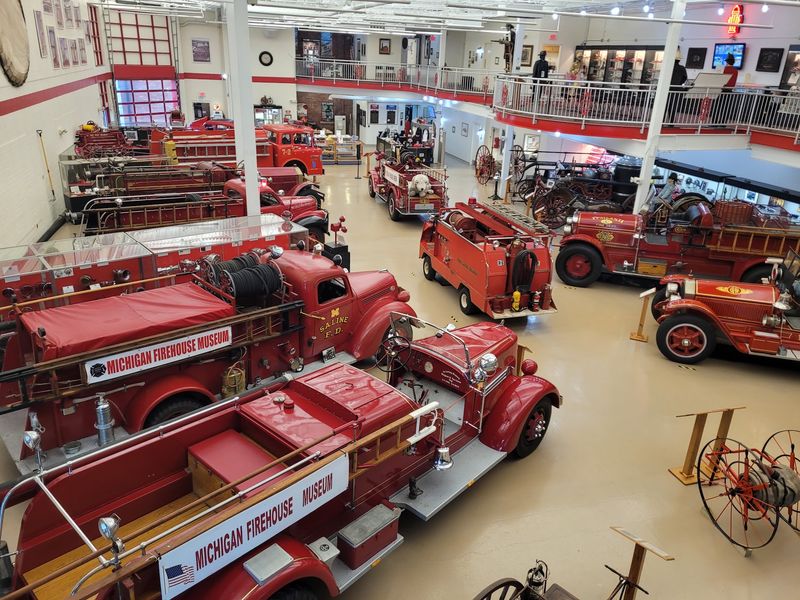
Wheels, ladders, pumps, cabs, and storage compartments show how different generations of equipment were arranged.
Comparing one vehicle with another makes changes in size, technology, and crew needs easier to see.
The museum holds a broad collection of firefighting vehicles and artifacts. Together, they tell a story centered on Michigan while also showing how firefighting technology developed over time.
Picking one feature to follow can make the collection easier to read. A ladder, seat, pump, or storage area often reveals a practical decision made for working crews.
For families, that kind of comparison can keep younger visitors interested without turning the visit into a lesson plan.
The museum continues to add interactive elements alongside its historic apparatus and exhibits.
Those hands-on features help connect the machinery with the people who once depended on it.
The trucks also reward a second look after exploring the smaller artifacts. Details often make more sense once the surrounding history is clearer.
Climb Aboard, Learn More
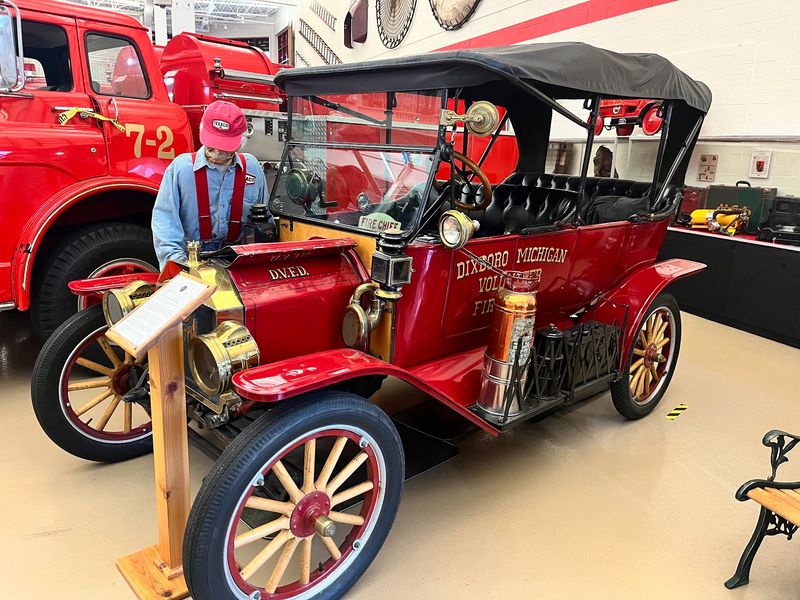
Not every display needs to sit at a distance. Interactive areas give the museum a welcome change of pace between the larger historical exhibits.
The museum describes its educational approach as a mix of firefighting history and fire-safety instruction designed to engage visitors of different ages.
That balance matters because many original artifacts still require careful protection.
A closer look at a truck cab, piece of equipment, or recreated working area can reveal how limited the space was for crews and their gear.
Children can practice looking closely while still having fun. Steps, seats, ladders, and controls turn into easy details to compare.
Simple questions can help connect those features with the work itself. How did firefighters prepare to leave the station, and where did their equipment go?
Hands-on learning works best when it supports the historic collection rather than replacing it.
Visitors who prefer to look rather than interact still have plenty to study. The shapes, materials, and mechanical details of the apparatus carry much of the story on their own.
A Remarkable Bell Collection
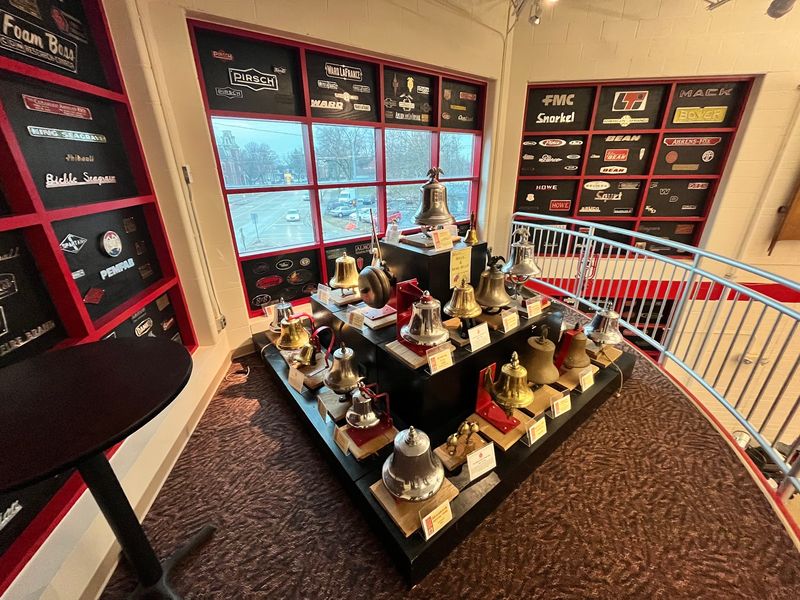
Bells might seem modest beside a fire truck, but their display deserves a slower look.
The museum describes its holdings as the largest collection of fire truck bells in the country.
Differences in size, shape, finish, and mounting style show that even a familiar piece of equipment changed across manufacturers and periods.
These smaller objects also tell a practical story. Bells helped fire apparatus announce its approach long before modern electronic warning systems became standard.
For younger visitors, the display can become a simple search for matching shapes or noticeable differences.
Older visitors may prefer the labels and historical context attached to individual examples.
Giving the bells a few minutes keeps them from being overshadowed by the larger vehicles nearby.
The collection also shows why firefighting history needs more than engines alone. Small pieces of equipment can reveal changes in technology and everyday practice.
The state’s firefighting history includes sounds as well as machines, and the bell display makes that part of the story visible.
Old Tools, New Ideas
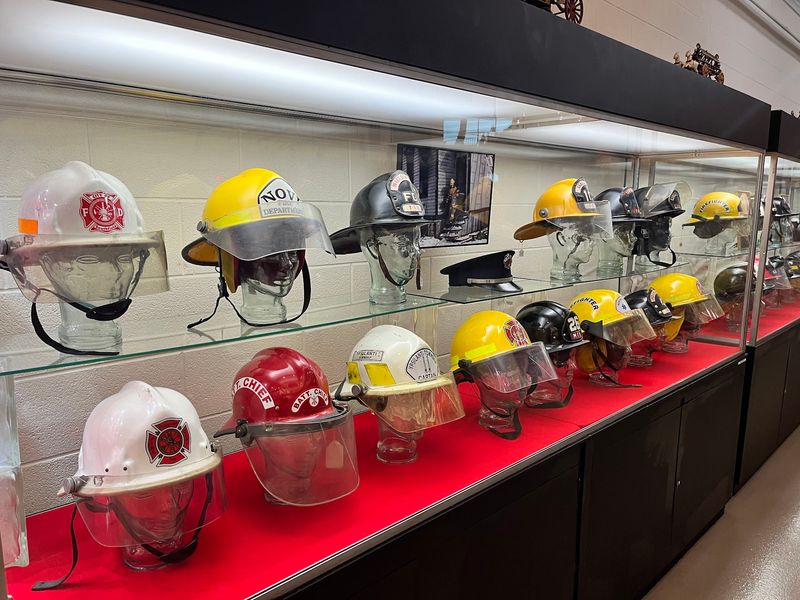
A truck gets attention, but smaller tools can explain just as much about how firefighting changed.
The Michigan Firehouse Museum and Education Center displays apparatus and artifacts spanning many periods.
Looking at each object as a response to a practical problem gives the collection a clearer thread.
What did crews need to carry, move, protect, or operate quickly? That question gives ordinary-looking equipment a stronger purpose.
Labels add context, while nearby objects make it possible to compare changes in materials, shapes, and design.
For school-age visitors, choosing one tool and describing what it was meant to do can make the displays easier to understand.
That approach turns observation into a short conversation and gives children a reason to look beyond a favorite truck.
Visitors do not need to memorize every date or technical term. Following one clear theme can make a large collection easier to remember.
Anyone with limited time can use the same strategy. A few carefully chosen displays often say more than a rushed pass through every case.
The Museum Grew Beyond 1898
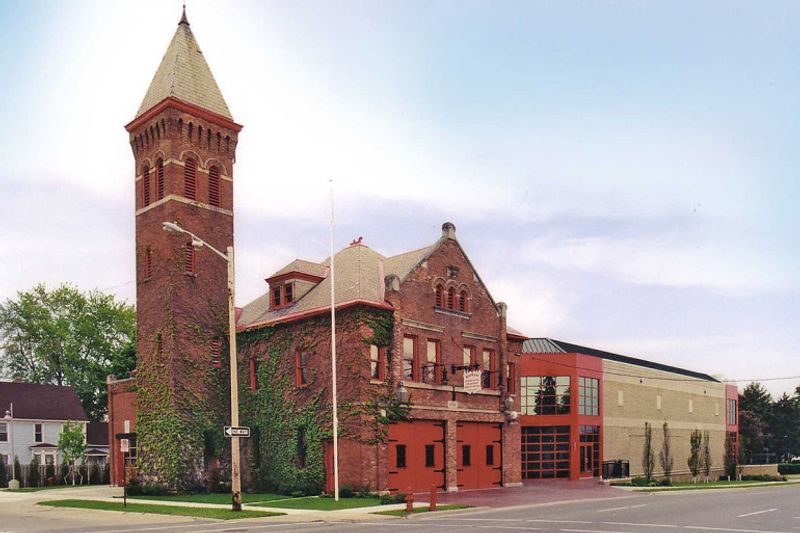
The historic rooms are only part of the museum. A modern addition gives the collection substantially more room.
Built in 2002, that multilevel addition helped expand the full facility to more than 26,000 square feet.
The scale is easy to underestimate from the street because the 1898 station remains the most recognizable part of the complex.
Moving between the old firehouse and the newer galleries also helps separate the building’s working past from its current museum role.
The Michigan Firehouse Museum and Education Center was established as a nonprofit museum in 1998.
Its larger home supports changing exhibits of antique fire trucks, early fire rigs, tools, clothing, helmets, bells, breathing equipment, archival material, and other firefighting objects.
The museum’s current materials also note that the main-floor apparatus has been restored to operational condition.
That work makes preservation part of the story, not just the finished vehicles on display.
A relaxed visit benefits from leaving enough time for both the historic station and the multilevel addition.
Fire Safety Feels Practical
History remains central to the museum, but fire-safety education is part of its stated mission too.
That connection makes sense because old equipment naturally raises current questions about preparation, communication, and emergency response.
Families can use the exhibits as a starting point for simple conversations about exits, alarms, and household fire plans.
Those discussions do not need to interrupt the historical side of the visit. They give younger visitors a clear link between old equipment and safety habits that still matter.
The museum combines educational displays with its broader collection of firefighting history. Field trips, group tours, and family-focused programs also support that educational role.
Its current programming includes fire-safety activities designed for younger visitors during certain events and group experiences.
That practical focus makes the museum more than a collection of polished engines and old uniforms.
Adults traveling without children can still take something useful from the same message. Fire prevention and emergency planning remain relevant long after leaving the galleries.
Plan A Comfortable Visit
This is the kind of museum that benefits from a visit with some breathing room. The collection extends well beyond the historic firehouse visible from the street.
This Firehouse Museum and Education Center is in Ypsilanti’s Depot Town area. Its mix of vehicles, artifacts, historic rooms, and changing exhibits suits a range of interests.
Current public hours run Thursday through Sunday from noon until four, while group tours are available by appointment.
Street parking is available on North Huron and North Washington streets, and limited accessible parking is available on site.
A relaxed route might begin in the original 1898 station before moving into the modern exhibit hall.
Families may want to spend extra time with the more interactive areas before returning to the smaller historical displays. Reading a few labels along the way adds context that a quick photograph cannot provide.
The museum’s changing exhibits mean the exact lineup can vary, but the focus stays on firefighting history, equipment, and public education.
Weather can make an indoor stop especially useful, yet the historic setting keeps the visit from feeling detached from the city around it.