Seven Devils Peaks Tower Nearly 8,000 Feet Above Hells Canyon From Heavens Gate Near Riggins, Idaho
A washboard gravel road, a dusty parking lot, and a short uphill walk do not sound like much of a promise. Yet at the top of that climb in west-central Idaho, the ground drops away into the deepest river gorge in North America.
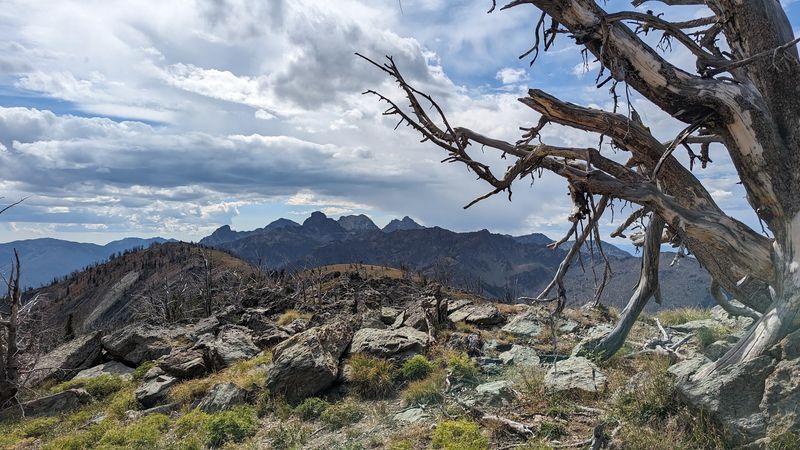
Jagged peaks rise so close you feel you could toss a pebble at them, and on a clear day the horizon stretches across four states. It is one of the biggest views in the state, and plenty of people who live a few hours away have never seen it.
A Lookout Above the Salmon River Country
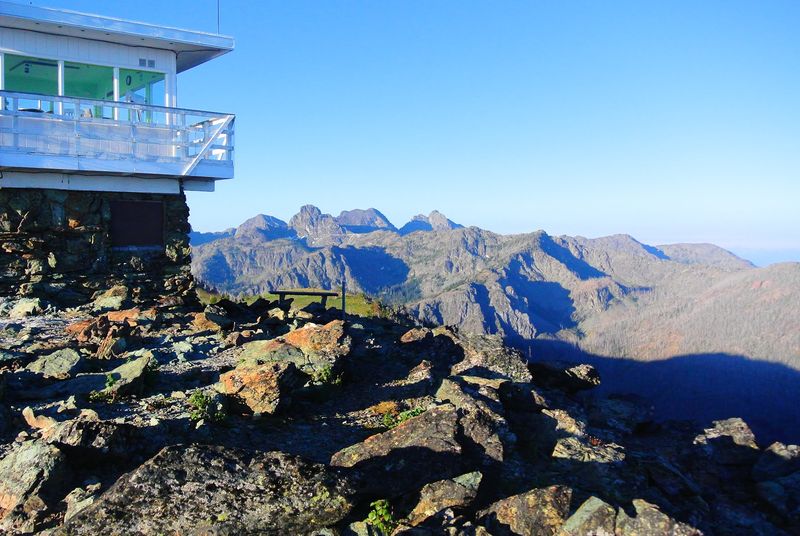
Perched at 8,429 feet in the Seven Devils Mountains, Heavens Gate is a rocky high point in Idaho County with a fire lookout tower on top. It sits west of Highway 95 and south of Riggins, well above the rivers that shape this corner of Idaho.
Maps list it simply as a mountain peak, and the postal address reads only Idaho 83549. That spare label fits a place with no gift shop, no visitor center, and no cell signal anywhere along the route.
What you get instead is a parking area, an outdoor restroom, and National Recreation Trail #73 leading up to the lookout. From the top, Hells Canyon plunges on one side while the Seven Devils crowd in on the other.
Much of the surrounding land falls within the Hells Canyon National Recreation Area, managed by the U.S. Forest Service.
That area covers 652,488 acres along the Idaho and Oregon border, with a sliver reaching into Washington.
Visitors come away describing the view as world class, and many say the name tells you everything you need to know. After one trip, it is hard to argue.
Seven Giants Turned to Stone
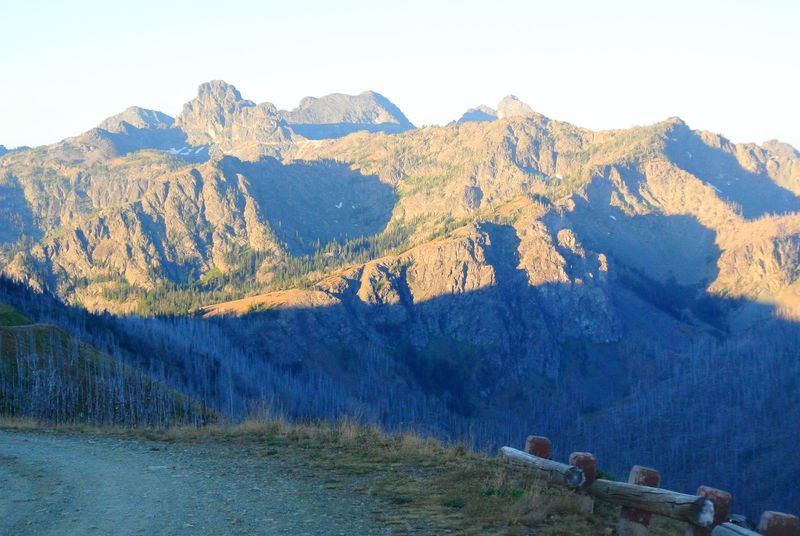
Long before any road climbed this ridge, the Nez Perce people told a story about these mountains. In their legend, seven giants were turned to stone, and the jagged summits you see today are what remains of them.
Geologists tell a different but equally dramatic tale. Volcanic forces, block faulting, and ancient glaciers all shaped the range, while the Snake and Salmon rivers kept carving away for millions of years.
The result is a cluster of 64 named peaks inside the Hells Canyon Wilderness. Some carry playful names, but the tallest of them all is He Devil Peak, reaching 9,393 feet.
Scattered between those summits are more than 90 alpine lakes. Many sit in rocky basins left behind by glaciers, and they glint like coins when the afternoon sun hits them.
Standing at Heavens Gate, you can trace that whole history with your eyes. The sharp ridges, the scooped basins, and the plunging canyon walls all fit together once you know the story.
Either version, giants or glaciers, makes the skyline more interesting to study from the tower bench.
Eight Thousand Feet Straight Down
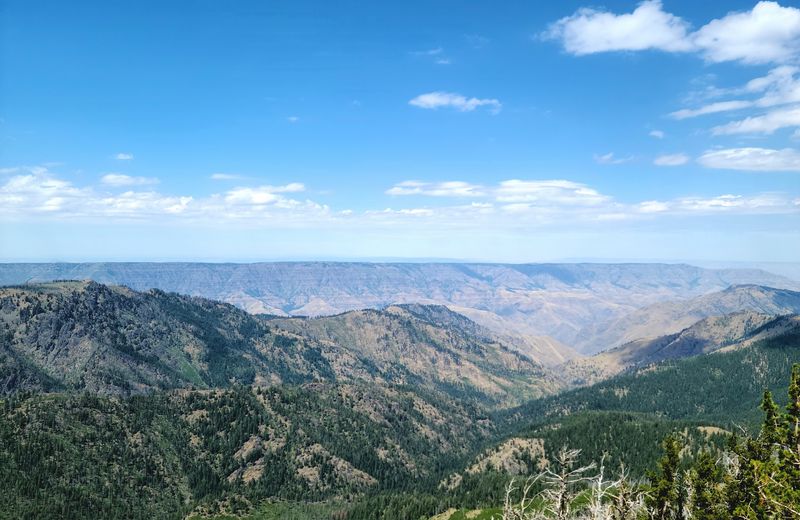
Numbers help explain why the view feels so dizzying. Hells Canyon reaches a maximum depth of about 7,900 feet, making it the deepest river gorge in North America and deeper than the Grand Canyon.
From the Snake River at the bottom to the top of He Devil Peak, the land climbs roughly 8,000 feet in only about eight miles. That ranks among the largest vertical rises anywhere in Idaho.
The Idaho side of the canyon looks dry and often bare, with tan slopes folding down toward the river. Those open hillsides let you follow the terrain for miles without trees blocking the way.
Visitors mention signs near the lookout that point out what you are seeing. They make it easier to match names to ridges, rivers, and distant high country.
On an especially clear day, people report seeing into four states from the summit: Idaho, Oregon, Washington, and Montana. Haze and smoke can shrink that range, so luck plays a part.
Bring binoculars if you own a pair. The river far below is easy to miss without them.
The Tower and Its Keepers
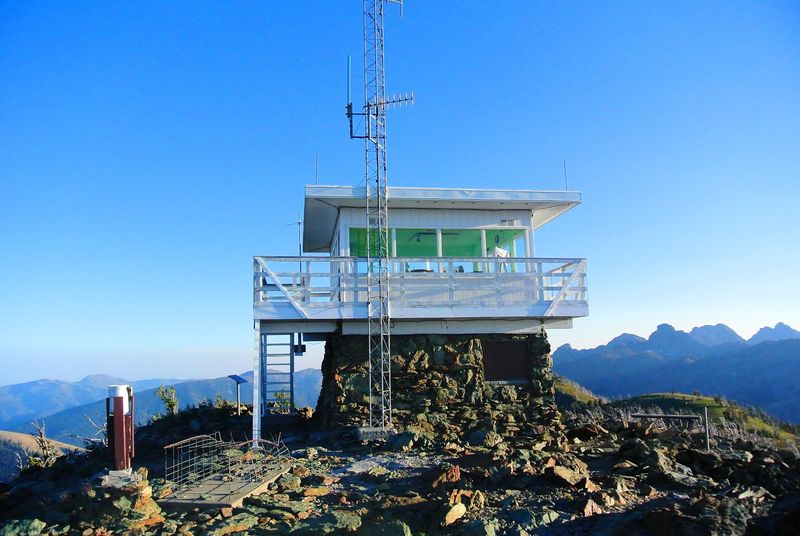
Unlike many retired lookouts, the tower at Heavens Gate is still active. That means the interior is usually off limits, and visitors understand why once they see how busy the job can be.
Travelers have mentioned meeting a couple named Ron and Stephanie, who spent around 14 years staffing and living at the lookout. Stories like that turn a scenic stop into something more personal.
A guest book waits for your signature, and printed maps have been available at times. Flipping through the pages shows names from all over, a quiet record of everyone who made the climb.
One visitor even got to watch a ranger raise the flag and recite the pledge alongside him. Moments like that stick with families long after the drive home.
Early in the season, a trap door may be locked, with a sign explaining when the top opens. A bench nearby still offers a fine seat for soaking up the scenery.
Be polite, keep voices low, and remember someone is working up there. The rangers earn plenty of kind words for keeping things friendly and tidy.
Half a Mile of Huffing Uphill
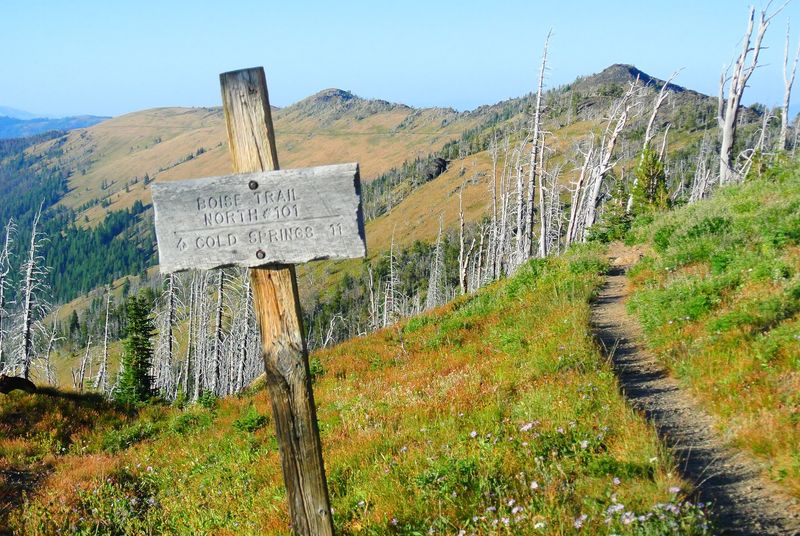
Good news first: the hike is short. From the gravel parking lot, it is about half a mile to the lookout on National Recreation Trail #73.
Short does not mean flat, though. Visitors describe the final push as steep and rough, and one admitted the climb nearly wore them out before the view made it worth every step.
The trail is well kept, according to people who have walked it recently. Still, it is not accessible for wheelchairs, so plan around that if anyone in your group needs a smooth path.
Snow changes the math. If drifts still cover the upper road, expect to walk roughly 2.5 miles to reach the tower instead.
Thin air at 8,000-plus feet can surprise flatlanders. Take breaks, sip water, and let kids set the pace.
Sturdy shoes help on loose rock, and a light jacket is smart even in summer, since the wind picks up on the ridge.
Once you reach the top, find the bench and rest. The payoff arrives all at once, and nobody minds how long it took.
Goats, Bighorns, and Alpine Quiet
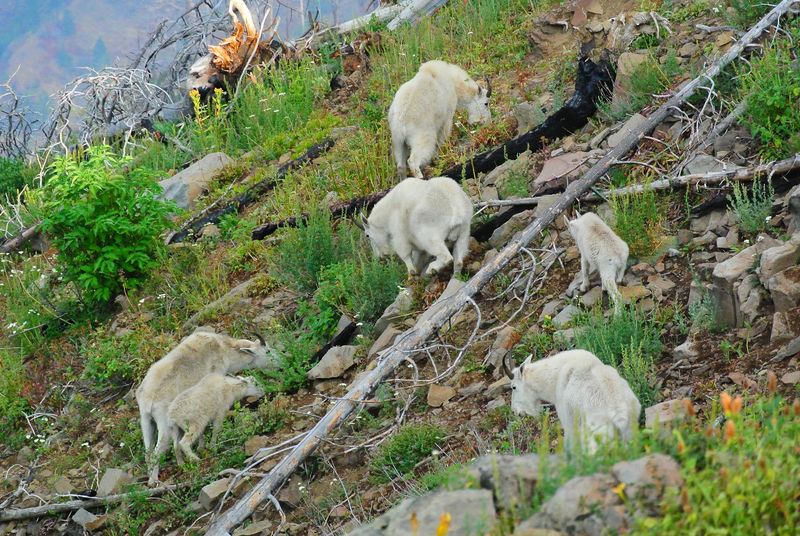
Keep an eye on the cliffs. Mountain goats are often spotted in the Seven Devils between July and September, picking their way across ledges that look impossible.
Bighorn sheep, mule deer, and elk also roam this high country. Black bears and cougars live here too, so store snacks carefully and keep small children close.
People who have visited talk most about the peace. Very few folks make the trip, and the silence at the top feels almost heavy compared with a busy trailhead in the Treasure Valley.
That calm suits a wide range of travelers. Retirees who enjoy a slow scenic drive, families wanting a big afternoon payoff, and photographers chasing clear light all find something here.
Riders and backpackers use the lookout to scout routes, too. From the tower, you can pick out basins and trails you might explore later on foot or by horse.
Timing matters for comfort. Early June can bring snow and ice, while by late June the ridge can turn surprisingly hot, so pack sunscreen along with that extra layer.
Forest Road 517 and Other Practical Matters
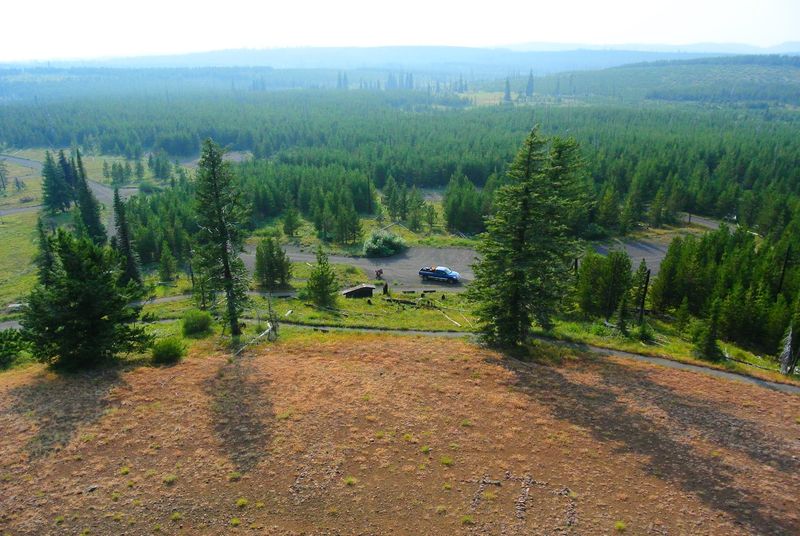
Getting there starts on Highway 95 just south of Riggins, a town of 372 people where the highway doubles as Main Street. From there, Forest Road 517 heads uphill toward the Seven Devils.
Expect a long gravel climb, often one lane, with washboard stretches and some serious drop-offs. Visitors say the drive from pavement takes around 30 minutes or more, and the last section is narrow.
The Forest Service does not recommend low-clearance cars, RVs, or trailers, especially when the road is wet or frozen. Some drivers have made it in a car, but most suggest an SUV or truck with good clearance.
No cell signal exists anywhere on the route. Fill the tank, pack water and food, and tell someone your plans before you go.
Summer is the usual window, since snow can linger into June. Check road conditions with the Forest Service before driving, as openings shift each year.
There is an outdoor restroom near the parking area. Oh, and plan on a car wash afterward, because that dust clings to everything.
Worth Every Bumpy Mile
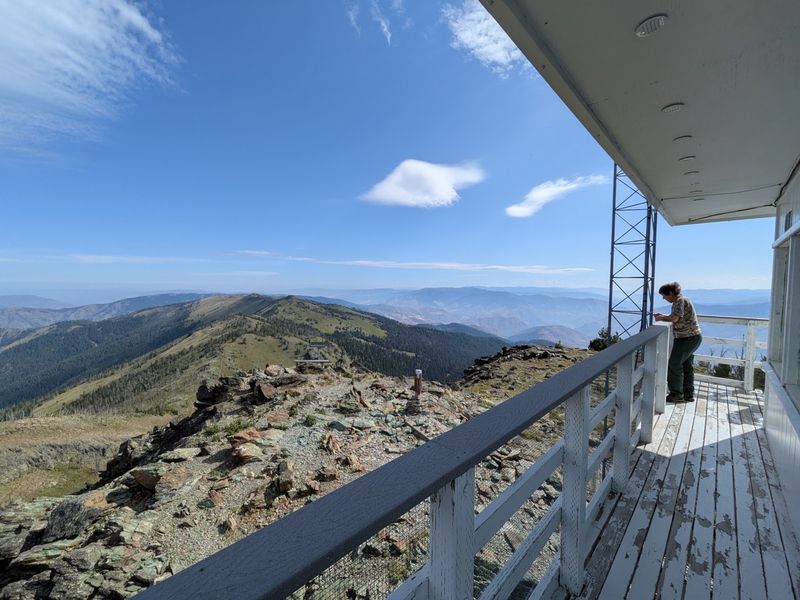
Plenty of Idaho viewpoints ask for less effort. Few give back this much.
Heavens Gate rewards patience on a rough road and a short, steep walk with a sweeping look at Hells Canyon and the Seven Devils. The active lookout, the guest book, and the chance of meeting a ranger add a human touch to all that rock and sky.
It is not for everyone. Nervous drivers, anyone in a low car, and travelers needing an accessible path may want to think carefully before heading up.
For everybody else, it makes a memorable summer day out from Riggins. Pair it with a stop along the Salmon River on the way back and you have a full day in Idaho County.
People who have been often say they still miss it years later. Others simply point to the name and call it accurate.
Go on a clear morning, sign the book, and count the states if the air allows. You may find yourself planning the return trip before you reach the pavement again.