This Massive Idaho Go-Kart Center Has Two Elevated Tracks And Karts That Reach 45 MPH
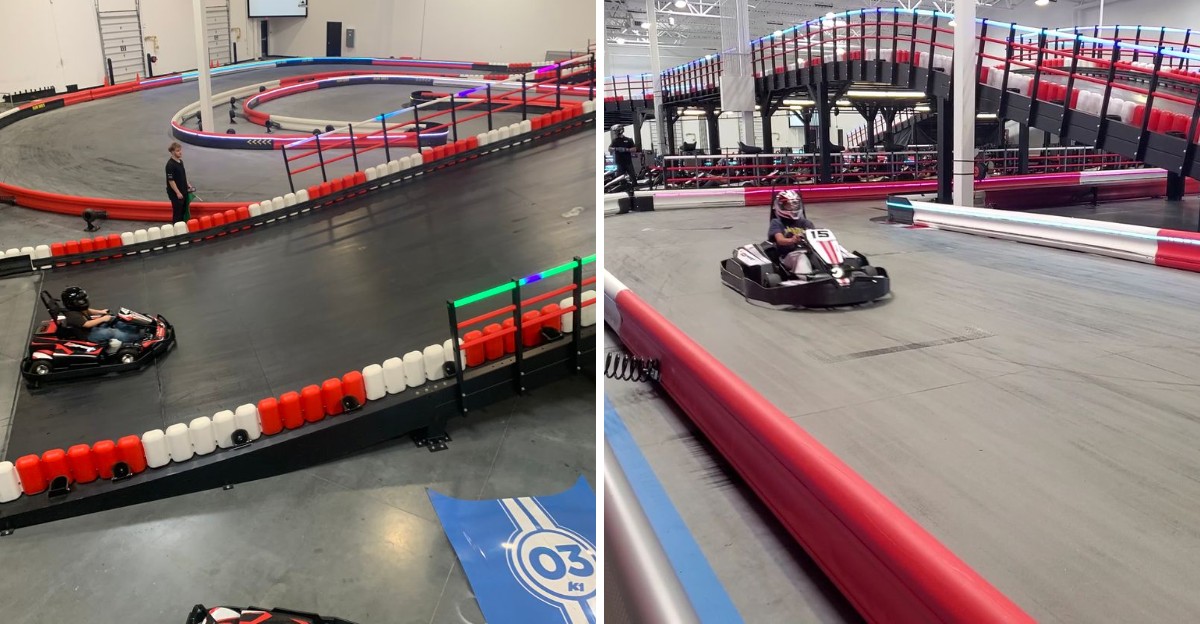
I love finding an adventure that catches me completely off guard, and this one does exactly that.
When I think of Idaho, my mind usually goes straight to mountains, rivers, and wide-open scenery.
Then I remember there is a place where the adrenaline comes from electric karts flying around elevated indoor tracks instead.
Honestly, that sounds ridiculously fun.
Speeds can approach 45 mph, which is fast enough to make every turn feel serious once the race begins. I also like that younger drivers can get in on the action while teens and adults chase quicker lap times.
This is the kind of stop I would add to a day just for the thrill of doing something completely different indoors.
Two Elevated Indoor Tracks Make This More Than A Typical Go-Kart Stop
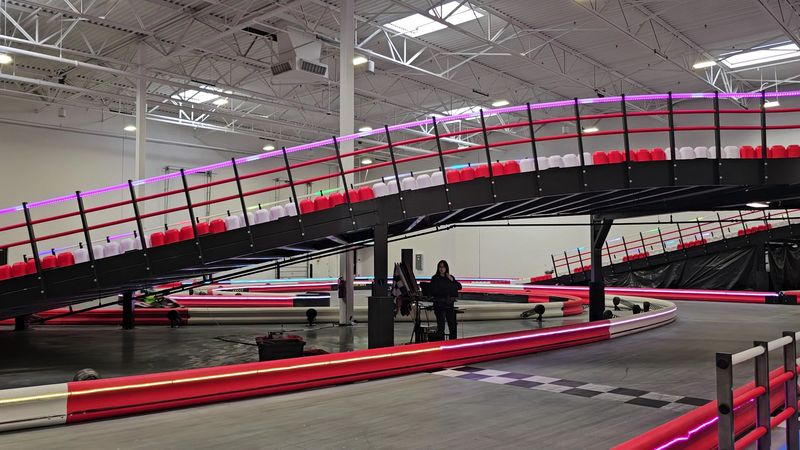
Ramps change everything. Most karting venues lay flat, rubber-lined loops across a warehouse floor, but here the circuit climbs, crests, and drops, sending your stomach along for the ride.
Two full indoor courses fill the building, each with elevated sections that reward smooth steering and confident braking.
Walk through the doors at K1 Speed Boise and the first thing you notice is scale: high ceilings, padded barriers, and the low electric hum of karts sweeping past.
The layouts twist through hairpins and short straights, so beginners can learn a line while experienced drivers hunt tenths of a second.
Elevation adds a puzzle that flat tracks never offer. Going uphill scrubs speed, so momentum matters, and coming downhill loads the front tires right when you need grip for the next turn.
Drivers quickly learn that patience through the climb pays off on the exit, where extra speed carries down the straight.
Spectators can follow the racing from designated viewing areas around the facility. Bring comfortable shoes, arrive with a little patience during busy hours, and plan a few laps to learn the rhythm.
You will find the whole operation at 1135 N Hickory Ave, Suite 100, Meridian.
Adult Electric Karts Can Reach Speeds Of Up To 45 MPH
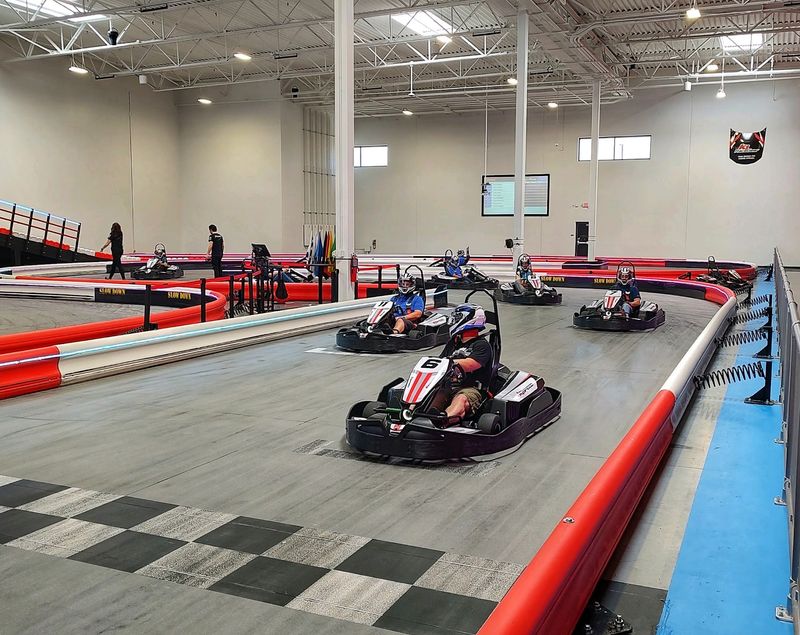
Zero engine noise, all acceleration. The adult karts here are Superleggero models, European-styled machines with electric motors that hand over full torque the instant your foot presses down.
Top speed reaches 45 miles per hour, which sounds modest until you remember your seat sits just inches above the concrete.
At that height, 45 feels closer to triple digits, with painted walls flashing past and every ripple in the surface traveling straight through the frame.
Drivers must measure at least 4 feet 10 inches to take the wheel of an adult kart. The Superleggero uses an adjustable steering wheel, while drivers must still be able to safely reach and operate the controls.
Because the motors are electric, there is no fuel smell and no smoky haze hanging over the track. You hear tires squealing, the whir of motors, and the countdown from the marshals instead.
Races are timed lap by lap, and posted results let you compare your fastest circuit against everyone else in the heat.
Lap times are recorded so drivers can compare their performance with other racers and the track’s posted best times.
Younger Racers Get Their Own Track And Junior Karts
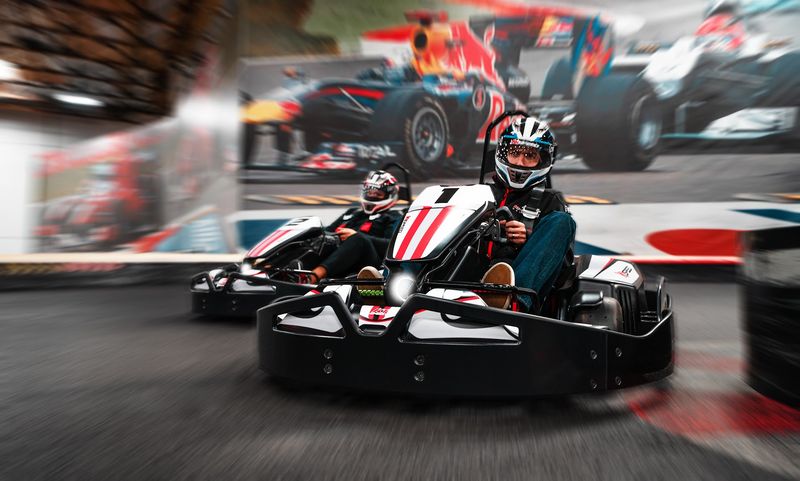
Kids who are tall enough to peer over a kitchen counter can often drive here, and that is the real charm of the junior program. The height requirement is 48 inches, measured before your first heat.
Junior karts top out near 20 miles per hour, a pace that feels genuinely quick to a young driver yet stays manageable.
Padded barriers, remote speed control from the marshals, and a briefing before every session keep things predictable.
A separate junior track means kids never share pavement with adult heats. Two rows of junior karts sit ready in the pit area, so more young racers can run at once and waiting stretches shrink on busy weekends.
The dedicated junior setup lets accompanying adults watch while younger drivers take their laps. For many families across Idaho, this is a child’s first taste of real racing, complete with a results sheet showing their fastest lap.
Practical tip: bring a hair tie for long hair, dress in closed-toe shoes, and arrive early on weekend afternoons when junior sessions fill quickly.
Weekend hours start at 10 AM on Saturday and Sunday, which makes mornings the calmest window for beginners.
Wednesdays And Thursdays Turn Both Courses Into One Super Track
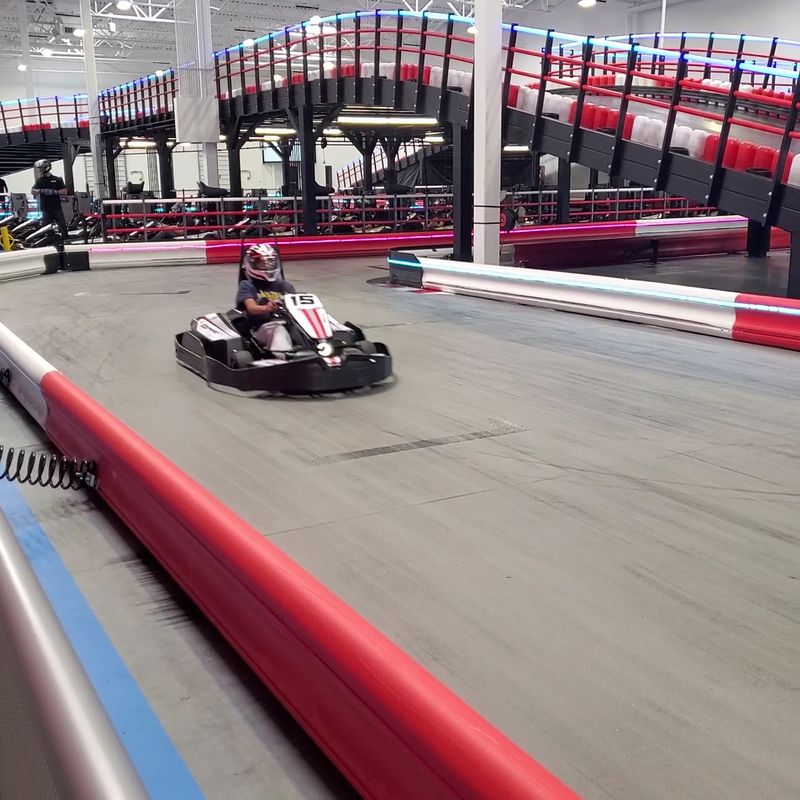
Midweek brings the layout everyone talks about. On Wednesdays and Thursdays, the barrier between the two circuits comes down and the courses connect into a single Super Track that stretches through the whole building.
Longer means harder. More corners in sequence test your memory as much as your reflexes, and a single sloppy entry can cost you time across three turns instead of one.
Doors open at noon on both days and racing continues until 10 PM, so an after-work or after-school run is easy to fit in. Crowds also tend to be thinner than on weekends, which means less waiting between heats and more track time per visit.
Drivers who already know the standard layouts get a fresh challenge here, since familiar corners connect in unfamiliar ways. Newcomers get something different too: more room to settle into a rhythm before the next braking zone arrives.
If you can only visit once, mark a Wednesday or Thursday on the calendar.
The combined circuit delivers the longest continuous laps offered at this Meridian center, and the extra distance makes every race feel like a proper motorsport session rather than a quick spin.
LED Lighting Takes Over The Tracks During Friday Glo Karting
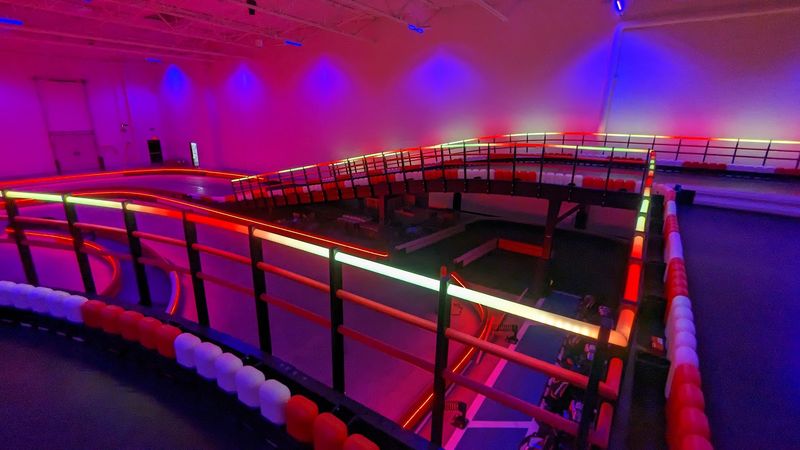
Color changes the whole feeling of a lap. Every Friday from 5 PM until closing, LED lighting washes the circuits in shifting blues, purples, and greens for Glo Karting.
Barriers glow, the karts catch the light, and white shirts practically shine under the beams. Music adds to the energy while the timing screens flicker with each completed lap.
Friday hours run from noon to midnight, giving the glow session a long, unhurried window. Families with younger racers often arrive right at five, while groups of friends and teens tend to fill the later heats.
Saturdays keep the midnight closing time as well.
Racing continues under K1 Speed’s usual track rules and staff supervision during the Glo Karting session. What changes is the mood: laps feel a little more theatrical, and passing under a bar of color adds drama to an ordinary straightaway.
Photographers in the family will love it. Long exposures pick up light trails from the karts, and even a quick phone snapshot from the rail comes out looking like a poster.
Wear something light-colored if you want to glow along with the room.
The Arcade Keeps The Competition Going Between Races
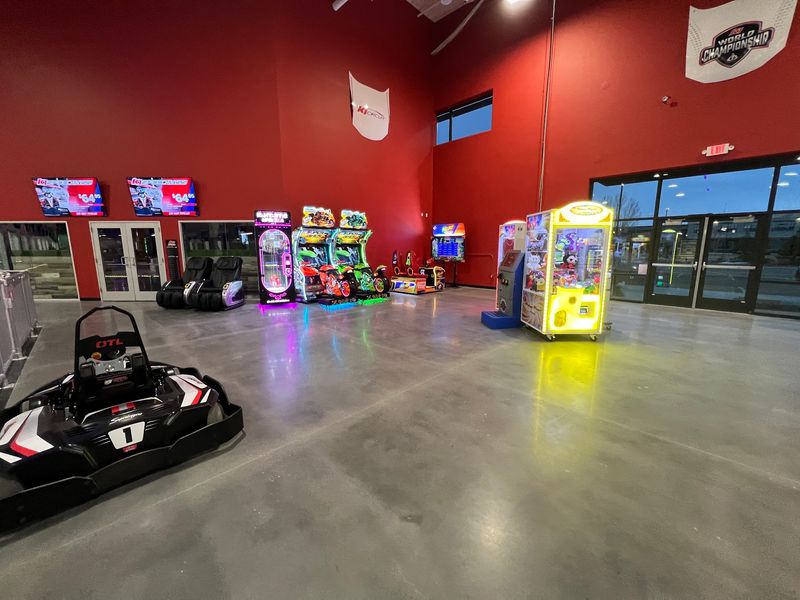
Not everyone in the group wants to drive, and that is exactly why the arcade earns its keep. Rows of machines light up one corner of the building with beeps, chimes, and the thump of air hockey pucks.
Classics share space with newer screens. Boise’s arcade includes a changing selection of video games and other skill-based attractions, accessed with a reloadable game card.
Prize machines add a target for kids collecting tickets, and the redemption counter gives younger visitors something to work toward while older siblings finish a heat.
Game choices can vary, so the current arcade lineup is best checked at the Meridian center.
The arcade also solves a common problem for families in Idaho who bring a child under the 48-inch minimum. Little ones who cannot race still get an hour of games, so nobody stands around watching.
Bring a card or load credits at the kiosk before your heat is called. That way you can hop off the track, grab a game, and stay in the middle of the action without missing your name on the board.
Paddock Lounge Serves Food And Drinks Right Beside The Action
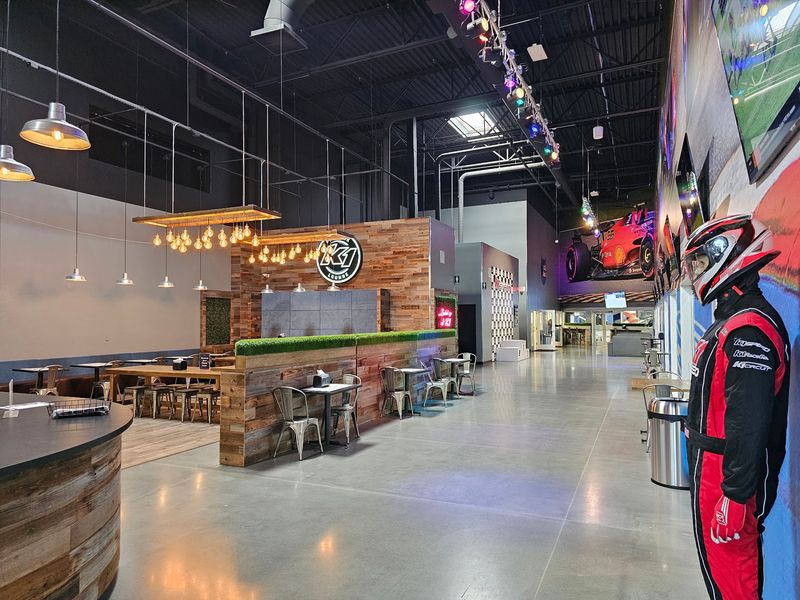
Hunger arrives fast after a dozen hard laps. The Paddock Lounge answers with a casual trackside menu and seating angled so you can watch karts sweep past while you eat.
Burgers come off the grill hot and stacked, and the pizzas arrive with a crust that holds up under a generous layer of cheese.
Sharable starters cover the rest: ginormous pretzels with soft, salty crusts, crisp chicken tenders, wings, and quesadillas cut into wedges for the table.
Soft drinks, water, and other cold beverages keep the group refreshed between heats. Order before your race is called and the food is usually waiting when you unbuckle.
Dessert deserves a mention. Current dessert choices include 5-Layer Chocolate Cake and Funnel Fries dusted with powdered sugar.
Both travel well between races, and a shared plate rarely lasts more than a few minutes at a busy table.
Tables sit close enough to the barriers that the hum of motors becomes background noise, and the timing screens stay in view. For a group splitting the day between racing and eating, nobody misses a heat while finishing a plate.
Why This Meridian Racing Center Is Worth The Drive For Idaho Thrill Seekers
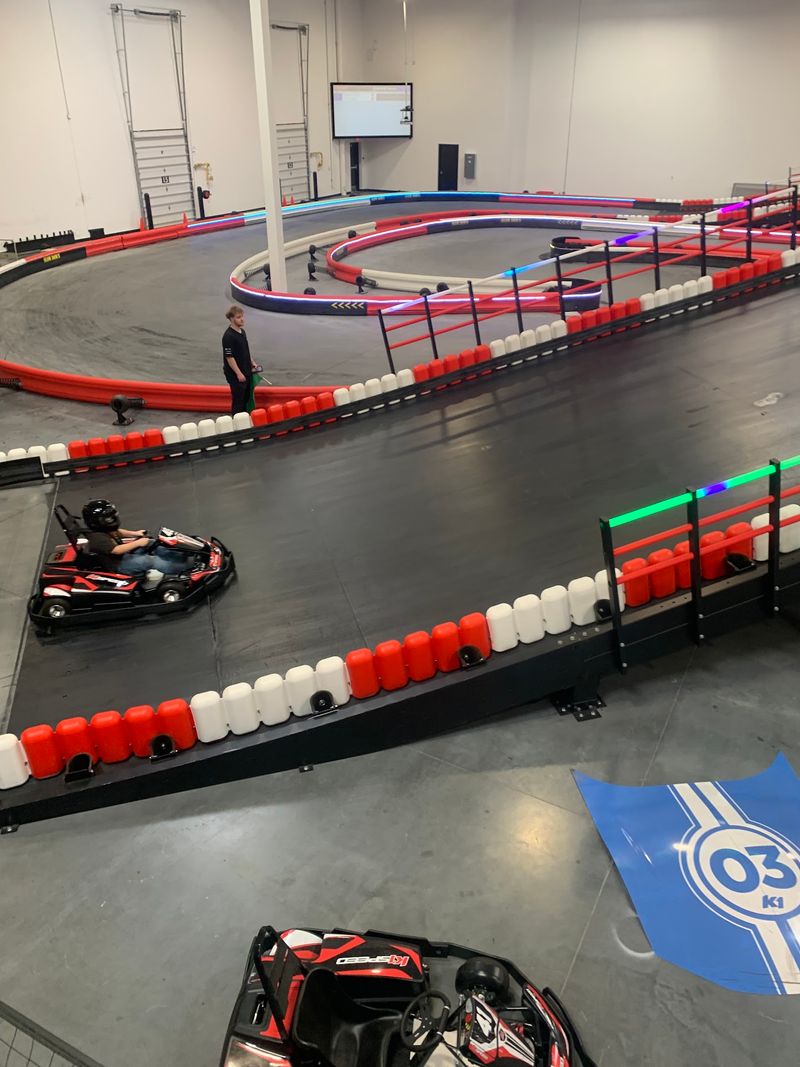
Weather rarely cooperates year-round in the Treasure Valley, which is what makes an indoor racing complex so useful. Rain, wind, or a January freeze has no effect on a heat that runs under a roof at a steady temperature.
A visit stacks up well against other outings. Elevated circuits, karts capable of 45 miles per hour, junior karts for racers 48 inches and taller, midweek Super Track days, and Friday glow sessions give a single building plenty of reasons for repeat trips.
Add the arcade and the Paddock Lounge, and an afternoon easily becomes a full evening.
Birthday rooms and group setups make it a practical choice for celebrations, while walk-in racers can usually get on track after a short registration and safety briefing.
Hours help too: noon to 10 PM Monday through Thursday, noon to midnight on Friday, 10 AM to midnight on Saturday, and 10 AM to 10 PM on Sunday.
Plan for comfortable clothes, closed-toe shoes, and a competitive streak. The building sits at 1135 N Hickory Ave, Suite 100 in Meridian, a short hop from Boise on the west side of the valley.
The fastest lap of the night might just belong to you.