Crossing The Dunedin Causeway Feels Like Driving Straight Across Florida’s Gulf Water
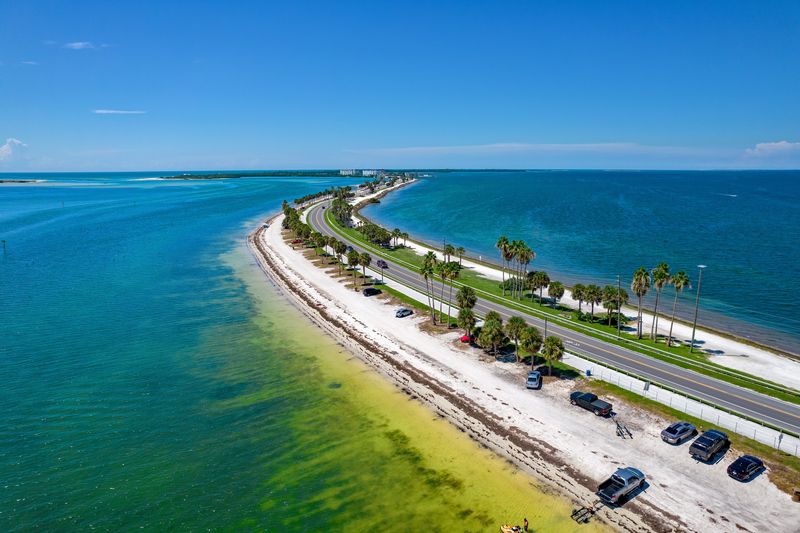
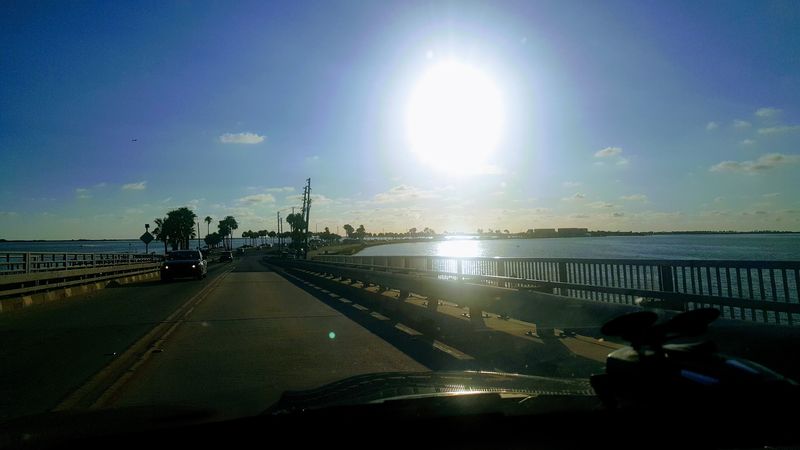
I pulled over for a quick photo and somehow stayed until the sky turned orange. Florida has a low, palm-lined road where the water sits so close on both sides that your car seems to float.
Kayaks slide off the sand, lines drop from the bridges, and dolphins roll past without an audience. Pack a towel, bring a chair, and leave enough time for sunset.
A Road Laid Right on the Water
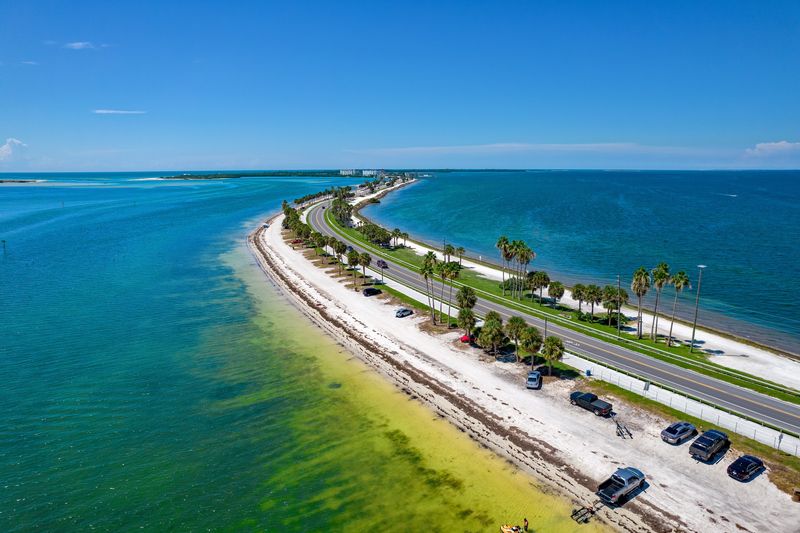
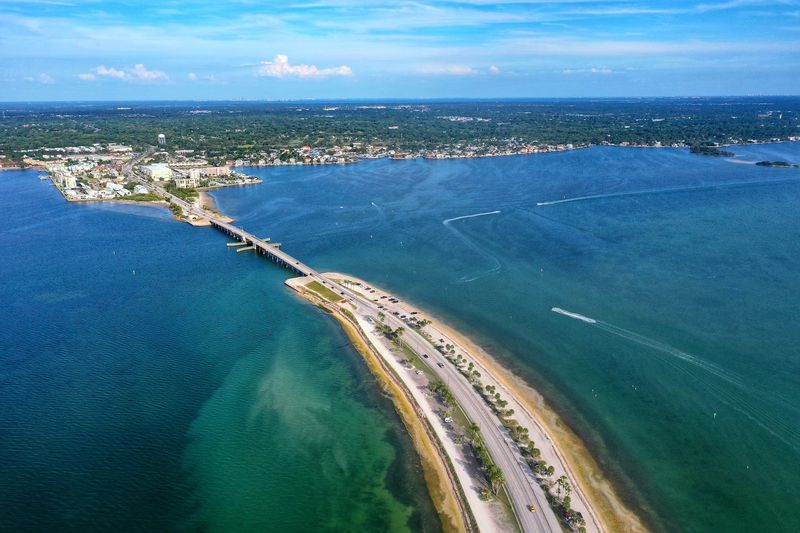
Water to the left, water to the right, and a thin ribbon of pavement in between. That is the whole idea of the Dunedin Causeway, and it lands the moment your tires leave the mainland.
The causeway runs west from the city of Dunedin on Florida’s Gulf Coast, linking the mainland to Honeymoon Island. It sits a short drive from Clearwater and roughly forty minutes or so from downtown Tampa, depending on traffic.
Palm trees stand in a line along the route, and the shoulders open onto sandy strips where cars park right beside the waves.
I expected a plain connector road. What I found was a park disguised as a commute, with kayakers, anglers, joggers, and dog walkers filling every sunny patch of shoreline.
Two bridges break up the stretch, and each one gives a quick lift above the bay before dropping you back to beach level.
Plenty of drivers treat it as the approach to the state park at the far end. Slowing down pays off, though, because the causeway itself holds most of the fun.
For your map app, the listed address is Causeway Blvd, Dunedin, FL 34698.
Old School Florida, Still Holding On
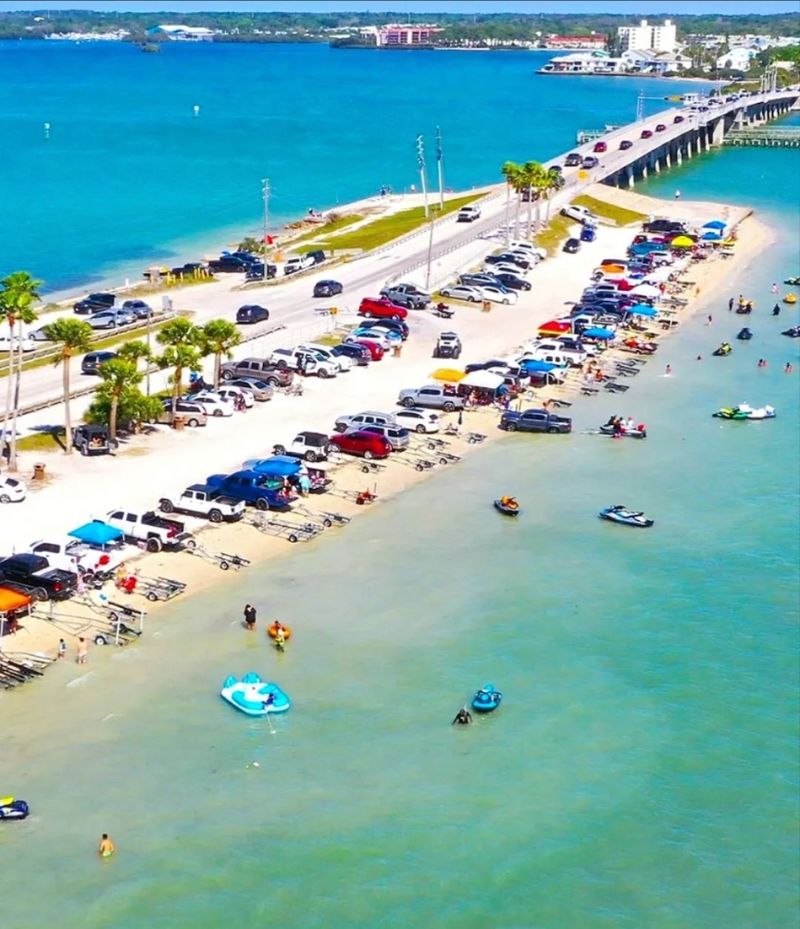
How many coastal roads still let you back your car onto the sand? Very few, and that small freedom gives the causeway its throwback personality.
The mood here leans toward the Florida of decades past. No high-rise hotels crowd the view, and no admission booth greets you before you reach the beach strips.
Blankets spread out on the sand, folding chairs face the water, and coolers sit open on tailgates. It feels like a neighborhood gathering spot that happens to have a Gulf view.
Much of that character comes from how casual everything is. You park, you walk a few steps, and you are standing in shallow water.
Snail hunting with kids, skipping shells, and watching pelicans dive make up a typical afternoon.
Change has arrived in recent years, mostly from storms. Repair work has closed a portion of the south side beach to vehicles, so a chunk of that sand sits quieter than before.
Jet skis and small motorboats can no longer launch from the shoreline either, which has shifted the scene toward paddle craft and sailboats. The slower pace suits the setting, and the relaxed spirit remains firmly in place.
Sunsets Over St. Joseph Sound
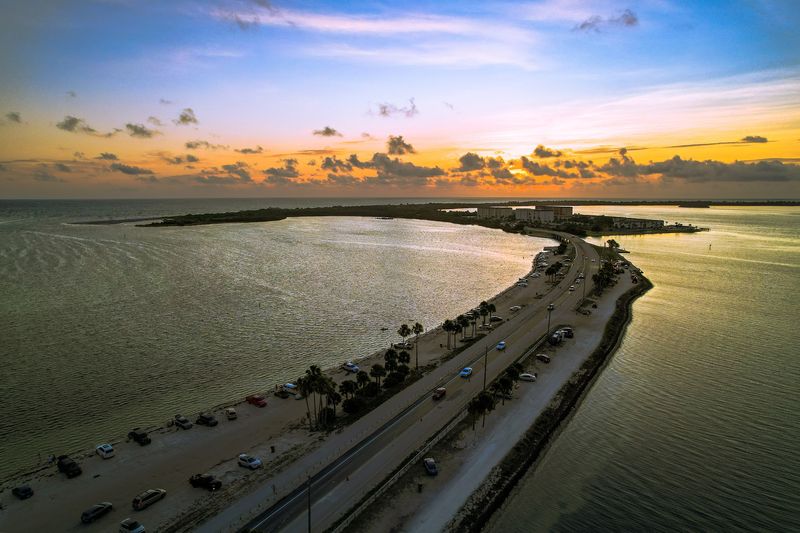
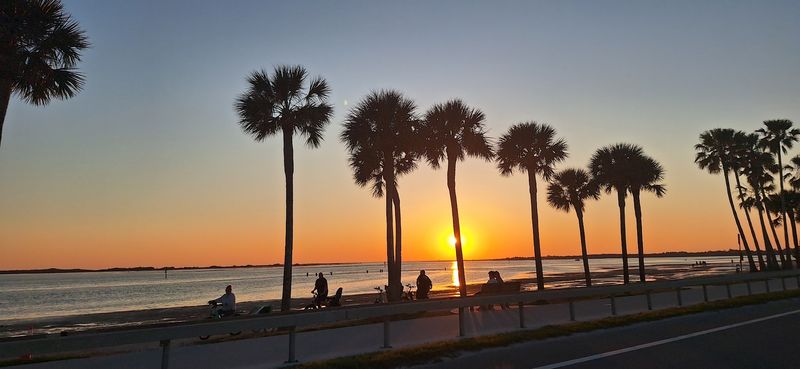
Golden light starts sliding across the water about an hour before the sun touches the horizon. By then, cars have started lining up along the shoulder, their owners settling into camp chairs facing west.
Sunset is the headline act on the causeway. With open water stretching out toward the islands and nothing tall to block the view, the whole sky turns into a canvas of tangerine, rose, and lavender.
Palms become black cutouts, and the bridges throw long reflections across the sound.
My advice is simple. Arrive early enough to claim a spot on the sand, because the best pull-offs fill as evening approaches, especially on weekends.
Bring a light jacket in winter, since the breeze off the water cools things quickly once the sun drops.
Early risers get a quieter version of the show. Sunrise paints the eastern sky behind the mainland, and the road is nearly empty at that hour.
Joggers and photographers tend to own those mornings.
Once, on a rare November night, the northern lights even appeared over the area, a reminder that the sky here can surprise anyone who keeps looking up after dark.
Paddling Toward Honeymoon and Caladesi Islands
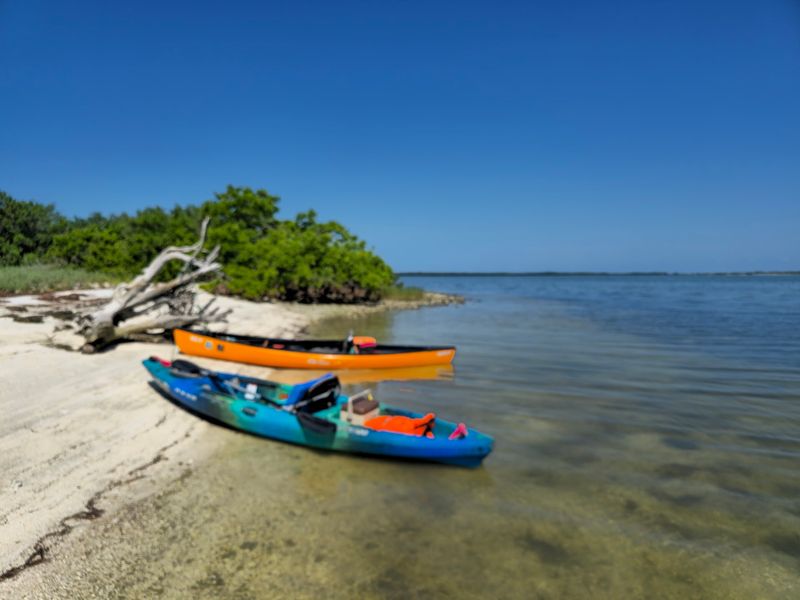
Kayaks outnumber almost everything else on a calm morning. Bright hulls of red, yellow, and lime green dot the shallows, and paddlers push off with barely a splash.
Launching is about as easy as it gets. Numerous sandy spots along the causeway work as informal kayak launches, so you can park, drag your boat a few feet, and float.
The water tends to be shallow and protected, which helps beginners find their balance.
For a longer outing, point the bow toward the islands. A short paddle reaches Honeymoon Island and Caladesi Island, where mangroves, sandbars, and quiet coves wait.
Sandbars in the sound make handy rest stops, and some groups spend an entire day parked on one.
Consider a few tactics before heading out:
Check the wind first, since afternoon gusts can turn a lazy return into a workout. Carry water and sunscreen, even on cloudy days.
Watch for boat traffic near the bridges, where channels run deeper.
Sailboats glide through as well, and a sailing rental operation adds to the lineup. On a breezy afternoon, white sails crisscross the sound like paper cutouts.
Rentals on the Sand
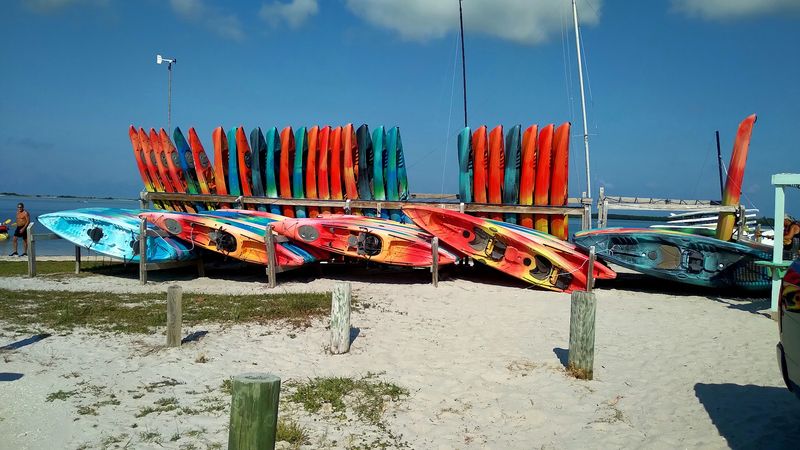
No kayak on your roof? No problem.
Rental outfits set up along the causeway make it simple to show up empty-handed and still spend the afternoon on the water.
Kayaks, stand-up paddle boards, and sailboats are all available to rent right beside the beach. Boards and boats line the sand in tidy rows, and staff can point out calm routes suited to your skill level.
Pricing and schedules change with the seasons, so call ahead or check before driving out rather than counting on a particular rate.
Paddle boarding has picked up a strong following here. The shallow, glassy water in the early hours makes standing up far less intimidating than it sounds.
Falling in is part of the experience, and the water is warm enough most of the year that nobody minds.
I fell twice in the first ten minutes and blamed the pelicans for distracting me. By the end, I was gliding along the shoreline feeling pleasantly smug.
A tip for groups: tandem kayaks work well for kids who are too small to paddle solo. Parents can steer while young ones scan the water for fish, crabs, and the occasional stingray shuffling across the bottom.
Lines Off Two Bridges
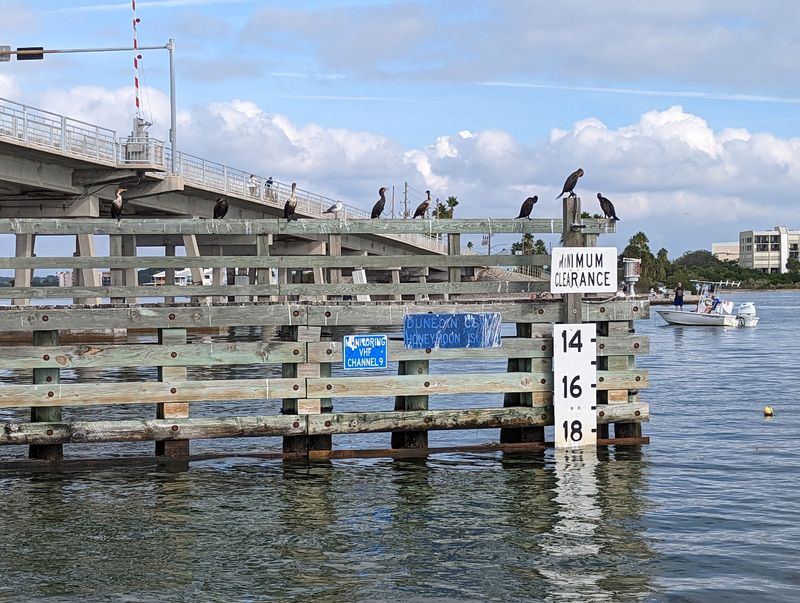
Picture a row of fishing rods leaning over a bridge railing, each one twitching slightly with the tide. That scene repeats almost every day on the causeway.
Fishing is one of the biggest draws here, and the options are generous. Shoreline casting works from the beach strips, while the two bridges give height and access to deeper moving water.
Buckets, tackle boxes, bait coolers, and folding stools crowd the edges during a good tide.
Because the causeway runs between open sound and protected bay, anglers have plenty of water to explore. Early mornings and evenings tend to be busiest, when the air cools and fish move closer to shore.
A few basics help. Florida requires a saltwater fishing license for most anglers, so sort that out before you cast.
Keep an eye on traffic when walking along bridge approaches, and give room to walkers and cyclists on the path.
Even if you never catch anything, watching seasoned anglers work their lines is its own entertainment. Herons and pelicans often wait nearby, hoping for a handout, and they are far more patient than most of us.
The Wide Path for Walkers and Runners
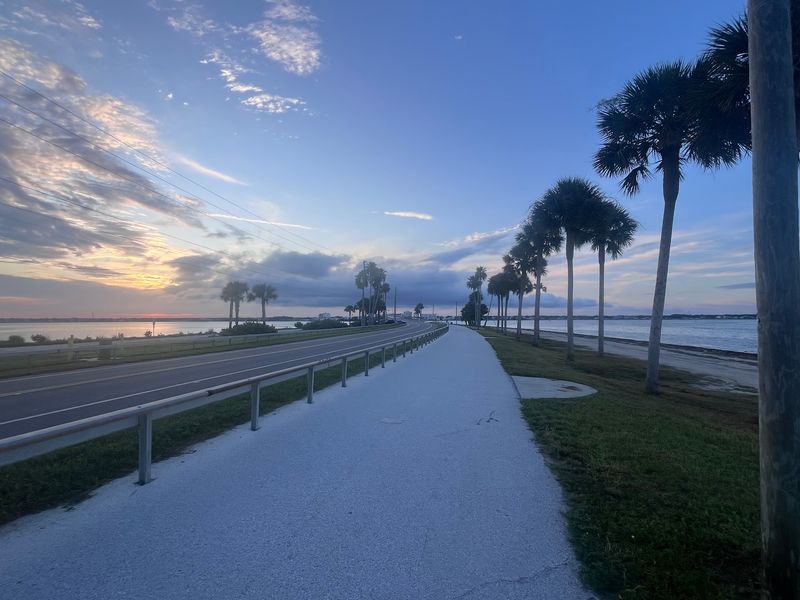
Sneakers pound a steady rhythm along the wide sidewalk that follows the causeway. On one side, traffic hums past; on the other, water laps against the sand.
The path is broad and smooth, built for walking, jogging, and skating. Strollers roll along easily, and leashed dogs trot beside their owners.
Palm shadows cross the pavement at regular intervals, offering tiny breaks from the sun.
Cyclists can use it too, though it leans toward foot traffic. Riders should expect to slow down often and share space with runners, kids, and pets.
Anyone wanting a fast training ride may prefer quieter hours, like right after the gates open early in the morning.
Distance-wise, a walk out to the first bridge and back makes a comfortable outing for most ages. Stronger legs can continue toward the island end for extended mileage and bigger views.
My favorite stretch comes near sunset, when the pavement glows and the sound turns copper. People stop mid-stride to snap photos, then pick up the pace again as the light fades.
Bring water, because shade is limited, and Florida humidity does not negotiate.
Dolphins, Birds, and Tiny Snails
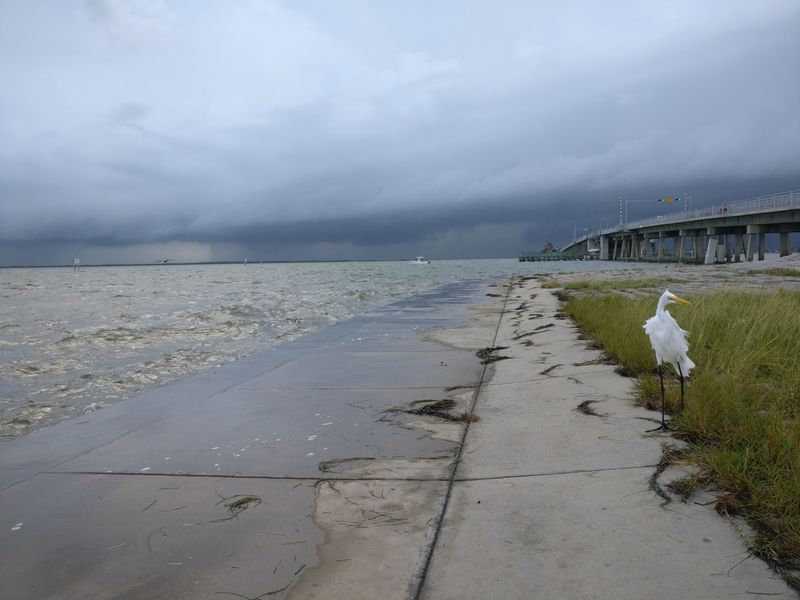
A gray fin breaks the surface, then another. Dolphins cruise the shallows around the causeway regularly, and spotting one never gets old.
Wildlife shows up everywhere here. Brown pelicans plunge headfirst after fish, great blue herons stand motionless in the shallows, and ospreys circle overhead.
Snowy egrets pick through the seagrass, and sandpipers scurry along the tideline.
After big storms, washed-up seaweed can pile along the beach. That makes swimming less appealing for a while, yet it also brings more birds hunting for snacks in the tangles.
Birdwatchers often find those days surprisingly rewarding.
Kids love the smaller discoveries. Shallow water hides snails, hermit crabs, tiny fish, and shells in every size.
Snail hunting with a bucket can easily fill an hour, and releasing everything afterward makes a nice lesson in respecting the sound.
For the best chances, go early or late, when animals are most active and crowds are thinner. Keep a respectful distance from dolphins and nesting birds.
Binoculars add a lot, and a zoom lens helps too, since the most memorable moments often happen just beyond easy reach.
Hammocks, Slacklines, and Stacked Stones
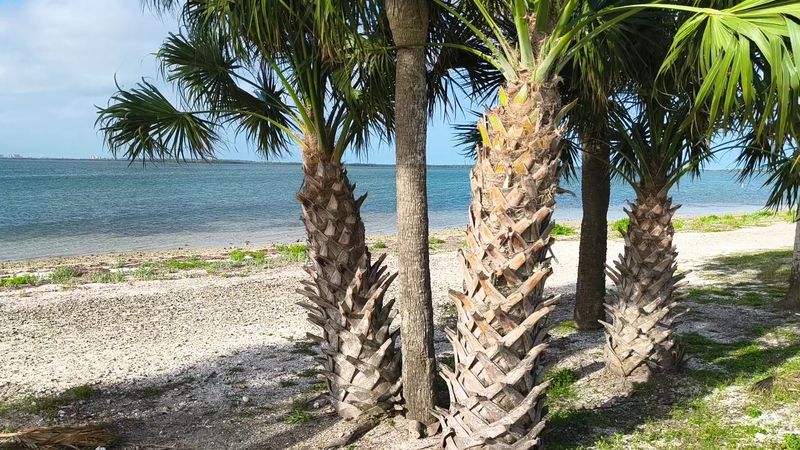
Some people come here to do nothing at all, and they do it beautifully. Between the palms, hammocks sway in the breeze while their occupants doze or read.
Hammocking has become a quiet tradition along the causeway. The evenly spaced palm trees make natural anchors, and the steady Gulf breeze keeps things comfortable.
Bring straps that protect the bark, and pick a spot with a clear water view.
Slackliners use the same trees. Watching someone wobble across a thin line with the sound sparkling behind them is oddly hypnotic.
It is a great spot for trying the sport, since the sand gives a softer landing than pavement.
Then there are the rock stacks. Along parts of the shoreline, balanced stones rise in careful towers, built by anyone with patience and steady hands.
Adding a stone of your own is harder than it looks, and succeeding feels like a small personal win.
None of these activities need a reservation or a fee. They simply need time, a bit of shade, and willingness to slow down.
On a causeway where so many people are rushing toward the island, lingering becomes the best choice.
Who This Stretch of Shoreline Suits
Families with small children find an easy win here. Shallow water, short walks from car to sand, and plenty of critters to find keep young kids busy without long hikes or crowded boardwalks.
Retirees and anyone with limited mobility benefit from parking so close to the water. You can set up a chair steps from your bumper and watch the sound for hours.
The flat path also makes gentle exercise simple.
Active types have options too. Runners, paddlers, sailors, and anglers each get their own corner of the causeway, often sharing the same patch of sand at different hours.
Keep expectations realistic, though. It is not a classic resort beach with lifeguard towers and wide surf.
The sand strips are narrow in places, and the water tends to be calm and grassy rather than wave-filled. For that postcard beach, Honeymoon Island sits right at the end of the road.
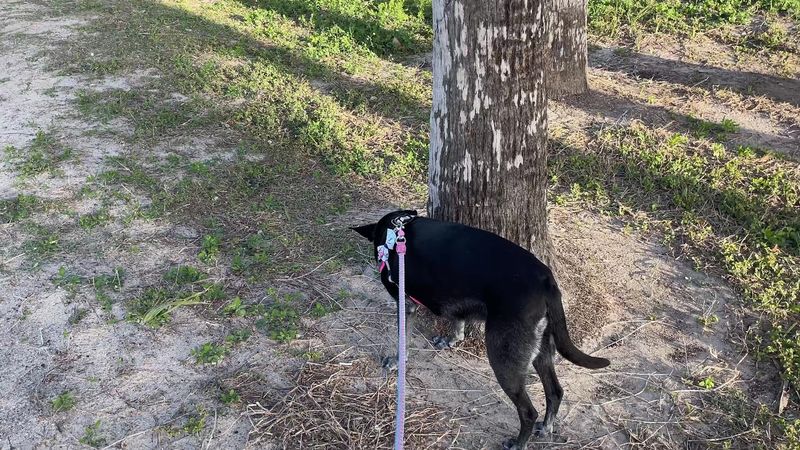
Dog owners should read posted signs carefully, since beach rules for pets vary along the route and can change. Leashed walks on the path are common.
Couples chasing a sunset date will be right at home.
Parking, Restrooms, and Other Practical Bits
Free parking right on the sand is the causeway’s biggest practical perk. Pull off, set the brake, and you are basically at the waterline.
The road is open from early morning until late evening, with gates opening around dawn and closing at night. Schedules can shift during repairs or storms, so check local notices before driving out.
Public restrooms are available near the beach areas, which helps families spending the whole day. Facilities are basic and limited, and they can feel stretched on busy weekends, so plan accordingly and pack hand sanitizer.
Weekends fill quickly because the causeway doubles as the route to Honeymoon Island State Park. Arriving early on Saturday or Sunday gives you the best choice of sand.
Weekdays are calmer, and winter afternoons are especially pleasant.
From June through November, hurricane season can bring storms, closures, and debris. Before any trip in that window, check weather and road conditions.
Summer afternoons also tend to bring thunderstorms, so mornings are the smarter choice.
Pack sunscreen, a hat, water, snacks, and a trash bag. Shade is scarce, and leaving your spot cleaner than you found it keeps this stretch pleasant for everyone.
Downtown Dunedin After the Water
Sandy feet and a sunburned nose usually mean one thing: time for lunch. Luckily, downtown Dunedin sits just a few minutes east of the causeway.
The downtown district is walkable and colorful, with independent shops, cafes, and restaurants lining its streets. Browsing boutiques, grabbing ice cream, or finding a sit-down meal makes a relaxed follow-up to a morning of paddling.
The Pinellas Trail also runs through town, giving cyclists and walkers a long paved route to explore. Pairing a causeway sunrise walk with a trail ride makes for a full active day.
At the far end of the causeway, Honeymoon Island State Park offers wider beaches, nature trails, and ferry access to Caladesi Island. Park entry has its own fee, separate from the free causeway, so bring a little cash or a card.
I stopped for a late breakfast in town, then drove back out for sunset. Doing both in one day felt greedy in the best possible way.
Clearwater Beach is also a short drive south. For anyone building a full coastal weekend, the causeway works as a calm anchor between busier stops.
Why a Simple Drive Stays With You
Plenty of Florida roads cross water. Few invite you to stop, stretch out, and stay until the stars show up.
The Dunedin Causeway manages to be several places at once. It is a sunset theater, a kayak launch, a fishing pier, a jogging track, and a lazy hammock grove, all stitched together by one low road across the sound.
Parking on the sand is free, the views are wide open, and the pace stays pleasantly slow.
Storm repairs have trimmed some access, and restroom capacity could use a boost. Neither issue dims the core experience, which comes down to water, light, and room to breathe.
My suggestion: treat the drive as the destination. Roll the windows down, pull over at the first sandy stretch that catches your eye, and leave the schedule open.
Bring a chair, a paddle, or just an appetite for a good sky.
Come once for the sunset. Chances are you will return for the sunrise, the dolphins, and the quiet feeling of floating across the Gulf in your own car.