Georgia Is Home To One Of The Oldest Gothic Revival Cathedrals Still Standing In The South
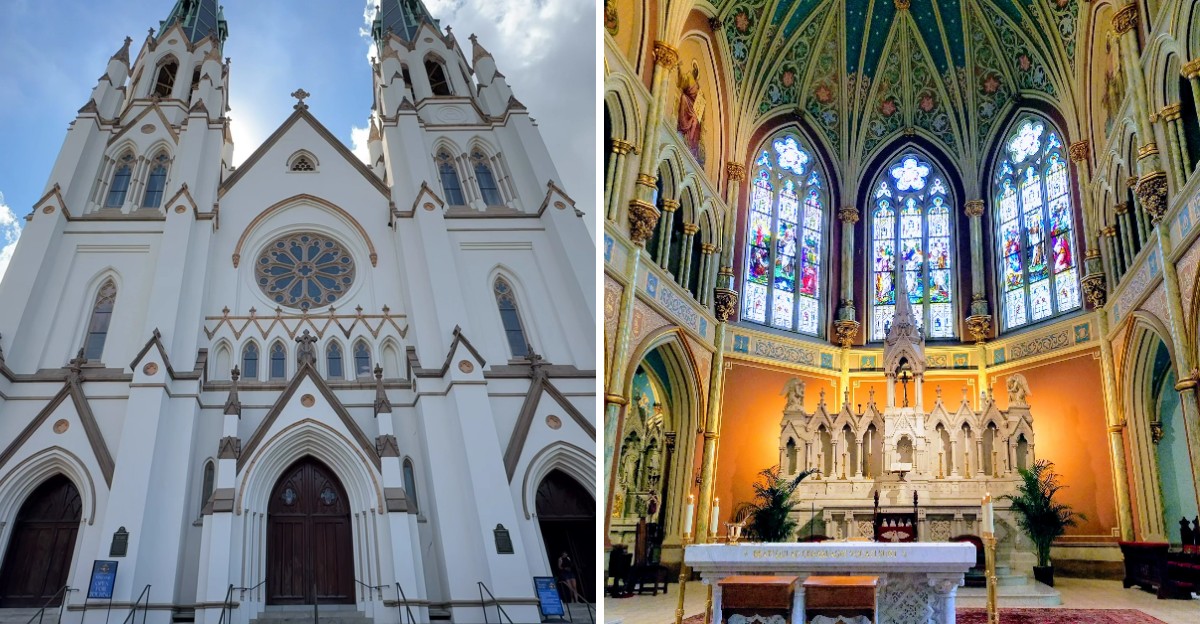
Look up. That is the only advice you need once inside.
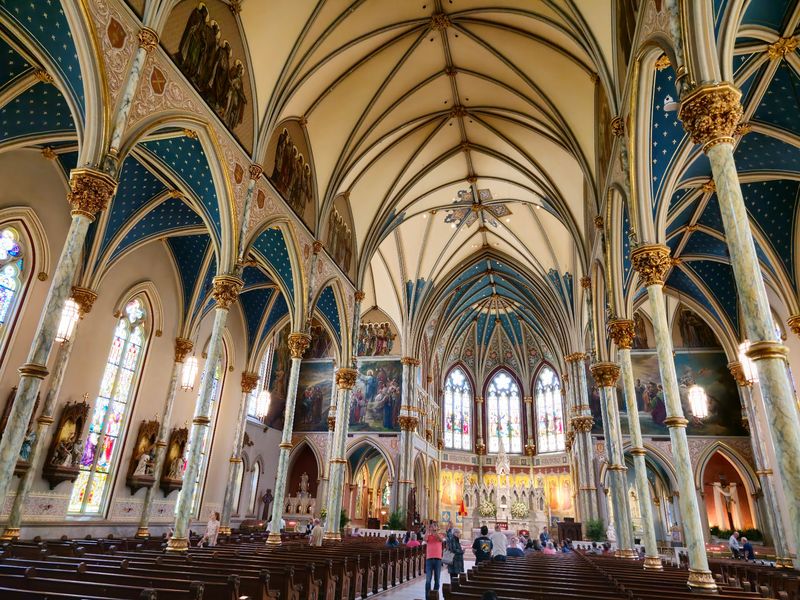
Soaring arches rise overhead like frozen waves of stone. Sunlight pours through stained glass and scatters color across the pews.
Painted ceilings glow in shades of blue and gold. Few buildings in Georgia can silence a conversation this quickly.
This grand cathedral ranks among the oldest Gothic Revival treasures in the South. Its spires have watched over the streets below for well over a century.
It has weathered hard times, careful restorations, and endless change around it. Yet it still feels peaceful and timeless.
I have always admired places built with patience and ambition. Every carved detail here reflects both.
You do not need to be religious to feel moved. Simply sit, breathe, and take it all in.
For lovers of history and architecture, this Georgia landmark deserves a slow, quiet visit.
Roots That Reach Back To The 1700s
Long before the spires, there was a small group of newcomers with big hopes. French Catholic families arrived in the late 1790s after fleeing the Haitian Revolution.
They started the first parish in the city around 1796 to 1799. Picture a tiny congregation with no grand building, just a strong idea of home.
Fast forward to 1873, and work began on the current cathedral. I love that the story starts with people, not bricks.
The building itself was a first for the state, too. It was the first church in Georgia built from brick, which felt like quite a statement back then.
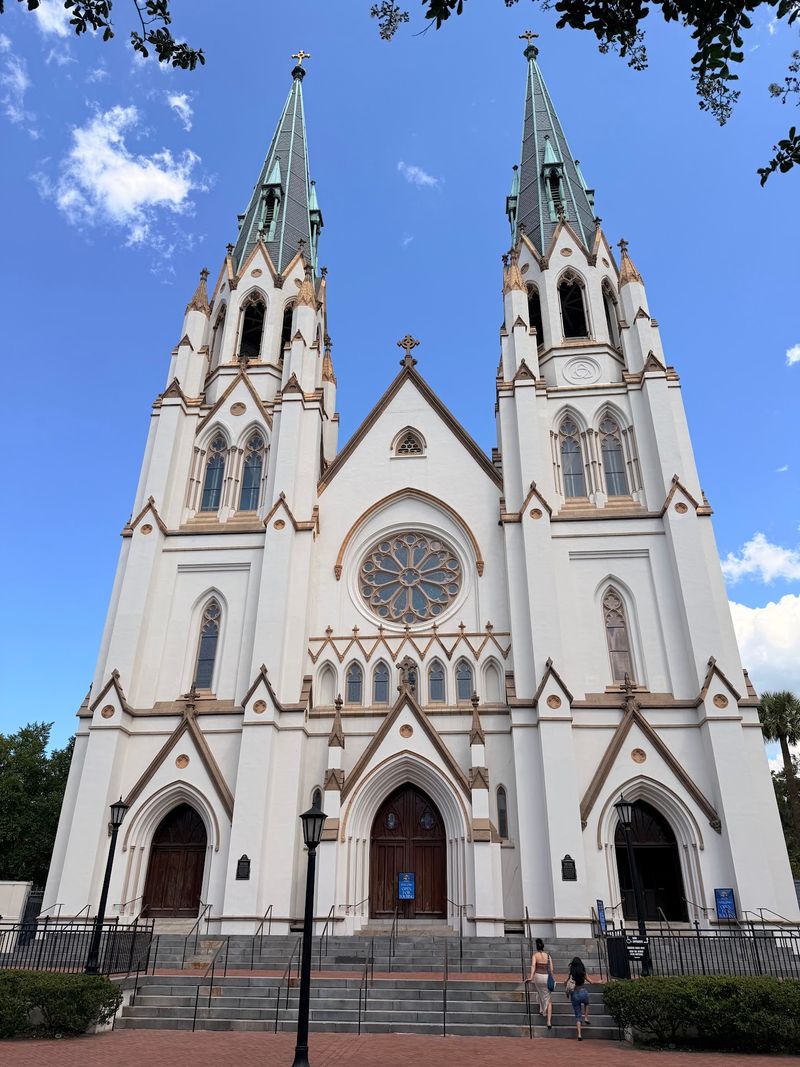
Architect Ephraim Francis Baldwin shaped the design in a High Victorian Gothic style. He folded in French building traditions, a nice nod to those founding families.
The doors opened for dedication on April 30, 1876. That date makes this one of the oldest Gothic Revival cathedrals still standing in the South.
Knowing this backstory changes how you see the place. Every arch feels less like decoration and more like a promise kept across generations.
You will find it at 222 East Harris Street, facing a small park on a tree-lined corner. The trolley tour stops nearby, which makes it an easy hop-off.
Twin Spires That Steal The Skyline
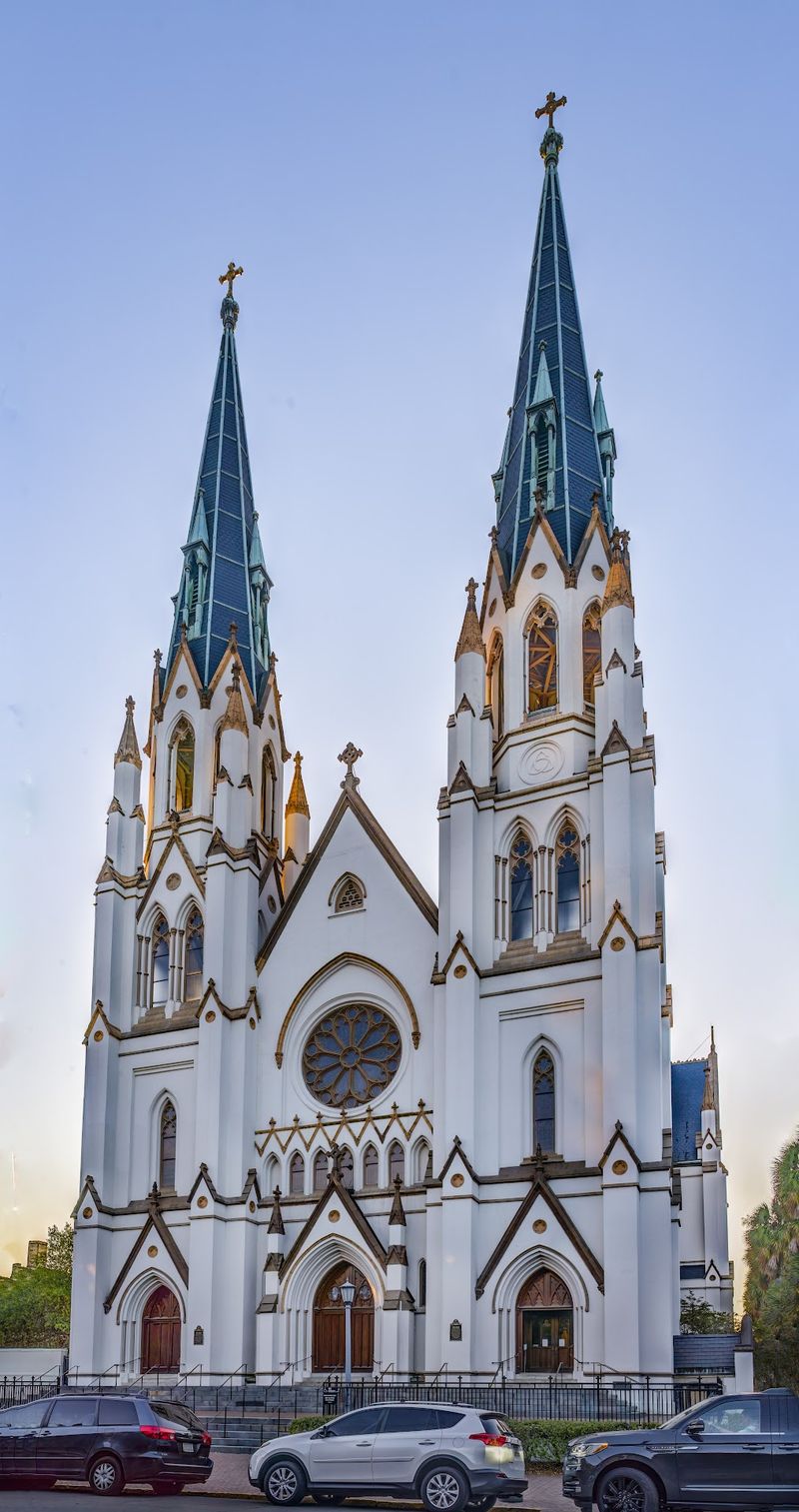
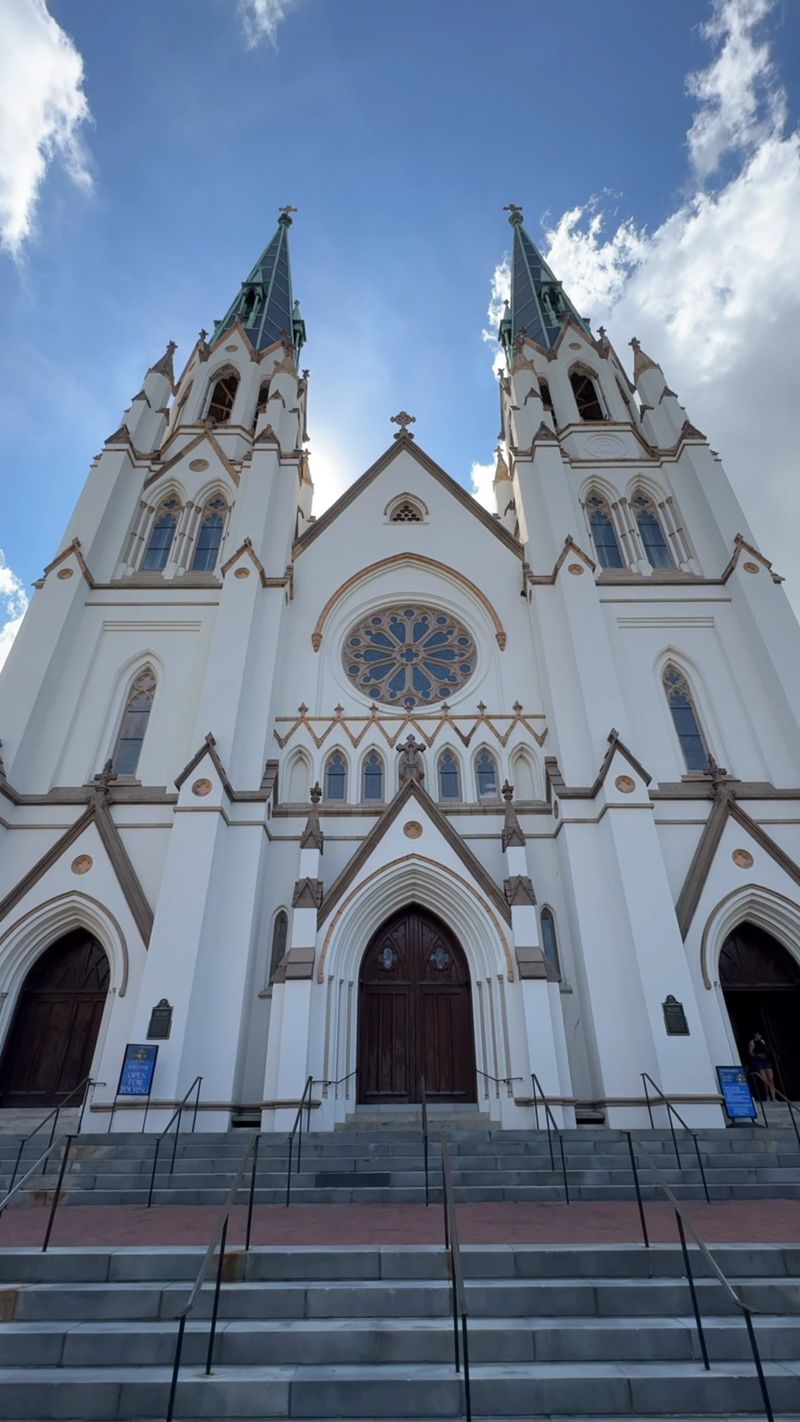
My neck got a real workout on the sidewalk out front. The two spires climb to 214 feet, and they do not stop pulling your eyes up.
Those towers were not part of the original 1876 building. They joined the scene in 1896, finishing the look the designer had in mind.
Around that same time, the church got a stucco and whitewash finish. That bright surface is why the building glows against the green oaks nearby.
The steep gabled roof adds even more drama. Together with the spires, it shows off classic High Victorian Gothic features you can spot from blocks away.
Here is a practical tip from my own wandering. Walk across to the small park on the corner for the best full view of both towers.
Photographers, bring a wide lens or step back farther than you think. Squeezing both spires into one frame takes a little patience and some creative crouching.
Morning light makes the white walls look almost soft. Late afternoon adds warm tones that feel like a painting.
Either way, the exterior alone is worth a slow stroll around the block before heading inside.
A Comeback Story After The 1898 Fire
Every great building needs a comeback chapter. This one got its big test on February 6, 1898, when fire swept through the interior.
Here is the remarkable part. The outer walls and the spires stayed mostly intact, proof of just how solidly the church was built.
The congregation did not wait around for long. Rebuilding started almost right away, and the community pulled together with impressive speed.
By December 1899, the first mass returned to the rebuilt space. Less than two years after the fire, people were back in the pews.
The official re-dedication came on October 28, 1900. It must have felt like a fresh start for the whole neighborhood.
Finishing touches took a bit longer, which makes sense for detailed work. The interior decoration and artwork were completed by 1912.
I find this history makes the visit more meaningful. Much of what you see today grew out of that determined rebuilding effort.
So when you stand beneath the arches, think about the teamwork behind them. The beauty here is also a lesson in not giving up on something you love.
Eighty-One Windows Straight From The Austrian Tyrol
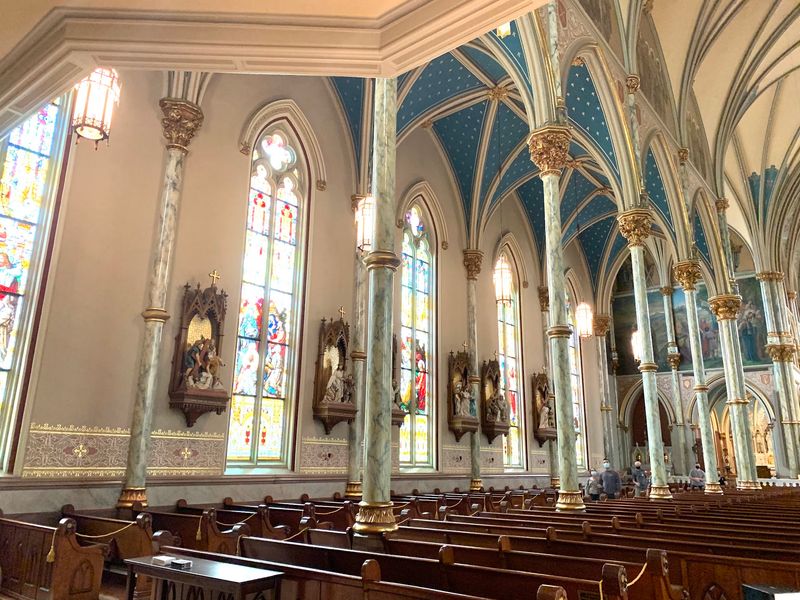
Counting windows is not my usual hobby, but here I tried. There are 81 stained glass windows, and I lost track somewhere in the middle.
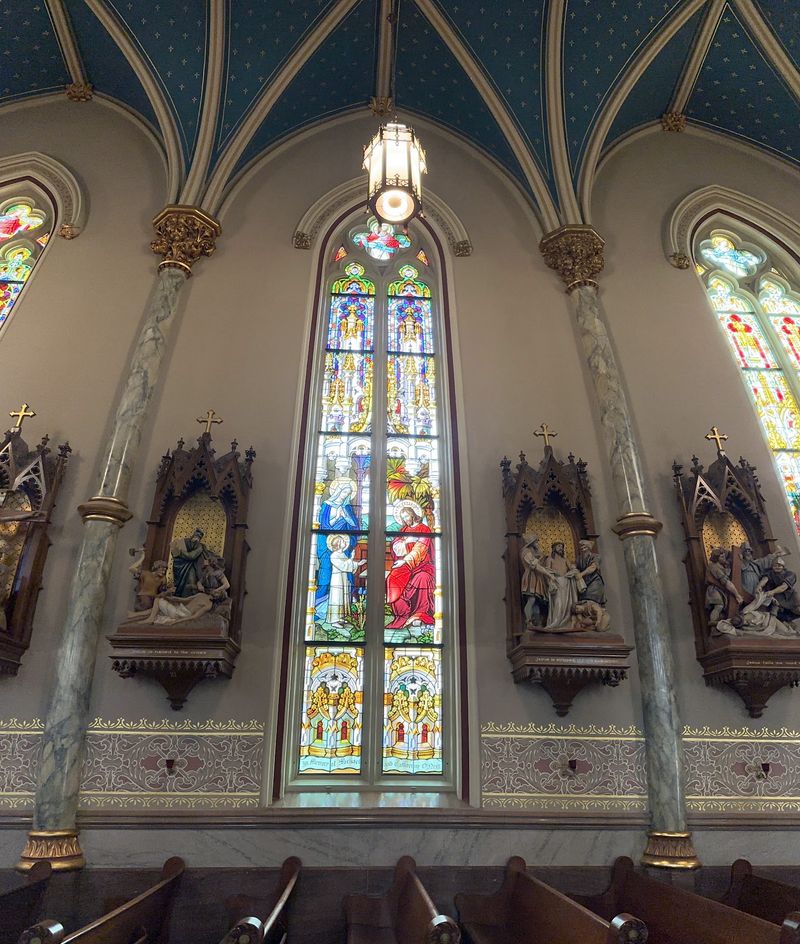
Innsbruck glassmakers in the Austrian Tyrol crafted them. They were installed around 1904 and 1905, during the rebuilding years.
The windows line both sides of the nave. When sunlight hits them, colored light spills across the pews and floor like scattered candy.
My advice is simple. Sit in a pew for ten minutes and watch how the colors shift as clouds pass outside.
Sunny days make the glass look brightest, though cloudy days reveal finer details. Each window tells a scene, so it pays to look closely.
Photos are allowed, which is a nice bonus. Still, no camera quite captures the way the light moves across the room.
Families with kids can make it a game. Ask them to find their favorite color or the tiniest detail in a single panel.
These windows might be the part you remember most. They turn a quiet visit into something that feels close to a light show, minus the noise.
A Peacock-Blue Ceiling That Floats 96 Feet Up
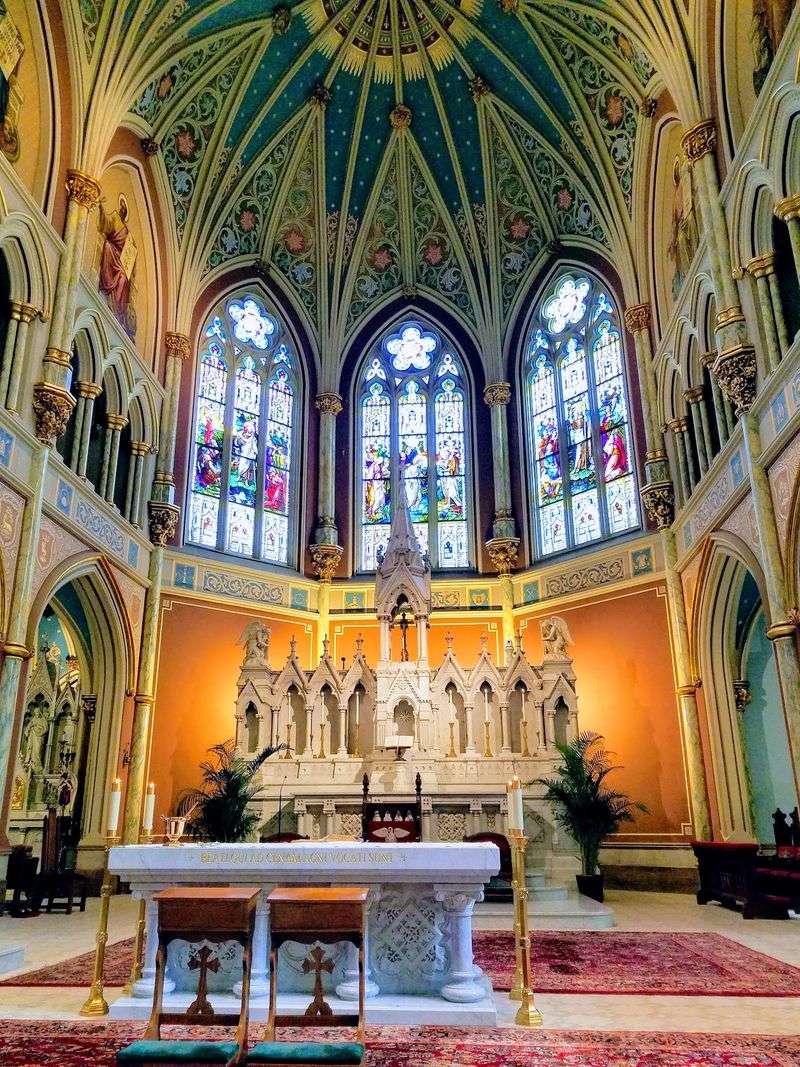
Blue is not a color I expected overhead. Yet the ribbed vaulting glows a rich peacock blue, trimmed with delicate hand-painted gold.
That ceiling reaches up to 96 feet. Pointed arches and ribbed vaults work together to create a strong sense of upward lift.
Designers of Gothic churches wanted your eyes to travel upward. Standing in the nave, I caught myself tipping my head back again and again.
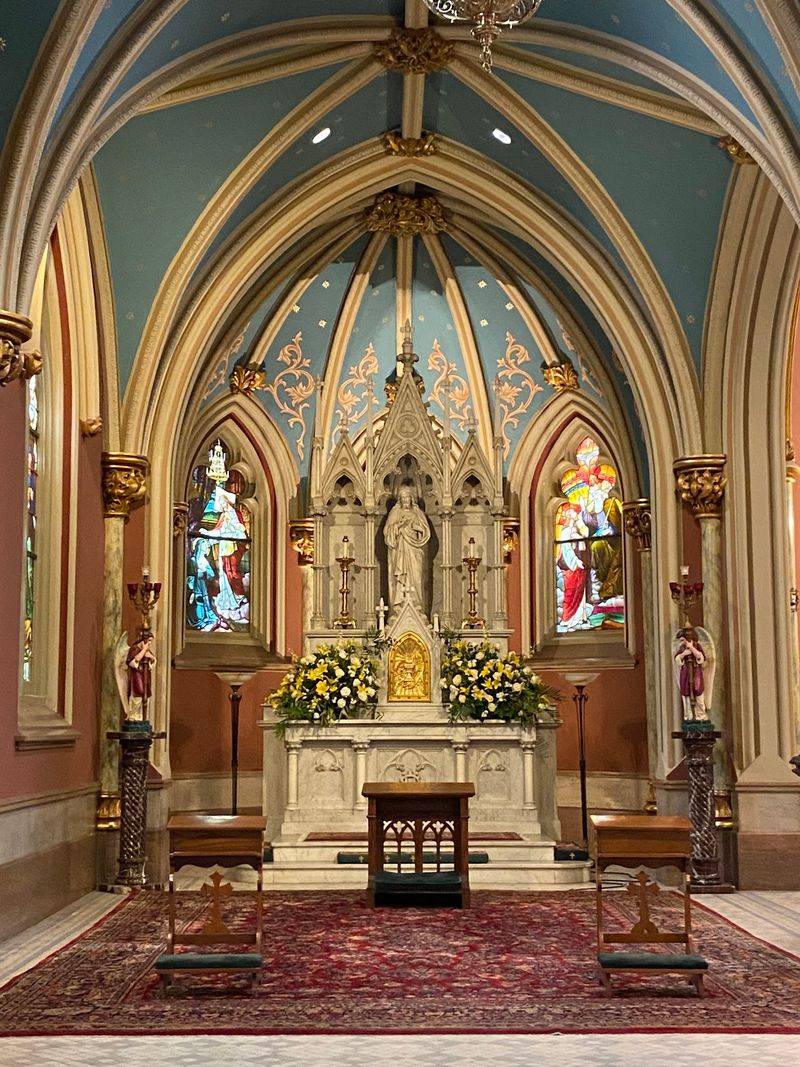
Above the main altar, the style changes a little. A barrel-vaulted ceiling rises there, with decorative carvings and colors adding extra richness.
There is also a fun detail you cannot see from inside. The floor plan forms a Latin cross, which shows clearly from an aerial view.
Try this trick during your visit. Stand at the back near the entrance, then slowly walk forward while looking up the whole time.
Just watch your step and the people around you. The ceiling tends to distract even the most careful walkers.
Many visitors call the blue and gold combination the highlight of the space. After one look, it is easy to understand why.
Artistry Worth Admiring In Every Corner
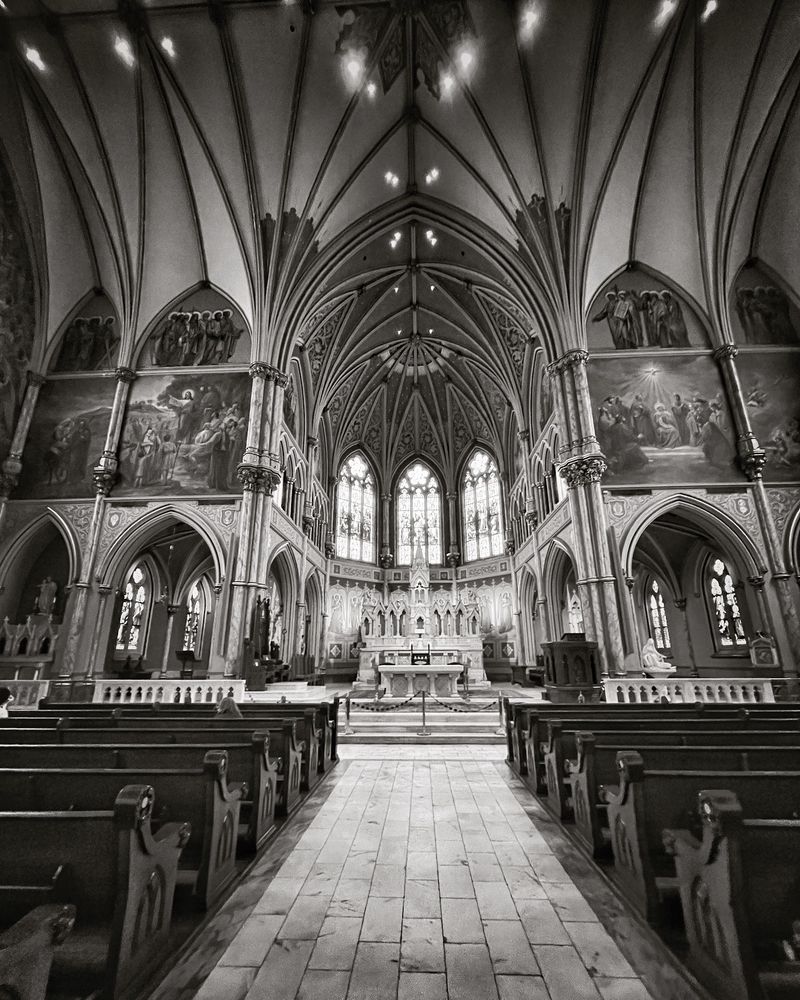
Paintings in churches often tell stories, and these are no exception. A series of murals shows the four evangelists, Matthew, Mark, Luke, and John.
The artists gave each Gospel writer real presence on the walls. Take a moment with each one, since the details reward slow viewing.
Front and center sits the altar, crafted from Italian marble. It anchors the whole sanctuary with a calm, polished elegance.
Below your feet, marble floors shine softly. Around you, hand-carved pews show craftsmanship that feels rare in modern buildings.
I ran my eyes along the wood grain while resting. Each pew seemed built to last another hundred years, and probably will.
A friendly tip for art lovers is to bring binoculars. Some mural details sit high enough that a closer view makes a real difference.
Volunteers are often on hand to share brief history. Their quick explanations helped me notice pieces I had walked right past.
This mix of painting, stone, and wood gives the interior its warm richness. It feels less like a museum and more like a lovingly kept home.
Secret Symbols Worth Hunting For
Consider this your scavenger hunt for grown-ups. The walls hide meaningful symbols that most people rush past without noticing.
Start behind the altar on the reredos wall. Ornate stencils show Christ’s monogram circled by a crown of thorns.
Around it sits a ring of 40 quatrefoils. They represent the 40 days of Christ’s temptation, a thoughtful touch for anyone who knows the story.
Now look to the highest point in the apse. The Lamb of God appears inside a trefoil design.
That three-part trefoil stands for the Holy Trinity. Once you spot one, you start seeing the pattern language everywhere.
Keep an eye out for the scallop shell, too. It is a symbol tied to St. John the Baptist, the church’s namesake.
My favorite find was the fleur-de-lis. It honors the French heritage of those first founding families from the 1790s.
Bring a curious friend and compare discoveries. Symbol hunting turned my visit from simple sightseeing into a genuinely fun puzzle that tied the whole history together.
Careful Care And A Papal Upgrade
Old beauty does not stay beautiful on its own. Keeping a building like this shining takes decades of steady attention.
Updates took place between 1959 and 1965. Another round came in 1984 and 1985, keeping the space functional for new generations.
The biggest effort happened in the 1990s. Crews cleaned stonework and refreshed the interior, wrapping up the work in 2000.
That restoration is part of why colors look so crisp today. The gold trim and deep blues feel fresh rather than faded.
Then came a big honor in 2020. Pope Francis raised the church to the status of a minor basilica.
That title recognizes its historical and architectural importance. It also confirms its role as a spiritual and cultural center in the South.
Knowing all this, I felt fine leaving a little extra in the donation box. Every dollar helps with upkeep, cleaning, and even the air conditioning.
It is nice to visit a landmark that feels so cared for. You can sense the pride in every polished rail and bright window.
Smart Tips For A Smooth Visit
Timing matters more than you might think here. This is an active church, and the doors close to sightseers during daily masses.
Visiting hours generally run from 9 am to 4:30 pm. Check the schedule on the church website before you go, since events can shift things.
Entry is free, though a donation of $3 per person is suggested. Bring cash for that and for lighting a candle if you wish.
There are no public restrooms inside. Plan ahead and use facilities before arriving, so you can relax once there.
Weekdays tend to feel calmer and quieter. Guests are asked to stay respectful, since some people come to pray.
Photos are welcome, so snap away with courtesy. I suggest giving yourself at least an hour to take it all in.
Leave space in your plans to simply sit a while. Honestly, the quiet in those pews may become your favorite souvenir.