8 Nebraska Hiking Trails That Are Perfect For September’s Cooler Temperatures
The first cool morning of September feels like a door swinging open. Summer heat lets go, the bugs ease up, and suddenly a long walk sounds like the best idea of the week.
Nebraska has more trail variety than most people expect, from pine ridges and badlands to waterfalls and river bluffs. Here are eight places where a light jacket and good shoes turn an ordinary weekend into a story worth telling.
1. Chadron State Park In Chadron
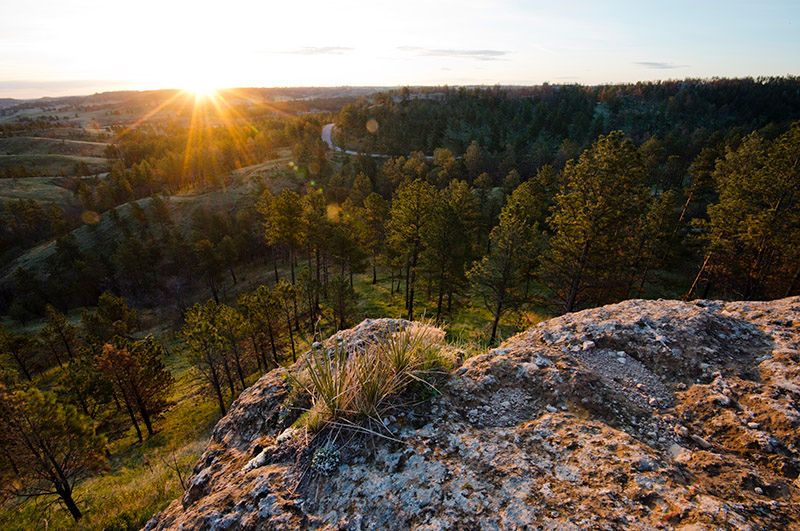
Ponderosa pines and clean, cool air greet you the minute you roll in along the Gold Rush Byway. Chadron State Park holds the title of Nebraska’s first state park, and it sits up in the Pine Ridge country where September mornings carry a real chill.
Miles of trails loop through the woods, and the difficulty levels range wide enough for nearly anyone. Families can stick to the kid-friendly routes, while stronger hikers can push up onto the ridges for long looks across the rugged country.
Deer show up often along the paths, and other wildlife tends to wander into view on quieter mornings.
Why choose this park first? The extras make a full weekend easy.
Cabins with back decks overlook the trees, a wooded campground fills the lower ground, and Chadron Creek offers fishing between hikes. Picnic tables, grills, a playground, and a challenging disc golf course round things out.
Even the drive through the park is pretty, with the road curving past pine-covered slopes. Dogs are welcome on the trails, which makes it a good pick for anyone hiking with a four-legged partner.
A paid parking lot serves the area, and weekday mornings stay noticeably calmer than Saturday afternoons.
2. Fort Robinson State Park In Crawford
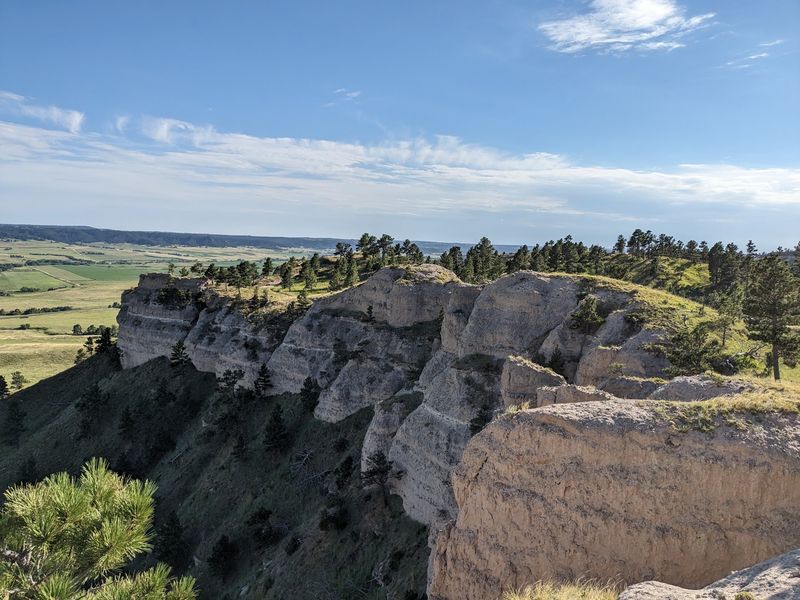
Twenty-two thousand acres. That number alone tells you Fort Robinson plays by different rules than the average state park.
Out here in the Pine Ridge, trails climb the buttes, trace the White River, and cut across open grassland. Some routes are easy enough for a casual stroll after lunch, and others turn into all-day challenges with serious climbing.
A determined hiker can stack together more than twenty miles without repeating much ground, and the scenery holds up the whole way.
History adds weight to every step. The park preserves a historic fort setting with museums, and a buffalo herd roams the grounds, so a September hike often comes with a glimpse of shaggy shapes on the horizon.
Fall color usually peaks later in the season here, which means early autumn delivers cooler temperatures and quieter paths before the leaf crowds arrive.
Picture finishing a ridge loop, then cooling off with a meal at the lodge restaurant. Horseback riding, biking, boating, and tennis courts keep non-hikers busy too.
Bring the dog, since pets are allowed. Pack layers as well, because buttes catch the wind, and a crisp breeze on top can feel very different from the sheltered valley floor.
3. Toadstool Geological Park and Campground
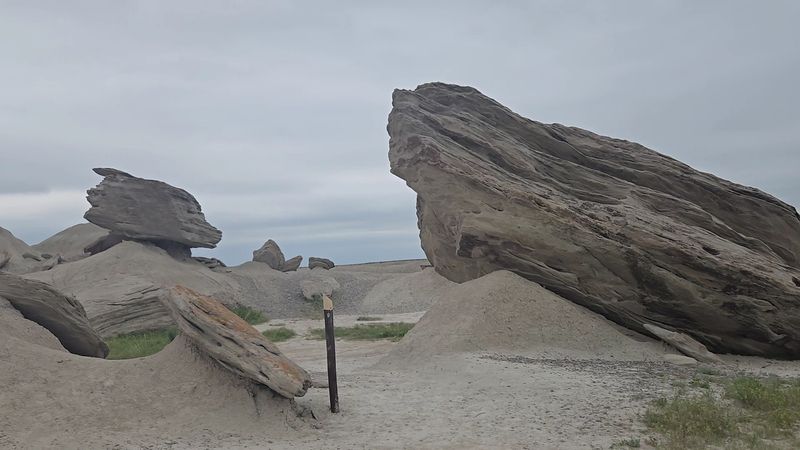
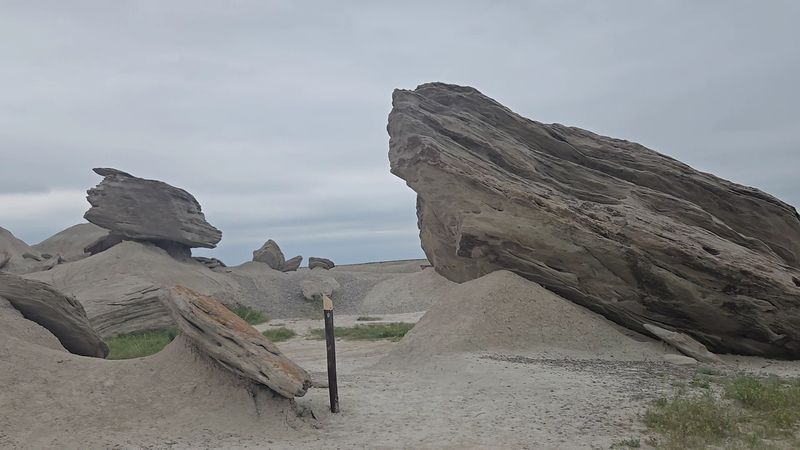
Is this still Nebraska? The question pops up naturally the first time you see Toadstool’s pale clay ridges and odd rock pedestals rising from the ground like something out of a science fiction movie.
Wind and water carved these formations over a very long time, leaving slabs of sandstone balanced on narrow columns that look like giant mushrooms. A mile-long loop trail winds right through the strangest stretch, short enough for kids yet packed with enough twists to keep adults curious.
Every bend reveals a new shape.
Shade is almost nonexistent on this exposed ground. Summer sun bounces off the light-colored rock and makes the loop feel twice as long, so September’s milder afternoons turn it into a much friendlier outing.
Remote describes the setting well, since the park sits far out in the northwest corner of the state near Harrison. The campground keeps things simple with six primitive sites, picnic tables, grills, and pit toilets.
After sunset, the dark skies put on their own show, with stars stretching from horizon to horizon.
Dogs can join the hike. Bring plenty of water and fill the gas tank beforehand, because services are scarce once you leave the highway behind.
4. Scotts Bluff National Monument
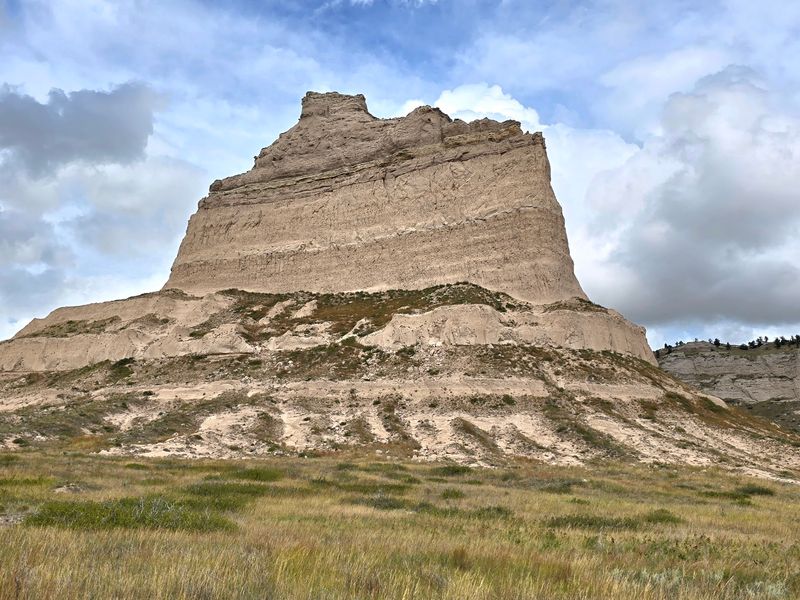
Covered wagons once used this towering bluff as a landmark on the Oregon Trail, and it still dominates the skyline around Gering. Rising roughly 800 feet above the North Platte River valley, it’s one of the most recognizable shapes in western Nebraska.
Hikers can tackle the paved route from the visitor area to the summit, a steady climb across exposed slopes that passes through a tunnel cut into the rock. On a hot July day, that sun-baked switchbacking feels punishing.
In September, the same path turns pleasant, with cooler air making the uphill push far more manageable.
At the top, paved foot trails lead to observation points. The view stretches across the plains, over the town below, and all the way to Chimney Rock on a clear day.
Not up for the climb? A road also reaches the summit, so mixed groups can split up and meet at the overlooks.
Admission is free, and parking is free as well, which makes this an easy day out on a budget. Remnants of the old trail and unique rock formations add a history lesson to the workout.
The monument keeps daytime hours, so plan an earlier start.
5. Wildcat Hills State Recreation Area
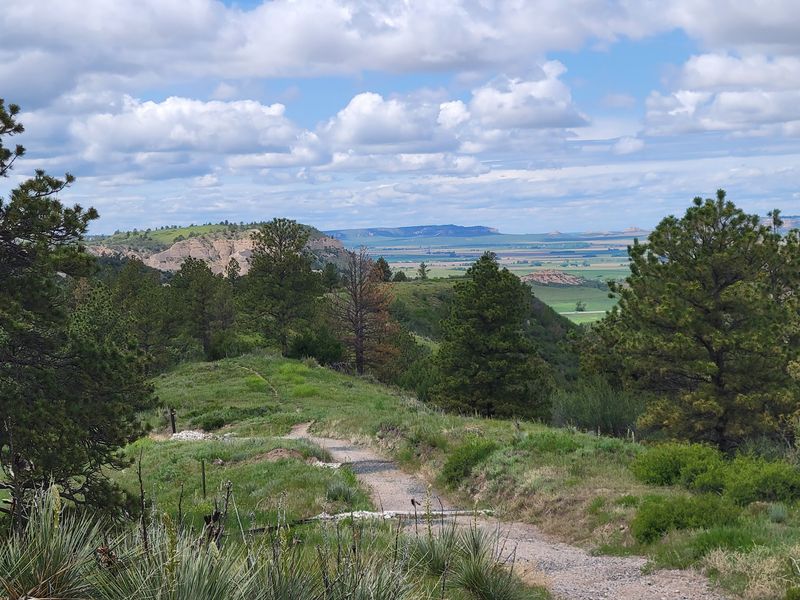
Just south of Gering, the land suddenly buckles into rugged canyons dotted with pine and cedar. Wildcat Hills feels like a pocket of mountain country dropped onto the High Plains.
Miles of nature trails wander through the area, and the routes suit both quick family walks and longer explorations. Birds flit between the trees, and other wildlife often appears along quieter stretches.
The overlooks deliver wide views that make it a favorite spot for nature photography, especially when early autumn light softens the ridgelines.
Here’s what sets it apart from its famous neighbor up the road. Scotts Bluff offers one big climb, while Wildcat Hills rewards slow wandering through shaded, twisting terrain.
Pairing the two makes a smart double-header for a western Nebraska weekend.
A nature center adds an educational stop before or after a hike, helping kids put names to the plants and animals they spotted. Picnic tables and restrooms make it easy to linger over lunch.
Dogs are welcome, too.
Gates follow daytime hours, so arrive with the morning. September brings that crisp start that makes the steeper sections feel effortless, and the calm, serene mood of the place settles in quickly once you leave the parking area.
6. Smith Falls State Park In Valentine
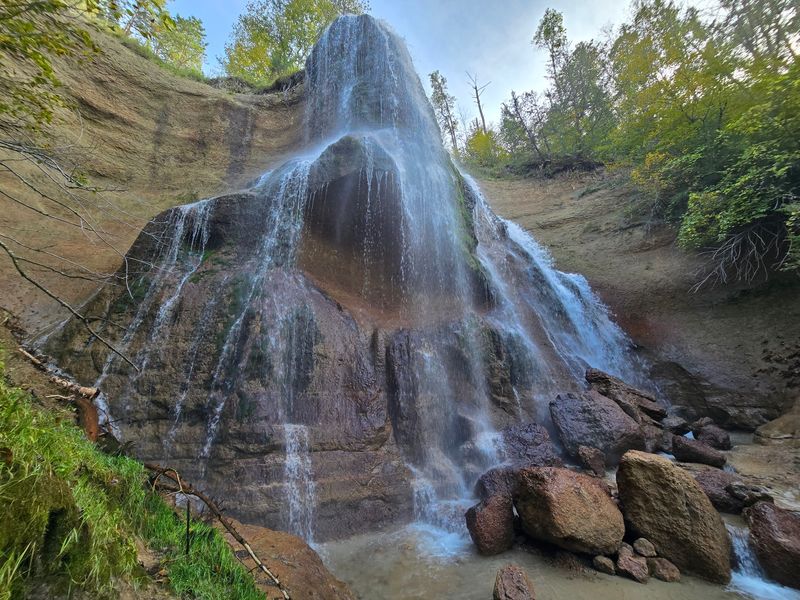
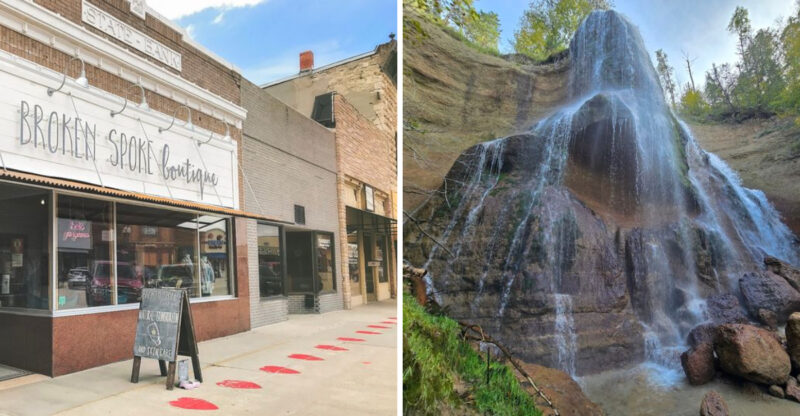
Water roars before you see it. Follow the sound along the boardwalk and Smith Falls appears, spilling about 70 feet down a mossy cliff as the highest waterfall in Nebraska.
Getting there takes only a short hike, which makes this the easiest payoff on the list. The boardwalk trail leads from the Niobrara River area up through a cool, shaded canyon to the base of the falls.
Kids handle the walk without complaint, and the ferns and trickling side streams keep their attention the whole way.
September changes the experience in a quiet way. Summer canoe and tube traffic thins out on the river, so the trail feels calmer and the clear water reflects early touches of autumn color.
The Niobrara itself moves slow and clear past the park, and canoeing remains a big draw. Camping, picnic tables, grills, a playground, and clean restrooms make it easy to spend a whole day.
Plan it as part of a Sandhills road trip, since the park sits east of Valentine along a scenic stretch. Dogs are allowed, and both free and paid parking areas serve the site.
Bring a camera, because the falls look different with every shift of the afternoon light.
7. Ponca State Park
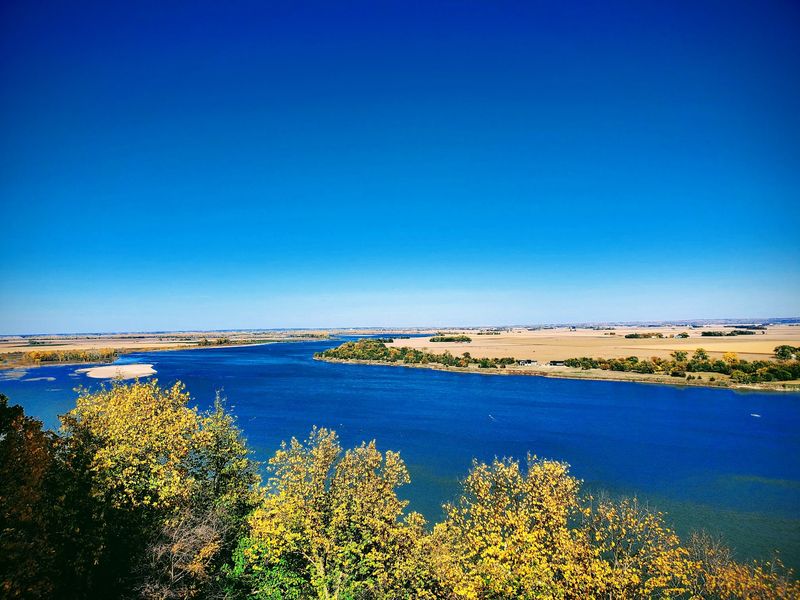
Oak-covered bluffs drop toward the Missouri River in the far northeast corner of the state, and Ponca State Park claims about 2,400 forested acres of that dramatic edge.
Trails here carry a completely different personality from the western picks. Instead of open buttes, you get leafy hollows, rolling climbs, and sudden overlooks where the river bends wide below.
Kid-friendly routes keep things manageable for younger hikers, while steeper ridge paths give stronger legs a workout.
Early autumn is when the forest starts to shift. Green canopies begin trading places with gold and rust, and the cooler air makes those uphill sections far easier than they feel in humid August.
An education center helps explain the wildlife and landscape you’re walking through. Beyond hiking, the park packs in fishing, cabins, horseback riding, archery, and a swimming pool, so a family can fill an entire weekend without leaving the grounds.
Camping options cover everything from primitive sites to full RV hookups, and the campsites are roomy. Picnic tables, grills, and a playground sit near the trailheads.
Gates open in the morning and close in the evening. Dogs are welcome, and Saturday afternoons draw the biggest crowds, so weekday visits feel especially peaceful.
8. Indian Cave State Park In Shubert
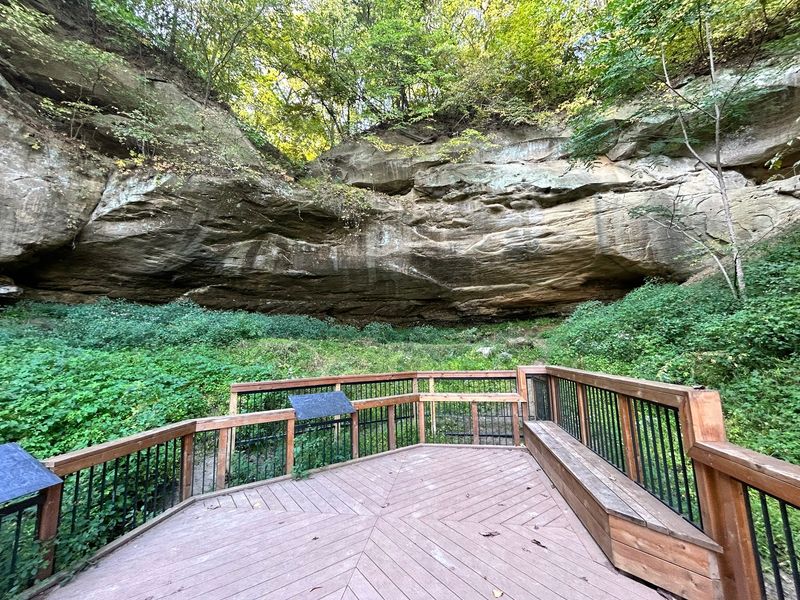
Carvings etched into sandstone give this southeast Nebraska park its name. The natural cave holds petroglyphs, a rare link to the people who lived along these bluffs long before roads arrived.
Hiking here can get tough, and that’s part of the appeal. Trails climb steep ridges, drop through ravines, and wind across thick hardwood woods with views over the Missouri River.
Some of the best river hiking in the state happens on these paths, though gentler kid-friendly routes exist for families wanting a lighter day.
Beyond the scenery lies something bigger. Indian Cave protects one of the last large remnants of a unique forest system that once lined the Missouri River bluffs, so every mile walks through a piece of Nebraska that has mostly disappeared elsewhere.
September is a smart time to go. Mild temperatures make the climbs friendlier, and the woods begin to show early color.
Wildlife stays active throughout the forest.
Access to the cave itself may change, since the steps have been closed at times, so check conditions before heading out. Camping, horseback riding, picnic areas, and a playground round out the park.
Dogs are allowed, and the grounds stay open around the clock.