This Massive California Salvage Store Sprawls Across 3 Acres And Sells Almost Everything Imaginable
Some shopping trips require a list. A salvage store this enormous requires curiosity, patience, and probably shoes you would happily wear for a few hours.
Three acres leave an awful lot of room for unexpected finds.
Building materials can share the hunt with furniture, housewares, vintage odds and ends, and objects so specific that you may wonder who owned them in the first place.
Three acres of secondhand chaos can make a California shopping trip feel more like an expedition.
The real entertainment comes from never quite knowing what will appear around the next corner.
You might arrive searching for something practical and get completely distracted by an old fixture or peculiar piece that suddenly gives you an entirely different project idea.
There is no elegant way to browse a place like this quickly.
The smartest strategy may be to leave some room in the car, forget about sticking perfectly to the shopping list, and see what deserves another life.
Three Full Acres To Explore
Most secondhand shops can be explored in fifteen minutes. Urban Ore is a different story.
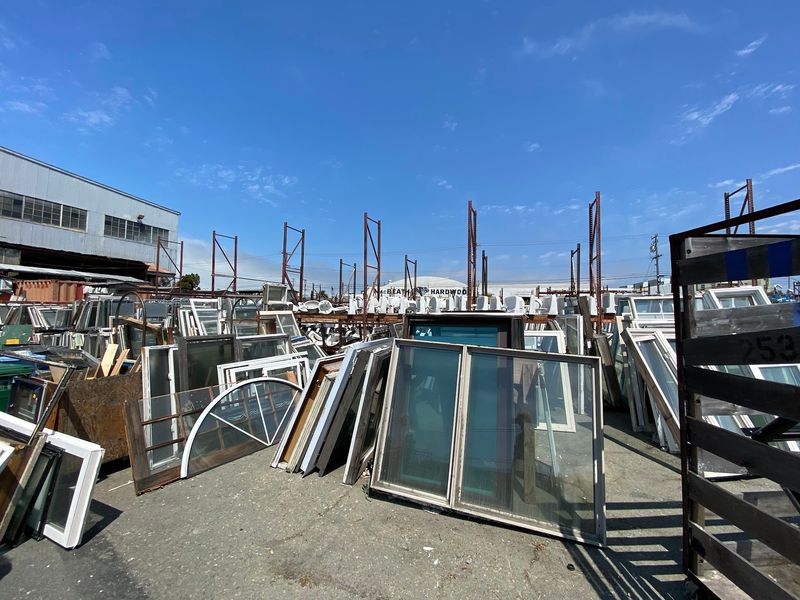
The Ecopark at 900 Murray Street, Berkeley, California 94710 stretches across roughly three acres of indoor and outdoor shopping space. That size changes how a visit feels from the very start.
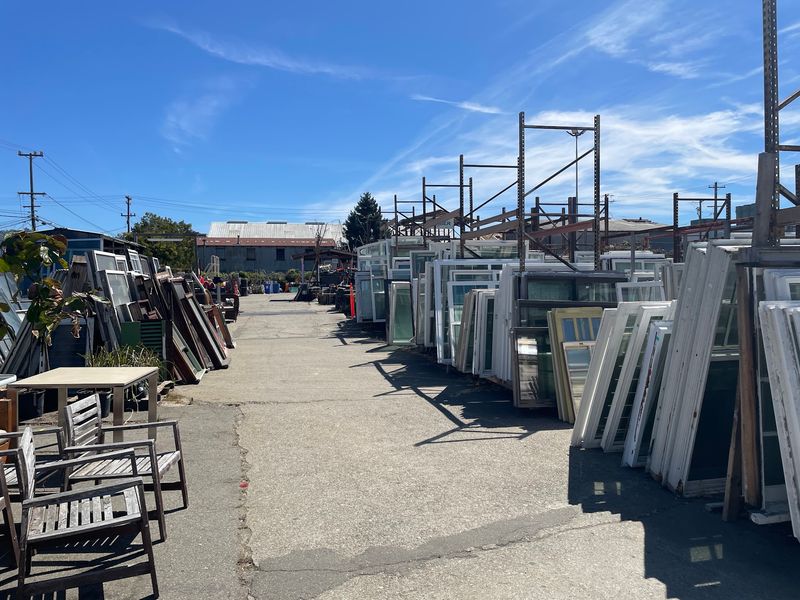
Shoppers move between a large warehouse and open yards where items sit under the sky.
Walking from one end to the other can take a while, especially with so much to stop and look at along the way. Planning a little ahead may make the trip more relaxed.
Wearing sturdy, closed-toe shoes is a smart choice since the outdoor sections involve uneven ground and heavy objects.
Layers can also help, because the open areas near the bay may feel breezy or cool on certain days.
Bringing measurements for a space at home is another useful habit. Spotting the perfect cabinet means little if it will not fit through the front door.
The store is open Monday through Saturday from 8:30 a.m. to 5 p.m. and Sunday from 10 a.m. to 5 p.m., though hours can change.
Giving the visit enough time tends to make the whole experience feel less rushed and a lot more fun.
A 30,000-Square-Foot Warehouse Of Finds
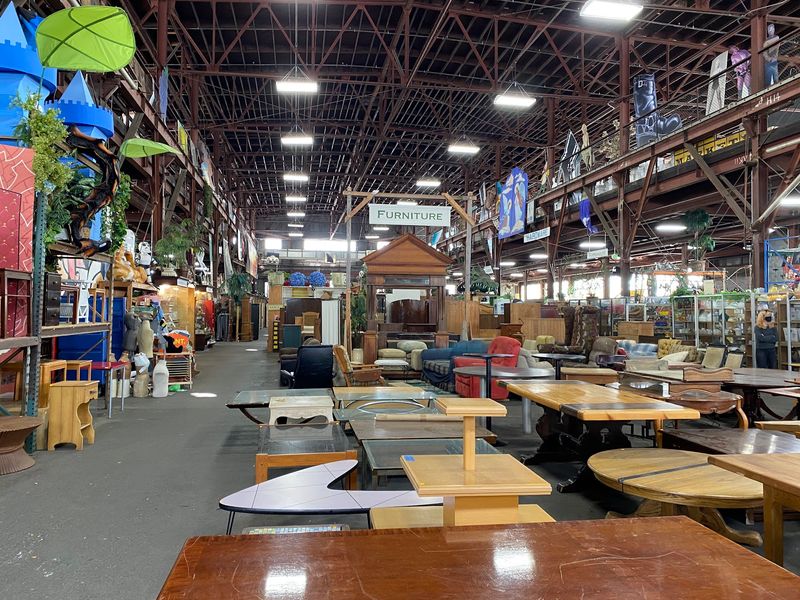
Step through the doors of the General Store and the ceiling seems to go on forever. The building covers about 30,000 square feet, which is roughly the size of half a football field.
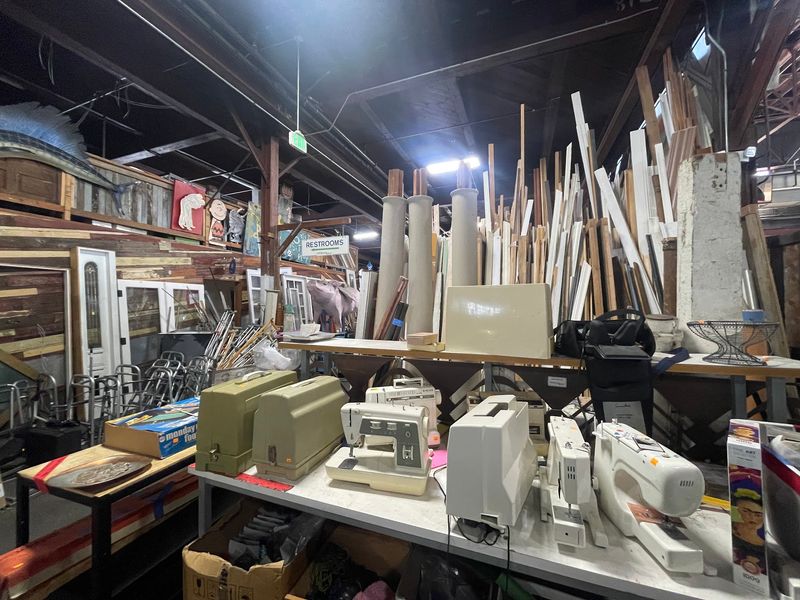
Every corner holds something different. Furniture sits near housewares, while hardware, clothing and appliances fill other areas.
Art supplies, musical equipment, books and media add even more variety. Plenty of miscellaneous objects round things out, and some of them may be hard to identify at first glance.
Moving slowly is the best approach here. Items can be tucked behind bigger pieces or stacked on high shelves, so a quick glance might miss a great find.
Looking up, down and around corners tends to pay off.
Since stock changes regularly, a shelf that looked empty last week might be full this week. Regular shoppers often stop by again and again for exactly that reason.
Prices are not always marked on every item, so asking a staff member is perfectly normal. A polite question usually goes a long way in a place this big.
Humble Beginnings At A City Landfill
Around 1980, a small group started pulling useful things out of the Berkeley city landfill. They had almost no equipment and very little money.
What they did have was a belief that perfectly good items were being buried for no reason.
Those early days were rough and simple. Salvagers worked right at the dump, sorting through what people had thrown away and setting aside anything that could be reused.
Doors, furniture, tools and building parts got a second chance instead of disappearing forever.
Things shifted in 1983 when the city closed its landfill. The operation followed the flow of materials to a new solid waste transfer station.
Over the years, the business moved several times as properties changed hands or got new uses.
Each move brought challenges, but it also gave the team chances to improve how the space worked. Layouts got better and systems became smoother as time went on.
Many of the objects on the shelves today travel a path similar to those very first rescued items.
A chair or lamp found here could have been headed for the trash before someone noticed its value. That idea gives shopping a quiet sense of purpose that a regular store rarely offers.
A Mission Printed Right On The Receipt
Few receipts carry a big life goal on them. Here, the paper slip handed over after a purchase includes the words To End the Age of Waste. It is the stated purpose of the whole business.
That phrase sounds bold, and it is meant to. The idea is that useful things should keep being used rather than tossed out after one owner is done with them.
Every sale is a small step toward that larger goal. For shoppers, this mission can change how buying secondhand feels.
Picking up a used bookshelf means one less item heading toward a landfill and one less new item needing to be made.
Kids and teens visiting with family might find this a great conversation starter.
Talking about where things come from and where they go after people stop using them can be eye-opening. The store offers a real-life example of reuse in action.
Keeping the receipt can be a fun reminder too. Some shoppers like holding onto it as a small keepsake from the trip. Either way, the message sticks with people long after the car is unloaded.
Two Very Different Shops Under One Name
Think of the Ecopark as two neighbors sharing one big lot.
On one side sits the General Store, which feels like a giant secondhand shop. On the other side is the Building Materials Exchange, which looks more like an architectural salvage yard.
The General Store is where shoppers find furniture, books, clothing, kitchen gear and all kinds of household odds and ends. It feels cozy in a cluttered, browsing sort of way.
People often wander there without any plan at all.
The Building Materials Exchange has a more practical energy.
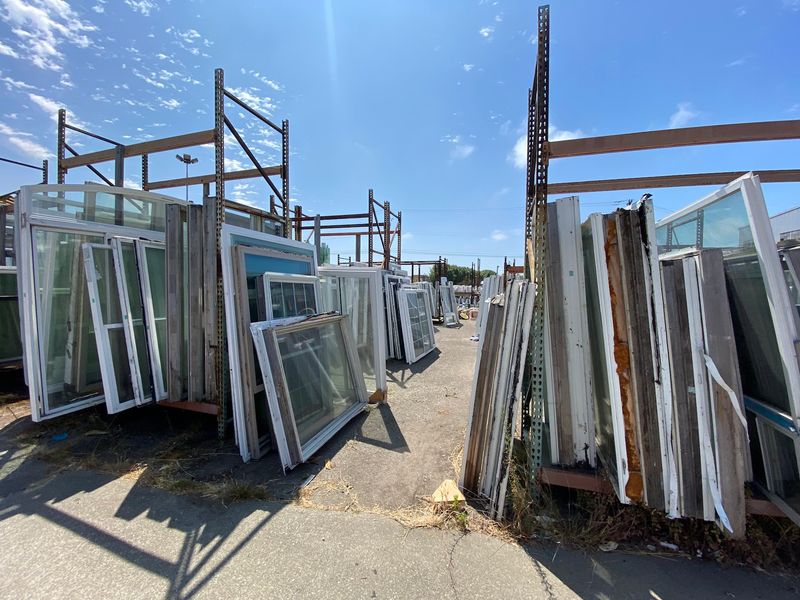
Much of it sits outdoors, with some indoor spots for things like flooring, trim and doors. Visitors there are often measuring, checking sizes and studying details closely.
Knowing about the split helps with planning.
Someone shopping for a vintage lamp can head straight indoors, while a home renovator might spend most of the visit outside.
Families with different interests can even split up for a while and meet again later.
Prices and policies may differ between the two areas, so asking questions in each section is wise. Return rules, for example, might not be the same everywhere.
Getting clear answers before buying can prevent surprises later.
Vintage And Antique Furniture In The Gallery
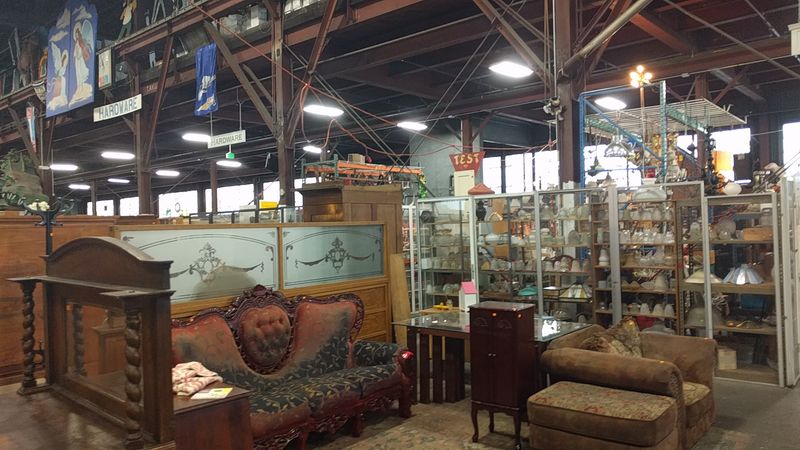
Solid wood, worn edges and a little bit of history often show up together in the gallery area.
California’s Urban Ore sets aside this space for higher-end pieces, including vintage and antique furniture. It feels a bit calmer and more arranged than some of the busier aisles.
Chairs, tables, dressers and other furnishings may appear here, depending on what has come in recently.
Many pieces were built long ago and show the kind of craftsmanship that can be hard to find in new furniture. Running a hand over the grain of an old tabletop gives a sense of how well it was made.
A few simple checks can help before buying.
Opening drawers to see if they slide smoothly is a good start. Gently rocking a chair or table may reveal loose joints that need repair.
Looking underneath for damage is also worth it.
Small scratches or faded finishes are common and can add character, but bigger problems might mean extra work at home.
Since prices vary, comparing a piece to similar items elsewhere may help with deciding.
Rows Of Old Doors And Windows
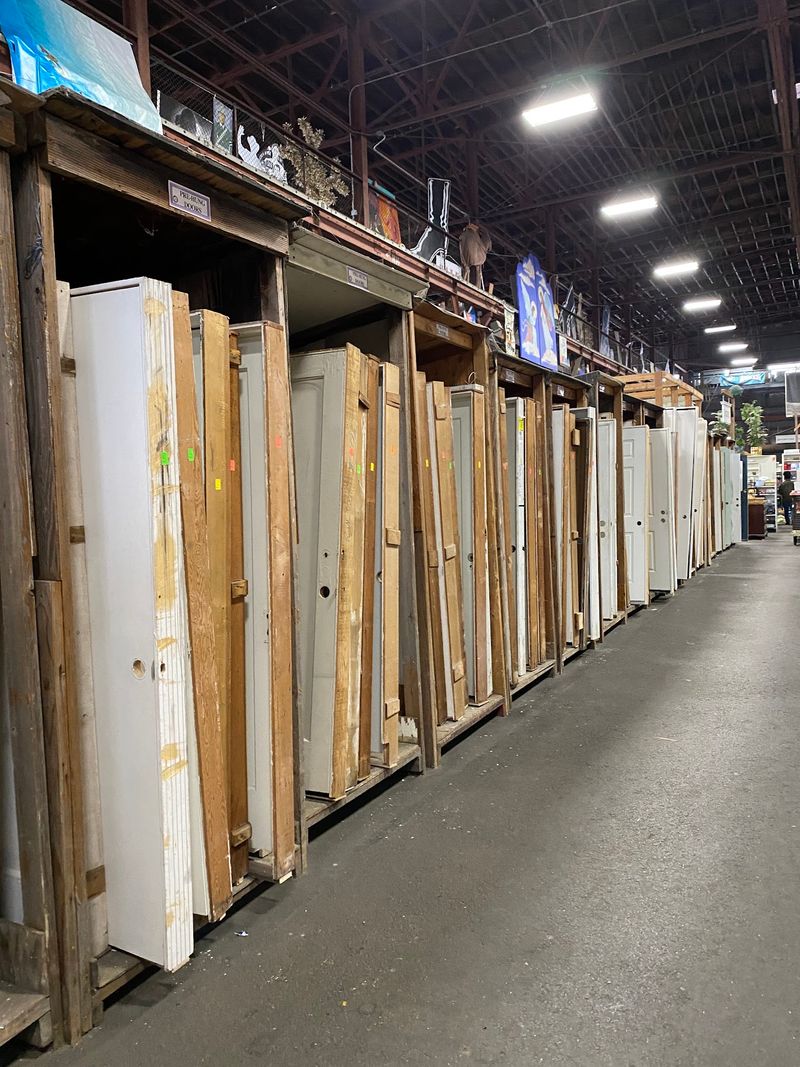
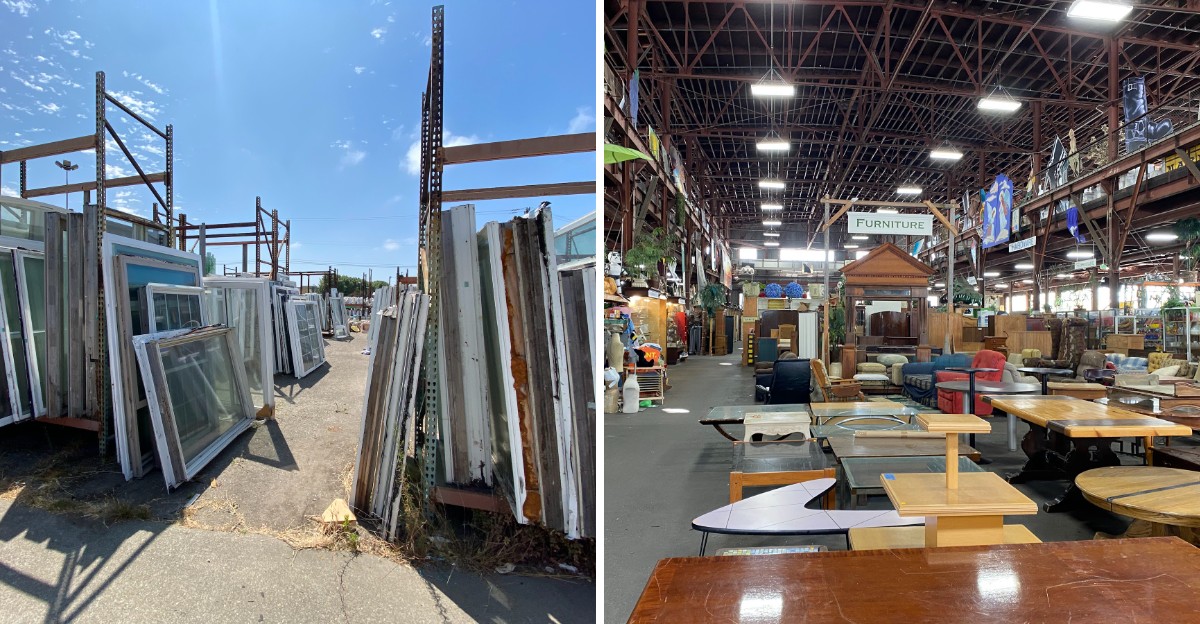
Hundreds of old doors leaning in rows can look like a maze of possibilities.
The building materials side holds doors, windows, trim, tile, stone, lumber and many other salvaged construction pieces. For anyone fixing up a house, it can feel like a goldmine.
Older homes often have odd-sized openings that modern doors do not fit. Finding a salvaged door from the same era may solve that problem while keeping the original look.
Windows with old glass and wooden frames can do the same for a historic home.
DIY fans also find creative uses for these pieces. An old door might become a tabletop or headboard, while a window frame could turn into wall art or a photo display.
Small tiles and trim pieces can add detail to craft projects too.
Measuring carefully is a must here. Writing down the exact height, width and thickness of any opening before arriving can save a lot of guessing.
Checking for warping, cracked glass or missing hardware is also smart.
Prices are not always posted on large items, so asking staff for a quote is normal. Doors and windows may also have their own return rules, so asking about them is wise.
Crates Of Vinyl Waiting To Be Flipped
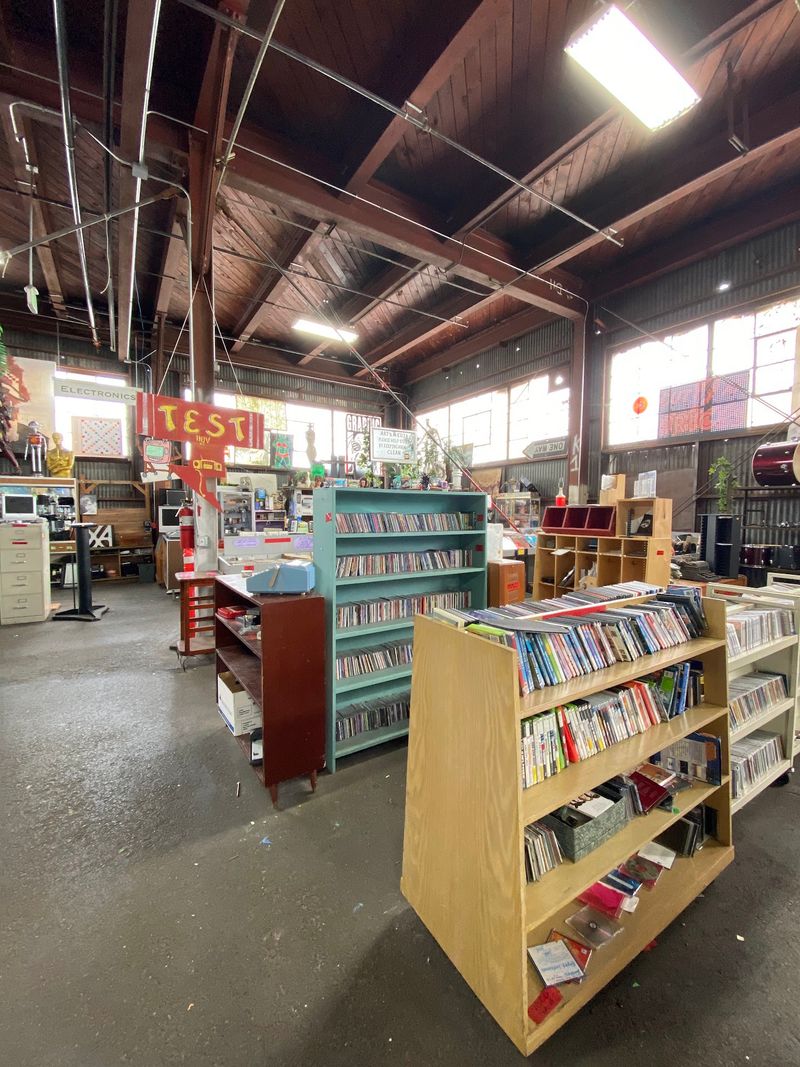
Flipping through a crate of old records has its own special rhythm.
The Arts and Media section carries vinyl records, plus CDs, DVDs, VHS tapes, books, video games, electronics and musical instruments.
Book lovers may find the selection especially large. Record hunting rewards patience.
Albums are not always sorted perfectly, so slowly working through each bin might uncover something unexpected.
The soft thump of sleeves falling forward becomes oddly relaxing after a few minutes.
Checking condition is important with used media. Sliding a record partway out of its sleeve to look for deep scratches or warping can prevent disappointment.
For DVDs and games, opening the case to make sure the disc is actually inside is a smart move.
Electronics and instruments deserve a careful look too. Asking whether an item has been tested may help, since some pieces might need repairs.
Old VHS tapes and cassette-era gadgets can be fun for anyone curious about how people enjoyed movies and music in earlier decades.
Younger shoppers sometimes get a kick out of seeing technology their parents grew up with. A quick browse here can easily turn into a long, happy stop.
Bringing Reusable Goods Instead Of Tossing Them
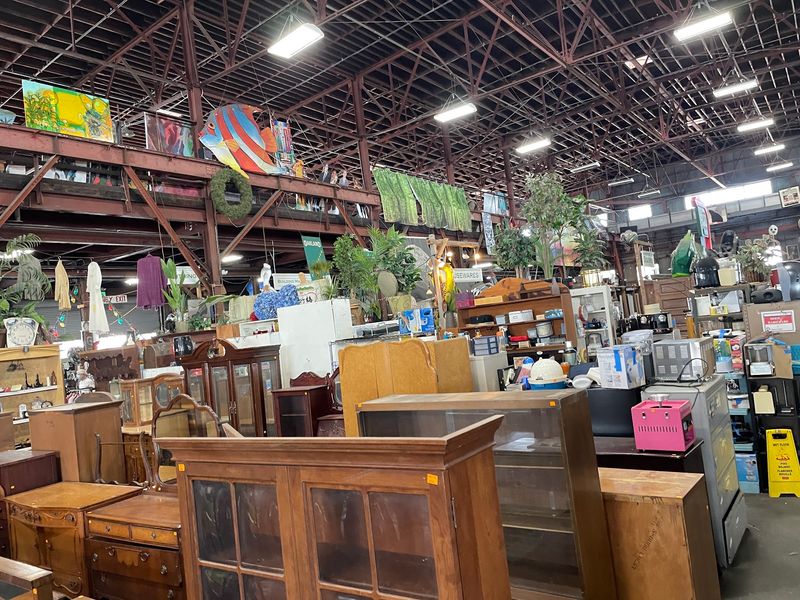
Cleaning out a garage often leaves a pile of things too good for the trash. Customers can drop off potentially reusable goods here instead of throwing them away.
This California store accepts a broad range of categories, though acceptance depends on condition and available space.
That last detail matters. Not every item will be taken, especially if it is badly damaged or the store is already full of similar things. Staff decide what they can actually use and sell.
A little preparation can make drop-offs smoother. Wiping down items and removing loose junk helps them look their best.
Grouping small objects in boxes is easier for everyone than handing over a scattered mess.
Checking the official website before loading the car is wise. Guidelines about what is accepted, where to bring items and when receiving is open may change over time.
Bringing items here keeps the cycle going. The lamp that sat unused in a closet could become someone else’s favorite reading light, which feels like a pretty good trade.