A 60-Foot Cross Rises Over The Treasure Valley From Table Rock Above Boise Idaho
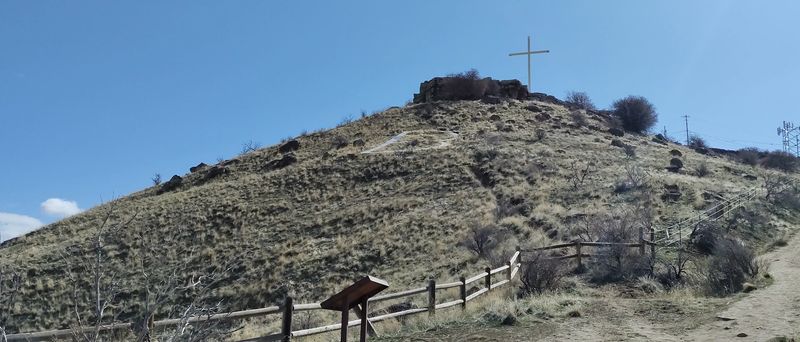
A flat-topped chunk of sandstone sits east of downtown Boise, Idaho, and at night a lit-up steel cross glows from its edge like a lantern left on for the whole valley. Most people in the Treasure Valley have seen it from a freeway, a backyard, or an airplane window.
Fewer know how it got there, who owns the ground beneath it, or how good the walk up feels on a spring morning. The story is part history lesson, part hike, and part front-row seat to the best sunsets in the region.
A Mesa Above The Capital City
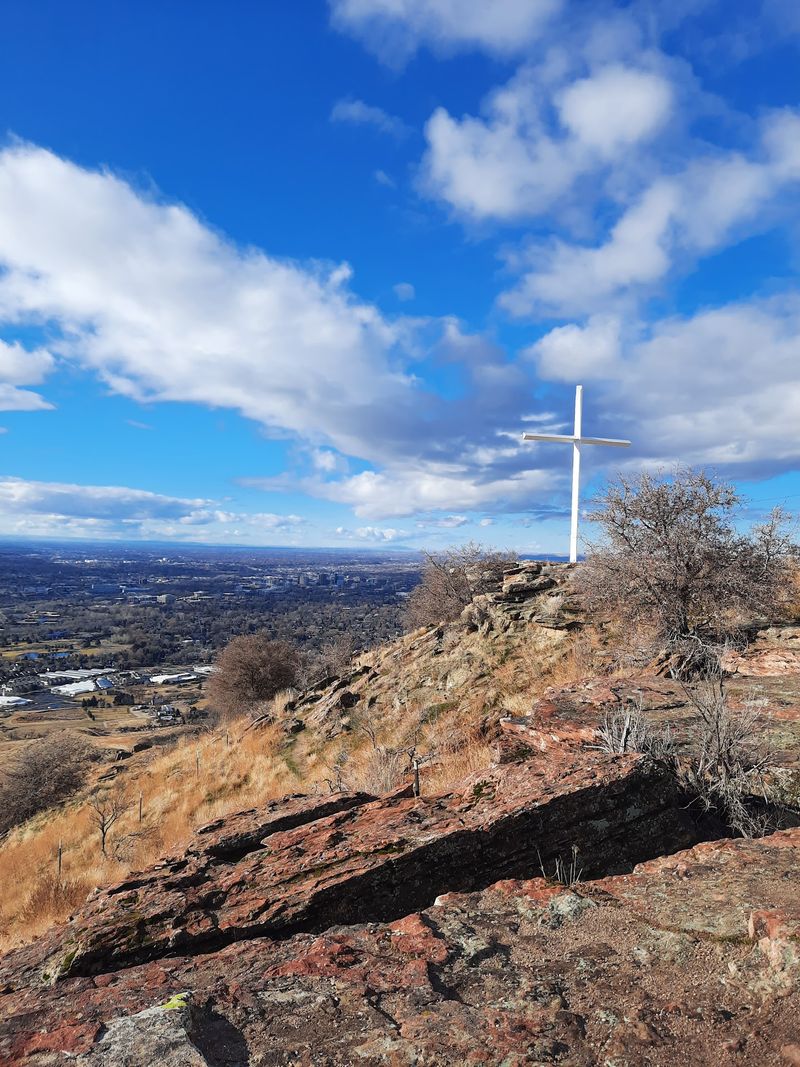
Look east from almost any rooftop in Boise and you will spot it: a flat, tan bluff with a white cross standing at its western lip. Table Rock is a sandstone mesa in the Boise Foothills, part of Ada County, and it ranks among the most recognized landmarks in Idaho.
The general address is simply Boise, Idaho 83712, which tells you how much the place belongs to the city itself. Trails climb its slopes from the east end of town, and the summit opens onto a sweeping view of the Treasure Valley.
Officially, it is classified as a mountain peak, though calling it a mountain feels a little generous. It is more like a giant tabletop someone set down beside the city and forgot to take back.
That plain shape is exactly what makes it so easy to recognize from miles away.
People come for different reasons. Some want a workout, some want a sunset, and some just want to stand next to the cross they have looked at their whole lives.
All of them end up at the same rocky edge, staring out at the same wide valley.
Born From A Television Episode
Strange as it sounds, a TV show started it all. In the mid-1950s, an episode of the popular program This is Your Life sparked an idea among members of the Boise Junior Chamber of Commerce, better known as the Jaycees.
The group set out to build a similar symbol in Idaho. Their goal was to promote Christianity, and the project also reflected the strong anti-Communist mood of that era.
Plenty of American towns were thinking along the same lines during those years.
The price tag was modest even for the time. Construction cost about $880, and some of that money came from children in the community who chipped in to help.
It is a sweet detail that often surprises people hearing the story for the first time.
Workers finished the steel cross on January 8, 1956. Picture a cold winter day, a crew hauling metal up a windy mesa, and a city below that had no idea how long the structure would last.
Nearly seven decades later, it is still standing in the same spot, glowing every evening over east Boise.
Steel, Light, And Sheer Size
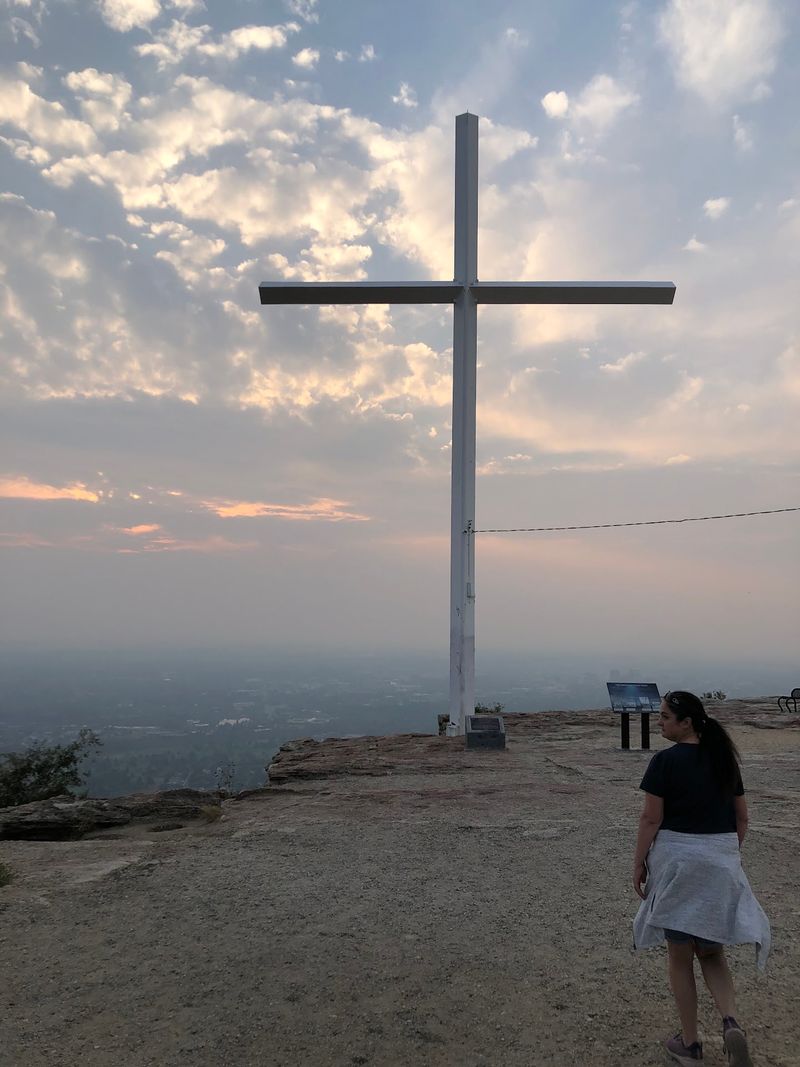
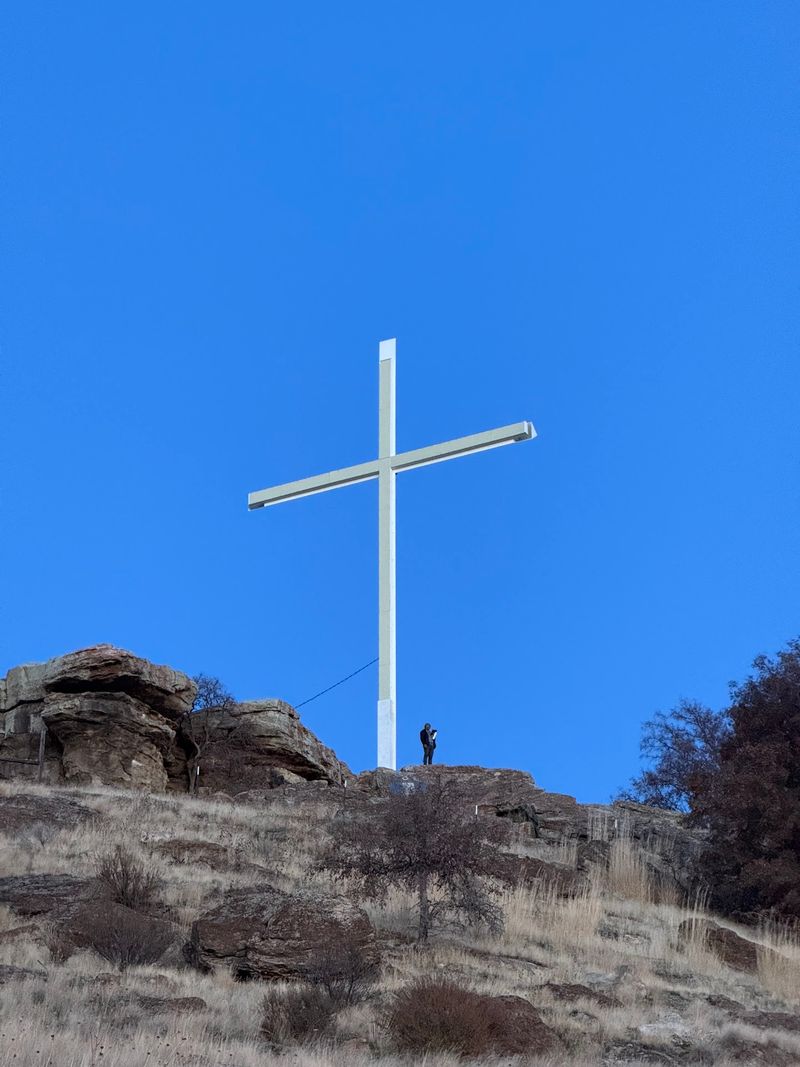
Standing at the base changes everything. From town, the cross looks tidy and small, but up close it towers about 60 feet tall and weighs roughly 4,500 pounds of steel.
Visitors who make the climb often describe it simply as huge, and that word fits. Kids crane their necks, adults step back to fit it into a photo, and almost everyone circles it at least once before turning toward the view.
Lighting is the other half of its personality. Older versions of the cross used bulbs adding up to about 2,100 watts.
These days, roughly 2,600 energy-efficient LED lamps make it shine, which helps explain why it reads so crisp and bright from across the valley.
That glow is what most Treasure Valley residents actually know best. Commuters see it on their drive home, and families spot it from backyards miles away.
Pilots and passengers coming into Boise often catch it too.
Fun fact: because the mesa sits so high above the city, the cross serves as an easy compass. Plenty of newcomers to Idaho learn their east and west by finding it first.
A Small Parcel With A Big Backstory
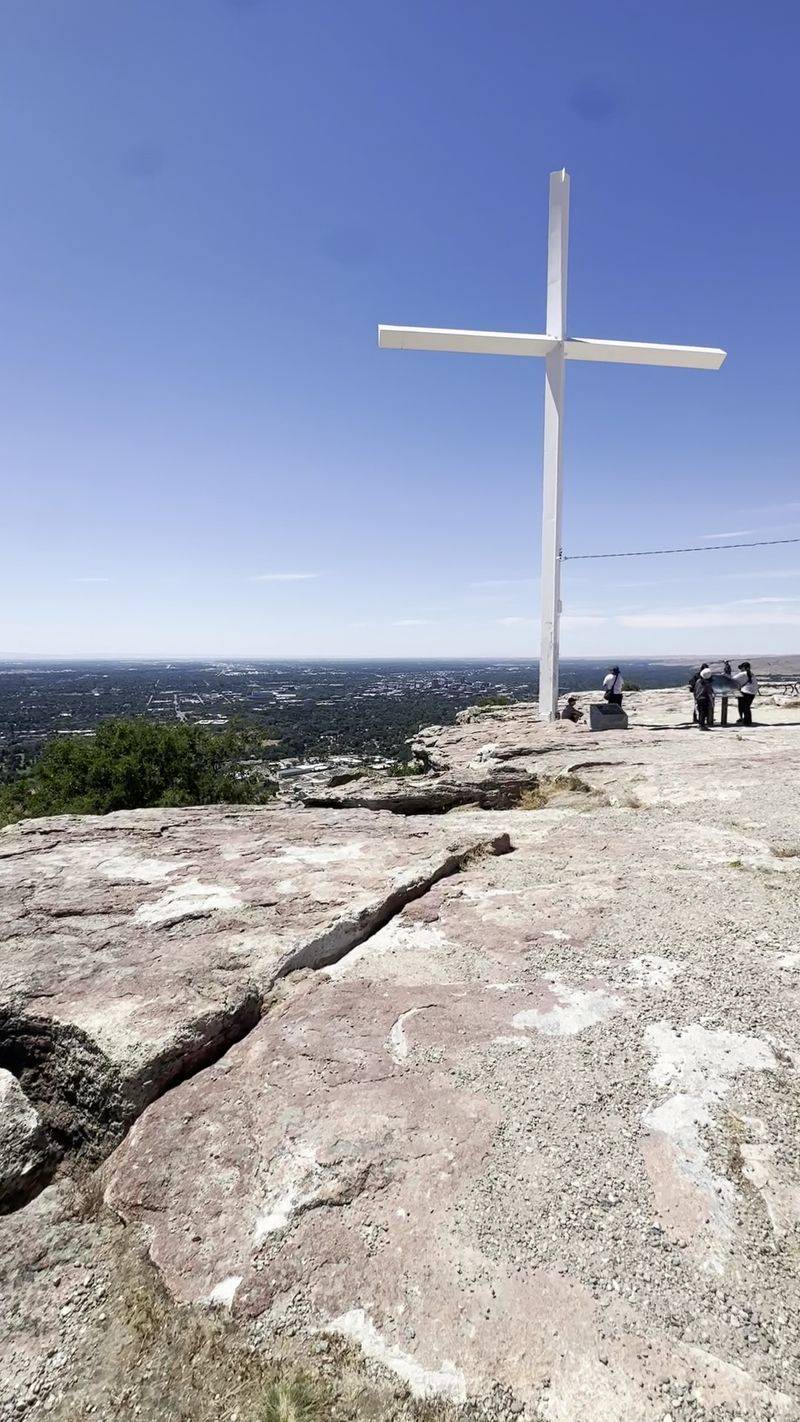
Here is a detail many longtime Boise residents never learned. The cross did not always sit on private land.
At first, it rested on ground managed by the Idaho Department of Corrections, a natural fit since the old prison stood just below. The Jaycees saw that this arrangement could cause trouble down the road, so in 1970 they asked to buy a small patch around the cross measuring 44 by 70 feet.
The Correction Board eventually declared the land surplus and handed it to the Idaho Department of Lands. Then, at an auction in November 1971, the Jaycees bought the parcel for just $100.
That price might be the best real estate deal in Ada County history.
The purchase turned that little square into private property. The idea was to protect the cross from future legal fights over whether a religious symbol belonged on public ground.
So the next time you stand at the base, notice how small the footprint really is. A plot not much bigger than a suburban backyard holds one of the most visible structures in all of Idaho.
Debates And A March Of Thousands
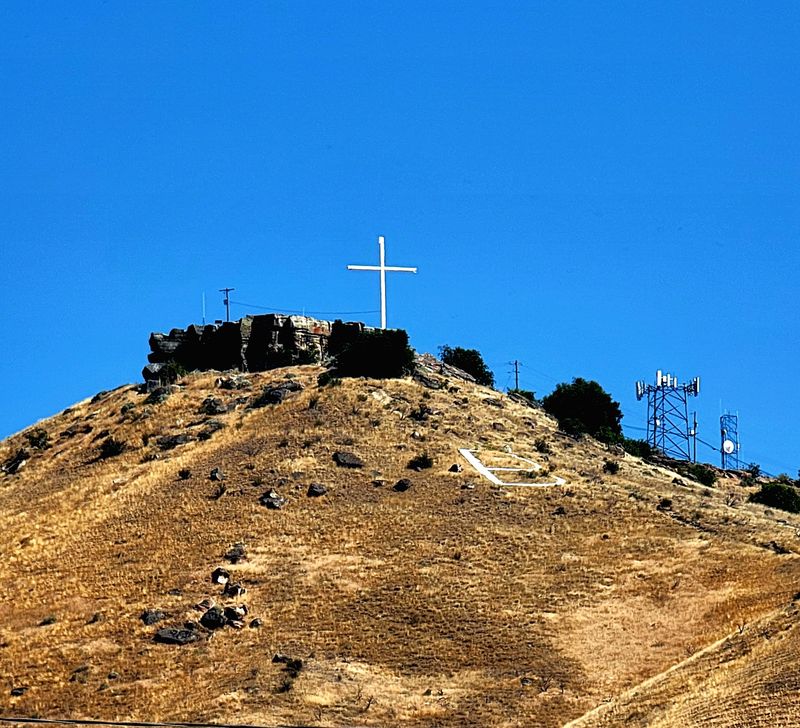
Not everyone has agreed about the cross, and its history includes some real public arguments. Questions about separation of church and state have followed it for decades.
In 1994, the American Civil Liberties Union questioned whether the original land sale to the Jaycees was legal and constitutional. Then in 1999, an activist from Chicago, Illinois, challenged the monument and pushed for its removal.
The community response was hard to miss. More than 10,000 people joined a march to keep the landmark in place, a remarkable turnout for a city the size Boise was back then.
Through all of it, the cross stayed put. For many people in the Treasure Valley, it became a symbol of home, while others still see it as a fair subject for discussion.
Both views are part of the story.
That mix is part of what makes Table Rock interesting rather than simply scenic. Few spots in Idaho carry this much shared memory, from protest signs to family photos, all tied to one steel structure on a sandstone ledge above the city.
Fifteen Million Years In The Making
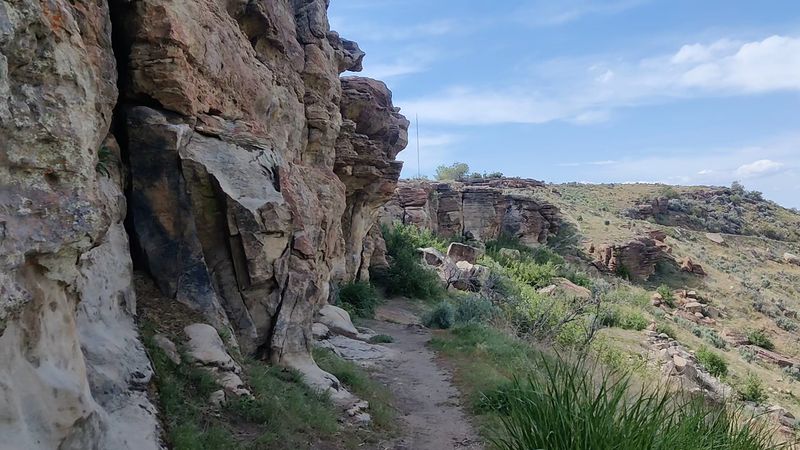
Long before steel or trails arrived, volcanic activity shaped this ground. The mesa formed roughly 15 million years ago, and its flat top and crumbly sandstone edges still show that ancient past.
Run a hand across the rock near the summit and you will feel grit and layers. Those layers mattered to Boise in a very practical way.
Sandstone from the Table Rock area was quarried and used in a number of the city’s notable buildings.
The best-known example sits right at the bottom of the trail. The Old Idaho Penitentiary was built with this stone, so the mesa and the prison are made of the same stuff.
Hikers literally walk from one piece of that rock to another.
For geology fans, the high desert setting makes the formations easy to read. There are no thick forests hiding the landscape, just sagebrush, grasses, and open slopes.
It is a neat way to see how Idaho cities grew from the ground they stand on. The hill gave Boise its stone, and the stone gave Boise some of its oldest walls.
Sacred Ground For The Shoshone
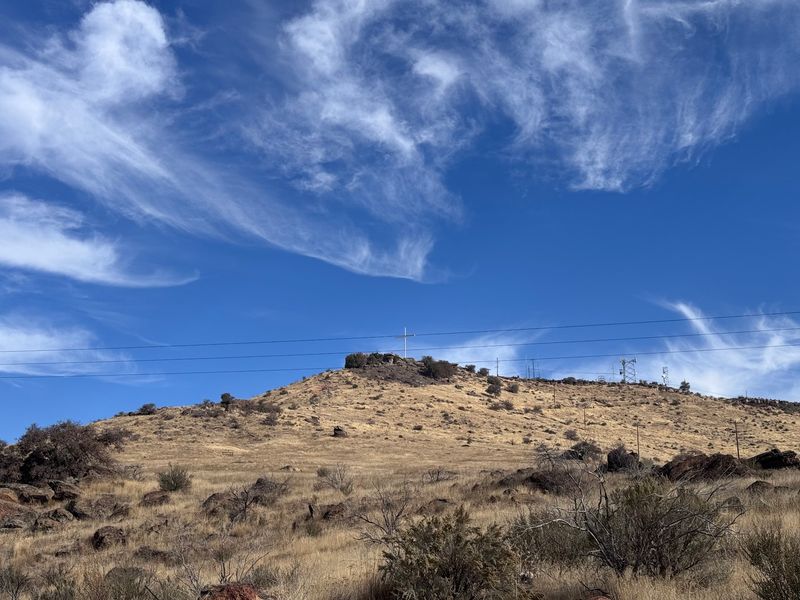
Long before Boise had streetlights, the mesa held deep meaning for the people who lived here. Table Rock is considered sacred to Native American tribes, and it once served as a ceremonial gathering place for the Northern Shoshone.
Knowing that changes how the summit feels. The same flat ground where modern visitors snap sunset photos was used for gatherings across many generations, long before a single trail sign went up.
Those older layers of history are easy to overlook, especially with a giant cross drawing every eye. Taking a quiet moment to remember them adds real weight to the climb.
Respect goes a long way here. Staying on marked trails, packing out trash, and leaving rocks where they lie help protect the place for everyone who values it, whatever their reason for coming.
A visit to Table Rock can be a lesson in how one landmark carries several meanings at once. In Idaho, places like this remind us that the land has stories reaching far beyond the founding of any city, and that this mesa has been a gathering spot for a very long time.
Climbing From The Penitentiary Trailhead
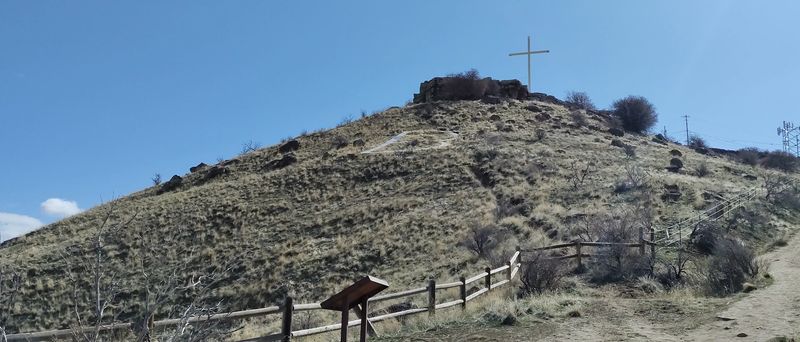
Most walks begin near the Old Idaho Penitentiary, where a large parking lot gives hikers plenty of room. Parking there is free, which makes this one of the easiest low-cost outings in the Treasure Valley.
From the lot, trails wind up the foothills toward the summit. Times vary by pace, but hikers commonly report around 45 minutes to an hour going up and about 30 minutes to an hour coming down.
Fit hikers sometimes reach the top in roughly 25 minutes.
A full round trip of one and a half to two hours is a fair plan for most people. That leaves time to linger at the top without rushing.
Some steep sections will get your heart pumping, especially near the upper stretches. Many visitors describe it as an intermediate hike, with a few calling it easy to moderate and others finding it a solid push.
The way down feels much gentler, so save some energy for enjoying the scenery. Loop options also exist, including routes that circle up the west face, around the north side, and back along the south side.
Sunsets That Steal The Show
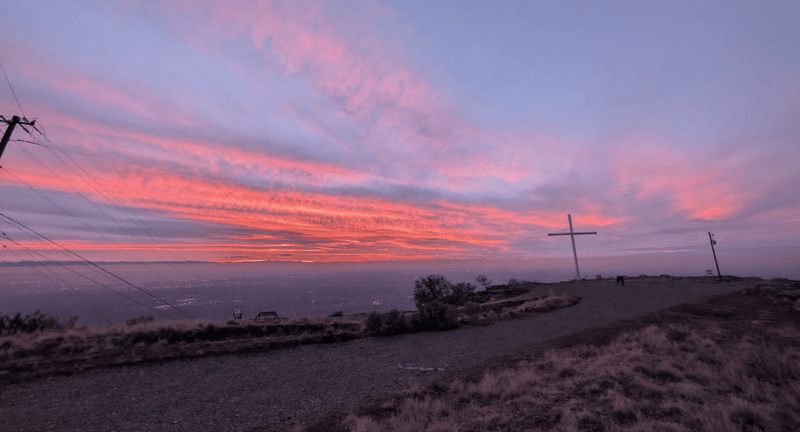
Ask around Boise about the best time to go, and sunset comes up more than anything else. The western sky lights up over the valley, and the mesa sits in exactly the right spot to watch it happen.
Hikers who arrive around late afternoon describe the lighting as unreal, with warm gold washing over the sandstone and the city slowly turning orange and pink. A loop hike started near 5 PM in the right season can end with the whole valley glowing.
Crowds stay fairly light. A handful of people usually gather at the edge, and once the sun drops, the summit often empties out quickly.
That quiet stretch after sunset is worth staying for.
As darkness settles in, the cross switches on behind you and city lights begin to sparkle below. It is a two-part show, and both halves are free.
Bring a headlamp or flashlight if you plan to linger, since the trail gets dim on the way down. Watching the sun leave Idaho from up here is the kind of evening people remember for years.
The Whole Valley Laid Out Below
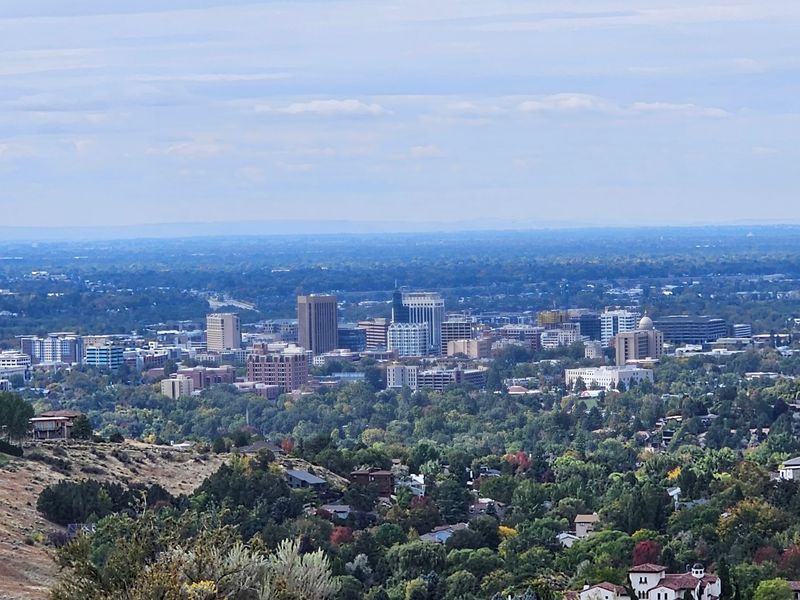
Reaching the top feels like opening a map. Downtown Boise spreads out below, and the Treasure Valley stretches far beyond it toward the Owyhee Mountains on the horizon.
Hikers often point out landmarks once they catch their breath. You can pick out the Boise airport, the downtown towers, and neighborhoods that look like tiny model towns from this height.
The best part, many visitors say, is simply sitting down and soaking it in. A cool breeze often drifts across the summit, which feels great after a sweaty climb.
Bring a snack and give yourself extra time up here. Rushing back down misses the point.
The view shifts as clouds move, as light changes, and as planes glide in for landing.
Families like to play spot-your-house, and friends often turn the lookout into a long chat session. One visitor noted it is a fine spot to simply talk with others, which is true of most good Idaho summits.
Bonus tip: clear days after a spring rain usually give the sharpest views across the valley.
Sunflowers, Marmots, And Trail Company
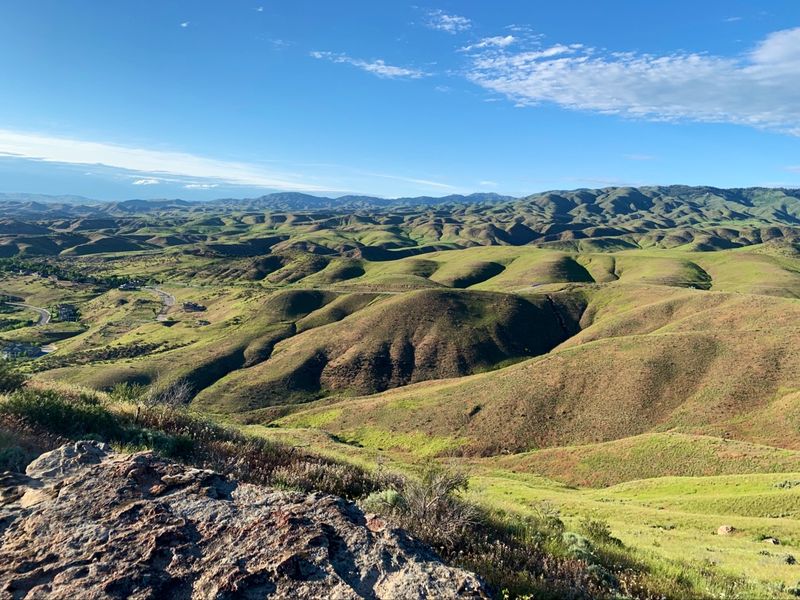
Spring paints the foothills yellow. Around late April, hikers report sunflowers lining the path, along with wildflowers scattered across the hills.
Keep an eye on the rocks near the top too. Marmots sometimes pop up on the summit, sunning themselves or scurrying between boulders, and spotting one makes kids squeal every time.
Not all wildlife is quite so cuddly. On warm days, especially along the road up from the Old Penitentiary, hikers occasionally encounter a snake or two, so watch your step and keep dogs close.
The high desert setting means wide open views of all this life. Sagebrush, grasses, and blooms make each season look a little different.
People are part of the scenery as well. Someone always seems to be out on the trail, and visitors often mention how friendly folks are while sharing the path.
A quick hello on a steep stretch is pretty much tradition here.
For anyone who thinks Boise is all pavement, a spring morning on Table Rock tells a very different story about the wild side of Idaho.
Kids, Dogs, Bikes, And Sweethearts
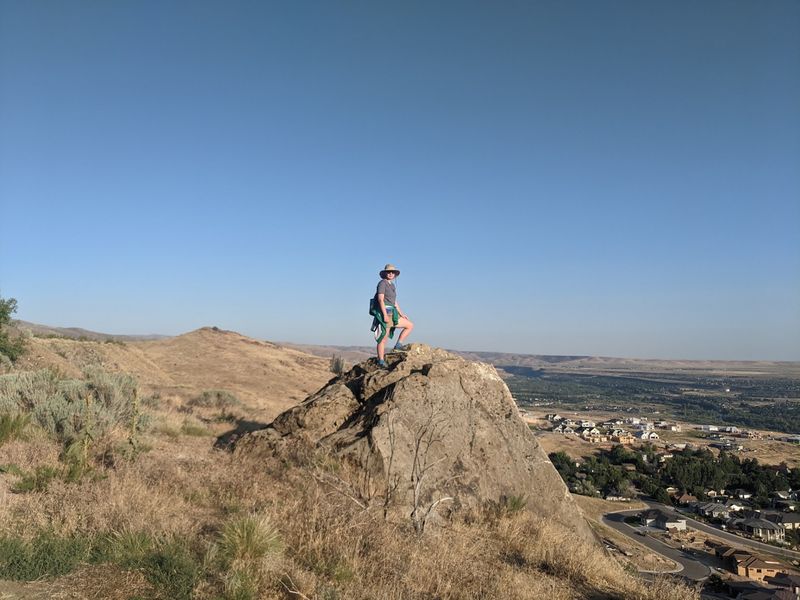
One local summed it up neatly: something for everyone. Table Rock works as a family hike, a dog walk, a mountain bike ride, and a famous date spot all at once.
Families report that young kids handle it well. One four-year-old walked most of the way up on his own, which says a lot about how manageable the trail can be at an easy pace.
Dogs are welcome and seem to love it. Bring a leash, plenty of water, and maybe a collapsible bowl, since the slopes offer almost no shade.
Mountain bikers consider it one of the best technical riding spots around Boise. Riders and hikers share the network, so stay alert and give a friendly heads-up when passing.
Couples have their own tradition here. The summit has long been known as Boise’s classic place for a romantic evening, especially with the cross glowing and city lights twinkling below.
Regular hikers also use it for fitness. Some climb at least once a month, saying it pushes them in all the right ways.
Few Idaho trails serve so many types of visitors.
Timing, Water, And Muddy Seasons
Heat is the biggest factor to plan around. The trail is exposed, and summer afternoons warm up fast, so many hikers prefer early mornings.
Water and sunscreen are must-haves no matter the season. Even a short climb gets sweaty under the open Idaho sky.
Spring mornings get special praise for being neither too hot nor too cold.
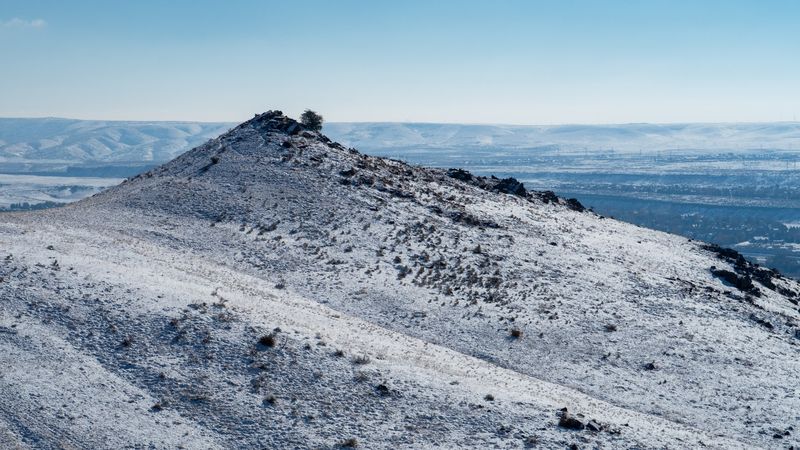
Wet weather brings a different challenge. Trails turn slick and muddy after rain, and winter visits can mean plenty of mud.
Hikers are asked to check for closures during soggy stretches, since walking on wet trails damages them.
Trails are open from sunrise to sunset. Plan to be heading down as light fades, and carry a light just in case.
Driving to the summit is generally not allowed. Access is on foot or by bicycle, and in the past security has blocked the drive-up route.
That can be frustrating for visitors with limited mobility, so it helps to know ahead of time.
Free parking sits near the Old Idaho Penitentiary. Check conditions before driving out, especially in early spring.
Worth Every Step Up
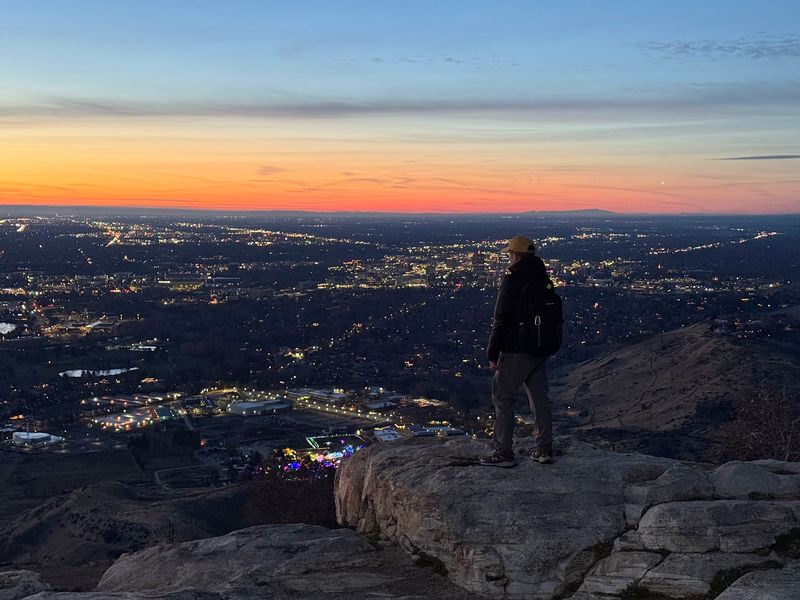
Few outings in Idaho give so much for so little. Free parking, a climb of an hour or so, and you are standing beside a 60-foot landmark with the entire Treasure Valley at your feet.
The appeal goes deeper than the view. Here is a mesa formed millions of years ago, sacred to the Shoshone, quarried for Boise’s oldest walls, and topped by a cross that children helped pay for in 1956.
Its story includes arguments and a march of thousands. That mix of history, debate, and pride is what makes it feel so personal to people who grew up here.
For newcomers, it is the fastest way to understand Boise’s layout. For longtime residents, it might be the spot of a first date, a family photo, or a monthly workout.
Go on a spring morning for wildflowers, or time it for sunset if you want the full glow. Either way, bring water, wear good shoes, and give yourself time to sit at the top.
Then, driving home, glance back east. The cross will already be shining.