There’s No Place On Earth Quite Like This Beautiful Historic Chapel In South Carolina
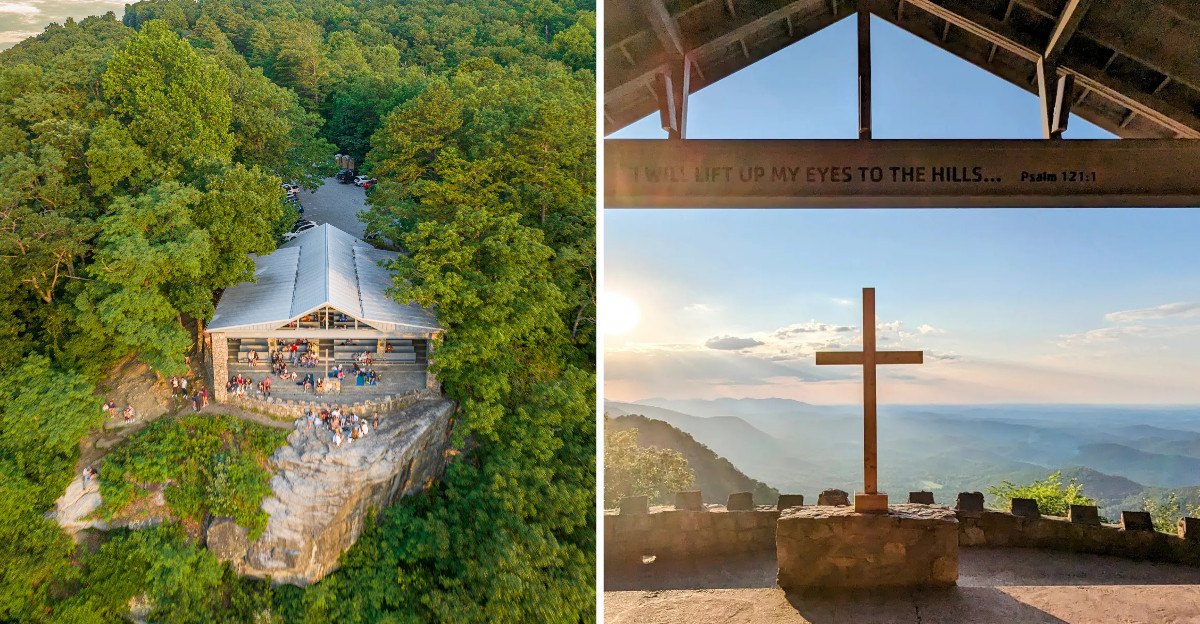
The first thing you notice is the view. Then everything else gets very quiet.
High in the South Carolina mountains, one historic chapel opens toward layers of blue ridges instead of a traditional front wall.
The effect is hard to describe without sounding dramatic. So yes, it really is that beautiful!
People come to pray, think, celebrate, or simply sit still for a while.
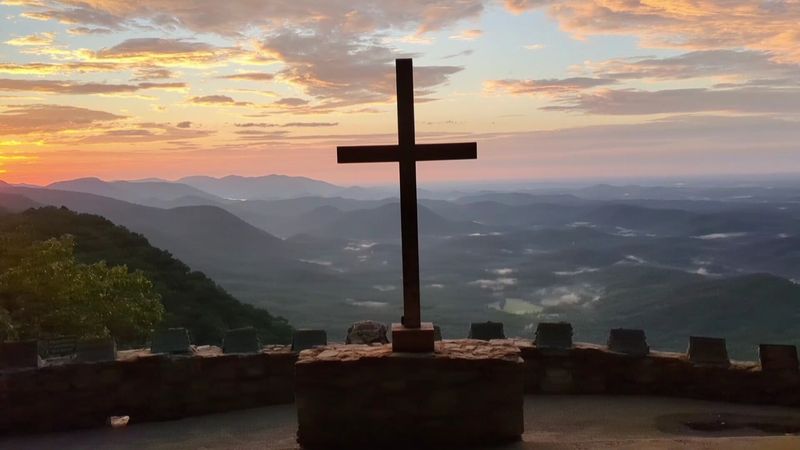
Sunrise can turn the valley gold, but the place does not need perfect light to feel special.
There is something deeply inviting about a spot that asks almost nothing from you except to stop and look.
A Chapel Born In 1941
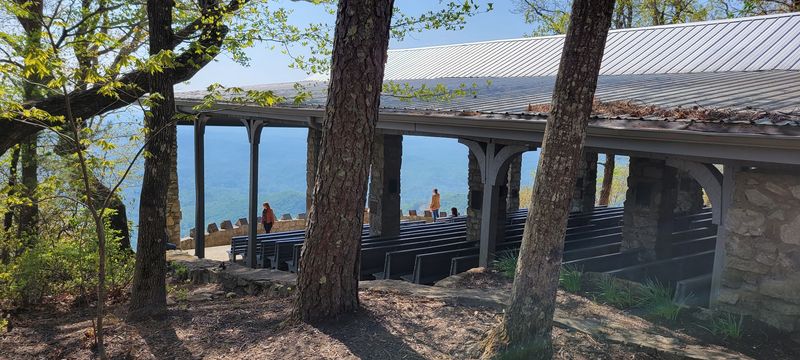
Some places carry their history quietly, and this one wears it in stone and timber.
The story reaches back to 1921, when land for the future mountaintop camp was assembled through major property gifts on Standing Stone Mountain. Camp Greenville opened at this higher mountain location in 1925.
Two decades later, in 1941, the Fred W. Symmes Chapel was constructed through support from its namesake benefactor.
The gift gave generations of campers a peaceful place to gather and reflect. Over time, the chapel became the spiritual center of the camp.
The chapel has not stayed frozen in time, though. Major upgrades came in 2012 and again in 2018.
Severe weather in September 2024 forced an extended closure and another major round of repairs. Public visitation resumed in January 2025 after restoration work was completed.
Those repairs preserved the familiar stone, timber, benches, and open mountain-facing character visitors had known before the closure.
For your map, the official chapel address is 100 YMCA Camp Road, Cleveland.
Perched High On Standing Stone
Height is the headline here, and the mountains are the whole story. YMCA Camp Greenville sits about 3,200 feet above sea level on the eastern ridge of the Blue Ridge Mountains.
From the chapel, ridge after ridge fades into softer shades of blue while the Piedmont stretches far below.
The open side faces toward the broad South Carolina landscape, giving the chapel its signature uninterrupted panorama.
Location adds another fun twist. The camp’s northern boundary meets DuPont State Forest and the North Carolina state line.
The chapel itself looks outward across the South Carolina Piedmont rather than directly into North Carolina.
At this elevation, conditions can feel noticeably different from the lower foothills, so an extra layer can be useful even during milder weather.
Wind can move quickly across the exposed ridge, and mountain conditions can shift over the course of a visit.
Take a few minutes to simply look before snapping photos. The layers change with cloud cover, haze, and the angle of the light.
Stone Walls, Open Skies
Forget stained glass and heavy doors. Here, the mountains themselves form the grand backdrop behind the altar area.
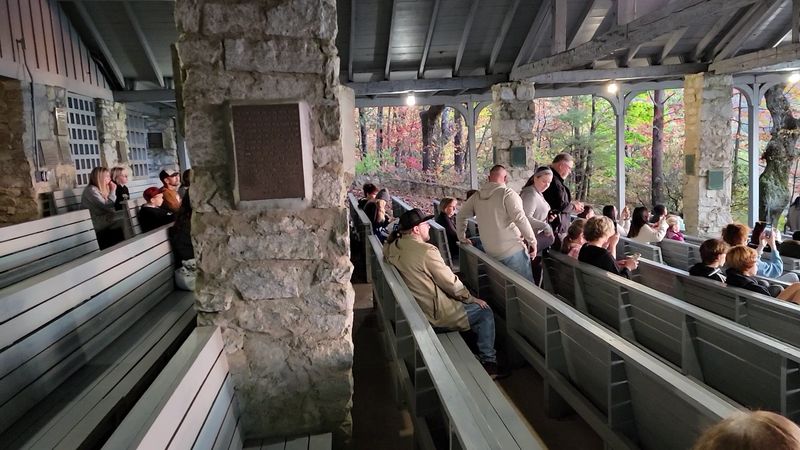
Tall stone columns frame the sides, while the front opens wide to the sky.
Sturdy wooden beams stretch overhead and give the space a cozy, rustic feel. Rows of wooden pews descend gradually toward the front.
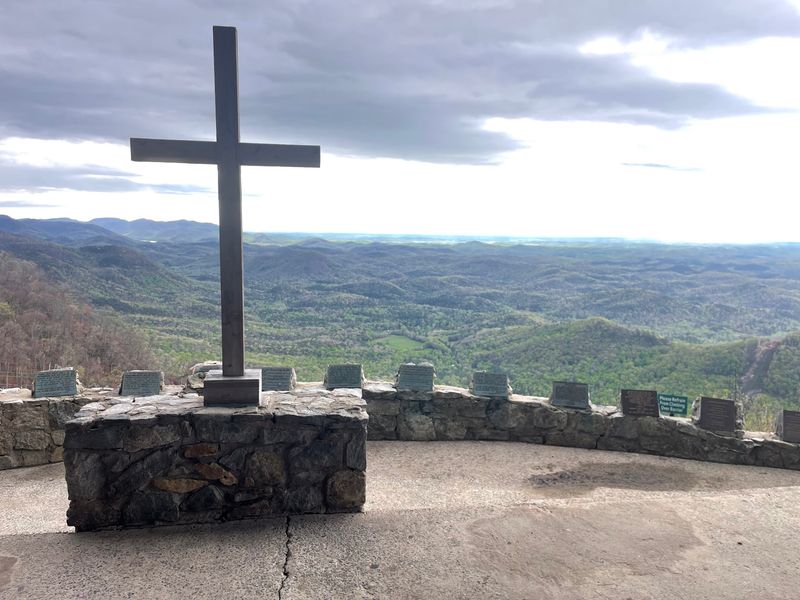
A plain wooden cross stands on a stone base near the edge, outlined by the ridges beyond. The beam above it carries the familiar words from Psalm 121:1.
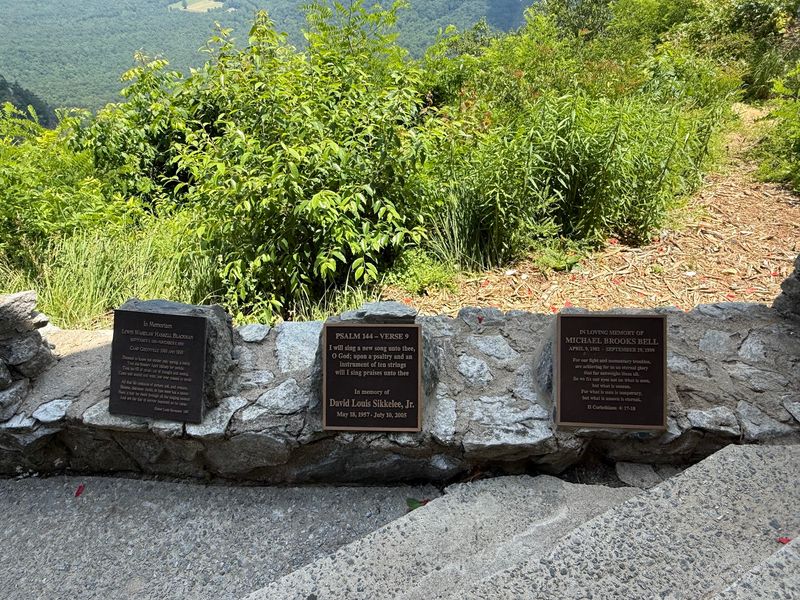
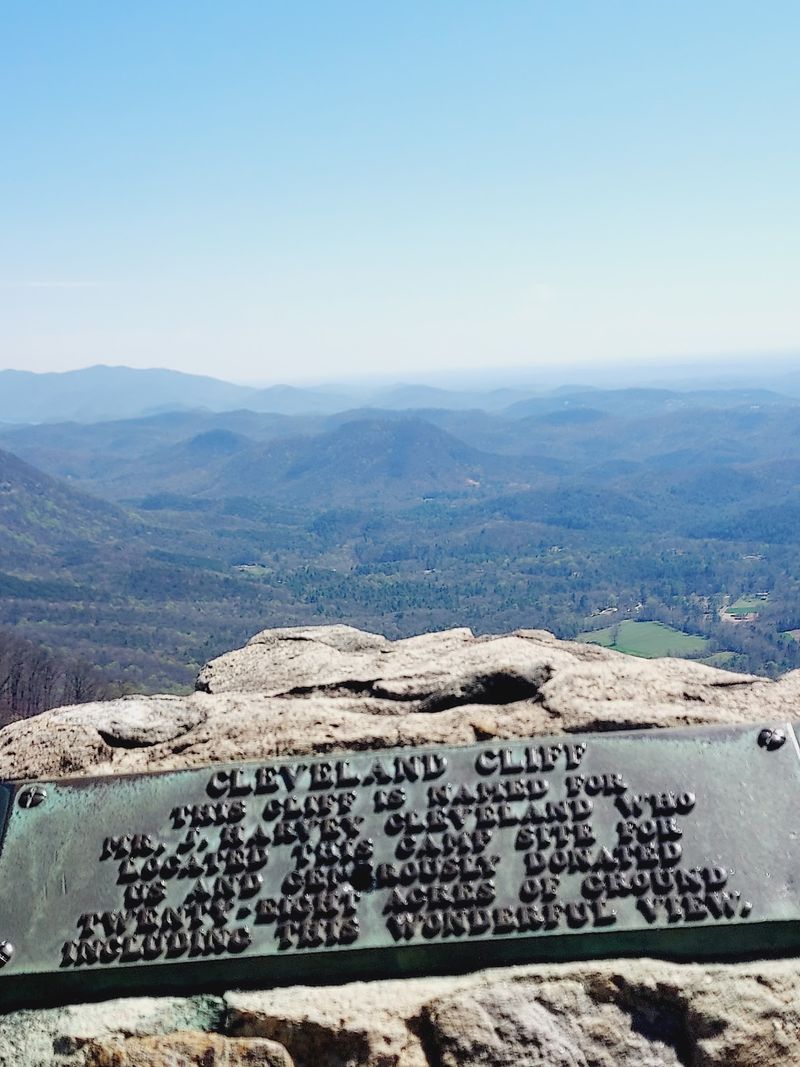
Stone plaques and inscriptions around the chapel add smaller details for visitors who take time to look beyond the main view.
Natural light fills the shelter and changes throughout the day. Morning light can warm the interior, while midday makes the stone and timber appear sharper.
Because the front remains open, weather becomes part of the setting. Wind, birdsong, drifting cloud, and changing visibility can alter the experience from hour to hour.
Fog sometimes hides most of the distant ridges and leaves only the closest features visible.
That variation is part of what makes repeat visits look different from one another.
Vows Above The Valley
The mountain setting also makes Pretty Place a well-established private ceremony venue.
Weddings and other reserved events regularly use the chapel, which is why public availability changes so often.
Weekends can be heavily booked, especially during spring and fall, and October in particular can have very limited public access.
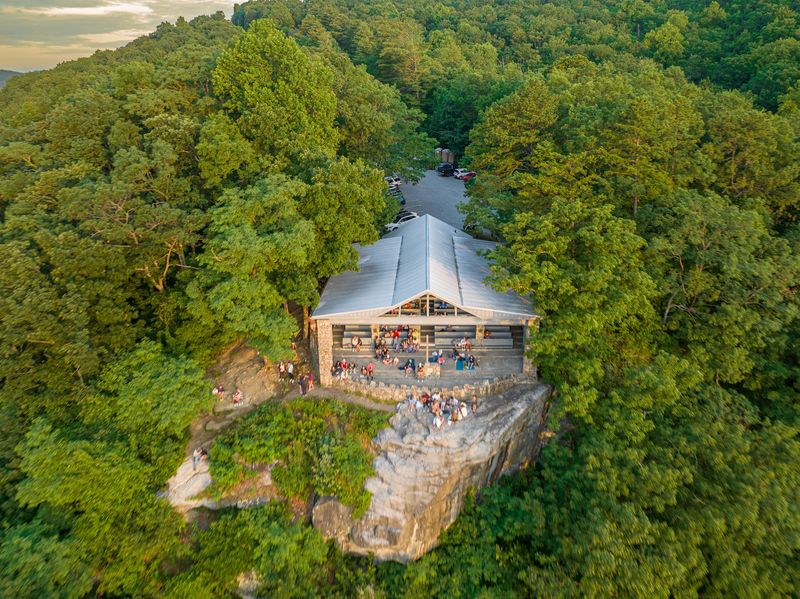
The chapel has seating for about 350 guests. Parking is more limited, with space for roughly 100 vehicles in the chapel area.
Couples holding a wedding there need a South Carolina marriage license because the chapel sits inside the state.
One especially meaningful part of the arrangement happens beyond the ceremony itself. Private-use fees help support both chapel maintenance and Camp Greenville programs.
Some of that support goes toward camperships, which help make camp experiences available to children who otherwise might not be able to attend.
When a private event is taking place, the chapel grounds close completely to public visitors. That makes the online schedule essential for anyone planning a casual stop.
Finding Your Quiet Place
Silence has a sound up here, and it is mostly wind.
The simple layout makes it easy to sit on a back pew and look toward the open ridge without needing a complicated plan.
The chapel functions first as part of YMCA Camp Greenville rather than as a regularly operating church. Its purpose is closely tied to camp programs, reflection, and reserved gatherings.
A few simple habits help protect that peaceful mood. Keeping voices low and allowing space around other visitors fits naturally with the setting.
Only service animals are permitted at the chapel, and the rest of Camp Greenville remains off-limits during ordinary public visitation.
A short stop can be enough to see the structure, but the open view rewards anyone who has time to stay a little longer.
The surrounding camp property supports abundant wildlife, including deer, wild turkeys, newts, salamanders, and a wide range of native plants.
Cloud shadows regularly move across the forested slopes below, giving the view a different pattern every few minutes. Public visitation remains open at no charge during posted hours.
Smart Tips Before You Go
Planning ahead matters more here than at many attractions. The most important step is checking the online visitation schedule shortly before leaving home.
Public hours change daily and sometimes by the hour because camp programs and reserved events receive priority.
The schedule is generally posted only 10 to 14 days ahead, and visitors are encouraged to check again the evening before or morning of the trip.
Public access is not simply dawn to dusk every day. Some dates offer only a short viewing window, while others remain closed throughout the day.
The chapel also closes completely to public visitation from mid-May through mid-August during summer camp.
Visiting is free. Donations can be made separately to help with continued upkeep and programming. The mountain road is winding, so allowing extra driving time makes the trip easier.
Current parking capacity is roughly 100 vehicles, and cars can be turned away temporarily once the chapel reaches its visitor limit.
Public visitors use temporary restrooms during open hours, while permanent indoor facilities are reserved for private events.
A ramp connects the parking area with the back of the chapel, but there is no ramp down to the front.
Heart Of Camp Greenville
Behind the famous view lies a much bigger story about camp life. The chapel belongs to YMCA Camp Greenville, which began in 1912.
The current mountain property covers about 1,400 acres. It ranks as the fifth-largest YMCA camp in the country.
During summer sessions, campers use Pretty Place as part of the camp’s regular programming and traditions.
That is why public visits stop from mid-May through mid-August rather than simply continuing around the summer schedule.
Camp stays active beyond summer as well. Family camps, environmental education, group programs, and other organized activities continue through the year.
The property holds two notable waterfalls. Rainbow Falls drops about 140 feet, while Shower Bath Falls falls over a much shorter ledge.
Two spring-fed lakes and miles of trails add even more variety to the mountain property. Those areas serve camp programs rather than ordinary Pretty Place sightseeing.
During public chapel hours, visitors are limited to the chapel area, and the rest of the private property remains closed to casual exploring.
Knowing that changes the context of the visit. Pretty Place is not simply a scenic overlook with benches.
Chasing The Golden Sunrise
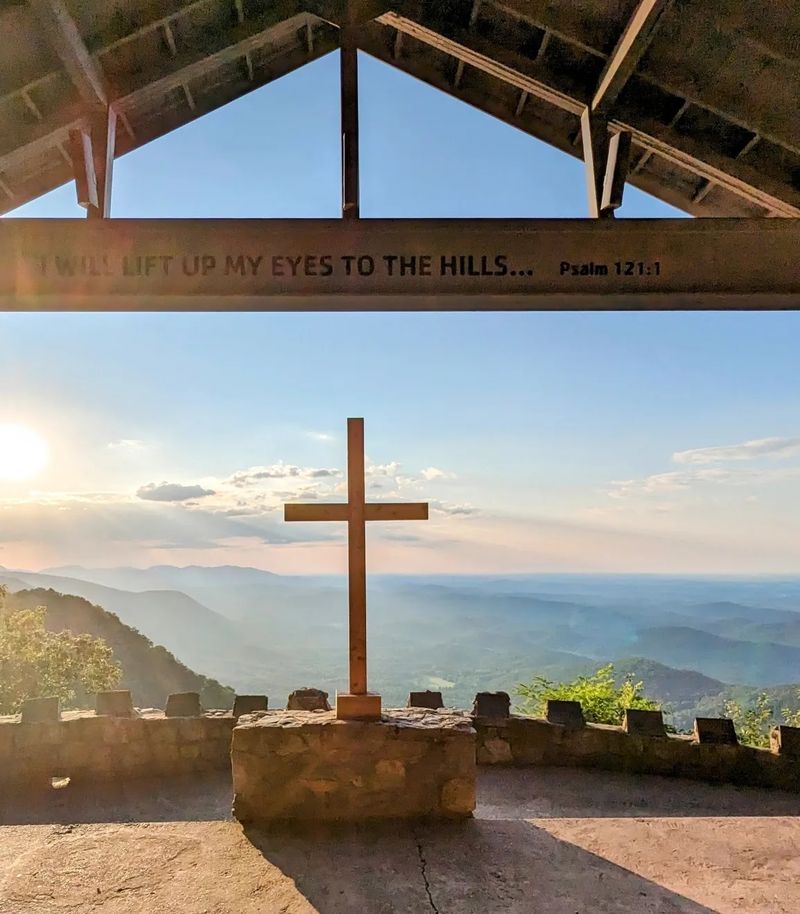
Sunrise is one of the chapel’s most recognizable scenes, but access at that hour should never be assumed.
Because the open side faces east, early light can appear behind the cross and gradually reveal the ridges beyond.
First light may begin with muted pink or blue tones before warmer color reaches the stone and wooden pews.
Low cloud or morning mist can settle into the valleys, adding extra layers between the chapel and the distant horizon.
When an early viewing window is open, chapel and parking capacity can fill quickly.
Weekends and major event periods are more likely to have restricted access, particularly during spring and fall.
Public sunrise visits do not use a standing reservation system. The posted visitation schedule determines whether the grounds are open at that hour.
Some special sunrise programs are separate from normal public visitation and may have their own attendance rules.
A wide-angle lens can capture the cross, timber frame, and mountain layers in one view. Extra layers of clothing can also help during cool early-morning conditions.
When the schedule and weather line up, the gradual change in light shows exactly why sunrise has become so closely associated with Pretty Place.