This Century-Old Georgia Basilica Has Stained Glass, Soaring Arches, And Old-World Details
You don’t need a passport to feel like you’ve landed in Europe. You just need to look up.
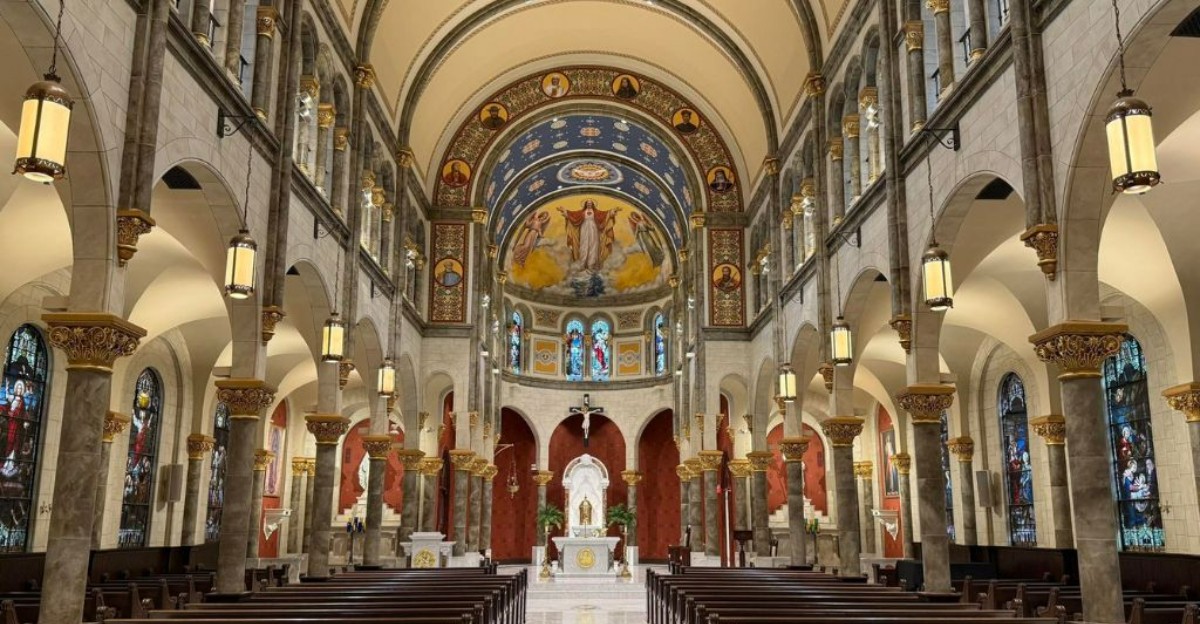
Inside this Georgia basilica, arches climb toward a ceiling that seems to float. Columns stand tall and steady.
Sunlight pours through stained glass and spills across the pews in pools of ruby, gold, and sapphire. Every corner holds something worth a second glance.
Carved woodwork. Painted details.
Craftsmanship from an era when builders measured success in decades, not deadlines.
I have deep respect for places like this. They slow you down without asking.
Voices drop to a whisper. Footsteps soften.
Even visitors who rarely set foot in a church find themselves pausing in the aisle. This landmark has watched over its city for more than a century.
It remains one of the most striking sights in all of Georgia, and it deserves an unhurried visit.
A Rainy Day Detour Into 1898
Rain has a funny way of picking my plans for me. That afternoon it pushed me under an arched doorway, dripping umbrella and all.
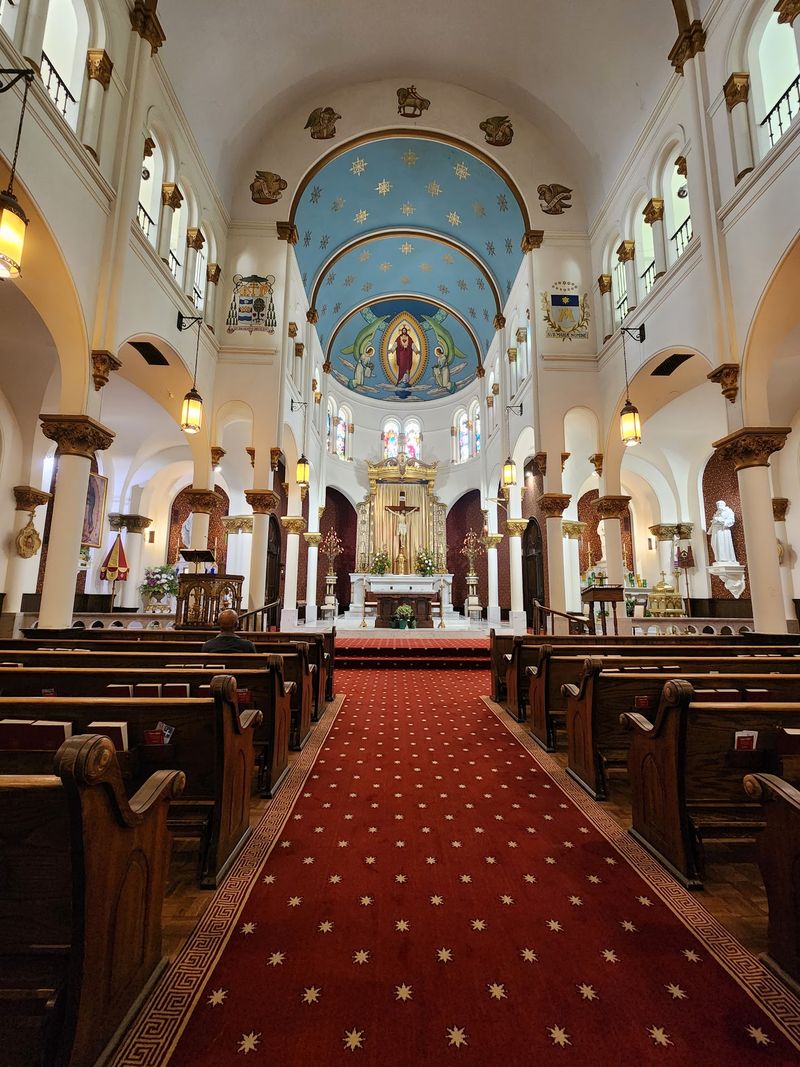
Once my eyes adjusted to the soft light, my mood changed fast. The ceiling seemed to stretch forever, and the quiet felt thick and calm.
History here runs deeper than the building itself. The parish began in 1880 under the name Saints Peter and Paul.
The church you see today was finished in 1898. That makes it well over a century old, which is a big deal in a fast-changing city.
Plenty of downtown streets have traded old buildings for glass towers. This one stayed put and kept its character through every new skyline.
Visiting feels like stepping into a time capsule that still gets used every day. People pray, sing, and gather here just like folks did generations ago.
My tip is simple. Give yourself a few extra minutes to stand still before you start snapping photos.
The details reveal themselves slowly, almost like they want you to earn them. That patience pays off at the Basilica of the Sacred Heart of Jesus.
You can find the building at 353 Peachtree St NE, Atlanta, Georgia. It sits close to the heart of downtown, near busy roads and offices.
Warm Brick And Terracotta With Romanesque Flair
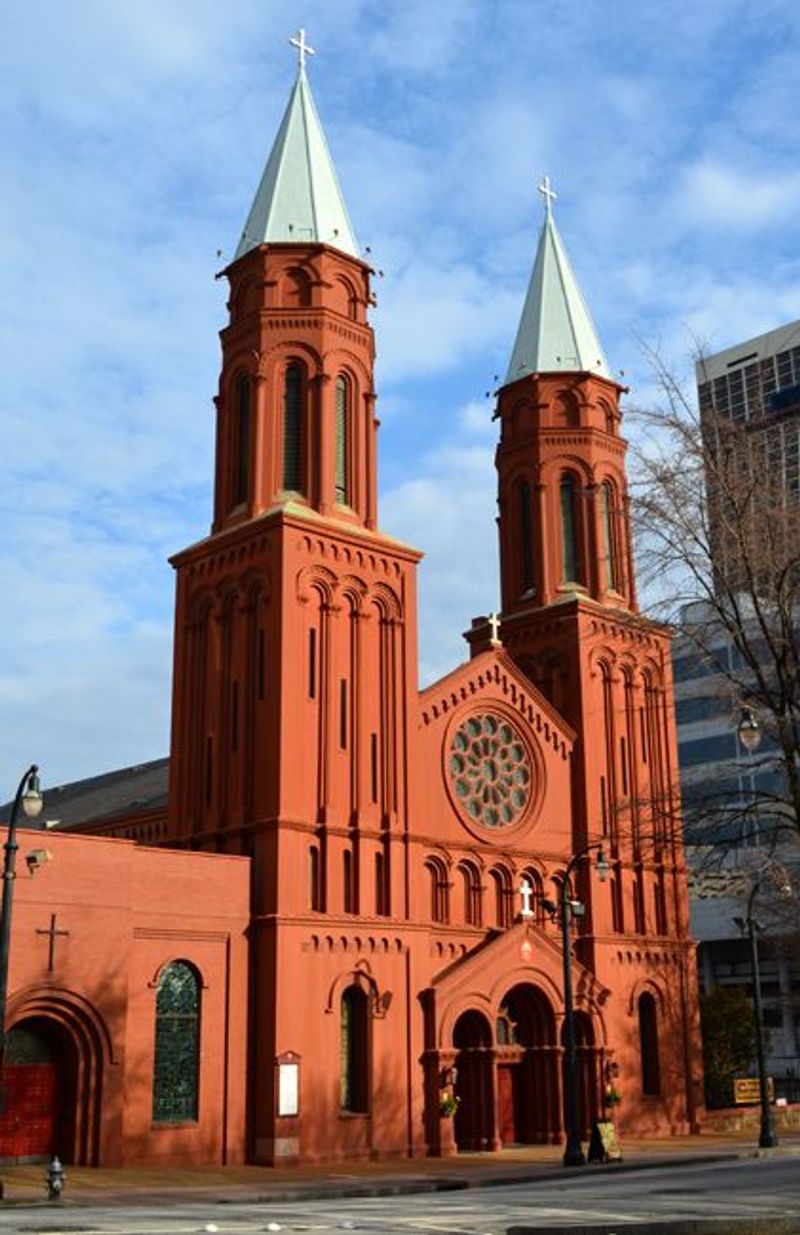
Architecture fans, get ready to geek out a little. The style here blends French Romanesque with Romanesque Revival, and it shows in every curve.
Romanesque buildings love round arches, sturdy walls, and a strong, grounded look. Picture a castle that decided to become peaceful instead of protective.
Architectural historian Robert Michael Craig called it one of the finest Romanesque Revival churches in the South. That is high praise from someone who studies buildings for a living.
The outside mixes warm red brick with detailed terracotta. Small touches of marble add a polished finish, like a nice watch on a work shirt.
Walk slowly along the sidewalk and look at the trim. The terracotta patterns are easy to miss if you rush past on your way somewhere.
That setting makes the old-world look even more striking. Modern towers nearby only highlight how special this handmade craftsmanship really is.
Bring a camera with a decent zoom. The upper details are worth capturing up close.
Twin Towers Reaching 137 Feet
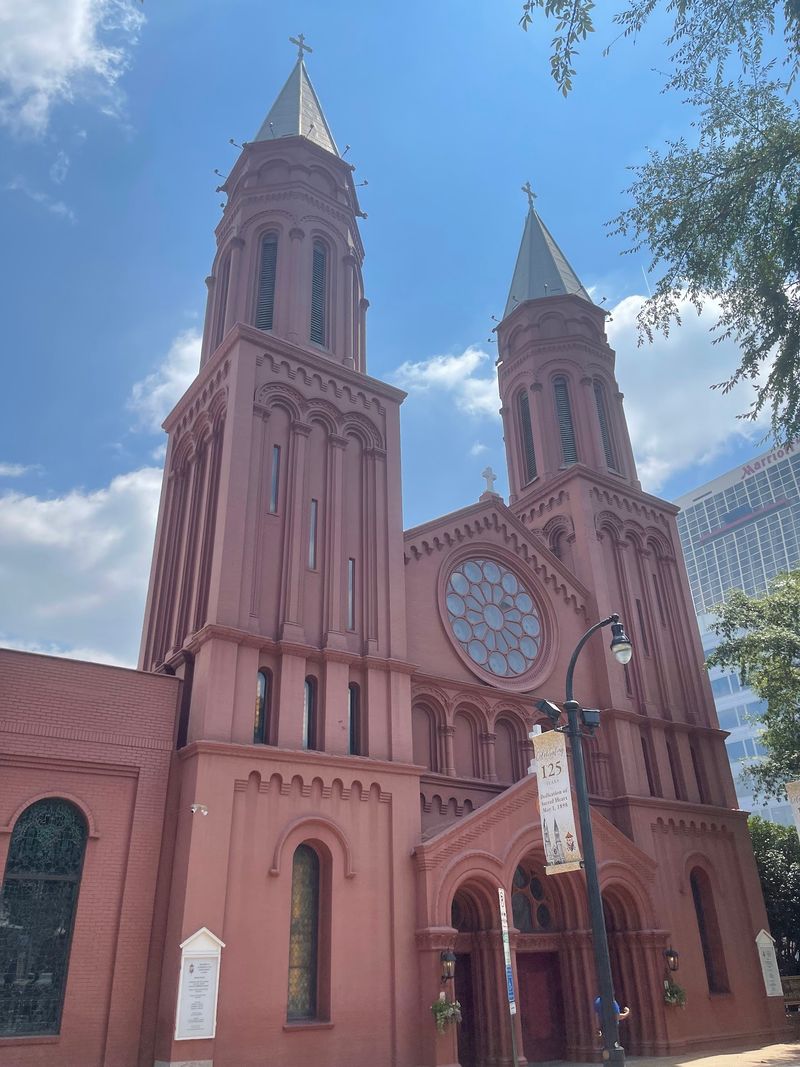
Neck stretches are recommended before you look up. The twin octagonal towers rise about 137 feet above the street.
Octagonal means eight sides, which gives each tower a rounded, graceful shape. From a distance, they look like a pair of stone sentries keeping watch.
I first spotted them from the corner and assumed they belonged to something much newer. Turns out they have been standing tall since before cars filled the road below.
Height mattered to church builders long ago. Tall towers helped people find the church from far away, kind of like an old-school map pin.
Today the towers still guide eyes upward. Even surrounded by modern buildings, they hold their own with quiet confidence.
Between them sits something even more eye-catching. A round rose window fills the space, and it adds a soft center to the strong towers.
For the best view, cross the street before taking photos. Standing too close makes it hard to fit both towers in one frame.
Morning light usually brightens the brick nicely. Afternoon sun can make the colors look warmer and richer, so try both if you can.
A Rose Window With A Colorful Surprise
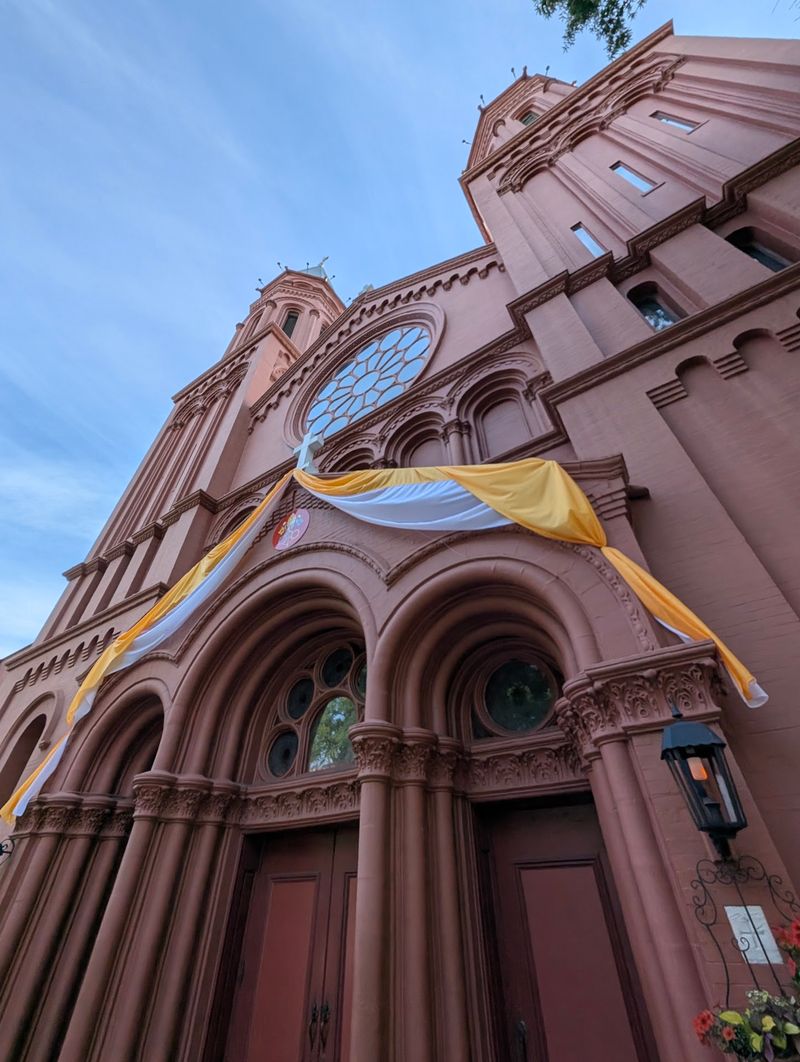
Leaving early would be a mistake here. The best surprise waits above the entrance, and many people only notice it on their way out.
The rose window carries the emblem of the Sacred Heart. It is a circle of colored glass that glows when daylight pours through.
On a sunny day, the inside fills with soft patches of color. Reds, blues, and golds land on walls and floors like scattered confetti.
My advice is to turn around before you exit. Look up toward the back wall, then give your eyes a moment to adjust.
Rose windows have a long history in European churches. Builders used them to tell stories and lift the mood of the whole room.
This one connects perfectly to the name of the church. The Sacred Heart symbol ties the outside design to the inside meaning.
Time your visit for a bright afternoon if possible. Cloudy days still look lovely, but sunshine turns the window into a full light show.
Bring patience instead of hurry. The colors shift as clouds move, so the view changes even while you stand in one spot.
Stained Glass Straight From Munich
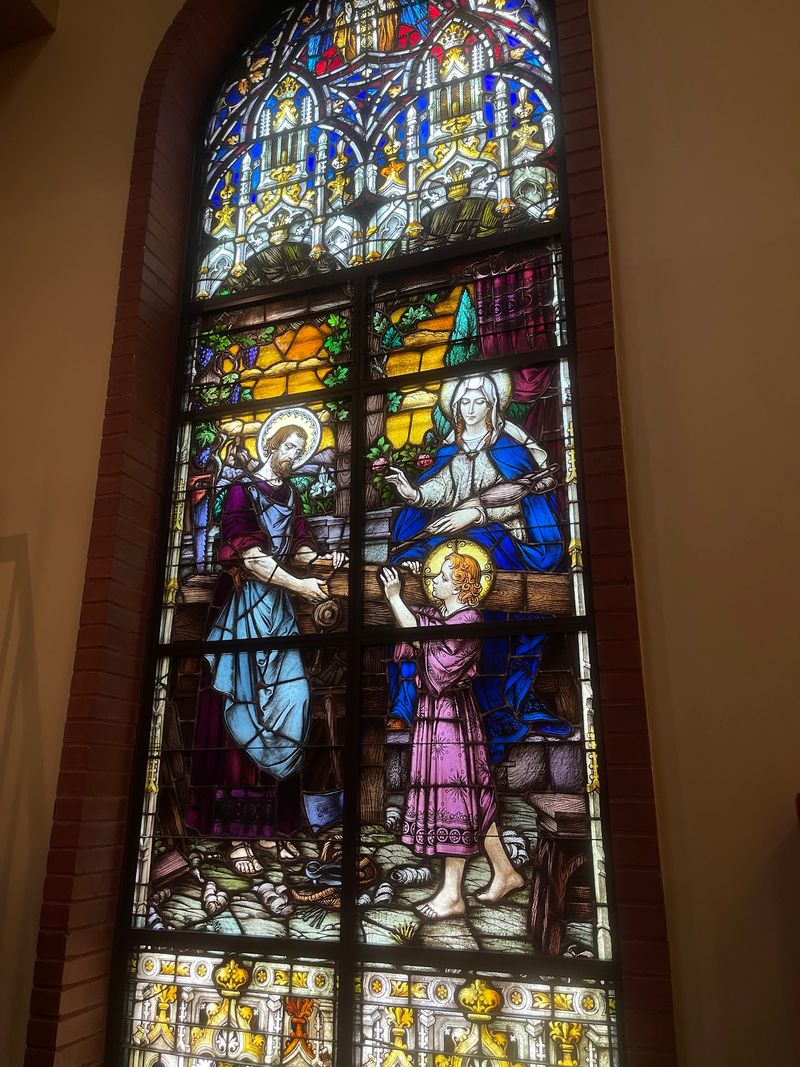
Some souvenirs travel a long way, and these crossed an ocean. Twenty-eight stained glass windows were installed here in 1902.
They came from Mayer Studios in Munich, Germany. That studio was famous for detailed, rich glasswork that told stories through color.
Each panel works like a page in a picture book. Before many people could read, windows like these helped teach important stories.
I spent longer than planned staring at one panel. The tiny painted faces and folds of fabric looked almost too delicate for glass.
Think about the trip these windows made over a century ago. Fragile glass had to travel across the sea without modern shipping tools.
Somehow they arrived and still shine today. That alone makes them feel a little like a small miracle of careful packing.
Walk along the sides of the nave to see them all. Try reading them one by one, the way you might browse a museum gallery.
Pay attention to how the light changes their mood. A window that looks calm and blue at noon can feel warmer later in the day.
Soaring Arches And A Grand Baldachin
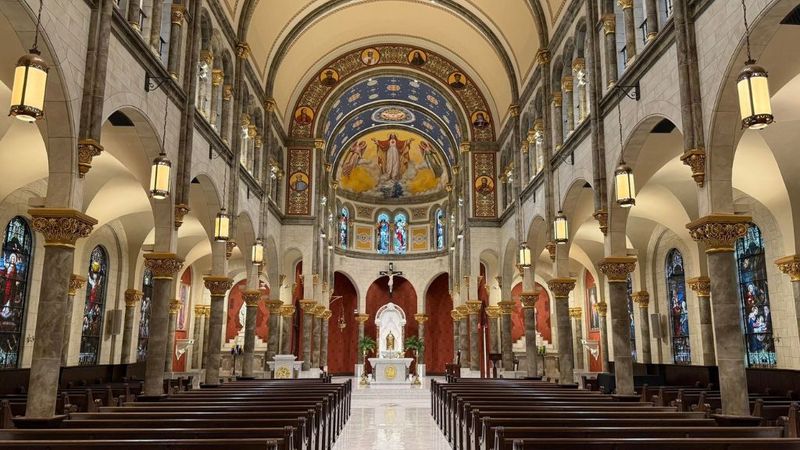
Arches do the heavy lifting in this room, both in structure and in drama. High rounded curves march down the nave toward the front.
They guide your eyes forward almost without effort. Before you know it, you are looking straight at the sanctuary.
At the center stands a baldachin. That is a canopy-like structure, and here it frames a life-size crucifix.
The word baldachin sounds fancy, I know. Think of it as a grand, carved frame that says pay attention to this spot.
Behind it, the restored apse features updated religious artwork and decorative details completed during the recent interior renovation.
Standing at the back, the layout feels like a well-planned path. Every arch and column leads you closer to the most important part of the room.
If you visit during open hours, take a seat in a pew for a few minutes. Sitting low makes the arches feel even taller.
Be respectful if prayer or Mass is happening. Quiet steps and a silenced phone go a long way in a space this peaceful.
Five Symbols Hiding In Plain Sight
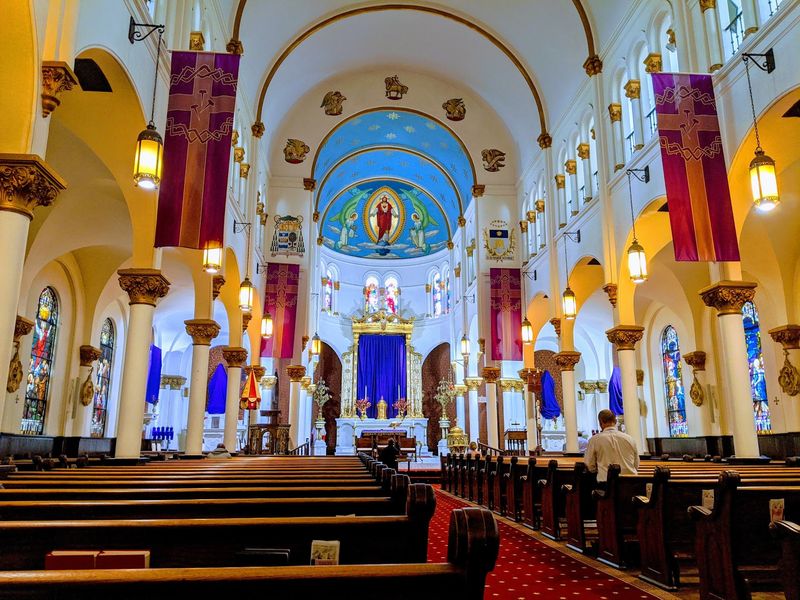
Here is a fun scavenger hunt for curious visitors. Look at the arch between the nave and the sanctuary and count five symbols.
At the very top sits the Lamb of God, representing Jesus. It takes the place of honor at the peak of the arch.
Below it are symbols for the Four Evangelists. These are the writers of the four Gospels in the Bible.
A lion stands for Mark, and an eagle stands for John. A bull represents Luke, while a man represents Matthew.
Once I knew the code, I could not stop spotting them. It felt like learning the secret language of the building.
Artists have used these symbols for centuries in churches around the world. Finding them here connects this Atlanta landmark to a much older tradition.
Kids especially enjoy this kind of search. Ask them to find the eagle first, then see who spots the lion fastest.
Small details like these reward slow visitors. A quick glance shows pretty decoration, but a closer look reveals real meaning behind each painted shape.
A Fresh Restoration With Old Roots
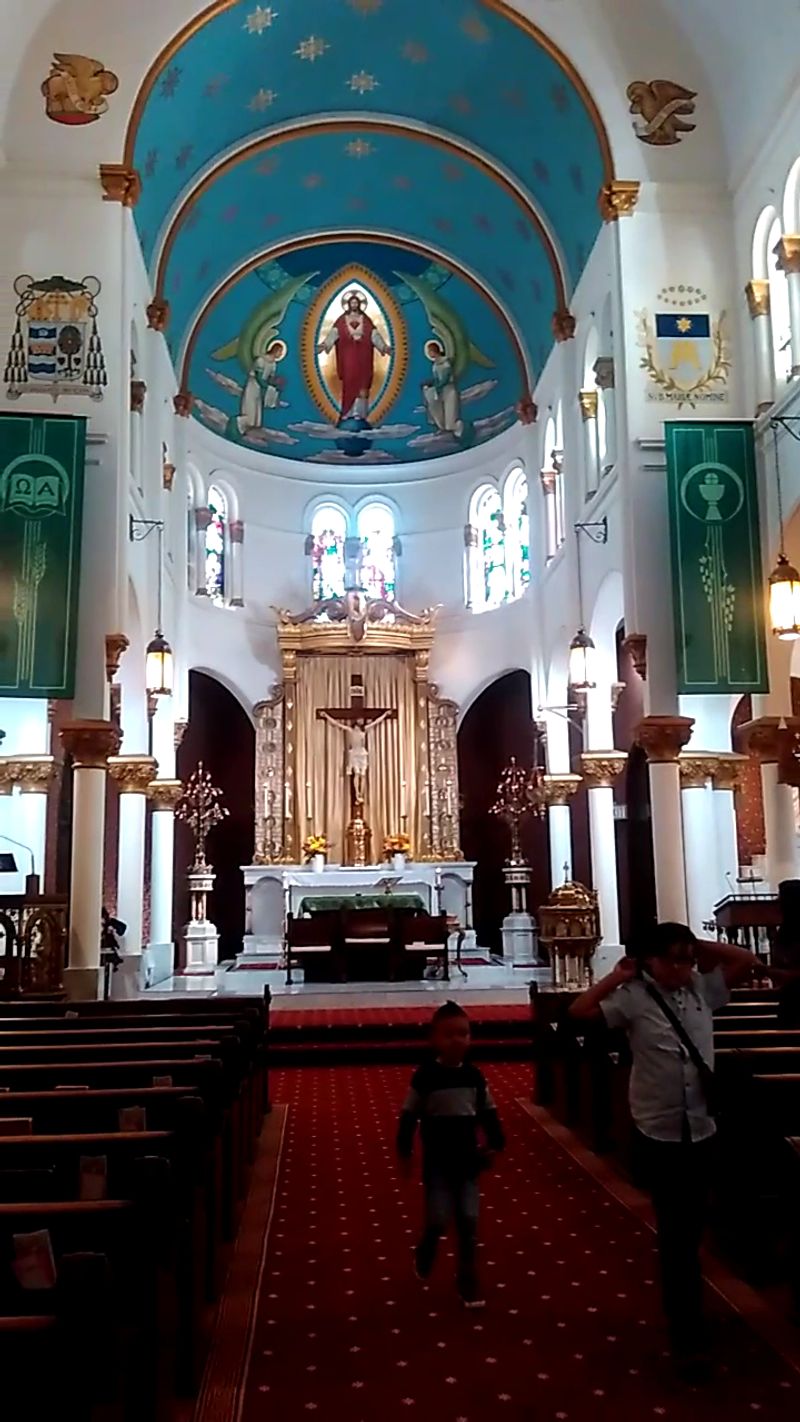
Fresh paint rarely makes something look older, but that was the goal here. Recent interior renovations aimed to bring back the look of the early 1900s.
Workers carefully restored the plaster and added a full new decorative paint scheme. The result feels both new and wonderfully old at the same time.
The sanctuary ceiling now shows the descent of the Holy Spirit. Stars and crosses surround the scene, like a night sky with a purpose.
That design took inspiration from the Mausoleum of Galla Placidia in Ravenna, Italy. Ravenna is famous for its glowing early Christian mosaics.
On the upper sanctuary walls, flowering designs tie into the story of the Crucifixion. They add softness to the strong lines of the architecture.
The refreshed colors and decorative details make the restored interior noticeably brighter.
When I saw the ceiling, I tilted my head back like a stargazer. It is easy to lose track of time studying all the small shapes.
Bring someone along who enjoys art. Comparing what each of you notices makes the visit even richer.
Basilica Status And Practical Visiting Tips
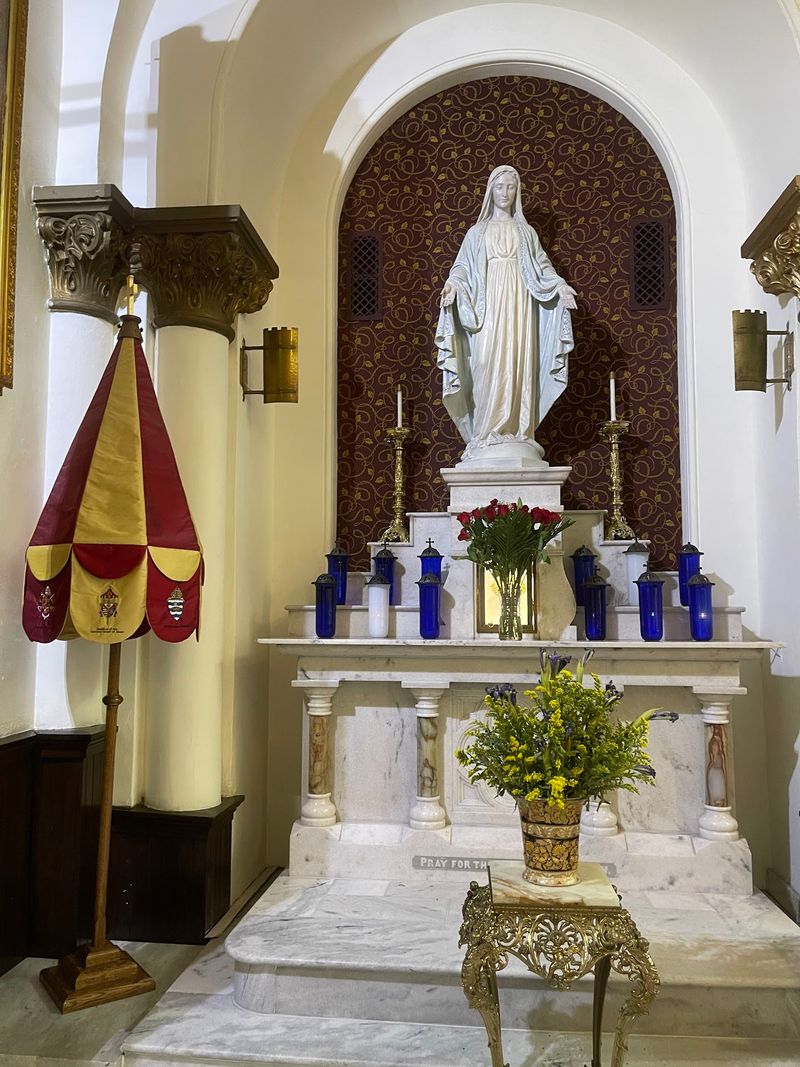
Not every church gets a fancy title, and this one earned a rare one. In 2010, Pope Benedict XVI named it a minor basilica.
It remains the only basilica in the entire Archdiocese of Atlanta. That honor recognizes its spiritual importance and long history.
Back in 1976, it was added to the National Register of Historic Places. So both history experts and church leaders agree it is special.
Visitors may also see relics connected to the True Cross of Christ. For many people of faith, that adds deep meaning to a visit.
Now for the practical stuff. The basilica is generally open for weekday visits Monday through Friday from 11 AM to 1 PM.
Parking downtown takes a little planning. Parking is available behind the church during designated times, so check the current parking information before visiting.
Dress comfortably but respectfully, and keep voices low. Leave a few extra minutes for wandering, because this place rewards anyone who slows down.