10 Missouri Tourist Spots I Tried To Dislike But Couldn’t Help Loving
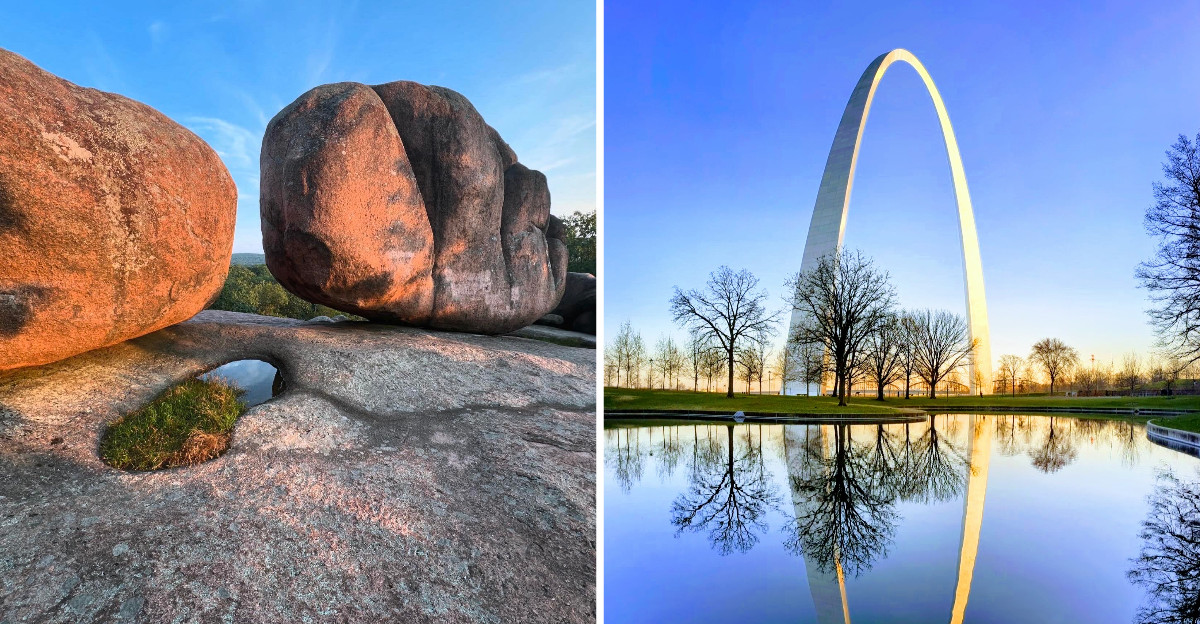
I wanted to think these Missouri tourist spots were overrated, truly.
Then a cave impressed me, something weird made me laugh, and a famous stop I expected to hate turned out to be genuinely fun. Annoying!
That is the problem with going in skeptical: sometimes the place wins anyway.
These attractions have history, scenery, quirky details, and just enough personality to make eye-rolling surprisingly difficult.
One may charm you slowly. Another gets you immediately. Either way, the verdict becomes awkwardly clear.
Popular does not always mean boring, and Missouri seems very pleased with itself for proving that point over and over again.
1. Silver Dollar City, Branson
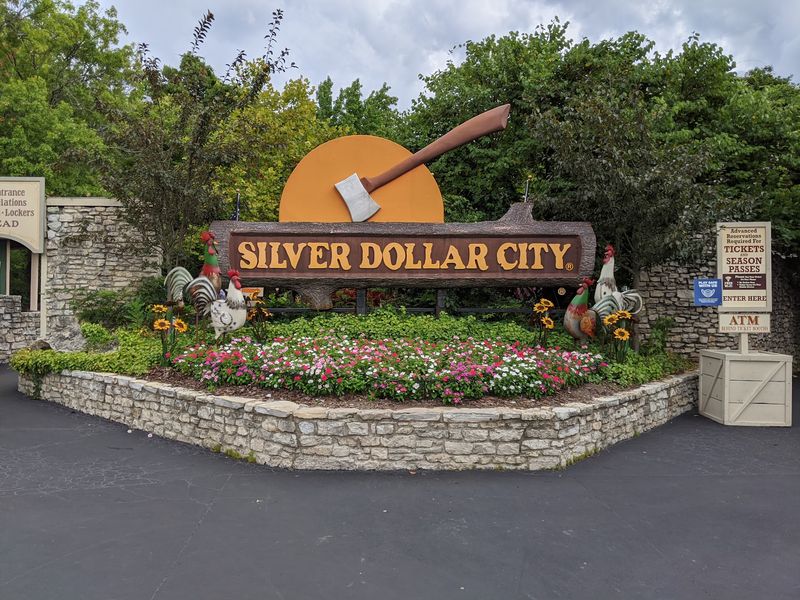
Call me crazy, but I thought old-timey theme parks were just for grandparents. Silver Dollar City makes that assumption difficult to keep for long.
The Branson park blends an 1880s Ozarks theme with more than 40 rides and attractions, including Outlaw Run, Time Traveler, WildFire, and PowderKeg.
The hills do more than frame the coasters, because the park was built around the entrance to Marvel Cave, the attraction that came first.
A guided Marvel Cave tour is included with park admission and lasts about an hour.
The route drops hundreds of feet below the surface through stairs and ramps before a cable train carries visitors back uphill, so sturdy shoes and realistic expectations about mobility matter.
Craft demonstrations remain a major part of the experience. Around 100 resident artisans work in areas such as glassblowing, blacksmithing, pottery, candy making, leatherwork, and woodcarving throughout the operating season.
The Frisco Silver Dollar Line adds a slower option with a roughly 20-minute steam-train ride through the Ozark countryside.
Seasonal programming changes the atmosphere again, with 10 festivals and special events on the 2026 calendar. Harvest Festival runs into late October, while An Old Time Christmas begins in November with more than 6.5 million lights.
Head to 399 Silver Dollar City Pkwy. The mix of cave history, rides, craftsmanship, and mountain scenery gives the park more range than the theme alone suggests.
2. Fantastic Caverns, Springfield
I had to do a double-take when someone said I could ride through a cave. Fantastic Caverns turns that unusual idea into a surprisingly easy underground visit.
The Springfield attraction offers a fully ride-through cave tour aboard Jeep-drawn trams, making it especially practical for visitors who would rather skip long stairways and steep climbs.
The guided route lasts about 55 minutes and follows the path of an ancient underground river.
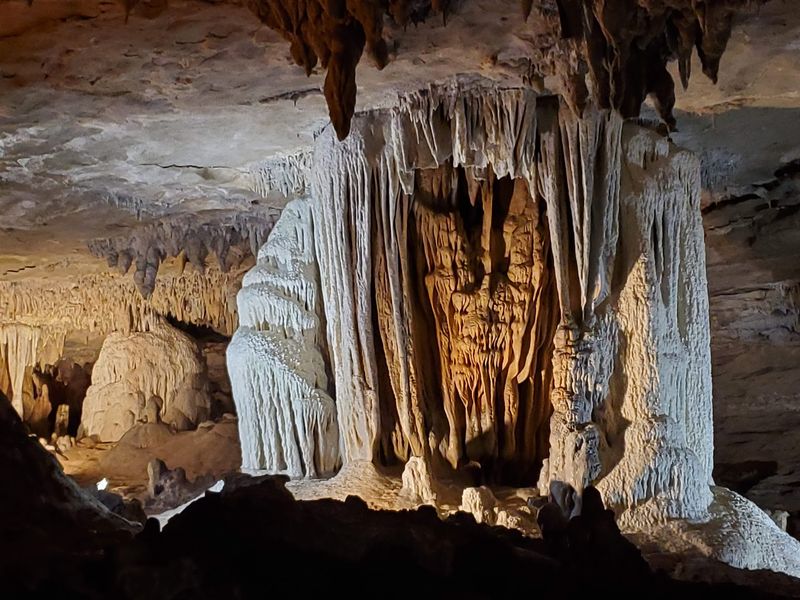
Columns, flowstone, soda straws, and cave pearls appear along the way while guides explain how the formations developed. The cave stays near 60 degrees throughout the year, so a light layer can be useful even when Missouri is hot outside.
Its documented history is just as memorable. A farmer’s dog led to the cave’s discovery in 1862.
Five years later, a group of 12 women explored the cavern, and their names can still be seen inside. The space was later used for live performances, adding another chapter to a place better known today for geology.
Fantastic Caverns operates 362 days a year, closing only on a few major holidays. Because the entire standard tour is seated, it works for a broader range of ages and mobility levels than many show caves.
Find it at 4872 N Farm Road 125 in Springfield. The appeal comes from seeing a substantial cave system without turning the outing into a strenuous hike.
3. Mark Twain Cave Complex, Hannibal
I assumed a book-themed cave would be pure marketing.
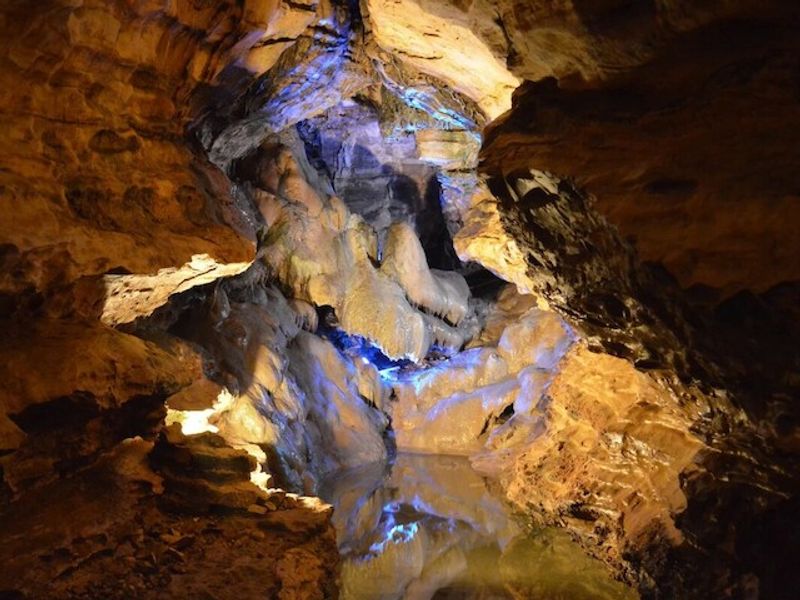
Mark Twain Cave Complex has enough genuine geology and literary history to make that concern disappear quickly.
The main cave near Hannibal is Missouri’s oldest show cave, with public tours dating to 1886.
Samuel Clemens explored its passages during his boyhood in Hannibal and later transformed the setting into McDougal’s Cave in The Adventures of Tom Sawyer.
Today’s standard tour lasts about an hour and follows a roughly three-eighths-mile electrically lit route.
The cave stays close to 52 degrees year-round, and the walking surface is generally gentle, though the attraction is not wheelchair accessible.
Nearby Cameron Cave offers a different experience. Its guided route runs about 90 minutes and covers roughly a mile through an unlit maze cave using provided flashlights.
Temperatures remain near 56 degrees, and the footing can be uneven even though the route has no stairs.
Both caves are designated National Natural Landmarks, but their personalities feel distinct. Mark Twain Cave leans into history and literary connections, while Cameron Cave puts more emphasis on the natural underground environment.
The complex sits at 300 Cave Hollow Rd outside Hannibal. Comfortable shoes and a light layer make sense in either cave, and visitors who enjoy both geology and Missouri history can easily build a longer stop around the two tours.
4. Missouri Star Quilt Company, Hamilton
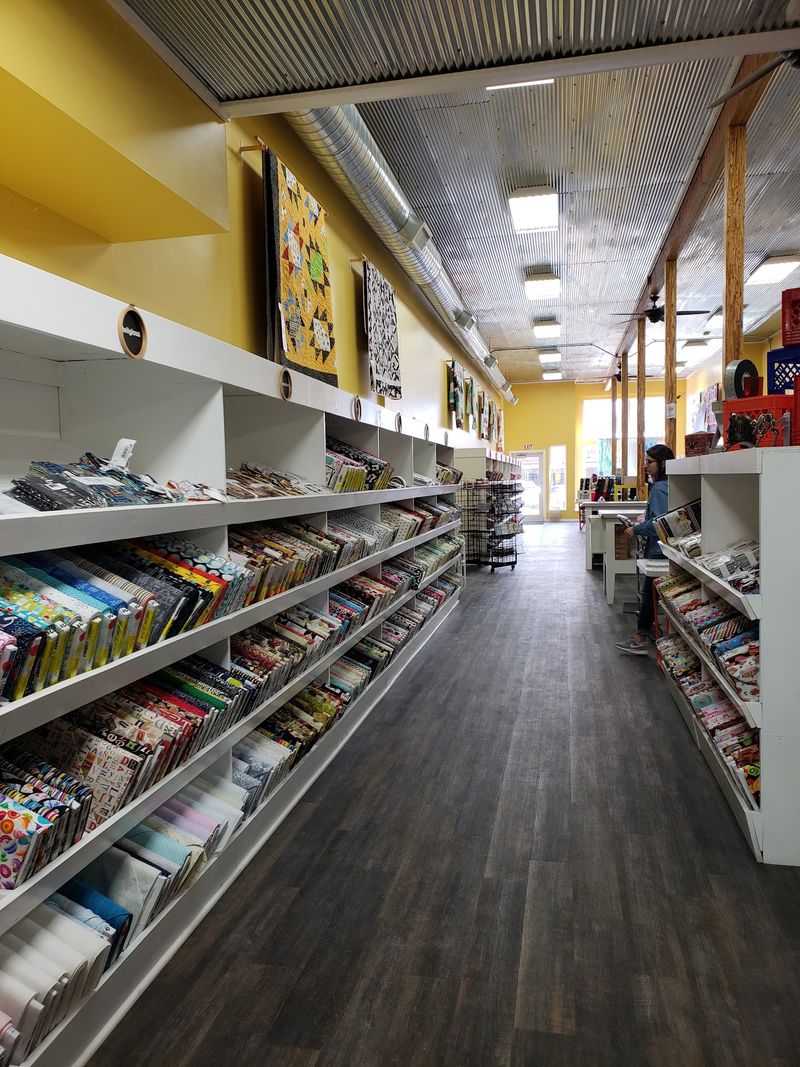
Here’s a crazy thought for you. A whole town can fall head over heels for fabric.
Missouri Star Quilt Company has turned downtown Hamilton into Quilt Town, USA, with 16 themed quilt shops concentrated along Main Street and nearby blocks.
The current lineup ranges from florals and seasonal fabrics to modern prints, notions, machine supplies, home projects, and handwork.
The business began in 2008 as a small family project in an old auto showroom. A website and online sewing tutorials followed in 2009, helping the company reach quilters far beyond northwest Missouri.
By 2011, the operation had moved into 114 N Davis St and continued expanding into additional downtown buildings.
The shops are close enough to explore on foot, so the experience feels more like a district than a single store. Visitors can start at the Main Shop, pick up a shopping pass, then move between specialized spaces without returning to the car.
Anyone who needs a break from fabric can use Man’s Land, a lounge with leather recliners, large televisions, a pool table, snacks, and its own restroom. That makes it easier for mixed-interest groups to spend more time downtown.
Current shop hours are generally 9 a.m. to 5 p.m. Monday through Saturday, with Sunday closures. Comfortable shoes help, because a full visit can cover several blocks before the fabric browsing is done.
5. Warm Springs Ranch, Boonville
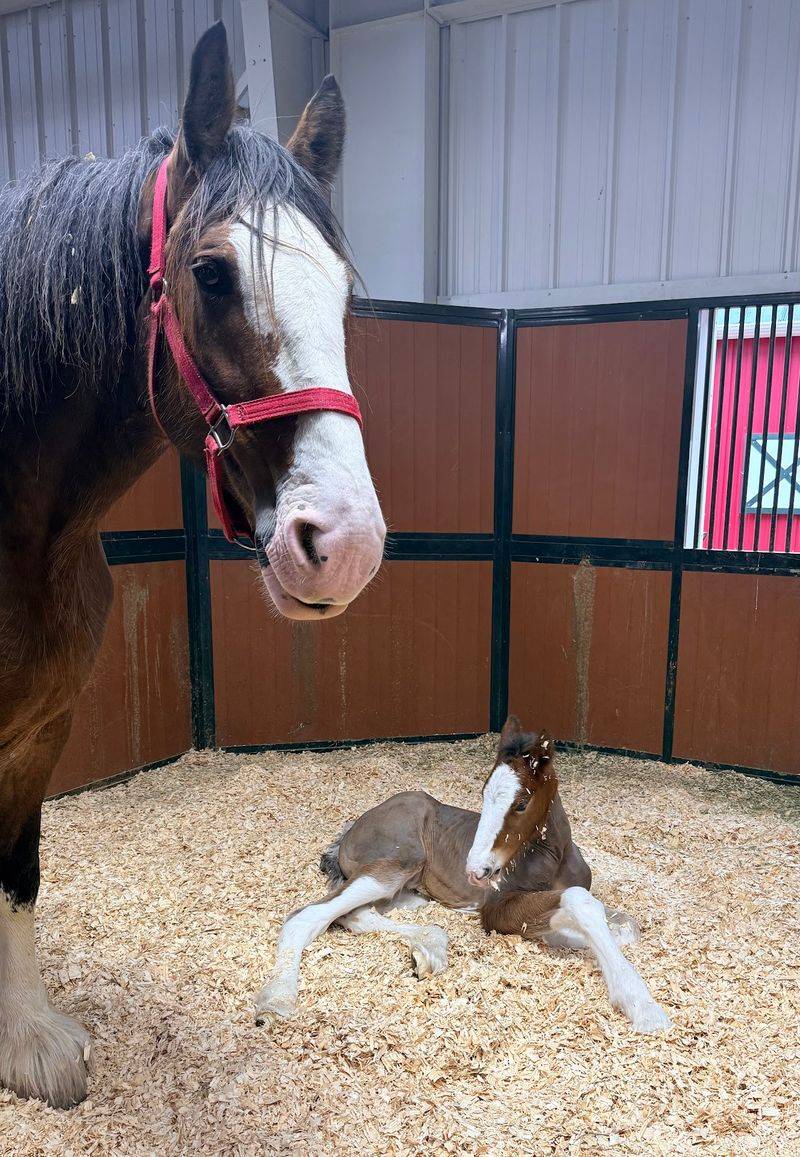
My plan to stay unimpressed lasted about four seconds.
Warm Springs Ranch puts visitors close to some of Missouri’s most recognizable Clydesdales while still functioning as a working breeding facility.
The ranch covers more than 300 rolling acres near Boonville and was built in 2008.
Its facilities include a mare and stallion barn, a foaling barn, a veterinary lab, and 10 pastures with walk-in shelters. More than 70 Clydesdales live on the property, from young foals to mature horses.
The old April-through-October schedule no longer tells the whole story. In 2026, reservations extend through late December, and the ranch is closed on Tuesdays.
Advance booking is required because visitors cannot simply wander the property on their own.
Several guided experiences now cover different parts of ranch life. Options include a history-focused tour, a pasture ride aboard a people mover, a closer look at hitch training, and selected hands-on experiences.
The ranch says 20 to 25 foals may arrive across a typical tour season, though the exact number visible on any visit naturally changes.
The holiday period also looks different in 2026. Rather than a large evening light event, daytime visits continue with seasonal decorations and photo settings.
Find the ranch at 25270 S Hwy 98 near Boonville. Comfortable walking shoes are sensible, and arriving ahead of the reserved start time keeps check-in simple.
6. Uranus Fudge Factory & General Store, St. Robert
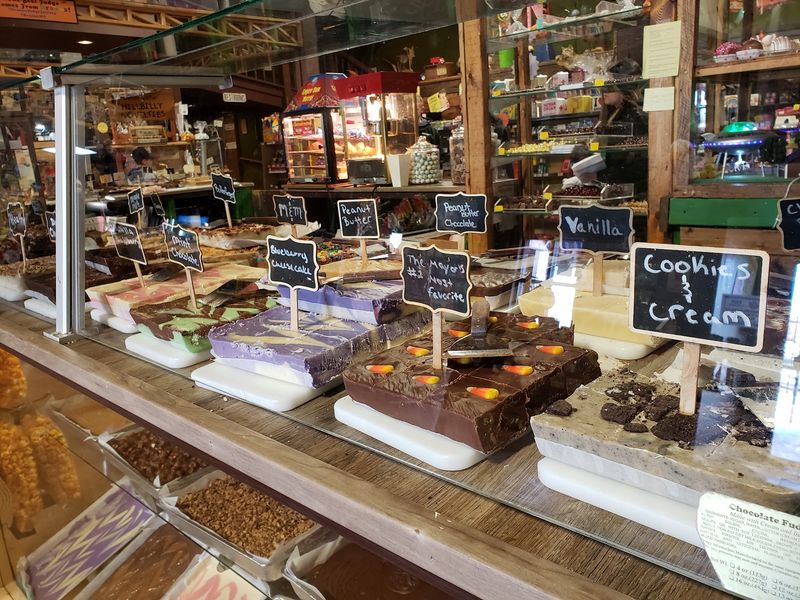
Let’s be real for a second about the jokes.
Every sign here leans into the name, but Uranus Fudge Factory & General Store has enough going on to make the stop more than a punchline.
The roadside complex sits at 14400 Hwy Z in St. Robert, just off Interstate 44 near historic Route 66.
Fudge is made fresh daily in the on-site kitchen, with a current lineup of roughly 19 flavors that includes familiar chocolate combinations, fruit-forward choices, and reduced-sugar options.
A six-flavor sampler gives first-time visitors an easy way to compare several varieties without committing to one.
The gift shop adds novelty merchandise, retro candy, and other road-trip finds, while the ice cream counter gives warm-weather travelers another reason to linger.
The property also includes an 18-hole pirate-themed miniature golf course.
A roadside curiosities museum adds another indoor stop, with displays built around classic oddities and Route 66-style spectacle rather than a traditional history-museum format.
Hours vary among the different attractions, so the general store may be open longer than the golf or ice cream areas on a given day. Checking the current schedule before a late visit is sensible.
What makes the place work is the contrast between deliberate silliness and a serious candy operation. A quick photo stop can easily turn into a longer browse, especially when mini golf and dessert enter the plan.
7. Laura Ingalls Wilder Historic Home & Museum, Mansfield
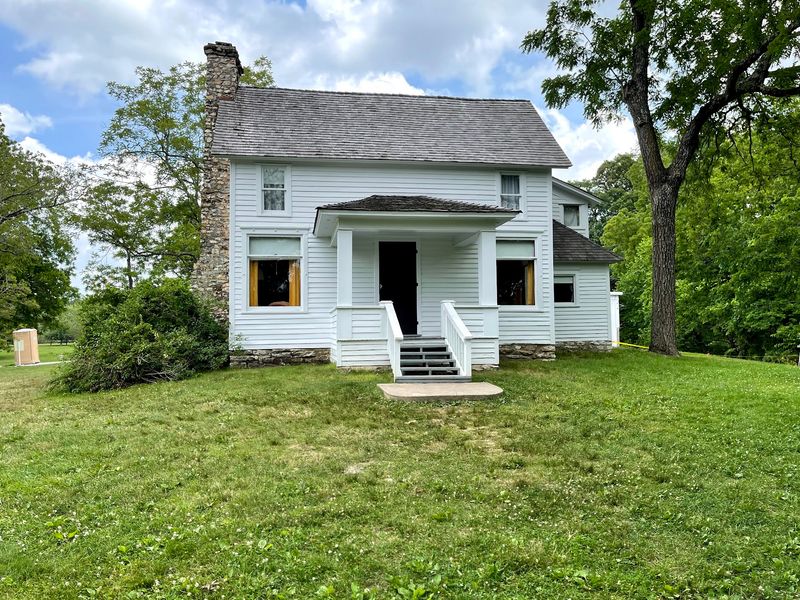
Just imagine for a second sitting where a favorite childhood book was written.
Rocky Ridge Farm in Mansfield connects the Little House books to the homes, tools, manuscripts, and everyday objects behind them.
Laura and Almanzo Wilder arrived in Mansfield in August 1894, not 1896, and began building a life on the farm.
The historic farmhouse developed in stages over many years, with the house completed in 1913 after roughly 17 years of additions and changes.
The Little House books were written at the two homes on Rocky Ridge Farm. Visitors can see the farmhouse study and writing desk, while the nearby Rock House adds another chapter to the family’s years on the property.
The museum collection is especially strong. Pa’s fiddle is displayed alongside handwritten Little House manuscripts, Wilder family keepsakes, needlework, clothing, and tools made by Almanzo.
A separate section explores the writing and career of their daughter, Rose Wilder Lane.
The farmhouse remains arranged much as Laura left it in 1957, giving the rooms a direct connection to her adult life rather than recreating a generic pioneer home.
The site is open seasonally from March 1 through November 15. Find it at 3060 Hwy A in Mansfield.
Allow enough time for both the museum and historic homes, because the strongest part of the visit comes from seeing the books and real objects together.
8. Jesse James Home Museum, St. Joseph
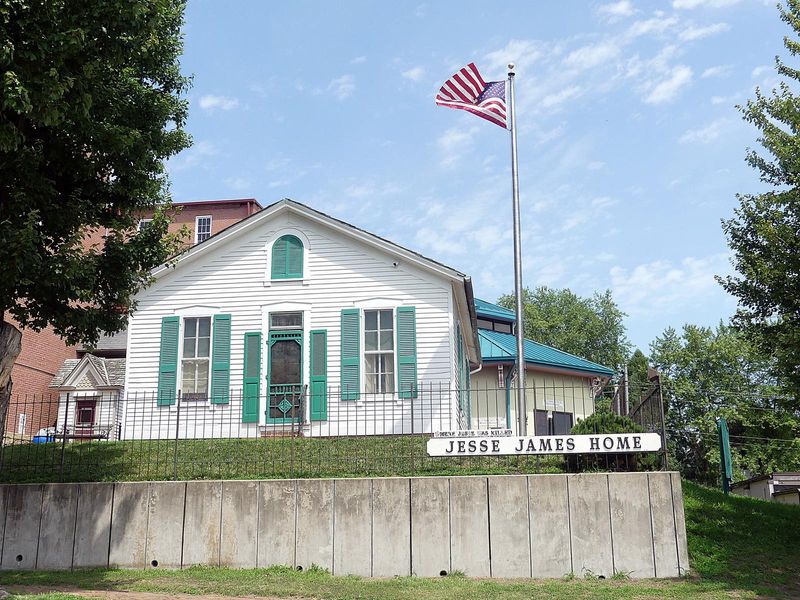
Sounds too good to be true, but a tiny house holds a huge Wild West story.
The Jesse James Home in St. Joseph preserves a compact piece of Missouri history beside the much larger Patee House Museum.
Jesse James lived in the house in 1882 under the name Tom Howard with his wife and two children.
The building originally stood at 1318 Lafayette Street on a hill overlooking Patee House, placing it close to one of the city’s most important nineteenth-century landmarks.
The house itself has traveled. It was moved to the Belt Highway in 1939 as a tourist attraction, then returned to its original neighborhood after being acquired for preservation in the 1970s.
Today it stands on the Patee House museum grounds, only a short distance from where it first sat.
Inside, exhibits focus on the James family, the house’s history, and the way the site became part of the larger legend surrounding the American West.
The small scale of the rooms makes the stop quick, but pairing it with Patee House adds much more context.
Patee House once served as Pony Express headquarters and now contains multiple floors of local-history exhibits, historic vehicles, and period displays.
Use 1201 S 12th St for the Jesse James Home. Current operating hours can vary with volunteer availability, so checking before making a special trip is a practical step.
9. Gateway Arch National Park, St. Louis
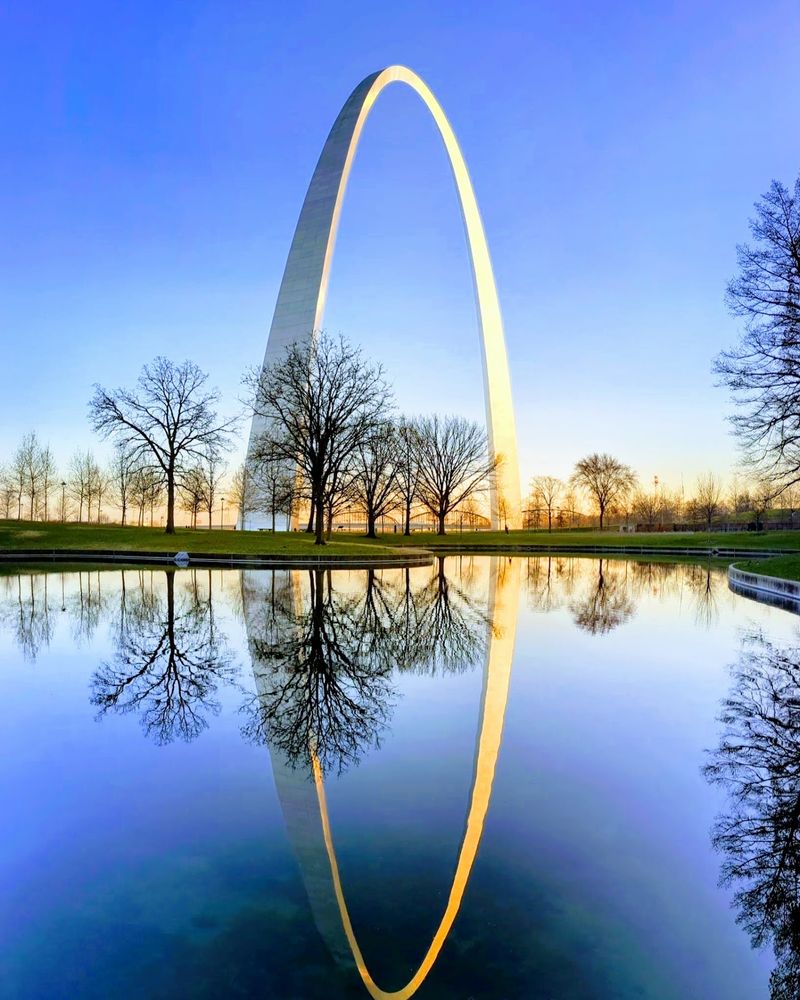
Look, I’ll be the first to admit I expected a giant shiny croquet hoop.
Gateway Arch National Park has enough history below ground and across the site to make the monument part of the visit.
The stainless-steel Arch rises 630 feet above St. Louis and spans the same distance from leg to leg, making it the tallest human-made monument in the United States.
The tram carries visitors to an observation area near the top, where narrow windows open views across downtown and the Mississippi River.
The full tram experience usually takes about 45 to 60 minutes. Advance tickets are strongly recommended because popular time slots can sell out, especially during busy periods.
Below the Arch, the museum is free and uses six galleries to explore more than 200 years of St. Louis and national history. The broader story includes westward expansion, Indigenous communities, migration, river commerce, and the changing city.
The Old Courthouse is open again after a major renovation completed in 2025. New exhibits cover its legal history, architecture, and nationally significant civil-rights cases, while restored courtrooms remain part of the visit.
Outdoor park grounds connect the Arch, riverfront, and courthouse area for an easy walk between stops.
The monument dates to 1965, while the site received its current Gateway Arch National Park name in 2018. Planning ahead leaves more time to explore than a quick photo ever would.
10. Elephant Rocks State Park, Belleview
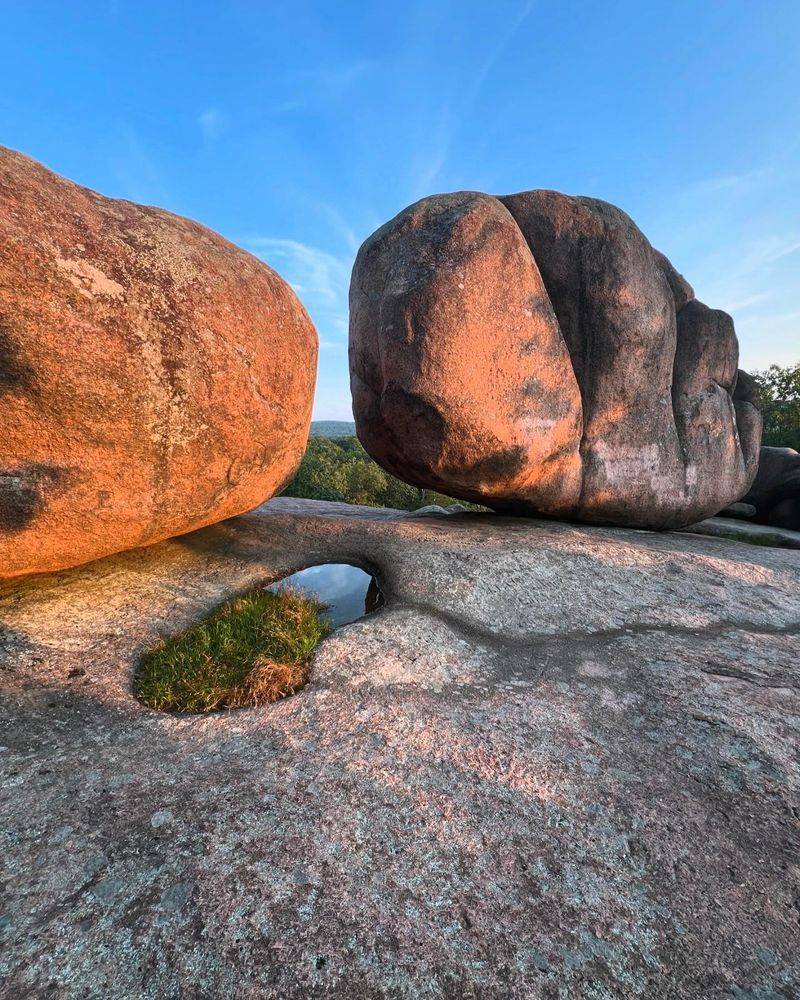
It makes you wonder, doesn’t it, how rocks can have this much personality?
Elephant Rocks State Park turns ancient geology into one of Missouri’s most unusual short walks.
The park’s giant rounded boulders are made from granite formed about 1.5 billion years ago.
Some weigh more than 600 tons and rise over 20 feet, while the largest formations stand in a line resembling a train of elephants.
Slow cooling created the granite deep underground. Long periods of uplift, erosion, and weathering later exposed the rock and rounded it along natural joints.
The one-mile Braille Trail provides the main route through the formations.
It was designed for visitors with visual and physical disabilities, with Braille interpretation, hand-rope guidance at certain stations, rest areas, and a paved surface.
Slopes and narrow points still occur, so accessibility conditions vary along the loop.
A short extension leads to the ruins of an old railroad engine house, connecting the landscape to the area’s quarrying history. Granite from this region was used for St. Louis paving stones and portions of the Eads Bridge.
Climbing and scrambling are popular where permitted, but sturdy footwear helps on exposed rock. Picnic tables provide an easy place to slow down afterward.
Find the park at 7406 Hwy 21 in Belleview. There is no campground, so it works best as a focused day stop built around geology, walking, and exploration.