This California Ranch Lets You Ride 2,000-Pound Clydesdale Horses With Stunning Ocean Views
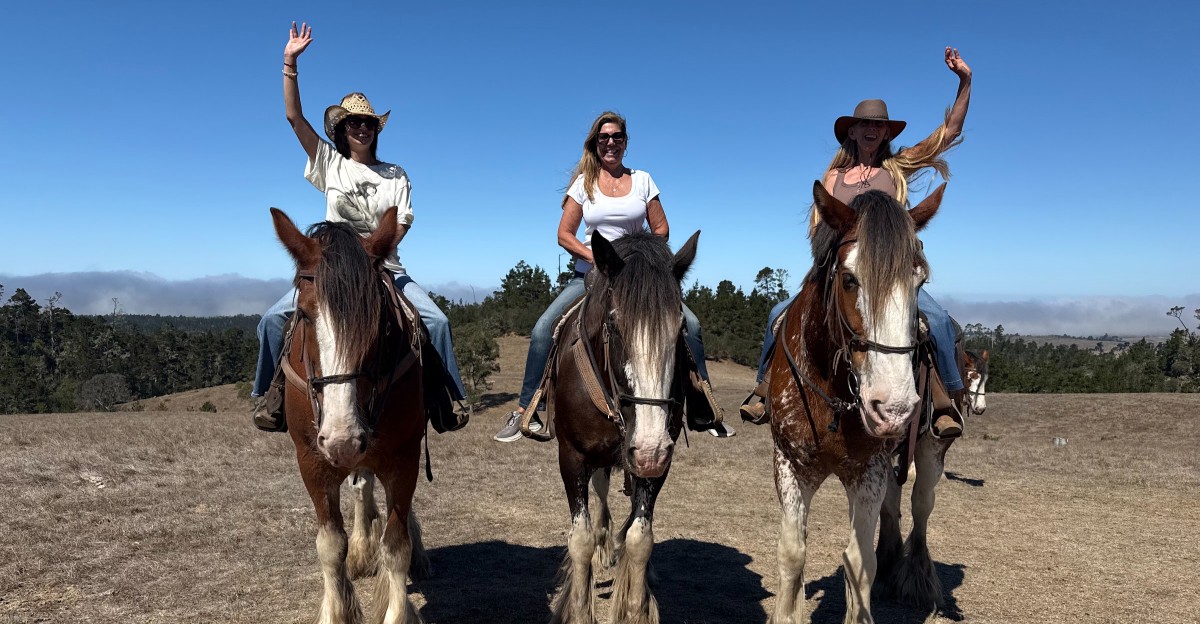
Horseback riding already sounds like a pretty good way to spend an afternoon.
Swap the usual trail horse for a towering Clydesdale weighing around 2,000 pounds, and the experience becomes something else entirely.
These gentle giants are famous for their enormous hooves, feathered legs, and impressive size, but seeing one up close is very different from watching them pull a wagon in a parade.
Getting into the saddle adds a whole new perspective, especially when the ride comes with sweeping coastal scenery.
A California horseback ride feels wonderfully larger than life when your four-legged companion weighs as much as a small car.
The combination of massive horses and beautiful surroundings makes this ranch particularly intriguing.
Instead of rushing through the landscape, riders get to experience the countryside at a slower pace, with ocean views adding an unexpected bonus to the adventure.
You Can Actually Ride These Gentle Giants
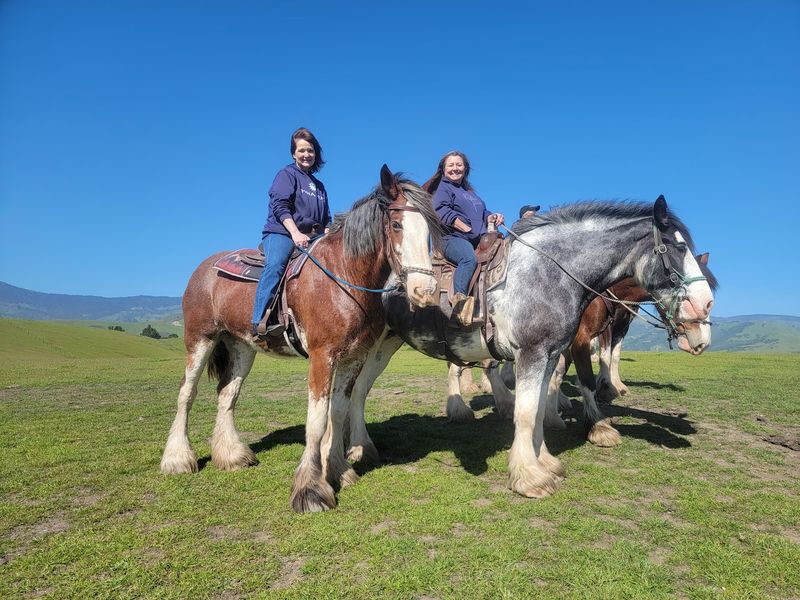
Sitting on a horse that stands taller than most doorways feels like climbing onto a moving mountain.
Guided horseback rides at Covell’s Clydesdales give visitors a rare chance to ride these massive draft horses instead of only admiring them from a fence.
Very few places in the country offer trail rides on Clydesdales, so the experience stands out from a typical stable visit.
Most draft horses were bred to pull heavy loads like wagons and plows. Riding one feels different from riding a smaller saddle horse because the steps are slower and broader.
Each stride may feel steady and rolling, almost like sitting on a comfortable couch that sways gently.
The wide back of a Clydesdale can feel surprisingly secure once a rider settles in. Legs stretch a bit farther apart than on a standard horse, so loose and flexible pants often help with comfort.
Closed-toe shoes with a small heel are a smart choice for keeping feet steady in the stirrups.
Guides lead the group and set the pace, so riders can focus on the scenery rather than steering every turn.
Helmets are part of the safety routine, and listening closely during the briefing makes the ride smoother.
For anyone who grew up loving horses, the moment of first sitting up high on one of these giants may feel like a childhood dream finally coming true.
The ranch sits at 5694 Bridge St, Cambria, California 93428, in the coastal hills above town.
Some Of The Horses Weigh Around 2,000 Pounds
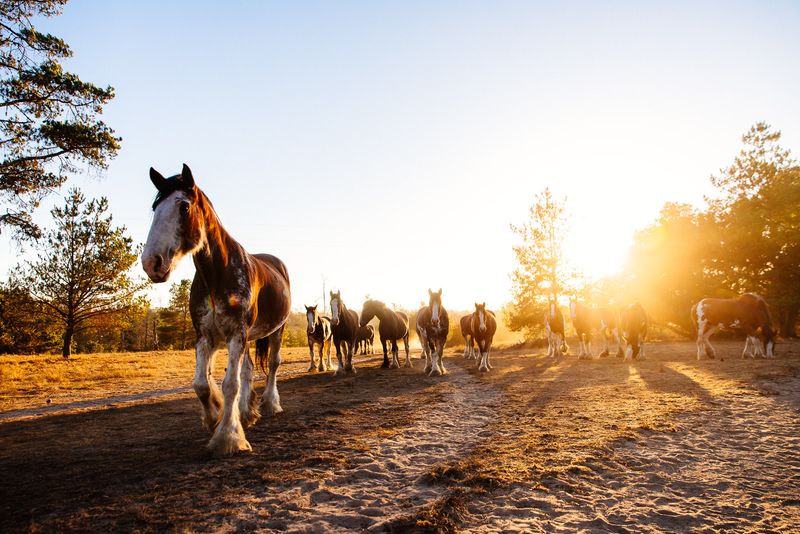
Two thousand pounds is roughly the weight of a small car. Clydesdales at the ranch typically weigh between 1,800 and 2,000 pounds, and some can reach up to 2,400 pounds.
Standing next to one for the first time can feel a little startling.
The breed comes from Scotland, where it was developed to haul heavy loads on farms and city streets. Thick necks, broad chests, and strong shoulders show that working history in every muscle.
The long white hair around the lower legs is called feathering, and it is one of the most recognizable features of the breed.
Hooves on these horses can be about the size of a dinner plate. Hearing them thud softly on a dirt trail adds to the sense of power.
Despite all that weight, Clydesdales often move with a high-stepping grace that surprises first-time visitors.
Watching them walk across a pasture feels almost like watching a slow dance. Their size may seem intimidating, yet the breed is widely known for a calm and patient temperament.
Approaching slowly and speaking in a relaxed voice can help both people and horses feel comfortable.
Staff explain where to stand and how to touch the horses safely. Keeping hands visible and avoiding sudden movements near their legs is simple advice that goes a long way.
The Ranch Covers Nearly 2,000 Acres
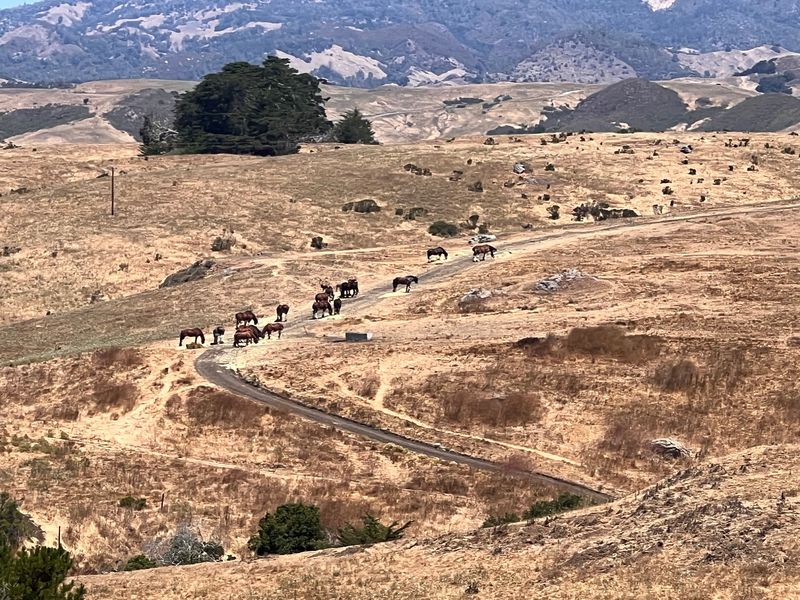
Open space is something that hits quickly after arriving at the property. Covell’s Clydesdales stretches across nearly 2,000 acres of rolling pastures in the hills above Cambria.
That much land gives the herd plenty of room to roam and graze. Wide hillsides fold into one another like soft blankets.
Grass may look bright green after winter rains and turn golden during the drier months, so the colors shift with the seasons.
Visitors may also notice grazing cattle and wild turkeys moving through parts of the land.
The quiet here feels very different from a busy beach town or a crowded highway.
Sounds tend to be simple, like wind in the grass, birds calling, and hooves moving through the dirt. Many people find that the slower pace helps them relax within the first few minutes.
Because the property is so large, much of it is reached only on horseback or by guided vehicle.
Walking around freely is not part of the typical visit, so following the plan from staff is important.
Comfortable layers make sense since temperatures on open hillsides can change as clouds and fog drift in.
Pacific Ocean Views Make The Ride Even More Special
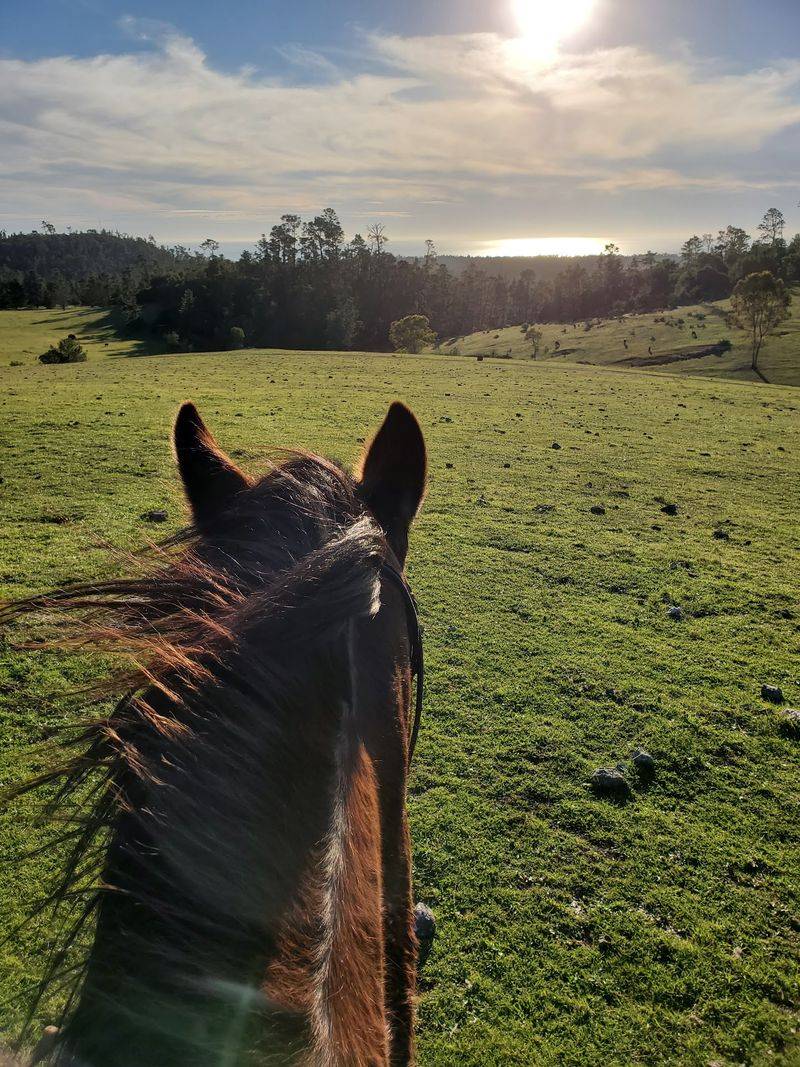
Few trail rides end with a glimpse of the sea from the back of a draft horse. The elevated terrain at the ranch can offer sweeping views toward the Pacific Ocean on clear days.
Spotting that strip of blue beyond the hills often becomes a favorite moment of the ride.
Weather plays a big role in what riders actually see. Coastal fog is common along this part of California, and it can cover the view for part or all of a ride.
Morning fog sometimes lifts later in the day, though that pattern is never guaranteed. Even on hazy days, the soft gray light over the hills can feel peaceful and calming.
The air often carries a cool and slightly salty feel near the coast. Wind may pick up on higher ridges, so a snug jacket helps.
Phones and cameras should be secured before mounting, since dropping one from a horse that tall means a long climb down.
Guides typically allow time for photos during the experience, which takes away the pressure to snap pictures while moving. A small strap or zippered pocket is useful for keeping a phone safe.
Clear skies are a bonus rather than a promise, and the horses and countryside remain the heart of the experience either way.
The Trails Wind Through Monterey Pine Forests
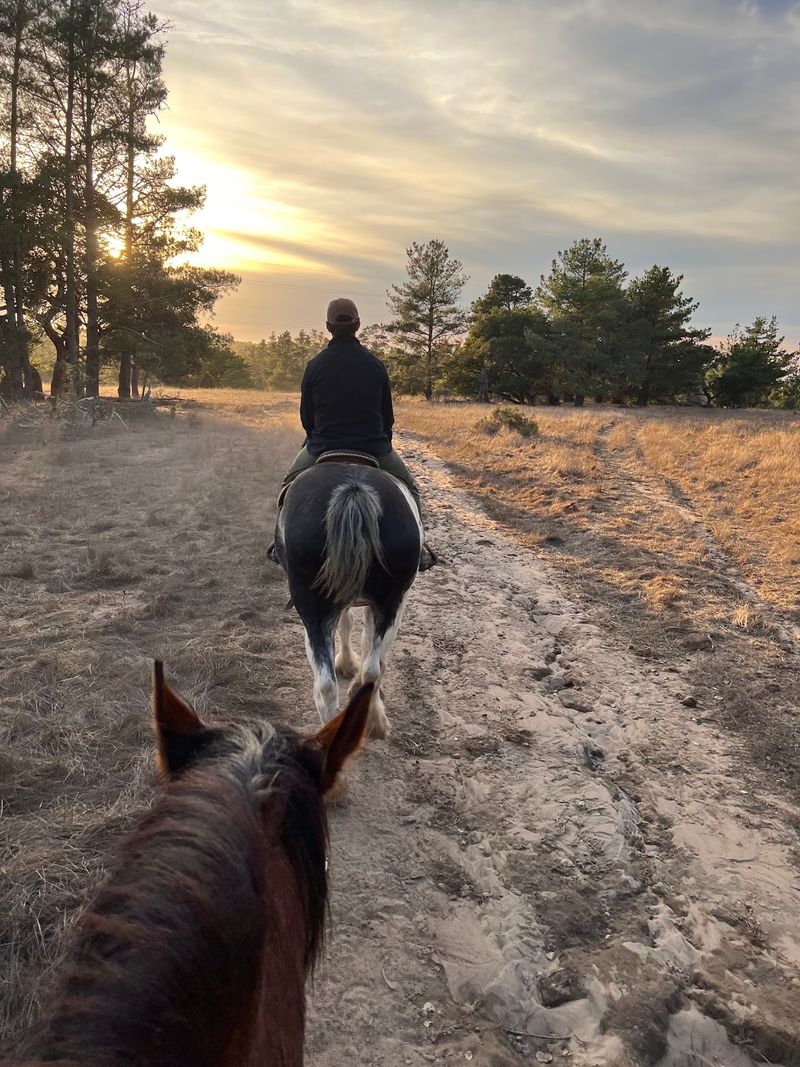
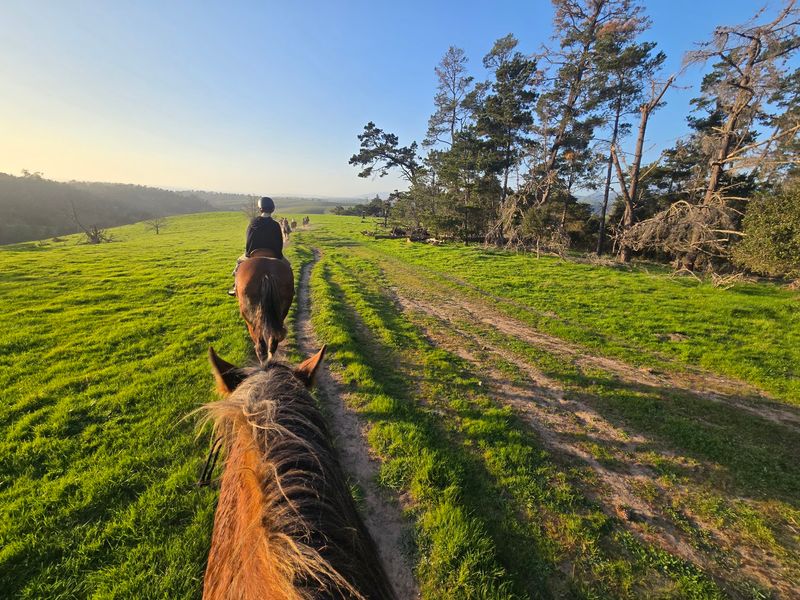
Shade arrives in a cool rush once the trail slips under the trees. Parts of the ride pass through Monterey pine forests, giving the landscape a completely different feel from the open pastures.
The switch from bright hillsides to shadowy woods keeps the ride interesting.
Monterey pines are a special tree in this region. Cambria is home to one of only a few native Monterey pine forests in the world, which makes riding through them feel extra meaningful.
Oak trees also appear along some stretches, adding twisted branches and mossy textures. Sunlight filters through the needles in small patches that dance across the horses’ backs.
Guides choose routes suited for the horses, but riders should still keep their posture relaxed and listen for instructions.
Having both shady woods and sunny hills in a single ride means the scenery keeps changing, and that variety may be one reason the time in the saddle seems to pass so quickly.
Beginners Can Join The Experience
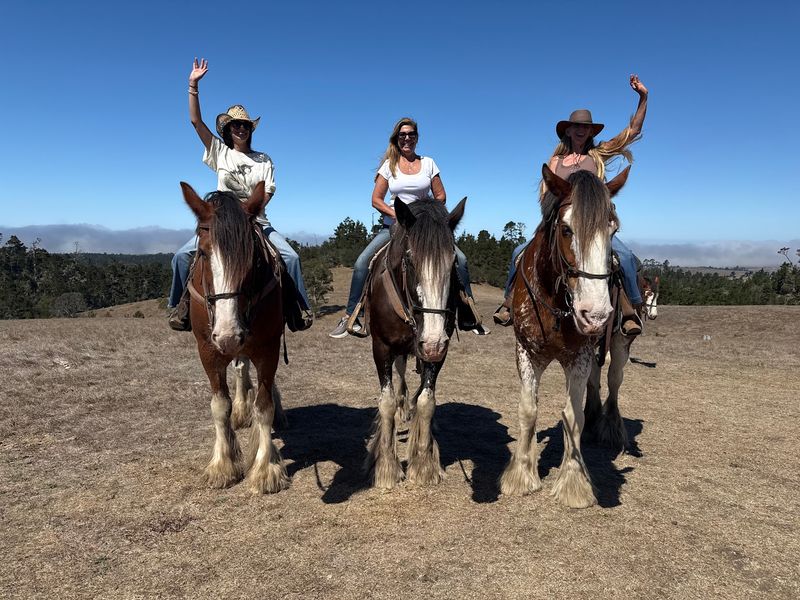
Nervous about never having ridden before? Years of horseback experience are not required for the guided rides, and eligible beginners are welcome to join.
Staff provide instructions before the group heads out on the trail. The briefing usually covers basics like how to sit, how to hold the reins, and how to stop or turn.
Guests are often asked about their comfort level so they can be paired with a suitable horse. Being honest about experience helps the team make the best match.
Clydesdales are widely known for their calm temperament, which can make them reassuring mounts for first-timers.
The pace stays mostly at a walk, so there is time to settle in and look around.
Some groups may get the option to trot in certain areas, depending on the guides and conditions.
Small habits can make a big difference for new riders. Keeping heels down, shoulders loose, and eyes looking ahead helps with balance.
Breathing slowly can also ease tension, and horses often respond well to a relaxed rider.
Asking questions is encouraged, and no question is too simple. Many first-time riders leave feeling surprised by how quickly nerves faded once the horse started walking.
The Horses Have Distinct Personalities
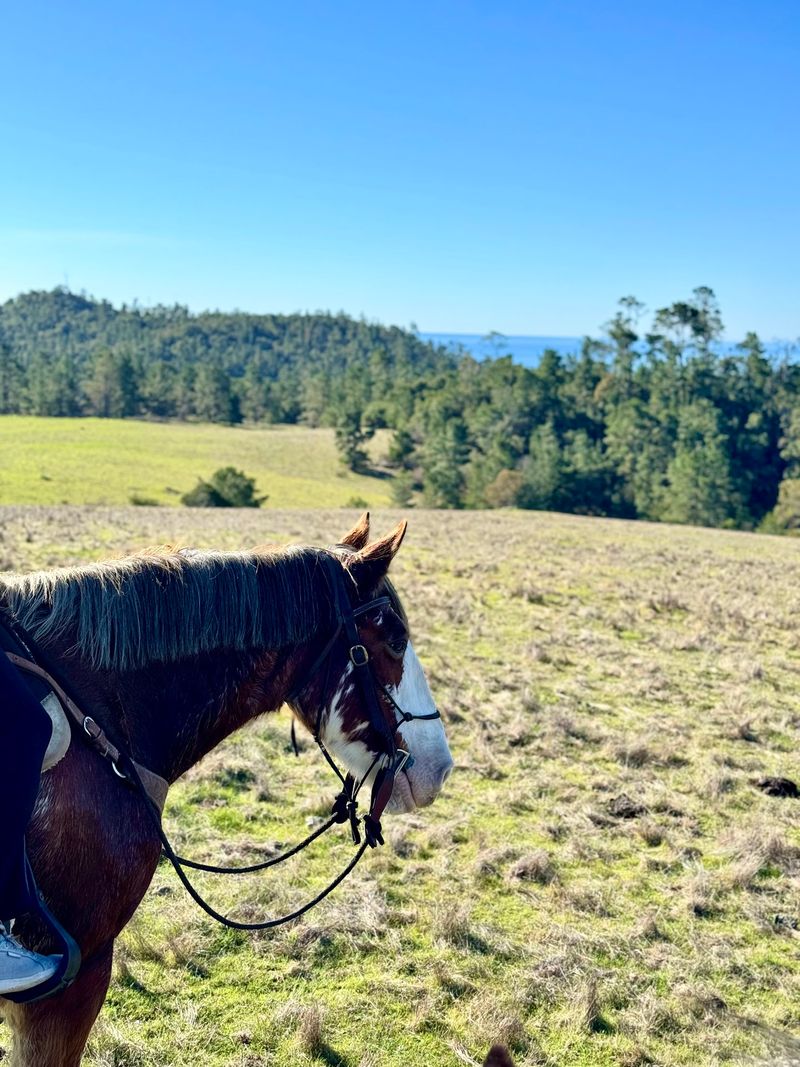
Every horse at the ranch has its own quirks, moods, and favorite friends.
Staff share details about individual horses during tours and rides, which makes the visit feel personal. Learning a horse’s name and habits turns a giant animal into a familiar companion.
Some horses may be slow and thoughtful on the trail. Others might prefer walking right behind a best buddy, and a few could be eager to keep moving.
Hearing these stories often sparks laughter and helps riders understand why their horse acts a certain way.
Clydesdales are commonly called gentle giants because of their easygoing manner. Even so, each one responds to people a little differently.
Paying attention to ears, eyes, and posture can give clues about how a horse is feeling.
Horses have nearly 360-degree vision, though they have small blind spots directly in front and behind them, which is why staff recommend approaching from the side.
Knowing this helps visitors move around the horses safely. Many guests leave with a soft spot for one particular horse they rode or met.
Taking a photo with that horse can become a treasured keepsake.
You Can Meet More Than 40 Clydesdales On A Ranch Tour
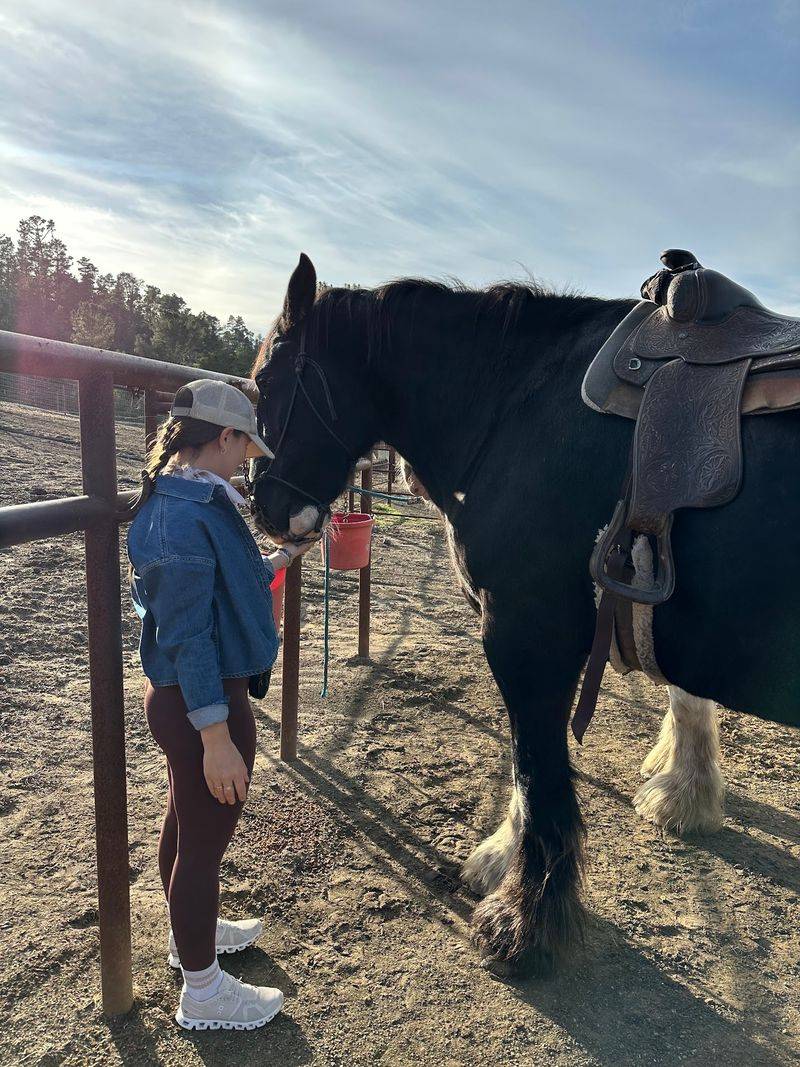
Getting nose to nose with a curious Clydesdale is the highlight for many tour guests. Vehicle tours at the ranch introduce visitors to the herd, which numbers well over 40 horses.
Guests have chances to get close to several horses and learn about their daily routines. The tour gives a behind-the-scenes look at what caring for these big animals involves.
Topics may include breeding, feeding, training, and general ranch operations. Hearing how much food and care a single Clydesdale needs can be eye-opening.
When the vehicle stops, some horses may wander over out of curiosity.
Their soft muzzles and warm breath often surprise people who expect a rough texture. Staff explain how to pet the horses safely, usually along the neck or shoulder.
Children and adults alike tend to light up during these close encounters.
Keeping fingers away from the mouth area is a simple rule worth remembering. Feeding the horses should only happen if staff say it is allowed.
The tour may also include stops to see foals in season or the miniature donkeys.
For travelers who learn best by seeing and touching, this hands-on visit can feel more meaningful than any museum display.
Reservations Are Required Before Visiting
Showing up without a plan simply will not work at this California ranch. Every visit requires a reservation because the ranch operates by appointment only.
Riding experiences are generally offered Monday through Saturday, weather permitting.
Trail rides are typically scheduled at 9 a.m. and 3 p.m., while vehicle tours usually happen around noon. Schedules may shift with seasons or ranch needs.
Checking the official website or contacting the ranch directly gives the most accurate details.
Trail rides may fill faster than vehicle tours on busy days. Having a backup date or being open to the tour option can help if rides are full.
Guests receive visiting instructions after booking. These directions explain where to arrive and what to expect, so reading them carefully matters.
Cell signal can be spotty in rural hills, so saving directions ahead of time is wise.
Weather can lead to changes, since rain may make trails unsafe for the horses. Staying flexible and watching for messages from the ranch prevents frustration.