14 Historic California Towns Worth Planning A Scenic Drive Around In 2026
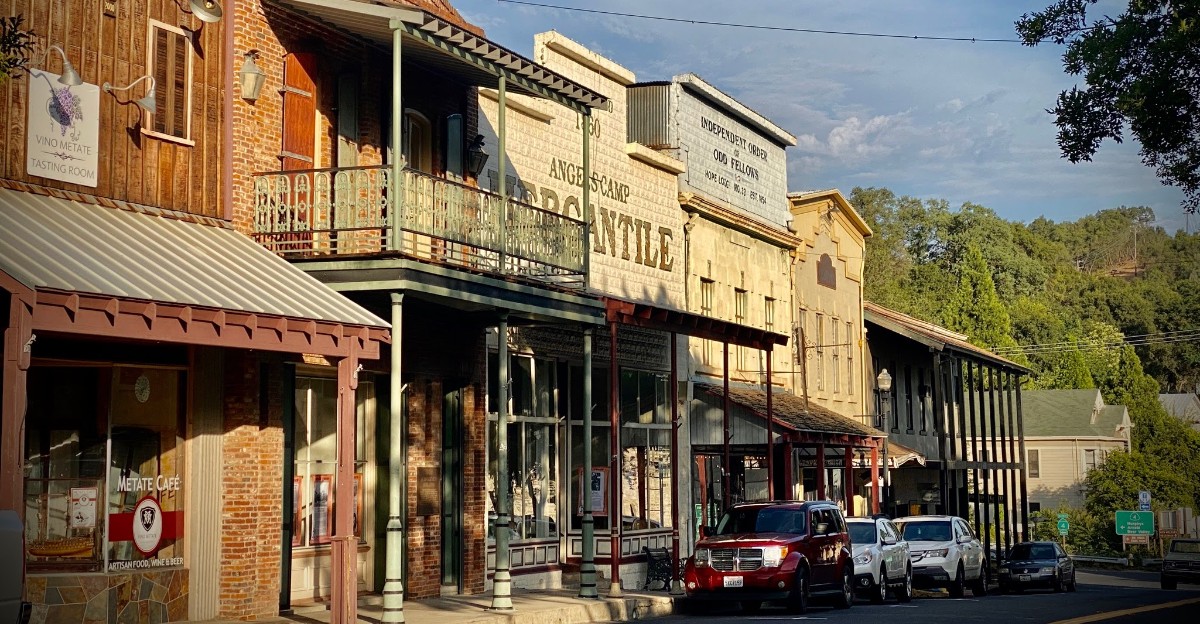
Some road trips are all about reaching the destination.
Others get much more interesting when the towns along the way have been around long enough to collect a few centuries’ worth of stories.
Historic storefronts, old mining districts, weathered buildings, and streets that still follow their original layouts can make an ordinary drive feel like a trip through several different eras.
The best part is discovering how much of that history remains woven into everyday life.
California’s backroads still lead to towns where the past has a habit of stealing the spotlight.
You might stop for lunch and end up wandering through a historic downtown, or pull over to admire an old building and discover an entire neighborhood worth exploring.
There is no need to rush through the itinerary.
With fourteen historic towns to consider, 2026 offers plenty of excuses to trade the fastest highway for a more scenic route and see what earlier generations left behind.
1. Nevada City
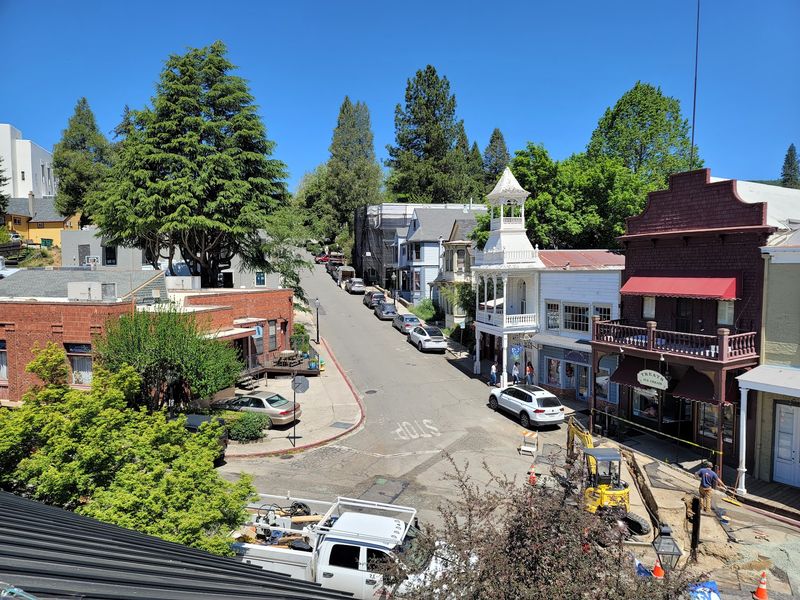
Nevada City’s downtown has a way of making the modern world feel a little farther away.
With more than 100 historic Gold Rush-era buildings and streets full of old-fashioned character, much of the town still looks remarkably close to how it did in the 1800s.
You can spend the afternoon admiring the architecture, wandering past historic storefronts, and grabbing a latte along the way.
Start on Broad Street, the main drag, where iron-front shops now hold bookstores, galleries, and cozy cafes.
Then peek inside the Nevada Theatre, opened in 1865. It is the oldest building in California that was built for shows and is still used for them. Mark Twain even spoke on its stage!
History fans should stop at the firehouse museum with its cute bell tower.
If you want to sleep somewhere special, book a room at the National Exchange Hotel. It is one of the oldest hotels still running west of the Rocky Mountains.
Now for the drive. Highway 49 and Highway 20 both curve through pine forests and rolling hills near town.
Fall is magic here. The maple trees downtown turn bright red and gold, and the cooler air makes walking easy.
2. Sutter Creek
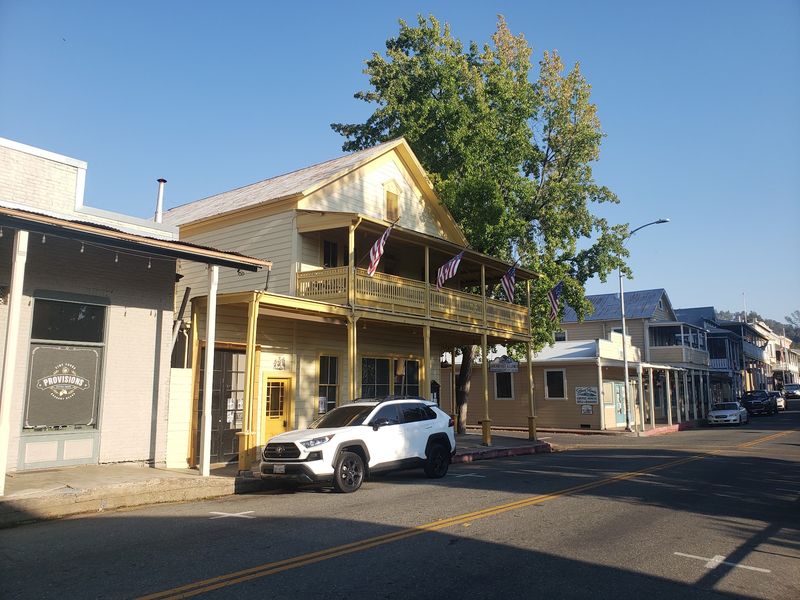
Ever heard of a factory that runs on water instead of electricity? Sutter Creek is home to Knight Foundry, the last water-powered foundry and machine shop in America.
Seeing those old gears and belts is like watching a giant puzzle come alive.
In the Sierra Nevada foothills, this little town has a Main Street that could star in a western movie.
Wooden balconies hang over the sidewalks, and most buildings date back to the 1860s and 1870s. Today they hold antique stores, candy shops, and small family-owned boutiques.
Take a short stroll to Miners’ Bend Park. It is a quiet place with real mining equipment and signs that explain how people dug for gold long ago.
Another fun stop is the Monteverde Store Museum. It looks almost exactly like it did when it sold supplies to locals over a century ago, with dusty shelves and old-fashioned scales.
Getting here is half the adventure. If you are coming from the Bay Area, think about taking the slow road through the California Delta, where levees, farms, and sleepy river towns slide past your window.
Once you arrive, you are close to the Shenandoah Valley wine region and the Eldorado National Forest.
3. Columbia
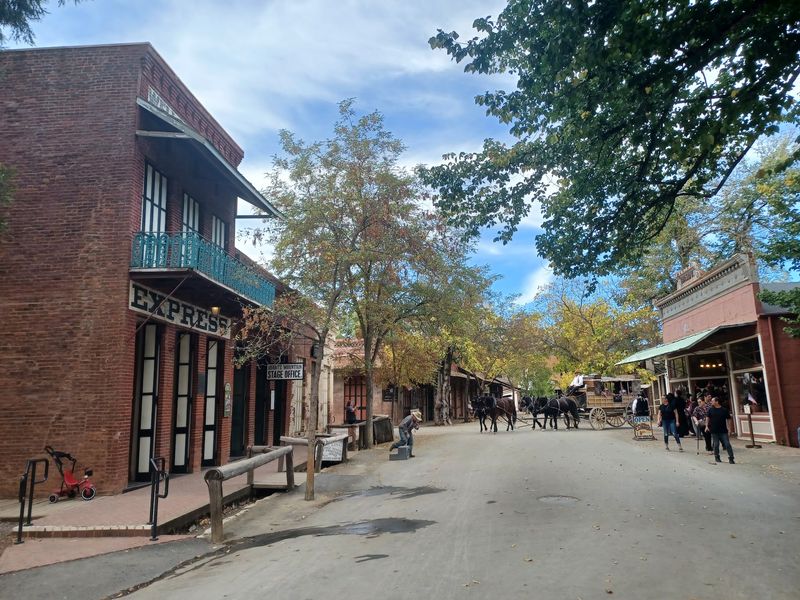
Clip-clop, clip-clop. That sound you hear is a real stagecoach rolling down the street in Columbia, a Gold Rush town that never stopped acting like it was the 1850s.
People call it the Gem of the Southern Mines, and once you visit, you will see why.
Columbia is part of Columbia State Historic Park, but it does not feel like a stuffy museum.
Shopkeepers wear old-time clothes, a blacksmith hammers glowing metal, and you can try panning for gold yourself. Finding even a tiny flake feels like winning a prize.
The best part? Cars are not allowed in the historic downtown. That makes it safe and relaxing to wander between saloons, candy stores, hotels, and an old ice cream parlor.
Grab a sarsaparilla, which is an old-fashioned soda, and sip it on a shady porch.
Do not skip the restored schoolhouse. Sitting at those tiny wooden desks gives you a real sense of what learning looked like for kids long ago.
Want the inside scoop? Join one of the daily town tours. Guides share wild stories about miners, fires, and the people who built this place.
4. Julian
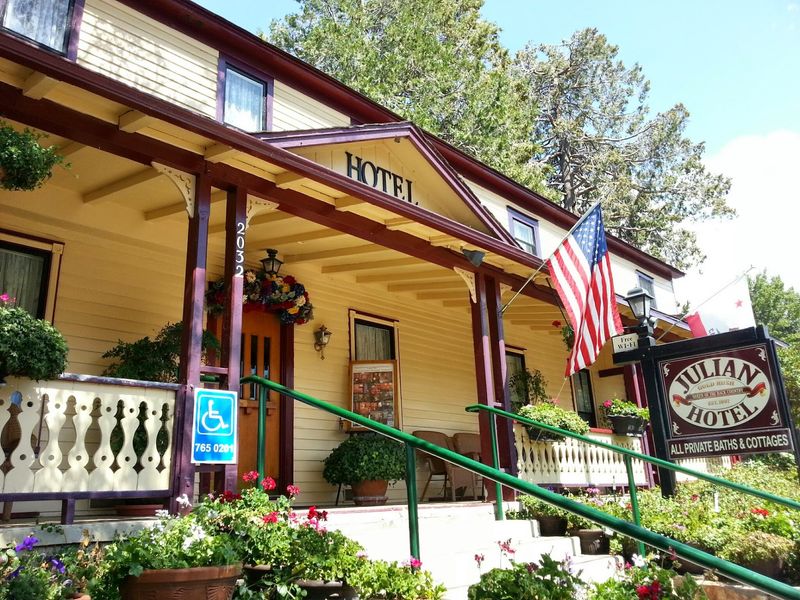
Let’s be honest. Most people drive to Julian for pie. And who could blame them? This small mountain town in San Diego County is famous for apple pie so good that folks line up out the door.
But Julian has a backstory too. Gold was found here in 1869, and the town quickly filled with hopeful miners.
When the gold faded, farmers planted apple orchards, and those trees still shape the town today.
Main Street feels rustic and friendly, with wooden storefronts, little gift shops, and old buildings from the 1800s.
Pop into a bakery and order a warm slice with cinnamon ice cream, or try an apple cider doughnut. You will thank yourself later.
The drive up into the Cuyamaca Mountains is a treat. Roads twist past oak forests, open meadows, and big views.
In winter, you might even spot a light dusting of snow, which feels pretty unusual for Southern California.
If you have extra energy, head to Cuyamaca Rancho State Park or the Mount Laguna Recreation Area. Both have trails for easy walks or bigger hikes, plus great spots for stargazing.
5. Ferndale
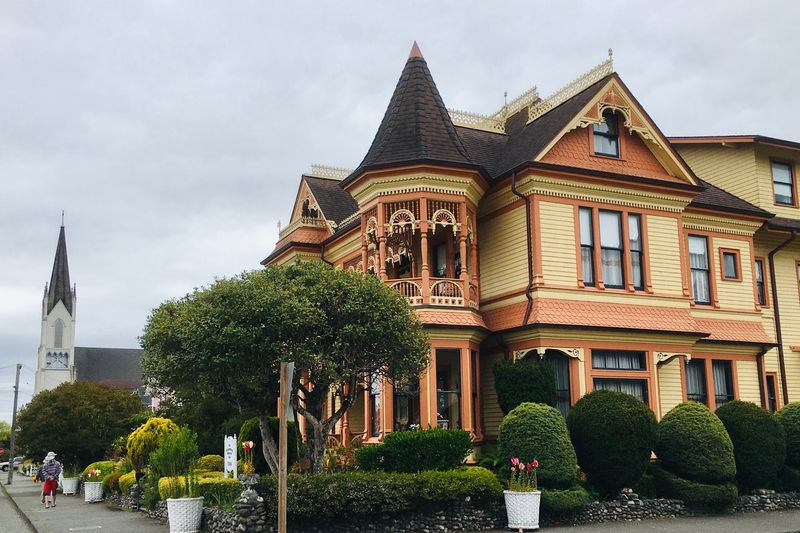
Some towns look pretty. Ferndale looks like a giant dollhouse.
Painted in soft pinks, blues, and yellows, its Victorian buildings are so fancy that locals call them Butterfat Palaces, because rich dairy farmers built many of them in the late 1800s.
Found near California’s far northern Redwood Coast, Ferndale has a Main Street you can easily walk in an afternoon.
The shops are packed with handmade candy, old books, and quirky gifts. Hollywood has noticed too, and several movies have been filmed right here.
Make time to see the Gingerbread Mansion. With its swirling trim and bright colors, it looks like it came straight out of a fairy tale.
Ready for adventure? Ferndale is the starting point for the Lost Coast drive, a twisty road locals call The Wildcat.
It climbs over hills and drops down to wild, empty beaches. Bring a full tank of gas, since services are few and far between.
Prefer giant trees? Head to the Avenue of the Giants, where redwoods tower hundreds of feet above the road. Rolling through it feels like driving through a cathedral.
For a final stop, visit Centerville Beach County Park. Crashing waves, sea birds, and salty wind make it a great place to stretch your legs.
6. Murphys
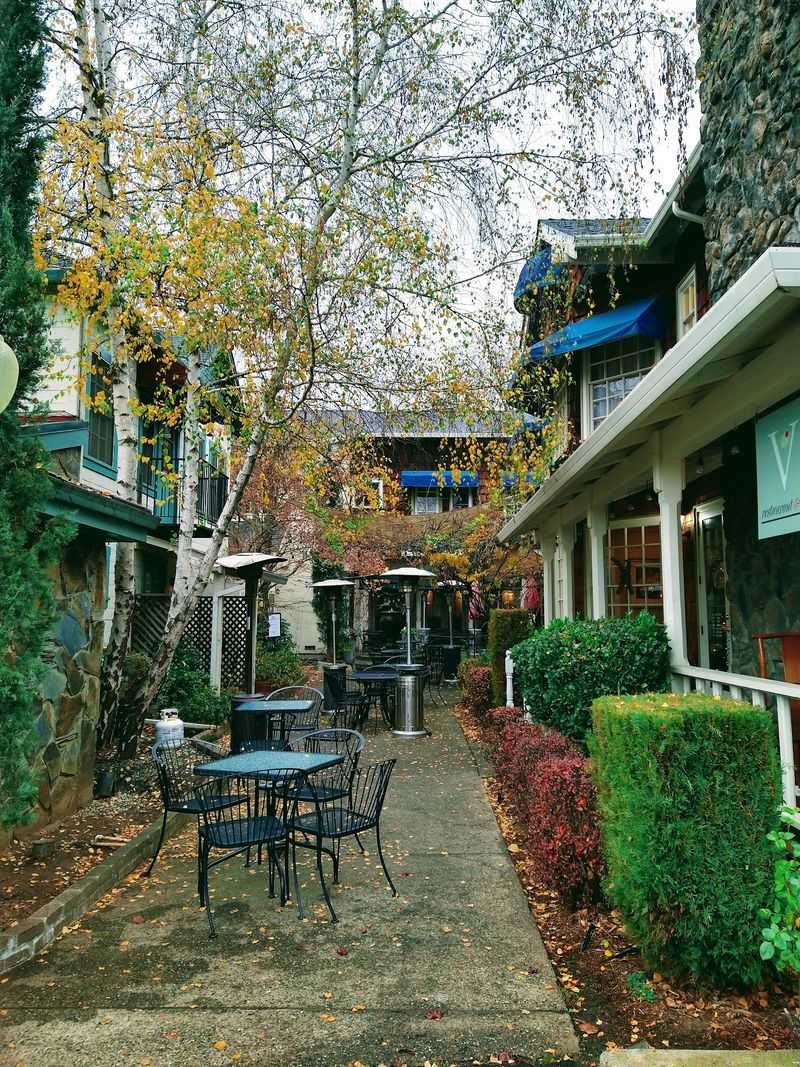
Nicknamed the Queen of the Sierra, Murphys has a way of making visitors slow down and smile.
Its Main Street is shady, walkable, and full of old stone buildings that survived the fires of the Gold Rush years.
Back in 1848, two brothers named Daniel and John Murphy set up a trading post here. Gold seekers soon rushed in, and the town grew fast.
Today, the buzz comes from tasting rooms, bakeries, and friendly little restaurants instead of pickaxes.
One building to look for is the Murphys Historic Hotel, which opened in 1856. Famous guests reportedly included Mark Twain and Ulysses S. Grant.
Families will enjoy the Murphys Old Timers Museum, which is packed with odd tools, photos, and a wall of fun historical plaques. It is free, though small donations help keep it running.
The drive around Murphys is pure Gold Country. Rolling hills, oak trees, and vineyards stretch in every direction.
Just up the road, Calaveras Big Trees State Park shows off giant sequoias, and nearby caverns let you explore underground.
Combine Murphys with Columbia, Angels Camp, and Sonora for a loop trip. They are all close together, so you can see several historic towns in one weekend.
7. San Juan Bautista
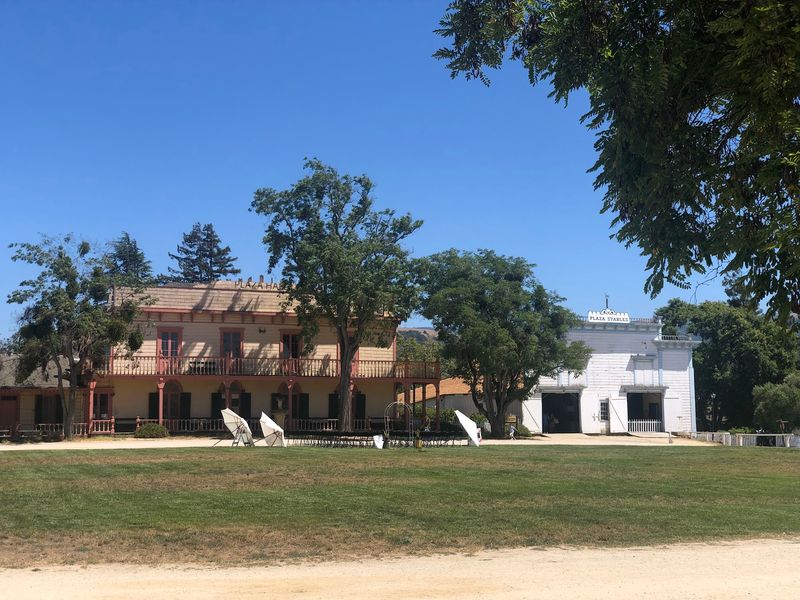
Quiet. Peaceful. Timeless. Those words fit San Juan Bautista perfectly.
This small town south of San Jose wraps around one of the best-preserved missions in California, and walking its plaza feels like stepping onto a page from an old history book.
Mission San Juan Bautista was founded in 1797. It has the widest church of all the California missions, with three long aisles inside.
Its long arched walkway, called a colonnade, is great for photos, especially in late afternoon light.
Around the mission sits San Juan Bautista State Historic Park. Here you can explore an old hotel, a stable full of antique carriages, and adobe homes from the 1800s.
Movie fans, listen up. The mission bell tower scenes from Alfred Hitchcock’s famous film Vertigo were shot here, although the tall tower was added with movie magic.
Fun fact: the mission sits right next to the San Andreas Fault. You can even walk a short trail near the plaza that shows where the ground has shifted over time.
After exploring, wander down Third Street for Mexican food, antique stores, and small bakeries.
8. Weaverville
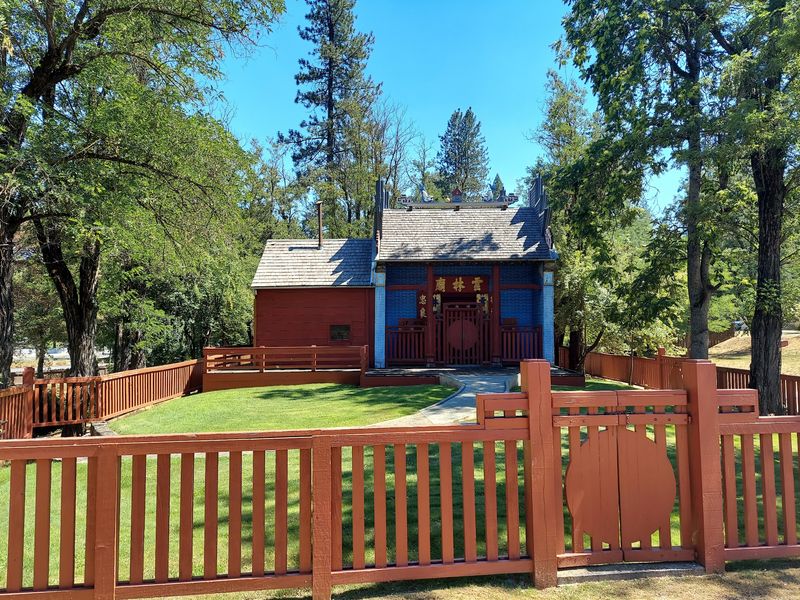
Here is a surprise most travelers never expect. Inside a tiny mountain town in Northern California stands the oldest Chinese temple in the state that is still in use.
It is called the Weaverville Joss House, and it was built in 1874.
Weaverville started in 1850, when gold drew miners from all over the world. Thousands of those miners came from China.
The Joss House honors their story, with its bright painted walls, carved altars, and peaceful garden. Tours are offered at the state historic park, and they are well worth your time.
Walking downtown is a treat too. Many Gold Rush buildings still line Main Street, including some with outdoor spiral staircases.
Those twisting stairs became a local trademark and make for fun photos.
The real star might be the drive. Weaverville sits on the Trinity Heritage Scenic Byway, a road filled with steep mountains, rocky cliffs, and the sparkling Trinity River.
Got some extra time? Swing over to Lewiston, a small historic town close by.
You can check out the Trinity Dam and visit the fish hatchery, where you might see salmon and trout.
Pack layers, since mountain weather can change quickly. Also download your maps ahead of time, because cell service gets spotty in these hills.
9. Sonora
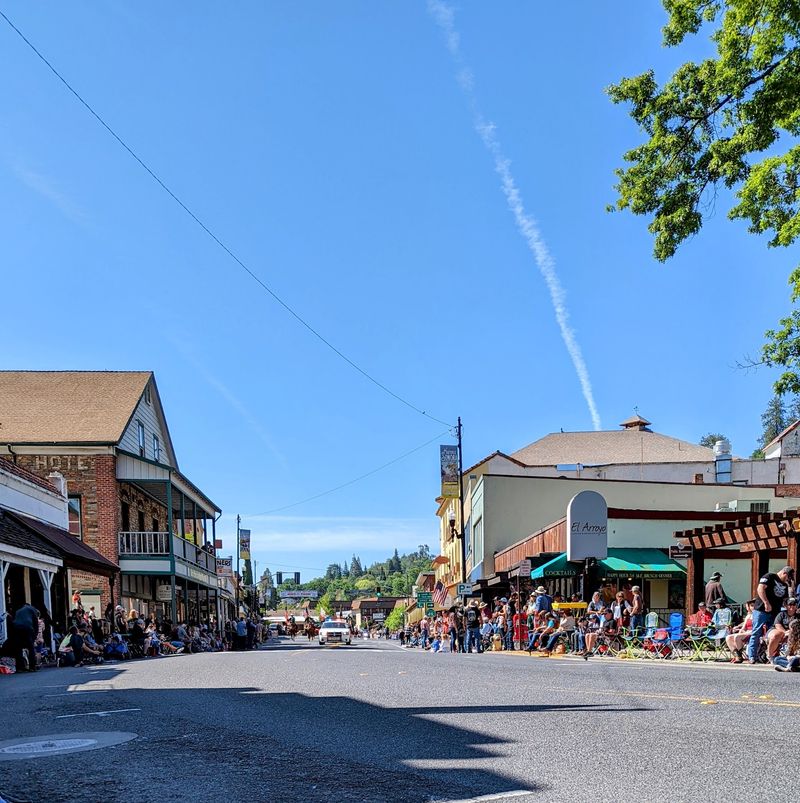
Think of Sonora as the friendly big sibling of Gold Country. It is lively, busy, and full of things to do, yet it still holds on to its Gold Rush roots.
If you need a home base for exploring nearby towns, this is a great pick.
Sonora was founded in 1848 by miners from Sonora, Mexico, which is how it got its name.
Within a few years, it became one of the richest mining towns in the region. Some huge gold nuggets were pulled from the hills around here.
Spend some time on Washington Street, the main road through downtown. Victorian storefronts hold cafes, bookshops, and clothing boutiques.
Look for the bright red St. James Episcopal Church, built in 1860, at the north end of the street. It is one of the most photographed buildings in the area.
For a quick history lesson, visit the Tuolumne County Museum. It is housed in an old jail, and you can still peek into some of the original cells.
Practical tip: Sonora has more hotels, gas stations, and grocery stores than smaller towns nearby. Stock up here before heading into the backroads, and you will be ready for anything.
10. Downieville
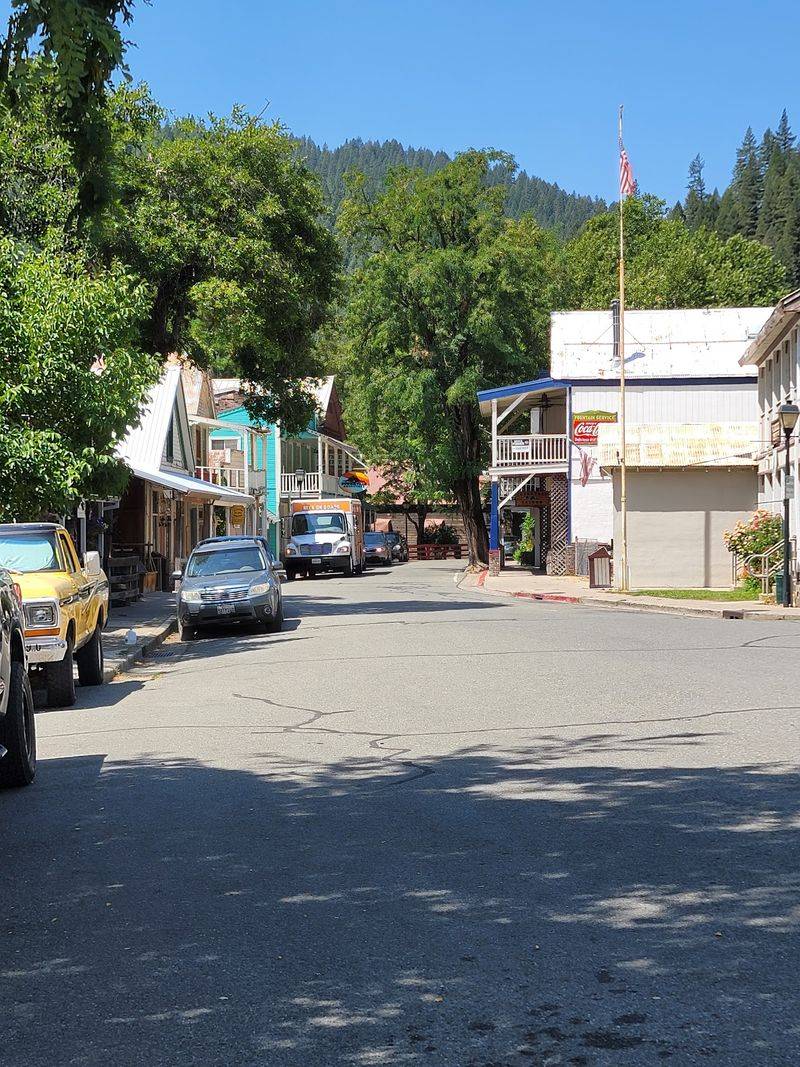
Only about 300 people live in Downieville today. Back in 1850, though, more than 5,000 miners crowded this narrow canyon, hoping to strike it rich along the rushing Yuba River.
Getting here is an adventure. Highway 49, nicknamed the Golden Chain Highway, curls through deep canyons and thick forests to reach town.
The road hugs the river for miles, and you will see sparkling pools, granite boulders, and plenty of spots to pull over and stare.
Once you arrive, Downieville feels like a hidden treasure. Old wooden and stone buildings lean along skinny streets, and little bridges cross the river right in the middle of town.
Many of the structures date back to the Gold Rush, giving the place a rugged, authentic look.
Visit the Downieville Museum, set in an 1852 stone building that was once a Chinese store. Its displays show mining tools, photos, and everyday items from pioneer life.
Outdoor fans have plenty to do too. Downieville is famous among mountain bikers for its thrilling downhill trails.
Plan carefully, because this town is remote. Fill your gas tank before you leave, bring snacks, and expect limited phone signal.
Many shops keep shorter hours in winter, so late spring through early fall is the best time to go.
11. Solvang
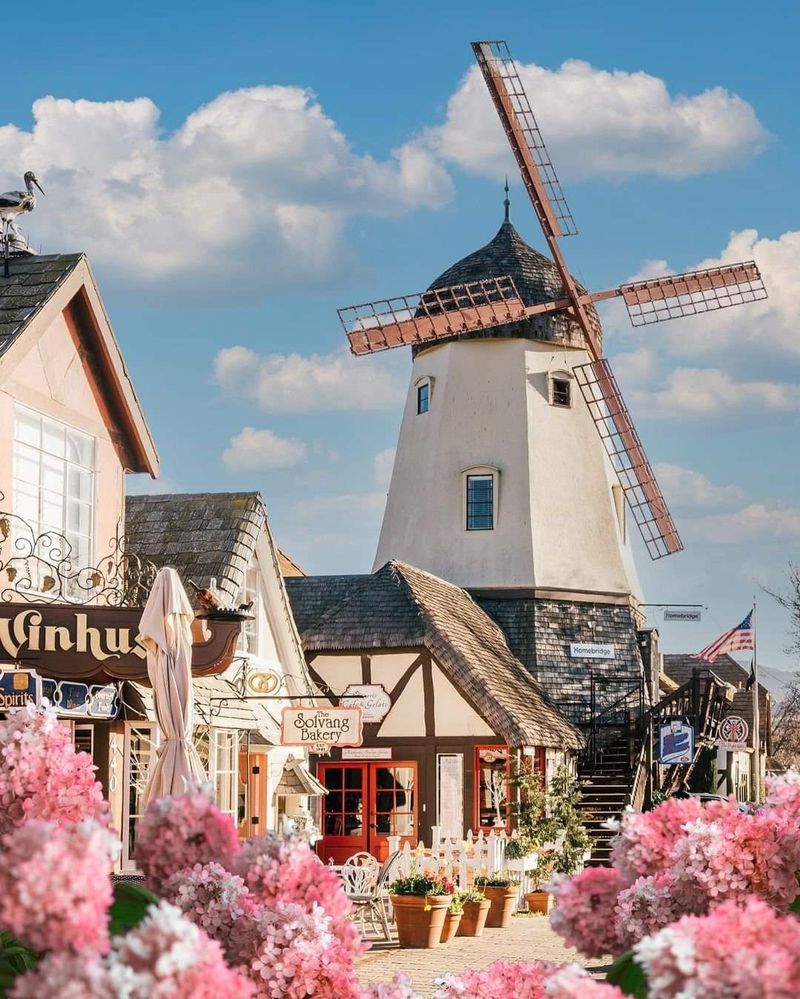
Windmills? In California? Absolutely. Solvang looks so much like a town in Denmark that first-time visitors often have to blink twice.
Danish settlers founded Solvang in 1911 in the Santa Ynez Valley. The name means sunny field, which fits perfectly, since the weather here is usually warm and bright.
Over the years, the town leaned into its heritage with half-timbered buildings, thatched-style roofs, and tall wooden windmills.
Your taste buds will be busy. Bakeries sell flaky Danish pastries and kringle, a twisty pastry filled with almond paste or fruit.
Be sure to try aebleskivers, which are round, fluffy pancake balls dusted with powdered sugar and served with jam.
As you stroll around, look for some fun Danish symbols. There is a copy of the famous Little Mermaid statue and a giant red wooden clog perfect for a silly photo.
A small museum also honors Hans Christian Andersen, the author of many beloved fairy tales.
History fans should visit Old Mission Santa Ines, founded in 1804, right at the edge of town. It adds Spanish mission history to Solvang’s European flair.
The drive through the surrounding valley is lovely, with vineyards, horse ranches, and rolling golden hills.
Nearby towns like Los Olivos and Santa Ynez are tiny but worth a peek. Solvang is a sweet, playful stop that feels like a mini trip overseas.
12. Placerville
Placerville sits along Highway 50, between Sacramento and Lake Tahoe. That makes it an easy stop on a longer road trip.
Many travelers zip right past, but those who pull off are rewarded with one of the liveliest historic Main Streets in Gold Country.
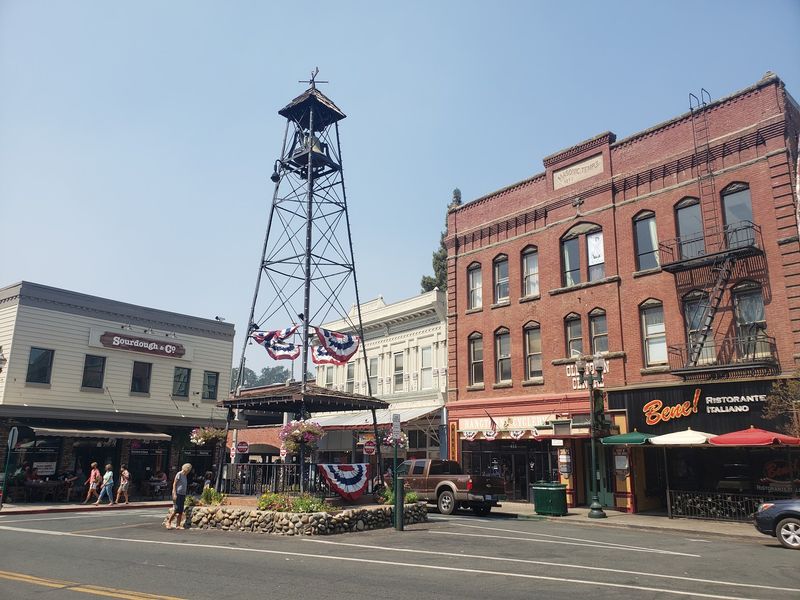
Brick buildings from the 1800s line the street, and many now house craft breweries, coffee shops, and farm-to-table restaurants.
Look for the Placerville Bell Tower, built in 1865 to call firefighters when flames broke out. It still stands proudly in the middle of town.
Want something truly unique? Visit Gold Bug Park and Mine. You can walk deep into a real hard-rock mine tunnel and see how miners chased veins of gold through solid stone.
Just outside town, Apple Hill is a must in the fall. Dozens of family farms sell apple treats, pumpkins, and fresh cider.
On weekends in autumn, the area fills with families picking fruit and enjoying hay rides.
Driving to Placerville means winding through oak-dotted foothills that turn green in spring. Also, Coloma is only a short drive away, so you can easily visit both towns in one day.
13. Grass Valley
Under your feet in Grass Valley lie more than 360 miles of old mine tunnels. That is not a typo!
The Empire Mine, which ran for over 100 years, was one of the richest and deepest gold mines in California. Today, Empire Mine State Historic Park lets you explore that amazing past.
You can peer down the main shaft, see giant mining machines, and tour the elegant stone Bourn Cottage, where the mine owner lived. The rose gardens around the house are beautiful in late spring.
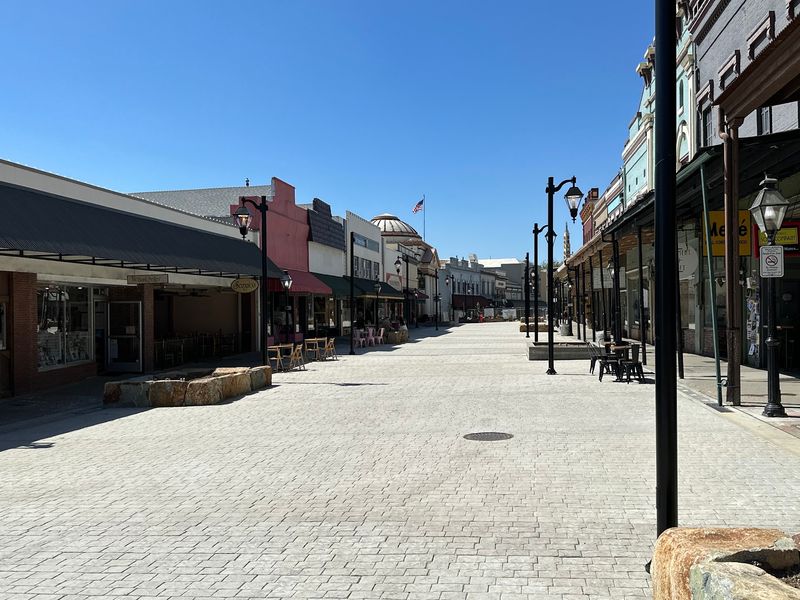
Downtown Grass Valley is just as inviting. Victorian buildings now hold cafes, art galleries, and fun shops. Look for a little meat pie shop, because Cornish pasties are a local favorite.
Miners from Cornwall, England, brought this hand-held meal with them, and the tradition stuck.
Grass Valley also has a colorful history. Famous dancer Lola Montez once lived here, and you can still see a replica of her house. Her wild life made her a legend in the 1850s.
Getting around is simple. Highways 49, 20, and 174 all lead to town and roll through forests, farms, and gentle hills.
Since Nevada City is only about four miles away, many visitors explore both on the same trip.
14. Angels Camp
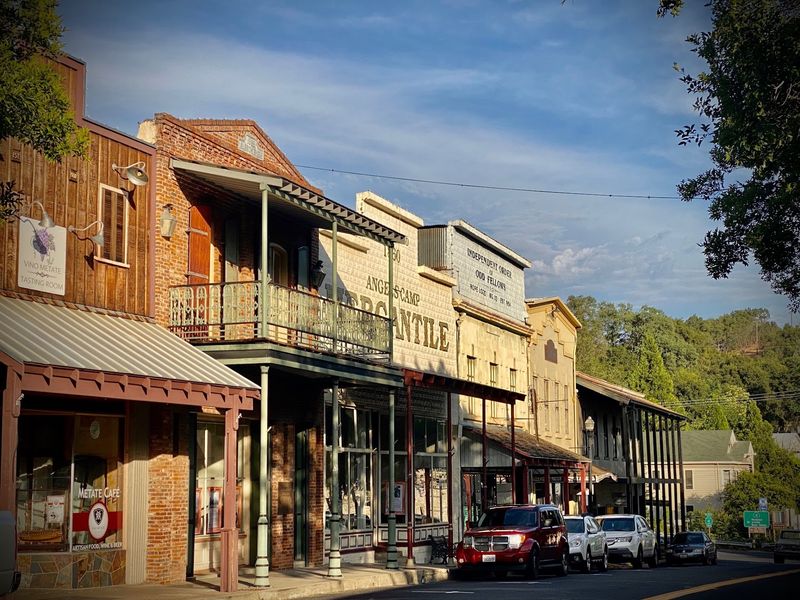
Ribbit! Few towns are as proud of a frog as Angels Camp.
In 1865, a young writer named Mark Twain heard a funny tall tale here about a jumping frog. He turned it into a short story, and it made him famous.
The town never forgot. Every May, the Calaveras County Fair and Jumping Frog Jubilee brings people from all over to watch frogs leap for prizes.
Even if you miss the event, you can follow the Frog Hop of Fame, a trail of bronze plaques along the sidewalk that honor champion jumpers.
Main Street is packed with Gold Rush buildings made of brick and stone. Shops, bakeries, and diners fill them now.
Take a peek at the Angels Camp Museum, which has a big collection of old carriages, mining tools, and rocks.
Angels Camp sits right on Highway 49, so it is easy to fit into a Gold Country loop. Drive about 20 minutes up the road to reach Murphys and its tasting rooms.
Keep going toward Calaveras Big Trees State Park, where giant sequoias rise high above you.
Families might also enjoy nearby caves, like Moaning Cavern and California Cavern. Guided tours lead you through cool underground rooms filled with sparkly rock formations.