Shoshone Falls Near Twin Falls, Idaho, Drops Farther Than Niagara, And Canyon Rim Overlooks Face It Head-On
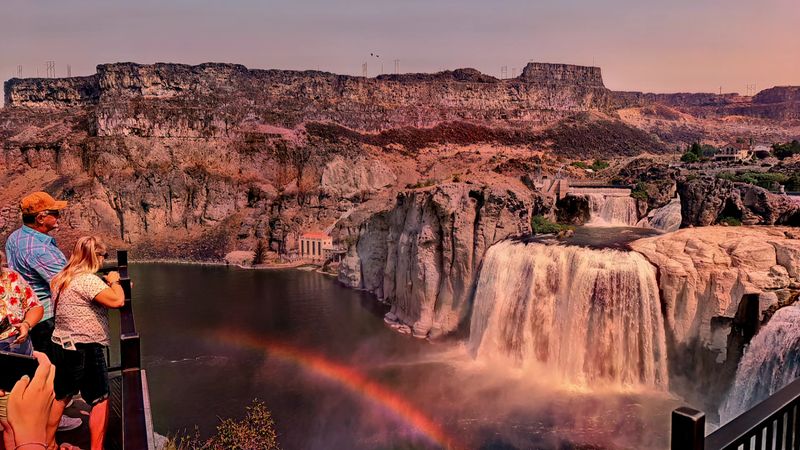
A waterfall in southern Idaho drops 212 feet, which beats Niagara Falls by roughly 45 feet. That fact alone made me stop scrolling the first time I read it.
The water spills over a basalt rim close to a thousand feet wide. Then it crashes into a canyon carved by an ancient flood in a matter of weeks.
Yes, weeks.
I like how close the viewing spots sit to the action. The main platform is about 75 feet from the nearest parking space.
You can step out of the car and face the whole thing head-on almost instantly.
The catch is timing. The same river that roars in spring can thin to delicate ribbons by late summer.
So when should you go, and what else waits along that canyon rim once you get there?
The Magic Valley Waterfall That Outranks Niagara
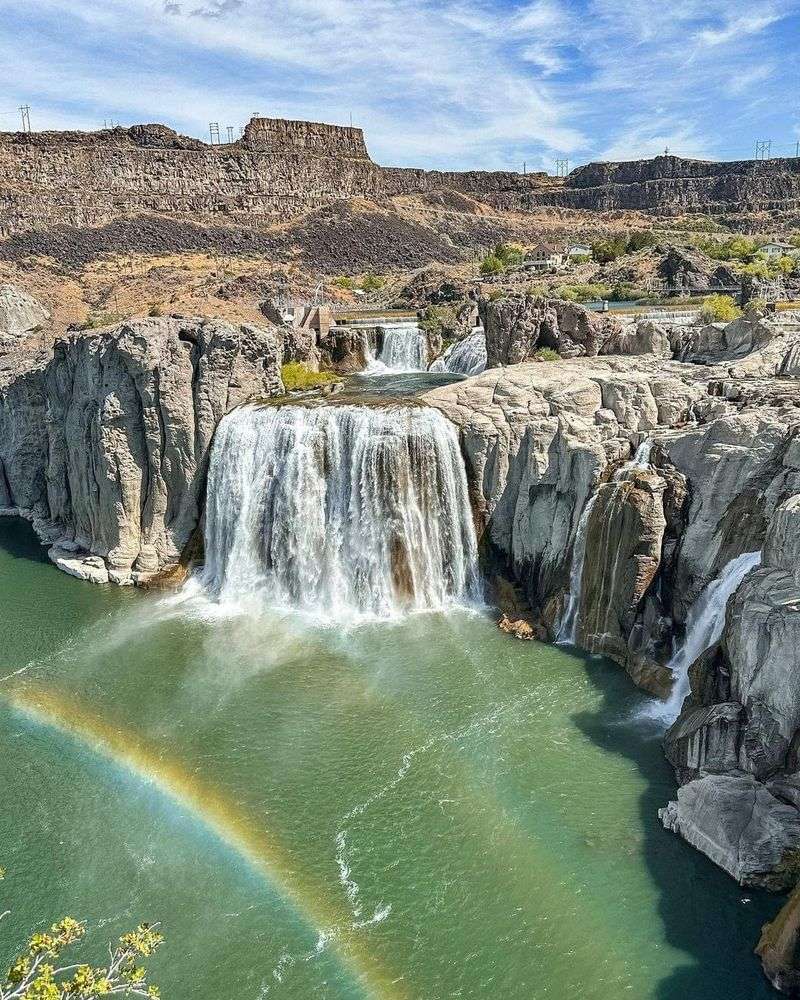
Shoshone Falls sits on the Snake River about three miles northeast of Twin Falls, Idaho. It drops 212 feet into a deep basalt canyon, which tops Niagara Falls by about 45 feet.
The nickname Niagara of the West gets tossed around a lot. Honestly, the comparison undersells the height, even if Niagara still wins on sheer volume.
The crest stretches close to a thousand feet across the rim. That width turns spring runoff into one enormous moving wall of white water.
The City of Twin Falls owns and operates Shoshone Falls Park, the grounds wrapped around the waterfall. Everything here sits in the heart of the Magic Valley, out on the Snake River Plain.
The setting matters as much as the drop. Sagebrush plateau runs right up to the canyon edge, then the ground simply falls away.
Below, a green strip hugs the river like someone forgot to tell it this is high desert. The contrast makes the falls feel even bigger than the numbers suggest.
Twin Falls is roughly two hours from Boise. That puts this spot squarely in day-trip range for a big slice of southern Idaho.
Good luck finding a better reason to fill the gas tank.
A Canyon Born From One Enormous Flood
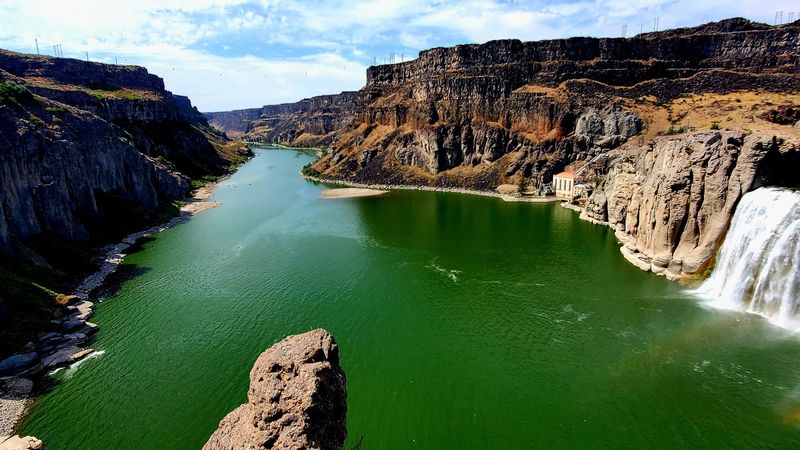
Roughly 14,000 to 17,500 years ago, ancient Lake Bonneville broke loose. The outburst flood tore through southern Idaho and carved this stretch of Snake River Canyon in a matter of weeks.
That is geology on fast-forward. The dark cliffs you see are basalt, old volcanic rock left behind by lava flows long before the flood arrived.
For thousands of years, the falls marked the upper limit for migrating salmon on the Snake River. Fish simply could not climb a 212-foot wall.
That barrier made the area a vital fishing and trading hub for Native American communities. People gathered here to harvest the fish that stacked up below the drop.
Europeans documented the falls in the 1840s. By the 1860s, the spot had already become a tourist draw, despite how remote it was.
In 1932, Frederick and Martha Adams donated the land to the City of Twin Falls. Their condition was simple: it had to stay a public park.
I believe that gift still shapes the place today. Instead of private land behind a gate, the rim belongs to everyone who drives out to see it.
Spring Is When the River Shows Off
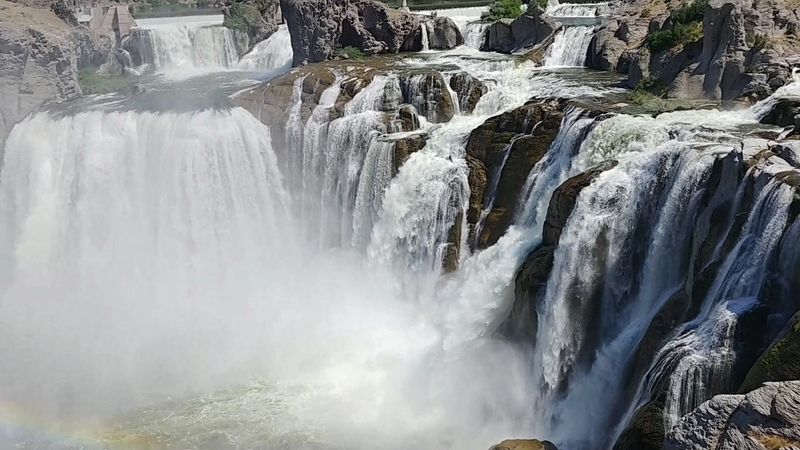
March through early May is the sweet spot. Winter snowmelt pushes huge volumes of water over the basalt, and the falls turn into a roaring block of white.
In a typical spring, flows run around 10,000 to 12,000 cubic feet per second. After a heavy snow year, they can top 20,000.
Those numbers are hard to picture, so here is a simpler version. The mist rises high enough that rainbows show up over the canyon on sunny days.
Summer and fall tell a different story. Water gets diverted upstream at Milner Dam, about 20 miles away, to irrigate Magic Valley farmland.
By late summer, the falls can thin into separate ribbons threading through dark rock. In early fall, the flow can look nearly dry.
Still, low water has its own appeal. You can see the shape of the cliff itself, plus a calm green pool at the base.
Some years surprise people, too, with stronger flow lingering later than expected. Since conditions change, check flow reports before driving if the roar is your main goal.
Overlooks That Put You Face to Face With the Drop
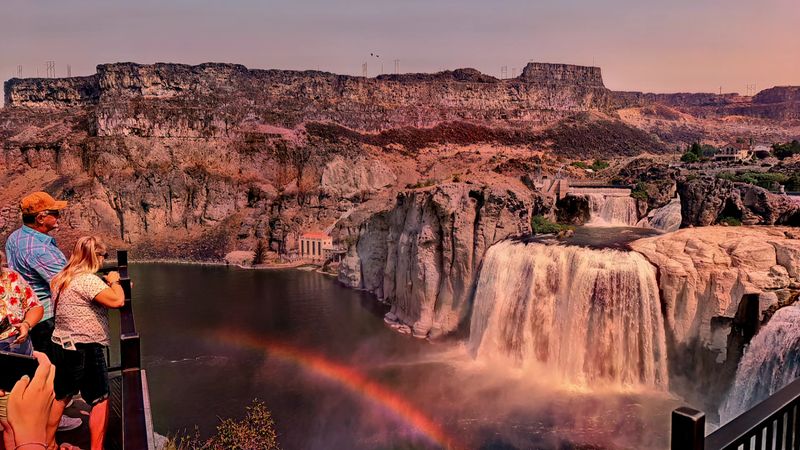
Seventy-five feet. That’s roughly the distance from the closest parking spot to the main viewing platform at Shoshone Falls Park.
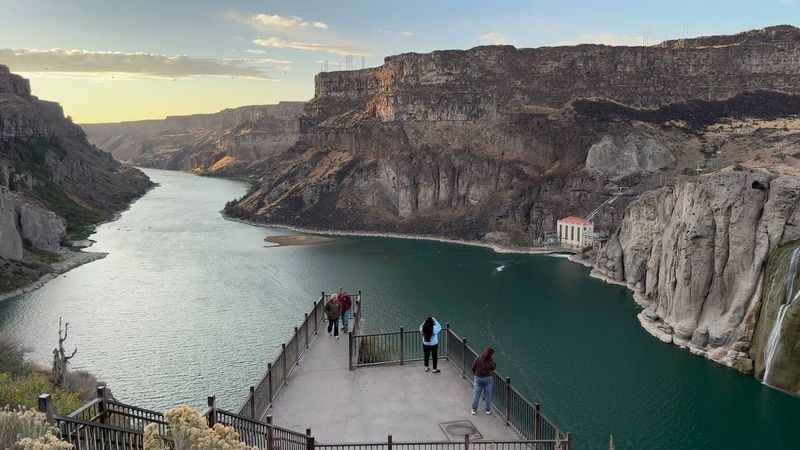
Few big waterfalls make it this easy. You get a direct, head-on look across the canyon at the full width of the falls.
Several overlooks spread around the park, each with a slightly different angle. Stairs lead down to a lower viewing deck, and they run a bit steep in spots.
Take them slowly and enjoy the change in perspective. The canyon walls frame the falls more dramatically the lower you go.
For anyone who skips stairs, the park is ADA accessible. Accessible parking sits closer to the falls, and multiple viewing spots require no steps at all.
A pair of binoculars earns its spot in the glovebox here. Smaller cascades and details across the canyon are easy to miss with bare eyes.
One quirky note: people keep tossing coins and trinkets over the viewing fence, wishing-well style. Please keep your hair ties.
The canyon has plenty of decorations already.
Eight Miles of Pavement Along the Canyon Rim
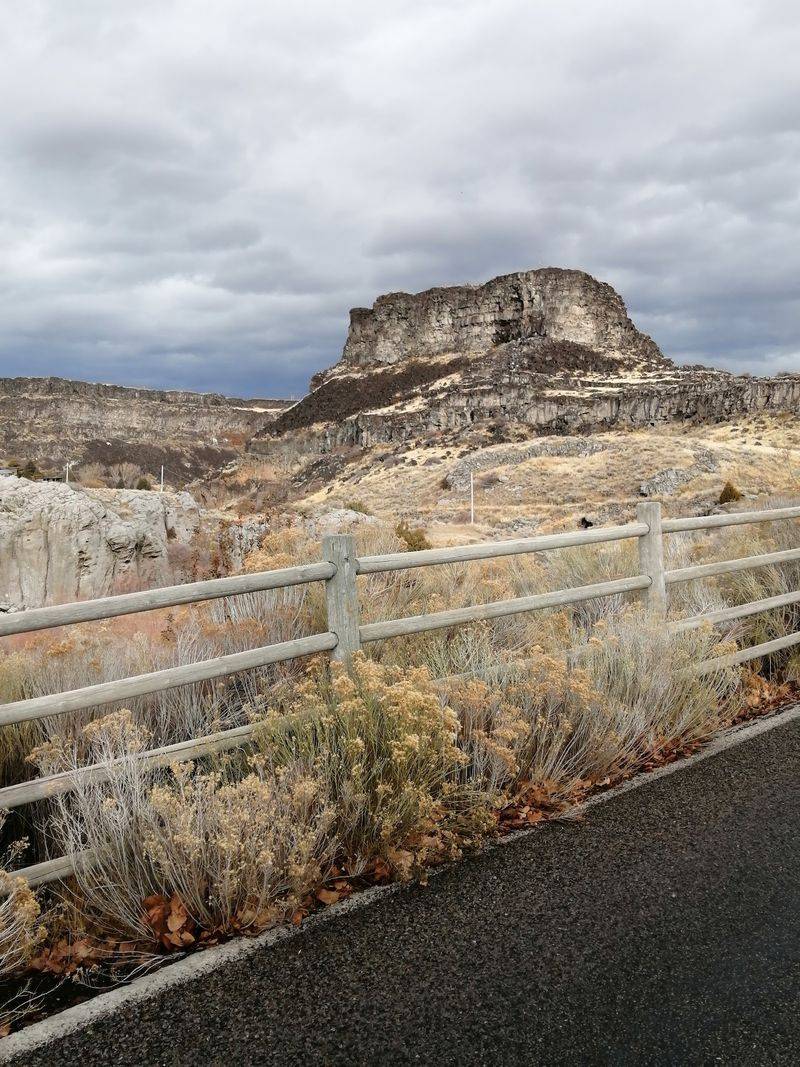
Walkers, runners and cyclists all share the Canyon Rim Trail. The paved path runs more than eight miles west from Shoshone Falls, following the edge of the Snake River Canyon.
Motorized use isn’t allowed, which keeps things quiet. The views shift constantly as the canyon bends and widens below you.
Fair warning about the start, though. Climbing out of Shoshone Falls Park includes some steep sections that will get your heart pumping.
Bikes make a lot of sense here. An e-bike makes that climb out of the park far friendlier, especially on a hot afternoon.
Prefer dirt under your shoes? Smaller unpaved trails wind through the park itself for a more rugged feel.
Along some canyon paths, natural springs surface above and below the cliffs. It’s a neat reminder of how much water moves through this rock.
Summer heat in southern Idaho is no joke on exposed pavement. Pack water, aim for cooler hours, and keep that camera within easy reach.
Every bend offers another angle on the gorge, so plan on stopping more often than you expect.
Picnic Lawns, a Lake, and a Gift Shop Up the Hill
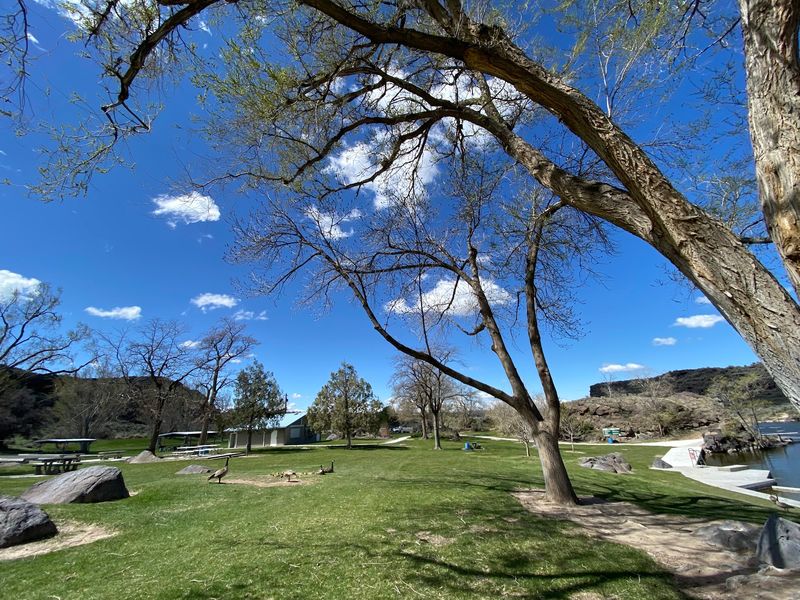
Lunch with a canyon view sounds like a solid plan. Shoshone Falls Park has shaded picnic areas, open lawns, benches and grills spread across the grounds.
Families can easily stretch a quick stop into a whole afternoon. The grassy spaces give kids room to roam while adults soak up the scenery.
A concession stand near the parking lot sells snacks and souvenirs. Hats, magnets, keychains and little stone animals fill the shelves.
Public restrooms are on site too. That detail matters a lot more than people admit on a long Idaho road trip.
Nearby Dierkes Lake shares the same complex. It offers swimming, fishing and paddleboarding, plus its own trails and picnic spots.
Dogs are welcome in the park on a leash. They aren’t allowed on the grassy areas around Dierkes Lake, so plan your walk accordingly.
Keep an eye on the field near the parking lot as well. Groundhogs have claimed it, and they seem perfectly happy with the arrangement.
It can get windy up on the rim, so weigh down those paper plates.
Paddling Up to the Base for a Whole New Angle
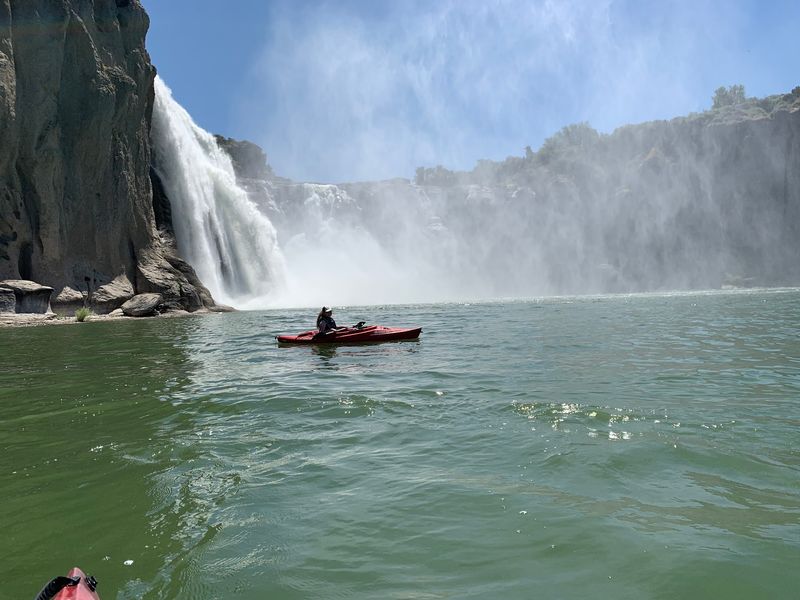
Rim views are great, but the river offers something wilder. Paddlers can launch a kayak or paddleboard from Centennial Waterfront Park and head upstream toward the falls.
Down on the water, the basalt walls tower overhead. The scale of the canyon finally makes sense from that low angle.
Kayak rentals are available at Centennial Waterfront Park. That makes the trip doable even if your boat lives three hours away.
The paddle ends near the lower falls view. You get to feel the rumble of the cascades instead of just watching them.
Back on land, history fans have another target. The Evel Knievel Jump Site sits about a mile up a trail from the falls.
That’s where the famous daredevil tried to jump the Snake River Canyon in 1974. Today, it offers wide canyon views and a look toward the Perrine Bridge.
I can’t imagine a better pairing for one day. Waterfall in the morning, motorcycle legend by afternoon, and a lot of Idaho stories for the drive home.
What to Know Before You Pull Into the Lot
Getting there is simple. Shoshone Falls is located at Idaho 83341, a short drive northeast of downtown Twin Falls.
From Boise, plan on about two hours each way. The regional airport in Twin Falls is roughly 25 minutes from the park.
There’s a modest vehicle fee, just a few dollars per car, starting in early spring and running through the fall season. Walk or bike in, and entry is free.
Certain recreation passes have covered admission for some visitors. It never hurts to ask at the gate if you carry one.
The park generally opens from dawn to dusk year-round. Winter road conditions can trigger temporary closures, so check before driving out.
Overnight camping isn’t allowed inside the park. Twin Falls has plenty of places to stay if you want to linger.
Summer can run very hot on the rim, with little relief at midday. Sunscreen, water and a hat belong on your checklist.
Spring weekends tend to draw the most interest because of peak flow. Arriving early gives you more breathing room at the main overlook.
Worth the Drive in Any Season, Best in Spring
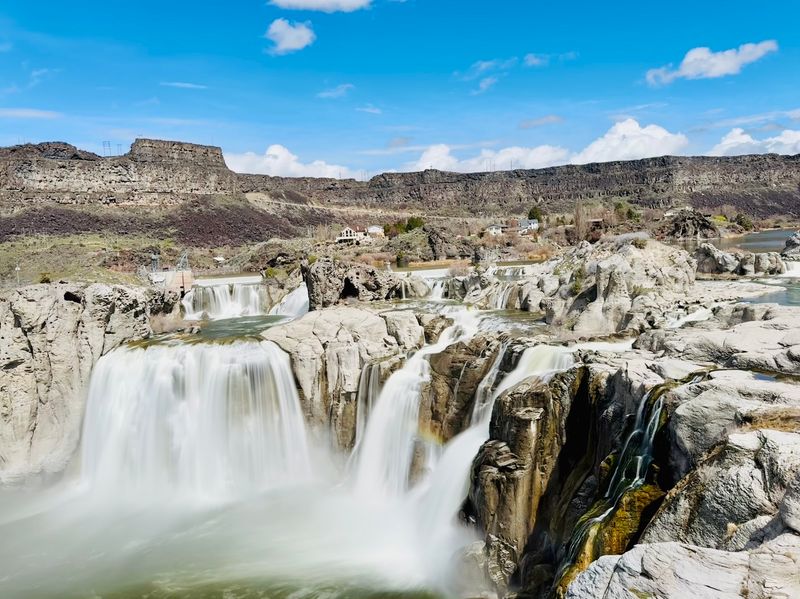
Some trips get filed away and forgotten. A 212-foot waterfall with a front-row overlook tends to stick with people much longer.
Shoshone Falls packs a lot into one stop. There’s ancient flood geology, Native American fishing history, and a park built around public access.
Spring delivers the full roar of snowmelt. Late summer trades thunder for delicate ribbons and clearer views of the basalt rim.
Either way, you get the canyon, the trails and the picnic lawns. Add Dierkes Lake, a paddle from Centennial Waterfront Park, and the Evel Knievel jump site, and the day fills fast.
In spring, the park has also hosted Shoshone Falls After Dark. The event has featured music and light shows projected onto the falls and canyon walls.
Dates change from year to year, so check before planning around it. Catching it would make a memorable evening.
For anyone in Idaho who has driven past the Twin Falls exit a dozen times, this is your sign. Go in spring if you can, but go.
The falls will handle the rest.