Maryland’s 10 Nostalgic Downtowns That Are Packed With Americana Charm
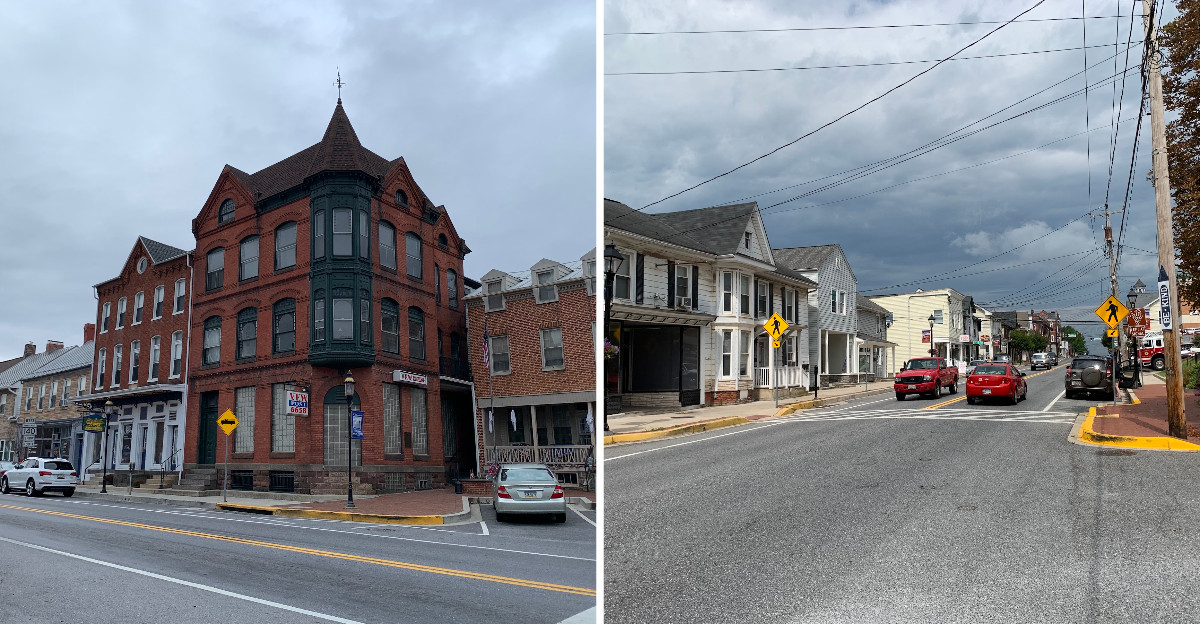
What makes a downtown feel like it belongs on an old postcard without turning into a tourist set?
Maryland towns often get that balance just right.
Historic theaters still glow at night, family-run shops keep their doors busy, and brick sidewalks lead toward waterfronts, depots, courthouses, and familiar neighborhood gathering places.
People still use these streets every day, which keeps the nostalgia feeling real.
One town may lean toward Chesapeake traditions, while another may show off railroad or mountain history. That variety makes wandering especially fun!
You can chase Americana charm without feeling like somebody staged the whole afternoon for your camera.
1. Frederick, Frederick County
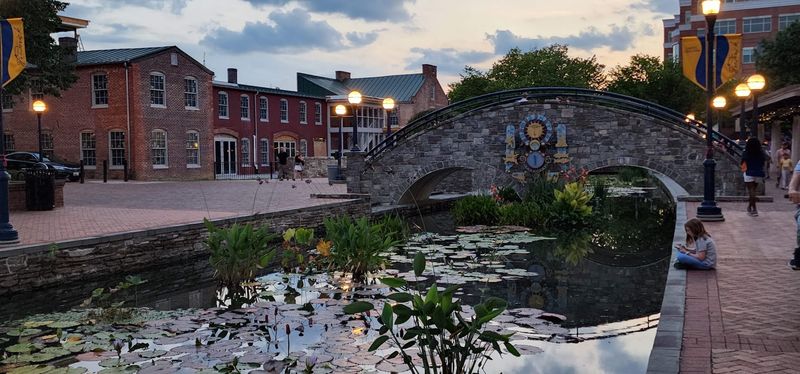
Church spires poke above the rooftops like a skyline from an old storybook.
Downtown Frederick, in Frederick County, spreads across a historic core of roughly fifty blocks.
Centuries-old architecture now shares the streets with more than 200 independently owned shops, galleries, restaurants, and other small businesses.
Carroll Creek Park gives the center of town an easy walking route.
Brick paths, landscaped edges, bridges, fountains, and public art follow the water through the downtown core, creating plenty of places to pause without leaving the historic district.
Painted walls and other public-art installations keep the scenery from feeling frozen in the past. The mix of restored buildings and creative details gives this historic downtown a lived-in character rather than a museum-like mood.
Patrick and Market streets are especially good for browsing. Bookshops, specialty stores, galleries, and gift shops fill historic storefronts, while side streets reveal porches, row houses, and architectural details that reward a slower pace.
The Weinberg Center for the Arts adds another layer of nostalgia. The restored 1920s theater still hosts performances, films, and community events at 20 W Patrick St.
Comfortable shoes help on the older sidewalks, especially if Carroll Creek and the shopping blocks are both on the plan. A bench beside the water makes an easy final stop before one more loop through downtown at the end.
2. Berlin, Worcester County
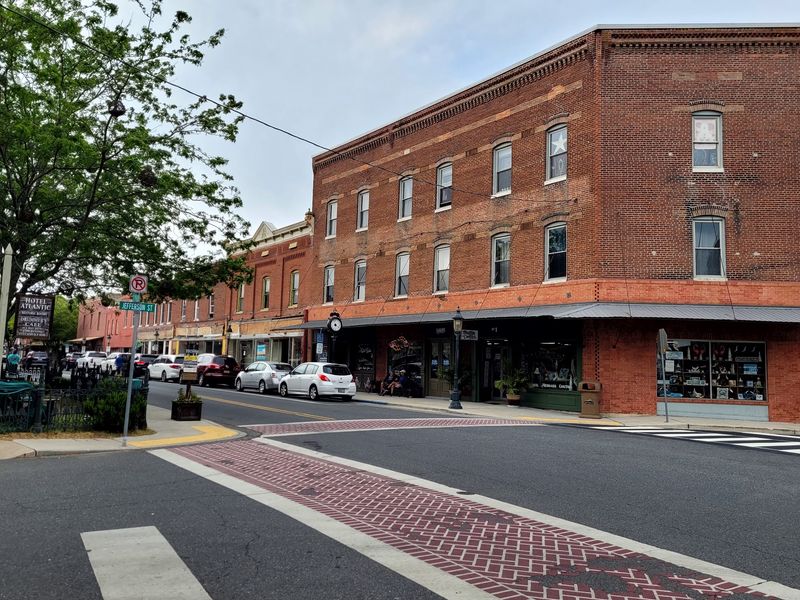
A tiny town once won the title of America’s coolest. Big honor, small streets, and plenty of charm to back it up.
Berlin sits in Worcester County, about seven miles inland from Ocean City.
Its compact commercial core became a National Register historic district in 1980, with late-19th and early-20th century buildings giving Main Street much of its familiar look.
The town earned Budget Travel’s “America’s Coolest Small Town” title in 2014. That recognition fits a downtown where independent shops, galleries, cafés, and colorful storefronts remain easy to explore on foot.
Film fans have another reason to recognize the streets. Berlin served as a filming location for Runaway Bride and Tuck Everlasting, adding movie history to the already photogenic blocks.
The historic district includes 48 documented resources, most of them contributing to its character.
Victorian-era commercial buildings stand close together, while trees, benches, murals, and seasonal decorations keep the center welcoming rather than formal.
For a deeper look at local history, the Calvin B. Taylor House Museum occupies a restored 19th-century home at 208 N Main St. The collection connects local life, businesses, and community stories from across the area.
Maryland beach traffic may be only a short drive away, but downtown Berlin works best at a slower speed. Browse a few shops, study the old façades, and leave enough time for an unplanned turn down a side street.
3. Havre De Grace, Harford County
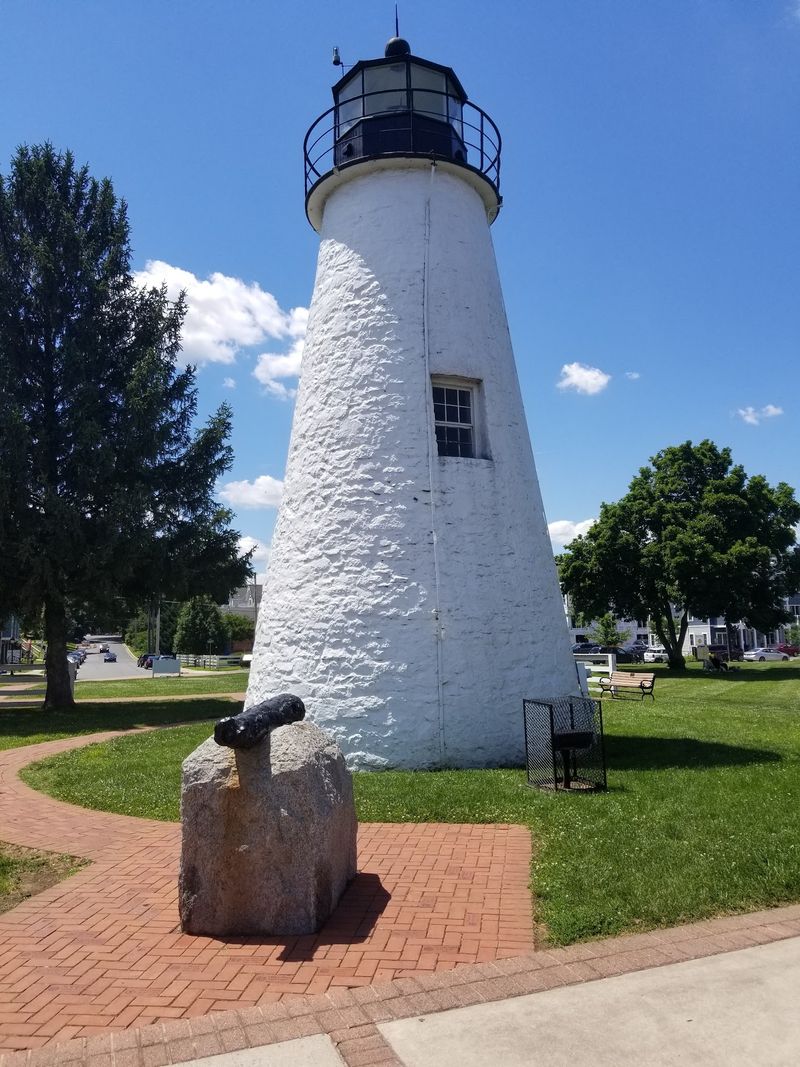
Imagine for a second a river and a bay shaking hands at your feet. That meeting point sets the stage for one salty little downtown.
Havre de Grace, in Harford County, sits where the Susquehanna River reaches the Chesapeake Bay.
Its National Register historic district contains about a thousand buildings, with most contributing to a streetscape shaped by the 19th and early 20th centuries.
The waterfront promenade makes the town easy to enjoy on foot. The half-mile route links Tydings Park with Concord Point, passing water views, landscaped spaces, and places to stop.
Havre de Grace is also known as the “Decoy Capital of the World.” The Decoy Museum at 215 Giles St preserves working and decorative Chesapeake Bay carvings while explaining the craft traditions that helped define the area.
Downtown adds antique shops, small businesses, museums, and historic homes to the waterfront mix. Federal, Greek Revival, and Victorian influences appear across the district without making every block look the same.
At the end of the promenade, Concord Point Lighthouse provides a classic finish. Built in 1827, the restored tower and keeper’s house museum remain open seasonally, with the lighthouse interior available on select days.
4. Chestertown, Kent County
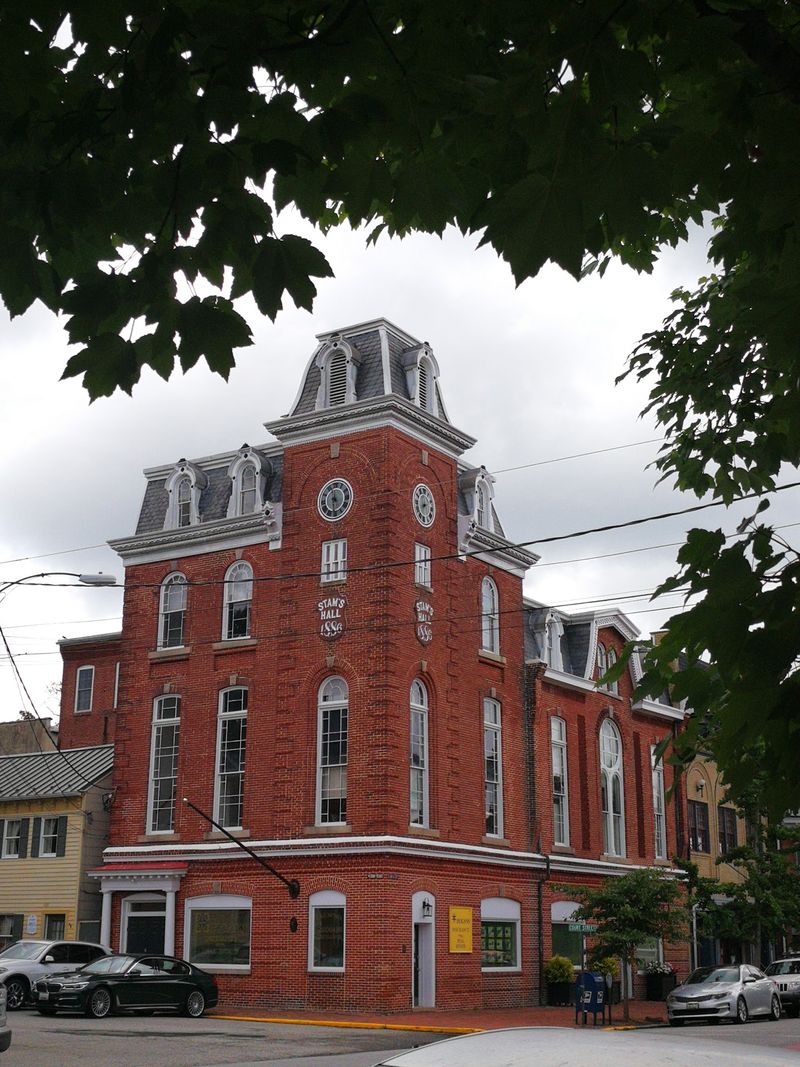
It makes you wonder, doesn’t it, how a town keeps colonial history this fresh? Some old secrets clearly involve lots of brick and care.
Chestertown, the county seat of Kent County, grew as a port on the Chester River and still preserves a remarkable concentration of 18th- and early-19th-century buildings.
The historic district includes the commercial center, riverfront, residential streets, and part of the Washington College campus.
Brick sidewalks and close-set façades make High Street a natural place to begin. Georgian and Federal architecture appears throughout the older blocks, while independent shops, galleries, cafés, and public spaces keep the center active.
The town’s best-known annual tradition is the Chestertown Tea Party Festival. Local history records the 1774 Chestertown Resolves, while the dramatic tea-tossing episode is treated as local legend and reenacted each Memorial Day weekend.
Washington College adds another layer to the setting. Founded in 1782, it became the first college chartered in the newly independent United States, with George Washington supporting its creation and allowing the school to use his name.
Near the waterfront, the schooner Sultana serves as a full-scale reproduction of a 1768 vessel used for education on Chesapeake ecology and history.
Saturday mornings bring a year-round farmers and artisans market downtown. Between the market, river views, and historic streets, this Maryland town makes wandering feel like the main event rather than something squeezed between attractions.
5. Cambridge, Dorchester County
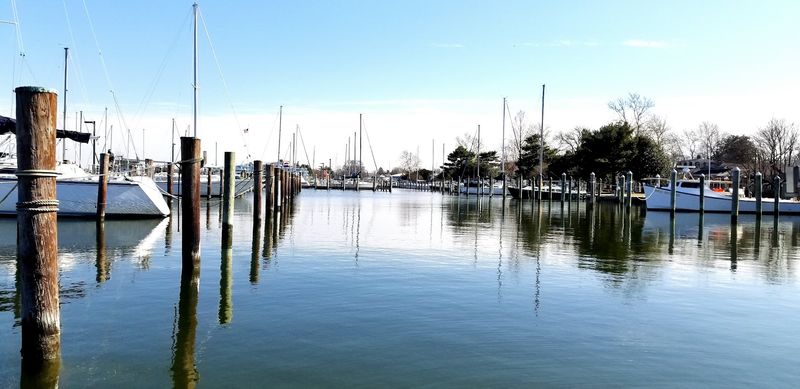
Settled in 1684, it ranks among Maryland’s oldest colonial cities.
Cambridge, the seat of Dorchester County, grew along the Choptank River and still carries that waterfront history through its downtown core.
The historic district covers more than forty blocks and includes a mix of late-18th, 19th, and early-20th-century buildings.
High Street is one of the easiest places to see that architecture up close. Brick sidewalks, mature trees, and restored homes lead toward Long Wharf, where the Choptank River opens wide beside the city’s marina.
At the end of the wharf, the Choptank River Lighthouse adds a strong maritime focal point. The current structure is a replica of a historic screw-pile lighthouse and includes a small museum with exhibits on local river life and navigation.
Race Street brings another important layer of local identity. The Harriet Tubman Museum and Education Center stands at 424 Race St, and the large Take My Hand mural covers an exterior wall behind the building.
Downtown also includes galleries, studios, independent businesses, and an Arts and Entertainment District centered around the historic core. That mix keeps the area from feeling like a preserved streetscape with nothing happening inside it.
A walk from High Street to Long Wharf and back through Race Street gives a good sense of Cambridge without rushing. Waterfront views, architecture, and public art all fit comfortably into one afternoon.
6. Easton, Talbot County
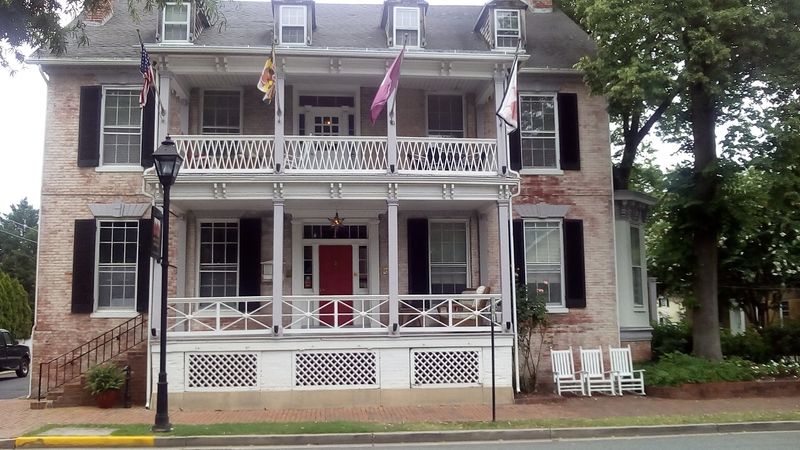
Let’s look at it from this angle: culture can come in a small package. Some call this town the cultural capital of the Eastern Shore.
Easton, in Talbot County, has a National Register historic district containing about 900 buildings and structures.
Most date from the 19th and early 20th centuries, giving the downtown core a strong mix of residential and commercial architecture.
The Avalon Theatre remains one of the most recognizable cultural anchors. The building was completed in 1922 and later redesigned with the Art Deco character that still defines its interior today.
A few blocks away, the Academy Art Museum adds rotating exhibitions, five galleries, art studios, classes, talks, and performances. Admission remains free, making it easy to pair the museum with a longer downtown walk.
Shops, galleries, cafés, and landscaped streets fill the space between those institutions. Harrison, Dover, Washington, and Goldsborough streets reward slow wandering, especially when older storefronts and residential blocks begin to overlap.
November brings the Waterfowl Festival, a long-running celebration of Eastern Shore art, nature, heritage, and craft traditions. The 2026 event is scheduled for November 13 through 15 across several downtown venues.
7. Westminster, Carroll County
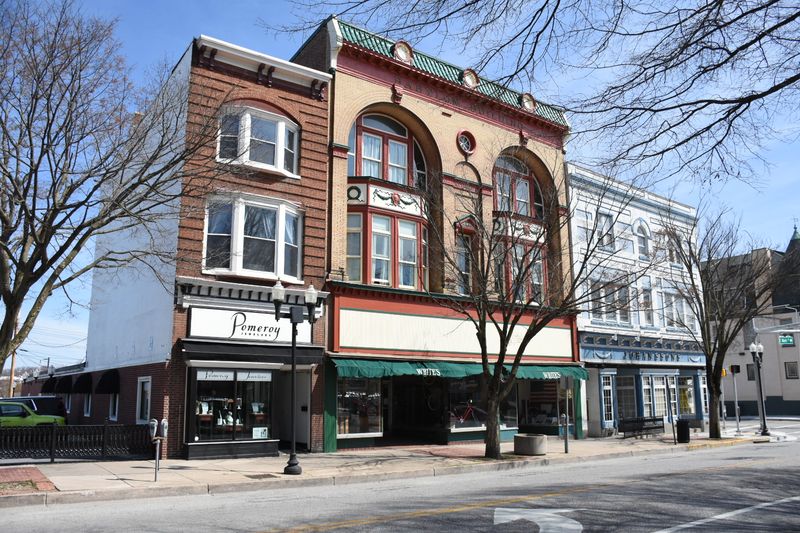
Westminster serves as the county seat of Carroll County. Its downtown is a nationally accredited Main Street community.
Historic Main Street sits inside a National Register district where wide sidewalks, mature trees, independent businesses, and varied architecture make walking straightforward.
Greek Revival, Georgian, Gothic Revival, and later commercial styles appear across the older blocks.
The Carroll Arts Center gives the downtown a particularly strong dose of nostalgia. It occupies the former Carroll Theatre, a 1937 Art Deco movie house that was carefully renovated and reopened as an arts center in 2003.
Today the building includes a 263-seat theater, galleries, classrooms, and a gift shop. Films, live performances, and rotating exhibitions keep the old theater active instead of treating it only as a preserved landmark.
A seasonal farmers market adds another reason to linger downtown on Saturdays from May through November. Locally owned shops and cafés fill the surrounding blocks, so the center stays useful even when no special event is scheduled.
A short drive away, the Carroll County Farm Museum preserves an 1852–53 farmhouse, a bank barn, a one-room schoolhouse, and other structures connected with 19th-century rural life.
Back on Main Street, the compact scale makes it easy to browse without a schedule.
Westminster’s strongest Americana quality comes from everyday use: an old theater still welcomes audiences, storefronts remain occupied, and shaded sidewalks continue to connect the center.
8. Mount Airy, Carroll County
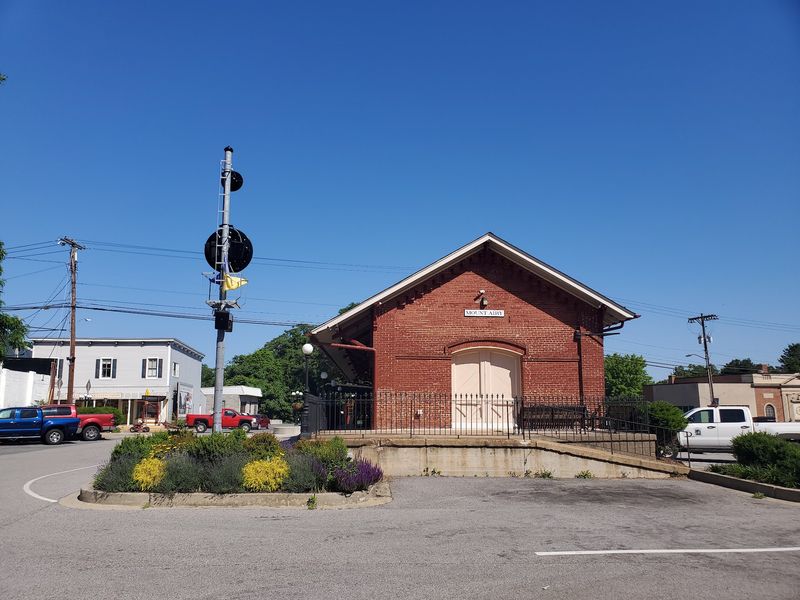
Call me crazy, but train whistles still seem to echo down this Main Street. The rails shaped everything about this hilltop town.
Mount Airy straddles the Carroll and Frederick county line, and its downtown grew directly from the Baltimore and Ohio Railroad.
A depot was established here in 1838, helping the settlement develop along Parr’s Ridge.
The brick station that stands today dates to 1882. It now houses the Mount Airy Museum at 1 N Main St, where local photographs, household objects, business items, tools, signs, and other collections trace the town’s growth.
The surrounding historic district includes commercial, residential, and religious buildings from the late 19th and early 20th centuries.
Main Street remains compact enough to explore at an easy pace, with older storefronts mixed into an active small-town center.
Several serious fires changed downtown between 1903 and 1926. Rebuilding during that period created much of the cohesive early-20th-century streetscape visible today, especially around the blocks near the station.
Independent shops and small businesses now occupy many of those historic buildings. The railroad connection still gives the center its strongest visual identity, even though the old depot serves a completely different purpose.
9. Emmitsburg, Frederick County
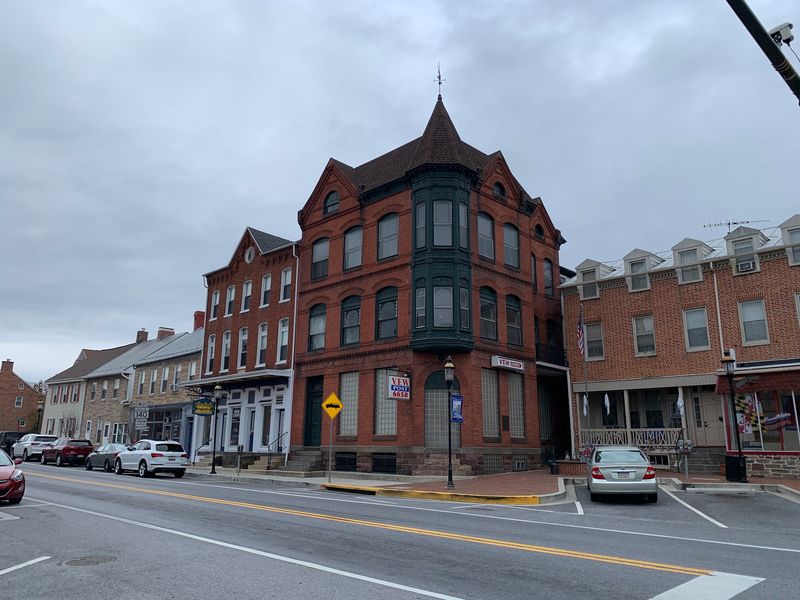
Here’s a crazy thought: a mountain view can come with your morning stroll. The Catoctin Mountains rise right behind this tiny town.
Emmitsburg, in Frederick County, was laid out in 1785 with a compact historic core along Main Street and Seton Avenue.
Its older buildings reflect a community shaped by education, faith, and nearby mountain landscapes.
Federal, Greek Revival, Italianate, and later vernacular styles appear across the historic district. The modest scale makes a slow walk feel more like exploring a neighborhood than checking off landmarks.
The National Shrine of Saint Elizabeth Ann Seton sits at 339 S Seton Ave. The grounds include a museum, basilica, historic homes, walking paths, and spaces that explain the life and legacy of the first American-born saint.
A short drive away, the National Shrine Grotto of Our Lady of Lourdes occupies a wooded mountainside on the campus of Mount St. Mary’s University.
Its grotto cave, gardens, devotional spaces, and 95-foot campanile create a very different setting from downtown.
The surrounding foothills give Emmitsburg much of its visual character in every season. Autumn color is especially striking, while spring softens the streets with flowering trees and fresh greenery.
The town works best without a rushed plan. Spend time downtown, choose one shrine for a longer visit, and leave enough room for the mountain backdrop to do some of the work.
10. Taneytown, Carroll County
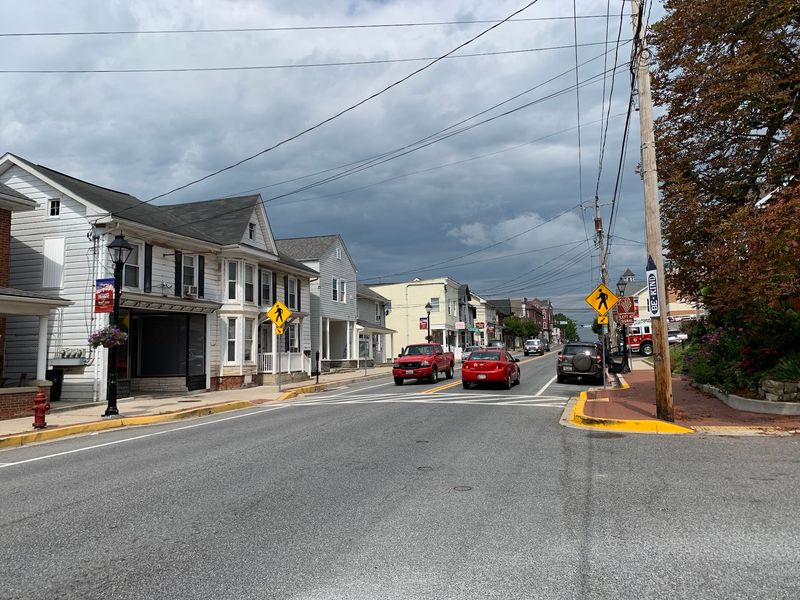
Look, I’ll be the first to admit this town flew under my radar. Missing it any longer would have been a big mistake.
Taneytown sits in northern Carroll County and traces its founding to 1754. Part of the city is listed as a historic district, with the older downtown centered on a walkable stretch of Main Street.
Brick storefronts, churches, and older homes give the center a straightforward small-town look. Its appeal comes from the way streets, businesses, and surrounding countryside still fit together.
Taneytown also carries both Maryland Main Street and nationally accredited Main Street recognition. Local businesses continue to use the historic core while revitalization programs support storefronts and preservation.
City parks add easy places to slow down before or after a walk, and public spaces remain free to use year-round unless otherwise posted.
Beyond the center, farmland, rolling hills, and red barns take over the view. That rural setting reinforces the sense that downtown is still connected to the agricultural landscape around it.
Pair it with Westminster or Emmitsburg for an outing, or let the quiet pace stand on its own. Small-town spirit is the attraction here, and it does not need much decoration.