10 Washington Churches So Beautiful They Look Straight Out Of The Old World
Washington hides churches that could fool you into thinking you crossed the Atlantic overnight.
Towering spires, glowing stained glass, and century-old stonework make that illusion surprisingly convincing. Then the stories get even better!
One church has remained unfinished for decades. Another tiny chapel once used its bell to guide ships through heavy fog.
A mission-style tower appears where you would never expect it. Each stop brings a new detail that makes pulling over feel completely justified.
These churches offer far more than beautiful architecture, and a few have histories that sound almost too unusual to be true. No passport will be necessary.
1. St. James Cathedral, Seattle
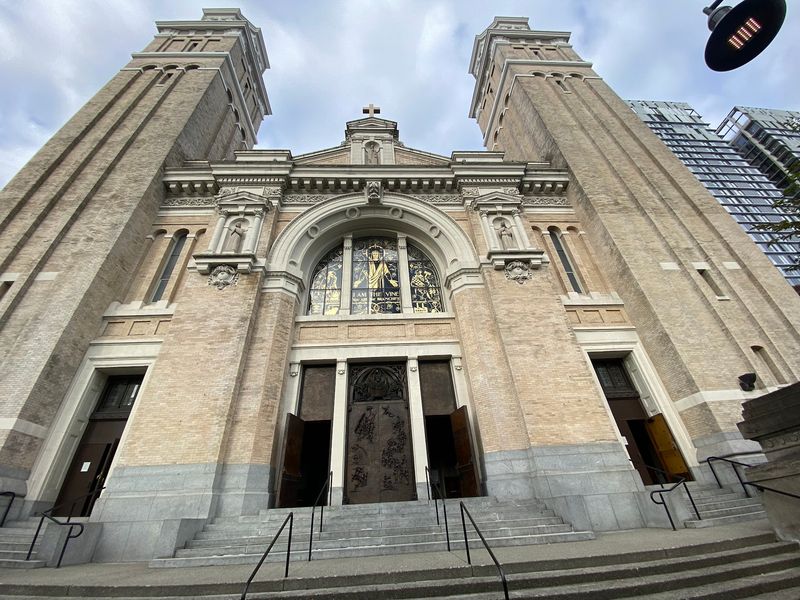
Would you believe me if I told you a snowstorm once reshaped a cathedral? That twist sits at the heart of this story.
St. James Cathedral in Seattle was dedicated in December 1907 after construction began two years earlier.
Its Italian Renaissance design gave the city a monumental new Catholic landmark, complete with twin towers and, originally, a large central dome.
Heavy snow in February 1916 caused that dome to fail. The cathedral then underwent a redesign, reopening in 1917 with a dramatically altered interior and no replacement dome.
Stained glass became one of the building’s defining features after that change.
Windows by the Charles Connick studio were installed in the late 1910s, while three east apse windows by Hans Gottfried von Stockhausen arrived during the major 1994 restoration.
The ceremonial bronze doors at the west entrance were installed in 1999. Their relief panels trace a spiritual journey from biblical beginnings toward an image of the heavenly city.
Music adds another layer to the visit. The west gallery organ dates to 1907, while the Archbishop Thomas J. Murphy Millennium Organ in the east apse was completed in 2000.
Washington visitors can find the cathedral at 804 9th Ave. The architecture rewards a slow look, especially around the stained glass, bronze doors, and restored central space.
2. The Cathedral Of St. John The Evangelist, Spokane
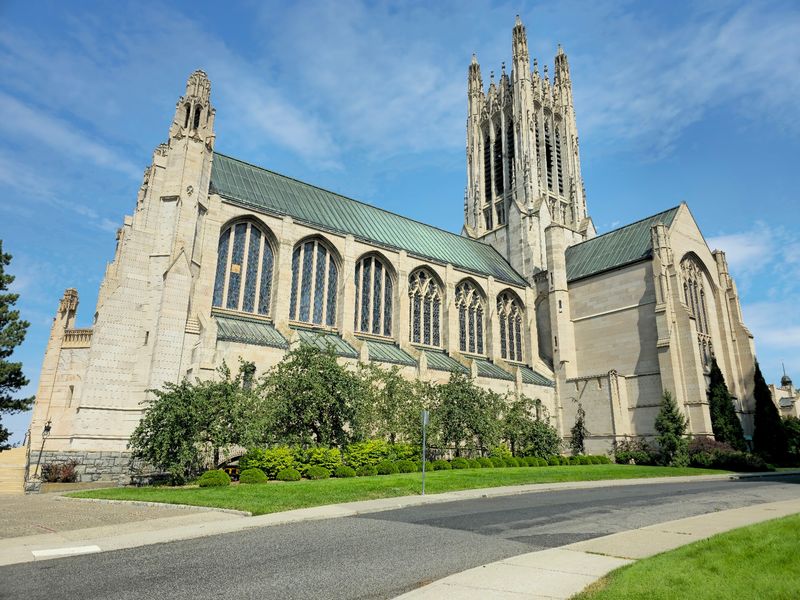
Let’s be real for a second: some cathedrals take generations to reach their final form.
The Cathedral of St. John the Evangelist in Spokane began in 1925 when three Episcopal congregations united behind one ambitious project.
The nave opened for worship in 1929, construction paused during the economic downturn of the 1930s, and later phases added the chancel, transepts, tower, and chapels by 1961.
Its English Gothic design carries a noticeable French influence.
Solid masonry construction uses sandstone from the Northwest together with Indiana limestone for detailed carving, giving the building the weight and texture associated with much older European churches.
Stained glass fills the interior with layered imagery. The great rose window rises above the west entrance, while other windows depict biblical figures, scenes from Revelation, the life of Jesus, and a large Te Deum composition.
Bishop Cross Tower holds a 49-bell carillon installed in 1969. The bells range from 17 pounds to 5,000 pounds, and Sunday carillon music begins before the main morning service.
The cathedral’s Aeolian-Skinner organ contains more than 4,000 pipes and remains central to the music program.
Self-guided visits are currently available on weekdays, with guided tours offered on Fridays. The cathedral stands at 127 E 12th Ave, high above downtown Spokane.
3. Proto-Cathedral Of St. James The Greater, Vancouver
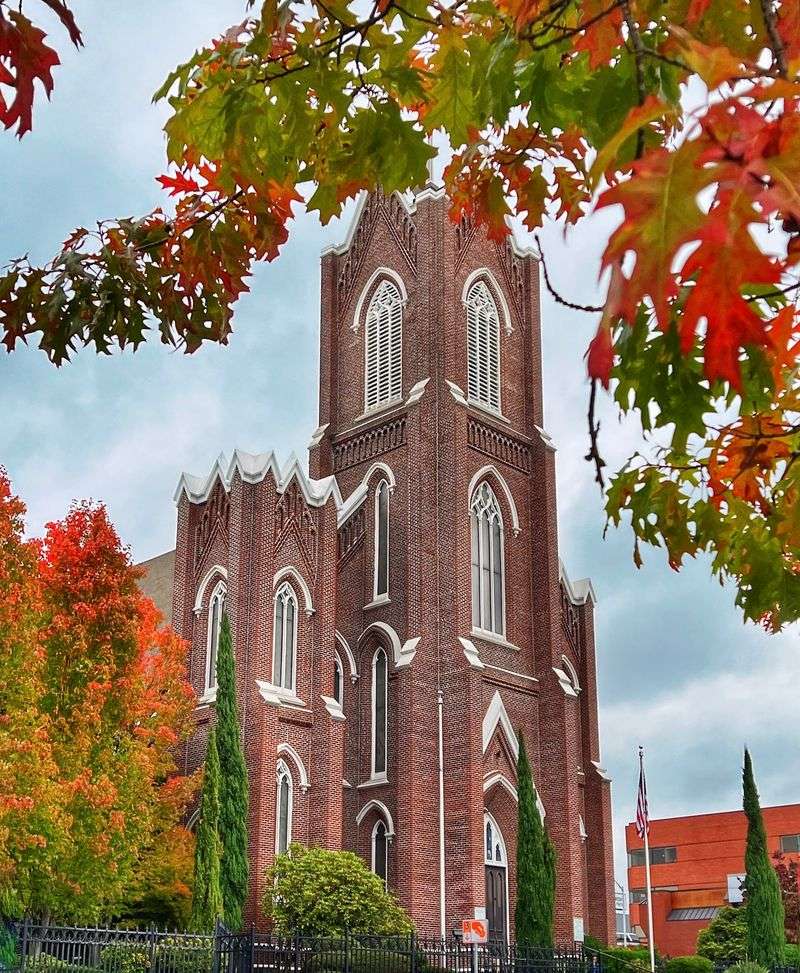
Correct me if I’m wrong, but old brick has a way of whispering stories. This one has plenty to share.
The Proto-Cathedral of St. James the Greater in Vancouver traces its parish history to 1838, when Catholic missionaries established a presence around Fort Vancouver.
A wooden St. James church was dedicated in 1846, and the parish became the cathedral church of the Diocese of Nesqually in 1850.
The present brick building was dedicated in 1885. Its Gothic character comes through in the tall proportions, ribbed interior, stained glass, and prominent steeple that once dominated the skyline of the growing town.
Materials and furnishings arrived from surprisingly far apart. Local brick and stone were paired with carved elements and church furnishings from Europe, reinforcing the Old World character that still defines the interior.
The diocesan seat moved to Seattle in 1907, ending the building’s cathedral era.
More than a century later, the parish received the title Proto-Cathedral in 2013 to recognize its role as the first cathedral of the diocese that eventually became the Archdiocese of Seattle.
A major restoration beginning in 2008 renewed plaster, decorative painting, wood graining, and gilded details without erasing the historic framework.
Public historical tours are offered on selected Saturdays. The church stands at 218 W 12th St, with visitor parking nearby. That layered history gives the site importance within Catholic history across the Pacific Northwest.
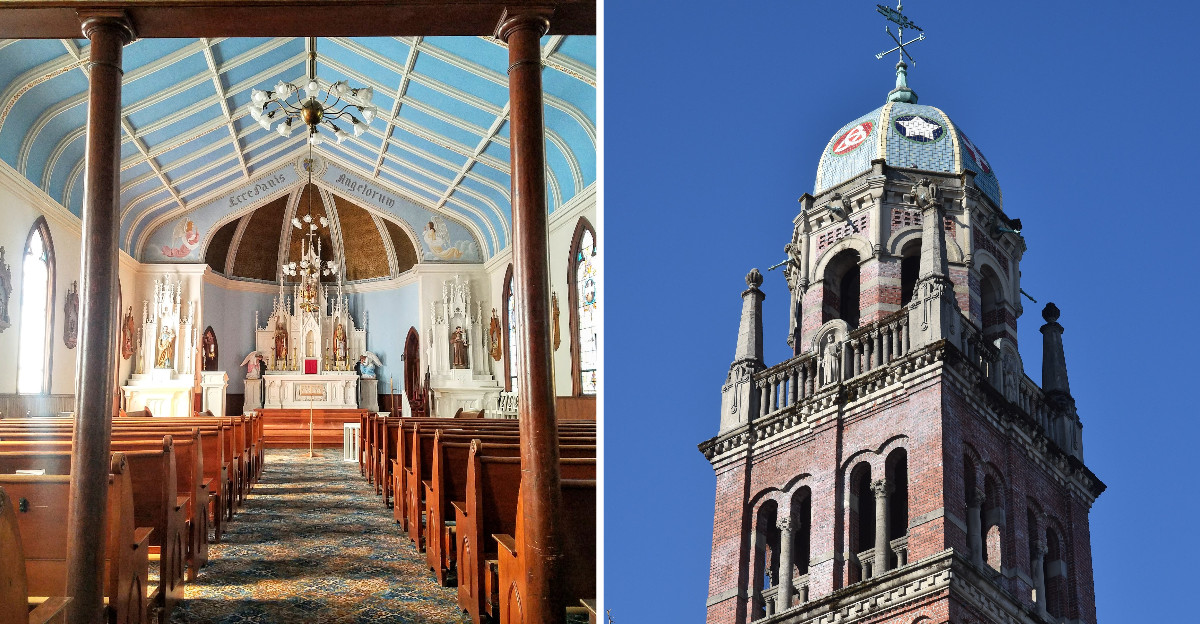
4. St. Paul Cathedral, Yakima
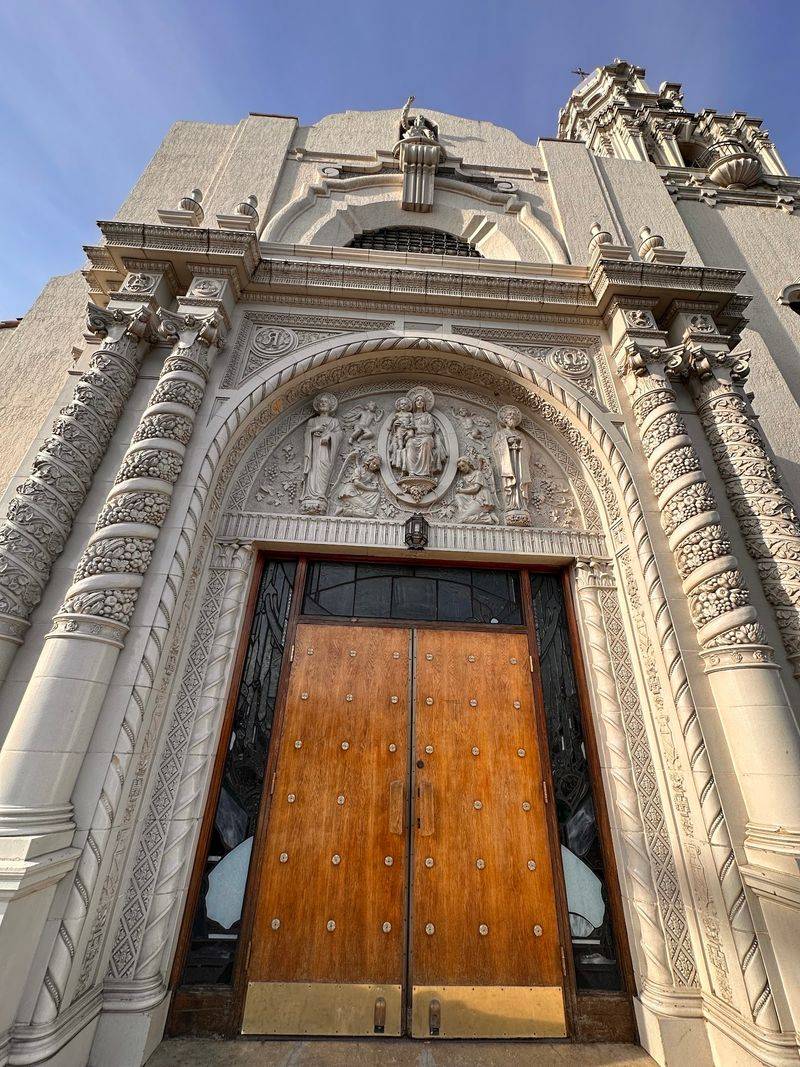
Call me crazy, but Spain might have a secret outpost in central Washington. One glance at this tower will make you wonder too.
St. Paul Cathedral in Yakima grew from a parish established in 1914. The present Spanish mission-style church followed in the 1920s, with its first Mass celebrated there in 1927.
The exterior is defined by a cross-shaped plan, red tile roofing, and a 125-foot tower capped by a glazed tile dome and bronze cross.
Those details give the building a Southwestern silhouette that stands apart from the surrounding city blocks.
Inside, the sanctuary sits beneath the rounded apse at the far end of the nave. Transepts extend from either side, reinforcing the traditional cruciform layout and drawing attention toward the central worship space.
The building became the cathedral of the newly created Diocese of Yakima in 1951.
A major expansion in the mid-1950s increased seating capacity to about 800 and added terrazzo flooring, oak pews, a chapel, baptistery, and expanded support spaces.
The structure remains an active cathedral rather than a preserved monument, so visits should work around scheduled services and parish activities.
Its architecture is most striking from the front, where the tower, tiled roof, and pale walls create the strongest mission-style composition.
The cathedral stands at 15 S 12th Ave, making it an easy architectural stop near central Yakima.
5. St. Patrick Catholic Church, Walla Walla
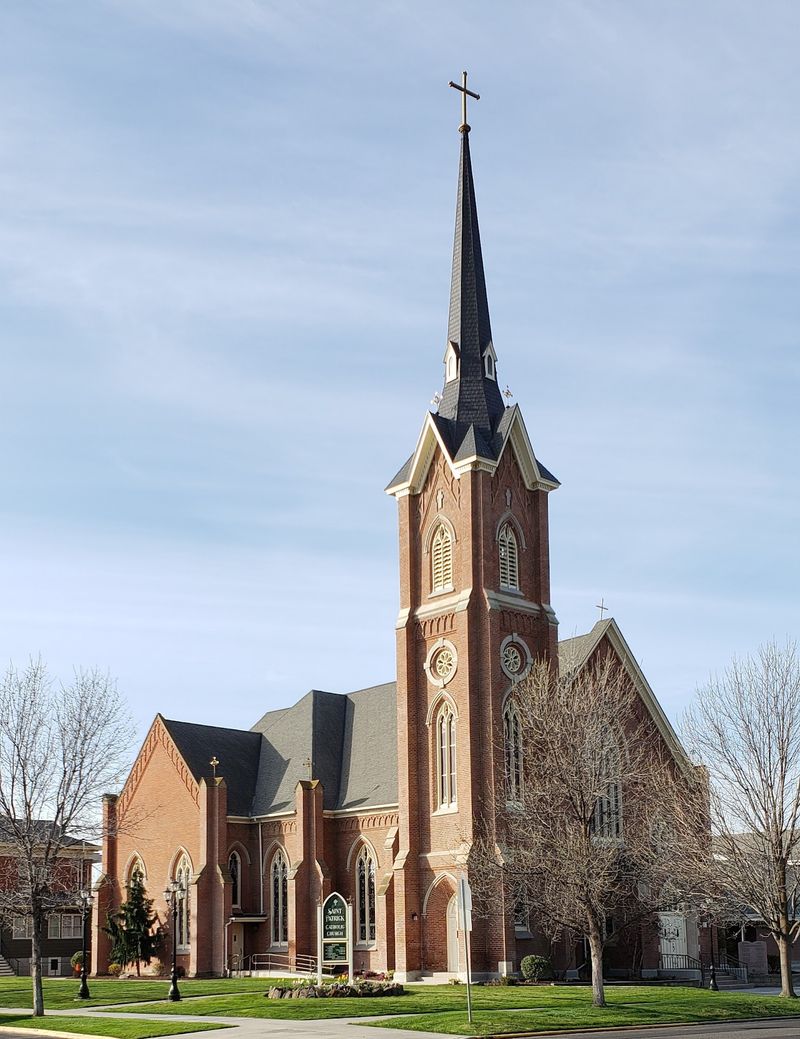
I had to do a double-take when I learned this facade has barely changed. Nearly a century and a half later, it still looks the same.
St. Patrick Catholic Church in Walla Walla dates to 1881 and remains one of the city’s oldest standing church buildings.
The parish itself grew from a Catholic community established much earlier in the Walla Walla Valley.
Its brick exterior, tall windows, and traditional church profile still give the building the nineteenth-century presence that made it a local landmark.
A major restoration began in 2023 and has focused on both the worship space and the building’s historic character. Work removed a later raised sanctuary extension, allowing the original proportions of the interior to read more clearly.
A new windowed wall beneath the choir loft created a narthex and a family room.
The Stations of the Cross were cleaned and repainted, interior surfaces received renewed finishes, hanging lights were updated, and devotional areas were refreshed.
The restoration has been handled as an ongoing project rather than a cosmetic makeover. Historic fabric remains central while newer interventions are designed to fit the older room.
St. Patrick remains an active parish with regular services, so quiet visits should avoid scheduled worship times.
The historic church itself stands at 415 W Alder St, a short walk from central Walla Walla.
6. St. Paul’s Episcopal Church, Port Townsend
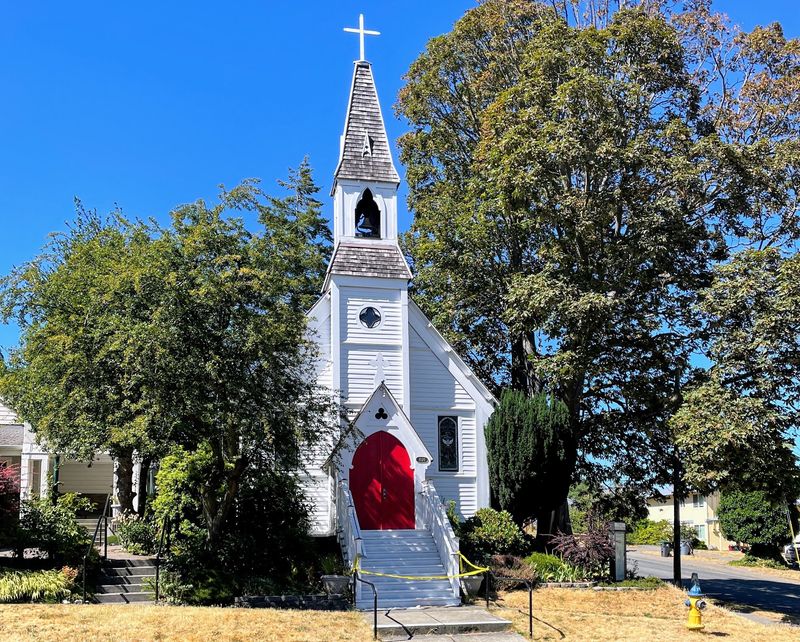
Just imagine for a second a church rolling down the street. Yes, rolling, on actual rollers.
St. Paul’s Episcopal Church in Port Townsend was moved that way in 1882 after a street regrade required relocation from its original bluff-side site.
The move strained the small building, and iron rods and clamps were added to stabilize it. Those practical repairs remain part of its visible history.
Construction began in 1861 and continued for four years, with the first service in the completed Carpenter Gothic church held on Easter Sunday in 1865.
The building is modest in scale, but its importance is larger than its footprint. It was the first Episcopal congregation in Washington Territory to construct its own church building and is the oldest Episcopal church building in continuous use in the state.
One of its most memorable details is the bell. Port Townsend was a major maritime gateway, and the bell was given so it could be sounded during foggy weather to help vessels locate the harbor. The restored bell still rings from the belfry on Sundays.
Inside, hand-built wooden elements reinforce the plain Gothic character rather than overwhelming it with decoration.
The church stands at 1020 Jefferson St in the Uptown district and remains an active parish.
7. First Presbyterian Church Tacoma, Tacoma
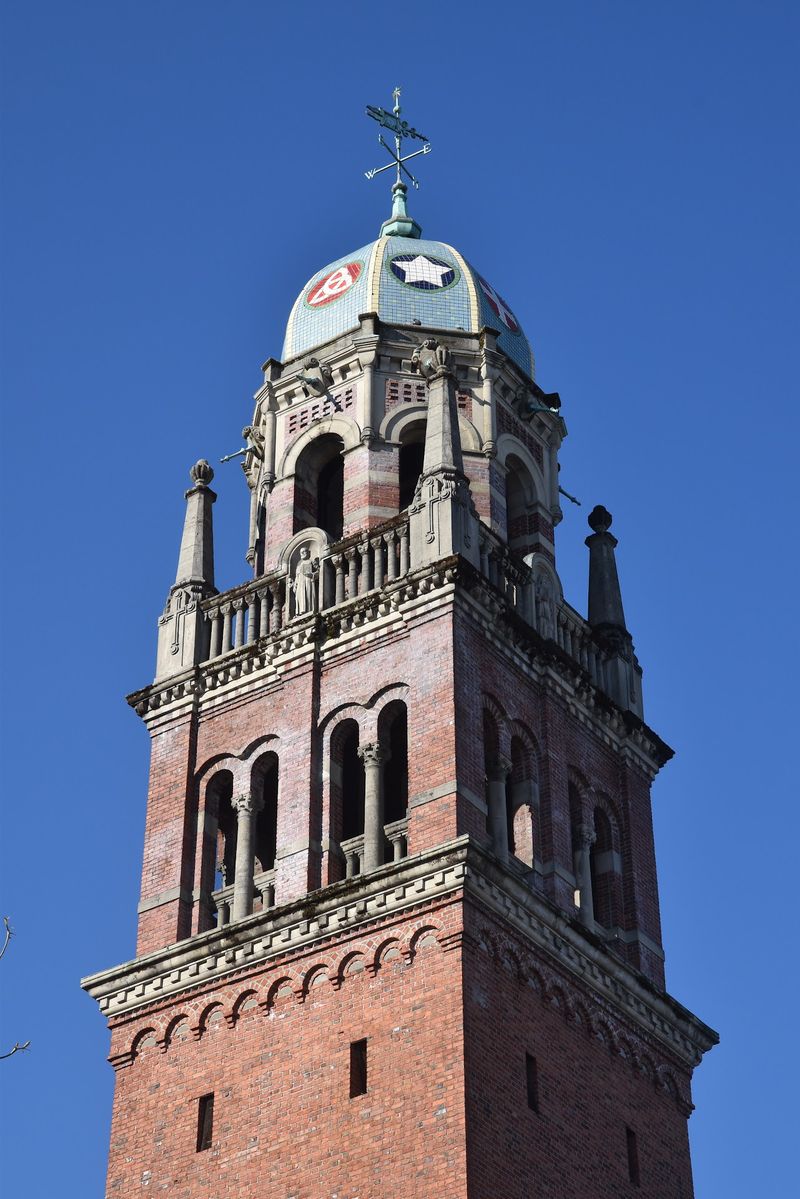
Here’s a thought worth chewing on. A church tower once helped guide ships into port.
First Presbyterian Church Tacoma opened its current building in 1925 after construction began two years earlier.
The Romanesque design came from the office of nationally prominent church architect Ralph Adams Cram, and its heavy walls, rounded arches, tile roof, and symbolic ornament give it an unmistakably historic character.
The tower rises 165 feet above Tacoma and served as a landmark for ships approaching the harbor. Niches near the upper level hold figures of the Four Evangelists, while a two-octave set of chimes sits just below the dome.
Inside, the sanctuary uses stone, wood, stained glass, mosaic, and carved furnishings as parts of one coordinated decorative program.
Three large rose windows are especially striking, with each assembled from roughly 2,500 pieces of colored glass.
The vaulted worship space was designed on a grand scale, while the smaller chapel offers a quieter counterpoint. Historic plans gave that chapel seating for about 100 people.
The church’s music tradition adds another reason to notice the building’s acoustics and scale, but the architecture remains the main attraction for a daytime visit.
First Presbyterian remains an active congregation, so access varies around services and events.
Find the building at 102 Tacoma Ave S, close to the edge of downtown and the Stadium District.
8. Sacred Heart Catholic Church, Bellingham
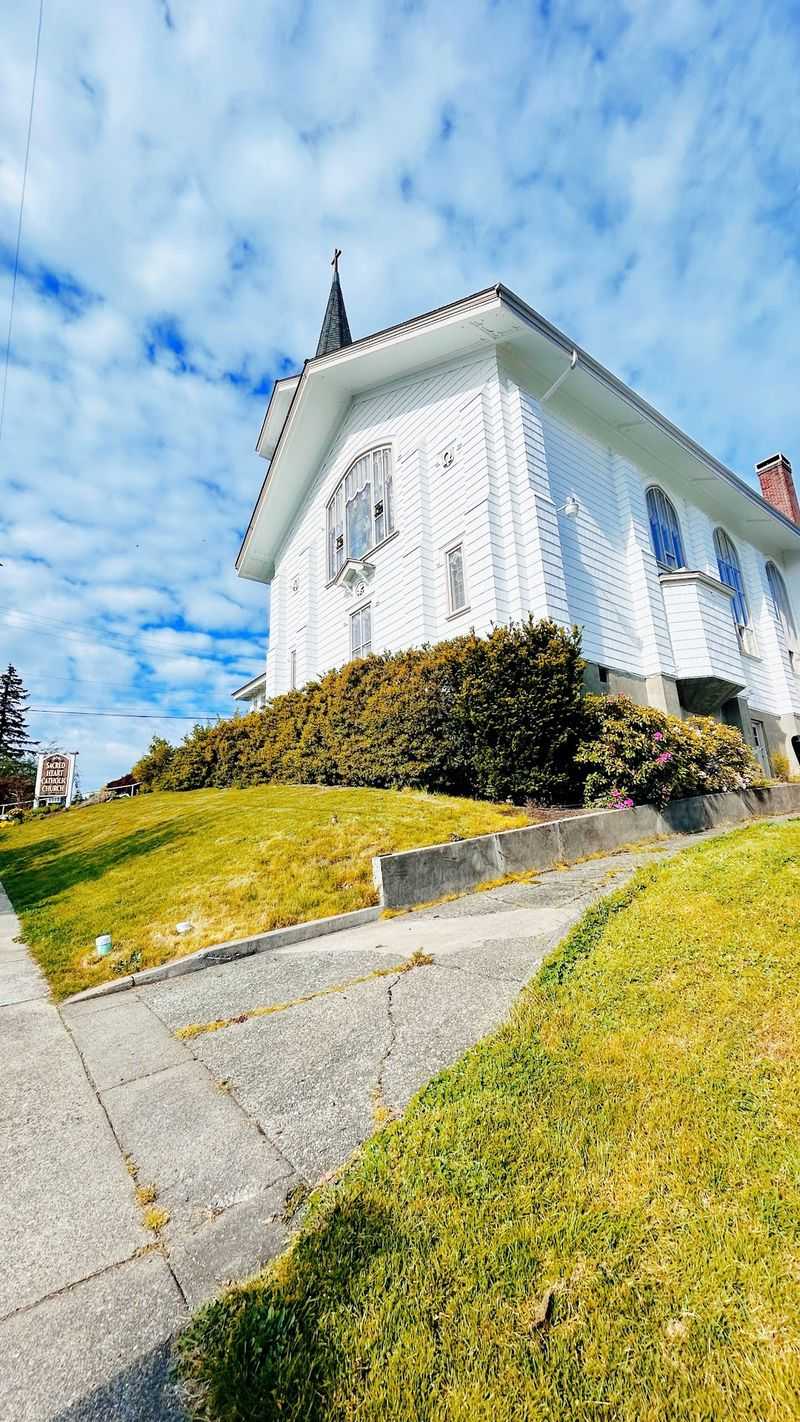
Have you given any thought to how a hilltop changes a building? Height turns a church into a neighborhood compass.
Sacred Heart Catholic Church in Bellingham began as a parish in 1905. Early services took place in temporary quarters before the congregation established its permanent home on 14th Street in 1912.
The current church is a contributing building in the South Hill Historic District.
Its Tudor Revival design uses a steep gabled roof, wide bargeboards, buttresses, and groups of stained-glass windows to create a profile that feels more English than Pacific Northwest.
The west-facing front is divided by shingled buttresses that emphasize the windows and religious symbols. A large stained-glass window fills the upper gable, while smaller panels appear lower on the facade and along the side walls.
Much of the original window pattern and exterior form remains intact, which helps the church retain its historic character within a neighborhood known for early twentieth-century homes.
Sacred Heart is still an active parish within the Archdiocese of Seattle and also has ties to Catholic campus ministry serving nearby university students.
The church is at 1110 14th St. Visitors should plan around worship schedules and treat the building as an active religious space rather than a sightseeing venue alone.
9. Mary Queen Of Heaven Catholic Church, Sprague
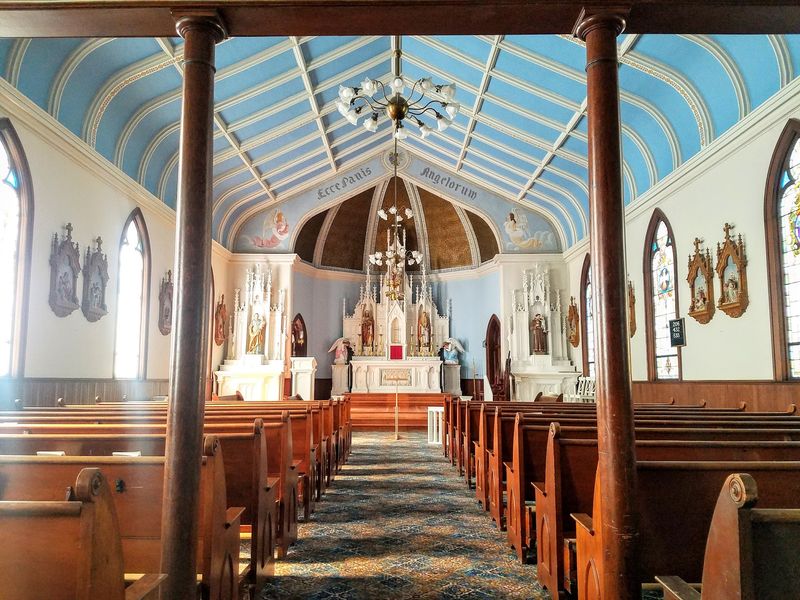
Sounds too good to be true, but a tiny farm town hides a Gothic treasure. Out among the wheat fields, a pointed steeple rises tall.
Mary Queen of Heaven Catholic Church in Sprague was built in 1902 after an earlier parish church from 1883 became too small.
The current building was designed by Spokane architect Herman Preusse, whose church work shaped several important religious buildings across the Inland Northwest.
The Gothic Revival design is unusually elaborate for a small agricultural community.
Pointed-arch stained-glass windows, a tall steeple, a ribbed arched ceiling, decorative interior painting, and careful masonry give the building a much grander presence than its setting suggests.
Its hillside position adds to the effect. The steeple rises above the surrounding town and has long served as one of Sprague’s most visible architectural landmarks.
The church was added to the National Register of Historic Places on April 26, 1990, specifically for its architectural significance and high level of historic integrity.
Unlike many preserved landmarks, it continues to function as a religious building. That ongoing use makes respectful timing important for anyone stopping to appreciate the exterior or hoping to see the stained glass from inside.
10. St. Andrew’s Episcopal Church, Chelan
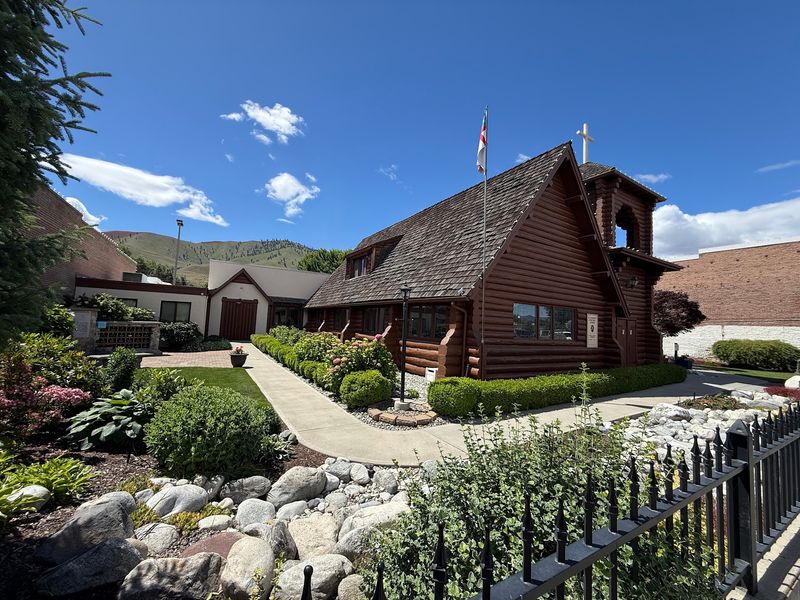
Look, I’ll be the first to admit log cabins rarely scream Old World. This one breaks that rule with style.
St. Andrew’s Episcopal Church in Chelan was designed in the late 1890s by the Spokane firm Cutter and Malmgren. Construction began in 1897, and the first service inside the completed log building followed in January 1899.
The church is the oldest surviving building in Chelan and one of the Pacific Northwest’s most distinctive Arts and Crafts religious structures. Its design uses local log construction without losing the careful proportions expected of a formal church.
Logs were prepared for a tight fit, giving the exterior unusually clean horizontal lines. The structure rests on a solid foundation, while the rustic bell tower adds a vertical accent without overpowering the compact building.
Much of the interior and exterior has remained close to its early appearance. The original seating was replaced around 1920, and later updates brought modern lighting and heating, but the essential log character survives.
The building joined the National Register of Historic Places in 1992. Its nomination notes that it may be the state’s oldest log structure still used continuously for worship by the same congregation.
Find St. Andrew’s at 120 E Woodin Ave, only a short walk from Lake Chelan and the center of town.