This Wonderfully Weird Museum In Louisiana Has To Be Seen To Be Believed
Louisiana has a roadside attraction that gets stranger with every room you enter.
First, an alligator-dog catches your eye. Then old arcade machines buzz, tiny scenes start moving, and a miniature Mardi Gras parade rolls by with the push of a button.
That is only the beginning!
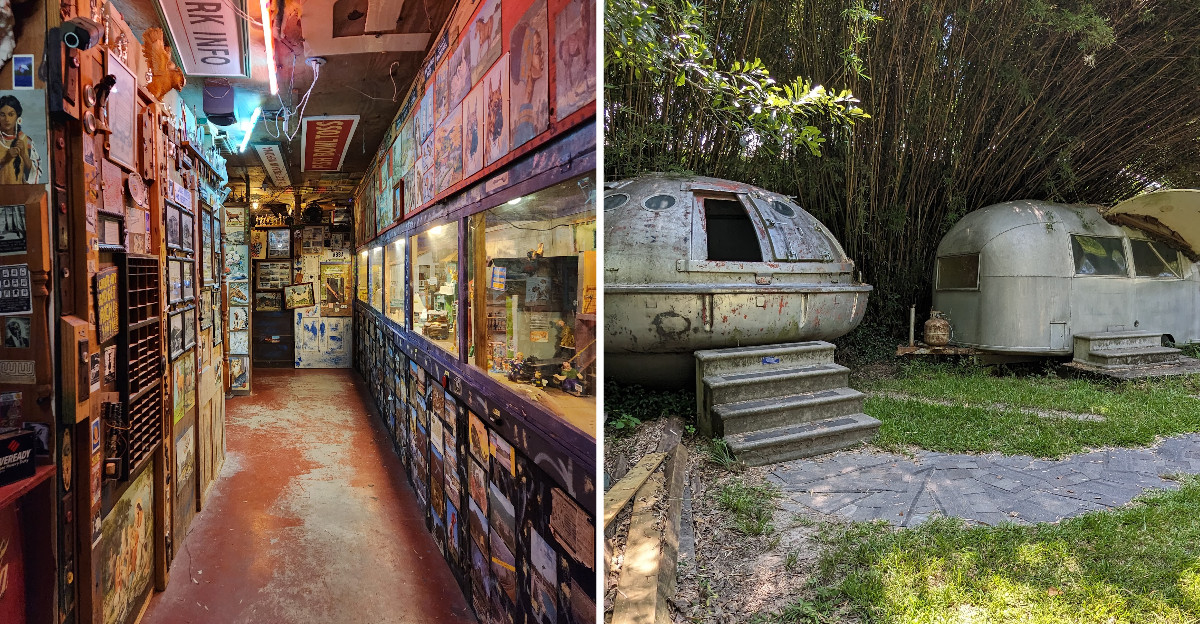
Handmade displays crowd the walls, odd collections fill the corners, and a crashed flying saucer somehow joins the mix.
Nothing stays predictable for long. One room leads to another, and each turn adds something even more unexpected.
By the time you reach the end, the biggest mystery may be how one person dreamed all of this up.
How One Collector Built Wonderland
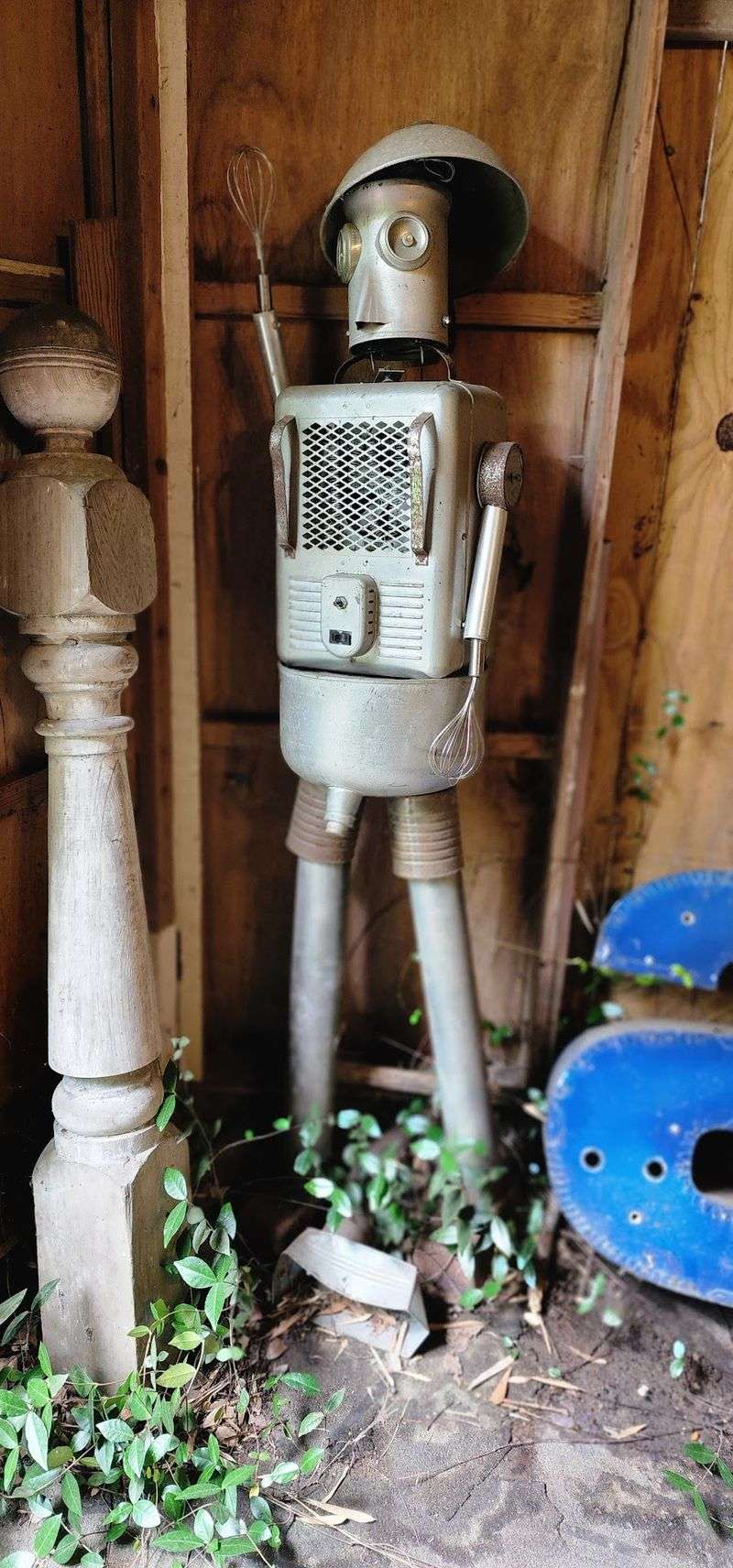
Every odd little kingdom needs a founder, and this one belongs to artist and inventor John Preble. His big idea sparked during a family trip to New Mexico.
There, he visited Tinkertown Museum, a place packed with carved miniatures and collected treasures. The handmade setting showed how a personal collection could become an entire roadside world.
He returned to Louisiana with the idea of building a Southern version shaped by local humor, folk art, and everyday objects.
The attraction opened around 2000 under the name UCM Museum. Say it out loud, and the joke becomes clear: you-see-em. The letters also came to stand for Unusual Collections and Miniatures.
Found objects, donated pieces, old signs, handmade machines, and original artwork kept filling the property. New additions have continued long after the first displays went into place.
In 2007, the attraction took on the name Abita Mystery House. The collection still carries the same playful mix of folk art, miniatures, and roadside imagination.
You can find this creative hideaway at 22275 Highway 36 in Abita Springs.
Fill Up At The Gas Station
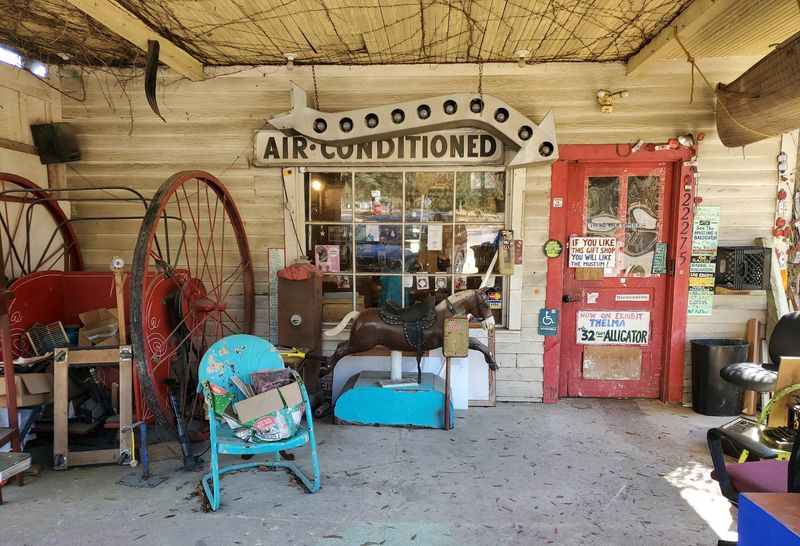
Forget the grand marble lobby. The tour begins at a vintage gas station with old filling pumps out front.
Bright, nostalgic decor covers the station, and it sets the mood right away. It also works as the entrance to the rest of the property, including the ticket counter and gift shop.
Past the station, the site rambles through a cluster of connected buildings and outdoor passages. The route feels more like wandering through a handmade environment than following a traditional gallery floor plan.
One of the historic structures is a roughly century-old Creole cottage moved onto the property. A large exhibition hall, open-air sections, and smaller structures add different layers to the self-guided route.
Each area holds a different theme or collection. Some spaces focus on miniatures, while others lean into found objects, folk art, old machines, or visual jokes.
Comfortable shoes help because the route moves both indoors and outside. It is also easy to backtrack after noticing something that was missed the first time.
Meet The Dogigator And Friends
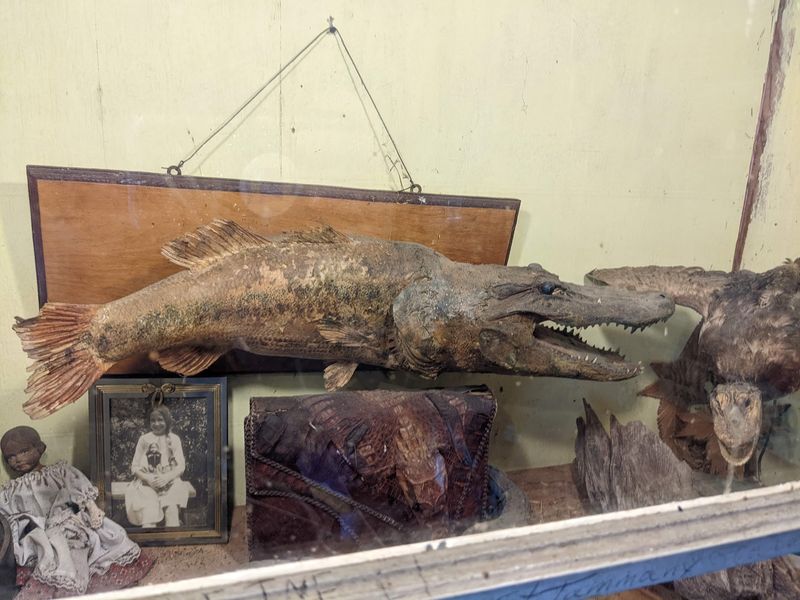
Nature did not plan these creatures, but the artist certainly did. Hybrid animals rank among the museum’s most famous residents.
The Dogigator combines a dog with an alligator, turning two familiar animals into one deliberately puzzling roadside creature.
Nearby, the Allisapien blends human and alligator features. The strange proportions make it look like something pulled from a homemade field guide to an imaginary world.
The biggest creature is the Bass-A-Gator, a roughly 22-foot combination of fish and alligator. Its scale makes it difficult to miss.
The creatures mix Louisiana swamp imagery with playful invention rather than trying to pass as real natural-history specimens.
Details matter when you look closely. Teeth, fins, fur, scales, and exaggerated features are assembled with the same handmade spirit seen throughout the property.
Everyday materials become something unfamiliar, and the careful construction gives these unusual creatures plenty of details to study.
Tiny Towns At The Push
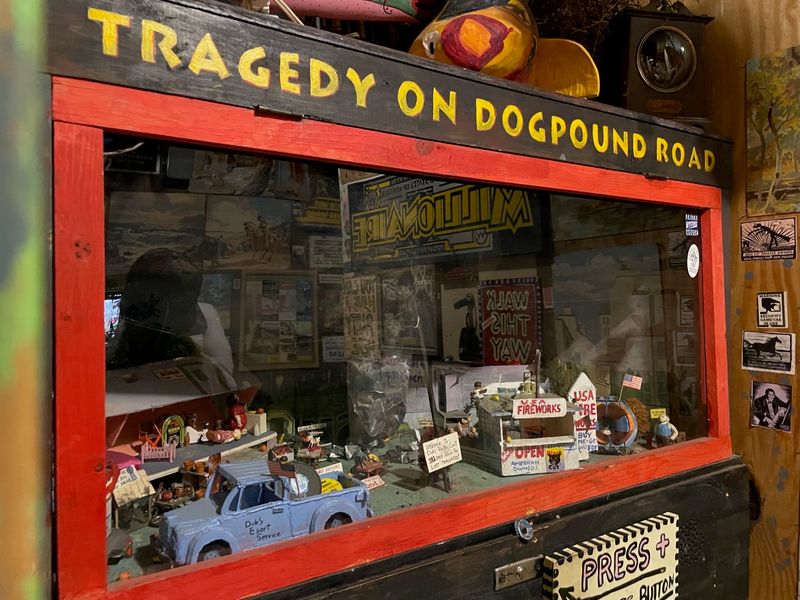
Push one little button, and a whole tiny scene can spring to life. The animated dioramas are among the museum’s most distinctive features.
One display recreates a Mardi Gras parade with small figures, moving parts, and festive decorations. Another presents a second-line scene inspired by New Orleans traditions.
Other miniatures turn music halls, streets, businesses, and roadside sights into compact mechanical worlds. Lights and motors bring parts of the scenes into motion.
A larger River Road display stretches the idea further, combining old buildings, industry, roadside attractions, and visual jokes within one long miniature landscape.
The tiny signs, painted structures, figures, and mechanical details reward slow looking. Many scenes make more sense after studying what is happening in the background.
These miniatures turn familiar Louisiana culture into something playful without losing the details that make the settings recognizable.
Some interactive machines are coin-operated, so carrying a few quarters can be useful. Most of the fun comes from pressing a button and watching an ordinary-looking scene suddenly start moving.
Shards, Mirrors, And A UFO
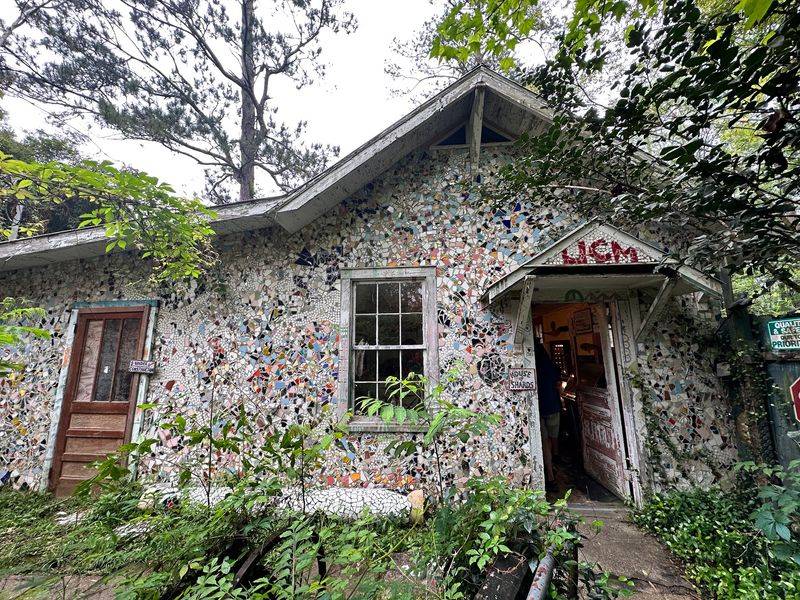
The House of Shards catches light from almost every direction. More than 15,000 pieces of glass, tile, mirror, pottery, and ceramic cover the transformed structure.
The mosaic continues across broad exterior and interior surfaces, turning an ordinary old building into one of the property’s most detailed pieces.
Sunlight changes the effect throughout the day. Mirrors flash, colored fragments brighten, and different patterns become easier to notice from different angles.
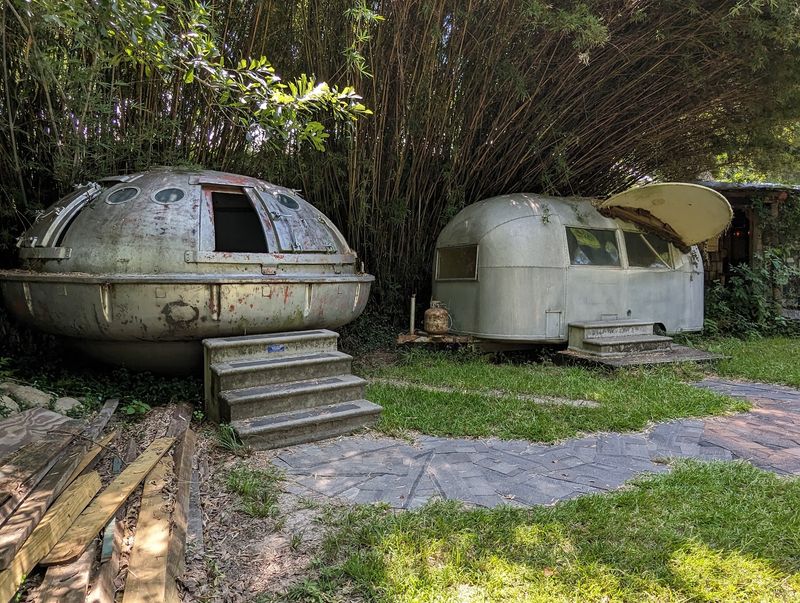
Not far away, the mood shifts from mosaic work to roadside science fiction. A flying saucer appears lodged in the side of an Airstream trailer.
The oversized display uses the same humor that runs through the miniature scenes and hybrid creatures. It is easy to understand the joke from a distance, but the surrounding details make it worth approaching slowly.
Both installations show how the museum works at its best. Familiar objects are rearranged until they become something completely different.
The scratches, mismatched surfaces, and earlier uses of those materials remain visible as part of the finished work.
Over 50,000 Rescued Treasures
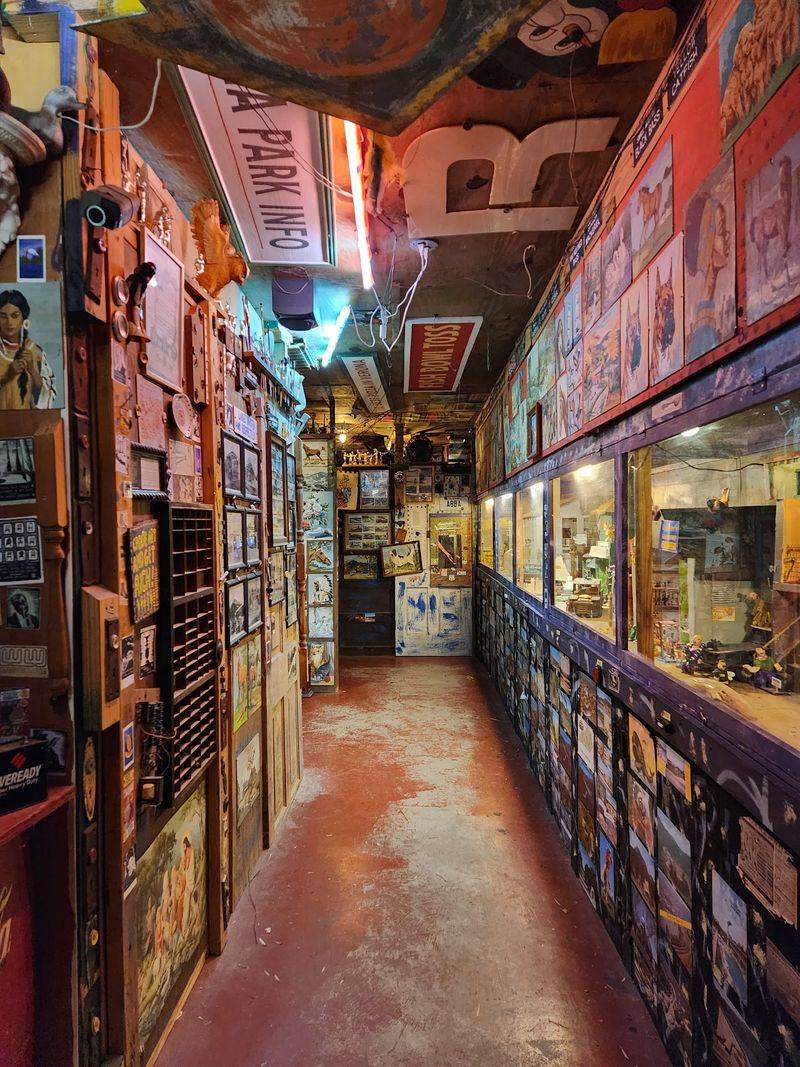
Combs, so many combs. One room alone makes it clear how quickly an ordinary object can become a collection.
The museum holds more than 50,000 found objects, collected pieces, and reused materials across its buildings and outdoor spaces.
Paint-by-number paintings line walls in colorful groups. Old radios, bicycles, bottle caps, signs, transistor boards, postcards, and other everyday objects appear in carefully packed arrangements.
Technology from earlier decades sits beside handmade folk art. Brick-style phones and electronic components become visual texture instead of disappearing into storage.
The collecting never really stopped. New material has continued to enter the displays, keeping the property closer to an evolving art environment than a finished exhibition.
That constant layering explains why the rooms feel so dense. Objects appear above doorways, along ceilings, inside cases, and in corners that would stay empty in a conventional museum.
Looking up, down, and sideways reveals pieces that can disappear into the background on a quicker pass.
The scale is impressive, but the organizing idea remains simple: ordinary things can become interesting again when they are grouped, altered, or placed in a new context.
Hands-On Fun Is Encouraged
Most museums ask visitors to keep their hands away from the displays. Here, many of the interactive pieces are designed to be activated.
Buttons, switches, and controls appear throughout the miniature exhibits. Press one, and figures may move, lights may turn on, or a machine may start running.
One elaborate marble contraption uses popsicle sticks, pinball-machine parts, plumbing pieces, and other reused materials. It sits inside an old movie-theater ticket booth.
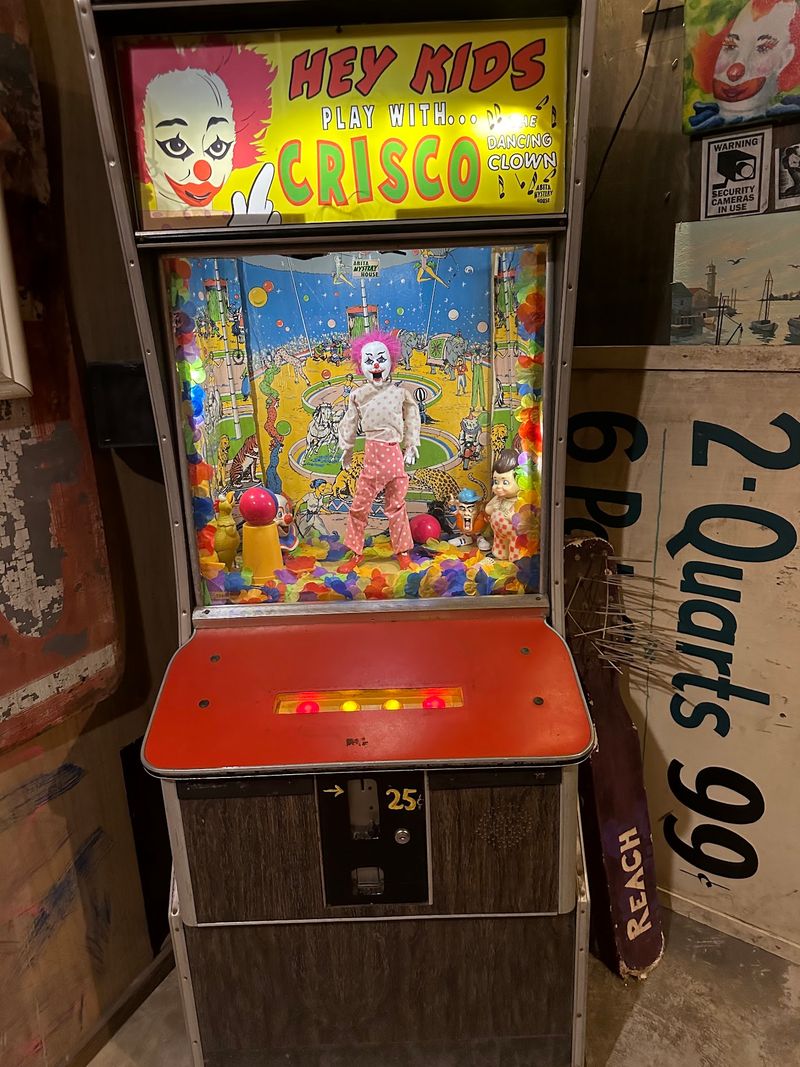
Vintage arcade machines add another hands-on element. Some still operate, giving the rooms a layer of old-school mechanical play alongside the folk art.
A wall packed with collected objects may be followed immediately by a machine that starts clacking into motion.
Some coin-operated displays still use quarters, so a few coins can be useful. Other push-button scenes operate without them.
The self-guided format lets visitors stop wherever something catches their attention. There is no fixed sequence that demands moving on before a display has finished revealing its details.
Go slowly and try the interactive pieces that are clearly meant to be used. Some of the smallest switches trigger surprisingly elaborate scenes.
Plan Your Northshore Detour
Good news for planners: the doors are currently open every day. Hours run from 10 a.m. to 5 p.m., Monday through Sunday.
The museum sits in Abita Springs, a historic small town on the north shore of Louisiana. It remains within easy day-trip range of New Orleans.
The Tammany Trace runs nearby. The paved 31-mile rail-trail passes directly through Abita Springs and connects the town with several other Northshore communities.
Cyclists can use the trail to reach the center of town and add the museum to a longer outing. The Abita Springs trailhead also provides a natural stopping point nearby.
Give yourself at least an hour inside. The route is compact, but the number of small objects, labels, miniatures, and mechanical details can easily stretch a visit longer.
Do not skip the gift shop on the way out. It carries art, prints, small souvenirs, and locally made items that continue the same offbeat visual style found throughout the attraction.
The founder’s own artwork also remains part of the larger creative world surrounding the museum.