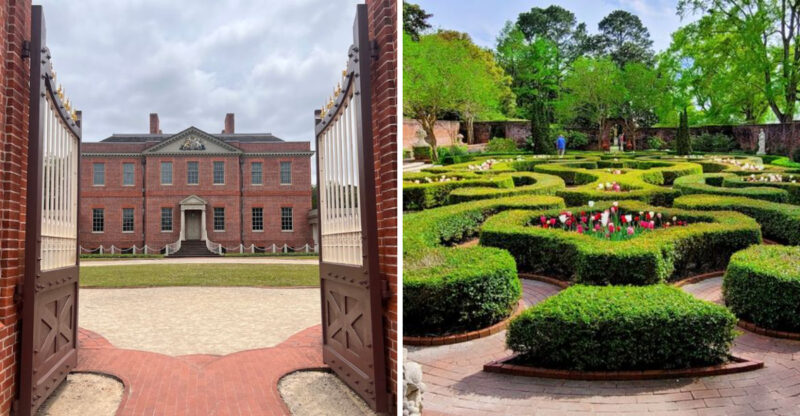
Civil War Soldiers Dug These North Carolina Trenches More Than 160 Years Ago And Traces Still Remain
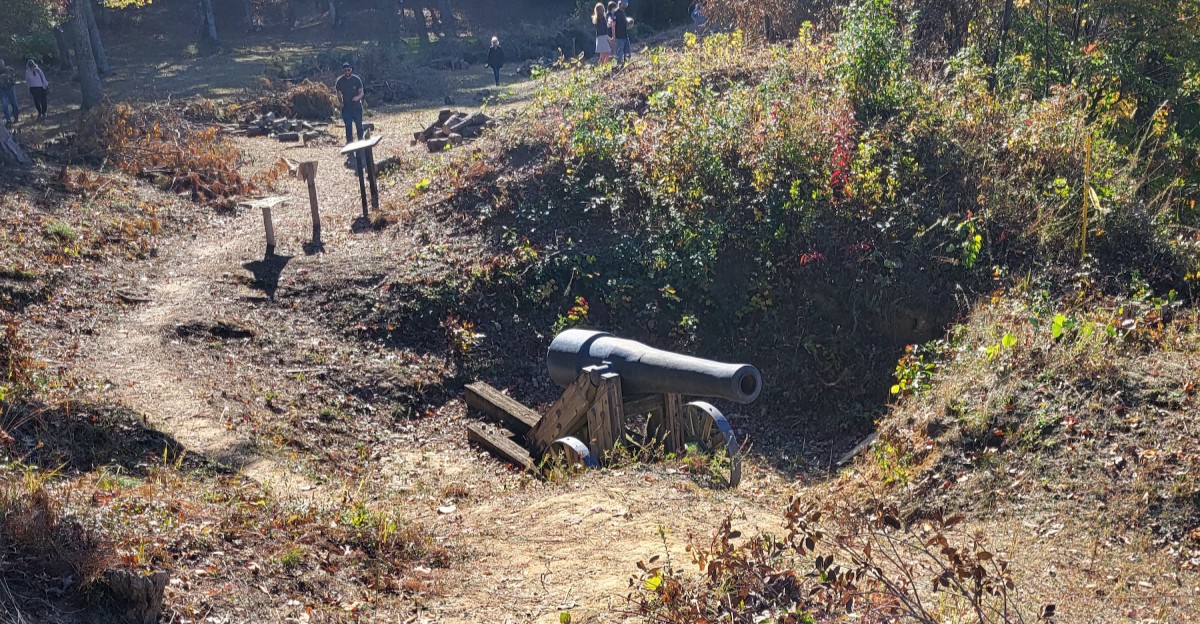
The ground looks peaceful now, which makes its history even harder to ignore.
More than 160 years ago, people reshaped this North Carolina bluff into a defensive system of trenches and earthen walls overlooking the Roanoke River.
Confederate troops worked here alongside enslaved laborers whose role is essential to understanding the site.
Much of that landscape can still be traced on foot today. Grass has softened the edges, trees have grown tall, and birdsong has replaced the noise of war.
Yet the earth still carries the outline of what happened here.
This is not a place to rush through.
The quieter the walk becomes, the more powerful those surviving traces start to feel.
Walk Along Earthen Defenses Dug More Than 160 Years Ago
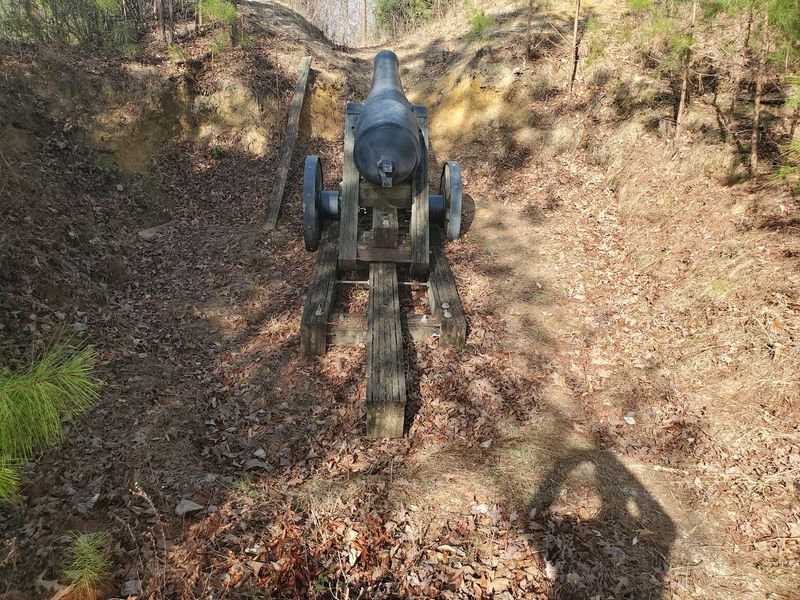
Rows of grassy ridges rise and dip beneath tall pines, preserving the shape of defenses built by hand more than 160 years ago.
Confederate troops started building the fort in October 1862, and they kept improving it until late 1864.
What you see now is the outline of their effort, softened by time but still easy to trace.
Fort Branch Confederate Earthen Fort Civil War Site sits on quiet farmland a short drive from the small town of Hamilton. The setting feels calm and green, with the smell of pine needles and damp soil drifting across the paths.
As you stroll, notice how the mounds curve and connect.
Some spots rise well above your head, while trenches drop into shady hollows where leaves collect.
Kids often love spotting the lines and guessing how soldiers moved between them.
In April 1865, departing troops destroyed the fort’s storage magazine and rolled their heavy cannons into the river. Yet the earth itself stayed put.
Wear sturdy sneakers and bring bug spray, since the ground can be uneven and the woods buzz in warm months.
Take your time here, since the quiet makes every small detail easier to notice.
It is at 2883 Fort Branch Road, Oak City, North Carolina 27857.
Stand On A 70-Foot Bluff Overlooking The Roanoke River
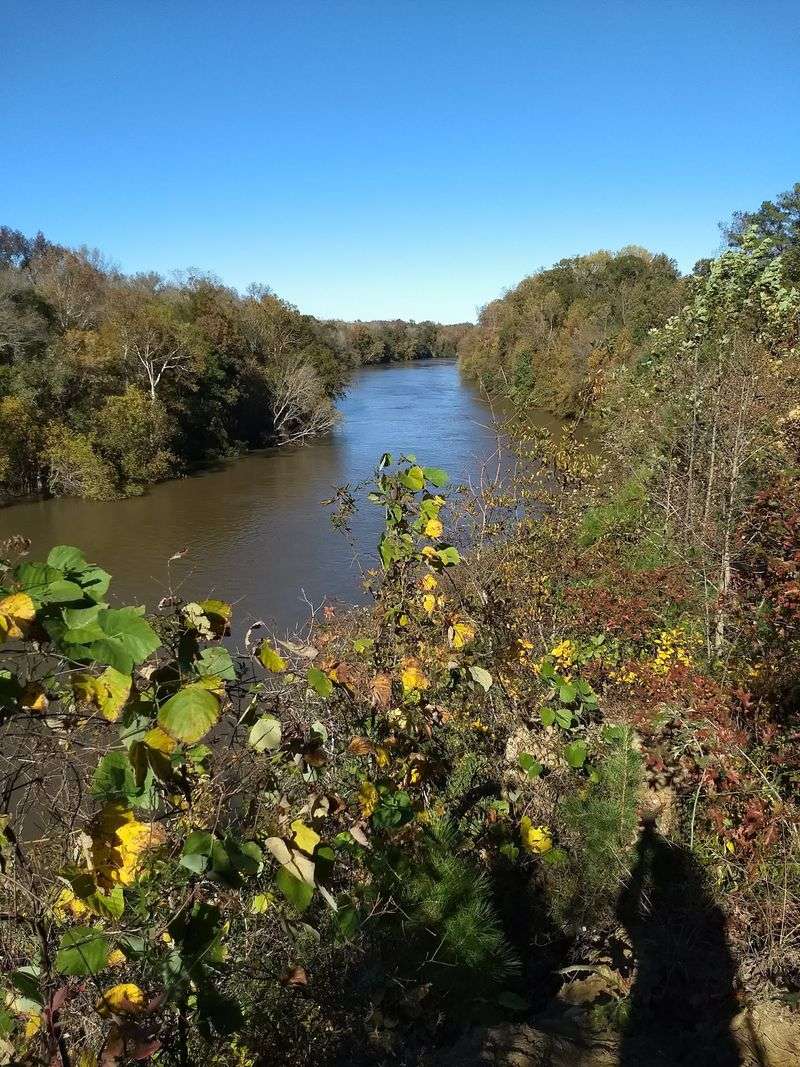
Few places in eastern farm country give you a view like this one.
The land suddenly climbs to a 70-foot bluff, and below it the Roanoke River bends in a wide, slow curve. Locals have long called this high ground Rainbow Banks.
The name fits on bright afternoons, when sunlight flashes off the brown water and the far shore glows green.
A split rail fence marks the edge, so you can enjoy the drop safely.
Listen closely and you may hear the river lapping or a heron calling from the trees.
Height mattered to the soldiers stationed here. From the top, lookouts could spot Union gunboats long before they came close, giving the fort time to prepare.
The steep wall of rock and clay below made climbing up from the water nearly impossible.
Bring a camera, because the view changes with the seasons.
Spring adds fresh leaves, summer brings deep shade, and autumn paints the riverbanks in gold and rust. Winter strips the trees bare, opening the widest look at the water.
Stand still for a minute and imagine scanning that river bend for movement, hour after hour.
See Original Civil War Cannons Returned To The Historic Fortifications
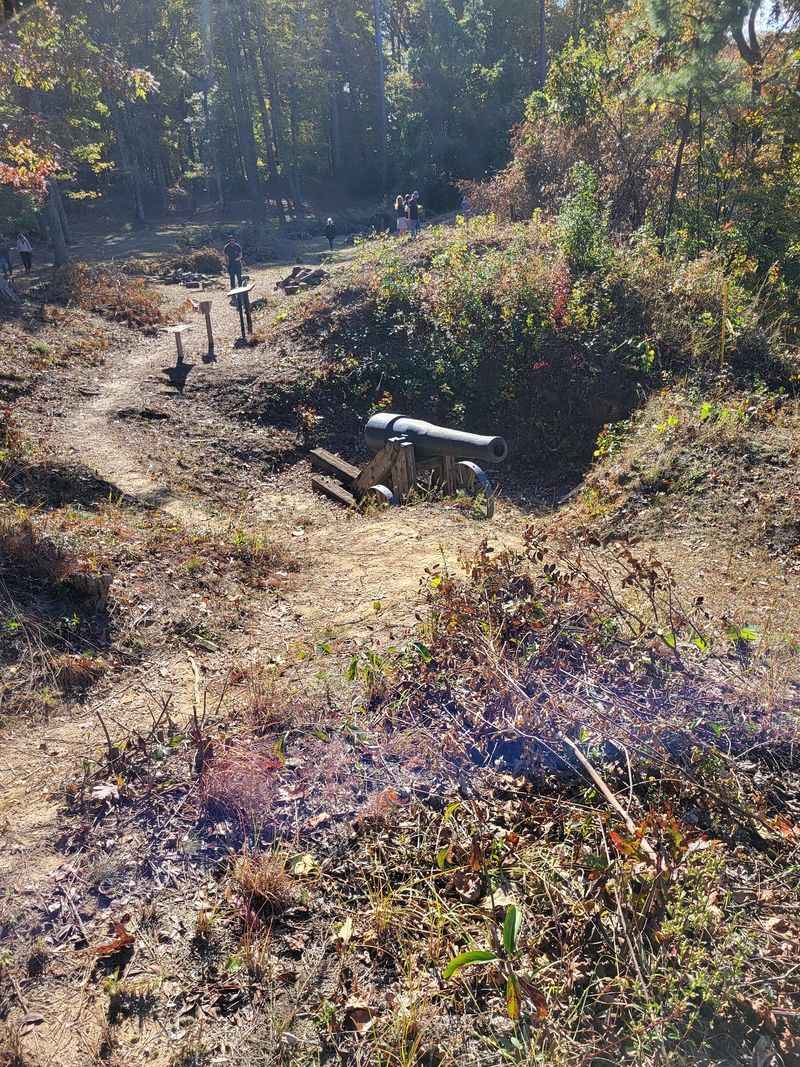
Here is a surprise most visitors never expect: the cannons sitting on these walls actually belong here.
When the war ended, soldiers pushed the fort’s big guns into the Roanoke River so the Union army could not claim them.
For about a century, they rested in the mud below the bluff. Major recovery work in the 1970s brought several guns and surviving carriage material back from the river, and Fort Branch currently identifies seven of twelve original cannons with the site.
The fort once held eleven or twelve, so most of the set has come home.
Historians describe Fort Branch as the only earthen fort in the South that still keeps much of its original artillery.
Up close, the iron looks rough and dark, with weathered surfaces shaped by years underwater. Ask a guide on open days about how each one was found.
Please look but avoid climbing on them, since these are rare historic artifacts.
Respecting them helps keep the collection safe for the next generation of curious travelers.
Snap photos from every side instead, since late-day light brings out the texture beautifully.
Follow The Earthworks Built To Stop Union Gunboats From Moving Upriver
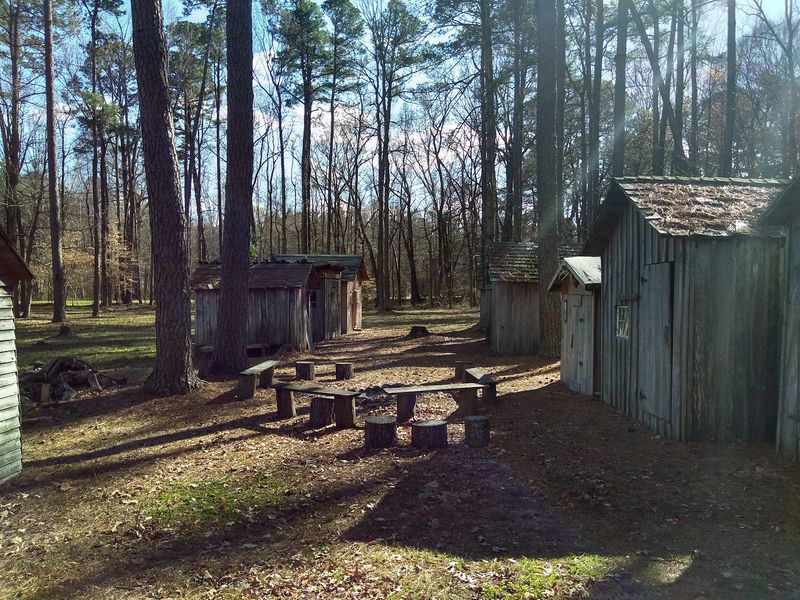
Rivers worked like highways during the Civil War, and the Roanoke offered a tempting path deep into the region.
Union gunboats hoped to steam upriver, reach towns and farms, and cut off supplies.
The builders of Fort Branch had one clear job: close that door. Walking the walls shows how they planned it.
The earthworks wrap around the high ground so the fort’s cannons could cover the river bend from several angles.
Thick mounds face the water, while other sections guard the land behind.
Follow the path slowly and the shapes start to make sense together. Heavy banks of soil could soak up impact far better than wood or brick.
Even today, the layout feels purposeful rather than random.
The plan worked. Union forces never advanced past the fort by water, and it became the anchor of defense for the whole Roanoke Valley.
That success protected people and farms upriver for much of the war.
Families can turn the walk into a game by asking kids where they would place a lookout.
Their answers often match the real design, which shows just how clever the builders were.
Learn How The Fort Helped Protect A Critical Confederate Railroad Route
Every army needs food, shoes, and supplies, and in the 1860s most of those traveled by rail.
One of the most important lines in the South was the Wilmington and Weldon Railroad.
People called it the Lifeline of the Confederacy. The Wilmington and Weldon Railroad ran from Wilmington to Weldon, where connecting rail lines carried traffic farther north toward Virginia.
At Weldon, a bridge carried the trains across the Roanoke River, and that bridge was a weak spot.
If Union boats sailed upriver and destroyed it, supplies for General Lee’s Army of Northern Virginia would slow to a trickle. Fort Branch stood between those boats and the bridge.
By guarding the river, the fort helped keep the trains rolling with goods heading north.
A quiet hilltop in the woods suddenly mattered to a huge part of the war. Grab a map before you visit and trace the river from the fort up to Weldon.
Seeing the distance makes the fort’s role click into place.
It also explains why soldiers spent two years building and improving these walls.
History often hides in connections like this, linking one small place to much bigger events.
Hear The Story Of The CSS Albemarle And The Shipyard It Helped Defend
Imagine building a huge iron-covered warship in the middle of a cornfield.
That is exactly what happened at Edwards Ferry, upriver on the Roanoke, beginning in 1863. Workers built a shipyard in a cornfield there and continued construction of the CSS Albemarle.
An ironclad ram was a sturdy vessel wrapped in thick iron plates.
It was designed to bump into enemy boats and shrug off their attacks. Building one took months of hammering, sawing, and fitting, all while hoping Union boats would not show up.
Fort Branch made that hope possible.
Its position downriver kept Union gunboats from reaching the shipyard, so construction could continue.
Without the fort, the project likely would have been spotted and stopped.
Once finished, the Albemarle steamed down the river and helped Confederate forces retake the town of Plymouth.
It also faced Union ships and, for a time, restored Confederate control over the lower Roanoke River and Albemarle Sound. Ask the volunteers on open days about this story, since it connects the fort to one of the most unusual ships of the war.
Hearing it while gazing at the same river the ship once traveled gives the tale real weight.
Visit During The Annual Reenactment For Artillery, Camps And Living History
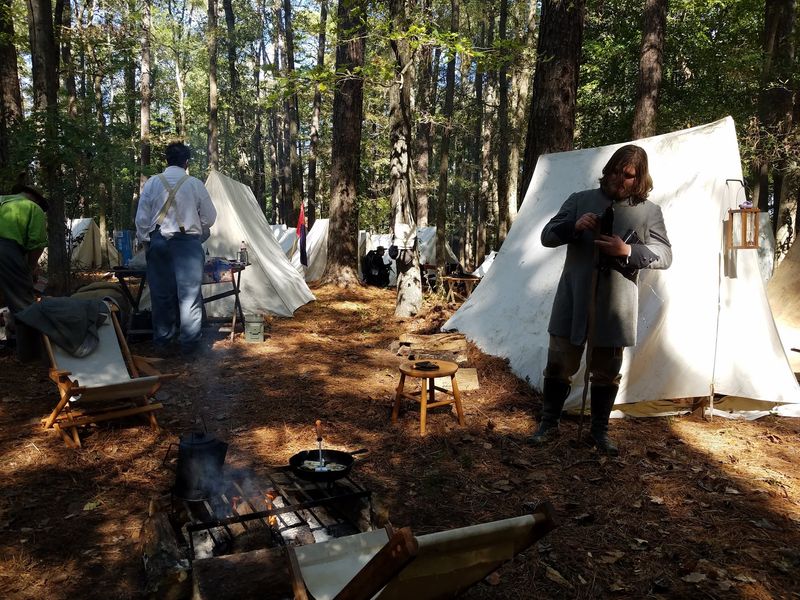
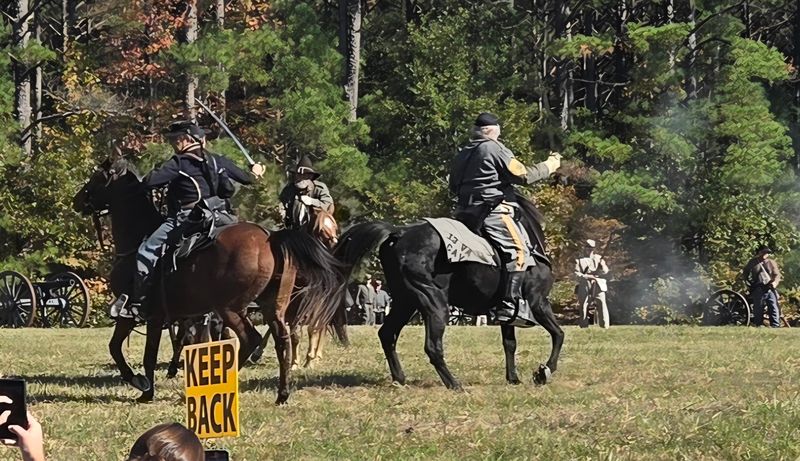
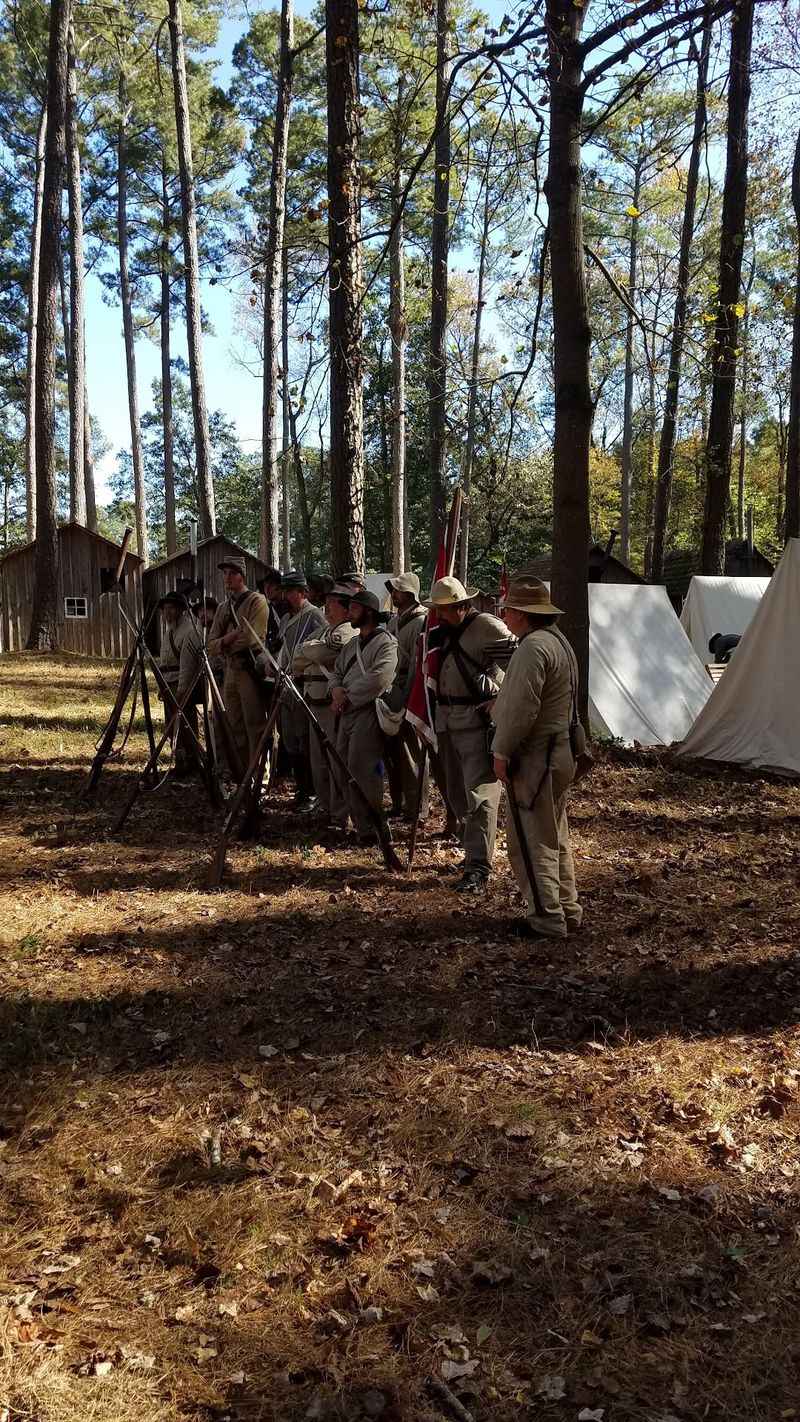
Smoke drifts over the field, drums tap a steady beat, and canvas tents line the grounds like a village from another century. Each year on the first weekend in November, the fort comes alive with one of the biggest living history events in North Carolina.
The 2026 gathering will mark the 40th annual reenactment.
Wander through the camps to see how soldiers cooked, slept, and passed the time.
Reenactors in wool uniforms stir pots over open fires, and the smell of wood smoke and simmering stew fills the cool autumn air. Cavalry riders and artillery crews show off their skills throughout the day.
Battle reenactments start at 1:30 p.m. each day.
Admission is free, though parking costs $10 for one day or $15 for both days. Bring cash, since that is the only payment accepted on site.
Dress in layers, because November mornings can feel chilly before the sun warms the field.
Comfortable boots help on grassy, sometimes muddy ground.
Prefer something cozier?
A Civil War Christmas event often takes place on the first Saturday of December, with candlelight tours and carols drifting through the old walls.
Plan Around Limited Weekend Hours Before Making The Drive
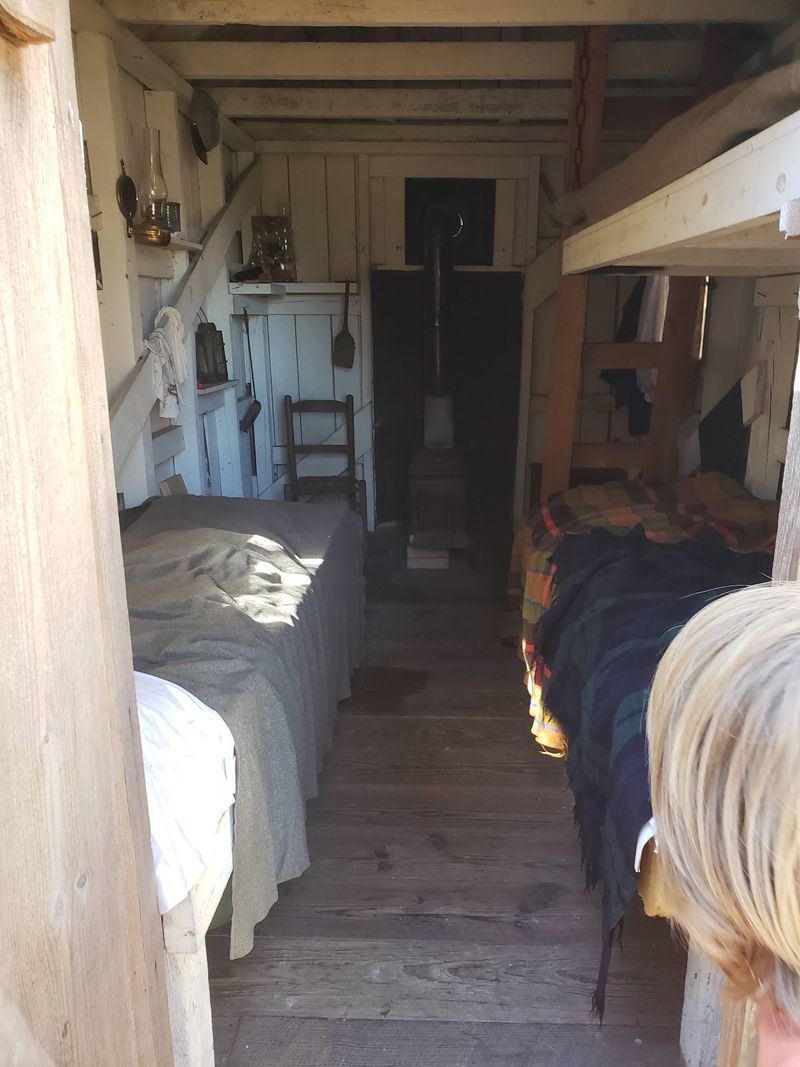
A little planning goes a long way with this hidden gem.
The fort is run by volunteers, so the museum and staffed areas open only on limited days.
Current official hours are 1 to 5 p.m. on the first and third Saturdays from April through the first weekend of November.
Want to come another day? Visits on other days can be arranged by appointment through the official website.
The property is privately owned, so visit during official open hours or arrange an appointment rather than entering the grounds independently.
Schedules have shifted over the years, so check fortbranchcivilwarsite.com before you leave home.
The fort sits along rural roads in eastern North Carolina, and the drive winds past fields, woods, and quiet farmhouses.
Cell service can be spotty, so download directions ahead of time. Pack water, snacks, sunscreen, and bug spray, since there are no big stores right next door.
Wear closed-toe shoes for exploring the trenches and paths.
A small notebook or sketchpad can make the visit more fun for young history fans.
Arrive early in the open window to leave plenty of time for the museum, the walls, and that unforgettable river view.
A slow, unhurried pace suits this peaceful place best.