A German Religious Community Built An 18th-Century Village In North Carolina You Can Still Visit Today
Some places in North Carolina feel like they missed the memo about time moving forward.
A few steps in, and suddenly the modern world starts looking suspiciously temporary. Cobblers, bakers, gardeners, and tradespeople keep the old rhythm going with the calm confidence of people who never needed Wi-Fi to make a point.
The streets do not feel staged as much as stubborn, like the whole village quietly refused to become a footnote. Every doorway seems to be hiding a recipe, a rumor, or a family story with excellent posture.
What makes the place so strange is not just its age. It is how alive the past still feels when nobody is trying too hard to impress you.
The Founding Story
Peace was built into Salem’s identity from the start. German-speaking Moravians founded the town in 1766 as part of their Wachovia settlement, creating a carefully planned community shaped by faith, skilled labor, education, music, and shared responsibility.
Instead of growing randomly, Salem was designed with order and purpose, giving shops, homes, schools, religious spaces, and work buildings clear places within the town. The Moravians were a Protestant group with roots in Central Europe, and their community life reflected a strong belief in discipline, cooperation, craftsmanship, and service.
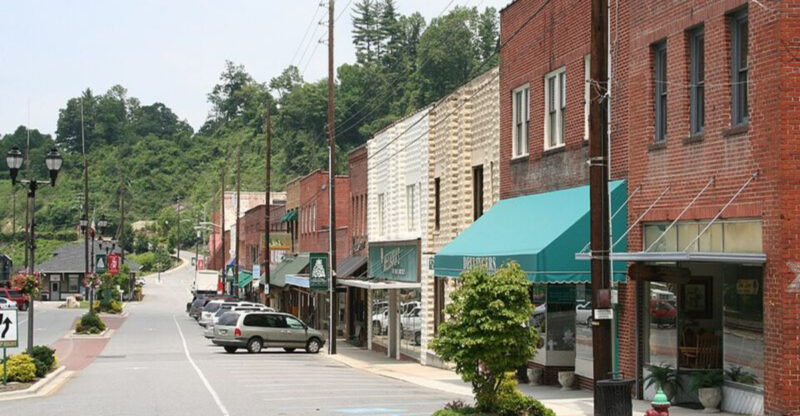
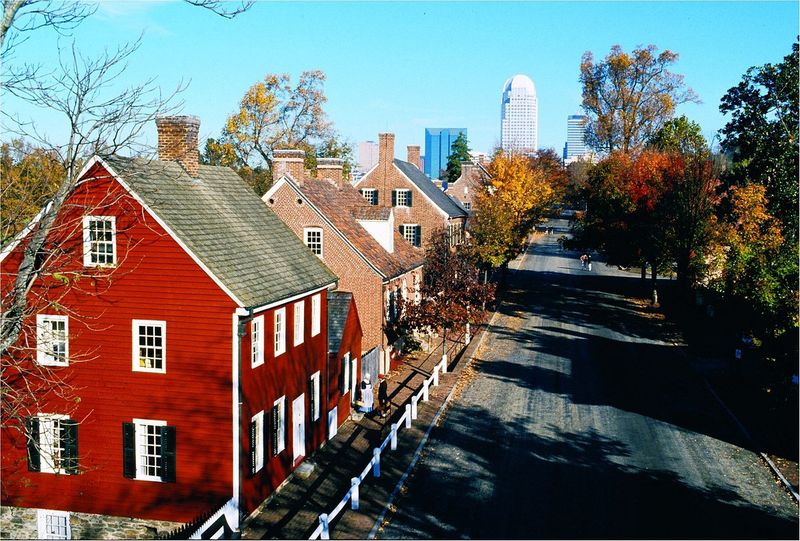
Walking through Old Salem today makes that planning feel surprisingly visible. Streets still hold the rhythm of an 18th-century town, while brick buildings and preserved workspaces show how daily life was organized around both practical needs and spiritual values.
The historic district sits at 900 Old Salem Road in Winston-Salem, North Carolina, making it easy to reach while still feeling removed from the modern city around it. Salem’s story matters because it shows a different version of early American settlement, one built less around individual expansion and more around a tightly connected religious community with a shared vision.
Winkler Bakery And Its Famous Treats
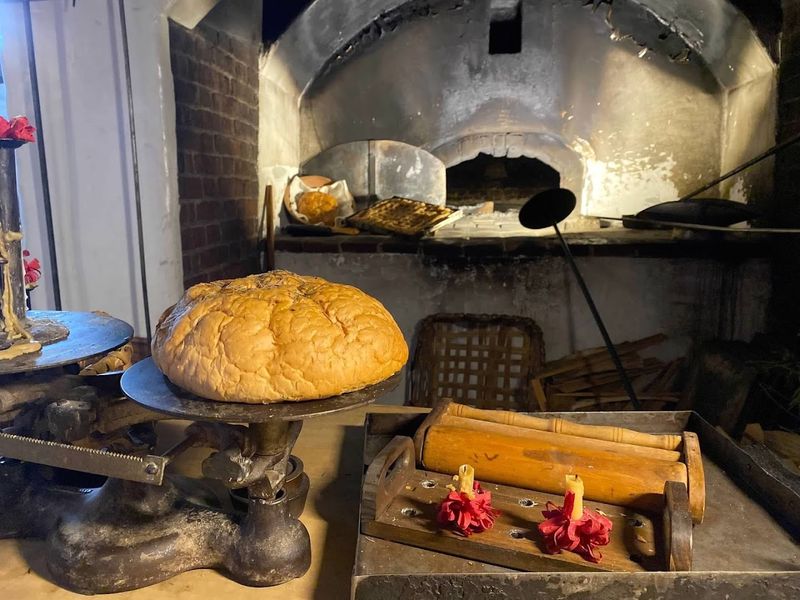
Warm Moravian sugar cake may be the fastest way to understand why Winkler Bakery is such a beloved Old Salem stop. The bakery sits inside the historic district and carries one of the strongest food traditions connected to Salem’s Moravian past.
Visit Winston-Salem describes Winkler Bakery as the oldest continually operating bakery in America, located inside Old Salem Museums and Gardens, with costumed bakers, Moravian sugar cake, rosemary bread, and Moravian cookies among its signature offerings. The bakery’s appeal is partly flavor and partly atmosphere.
Stepping inside feels different from visiting a modern pastry counter because the setting, recipes, and baking traditions all connect directly to the historic village around it. Moravian cookies are especially famous for their thin, crisp texture, while sugar cake brings that rich, buttery sweetness people often remember long after leaving.
Visitors do not need to overcomplicate this stop. Buy a few treats, notice the old-world feel of the space, and let the smell of baking do the rest.
Old Salem has many serious historical layers, but Winkler Bakery proves that history can also taste warm, sweet, and wonderfully simple.
The Historic Town Layout And Architecture
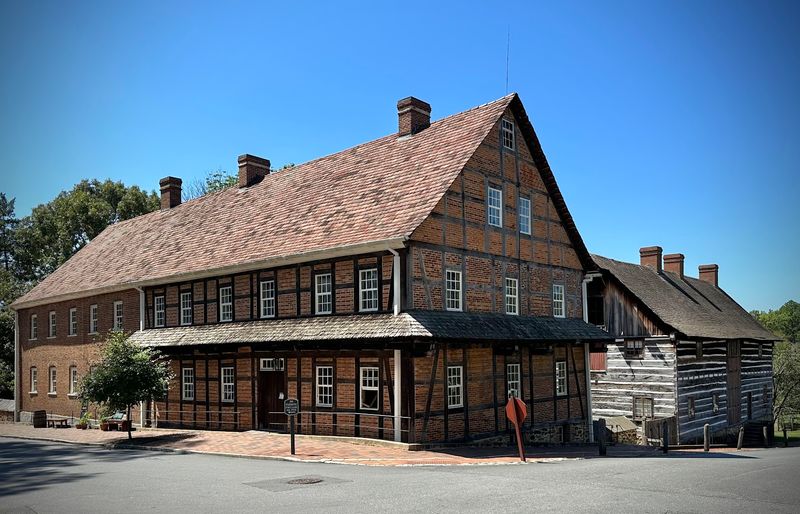
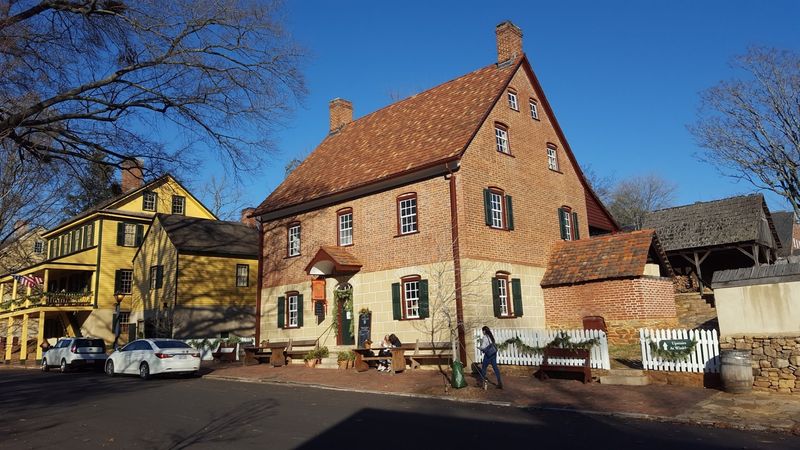
Architecture does a lot of the storytelling in Old Salem before anyone says a word. The historic town preserves streets, brick buildings, workshops, homes, gardens, and public spaces tied to Salem’s Moravian community, giving visitors a rare chance to see how an 18th-century planned settlement worked on the ground.
Old Salem’s own architecture resources highlight buildings such as the Single Brothers’ House, constructed in 1769 with a later 1786 addition, along with many other structures that show the town’s Germanic building traditions and later American influences. The district does not feel like a loose collection of unrelated historic houses.
Everything seems to belong to a larger plan, from the placement of work buildings to the scale of the streets. Some structures are museum spaces, while others remain part of the broader living neighborhood, which gives Old Salem a more authentic feeling than a sealed-off attraction.
Brickwork, rooflines, windows, doorways, and garden walls all reward slow looking. Visitors can walk the streets even without entering every ticketed building, and that simple act offers a strong sense of how carefully Salem was imagined, built, and preserved.
Costumed Interpreters Bringing History Alive
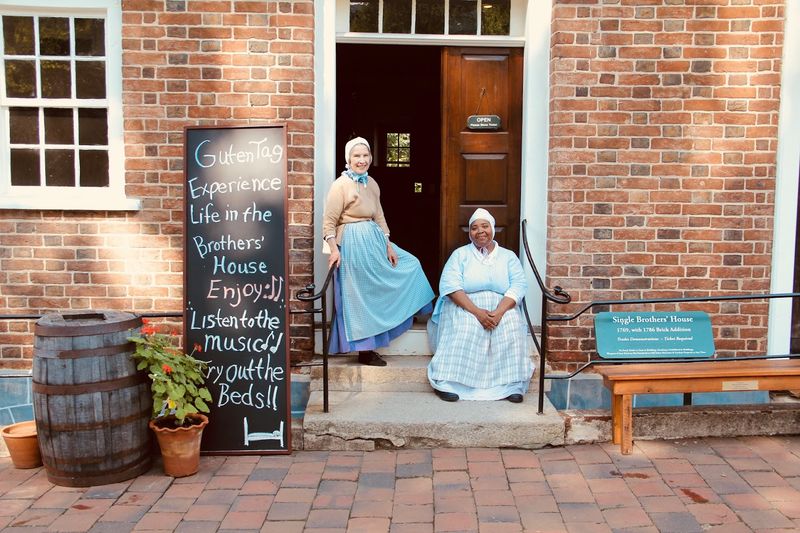
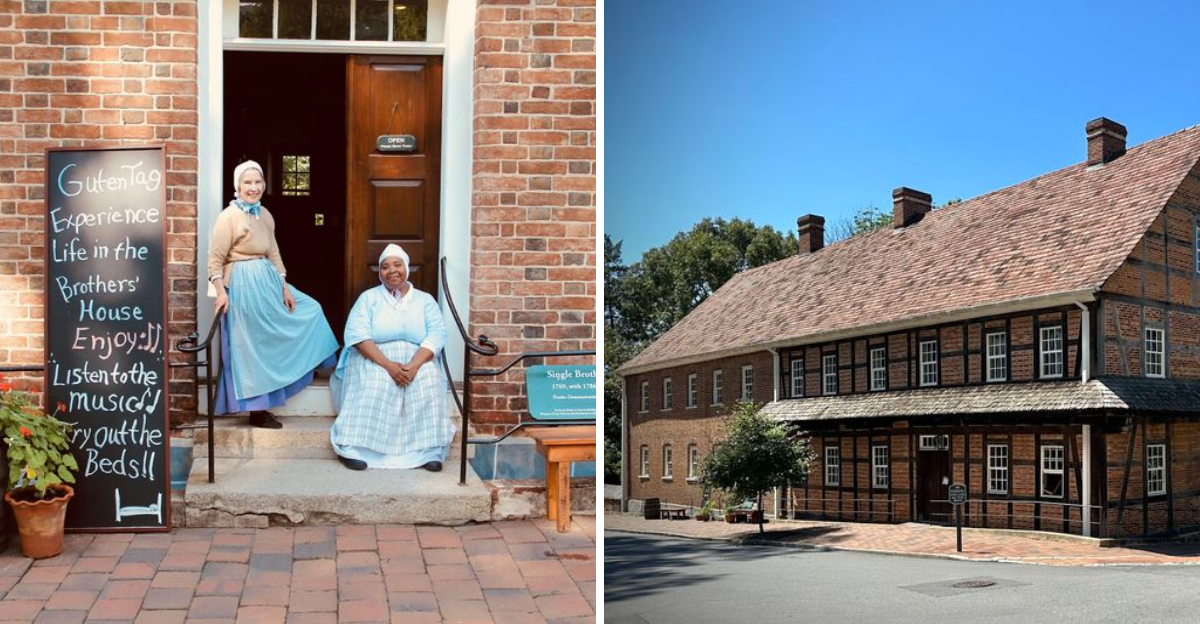
Live interpretation helps Old Salem feel active instead of frozen behind glass. Craftspeople and educators in historic settings demonstrate trades, domestic work, foodways, and daily routines connected to Salem’s Moravian community.
Old Salem’s 2026 open venues list includes spaces such as the Timothy Vogler Gun Shop, Blum House Joinery, Potter’s Workshop in the Single Brothers’ House, Boys’ School, Miksch House and Garden, Salem Tavern Museum, and other interpreted buildings, many of which require tickets. That variety gives visitors a fuller picture of town life beyond one famous landmark.
A blacksmith, joiner, potter, baker, teacher, or household interpreter can make the past easier to grasp because skills become visible in real time. Children often respond strongly to hands-on details, while adults tend to appreciate how much knowledge sits behind each demonstration.
The best moments happen when a visitor asks a question and the interpreter connects one small object or routine to a much larger story about faith, labor, gender, education, trade, or community life. Old Salem works because it turns history into something visitors can hear, smell, watch, and sometimes touch.
The Single Brothers’ House
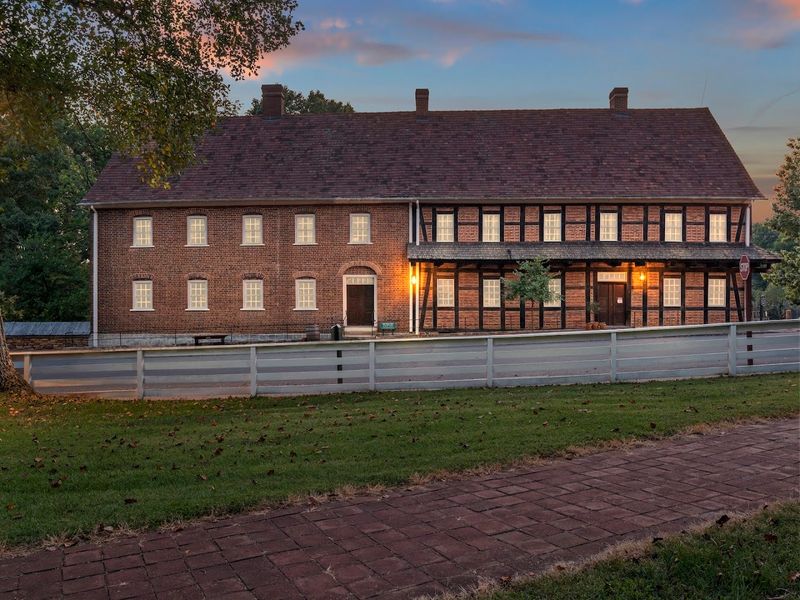
Communal life becomes especially clear inside the Single Brothers’ House. Old Salem’s architecture information identifies the building at 600 South Main Street, constructed in 1769 with a 1786 addition and restored in 1964.
In Moravian Salem, unmarried men belonged to the Single Brothers’ Choir, one of the community’s age, gender, and life-stage groups, and some members lived together in this building. That arrangement can surprise modern visitors because it shows how carefully the Moravians organized social and spiritual life.
The house was not simply a dormitory. It was tied to work, worship, training, and the broader economy of the town.
Young craftsmen learned trades, contributed to the community, and lived within a structure that reflected Moravian ideas about order and shared purpose. The building also stands out architecturally, with sections that reveal different phases of construction and the skilled hands behind them.
Walking through the rooms helps visitors imagine daily routines shaped by bells, workbenches, meals, prayers, and communal responsibility. Few buildings in Old Salem explain the settlement’s structure as clearly as this one.
It turns an abstract idea, the Moravian choir system, into walls, rooms, tools, and real human lives.
The Museum Of Early Southern Decorative Arts
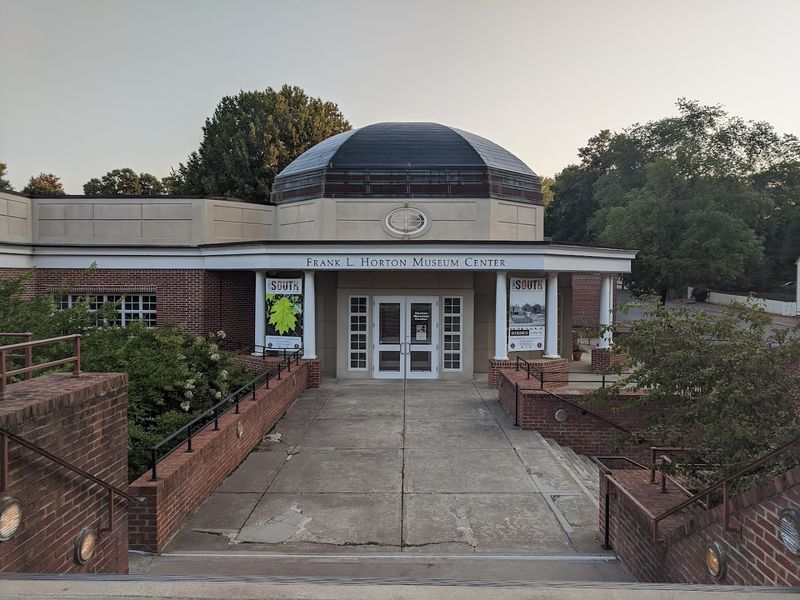
Decorative arts add a richer Southern context to any Old Salem visit. The Museum of Early Southern Decorative Arts, known as MESDA, is part of Old Salem Museums and Gardens and is housed in the Frank L.
Horton Museum Center. MESDA focuses on Southern furniture, ceramics, textiles, metalwork, paintings, and other objects that help explain how people made, used, displayed, and valued household goods across the early American South.
That focus makes the museum especially meaningful in North Carolina, where regional craft traditions carry deep historical weight. Instead of treating furniture or ceramics as purely pretty objects, MESDA helps visitors see them as evidence of labor, taste, trade, identity, and social structure.
Rooms and galleries can reveal how German-speaking Moravians, Anglo-American families, African American makers, and other Southern communities contributed to material culture in different ways. Pairing MESDA with the historic town outside makes the overall visit stronger.
Old Salem shows workshops, streets, gardens, and buildings, while MESDA brings close attention to the objects people lived with. Together, they make the past feel more textured, personal, and visually memorable than a standard walking tour alone.
Gardens, Grounds, And Outdoor Spaces
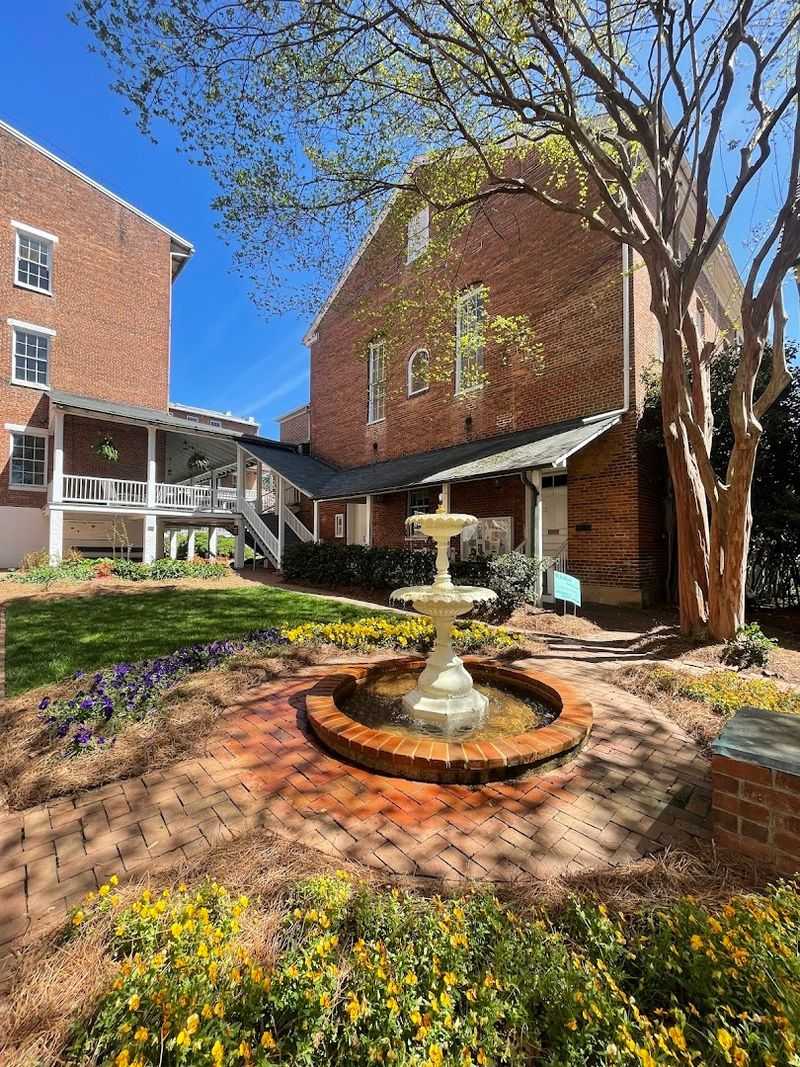
Garden paths soften the brick-and-stone history of Old Salem in the best possible way. The grounds at Old Salem Museums and Gardens help visitors understand that Moravian life was not limited to workshops, worship, and domestic interiors.
Gardens mattered too, providing herbs, vegetables, flowers, seasonal beauty, and practical resources for the community. Old Salem’s broader museum description includes the Gardens at Old Salem as part of its historic experience, alongside the Historic Town of Salem and MESDA.
Walking between buildings, visitors can see how outdoor spaces support the feeling of a complete village rather than a row of isolated landmarks. Spring brings fresh growth and bloom, summer fills the beds with texture, autumn adds warm color, and winter gives the district a quieter architectural clarity.
The streets and paths are also part of the appeal, especially for visitors who enjoy exploring without rushing through every ticketed interior. Photography feels natural here, but the real pleasure is slower than that.
Old Salem’s outdoor spaces encourage visitors to pause, look closely, and notice how gardens, fences, walkways, and buildings work together to create a community shaped by both usefulness and beauty.
Your Visit To Old Salem
Getting the most out of a trip to Old Salem starts with a little planning. For 2026, many ticketed venues are open Wednesday through Friday from 9 AM to 4 PM and Saturday from 10 AM to 4 PM, but visitors should check the current Old Salem schedule before going.
Arriving early is strongly recommended, since some interpreted buildings close for a lunch break around noon and reopen at 1:15 PM. Giving yourself a full day ensures you miss nothing.
Tickets for full museum access, including entry to interpreted buildings and MESDA, are available through the official website at oldsalem.org or by calling (336) 721-7350. Walking around the historic district, visiting the bakery, and browsing the gift shop are all free of charge.
An all-access pass is worth every penny for anyone who genuinely loves history and wants to experience everything available.
Comfortable shoes are a must, since the cobblestone streets can be uneven. Strollers and wheelchairs may find some areas challenging.
Located at 900 Old Salem Road in Winston-Salem, the site is an easy day trip from many parts of North Carolina, including the Raleigh-Durham area.