This Hidden North Carolina Pond Is Crawling With Alligators, And It’s Scarier Than You Think
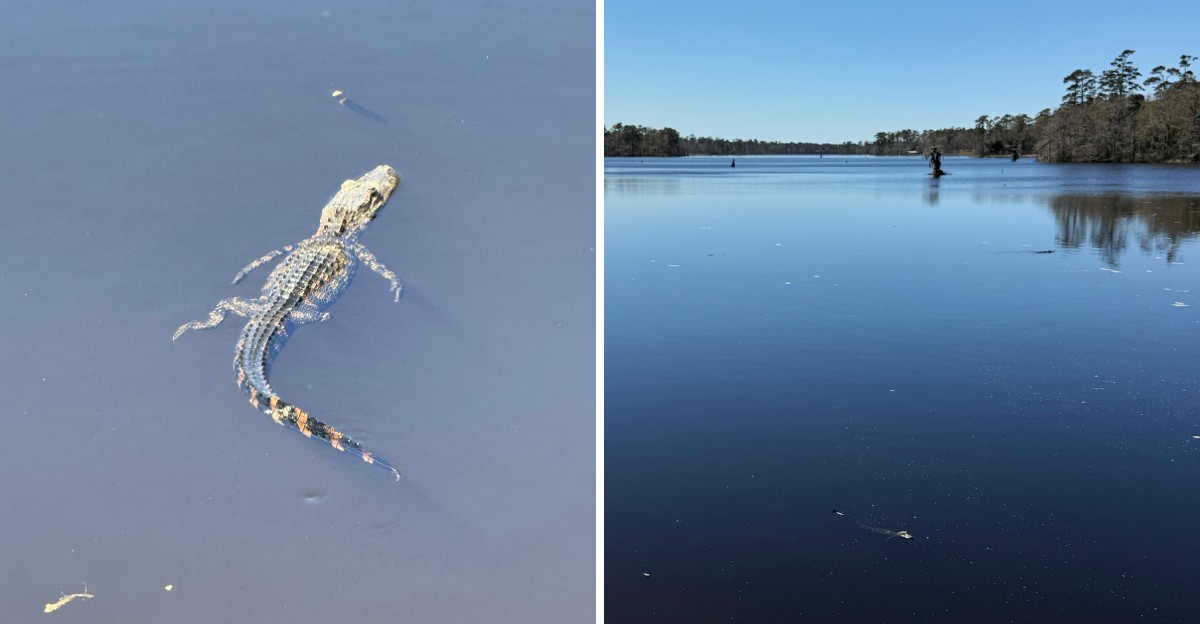
The water looks calm right up until something blinks back.
In southeastern North Carolina, a quiet pond hides a surprisingly wild side beneath its mossy edges and glassy surface.
Alligators live here naturally, which means a peaceful overlook can suddenly feel much more interesting when a dark shape starts moving through the water.
They are impressive. They are ancient-looking. And they are definitely not interested in becoming anyone’s vacation selfie partner.
That is part of what makes this place so fascinating.
The scenery feels almost storybook beautiful, but the wildlife demands real distance and respect.
Consider it a reminder that sometimes the most unforgettable North Carolina views come with teeth.
Learn Why This 688-Acre Coastal Pond Makes Such Good Alligator Habitat
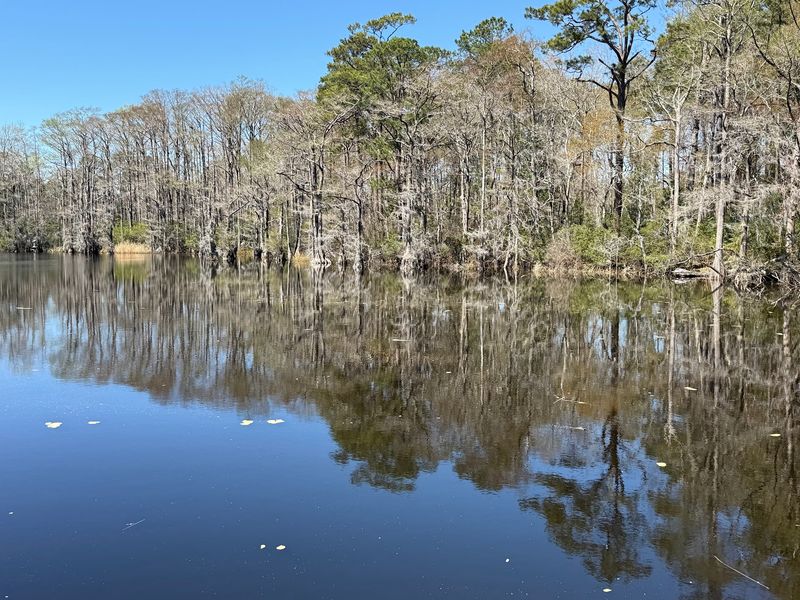
Picture a sprawling sheet of tea-dark water, warm shallows, and endless hiding spots along its edges.
For an American alligator, that combination is close to perfect.
Few places in Brunswick County offer so much of what these reptiles need in one spot.
The pond covers roughly 688 acres, and its winding shoreline stretches about 11 miles through low coastal country. Fish, turtles, wading birds, and small mammals keep the food supply steady all year.
Warmth matters too. Alligators are cold-blooded, so they rely on sunny banks to heat their bodies and on cool water to calm down when afternoons turn steamy.
Southeastern North Carolina sits near the northern edge of the species’ range, and mild coastal winters here give gators a fighting chance. Thick plants along the edges add one more advantage.
Marsh grasses and shrubby banks give females safe places to build nests from mud and leaves.
Once you understand all these pieces, the large number of gators here stops feeling surprising and starts making real sense.
Think of it as a reptile resort with no checkout time.
You can find Orton Pond, Winnabow, beside Orton Rd SE.
Watch For Alligators Basking Near The Water Without Getting Too Close
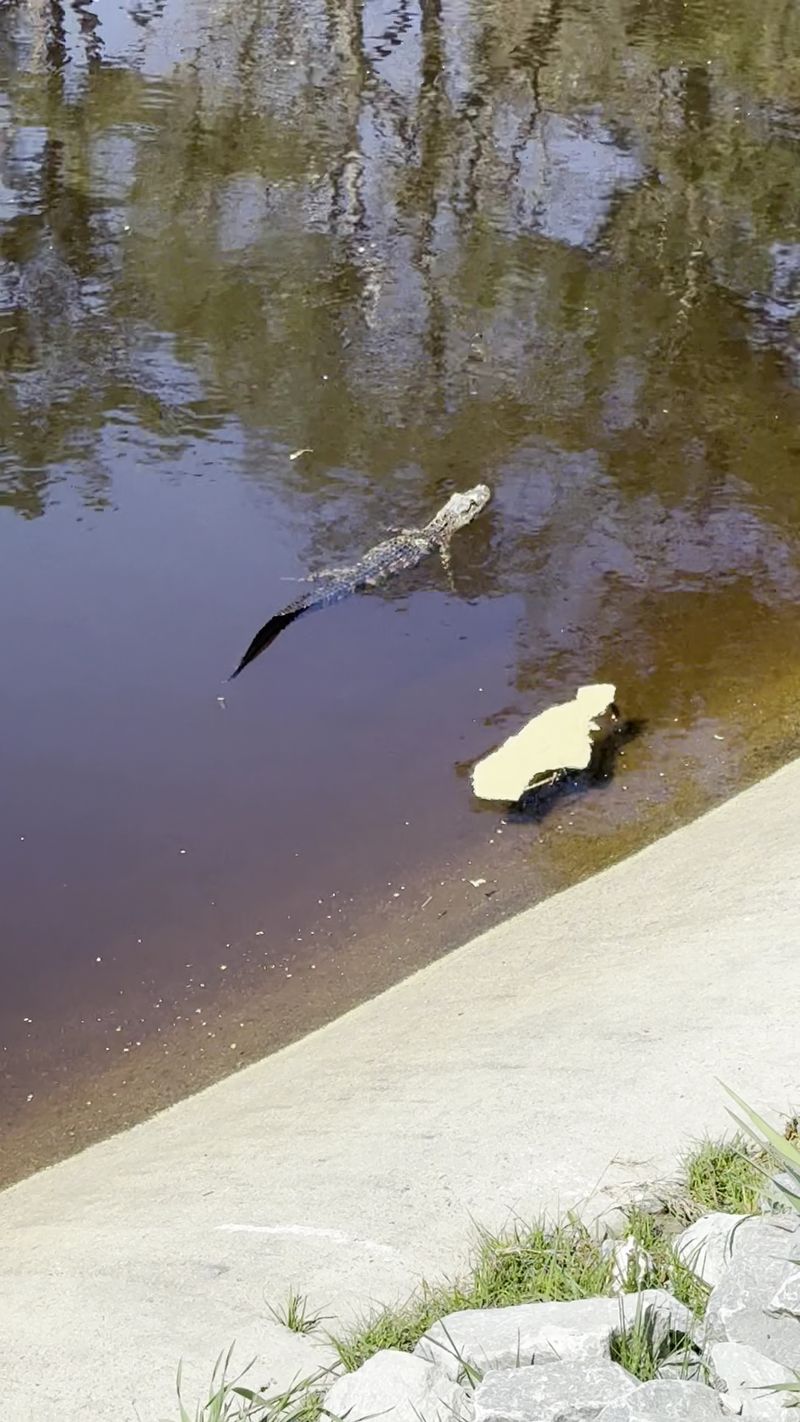
Stillness is the first clue.
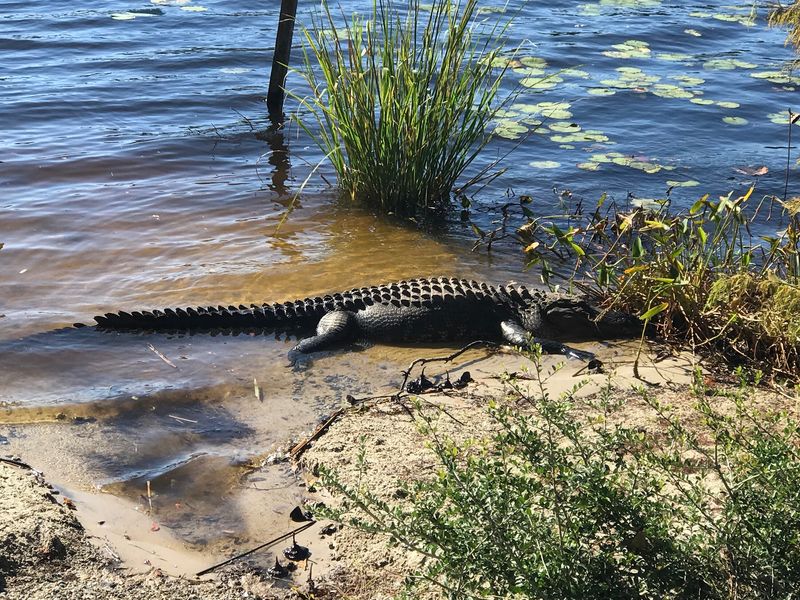
A log that never drifts, a dark shape lying on a muddy bank, a pair of bumps barely breaking the surface: any of these could be a gator soaking up sunshine. Basking happens most on clear, mild days, when the reptiles crawl out to warm up after a cool night.
Some lie with their mouths hanging open, which looks alarming but simply helps them release extra heat.
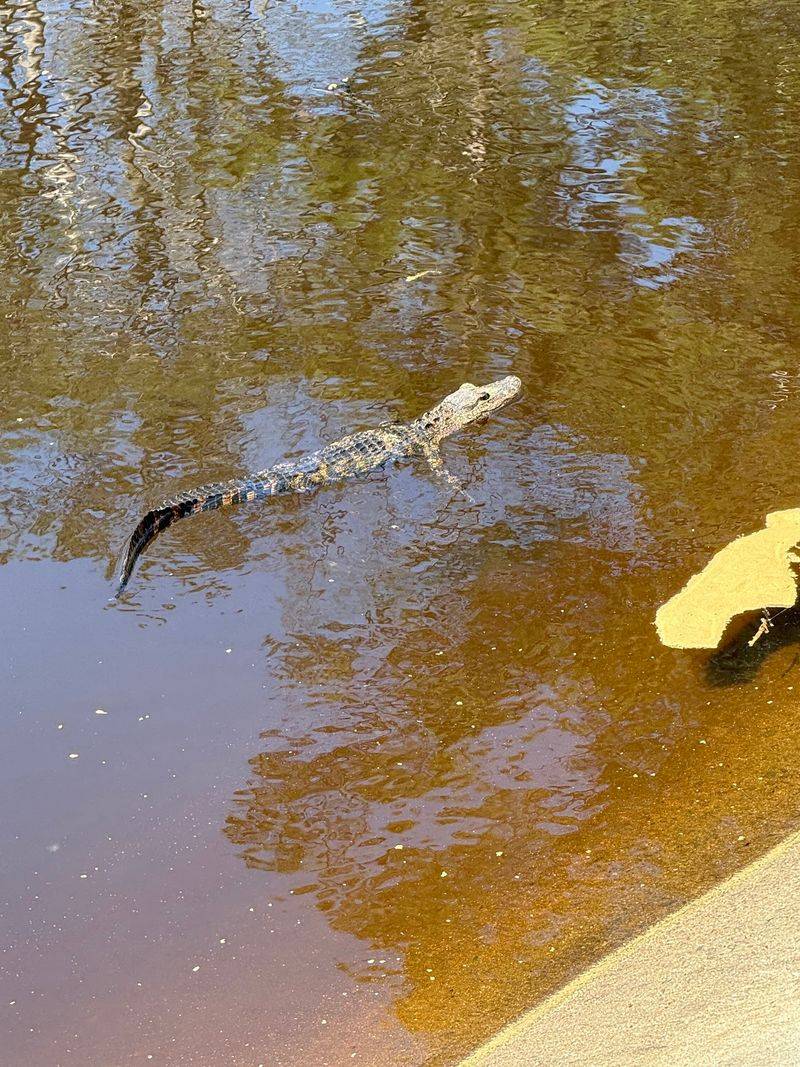
Others stay half in the water with only eyes and nostrils showing.
Wildlife experts suggest staying at least 60 feet away from any alligator, no matter how small or sleepy it seems. That is about the length of four cars parked bumper to bumper.
A zoom lens or a pair of binoculars lets you study scaly ridges and golden eyes without crowding the animal.
Feeding is against the law in North Carolina, and for good reason.
Gators that link people with snacks lose their natural caution and begin approaching humans. If one starts moving toward you, calmly back away and give it the whole bank.
Quiet watching rewards patience.
Sometimes a slow tail swish or a soft splash is the only show, and that is plenty.
See How An Artificial Pond Created In The 1800s Became A Wildlife Haven
Hard work, not nature alone, gave this landscape its shape.
Long before anyone thought of it as gator country, the land around the pond belonged to Orton Plantation, one of the best-known rice estates on the lower Cape Fear River. Rice needs huge amounts of controlled fresh water.
Enslaved Africans and their descendants, many with Gullah Geechee roots, cleared cypress swamps and built the earthen works that held water back and released it to the fields.
Historic documentation identifies Orton Pond as an older impoundment first created under Roger Moore for mill power and later incorporated into the plantation’s rice-production water system.
Rice production declined after the Civil War but continued at Orton intermittently into the early twentieth century, ending around 1931.
The pond remained part of the estate’s water system and later became a recreational and wildlife landscape.
Nature moved in quietly. Fish multiplied, ospreys found tall perches, and alligators claimed the warm shallows as their own.
Over generations, a tool built for farming became one of the richest wildlife pockets in the region.
Standing at the roadside, you are really looking at two stories layered together: human history beneath the surface and wild life thriving on top.
Look Across Still Water Surrounded By Thick Vegetation And Cypress-Like Wetland Scenery
Morning light hits the surface like a mirror held very still. Clouds, treetops, and drifting birds all appear twice, once above and once below.
The water often looks the color of strong coffee.
That shade comes from tannins, natural compounds that leak from fallen leaves and bark, much like tea steeping in a cup.
It is not dirty, just stained by the forest around it.
Along the banks, tall trees with flared trunks rise from soggy ground, some draped with gray strands of Spanish moss that sway in the breeze. Shrubs, grasses, and lily pads crowd the shallows.
Every few minutes something moves: a heron lifting off, a turtle sliding from a log, or a fish breaking the surface with a soft plop.
Sound adds to the mood. Frogs creak and chirp, insects buzz in the warm months, and an osprey may whistle high overhead while circling for lunch.
Bring a camera with a good zoom and try visiting under different skies.
A gray, misty day makes the pond feel mysterious, while a bright afternoon turns the greens glowing and lively.
Either way, the scenery feels like a postcard from old North Carolina.
Keep Pets And Children Well Away From The Water’s Edge
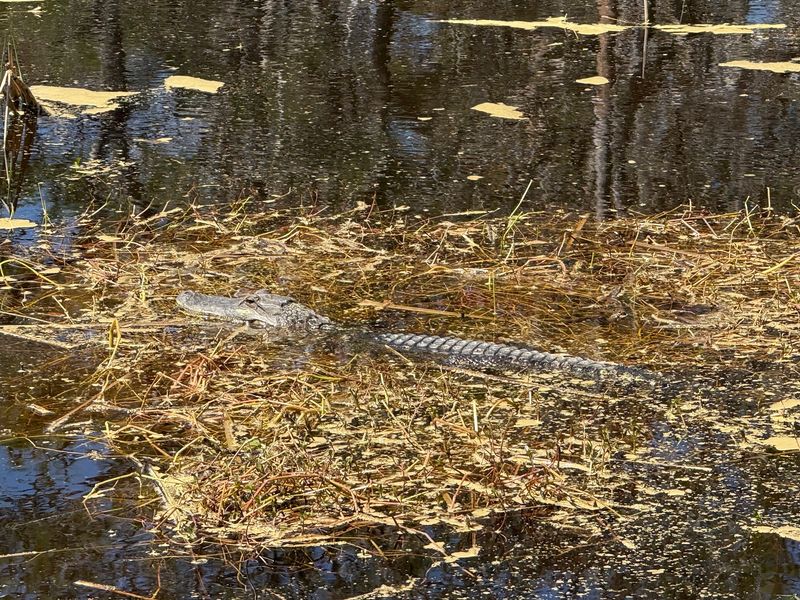
A wagging tail and a splashing toddler might look like pure fun, yet to a hungry gator they can look like something else entirely.
Alligators hunt by instinct, and they do not separate a beloved family dog from a raccoon at the water’s edge. Dogs face the biggest risk.
Their size, their barking, and their habit of trotting right up to the shoreline all draw attention from reptiles lurking just below the surface.
Keep every pet on a short leash and well back from the bank, even if no gators are visible.
Kids need close watching too.
Hold hands with little ones near the roadside viewing area, and explain before you arrive why the water is off limits. A simple rule works well: look with your eyes, keep your feet on solid ground.
Throwing sticks, stones, or snacks into the pond is never a good idea. Those actions can lure animals closer and teach them bad habits.
Planning ahead keeps the outing relaxed.
Leave the fetch toys in the car, pack binoculars so children can still see the action up close, and turn the visit into a lesson about respecting wild creatures.
That way, everyone heads home with good memories and zero close calls.
Know Why Dawn And Dusk Require Extra Caution Around Alligator Habitat
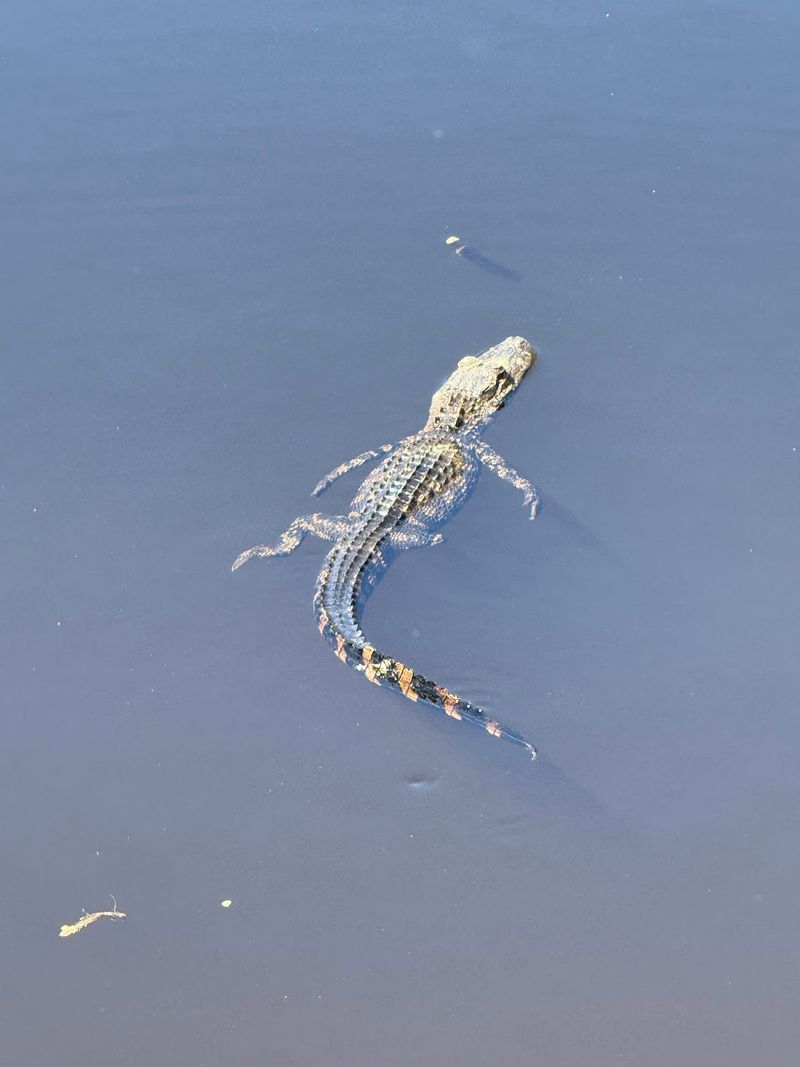
Golden hour feels magical for photographers, but it is also dinnertime for the pond’s top predator.
As the light fades or slowly returns, alligators shift from lazy basking to active hunting. Low light hides them well.
A gator floating in coffee-dark water at dusk can be nearly impossible to spot until it moves. Their eyes are built for these dim hours, so they see you far better than you see them.
Spring and summer bring another reason for care.
Mating season ramps up in late spring, and by early summer females are guarding nests piled from mud and plant matter in thick cover near the shoreline. A mother gator will defend those eggs, and later her tiny striped hatchlings, with surprising speed.
NC Wildlife advises extra caution between dusk and dawn, so do not approach the water or stop in unsafe roadside areas for a closer look.
Listen as well as look. A low rumble or a hiss means you are already too close.
Midday visits on cooler, sunny days usually offer the safest viewing.
The animals are calmer then, and you have the light on your side.
Remember That The Pond Is Privately Owned And Public Access Is Restricted
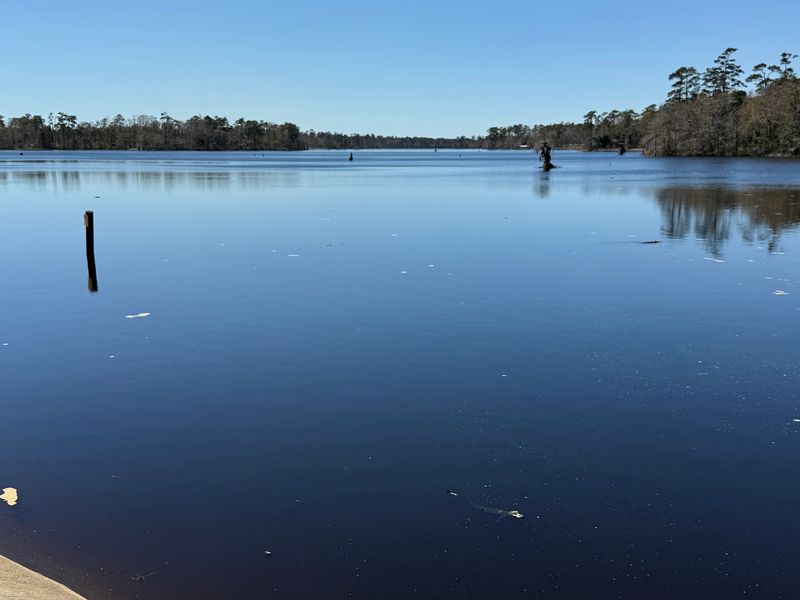
Here is the part many travelers miss: you cannot simply stroll down to the shoreline.
The pond and much of the land around it sit on private property connected to the historic Orton Plantation. For years, the plantation’s gardens welcomed guests, but they closed to the public around 2010 when the estate changed hands.
Since then, the grounds have stayed off limits.
Gates, fences, and posted signs mark boundaries that visitors need to honor.
What does that leave for curious travelers?
Public access does not extend to the pond or shoreline, so any view should remain from lawful public-road areas without entering private property. Crossing onto posted land counts as trespassing, which can lead to fines.
It also disturbs nesting birds, basking reptiles, and the quiet habits of creatures that depend on being left alone.
Road conditions can change, too, so check local updates before driving out. Repairs have closed stretches of nearby roads in the past.
GPS apps sometimes route drivers toward the neighboring military terminal, so watch for the pond on your approach and turn around well before any restricted gates.
Pair A Roadside Look With Nearby Cape Fear History Instead Of Trespassing
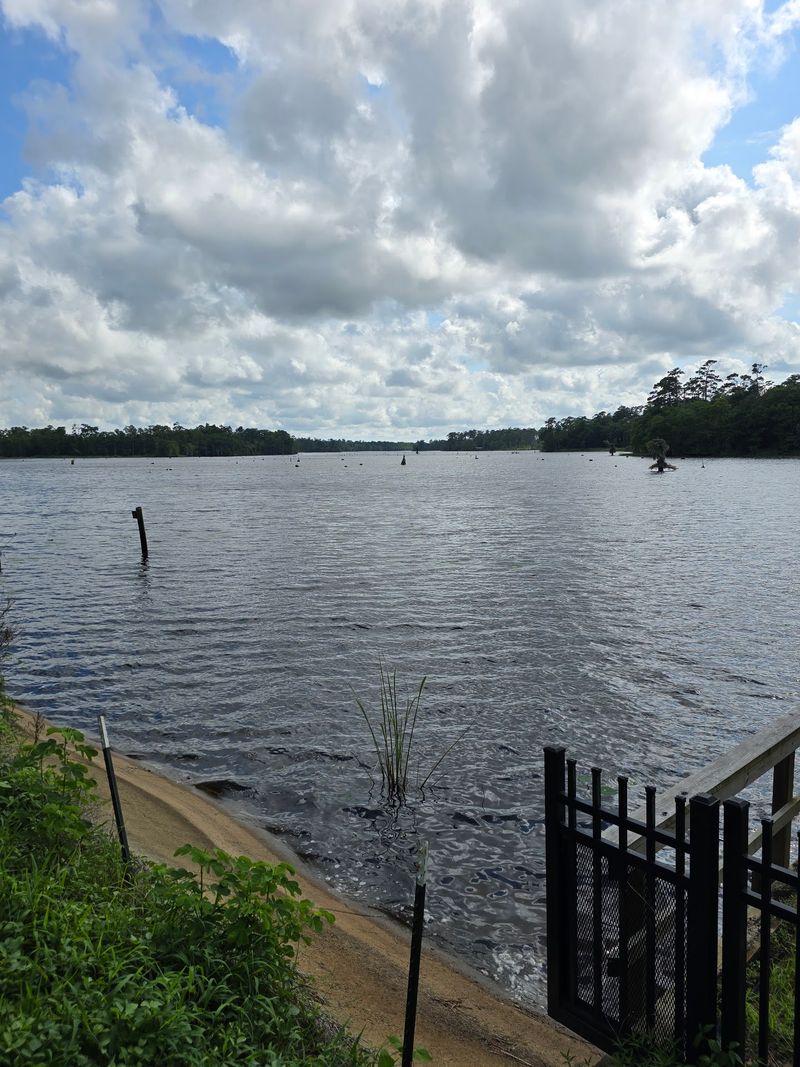
Curiosity about this corner of the Cape Fear does not have to end at a roadside glimpse.
Just down the road, history opens its doors to everyone.
Brunswick Town/Fort Anderson State Historic Site tells the story of a busy colonial port that once shipped tar, pitch, and lumber across the Atlantic. The town was abandoned during the Revolutionary War era and burned by British forces in 1776.
You will find it at 8884 St. Philip’s Rd SE, Winnabow, NC 28479.
Walking trails wind past brick foundations peeking from the grass, each one marked with signs that explain who lived and worked there.
The ruins of St. Philip’s Church, with thick brick walls still standing, feel especially striking under the tall pines. Later, during the Civil War, soldiers built Fort Anderson’s massive earthen mounds right on top of the old town site.
A visitor center offers exhibits, artifacts, and helpful staff who can answer questions.
Admission is free, which makes it an easy add-on for families. Riverside breezes, shady paths, and wide views of the Cape Fear River round out the experience.
Pairing the two stops gives you wild scenery and deep history in one memorable afternoon in North Carolina.