Every Train Fan Gets Close To The World’s Largest Steam Locomotive Sitting In A Nebraska Park
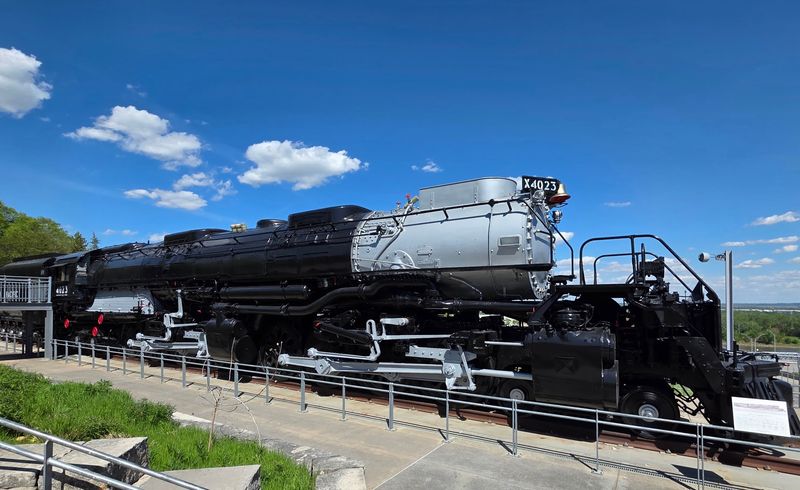
A Big Boy steam locomotive once rode down a highway on a truck. It’s the only known time one of these giants traveled by road, and it happened right here in Nebraska.
That engine logged 829,295 miles hauling freight over mountains. Now it sits on a hilltop, staring down at westbound drivers like a very large welcome committee.
Only 25 Big Boys were ever built, and just eight survive today.
I love that this one doesn’t hide behind velvet ropes or a ticket booth. You can walk all the way around it and feel tiny next to its wheels.
A record-setting diesel keeps it company, too.
I can’t imagine a better free stop for anyone who ever pressed their face to a train window. So where exactly is this steel giant parked?
A Hilltop Perch Built For Two Railroad Legends
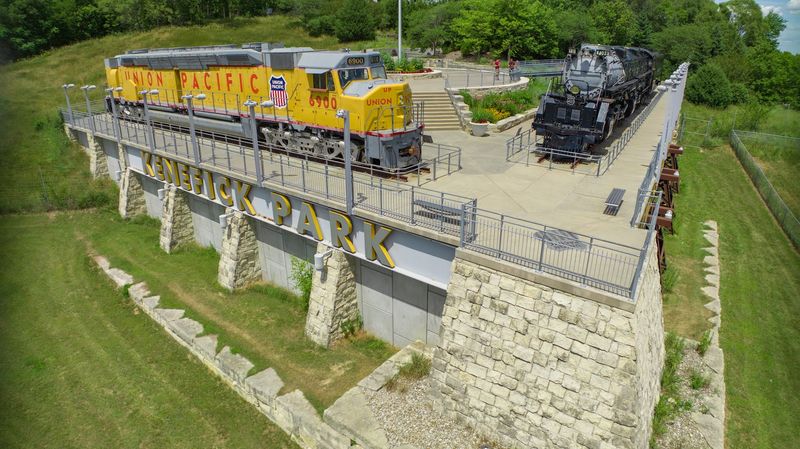
Kenefick Park – Union Pacific Locomotives sits on a bluff in Omaha, Nebraska, high above the traffic. It’s a small park with one very big job: showing off two of the most famous engines Union Pacific ever ran.
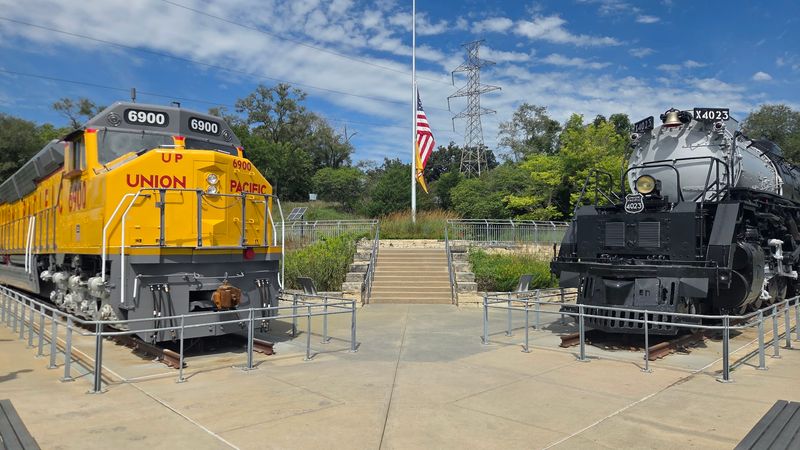
The headliner is Big Boy No. 4023, a steam locomotive from the class once considered the largest in the world. Its neighbor is Centennial No. 6900, the largest and most powerful diesel-electric locomotive ever built.
That’s a lot of railroad bragging rights on one hill.
Both engines rest on permanent static display outdoors. You can’t ride them, but you can get remarkably close.
That closeness is the whole point, and it’s what makes the stop so memorable.
The park also wraps the trains in plazas, stonework, walkways, and native grasses. Interpretive signs explain how the railroad shaped Omaha and the American West.
It feels part museum, part overlook, and part pilgrimage spot for anyone raised on train sets.
Best of all, admission is free. So you get world-class railroad history without opening your wallet.
Not a bad trade for a short climb, which we’ll get to soon enough.
The Muscle Behind Those Massive Wheels
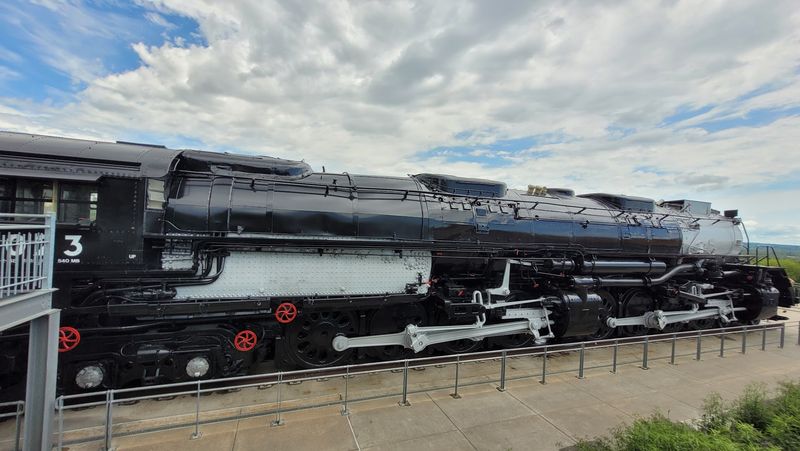
Sixteen driving wheels. That’s what the 4-8-8-4 wheel arrangement gives a Big Boy, and you’ll understand the math once you stand beside them.
Union Pacific designed the Big Boy class in the early 1940s for one tough assignment. The engines hauled heavy eastbound freight through the Wasatch Mountains and over Sherman Hill.
Their route ran between Ogden, Utah, and Green River, Wyoming, where steep grades demanded serious pulling power.
Only 25 Big Boys were built between 1941 and 1944. They also played a vital role moving heavy equipment during World War II.
These weren’t show ponies, they were working giants with tight schedules.
Up close, the size is hard to process. The boiler stretches on and on, and the wheels look built for a much larger planet.
You can walk around the entire engine to take it all in from every angle.
That full lap is worth doing slowly. Each side reveals pipes, rods, and fittings that once worked together at full steam.
Kids tend to count wheels, while grown-ups quietly wonder how anyone ever kept this thing on schedule.
Why No. 4023 Stands Apart From Its Siblings
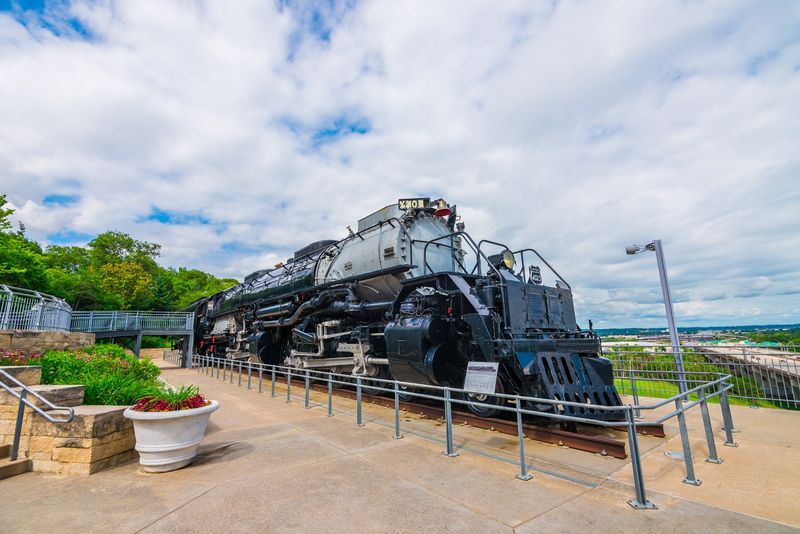
Eight Big Boys survive today, scattered across the country. No. 4023 holds a quirky distinction among them all.
It’s the only survivor from the second production group, built in 1944. The other seven came from the original 1941 batch.
So Omaha’s engine is the youngest sibling of the surviving family, which seems fitting for one that ended up on such a high perch.
The American Locomotive Company built No. 4023 in November 1944 in Schenectady, New York. It went on to rack up 829,295 miles.
That’s enough distance to circle the Earth more than 33 times, all while dragging freight uphill.
It received a Class 3 overhaul in 1957. The engine made its last run on July 20, 1959, and Union Pacific officially retired it in July 1962.
After that, its working days were over, but its traveling days clearly weren’t.
Rail fans who chase all eight surviving Big Boys often treat this one as a must-check box. Seeing its number plate in person feels a bit like meeting a celebrity.
A very heavy celebrity who doesn’t sign autographs.
The Wild Road Trip That Got A Big Boy Up Here
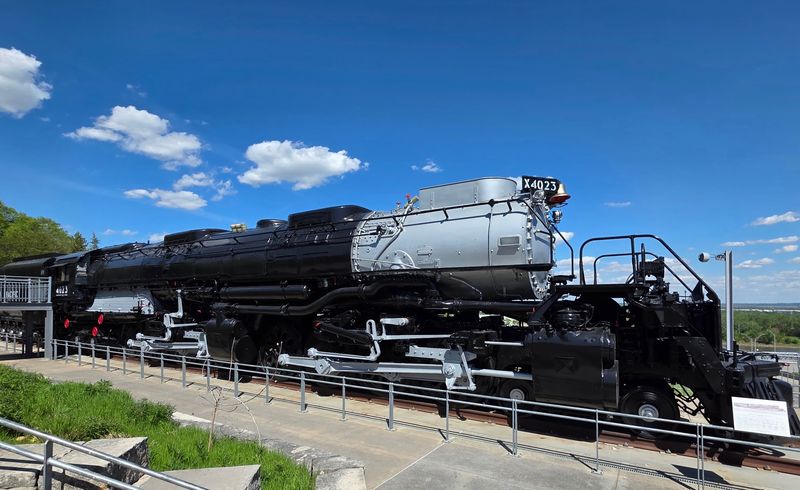
How do you move a Big Boy to the top of a hill? Carefully, and apparently by highway.
The engine’s Omaha story began in 1974. That year, No. 4023 was cosmetically restored and brought to Omaha.
It went on display in front of Union Pacific’s locomotive shops, where it stayed for more than a decade.
In 1988, it moved to the original Kenefick Park on Abbott Drive. Then plans changed.
That land was redeveloped for an arena and convention center in the early 2000s, so the engine needed a new home.
For a while, it waited in storage near the Durham Museum in downtown Omaha. Then came March 2005, and the big move.
Crews hauled No. 4023 by truck on a highway to its current spot.
That trip marked the only known time a Big Boy traveled by road. Picture the drivers who got stuck behind that load.
They definitely had a story to tell at dinner.
So if you’ve ever wondered how the trains got up there, now you know. No secret third train required, just serious planning and a very patient escort.
Meet The Diesel That Holds Its Own Record
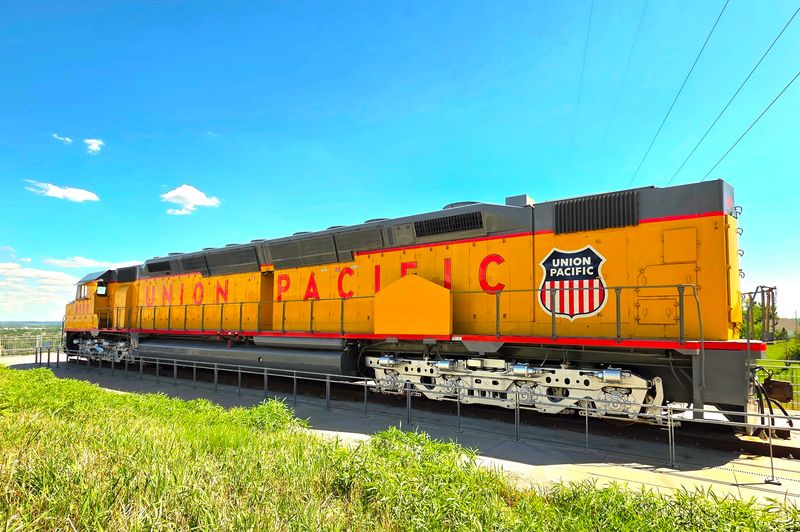
Steam gets the spotlight, but the yellow giant next door deserves its own applause. Centennial No. 6900 is the largest and most powerful diesel-electric locomotive ever built.
That’s a pretty strong title to share a hilltop with a Big Boy. Together, the pair tells a neat story about two eras of railroading.
One engine ran on fire and steam, while the other belonged to the diesel age that followed.
Seeing them side by side makes the comparison easy. The Big Boy looks like a rolling factory of pipes and rods.
The Centennial looks sleek and modern, though it’s still enormous by any standard.
Interpretive signs help explain how each machine fit into Union Pacific’s history. You don’t need to be an expert to follow along.
The signs keep things clear and give context for what you’re looking at.
Families with mixed interests can appreciate the variety, too. Somebody always picks a favorite, and debates tend to break out quickly.
Team Steam versus Team Diesel might be the friendliest argument in Omaha.
A Peek Into The Cab From The Raised Walkway
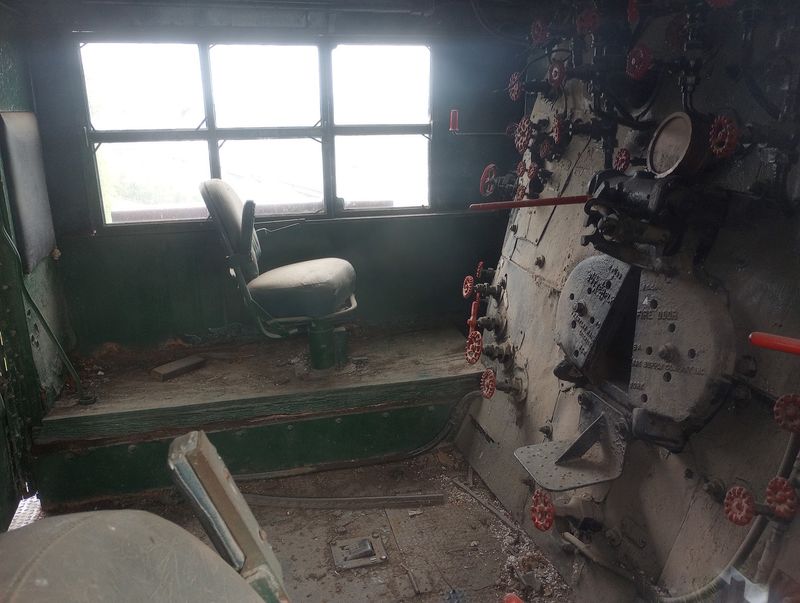
Climbing aboard is off limits. Still, there’s a clever workaround for the curious.
A raised walkway runs alongside the Big Boy, letting you look into the cab. That’s where the crew once worked the controls on long mountain runs.
It’s a rare chance to see the business end of a steam giant without a ladder.
The engines sit within an enclosure for viewing only. That keeps them protected, especially after the Big Boy received a fresh coat of paint.
A well-kept engine looks sharper, and this one shows off its care.
From the walkway, you get a different sense of scale. Looking down the boiler from cab height feels a lot like standing on a balcony.
Suddenly the length of the locomotive makes even more sense.
Little train fans may wish they could pull a whistle cord. Grown-ups might secretly wish the same thing.
Either way, the view into the cab helps everyone imagine life on the footplate, minus the coal dust and the long shifts.
Panoramic Views That Stretch Into Two States
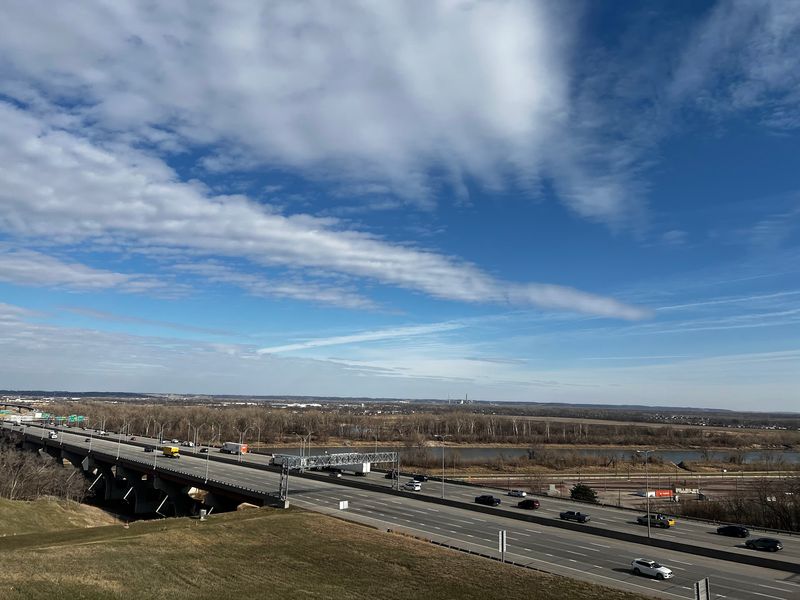
Turn around after admiring the trains. The scenery behind you is a bonus nobody should skip.
The park’s elevated spot delivers wide views across the Missouri River Valley. You can look over landscapes in both Nebraska and Iowa from one hilltop.
It’s an easy reward for the uphill walk.
Interstate 80 runs right below, and you’ll definitely hear it. Highway noise comes with the location, so don’t expect a hushed garden mood.
Think of it as a soundtrack of modern transportation paired with historic rail giants.
That same highway gives the park a famous role. The display is clearly visible from I-80 and serves as a welcome landmark for westbound drivers entering Omaha.
Plenty of Nebraskans have spotted the engines through a car window without ever stopping.
Maybe this is the year that changes. Seeing the hill from the road is one thing.
Looking back down at the traffic from beside a Big Boy feels completely different, and a lot more satisfying.
Bring Comfy Shoes For The Climb Or Take The Ramp
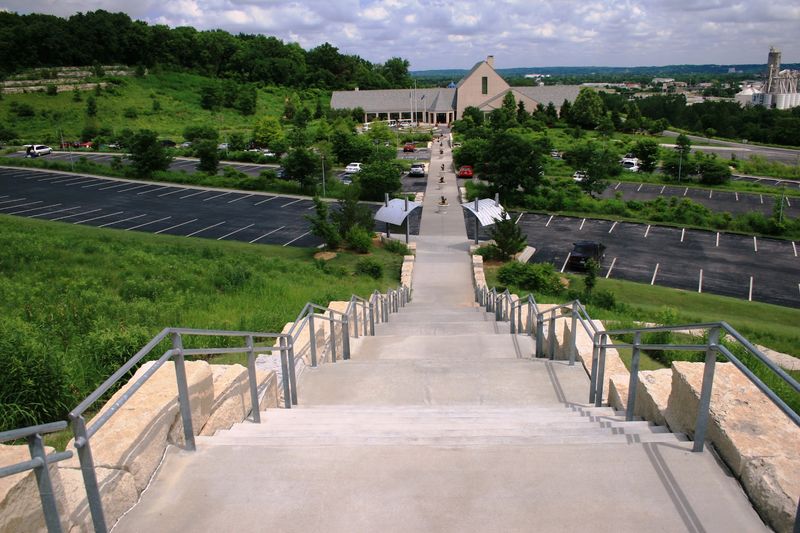
Leg day, meet train day. Reaching the locomotives takes a little effort from the main parking area.
A staircase climbs from the lot to the hilltop display. It’s more than 60 steps, so pace yourself if you’re toting snacks or small kids.
Interpretive signs along the route give you good excuses to pause.
Prefer not to tackle stairs? A ramp offers another way up.
The concrete path is friendly for wheelchairs and strollers, which makes the park easier for more families to enjoy.
The parking area is shared with Lauritzen Gardens. That convenience comes with one timing note worth remembering.
The gates close at 5 p.m., so leaving is fine, but getting back in isn’t.
Photography can feel tight in spots because of the space around the engines. Wide shots take a bit of creativity.
Stepping back along the walkways can help you fit more of that enormous boiler into the frame.
Native grasses line much of the route. They add texture to the climb and make the hillside feel more like a park than a parking lot.
Easy Pairing With Omaha’s Botanical Gardens
Got a garden lover and a train lover in the same car? Problem solved.
Kenefick Park sits right beside Lauritzen Gardens, Omaha’s botanical garden. The two share a parking area, which makes combining them almost effortless.
One trip can easily cover blossoms and boilers.
Unlike the park, Lauritzen Gardens charges an entry fee. Inside, you’ll find a gift shop and a café.
Seasonal tram tours also help visitors cover more ground without wearing out their legs.
The gardens also set up outdoor model train displays during certain seasons. That adds a fun miniature twist after seeing the full-size giants up the hill.
Kids may enjoy comparing the tiny trains to the real thing.
Planning both stops turns a quick look into a fuller afternoon. Start with the locomotives, then wander the gardens at a slower pace.
Or reverse it if someone in your group insists on flowers first.
Either way, Omaha makes it simple. A free railroad display and a botanical garden next door feel like a pretty generous pairing for one parking spot.
Hours, Holidays, And Where To Point Your GPS
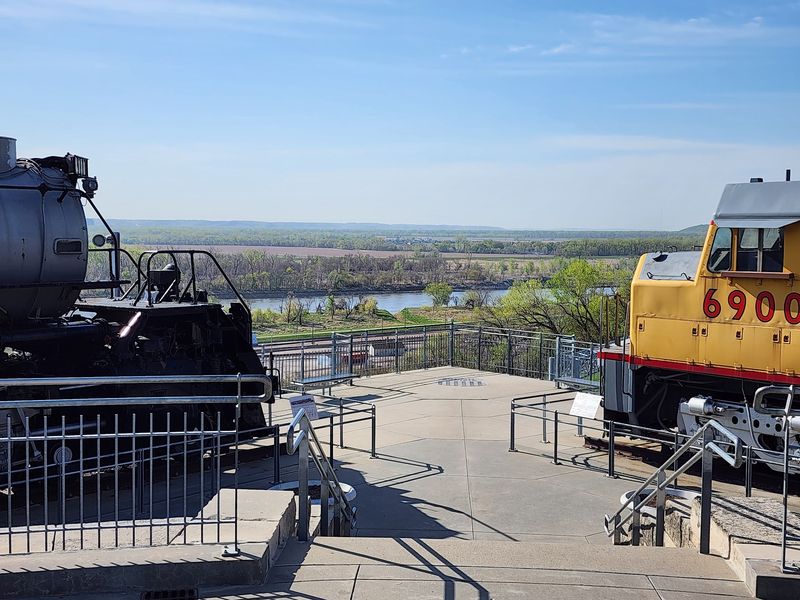
Timing matters here more than you’d guess. The park keeps daytime hours, opening in the morning and closing in the late afternoon every day of the week.
It’s open year-round, which makes it a handy pick in any season. The park closes on Thanksgiving, Christmas, and New Year’s Day.
Otherwise, the engines are waiting whenever you are.
Plug 100 Bancroft Street, Omaha, Nebraska, into your map app. That address takes you to the shared parking area with Lauritzen Gardens.
From there, choose stairs or ramp and start climbing.
Admission to Kenefick Park – Union Pacific Locomotives is free. Parking is free as well, which keeps the visit easy on the budget.
It’s the kind of stop that fits neatly into a lunch break or a road trip pause.
A visit doesn’t need hours of planning. Many people spend a relaxed stretch reading signs, circling the Big Boy, and soaking in the view.
Just keep an eye on the clock, since those gates close firmly at the end of the day.
Why This Steel Giant Deserves A Spot On Your Nebraska List
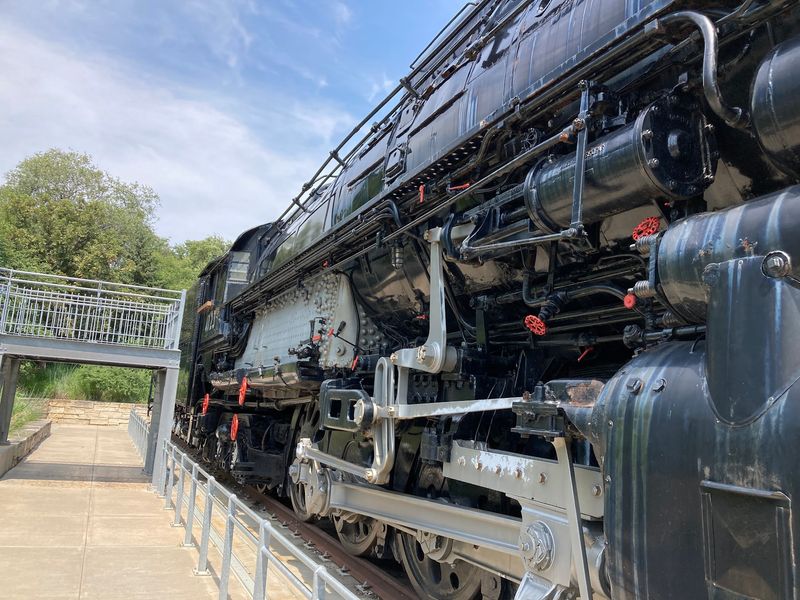
Some road stops fade from memory by the next exit. A 1944 Big Boy towering over the interstate isn’t one of them.
Kenefick Park – Union Pacific Locomotives packs a lot into a small space. You get a rare steam survivor, a record-holding diesel, history signs, and views into Iowa.
All of it comes free, which feels almost too generous.
The park is named for John Kenefick, a former Union Pacific chairman and CEO. That connection fits, since Union Pacific’s story runs deep in Omaha.
Standing beside these engines makes that history feel touchable rather than distant.
Families can turn it into a quick adventure. Rail fans can cross another Big Boy off their list.
Curious drivers who’ve glanced up from I-80 for years can finally see what all the fuss is about.
Nebraska has plenty of places worth a detour. This one just happens to weigh more than most.
Bring comfortable shoes, a camera, and a little patience for the stairs, and let the Big Boy handle the rest.