This Free North Carolina Festival Brings A Town Destroyed 250 Years Ago Back To Life For One Day
British troops burned an entire colonial port town in 1776, and nobody ever rebuilt it.
Once a year, the old streets fill with blacksmiths, bakers, and candle makers anyway.
The whole thing is free, and kids can try colonial games while grown-ups suddenly discover that dipping a candle is far more entertaining than expected.
I love that this North Carolina site does not pretend there is a perfectly rebuilt village waiting here.
The foundations are real. The river is real.
Costumed interpreters simply help the missing pieces come back into focus.
A ghost port, a Civil War fort, and the shell of an old church all share the same riverbank.
For one day, the town gets its people back.
I think that is what makes it feel a little magical.
One Saturday Each October, A Vanished Port Starts Working Again
Port Brunswick Day is the big free festival at Brunswick Town/Fort Anderson State Historic Site. For one day, living historians recreate life in a busy colonial port that hasn’t stood since 1776.
Mark your calendar for Saturday, October 17, 2026. The event runs from 10 a.m. to 4 p.m., and it’s open to all ages.
The 2025 edition landed on October 18 as part of the America 250th celebration. That timing makes sense, since this town’s story is tied tightly to the Revolution.
Programs sometimes focus on a specific moment, like the fall of 1767. That gives the day a clear setting instead of a vague old-timey blur.
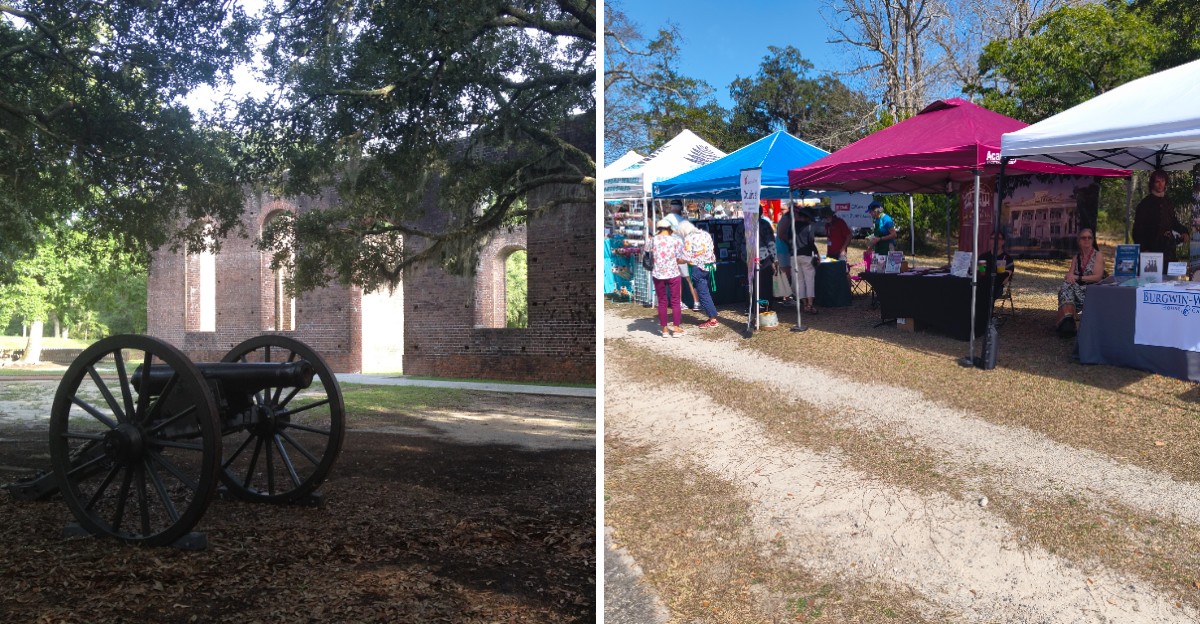
You won’t find rides or a midway here. Instead, you get real people practicing real colonial skills on the actual ground where the town once stood.
Plan to arrive early so you can see more demonstrations before lunch. The site is spread out, and good walking shoes will help a lot.
Free admission makes it an easy yes for families on a budget. Honestly, a day trip into 1767 for zero dollars is a deal colonial merchants would have envied.
Sparks Fly When The Blacksmith Gets To Work
Colonial towns ran on handmade everything. Nails, hinges, tools, and candles didn’t come from a store shelf, so somebody had to make them.
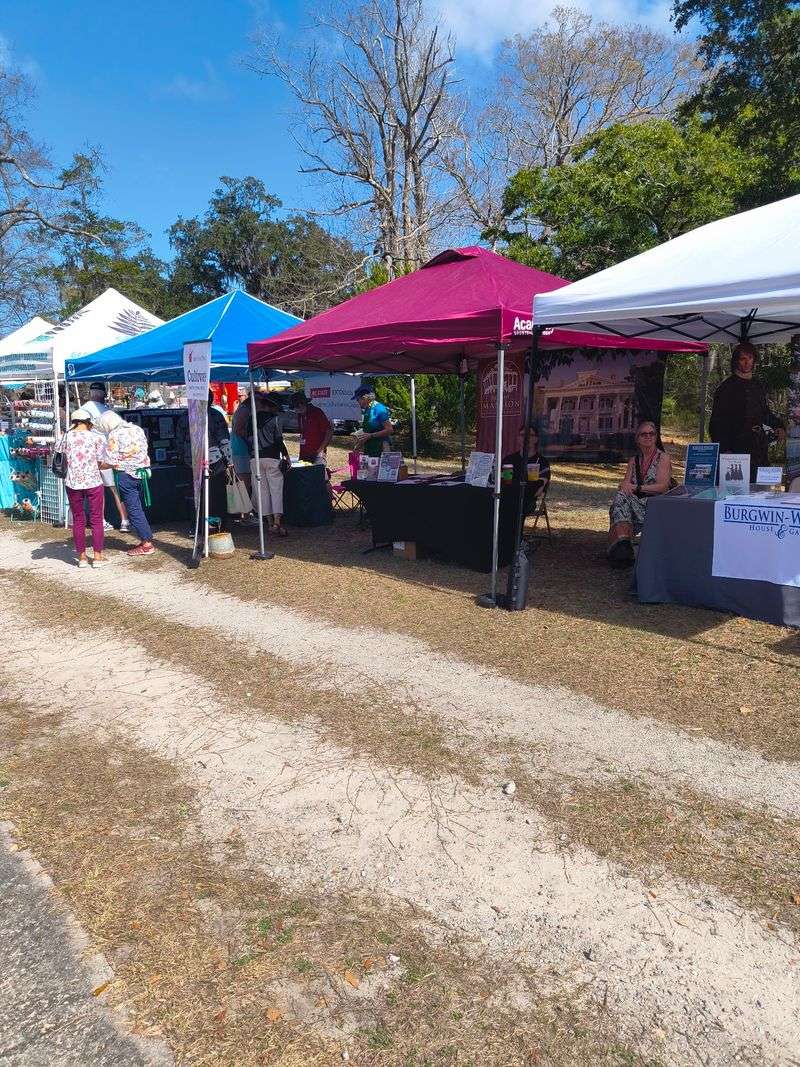
During Port Brunswick Day, interpreters demonstrate colonial trades such as blacksmithing, woodworking, and candle making. Each station turns a dusty word from history class into something you can actually watch.
The blacksmith tends to be a crowd favorite for obvious reasons. Fire, hammers, and glowing metal make a pretty convincing argument for paying attention.
Woodworking shows a slower kind of skill. Watching someone shape wood with old-style tools makes modern power drills feel almost like cheating.
The cooking and baking areas show how colonial families fed themselves without a microwave. Every meal took planning, muscle, and a lot of patience.
Here’s my tip for getting the most from each stop. Ask the interpreters questions, because they’re there to explain how and why things were done.
Kids especially light up when they get real answers. A simple question about horseshoes can turn into a surprisingly great story about life on the Cape Fear River.
Kids Get To Play Like It’s The 1760s
Screens off, hoops out. Port Brunswick Day includes colonial toys and games that kids can try for themselves.
That hands-on part matters more than it sounds. Children remember what they touch and play with far longer than what they read on a sign.
Families have mentioned making candles or rope to take home as keepsakes during events here. A hand-dipped candle beats a plastic souvenir any day.
The visitor center also offers hands-on activities year-round. There’s a junior ranger program too, which gives young explorers a mission while they wander.
My advice is to let kids lead the way for part of the day. They’ll often find the funniest or most interesting station before the grown-ups do.
Pack snacks, water, and sunscreen, since much of the fun happens outdoors. October in coastal North Carolina can still bring warm afternoons.
There’s also something sweet about watching kids discover old games still work. Turns out a stick and a hoop held attention long before anyone invented a charger cable.
A Busy Port, A Fiery Ending, And A Town That Stayed Gone
Founded in 1726, Brunswick Town grew into a major pre-Revolutionary port on North Carolina’s Cape Fear River. Ships, trade, and big ambitions all passed through here.
Then 1776 arrived. British troops burned the town during the American Revolution, and it was never rebuilt.
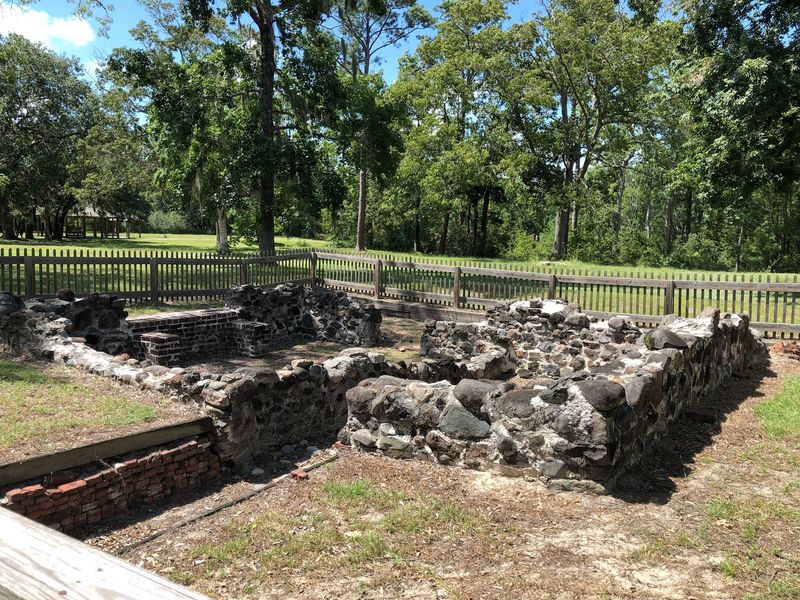
That’s what makes Brunswick Town/Fort Anderson State Historic Site so unusual. You aren’t looking at a recreated village, but at the real excavated foundations of colonial homes.
A paved path, roughly three-quarters of a mile, leads past these sites. Signs along the way explain who lived where and what the town was like.
Archaeology is still part of the story here. Excavation work has continued over the years, which means the past keeps adding new chapters.
The site is also marking a big birthday. Brunswick Town’s 300th anniversary, called BT300, runs through 2025 and 2026.
Knowing this backstory before Port Brunswick Day makes the festival hit harder. Those costumed bakers and blacksmiths are filling in streets that went quiet two and a half centuries ago.
Those Big Brick Walls Belong To A Church With A Story
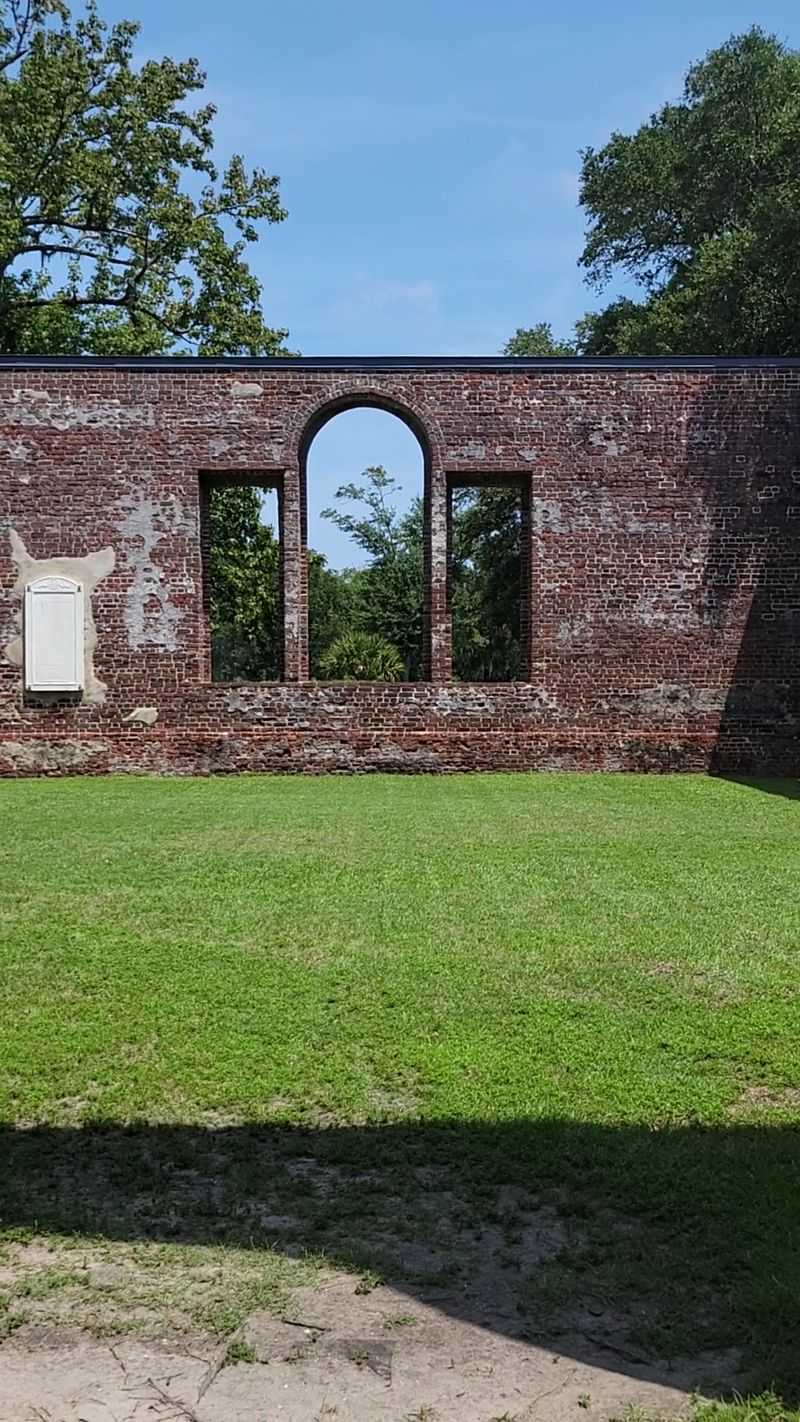
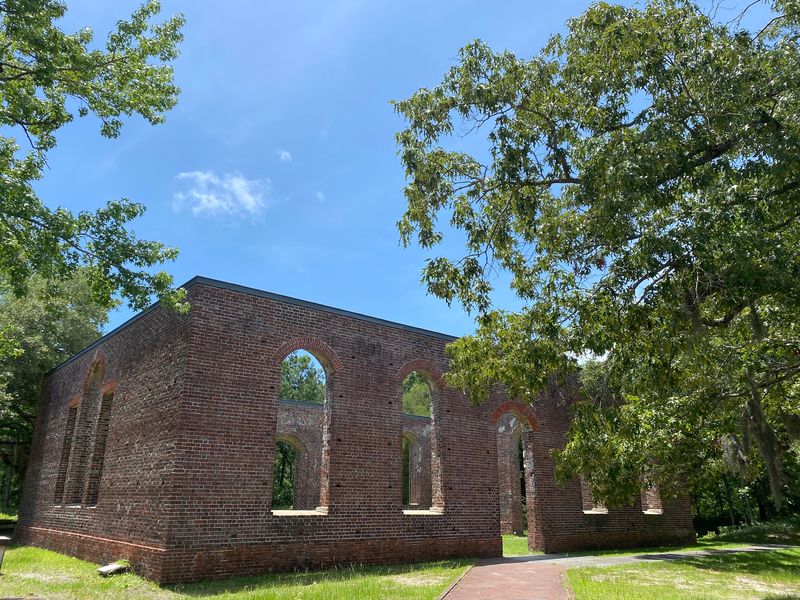
Tall, roofless, and seriously photogenic, the ruins of St. Philip’s Anglican Church are a standout. The brick walls rise above the site and give you a sense of the town’s scale.
A church this size tells you Brunswick wasn’t some tiny outpost. People here had money, plans, and a strong sense of community.
The ruins still host special moments today. The site has used them for events like an 18th Century Easter Litany and an 18th Century Christmas service.
Standing near those old walls gives the history real weight. You can trace the window openings and imagine the space they once framed.
Photographers will want extra time here. The brick looks especially good against blue sky and green trees.
Please stay respectful while exploring the ruins. They’re a fragile piece of history, and they’ve already survived a lot.
On festival day, the church helps anchor everything happening around it. It’s a reminder that this place was a real town with real neighbors, not just a backdrop for costumes.
Plot Twist: A Civil War Fort Sits On Top Of The Colonial Town
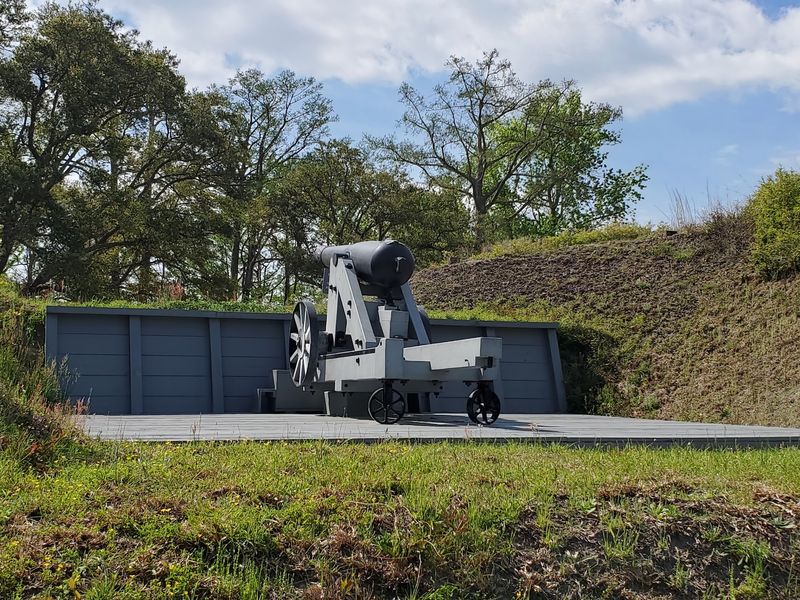
Just when you think the story wraps up in 1776, the Civil War shows up. Fort Anderson was built right on top of the old village site.
The fort formed part of the Cape Fear River defenses below Wilmington. Today, its grassy earthworks are still visible across the grounds.
So one walk covers two very different eras. Colonial foundations and 1860s fortifications share the same patch of riverfront land.
The paved trail winds through the remnants of Fort Anderson and loops back toward the visitor center. It’s an easy way to connect both chapters without getting lost.
The site also holds events tied to this era. In February 2025, it marked the 160th anniversary of the fort’s capture by U.S. forces with living history and 19th-century weapons demonstrations.
Those mounds may look like simple hills at first. Read the signs, though, and they turn into a smart piece of military engineering.
It’s a little wild that one riverbank holds this much history. Most places get one big story, and this spot got at least two.
Start Inside With Artifacts, A Film, And A Few Souvenirs
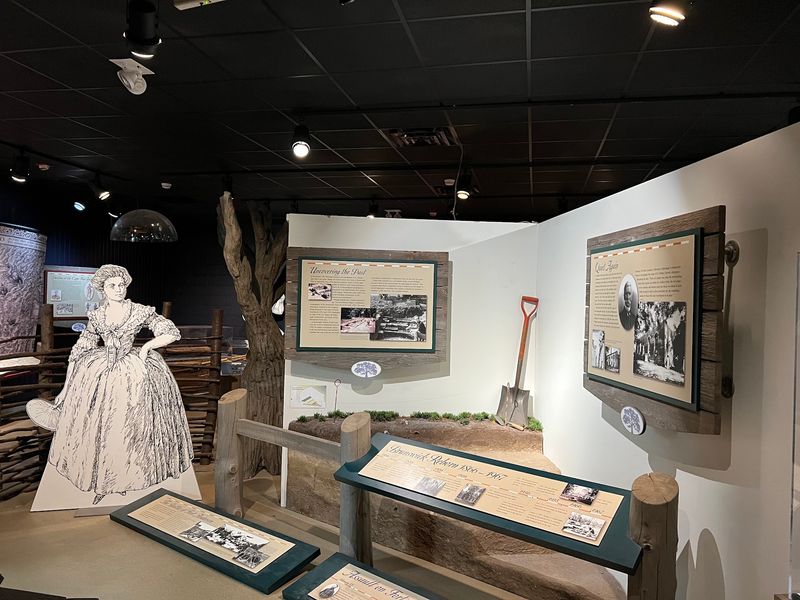
Good news for planners. The visitor center gives you a solid foundation before you head out to the actual foundations.
Inside, an exhibit hall displays artifacts and information about the colonial town and the Civil War fort. A short film helps tie the whole story together.
The visitor center also hosts presentations during some events. It’s a handy spot to get your bearings if you’re new to the site.
A small gift shop carries new merchandise celebrating Brunswick Town’s 300th anniversary. That’s a fun way to bring home a piece of the BT300 celebration.
On regular days, the site is open Tuesday through Saturday from 9 a.m. to 5 p.m. It’s closed Sunday and Monday, so plan around that.
Here’s one strategy worth considering. On warm days, walk the outdoor trail first and save the indoor exhibits for when you need a break.
Either order works, though. Seeing artifacts after walking the ruins makes them feel personal, like you just visited the neighborhood where they belonged.
Port Brunswick Day Isn’t The Only Party On The Calendar
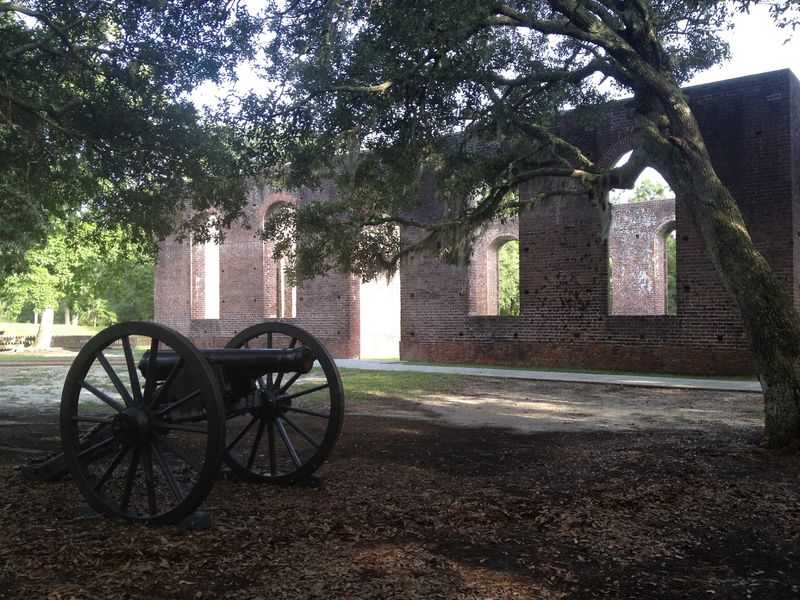
February brings protest energy. The Stamp Act Resistance living history event travels back to 1766, when colonists pushed back against British taxes.
The 2026 program took place on February 21 from 10 a.m. to 2:30 p.m. Visitors met interpreters portraying key figures and attended lectures.
Kids had hands-on activities at that one, too. They could make tricorn hats and paint toy soldiers, and admission was free.
Spring brings the North Carolina Rice Festival. Its 2026 edition took place March 7 at the historic site.
The 2026 festival featured history and cultural presentations, tours, and demonstrations. It also included live entertainment, arts and crafts, and Gullah Geechee food vendors.
The site is also joining the America 250th celebration. That makes 2026 a great year to come back more than once.
If you miss October’s celebration, check the site’s calendar for upcoming events. Brunswick Town/Fort Anderson State Historic Site keeps the calendar busy, and each event shows a different side of the same remarkable riverbank.
Bring Comfy Shoes And Leave Time For The River
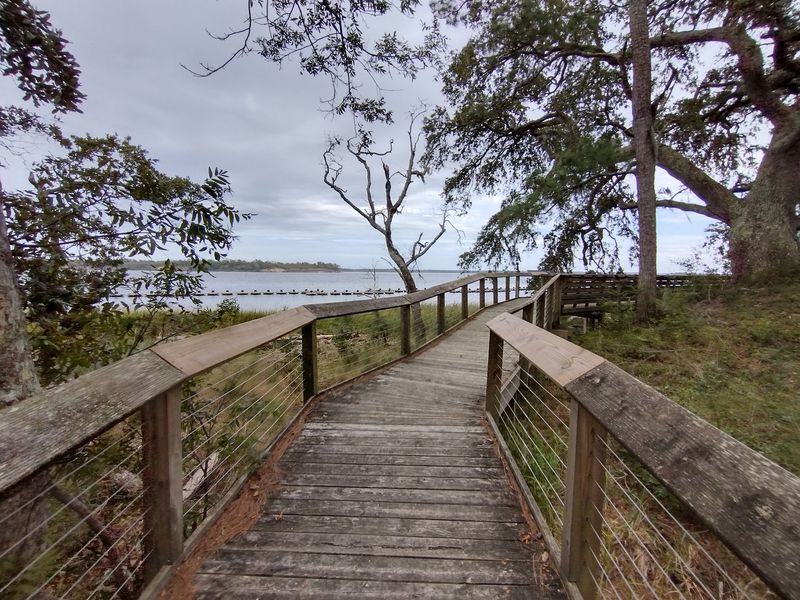
Water views win again. The Cape Fear River runs right alongside the site, giving the whole place a calm, breezy waterfront setting.
You’ll find Brunswick Town/Fort Anderson State Historic Site at 8884 St Phillips Rd SE, Winnabow, NC 28479. It sits in Brunswick County, south of Wilmington.
Trails lead past ruins, earthworks, and the shoreline. Comfortable shoes are a smart call, especially on a full festival day.
The river has shaped this place for centuries. Today, shoreline stabilization projects are underway to protect the site from erosion.
That work matters a lot. Without it, water could slowly wear away pieces of history that survived a fire and a war.
Bring water, a hat, and maybe a picnic plan for a slower afternoon. Coastal North Carolina weather can stay warm well into fall.
Before you leave, take one last look across the river. It’s the same view colonial ship captains once used, and it still feels like the best seat in town.
Even if the town itself only shows up once a year.