It Hurts My Soul When People Visit North Carolina And Miss These 14 Places
The places I remember most are usually the ones I almost skipped.
North Carolina has plenty of famous stops, but the stranger corners are often where the best stories begin.
A random turn can lead to something so odd that the whole road trip suddenly feels more interesting. Those are the moments I love.
You stop because curiosity wins, then spend the next hour wondering how nobody ever told you about this place.
The state is full of spots that feel slightly hidden and wonderfully hard to explain afterward.
Perfect. The best road-trip story should sound a little unbelievable anyway.
14. Judaculla Rock
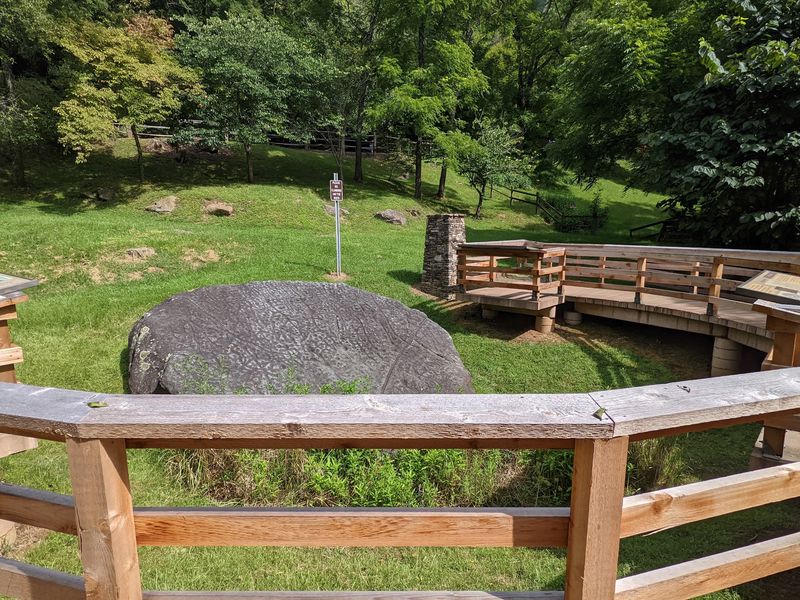
Long before anyone wrote history books, people pressed their marks into stone on a quiet hillside in the mountains.
Those swirls, cups, and curving lines still sit there today.
Over 1,500 carvings crowd the surface, making it one of the most detailed petroglyph collections in the Southeast.
Cherokee legend links the markings to Tsul’kalu, a giant and master of game animals who is said to have left his handprint on the rock.
Judaculla Rock holds deep spiritual meaning for the Cherokee people, so treat your visit with the respect you would give any sacred place. You will find it at 552 Judaculla Rock Rd.
Scientists believe quarrying here began 3,000 to 4,000 years ago.
Nearby outcrops still show scars where Indigenous people carved out soapstone bowls.
The petroglyphs themselves were added roughly between 200 CE and 1400 CE.
A curved, raised platform lets you study the boulder without touching it, which helps protect the fragile stone. Interpretive signs explain the symbols and what experts think they might mean.
Come on a bright day, since natural sunlight makes the grooves pop.
Bring a light jacket in cooler months.
The breeze moves through the trees, birds call from the edges of the field, and the old rock sits silent, holding its secrets.
13. Fontana Dam Visitor Center
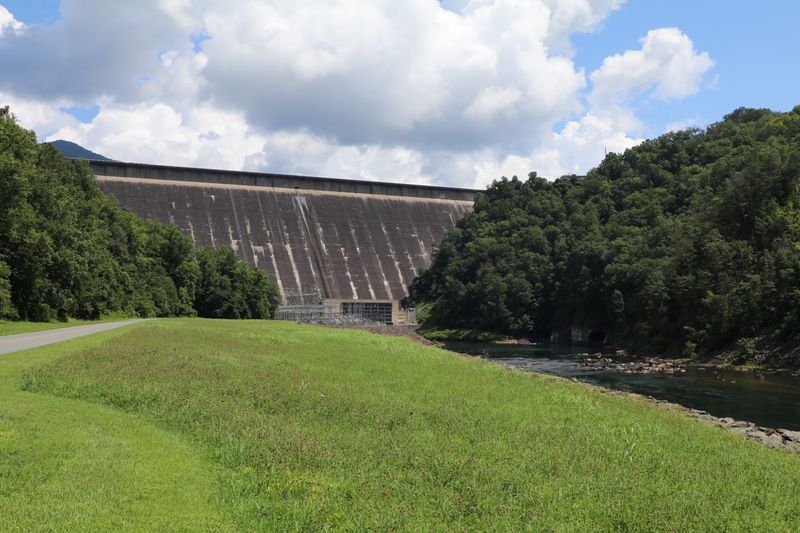
Rising 480 feet above the forested valley, the concrete wall looks almost unreal against the trees.
That is the surprise waiting in a tiny mountain community near the Great Smoky Mountains.
No dam east of the Rocky Mountains stands taller.
Built during World War II, the structure went from start to finish in just 36 months, wrapping up in 1944 to meet a huge demand for electricity.
The Fontana Dam Visitor Center shares that story through exhibits about the Tennessee Valley Authority and how the power plant works.
Head to 1001 Fontana Dam Rd. Behind the dam spreads Fontana Lake, with 238 miles of shoreline and more than 10,000 acres of water.
On a calm morning the surface looks like polished glass.
Mist often lifts off the coves as the sun climbs. You can drive or stroll across the 2,365-foot top any time of year.
Hikers on the Appalachian Trail cross here too, and a nearby shelter with hot showers earned the cheerful nickname Fontana Hilton.
The visitor center opens daily from May through October, usually 9 a.m. to 7 p.m. in summer.
Pack snacks, since services are few out here.
The view across the lake toward the ridges is worth every winding mile.
12. Linville Caverns
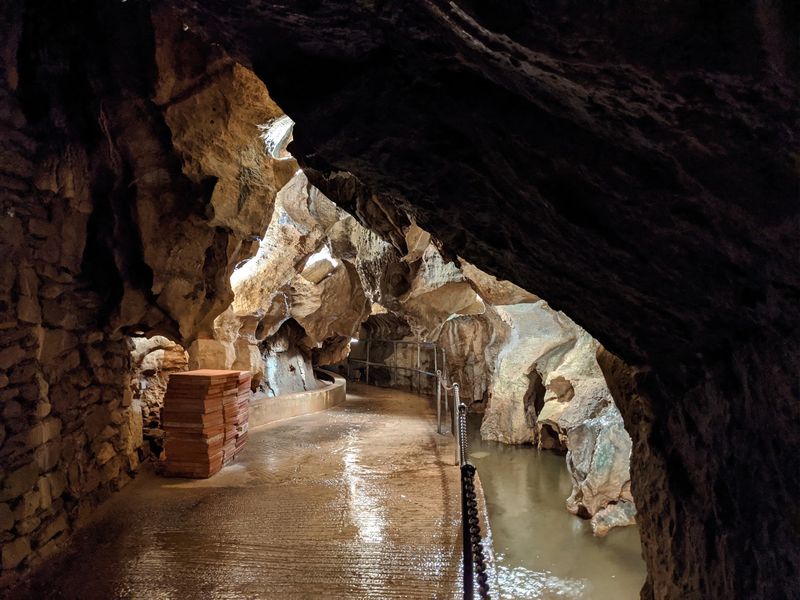
Cool air brushes your face the moment you step inside Humpback Mountain.
Outside it might be a sticky summer afternoon, yet down here the world feels calm and chilly.
The only show caverns in North Carolina wait beneath your feet.
Guided tours lead you through Linville Caverns along lit pathways that wind past stalactites close enough to study.
Some chambers have ceilings so high they feel like a stone cathedral. The entrance sits at 19929 US-221.
Here is a fun bit of history.
In the early 1800s, local fishermen noticed trout swimming in and out of what looked like solid rock.
Curious, they followed, and Henry E.
Colton later explored the hidden passages. Those trout still live in the underground stream.
Watch for them gliding through the clear water as your guide explains how dripping minerals shaped every column and curtain over thousands of years.
Public tours began in 1937, and the caverns are welcoming visitors again in 2026. From March to November they usually open Thursday through Monday, 9 a.m. to 5 p.m., with Sunday hours from 1 p.m. to 5 p.m.
Adult tickets cost $15, and kids and seniors get discounts.
Wear sturdy shoes and bring a sweater.
11. Emerald Hollow Mine
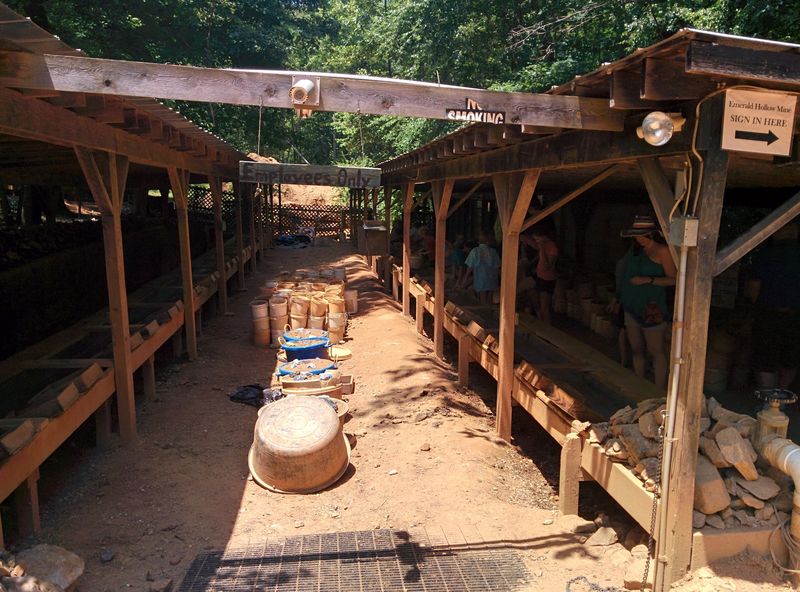
Muddy hands, a screen full of gravel, and a sudden flash of green.
That moment is why families keep coming back to the Brushy Mountain foothills.
You really can hunt for your own gems here.
Emerald Hollow Mine is the only emerald mine in the country open to the public for prospecting. More than 60 kinds of gems and minerals turn up across its 70 acres, including aquamarine, garnet, amethyst, topaz, and sparkling quartz.
The town shares its name with a rare stone.
In 1879, geologist William E. Hidden discovered a green form of spodumene, now called hiddenite, and very few places on Earth produce it.
The mine itself opened to visitors in 1986.
Beginners usually start at the sluice, washing buckets of dirt while water rushes over the screens.
Bolder diggers head to the creek to search on their own.
Either way, expect wet sneakers. Got lucky?
On-site lapidary services can cut and polish your find into something worth showing off.
The mine currently opens at 8:30 a.m., closing at 5 p.m. Monday through Thursday and 6 p.m.
Friday through Sunday, with earlier closures possible because of weather or attendance.
Wear old shoes, bring a towel, and leave room in your pocket for treasure.
Address: 484 Emerald Hollow Mine Dr, Hiddenite, NC 28636.
10. Historic Occoneechee Speedway
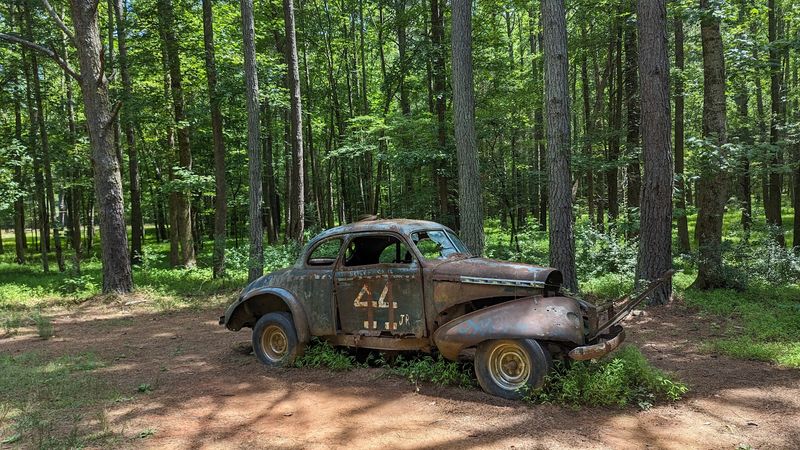
Engines once roared where pine needles now soften every step.
Walking this old oval feels like wandering through a page of racing history the forest decided to keep.
It is peaceful, a little eerie, and totally unique.
Historic Occoneechee Speedway was one of NASCAR’s first two tracks and the only dirt speedway left from that opening 1949 season.
Today its 44 acres belong to Eno River State Park, and the mile-long oval serves as a shady path. Look closely as you go.
Pieces of the original grandstands still rise from the brush, a flag stand waits by the track, and a few rusting cars sit among the sycamores.
Legends like Richard Petty and Fireball Roberts raced these turns.
So did Louise Smith, one of NASCAR’s pioneering female drivers.
Before all that, the ground was a half-mile horse track in the late 1800s, later expanded by Bill France Sr. in 1947.
About 3 to 4 miles of trails loop through the site and along the Eno River. The Speedway Trail is currently designated for hiking only, and pets must remain leashed under state park rules.
The gates usually open early and close in the evening, with hours shifting by season.
9. Reed Gold Mine
In 1799, a 12-year-old named Conrad Reed spotted a heavy yellow rock in Little Meadow Creek.
It weighed 17 pounds, and his family used it as a doorstop for a while.
Nobody guessed it was solid gold.
That lucky find made Reed Gold Mine the site of the first documented gold discovery in America, sparking the nation’s original gold rush decades before California’s. Today it is a National Historic Landmark.
Start inside the museum, where artifacts and displays explain how the region once led the country in gold production.
That boom was so big that the Charlotte Mint opened to handle it. Next comes the best part.
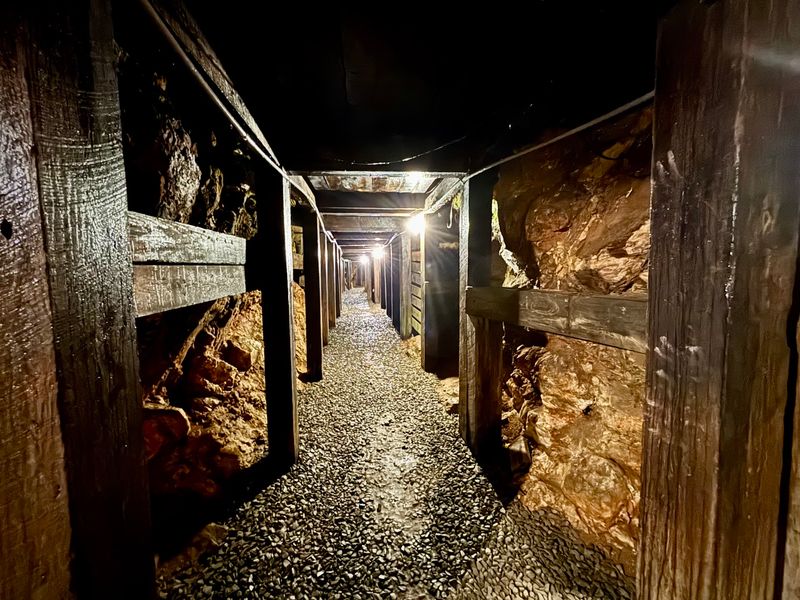
Restored sections of underground tunnels let you walk where miners once swung picks by candlelight.
The rock walls feel damp and close, and the air turns cool.
Back in the sunshine, try panning for your own glittering flakes.
Swirl the water slowly, tilt the pan, and watch for a tiny gleam settling at the bottom. Walking trails also wind past old mining machines scattered around the grounds.
It is a hands-on history lesson that even restless kids enjoy.
Address: 9621 Reed Mine Rd, Midland, NC 28107.
8. Town Creek Indian Mound
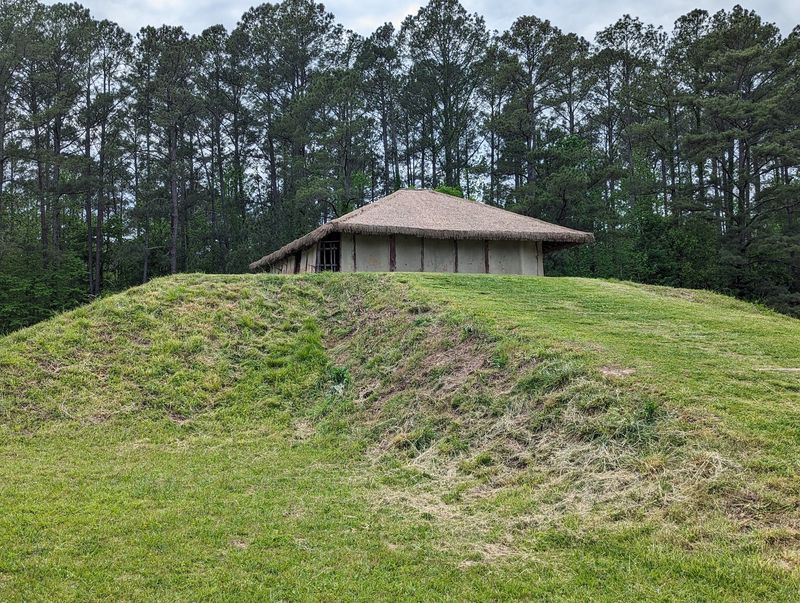
A tall wooden wall rises from a grassy bluff, circling a plaza that once buzzed with ceremony.
Beyond the palisade, an earthen mound stands about 15 feet high.
Stepping inside feels like entering another century.
Around the 11th century, the Pee Dee people built this center as a political and spiritual hub above the Little River.
Town Creek Indian Mound is the only state historic site devoted to American Indian heritage, and its reconstructed village shares their story.
Inside the walls you will see a recreated temple atop the mound, a burial house, and other structures.
The mound was built over older earth lodges, layer upon layer. Here the community gathered for the busk, a festival of renewal and cleansing.
Archaeologists have studied the site since 1937.
Their work revealed wide trade networks and a carefully organized society. Right now the visitor center and gift shop are closed for renovation.
Still, the mound and village are open for self-guided visits Tuesday through Saturday from 9 a.m. to 5 p.m., and restrooms are available. Bring water and walking shoes for the trails.
Find it at 509 Town Creek Mound Rd, Mt Gilead, NC 27306.
7. Goat Island Park
Goats once roamed this little island, and that is not a joke.
In 1910, textile leader Stuart Cramer turned a herd loose to keep the plants trimmed.
The name stuck long after the goats left.
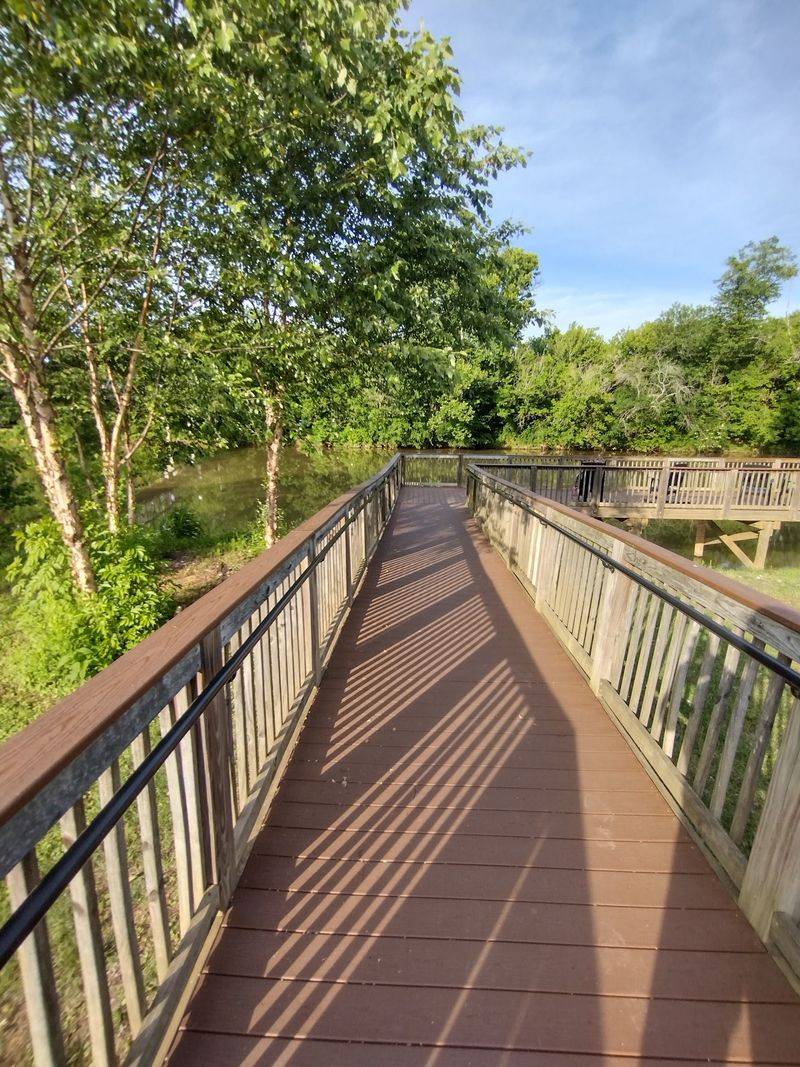
Today Goat Island Park covers 30 wooded acres in the South Fork Catawba River, linked to downtown Cramerton by pedestrian bridges.
It sits only about 20 miles west of Uptown Charlotte.
Look for 141 8th Ave. Cross the bridge and the city noise fades into rushing water and rustling hardwoods.
A paved greenway roughly half a mile long loops past wetlands and river views.
Walkers, joggers, and young bikers all share it. Kids head straight for the treehouse-style playground, while little ones have their own play area.
Grown-ups can try outdoor fitness gear, ping-pong tables, cornhole, or an 18-hole disc golf course.
Want to get on the water? Two canoe and kayak landings make launching easy, and an observation pier is great for spotting herons.
Downtown restaurants sit steps away, so grabbing lunch after a morning outside is simple.
The park stays open from dawn to dusk.
6. Vollis Simpson Whirligig Park
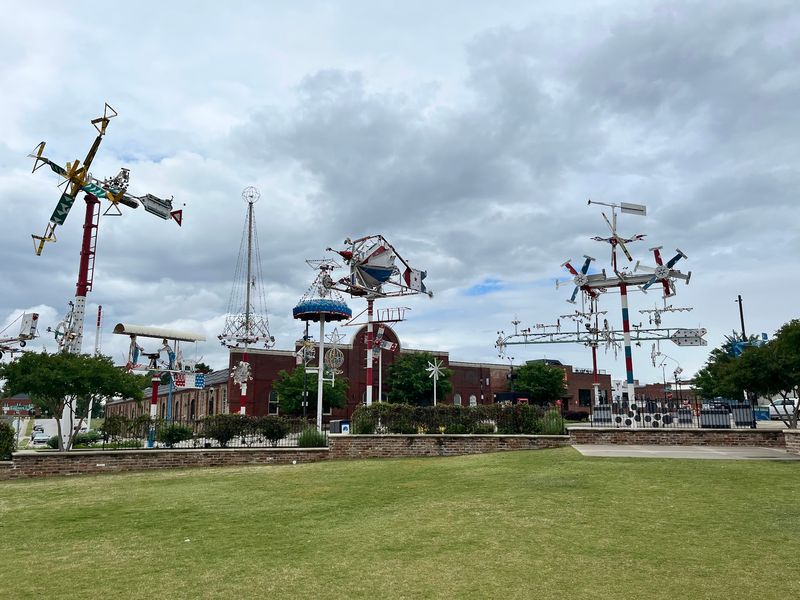
Clink, whirr, flash. Step into downtown Wilson on a breezy day and you will hear the park before you see it.
Thirty giant metal sculptures twirl and glitter overhead.
Vollis Simpson, a farm machinery repairman, started building these whirligigs from recycled metal in the early 1980s.
Vollis Simpson Whirligig Park now gathers his creations on two acres, some nearly 50 feet tall.
Head to 301 Goldsboro St S. Each sculpture is a puzzle of fans, wheels, and shiny reflectors.
Spot a bicycle rider, an airplane, or a figure that seems to wave.
The longer you stare, the more tiny details appear. These works are the official State Folk Art.
In 2026, USA TODAY 10Best readers named the spot the top sculpture park in America.
Come near sunset, when the reflectors catch the golden light.
Benches and picnic areas make it easy to linger, and the lawn amphitheater hosts music and movie nights.
Farmers markets and family events also pop up under the shelter.
Across the street, a museum and gift shop explain how volunteers saved the art.
Admission is free, and the park is open daily from 5 a.m. to midnight.
5. Bentonville Battlefield
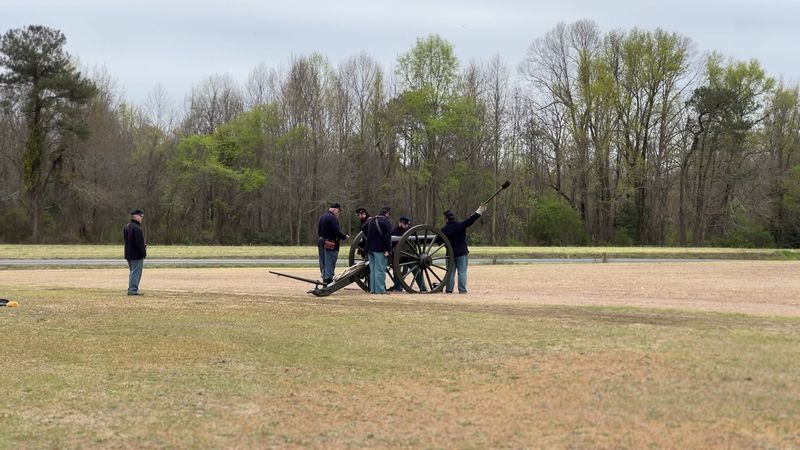
Quiet fields stretch toward the tree line, and it is hard to imagine they once shook with conflict.
For three days in March 1865, armies clashed across this farmland.
The calm today invites slow, thoughtful exploring. Bentonville Battlefield marks the largest Civil War battle fought in North Carolina and the final major attempt to stop General William T.
Sherman’s march through the Carolinas.
It happened just weeks before Lee surrendered at Appomattox. The site sits at 5466 Harper House Rd.
The heart of the visit is the Harper House, an 1855 farmhouse that served as a field hospital.
Its rooms are furnished to show that wartime role.
Nearby, a reconstructed kitchen and a dwelling for enslaved people widen the picture of daily life.
Inside the visitor center, a large fiber-optic map lights up troop movements with sound and narration. A 15-minute film adds helpful background.
A 10-mile driving tour and 6 miles of walking trails trace preserved earthworks and open ground.
Admission is free, with a small fee for Harper House tours. Hours run Tuesday through Saturday, 9 a.m. to 5 p.m.
4. Merchants Millpond State Park
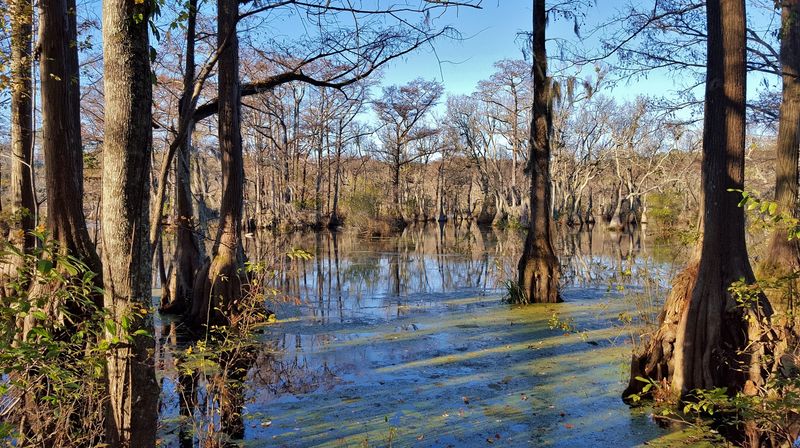
Paddle around one bend and the world goes hushed.
Bald cypress trunks rise from black, glassy water, Spanish moss drifts from the branches, and your kayak leaves the only ripple.
It looks like a scene from the Louisiana bayou.
Merchants Millpond State Park surrounds a 760-acre pond nearly two centuries old, close to the Virginia line in the northeast corner of North Carolina.
Its Lassiter Swamp feels like an enchanted forest. Find the park at 176 Mill Pond Rd.
Rent a canoe in season and glide past knobby cypress knees.
Keep watch for turtles sunning on logs and great blue herons stalking the shallows.
You might even see an American alligator, since this is the northern edge of their range. Prefer dry land? Over 9 miles of hiking trails and 5 miles of biking paths wind through coastal forest.
The millpond itself reflects the area’s 19th-century history as a milling and trading center.
Anglers try for largemouth bass, catfish, and sunfish.
Backpacking and paddle-in camping remain available, but the family tent-and-trailer campground is currently closed for construction, so check conditions before reserving.
3. Portsmouth Village
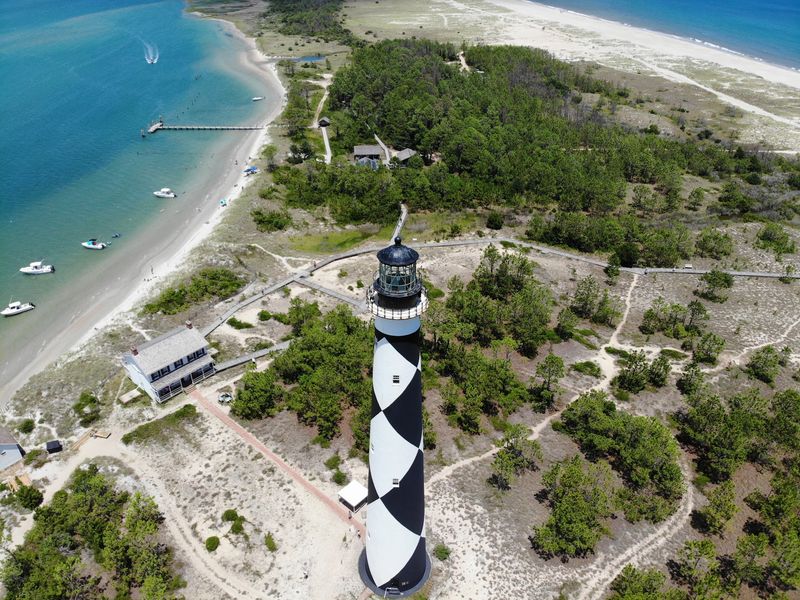
Nobody lives here anymore, yet the houses still stand as if their owners just stepped out.
A white church steeple pokes above the marsh grass.
Wind is often the only sound. Founded in 1753, Portsmouth Village was a busy port where workers moved cargo from big ships onto smaller boats to cross Ocracoke Inlet.
The last two residents left in 1971, and the island became part of Cape Lookout National Seashore.
Portsmouth Island is reached only by boat, usually by ferry from Ocracoke.
Wander the sandy lanes past the church, post office, schoolhouse, and U.S. Life-Saving Station.
Many buildings open seasonally, with rooms carefully kept in place. Peeking inside feels a bit like time travel.
The village reached its largest population in 1860.
Changing shipping routes and the Civil War slowly emptied it.
Facilities are limited, so plan ahead. Restrooms are in the Salter House, plus composting toilets past the Life-Saving Station.
Pack drinking water, food, sunscreen, and plenty of bug spray, because the insects can be fierce. Paths may be sandy or soggy.
Save time for the beach, where shelling is wonderful.
2. Old Baldy Lighthouse
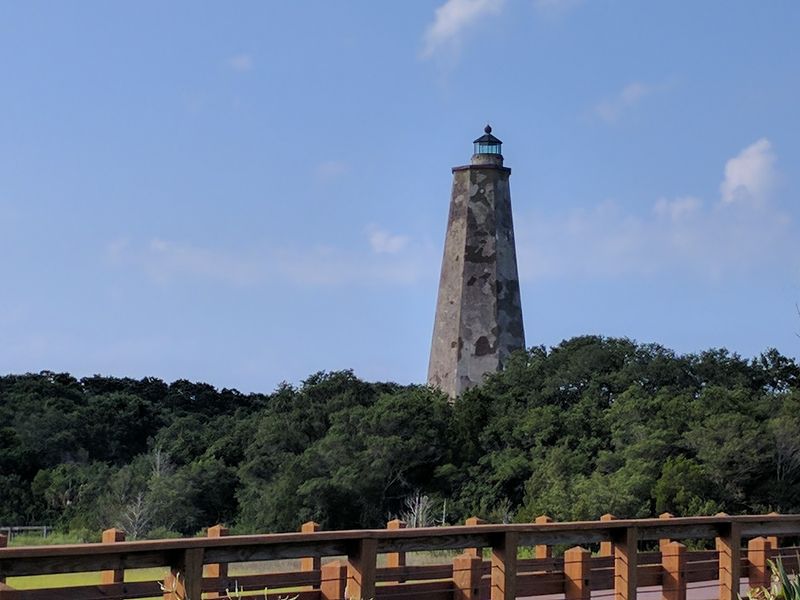
Leave the car behind at Southport and hop on a ferry.
Bald Head Island runs on bicycles, golf carts, and walking feet, so life instantly slows down.
Soon a patchy old tower appears above the treetops. Built in 1817, Old Baldy is the oldest standing lighthouse in North Carolina, rising 110 feet with eight sides.
Its stucco has worn into a mottled pattern that shows the bricks beneath. Climb it at 101 Light House Wynd.
Inside, 108 steps and five landings lead to the top.
Catch your breath, then soak in views of beaches, salt marshes, maritime forest, and the wide Cape Fear River. An earlier tower from 1794 was lost to erosion.
Old Baldy stayed active until 1935, served as a radio beacon during World War II, and was relit in 1988, though it no longer guides ships.
Next door, the Smith Island Museum of History fills a replica 1850s keeper’s cottage.
Picnic tables, an old oil house, and a sprawling live oak make the grounds pleasant for a slow lunch.
The lighthouse usually opens from March through December, and guided island history tours add even more stories.
1. Carolina Beach State Park
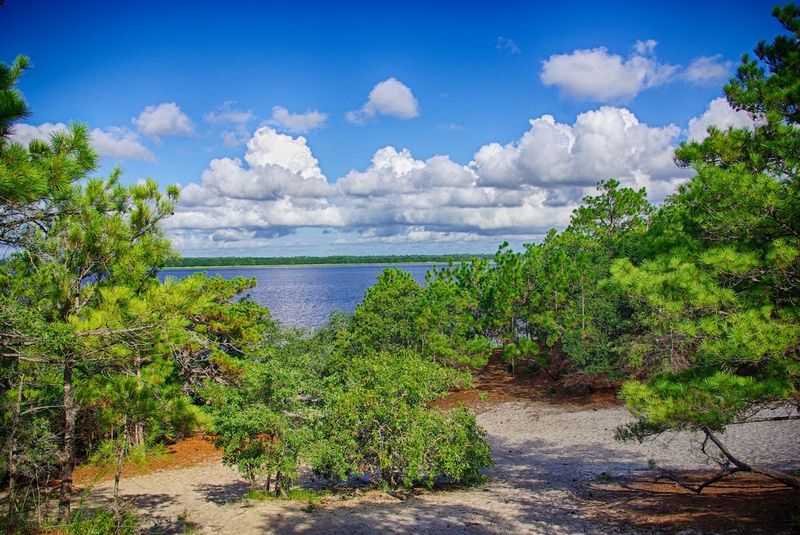
Hungry plants with tiny toothy traps grow wild along these sandy trails.
Venus flytraps live naturally in only a small coastal area, and this park sits right in the middle of it. Spotting one feels like finding a hidden prize.
Carolina Beach State Park encompasses about 761 acres just south of Wilmington.
The half-mile Flytrap Trail uses wooden walkways to lead you past flytraps, pitcher plants, and sundews. Start at 1010 State Park Rd.
Look low along the boardwalk edges, since the traps are small and easy to miss.
April through October is the best time to see them. Please stay on the path, because these plants are fragile.
Nearly nine miles of trails wind through the park in total.
The 3-mile Sugarloaf Trail passes a 50-foot dune that has served as a navigational landmark for Cape Fear River pilots since at least the 1600s. The Swamp Trail branches off the Sugarloaf Trail and passes views of tidal cypress-gum swamp and brackish marsh.
Stop by the visitor center for flytrap exhibits and ranger programs.
The family campground has 79 campsites, including 10 with full hookups, plus six camper cabins and hot showers.
Entry is free for most day-use activities, and park hours vary seasonally, with October hours currently running from 7 a.m. to 9 p.m.