Walk Among Thousands Of Native Prairie Plants At This Restored Nebraska Tallgrass Preserve
Pioneer wagon ruts are still carved into the hills here, and they made the National Register of Historic Places. Those grooves sit among more than 370 kinds of native plants.
That alone got my attention. Then I learned less than one percent of Nebraska’s original tallgrass prairie still exists.
This preserve protects one of the larger unbroken pieces of it, and you can walk right through it.
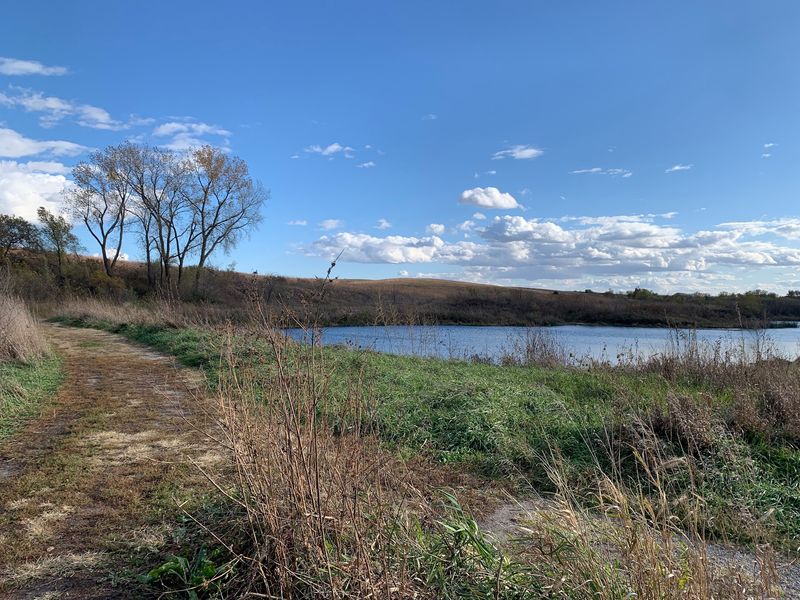
The trails wind past wildflowers, wetlands, a quiet pond, and grasses that turn auburn by late fall. More than 230 bird species have been spotted on this land.
I like how a short drive from a busy city can drop you into something this wide and this old.
So who saved it? And why did the plow skip it all those years ago?
A 1,160-Acre Slice Of Real Prairie Waits Just Southwest Of Lincoln
Spring Creek Prairie Audubon Center covers about 1,160 acres of rolling tallgrass prairie near Denton. That is a lot of grass, and almost none of it feels crowded.
The preserve sits roughly 20 to 30 minutes southwest of Lincoln. You can leave a city full of traffic lights and arrive somewhere with mostly sky and birdsong.
Audubon Nebraska runs the property as a sanctuary for prairie plants and the birds that rely on them. The mission is simple to explain and hard to pull off.
Keep the tallgrass healthy, and the wildlife follows.
More than four miles of walking trails loop through the land. They pass native wildflowers, tall grasses, wetlands, and wooded stream banks along the way.
The terrain surprises a lot of first-timers. Nebraska gets teased for being flat, yet these hills roll and dip in every direction.
Some stretches climb steeply enough to remind your legs they exist.
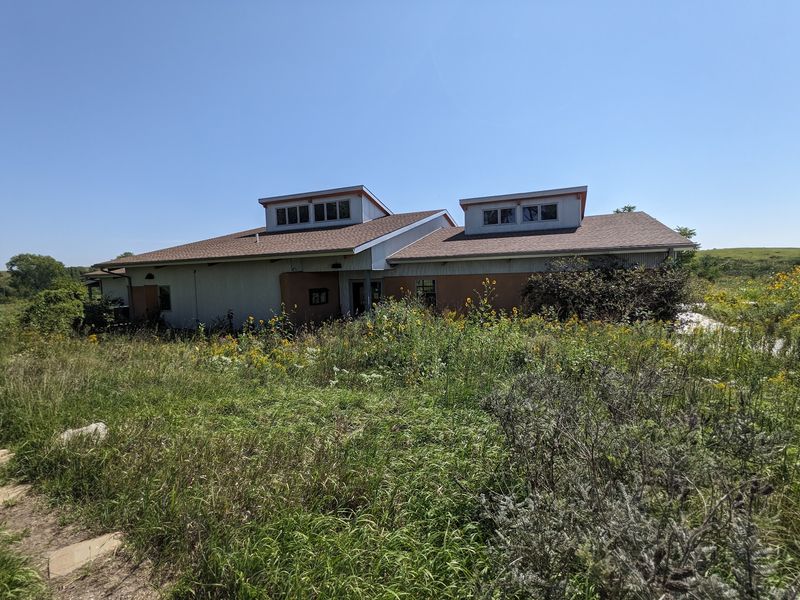
A welcoming visitor center anchors the whole place near the parking lot. It makes a handy starting point before you wander out.
Think of it as the front porch to a very large backyard.
How A Ranch Family’s Wish Turned Into A Protected Sanctuary
Long before the trail signs went up, this land was the O’Brien ranch. The family, especially Kathie O’Brien, wanted the property protected rather than carved up.
That wish led to a sale to Audubon Nebraska. The center was established in 1998, giving the prairie a permanent guardian.
Why this ranch? It belonged to one of the largest continuous parcels of tallgrass prairie left in the state.
Conservation groups don’t get many chances like that.
Most of Nebraska’s original tallgrass vanished under farm fields long ago. Less than one percent of it remains today.
Every surviving acre carries extra weight because of that number.
I believe the O’Brien story is the heart of this place. One family looked at their land and pictured its future, not just its price.
Plenty of Nebraskans can relate to that kind of attachment to home ground.
Today the ranch name lives on in the preserve’s history. The grasses still wave across the same hills cattle once grazed.
Only now, thousands of visitors get to share them.
Glacial Boulders Helped Keep The Plow Away
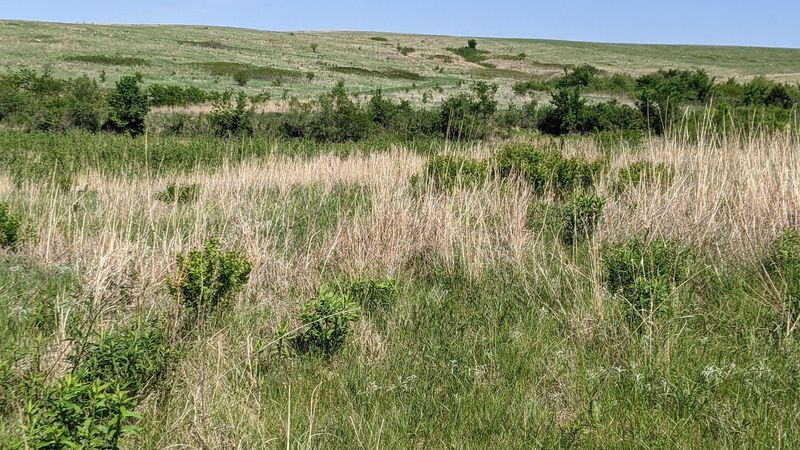
Rocks rarely get credit for saving anything. Here, they deserve a thank-you note.
Many parts of this prairie were never farmed. The hilly ground and the glacial boulders scattered through the soil likely made plowing more trouble than it was worth.
Those boulders arrived courtesy of ancient glaciers. The ice left them behind, and early settlers apparently decided to work around them instead.
That stubborn landscape became a gift. Unbroken prairie keeps its original mix of roots, soil life, and plant communities.
Restored land can recover a lot, but never-plowed ground holds history you simply can’t replant.
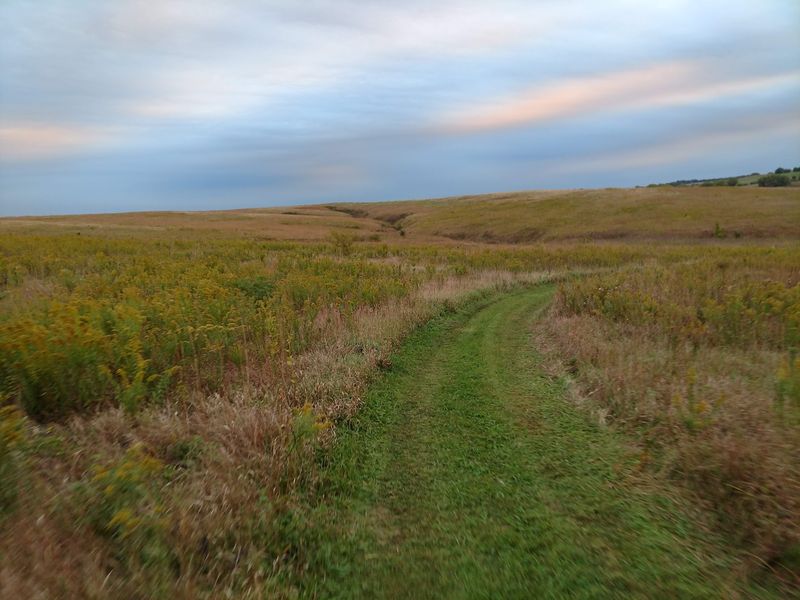
Walking the hills, you can feel how uneven the terrain really is. Steep rises give way to low draws and wet spots.
It’s easy to see why a farmer with a team of horses would grumble and move on.
So the next time someone calls Nebraska flat, point them toward Denton. The bumpy hills and leftover glacial rocks tell a different story.
They also explain why this particular prairie survived when so much else did not.
Real Pioneer Wagon Ruts Still Groove The Hillsides
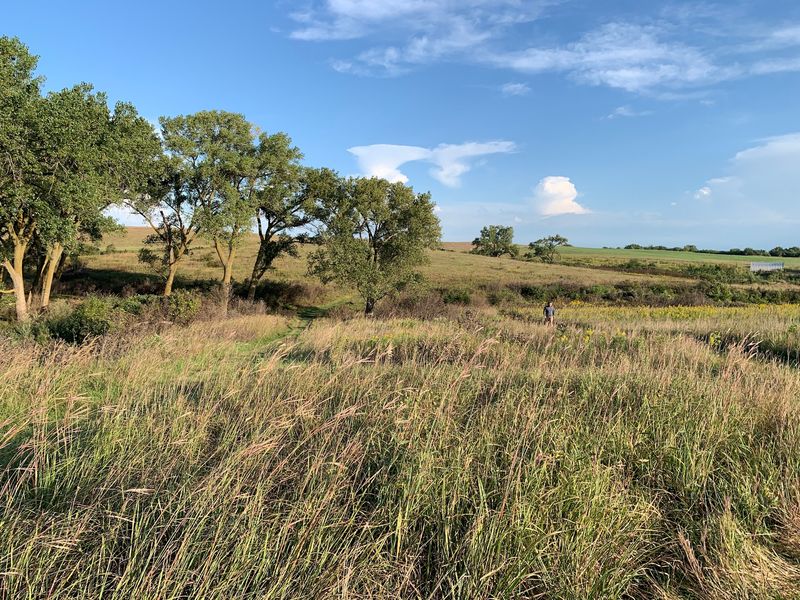
Covered wagons really did roll through here. Their wheels left ruts that are still visible on the land at Spring Creek Prairie Audubon Center.
The tracks belong to the Nebraska City-Fort Kearny Cutoff, a route that fed into the Oregon Trail. Travelers in the 19th century used it to head west.
These ruts are listed on the National Register of Historic Places. That’s a fancy title for a set of grooves in the grass, and they earned it.
Think about the weight it took to press those lines into the earth. Heavy wagons, tired oxen, and families hauling everything they owned all passed this way.
Unplowed prairie simply kept the record.
Spotting the ruts takes a little attention. They show up as shallow depressions running across the hills rather than dramatic trenches.
Guided tours have been known to point out these historic features alongside the native ecology.
History buffs will want to slow down here. Kids might enjoy imagining themselves as trail travelers too.
Either way, standing beside those tracks makes Nebraska’s pioneer past feel very close.
Four Miles Of Trails Give You Plenty Of Choices
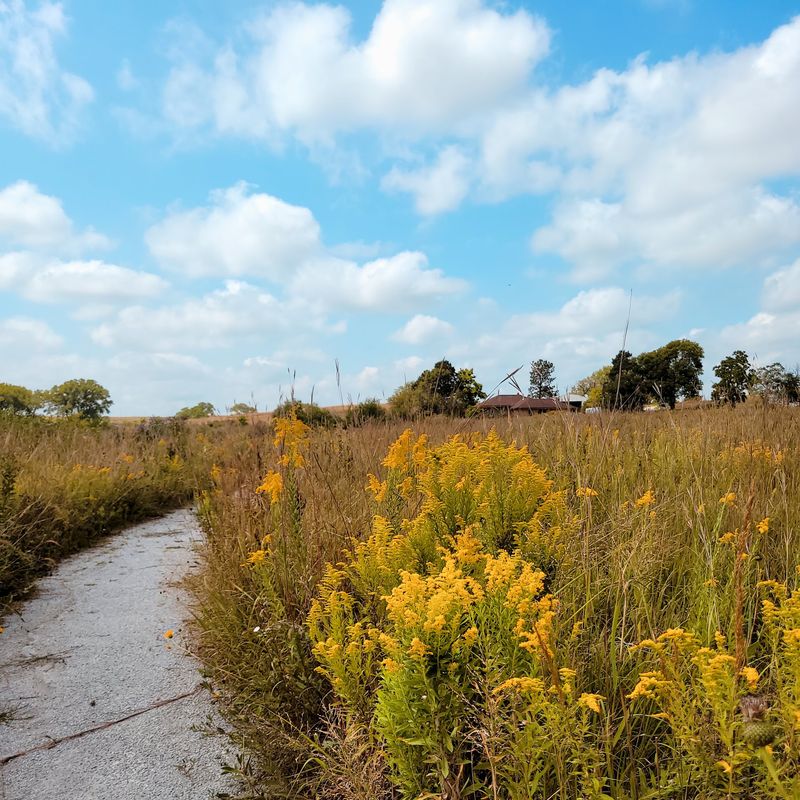
Pick a direction and start walking. The trail system offers more than four miles of paths, so you can do a quick loop or a long wander.
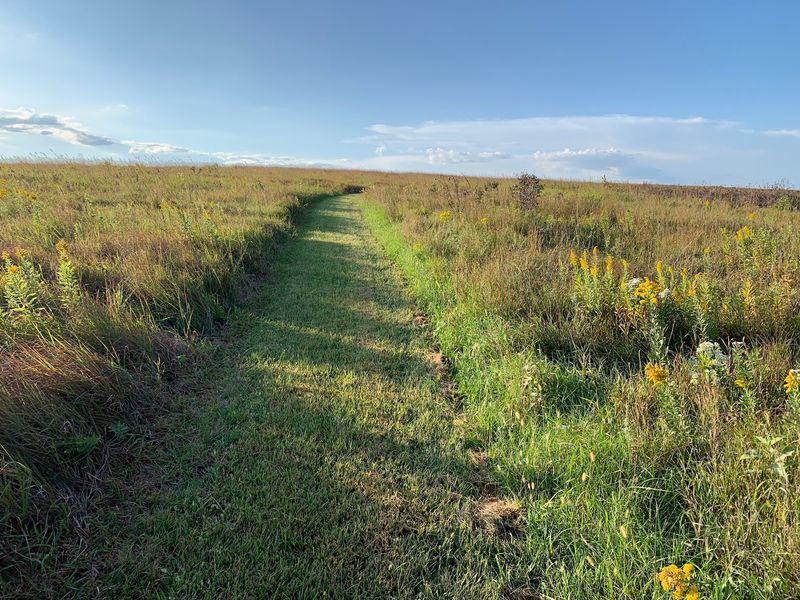
Most main trails are mowed paths through the grasses. Near the parking lot and visitor center, crushed limestone and paved trails offer an accessible option.
The routes lead past wetlands, a small pond, wooded streams, and open hilltops. One trail approach starts steep and eases downhill.
Another starts level and saves the climbing for later.
A little bridge crosses the pond, which is a favorite spot for spotting frogs and turtles. Marshy areas nearby can attract wading birds like herons.
Pets and bicycles have one dedicated stretch. A one-third-mile path heading north from the parking lot welcomes leashed dogs and bikes.
The rest of the network stays pedestrian only, which keeps things peaceful.
Wear sturdy shoes and bring water on warm days. Bug spray is smart in late spring and summer, since ticks love tall grass.
Your future self will be grateful during the drive home.
More Than 370 Plant Species Paint The Hills Through Every Season
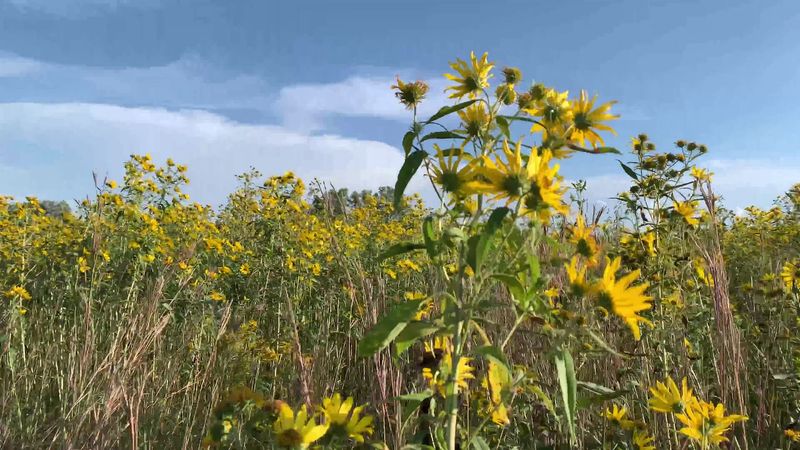
Over 370 species of plants grow across this prairie. That’s the kind of variety that makes a casual walk feel like a botany lesson you didn’t sign up for.
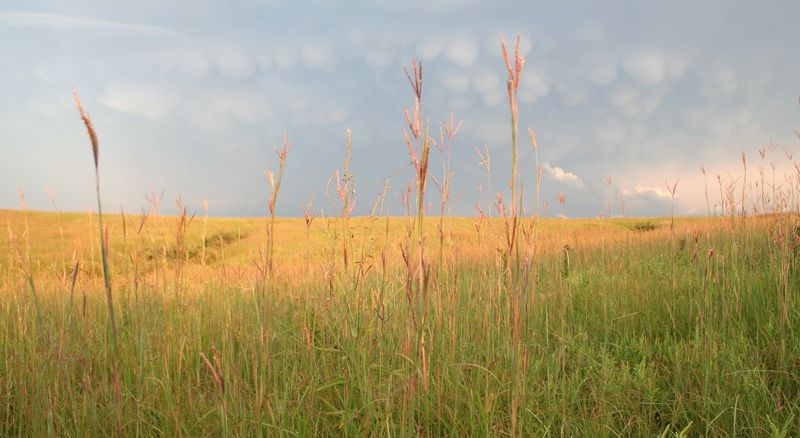
Tall native grasses form the backbone of the landscape. Wildflowers pop up between them, changing the colors on the hills as the months pass.
Late fall brings a different show entirely. The grasses can turn a rich auburn color that glows across the rolling ground.
Summer, meanwhile, fills the trails with blooms and buzzing pollinators.
Those plants do serious work below the surface too. Prairie roots run deep, holding soil in place and storing moisture.
What you see above ground is only part of the story.
A diverse plant community supports everything else here. Butterflies, bees, birds, and mammals all depend on this mix for food and shelter.
Lose the plants, and the rest unravels quickly.
You don’t need to know a single plant name to enjoy it. Still, the visitor center can help curious walkers learn what they’re looking at.
Fair warning, you may start naming grasses at dinner.
Birders Can Chase Around 235 Recorded Species Here
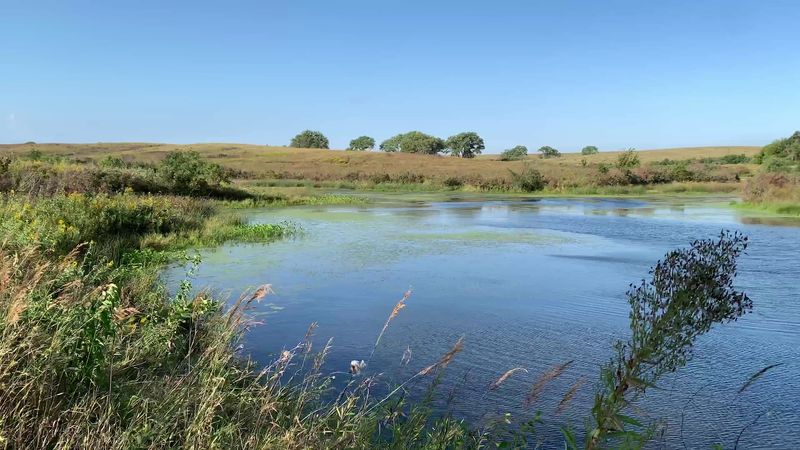
Bring binoculars, because roughly 235 to 240 bird species have been observed on this land. Serious birders and curious beginners both have plenty to look for.
Grassland birds are the headliners. Henslow’s sparrows, bobolinks, and dickcissels find shelter and breeding grounds in the tallgrass.
Those species need big, open prairie to thrive. Habitat like this has become rare, which makes Spring Creek Prairie Audubon Center especially valuable for them.
Wetlands and the pond add more variety. Wading birds and water-loving species show up alongside the grassland crowd.
Great blue herons are among the larger visitors around the marshy spots.
Birds aren’t the only residents either. About 30 mammal species and 53 butterfly species have been recorded here.
White-tailed deer sometimes appear along the edges of the trails.
A quiet pace pays off on these paths. Stop, listen, and let the prairie fill in around you.
The lack of road noise makes every song easier to hear, and that’s a rare treat these days.
The Visitor Center Runs Partly On Prairie Sunshine
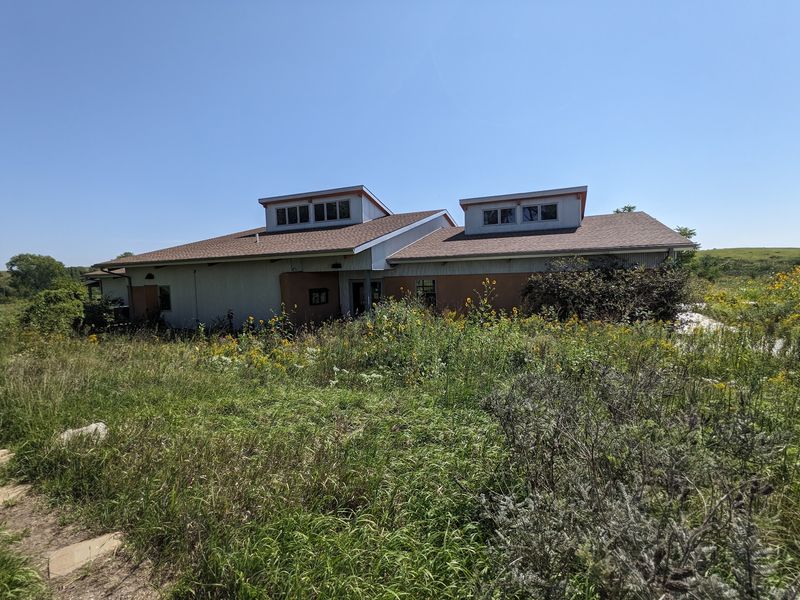
Solar panels went up on the roofs in 2024. Now the visitor center generates clean energy from the same sun that feeds the grasses outside.
The building opened in 2006 with energy-efficient design built in from the start. Salvaged and reclaimed materials were used in its construction too.
Inside, interactive exhibits installed in 2015 explain tallgrass prairie life. They’re designed to spark curiosity before you head out onto the trails.
Kids tend to find plenty to poke at and read.
Restrooms are available here, along with a small nature store. Art exhibits have also been part of the space, all tied to the prairie theme.
Staff members at the desk can recommend trails based on the weather and season. That local know-how helps first-time visitors figure out where to start.
It beats guessing at a fork in the path.
I like that the building practices what the preserve preaches. Conservation isn’t just a sign on the wall here.
It’s built right into the roof, the walls, and the electric bill.
Fire, Grazing, And A Few Chainsaws Keep The Grass Wild
Healthy prairie doesn’t happen by accident. It takes planning, sweat, and occasionally a carefully controlled fire.
Prescribed burns are mainly scheduled in early spring. They help control invasive plants like brome grass and give native species room to grow.
Burning also reduces the fuel that could feed wildfires. Prairie plants evolved alongside fire, so they bounce back quickly.
Invaders usually don’t handle it nearly as well.
Grazing plays a role too. Animals munching across the land help maintain native plant diversity and discourage unwanted species.
Fall and winter bring a different chore. Crews cut invasive trees such as eastern redcedar, honey locust, and elm.
Left alone, those trees would shade out the sun-loving prairie plants underneath.
Habitat management staff and volunteers handle this work year after year. Without them, the open grassland would slowly turn into scrubby woods.
That would leave the grassland birds with nowhere to go.
So the next time you admire a sweeping view, thank the crew. Somebody worked hard to keep that horizon open.
Picnic Tables, Field Trips, And Programs For Curious Minds
Pack a lunch, because there’s a picnic area waiting behind the nature center. Ten tables and trash cans make it easy to refuel between walks.
An outdoor restroom and a drinking fountain sit nearby for convenience. The large parking lot can even handle group tour buses.
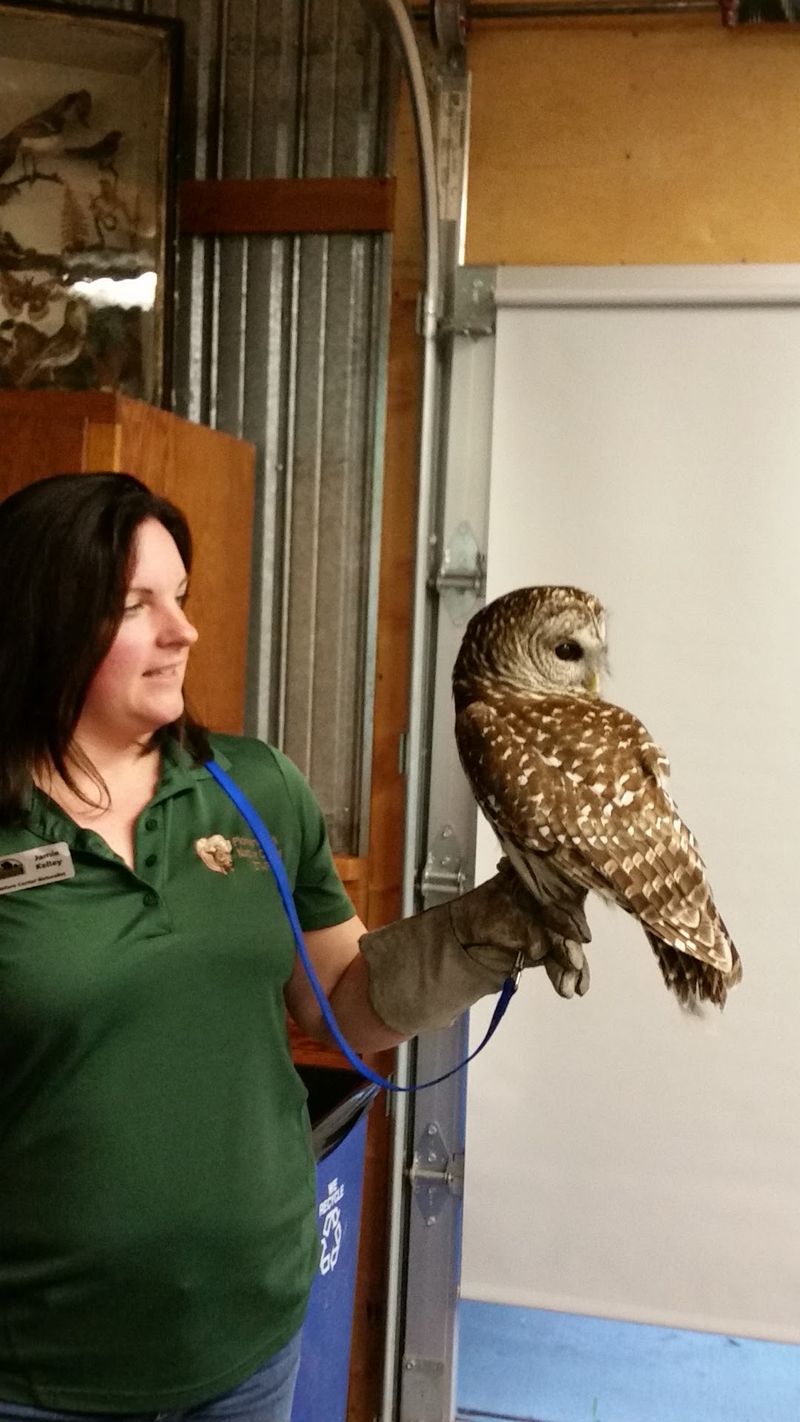
Learning happens all year here. Spring Creek Prairie Audubon Center hosts family nature programs, school field trips, and special events through the seasons.
Guided tours are available for groups of all ages and interests. They dig into both the natural world and the historic landscape.
A good guide can turn a simple stroll into a real eye-opener.
Older students have their own option. The Wildlife Explorers program introduces middle and high school students to conservation careers and community roles.
Families with energetic kids will appreciate the open space. Little legs can burn off steam on the trails, then settle down with a sandwich.
Adults wanting quiet reflection can find their own corner of the hills too. Everyone heads home a bit more tired and a lot more curious.
Plan Your Visit, Then Let The Prairie Do The Rest
Getting here is easy from Lincoln. Head southwest to 11700 SW 100th St., Denton, NE 68339, and watch for the gravel parking lot.
Road signs can have small print, so keep your eyes open on the final stretch. A map app helps on these rural Nebraska roads.
The visitor center keeps full daytime hours on weekdays. Weekend hours are shorter and wrap up around midday, so plan Saturday and Sunday trips for the morning.
Check ahead for program schedules and any admission details before you go. Seasons change the experience dramatically, so each visit can feel brand new.
Spring and summer bring blooms, birdsong, and yes, ticks. Fall turns the hills auburn and cools the air for longer hikes.
Even a chilly winter day can make a lovely short walk.
Spring Creek Prairie Audubon Center packs pioneer history, rare tallgrass, and hundreds of bird species into one afternoon. It’s a piece of old Nebraska still standing in the wind.
I can’t imagine a better reason to point the car toward Denton.