9 Things To Do In New York City For $10 Or Less That Are Actually Worth Your Time
For the price of a single subway swipe, you can ride a cable car about 250 feet above the East River. The whole trip takes roughly three minutes.
I can’t get over that. That wild little deal got me thinking about how much of New York City still costs next to nothing.
There’s a library guarded by stone lions. There’s a cemetery that was once a Revolutionary War battlefield. And there’s a park built on an old landfill that now shows off giant sculptures.
New York has a reputation for draining wallets fast. I love proving that reputation wrong, one cheap adventure at a time. Each pick below costs ten dollars or less, and plenty are free.
Let’s see how far can a crumpled ten-dollar bill really take you in the Big Apple.
1. Whitehall Terminal
The best boat ride in New York Harbor doesn’t require a ticket. Even better, the Staten Island Ferry operates around the clock.
The bright orange boats depart from Whitehall Terminal at 4 South Street in Lower Manhattan, crossing the harbor to St. George on Staten Island.
Each journey takes approximately 25 minutes, making the ferry an attraction that also happens to serve everyday commuters.
As the boat moves away from Manhattan, the skyline spreads across the water. The Statue of Liberty and Ellis Island come into view, with passing vessels adding movement to the panorama.
The ferry travels past these landmarks rather than stopping at either island. That makes it a scenic crossing, not a substitute for a guided visit to the monuments.
Service runs every day, with more frequent departures during busy commuting periods. Travelers seeking a quieter outing can consider a weekend morning or a time outside the usual rush.
The terminal has indoor waiting space, restrooms, and nearby subway connections. On the vessel, outdoor decks provide opportunities to enjoy the harbor breeze when available.
At St. George, everyone exits before boarding the next Manhattan-bound departure. Taking both legs offers two different perspectives on the waterfront.
A light jacket is useful, especially when the wind picks up on the open water. The changing light can give familiar landmarks a different appearance on each crossing.
2. Roosevelt Island Tramway
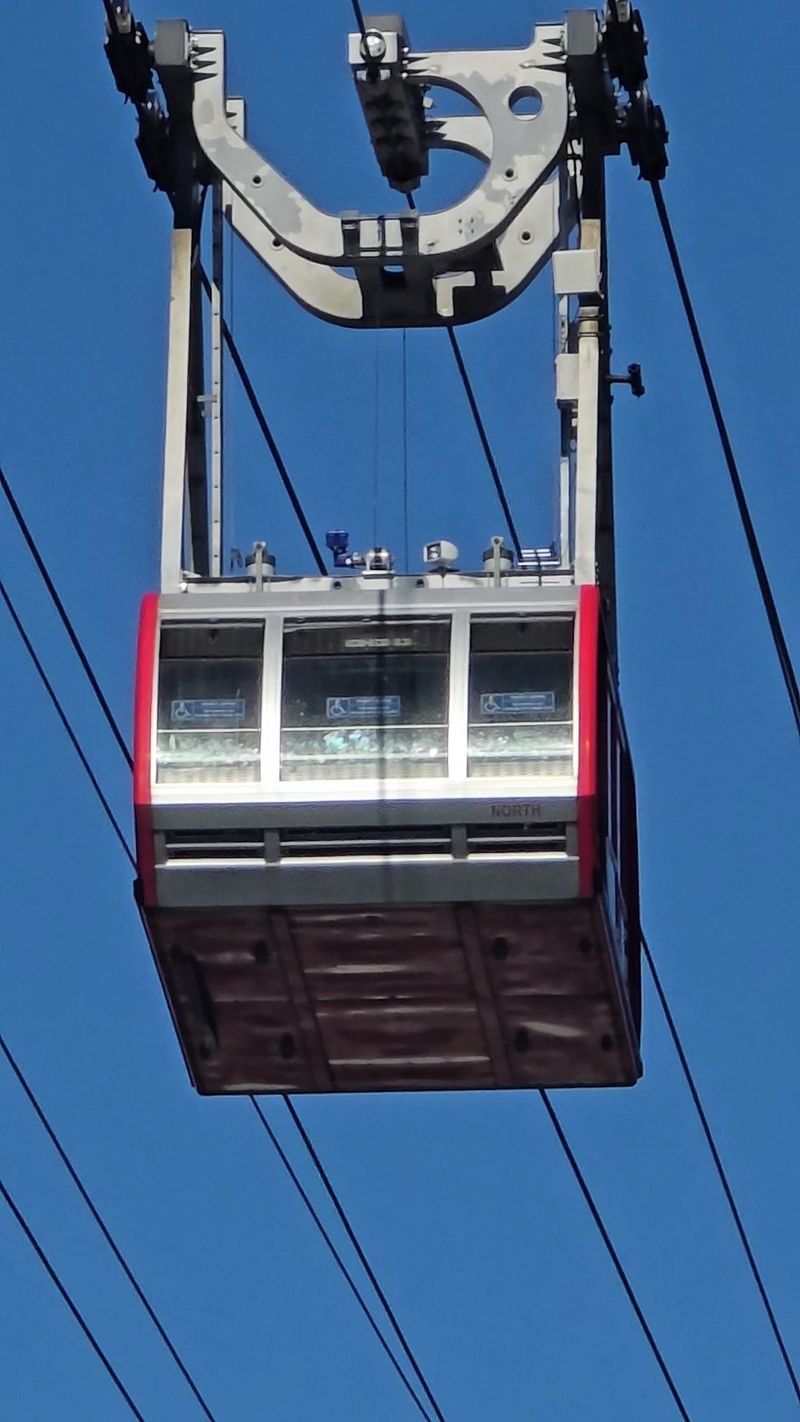
Ski lift vibes, only with skyscrapers instead of mountain slopes. The Roosevelt Island Tramway turns an ordinary river crossing into a short aerial adventure.
Board at 254 East 60th Street, beside Second Avenue in Manhattan, and the cabin rises above the East River alongside the Queensboro Bridge. At its highest point, the tram reaches approximately 250 feet above the water.
The crossing takes about three minutes. From the windows, passengers can see the bridge structure, surrounding towers, and the narrower strip of land that forms Roosevelt Island.
Because the tram operates as public transportation, it accepts the same standard fare payment system used on the subway. A return journey requires another fare, with the two rides remaining comfortably within the article’s budget.
Service generally runs from 6 a.m. until 2 a.m., extending later on Fridays and Saturdays. Cabins arrive more frequently during busy periods and roughly every fifteen minutes at other times.
For a longer outing, walk the island’s waterfront paths or head toward Four Freedoms Park at its southern tip. The views back toward Manhattan make the return trip feel worthwhile.
A window position can be easier to find outside commuting hours, although crowds vary. This is one of the quickest ways to see a familiar city from an unexpectedly elevated angle.
3. New York Public Library – Stephen A. Schwarzman Building
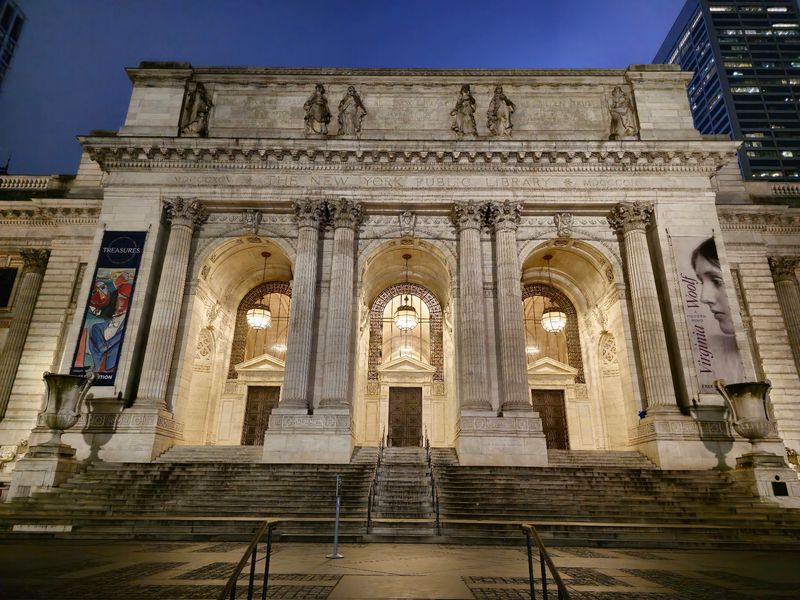
Two stone lions guard the front steps, and they don’t even ask for a ticket. Beyond them stands one of the city’s grandest public interiors.
The Stephen A. Schwarzman Building at 476 Fifth Avenue opened in 1911. Its Beaux-Arts architecture includes marble staircases, chandeliers, soaring ceilings, and Astor Hall, a magnificent entry space that sets the tone for the visit.
The free Polonsky Exhibition of the Library’s Treasures adds an entirely different attraction. Rare books, manuscripts, maps, and cultural objects tell stories spanning thousands of years, with changing displays drawn from the library’s collections.
The Rose Main Reading Room is another architectural highlight, filled with long tables and distinctive ceiling artwork.
Because it functions as a research space, sightseeing access follows designated visitor arrangements rather than unrestricted wandering.
Free guided tours and a self-guided audio experience can help explain the building’s history, though guided places are limited and may require advance booking.
Most days, the library opens at 10 a.m.; Tuesday and Wednesday have later closing times, with shorter Sunday hours outside summer. The building also sits beside Bryant Park, making a walk outdoors an easy addition.
Quiet voices are expected in study areas. With no admission charge for the public exhibitions, this landmark offers architecture and culture without asking visitors to choose between them.
4. Wave Hill Public Garden & Cultural Center, Bronx
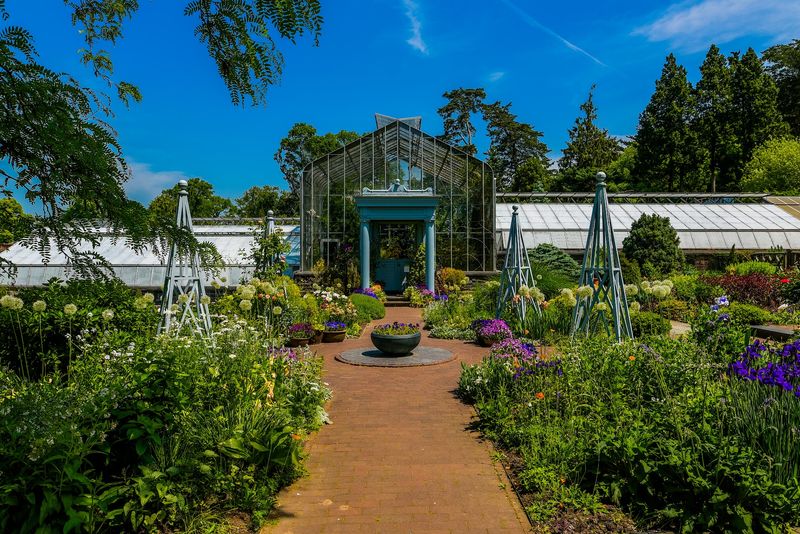
Flowers, winding paths, and Hudson River views make this garden feel surprisingly far from a busy city boulevard. The scenery is only part of the attraction.
Wave Hill occupies 28 acres in Riverdale, with carefully tended lawns, seasonal flower borders, woodland paths, and overlooks facing the Palisades across the river. The changing plantings give each season a different character.
The Marco Polo Stufano Conservatory houses collections suited to contrasting growing conditions, including tropical and dry environments.
Nearby, the historic Wave Hill House adds architecture to the landscape, while Glyndor Gallery hosts changing art exhibitions.
For an easy arrival, the garden entrance is at 4900 Independence Avenue in the Bronx.
Standard adult admission meets this list’s budget, and Thursdays offer free general admission, except for organized groups. Certain premium events have separate admission arrangements.
The grounds generally open Tuesday through Sunday from 10 a.m. to 5:30 p.m., with an earlier closing time during winter. Specific indoor spaces close sooner, so an afternoon visit benefits from a little planning.
Families can look for seasonal nature programs and activities. The cafe offers a place to pause, while shaded benches around the grounds allow time to appreciate the river views.
This is an especially pleasant New York escape for travelers who enjoy gardens as much as traditional sightseeing. The open lawns and terraces offer several places to pause.
5. The Green-Wood Cemetery, Brooklyn
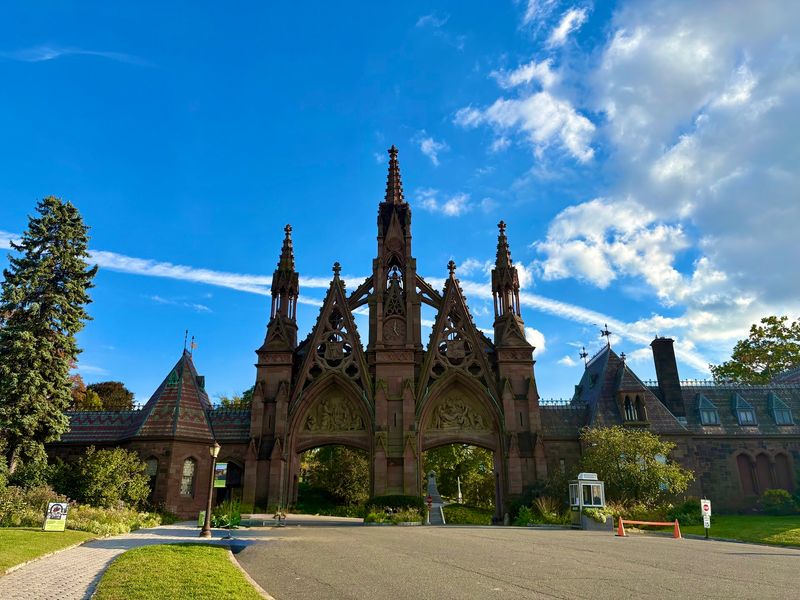
In the nineteenth century, this Brooklyn landscape became a destination for its gardens, monuments, and winding roads. Its remarkable scenery still invites an unhurried walk.
Founded in 1838, Green-Wood covers 478 acres of hills, ponds, trees, and carefully designed paths. It is also an accredited arboretum, which makes the botanical setting as interesting as the architecture.
The main entrance is at Fifth Avenue and 25th Street in Brooklyn, where elaborate Gothic Revival gates create a memorable introduction. Stone carvings and ornate details reward a closer look before the path begins climbing uphill.
Battle Hill, the borough’s highest natural point, is connected to significant events from August 1776. Beyond that historic setting, monuments and sculptures reveal the changing artistic tastes of different generations.
The grounds remain a place for quiet reflection, so respectful walking and attention to marked paths are important. Admission is free, and visitors can use a map to choose shorter or longer routes.
During October 2026, the main entrance welcomes pedestrians from 8 a.m. to 6 p.m., with hours adjusting at other times of year.
There is also a new visitor center called the Green-House near the main gate, featuring exhibitions and resources for exploring the landscape.
Comfortable shoes are a good choice for the slopes. Even a short visit offers an unexpected combination of greenery, history, and remarkable stonework.
6. Queens Museum, Corona
Ever wanted to see New York City from above without boarding a plane? The Queens Museum shrinks the whole city down for you.
Its famous Panorama is a vast architectural model built for the 1964 World’s Fair. Across more than 9,000 square feet, tiny buildings, bridges, and parks represent all five boroughs at a scale of one inch to 100 feet.
The miniature city contains approximately 895,000 buildings, with its last comprehensive updates reflecting the early 1990s. That makes it both a remarkable cityscape and a fascinating glimpse of how the metropolis looked in an earlier period.
Other galleries offer a different perspective. A collection of Tiffany lamps reveals intricate colored glasswork, while temporary exhibitions introduce contemporary artists and changing ideas about urban life.
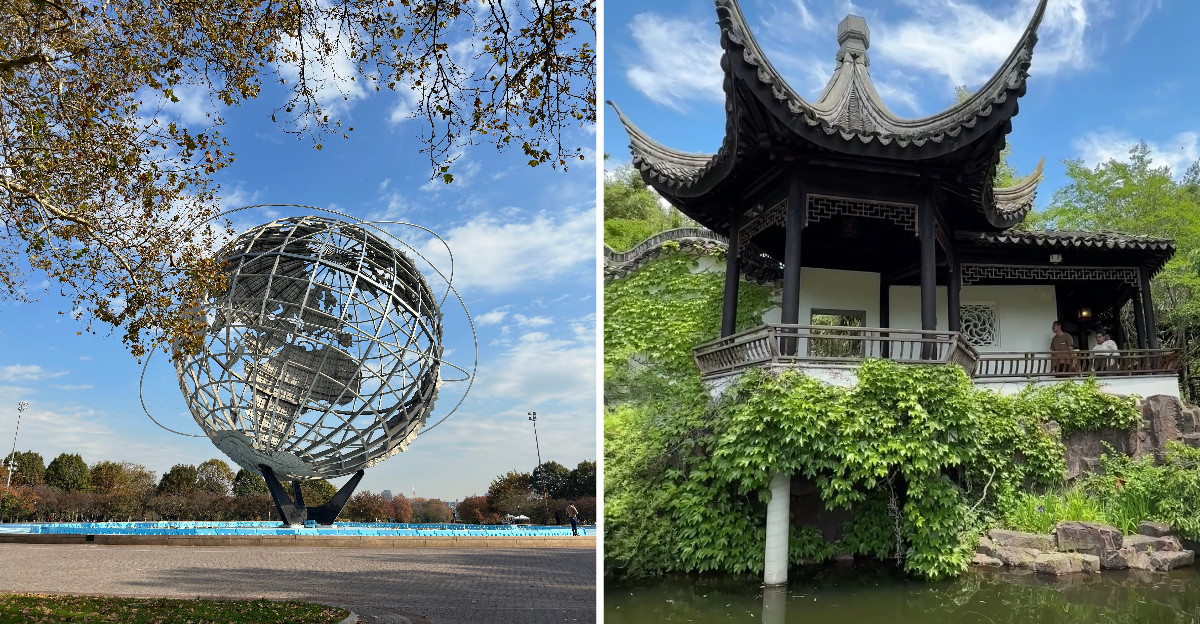
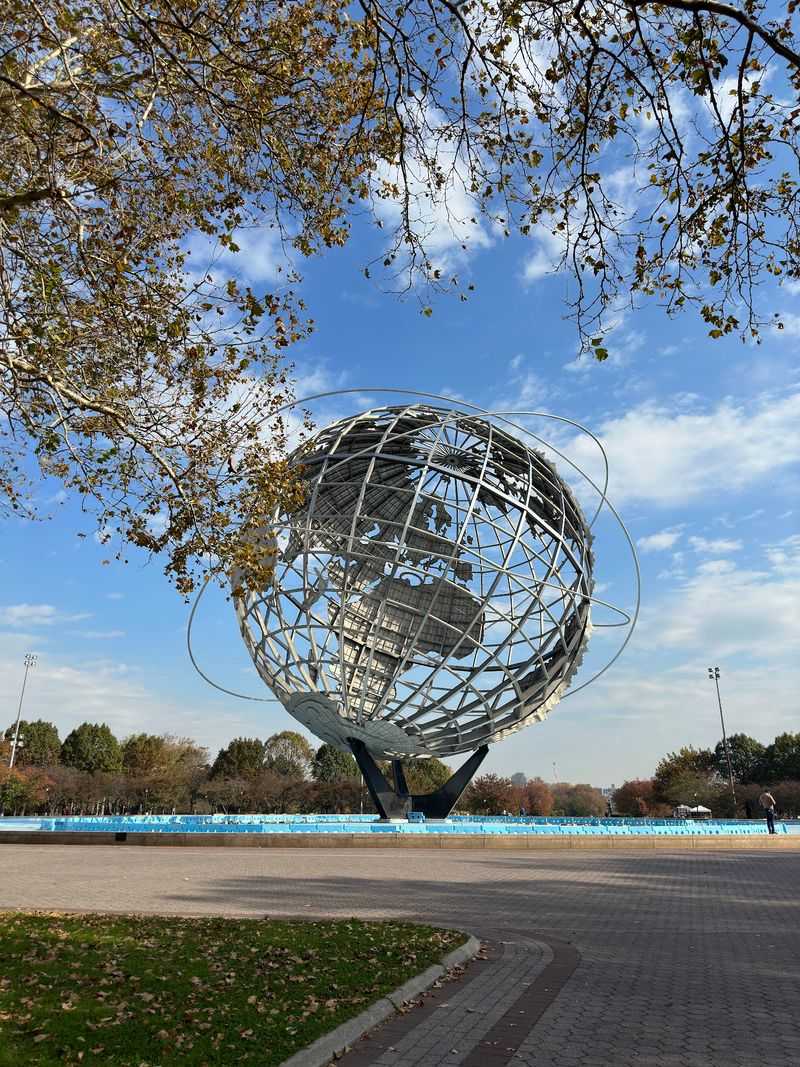
The museum occupies the New York City Building in Flushing Meadows Corona Park, Queens. From the surrounding parkland, the Unisphere provides another unmistakable landmark before or after the galleries.
Admission is pay what you wish, so visitors can choose an amount within their budget. Timed entry reservations are encouraged, especially when planning a weekend visit.
Hours run from noon to 5 p.m. Wednesday through Friday and 11 a.m. to 5 p.m. on weekends; Monday and Tuesday are regular closing days.
The tiny streets of the Panorama make an enormous city feel surprisingly understandable, one miniature block at a time.
7. Snug Harbor Cultural Center & Botanical Garden, Staten Island
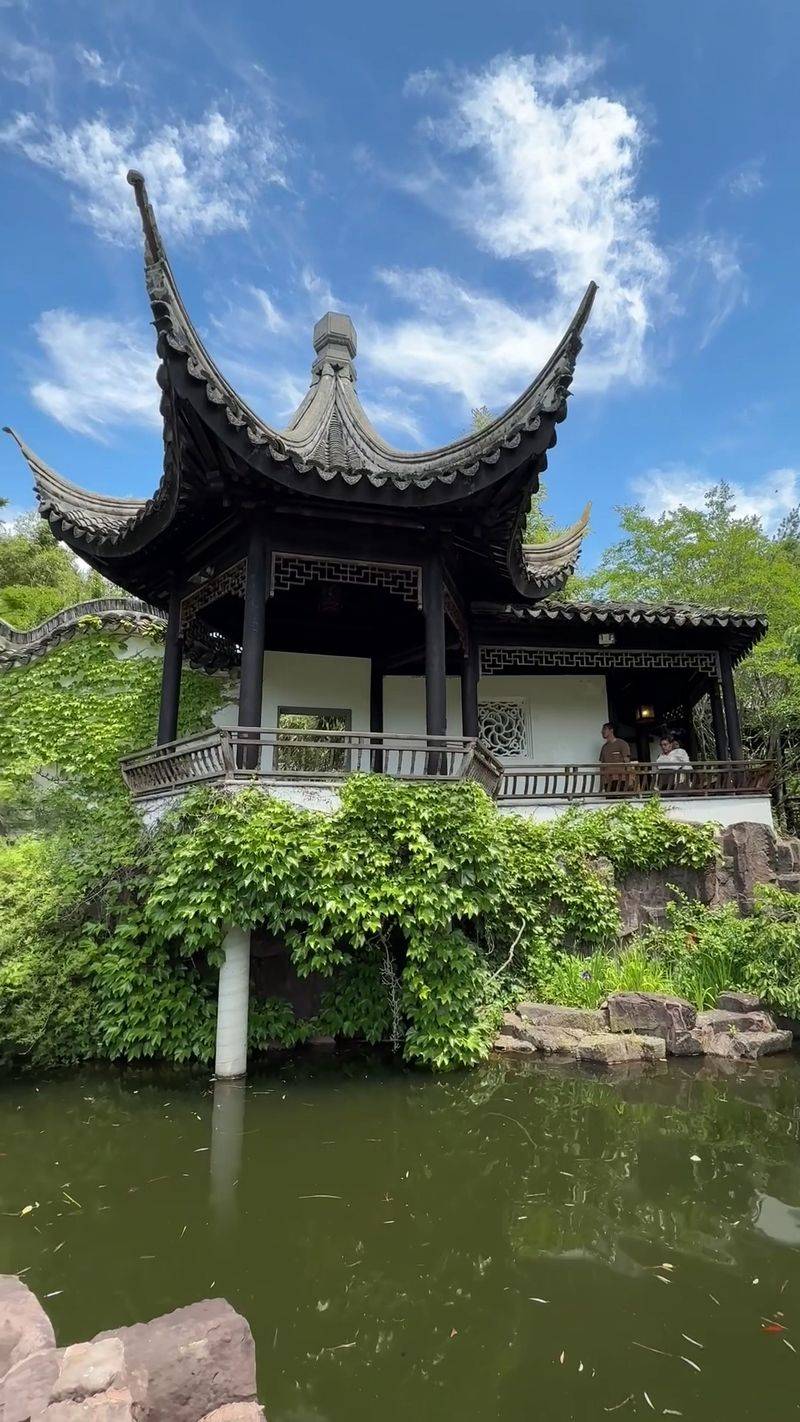
Retired sailors once called this place home. Today, Snug Harbor welcomes garden lovers, architecture enthusiasts, and anyone curious about Staten Island’s quieter corners.
The historic campus stretches across 83 acres, with nineteenth-century buildings, formal gardens, open lawns, and pathways connecting cultural spaces.
Its origins as a residential community for sailors are still visible in the arrangement of its imposing buildings.
A row of Greek Revival structures gives the central grounds a particularly stately appearance. Garden areas add variety, from seasonal flower displays to carefully arranged landscapes inspired by different horticultural traditions.
At 1000 Richmond Terrace, visitors can enter the main outdoor campus for free.
Grounds are open from dawn to dusk throughout the year, although individual museums, galleries, and specialty gardens maintain separate schedules and may require additional admission.
For a completely free outing, concentrate on outdoor paths, architecture, public sculptures, and changing plantings. The Chinese Scholar’s Garden and other ticketed attractions can be considered separately according to the day’s budget.
Occasional workshops, performances, and exhibitions add another dimension to the property. Some programs have their own admission arrangements, so walking the grounds is the simplest way to keep the outing inexpensive.
This expansive Staten Island setting pairs naturally with the free ferry crossing from Manhattan. Allow time to explore the grounds at a comfortable pace rather than treating the visit as a quick stop.
8. Governors Island
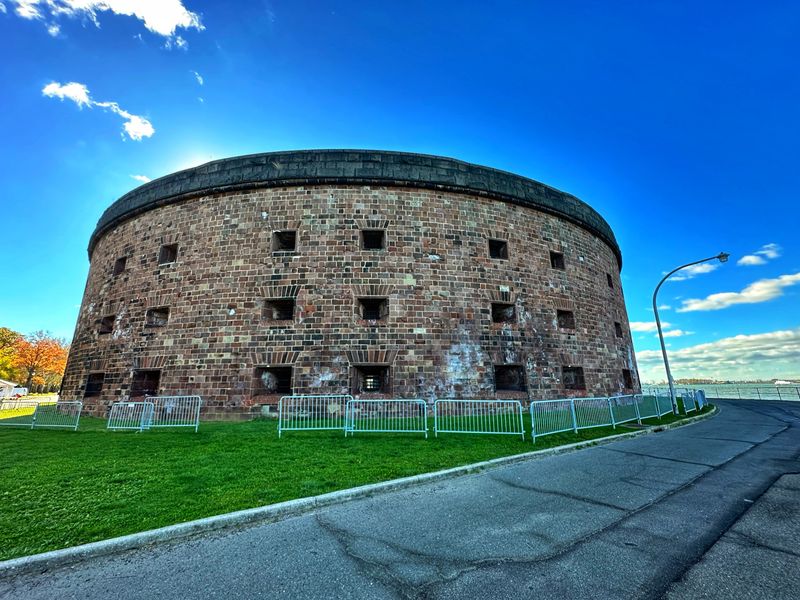
An old military island turned into a giant green playground? Governors Island pulls off that transformation with remarkable style.
This 172-acre retreat sits a short ferry ride from Lower Manhattan, with lawns, paths, historic buildings, and open waterfront scenery.
Some of the island’s former service structures remain, giving the landscaped public spaces a distinctive architectural backdrop.
Hammock Grove offers an easy place to relax among trees, while the Hills provide higher viewpoints toward the harbor. Picnic Point has open seating and broad water views, making it especially attractive for a packed lunch.
To reach the island, board the dedicated ferry at the Battery Maritime Building, 10 South Street in Manhattan.
The regular round-trip ticket falls comfortably within this list’s budget, and departures before 11 a.m. on Saturdays and Sundays are free for everyone.
The island is open year-round. During fall 2026, general visiting hours run from 7 a.m. to 6 p.m., with seasonal ferry arrangements changing throughout the year.
Outdoor walking, picnicking, and enjoying the skyline require no additional admission. Cycling, special events, and certain activities may involve separate arrangements, so visitors can choose how much to add.
From the southern lawns, the Statue of Liberty becomes part of the view. It is a wonderful setting for an easy afternoon with room to spread out and explore. Hammocks and hillside paths encourage a leisurely visit.
9. Socrates Sculpture Park, Astoria
Forty years ago, this patch of Queens was an abandoned landfill. Artists and Astoria residents saw something else entirely.
Socrates Sculpture Park opened in 1986 and transformed the waterfront site into an outdoor space for ambitious contemporary art.
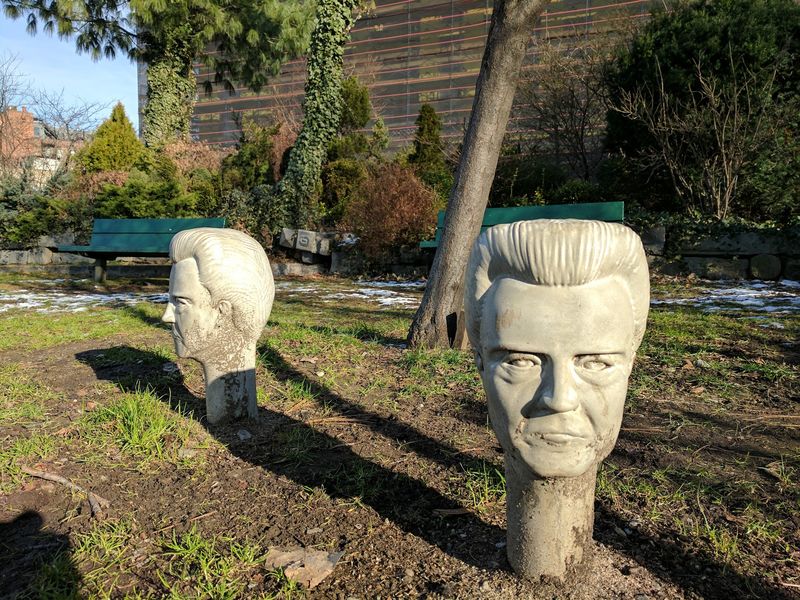
Instead of traditional galleries, enormous sculptures and installations stand directly among the grass, trees, and paths.
The exhibitions change as new projects arrive, making each visit different. Artists work with materials ranging from metal and wood to reclaimed industrial objects, responding to the landscape and the surrounding neighborhood.
The park celebrates its fortieth anniversary in 2026 with an expanded program of outdoor installations and creative projects. Some works will remain on view well into 2027, giving returning visitors time to encounter the evolving displays.
The entrance is at 32-01 Vernon Boulevard in Long Island City, near Astoria’s waterfront. Admission is always free, and the park welcomes visitors daily from 9 a.m. until sunset, with adjusted hours on certain holidays.
Beyond the sculpture, the setting offers views across the East River toward Manhattan. Public programs may include artmaking workshops, movement activities, and performances, with schedules varying by season.
There is room to pause on the grass and take in the changing skyline. For anyone interested in creative ideas without a traditional museum setting, this Queens destination provides a refreshing finale to a low-cost city adventure.