These Are The 6 Florida Beaches Where You Find Fossil Shark Teeth Right At The Waterline
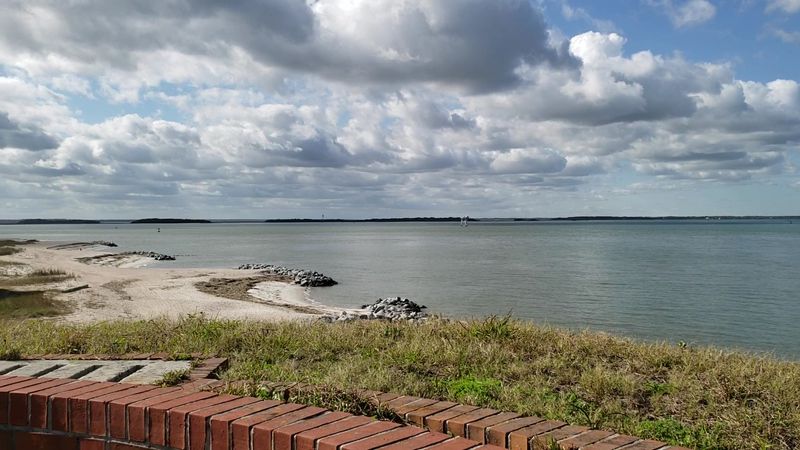
I have a confession: I once thought a shark tooth hunt meant scuba gear and nerves of steel. Turns out, on some Florida beaches, the teeth wash up right by your toes.
These little treasures are fossils, often millions of years old. They usually look black, gray, or brown because minerals stained them while they sat buried for ages.
That dark color is your secret weapon. Against pale sand and broken shells, a fossil tooth tends to pop out once your eyes know the shape.
I love that the tools are so simple. A bucket, a little patience, and a slow walk along the wash can turn into a prehistoric scavenger hunt.
The tide keeps shuffling the deck, so a new batch can show up after the water moves. Ready to see where to look first?
1. Caspersen Beach
Shell piles here aren’t clutter. They’re basically a buffet of ancient teeth waiting for a curious hand.
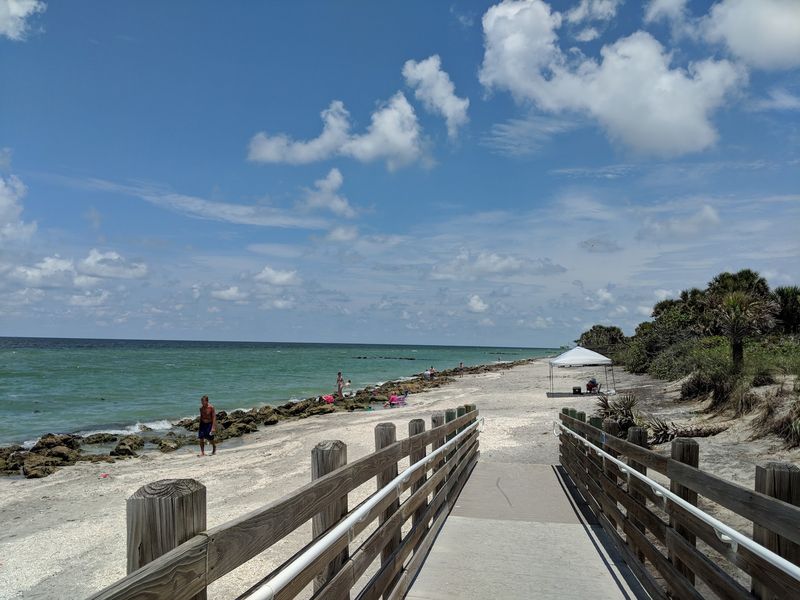
You’ll find this wild stretch of Gulf coast on the south end of Venice, Florida. The look is natural and untamed, with white sand, a boardwalk, and a shoreline that feels far from the condo crowd.
The best trick is simple. Kick gently through the shell piles, or dig right at the edge of the tide where the water drops its load.
Some of the action happens just a couple of feet into the water. The breaking waves churn up sand and shells, and teeth often tumble out of that mix.
Bring a mesh scoop or a kitchen strainer if you own one. Your fingers work too, though your back may file a complaint after an hour.
Swimming isn’t really the headline here. Plenty of people treat this beach as a hunting ground first and a lounging spot second.
Parking is free, and you’ll find real restrooms and outdoor showers. That shower matters more than you’d think after sifting wet sand all morning.
Saturdays tend to be the busiest stretch. Weekday mornings may give you more elbow room at the tide line.
Address: 4100 Harbor Dr, Venice, Florida 34285
2. Venice Beach
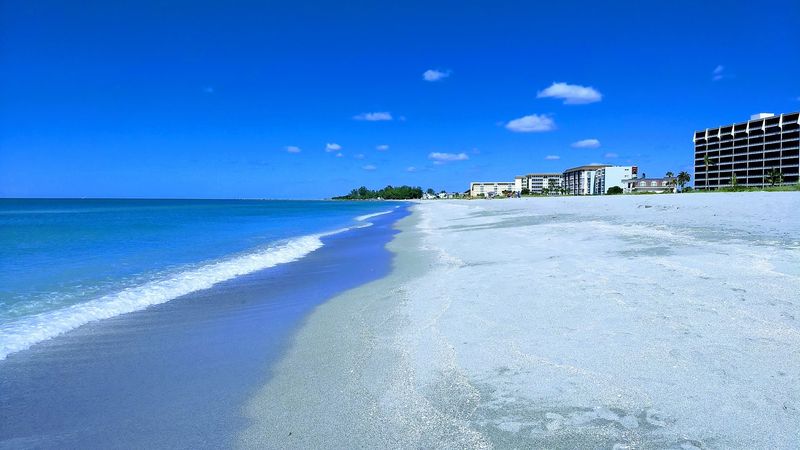
Venice calls itself the Shark Tooth Capital of the World, and this beach is a big reason why. Some teeth sit right on top of the dry sand before you even reach the water.
That makes it a great first stop for beginners. Kids can sift with bare hands and still come up with a prize or two.
Head toward the wet sand next. The waterline is where the shells collect, and the darker shapes stand out once your eyes adjust.
Look for a triangle with a smooth, shiny surface. Fossil teeth feel slick, while shell bits usually feel rough and chalky.
This is also the comfortable option on the list. It’s a public white-sand beach with parking, restrooms, a concession stand, volleyball courts, and a picnic area.
The water here tends to run calm and clear. That gives you a nice break between searching sessions, especially on hot Florida afternoons.
There’s a gift shop too, if your hunt comes up short. No judgment, but finding your own beats buying one.
Saturdays get crowded, so arrive early if you want the tide line mostly to yourself. Morning light also helps those dark teeth shine.
Address: 101 The Esplanade S, Venice, Florida 34285
3. Mickler Beach
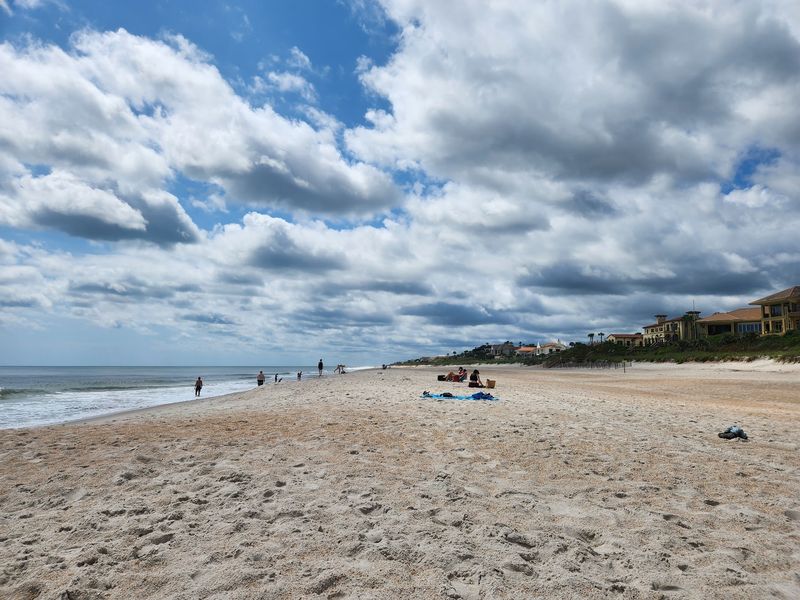
Over on the Atlantic side, the sand takes on a pinkish tint. The shark teeth, thankfully, stay dark and easy to spot.
Mickler Beach sits in Ponte Vedra Beach, a short drive southeast of Jacksonville. It’s known for shell and shark tooth collecting, and that reputation has held for years.
Your best plan is to walk the tide breaks slowly. Scan the shell wash where waves drop their debris, then take another pass a little later.
Hunters here can easily spend hours wandering. Fair warning, that slow shuffle becomes oddly addictive.
Sunrises over the ocean make an early start worth it. You get softer light, cooler sand, and a fresh tide line to search.
Families have plenty of support here. A lifeguard is posted, and there are public restrooms and showers.
Dogs are allowed, so your four-legged helper can tag along. Just don’t expect them to tell a fossil from a pebble.
Parking is free, with an on-site lot plus street parking. Weekend afternoons draw the biggest crowds, so a weekday may feel roomier.
Address: 4265 Mickler Rd, Ponte Vedra Beach, Florida 32082
4. Fort Clinch State Park
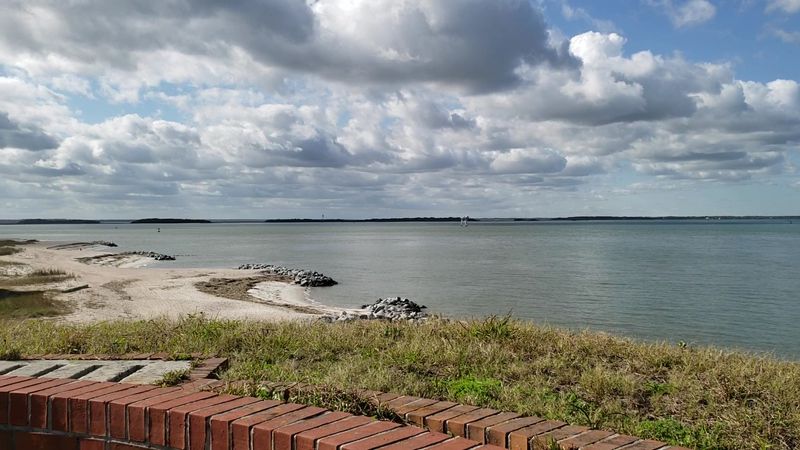
Two kinds of history share one park here. There’s a Civil War-era fort, and there are teeth far older than that.
Fort Clinch State Park sits on Amelia Island, about 45 minutes northeast of Jacksonville. The drive in follows a pretty canopy road shaded by trees.
Many visitors tour the fort and then hit the beach behind it. That shoreline earns serious praise as some of the best shark tooth hunting on the island.
Check around the rocks along the shore. Teeth can settle among them, and patient searchers have filled a bag with more than a hundred in one outing.
Plan to drive to the beach access instead of walking from the fort. It saves your legs for the actual hunting.
The park offers far more than sand. You’ll find nature trails, guided fort tours, wildlife viewing, picnic tables, grills, and a playground.
Campers can grab tent sites with easy beach access. Imagine starting your search right after coffee, before most day visitors show up.
Park staff tend to know their stuff, so ask questions. It’s also wise to check conditions before driving out during hurricane season.
Address: 2601 Atlantic Ave, Fernandina Beach, Florida 32034
5. Blind Pass Beach
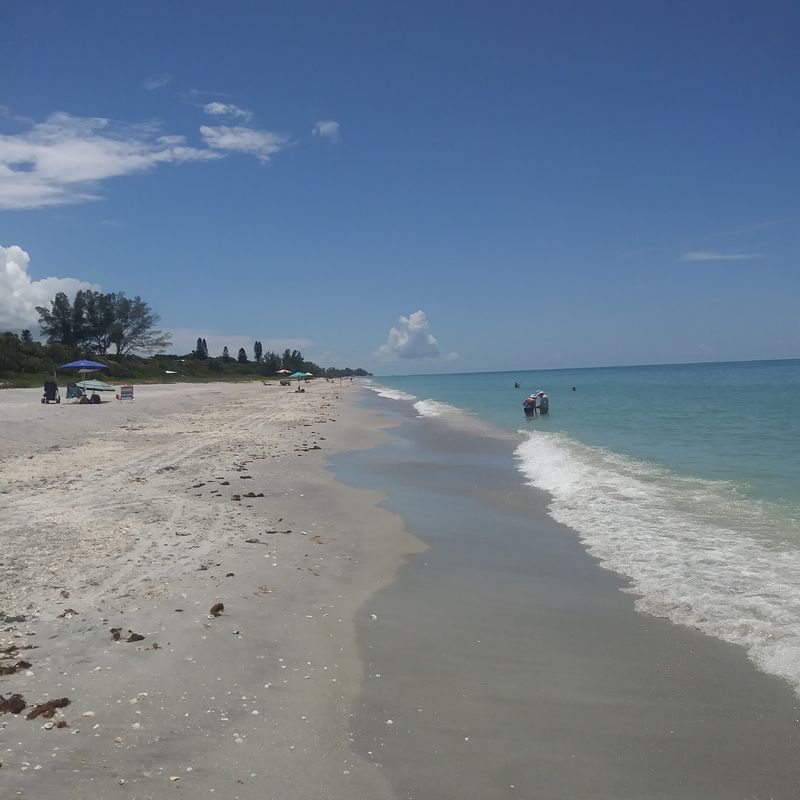
Quiet beaches make great hunting grounds. Fewer footprints usually mean more teeth left for you.
Blind Pass Beach stretches along Manasota Key, just north of Englewood Beach. It’s a narrow Gulf beach with a bayside lagoon on the other side.
Shark teeth turn up in good numbers along the wash. The white sand helps, since dark fossils stand out against it.
Work the spot where waves pull back and leave a fresh layer of shells. Then crouch low and scan before the next wave rearranges everything.
When your eyes need a rest, cross to the bay side. There’s a fishing dock, a canoe and kayak launch, and mangrove trails to explore.
That variety is the real perk here. You can paddle, hunt, and wander shady trails in one easy trip.
Families will appreciate the playground and covered pavilion with a grill. Restrooms and outdoor showers round out the setup.
Parking is free, and weekend afternoons see the most visitors. Mornings tend to stay calm, which suits a slow Florida treasure hunt just fine.
Address: 6725 Manasota Key Rd, Englewood, Florida 34223
6. Englewood Beach
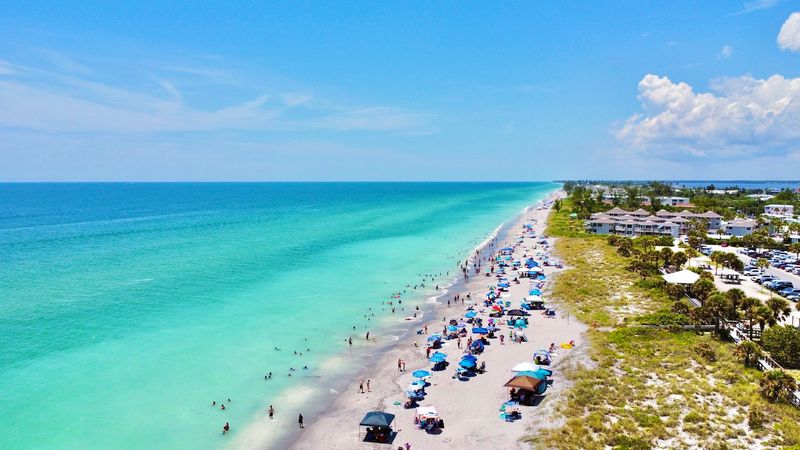
Teeth aren’t the only fossils washing up here. Lucky hunters have also scooped up pieces of fossilized bone along the shore.
Englewood Beach is a wide stretch on Manasota Key, roughly an hour south of Sarasota. It’s popular for collecting both sharks’ teeth and seashells.
That width gives you room to roam. Walk the waterline slowly and let the waves do some of the sorting for you.
Bring two containers if you’re ambitious. One for shells, one for fossils, and maybe a third for whatever your kids insist is treasure.
Beyond the hunt, there’s plenty to do. Volleyball courts and a fishing pier help split up the day.
Restaurants sit within walking distance too. That’s handy when a long search turns into a serious lunch craving.
The water often runs a pretty blue, and parking sits close to the sand. Saturdays get busy, so earlier visits may help.
Think of this beach as a fun finale for a Gulf coast fossil road trip. Venice and Manasota Key are close, so you can hit several spots in one Florida weekend.
Address: Beach Rd, Englewood, Florida 34223