This Idaho Church Built By Pioneer Hands From Sandstone Hauled Across Bear Lake Is Worth An Afternoon Visit
Pioneers once hauled blocks of red sandstone across a frozen lake by sled to build a church. Not a cabin or a chapel, either.
They built a Romanesque tabernacle big enough to seat 2,000 people.
The stone came from a creek area roughly 18 to 24 miles away. Winter turned the lake into a shortcut, and wagons and sleds rolled right over the ice.
A family of Swiss masons then shaped those blocks with real skill.
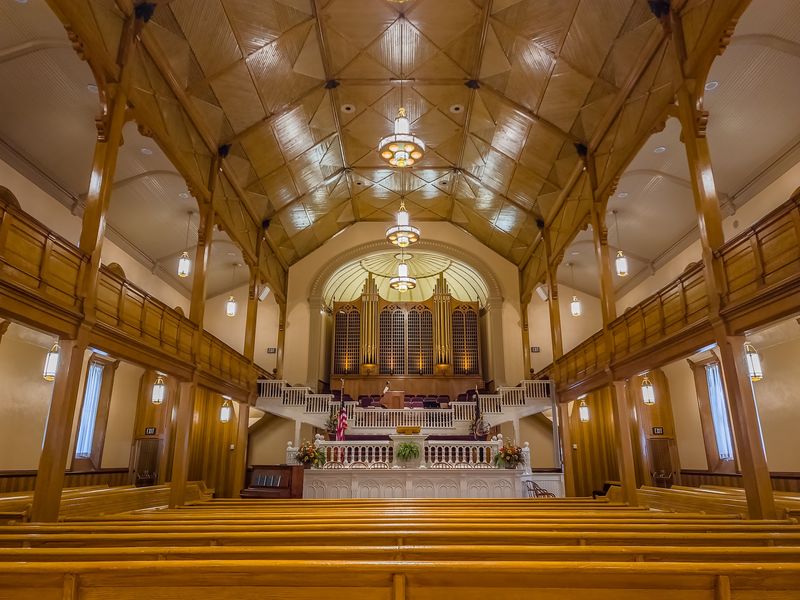
Then there’s the ceiling. A master carpenter who also built ships crafted it, and it looks like an upside-down hull made of wood.
I can’t imagine a better thing to stare at during a long meeting.
All of this sits in a tiny town in southeast Idaho, close to a famously blue lake. I like how it rewards a simple afternoon stop.
So how did a small pioneer valley pull off something this grand?
A Red Stone Giant On A Small-Town Main Street
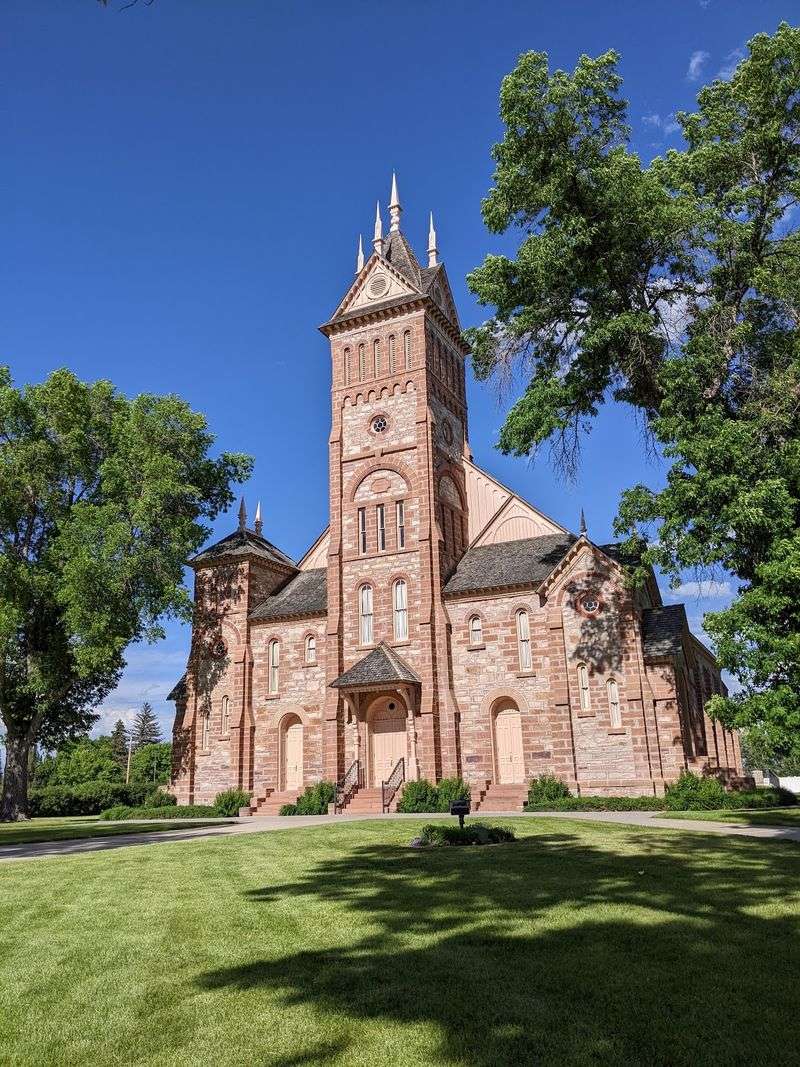
Driving south along U.S. Highway 89, you suddenly see a red sandstone landmark that looks far too big for its town.
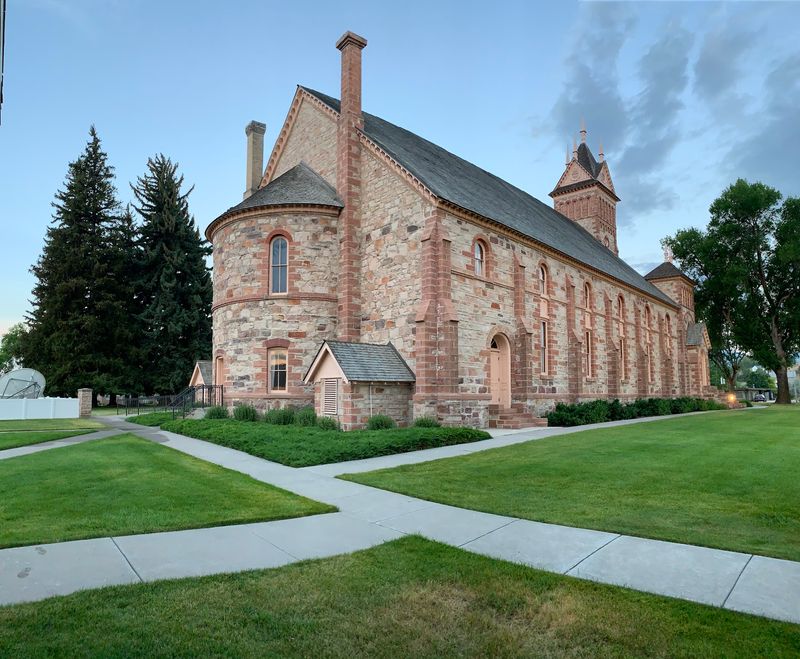
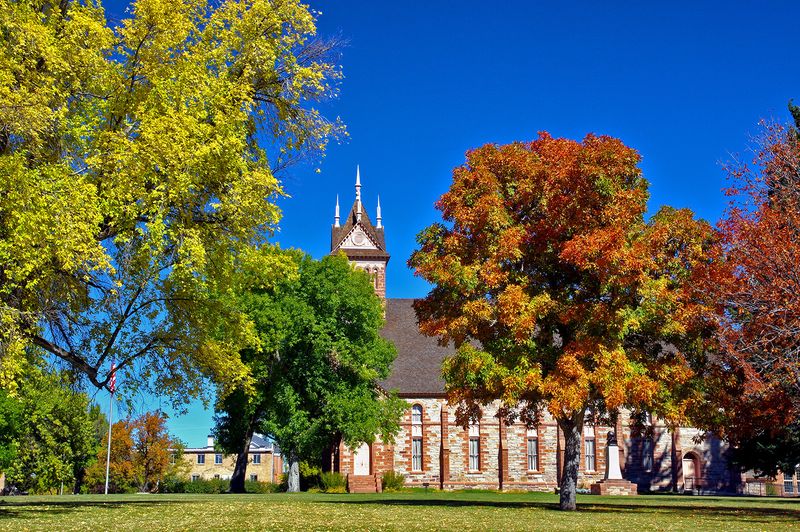
That’s the Paris Tabernacle, also called the Bear Lake Stake Tabernacle, and it owns the skyline in Paris, Idaho.
The building is a historic meetinghouse of The Church of Jesus Christ of Latter-day Saints. It still hosts local congregational meetings and community events, so it isn’t just a museum piece frozen in time.
Paris is a small rural community in the Bear Lake Valley of southeast Idaho. The tabernacle stands out sharply against the quiet streets and open farmland around it.
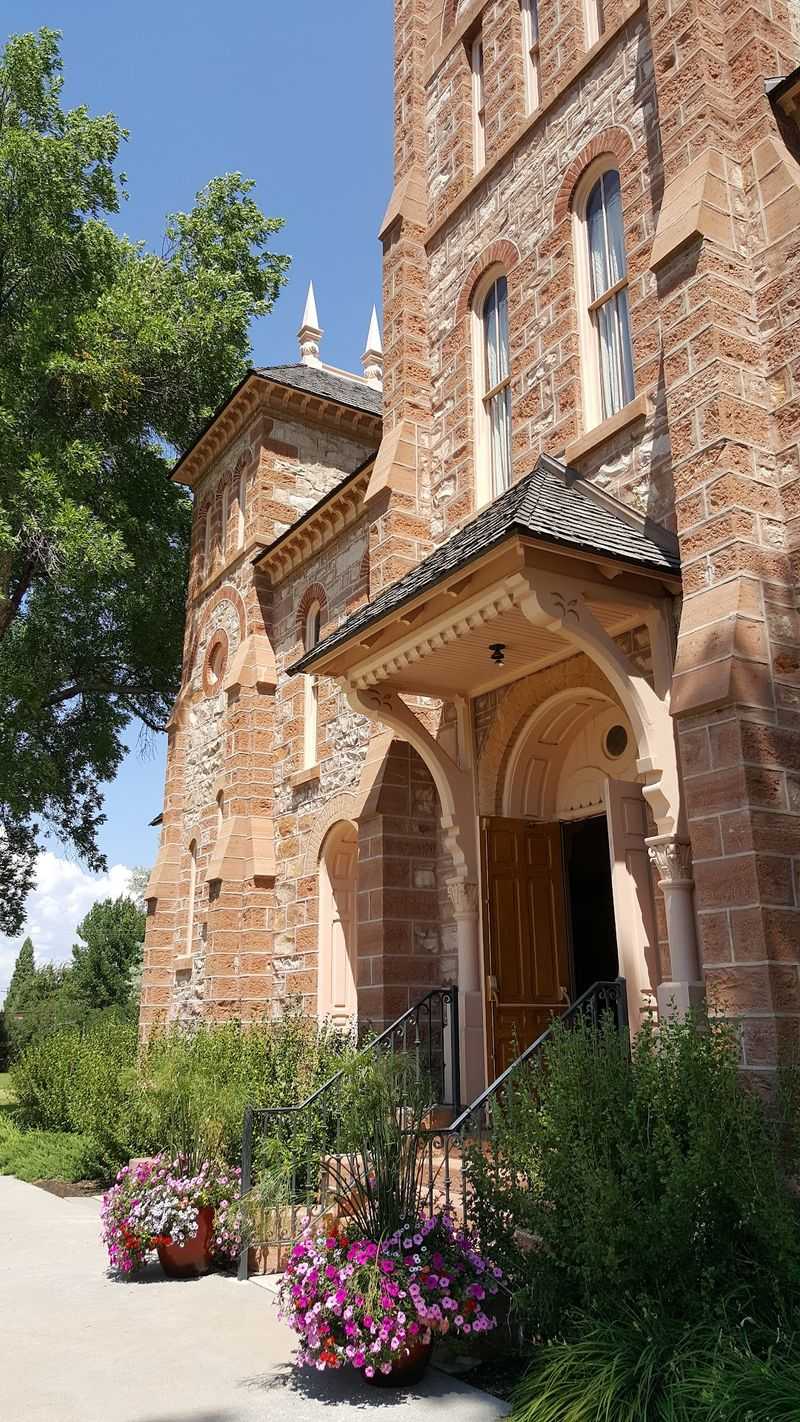
Its Romanesque style gives it heavy stone walls, rounded arches, and a commanding tower. The look feels more like something from an old European town than a pioneer settlement.
That contrast is half the fun of stopping here. You come for a quick look and leave knowing a whole valley’s worth of history.
Seasonal guided tours open the doors to the public each summer. The rest of this story explains why those tours are worth fitting into your Bear Lake plans.
Why The Valley Waited Years To Build It
Settlers founded Paris in the late 1860s, and they dreamed of a proper meetinghouse almost from the start. Dreams were cheap, though, and stone buildings were not.
Serious construction didn’t begin until 1884. Before that, the church’s builders and resources were tied up in other big projects, including the Logan Tabernacle and the Salt Lake Temple.
Once those wrapped up, the Bear Lake Valley finally got its turn. Work stretched from 1884 to about 1889, which is a long haul for a farming community with short summers.
Think about what that meant for families here. Crops, livestock, and harsh winters all competed with the tabernacle for time and muscle.
The building was originally known as the Bear Lake Tabernacle. It served congregations spread across the valley, which made it a true regional gathering place rather than a single town’s chapel.
That patience shows in the finished product. Nothing about it looks rushed, and every arch and block suggests people who planned to build once and build well.
Knowing the wait makes the first view of the building land a little harder. Those walls stand for years of hope before a single stone was set.
Sleds Across The Ice, Sandstone In Tow
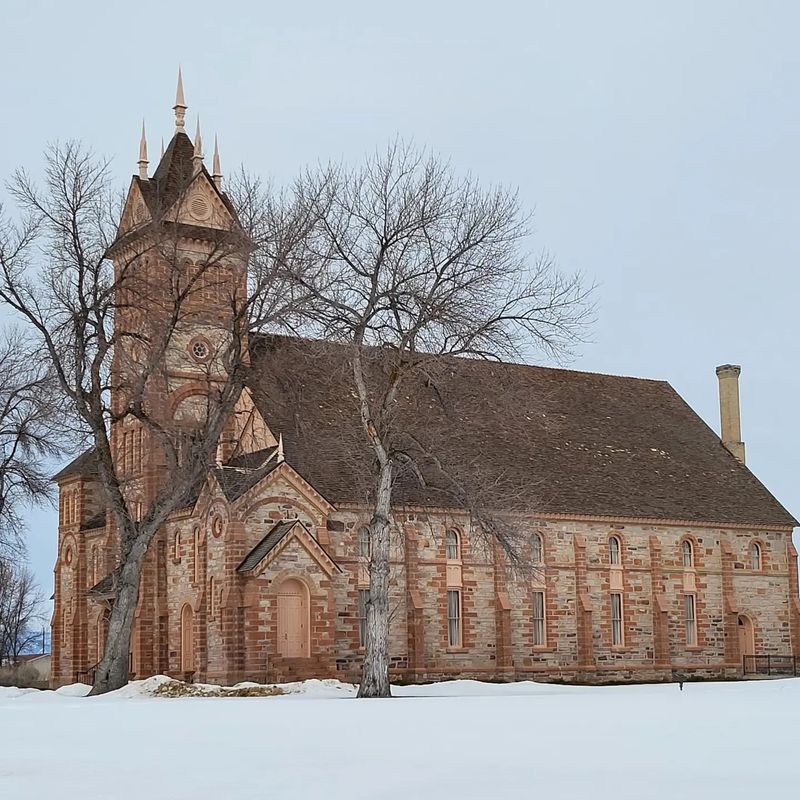
Here’s the detail that makes people stop mid-sentence. The red sandstone came from Indian Creek, roughly 18 to 24 miles southeast of Paris, and much of it crossed frozen Bear Lake.
Local Latter-day Saints quarried the stone themselves. In winter, they loaded it onto wagons and sleds and drove straight over the ice.
Why risk it? Going across the lake cut several miles off the trip compared with traveling around the shoreline.
Picture the work involved, block by heavy block, in cold mountain weather. Every trip meant hours of hauling before any mason even touched the stone.
The method only worked because winter froze the lake solid enough to hold the loads. That turned a seasonal hardship into a clever building tool.
Bear Lake today is better known for its turquoise summer water and raspberry shakes. Few beach visitors realize the lake once doubled as a pioneer freight road.
Once you know this story, the walls look different. Each warm red block carries a little winter adventure inside it, and that’s a fun thought to hold while touring the building.
Swiss Masons Who Made Every Block Count
Quarrying stone is one thing. Turning rough blocks into clean, even walls takes a different kind of talent altogether.
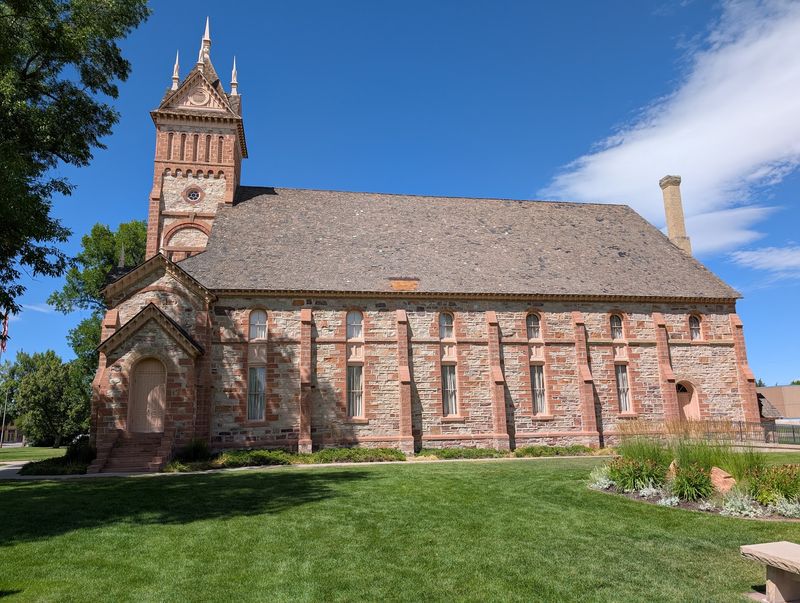
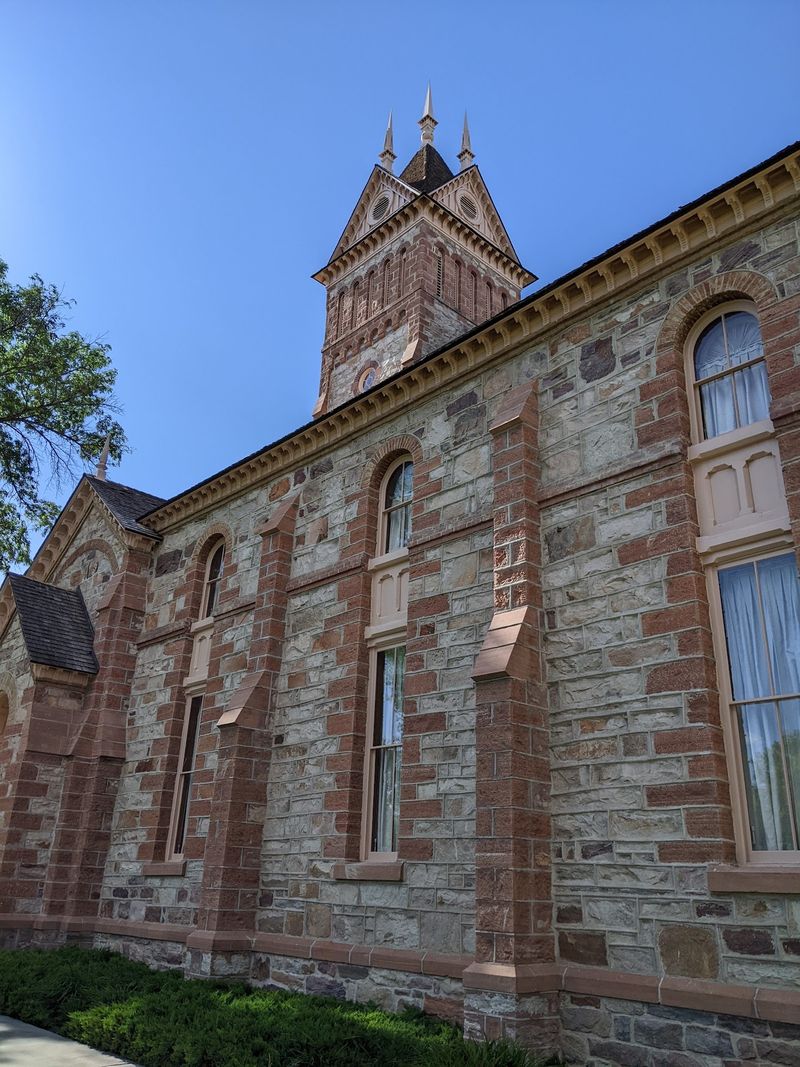
That job went to the Tueller family, skilled masons from Switzerland. They completed the distinctive ashlar stonework that gives the Paris Tabernacle its tidy, squared look.
Ashlar means the stones are cut and dressed into regular shapes. They fit together in neat courses instead of a jumble of lumpy rock.
Get close to the exterior and you can study the rows yourself. The precision is easy to appreciate, especially when you remember it was done in the 1880s.
I love that immigrant craftsmen shaped one of Idaho’s most recognizable pioneer buildings. Their old-world training ended up defining a landmark in a very new frontier town.
The red tones also shift with the light throughout the day. Morning and late afternoon sun bring out the warmth of the stone nicely for photos.
Take a slow lap around the outside before heading in. The masonry tells its own quiet story, and it’s a nice warm-up for the craftsmanship waiting indoors.
An Engineer With A Famous Last Name
Plenty of pioneer buildings came together through trial and error. Not this one.
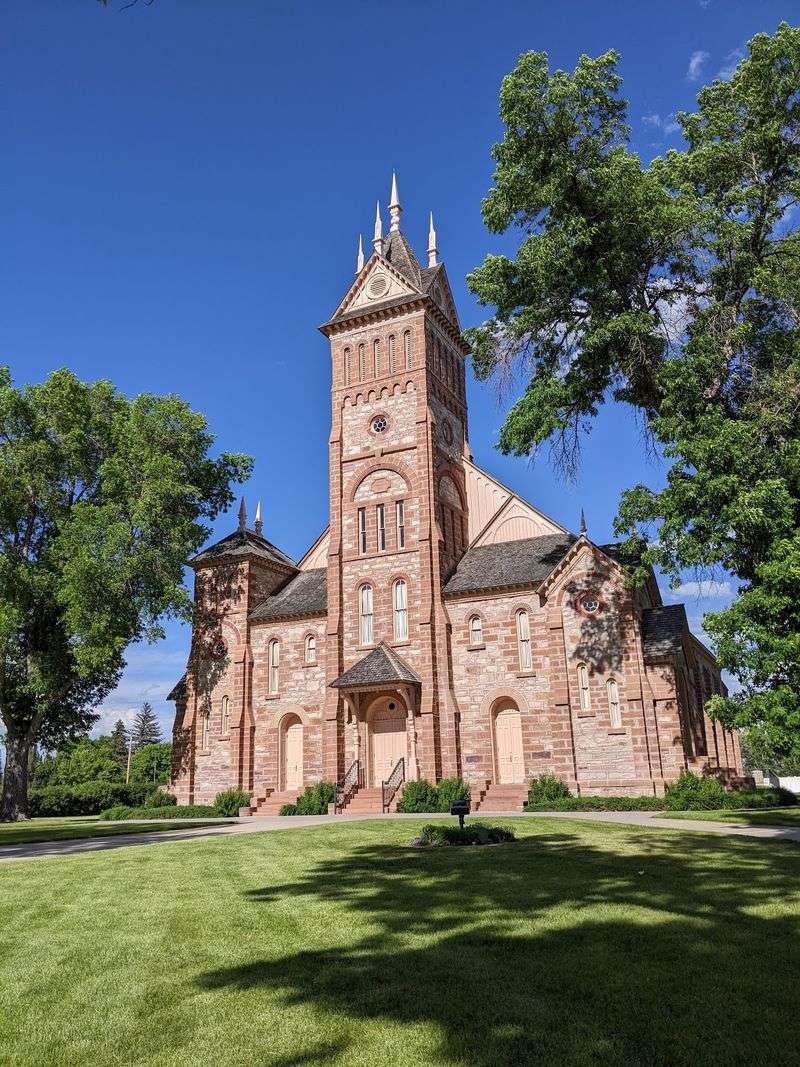
The Paris Tabernacle was designed by Joseph Don Carlos Young, a professionally trained engineer. He was also a son of Brigham Young, which gave the project a direct link to church leadership.
His training shows in the bold Romanesque design. Rounded arches, solid stone mass, and a strong tower give the building serious presence.
Romanesque architecture traces back to medieval Europe. Seeing it rise in a remote Idaho valley feels a bit like spotting a castle at a county fair.
Young also planned the building around one big goal. Up to 2,000 people needed to see and hear the pulpit clearly, and the layout reflects that.
That kind of planning mattered before microphones and speakers. Good design was the only sound system available.
Standing outside, notice how the arches repeat across the walls. It gives the whole structure a steady rhythm, and it helps explain why the building still looks so confident well over a century later.
A Setback, Then A Long-Awaited Dedication
Just when the finish line came into view, trouble arrived. A fire partially damaged the interior around 1887 or 1888.
Sources differ slightly on the exact year. They agree, though, that the damage pushed back the building’s dedication.
Repairs followed, and the community kept going. Some accounts say construction wrapped up in 1888, while others place completion in 1889.
The big day came on September 15, 1889. Church President Wilford Woodruff dedicated the tabernacle, joined by First Counselor George Q.
Cannon.
For valley families, that moment capped years of quarrying, hauling, and building. It’s hard not to admire that kind of follow-through after a setback like a fire.
The building kept serving the area long after those first meetings. Over the decades it received modern electrical, heating, and air systems.
Even so, care went into keeping its 1880s appearance. A refurbishment in 2004 and 2005 refreshed the building while protecting its pioneer character, so today’s visitors see something very close to what those first congregations saw.
Look Up For The Upside-Down Ship
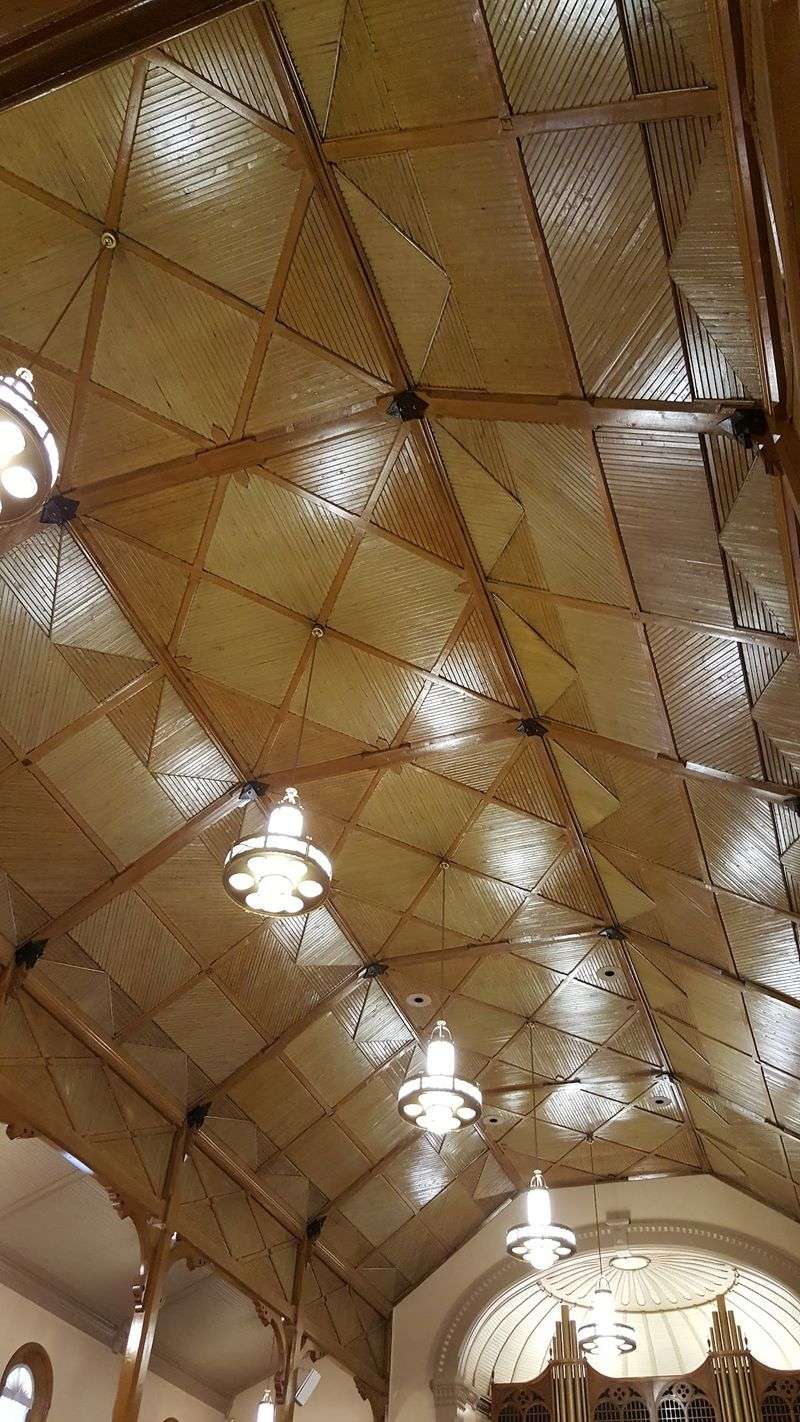
Most church visits involve looking forward. In this one, your neck will spend a lot of time tilted back.
The vaulted, wood-paneled ceiling is one of the building’s signature features. It was crafted by James Collings Sr., a master carpenter who was also a shipbuilder.
That background explains the shape. The ceiling resembles an inverted ship’s hull, curving overhead like a boat flipped upside down.
Collings worked geometric patterns into the wood paneling. The lines draw your eye across the whole room in a satisfying way.
It’s a fitting touch for a building whose stone once crossed a lake. Water and boats keep turning up in this story, even in a landlocked Idaho valley.
Bring a camera, but also give yourself a minute without one. The ceiling reads best when you simply stand still and follow the patterns from one end to the other.
Of all the craftsmanship inside, this is the piece most likely to stick with you. A shipbuilder’s skill, used to cover a congregation, is a pretty great pioneer plot twist.
Seats Designed So Nobody Misses A Word
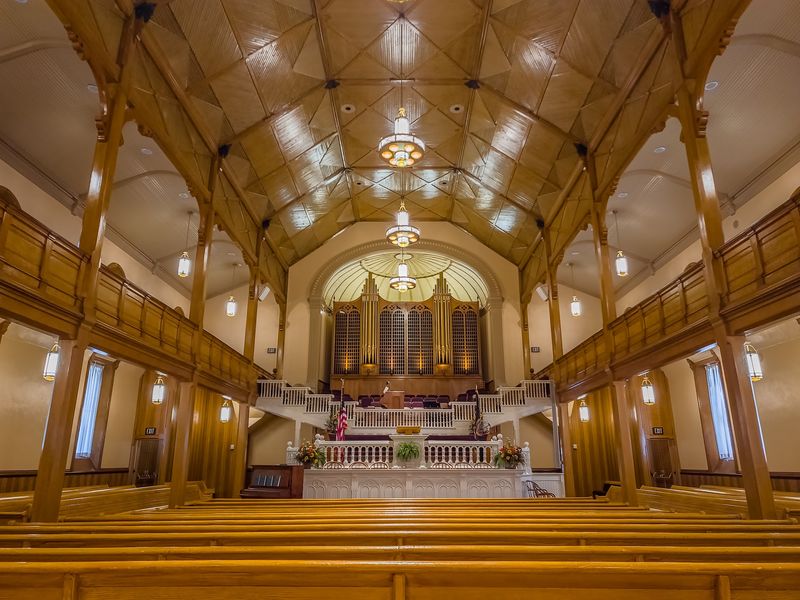
Back in the 1880s, a bad seat meant missing the whole sermon. The builders here solved that problem with clever layout choices.
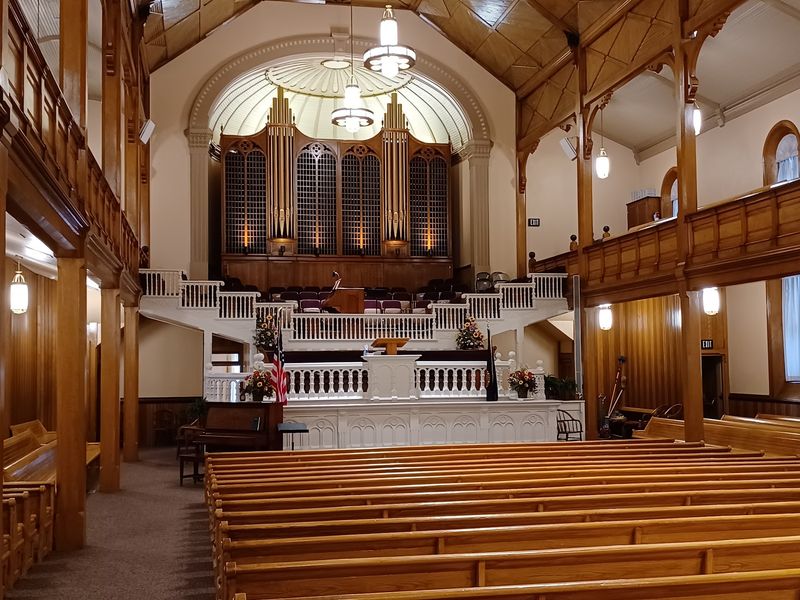
The main floor slopes toward the front. A second-floor gallery wraps above, and a semicircular choir loft curves behind the pulpit.
All three features work together toward one goal. Up to 2,000 attendees could see the speaker clearly from wherever they sat.
That’s a big crowd for a valley of pioneer farmers. The room was built for full-scale gatherings that pulled people in from across the region.
Look closely at the doors, too. They’re made of pine, but hand-painted to look like oak wood grain.
Faux graining was a popular technique in that era. It let builders get a fancier finish without needing expensive hardwood.
Little details like that make the interior fun to explore slowly. You start noticing how much thought went into every surface, from the slope underfoot to the painted grain on each door, and that makes the room feel both practical and surprisingly elegant.
629 Pipes And Glass With A Sticky Legend
Six hundred twenty-nine pipes. That’s the count inside the tabernacle’s historic Austin two-manual pipe organ.
The organ was installed in 1928, decades after the building’s dedication. It’s a handsome centerpiece and a reminder that the tabernacle kept growing with its community.
Music has always mattered here. A room shaped for clear sight lines naturally suits singing and organ performances too.
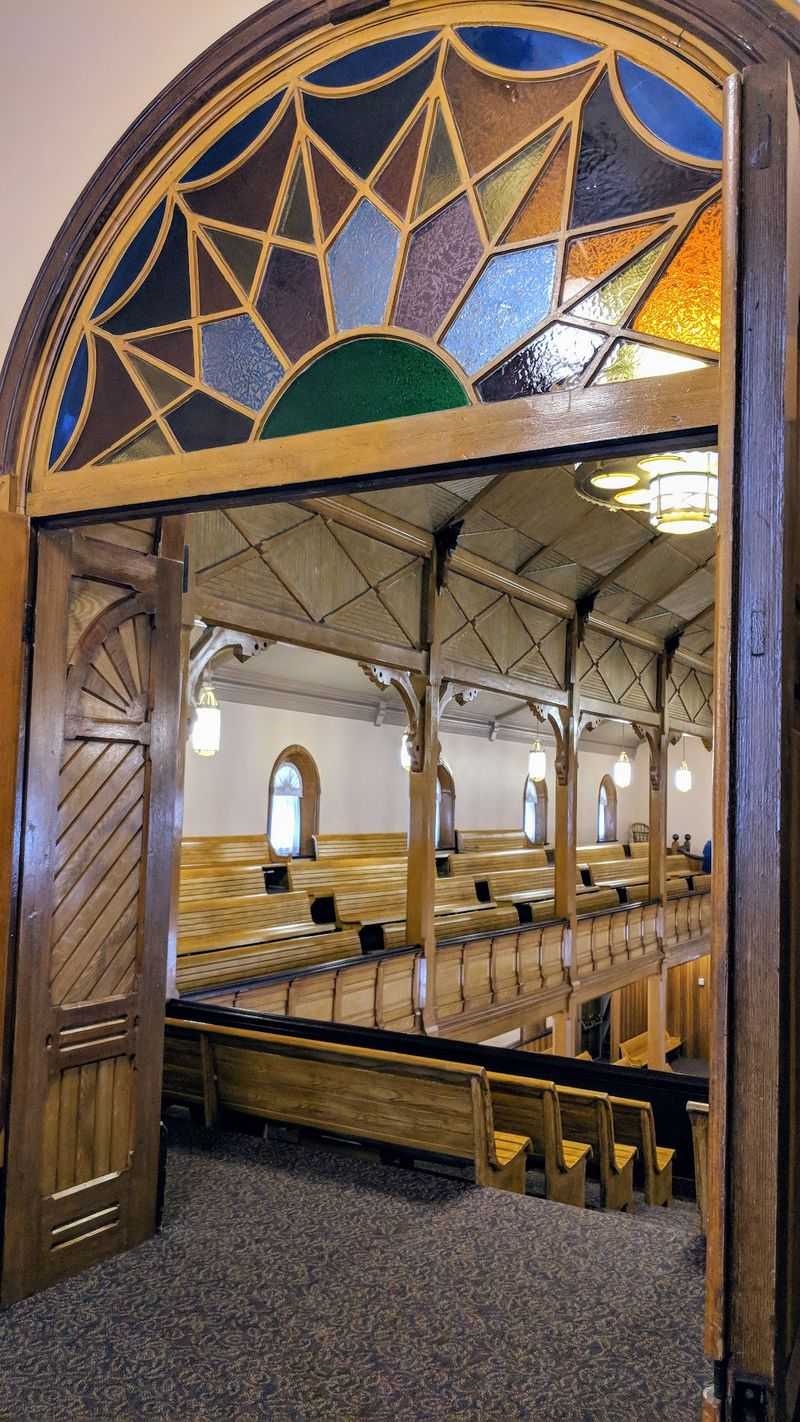
Then there’s the stained-glass window at the top. Its story is the kind you’ll want to repeat at dinner.
According to tradition, some of its panes crossed the Great Plains packed in molasses. The thick syrup supposedly protected the fragile glass from breaking on the rough journey west.
It’s a story rather than a confirmed record, so enjoy it as local lore. Still, it fits perfectly with a building full of creative pioneer problem-solving.
Between the pipes and the glass, this corner of the tabernacle rewards curious eyes. Ask your tour guide about both, and you’ll walk away with a couple of great facts to share on the drive home.
Heirlooms Left Behind By The First Families
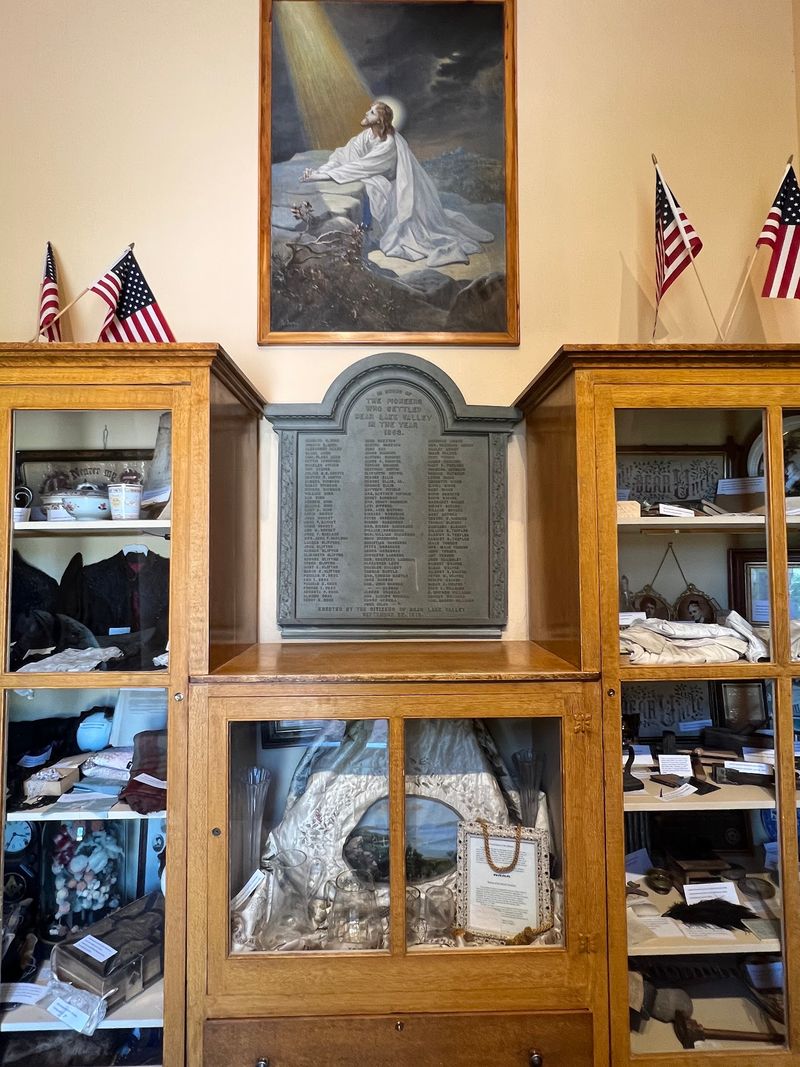
Tucked within the building is a small museum that many first-timers don’t expect. It holds heirlooms and art objects left by early settlers of the valley.
These items add a personal layer to the architecture. You see the grand stone walls, then the everyday belongings of the people who raised them.
For families with Bear Lake roots, that connection can feel especially meaningful. Ancestors from this valley may well have had a hand in hauling or setting the stone.
The tabernacle’s importance reaches beyond local memory. It was added to the National Register of Historic Places on December 8, 1972.
That listing recognizes it as a significant piece of American history. It’s one of the standout pioneer landmarks anywhere in Idaho.
Spend a few unhurried minutes with the displays. They help explain the people behind the project, not just the building itself.
History feels closer when it comes with names, objects, and family stories. This little collection delivers that, and it pairs nicely with everything you’ll learn about the stonework and ceiling.
An Easy Win For History Buffs And Families
You don’t need to be a church member to enjoy this place. History lovers, architecture fans, and road-tripping families all get something out of it.
Guided tours run about 30 to 45 minutes. They cover the building’s history and architecture, from the quarry story to the shipbuilder’s ceiling.
That length works well with kids. It’s long enough to feel substantial without testing anyone’s patience.
The main floor is wheelchair accessible. Public restrooms are available, which every parent on a long drive will appreciate.
Since the tabernacle is still an active meetinghouse, the atmosphere stays respectful and calm. It’s a nice change of pace from busy beaches and crowded shake stands.
Community events also happen here. Holiday programs, like Independence Day concerts, have brought music and visitors into the space.
The overall vibe is welcoming and low-key. Expect a peaceful hour of discovery, some great stories, and plenty of time to soak in the craftsmanship, whatever brought you through the doors in the first place.
Timing Your Visit Around The Summer Tour Season
Timing matters more than you might think. Public tours run seasonally, typically from Memorial Day weekend through Labor Day.
In 2026, tours stretched through the end of September. That extension lined up with the open house for the nearby Montpelier Idaho Temple.
Schedules can shift from year to year. Check before driving, especially if you’re planning around a shoulder-season trip.
You’ll find the Paris Tabernacle at 109 S. Main Street, Paris, Idaho 83261.
It sits right along U.S. Highway 89, so it’s an easy stop on a Bear Lake loop.
Parking near a small-town Main Street is usually simple. The building is hard to miss, since nothing else in town comes close to its size.
Plan for roughly an hour, including the tour and a walk around the exterior. That leaves plenty of room for lunch, beach time, or other stops nearby.
Restrooms are on site, which helps on a longer road day. With a little planning, it slides neatly into a summer afternoon without any stress.
Round Out The Afternoon, Then Head For The Lake
Once the tour wraps, the Bear Lake Valley has more waiting. The Paris Historical Museum sits nearby and adds even more local history to your day.
Feeling adventurous? The Paris Ice Cave is another nearby attraction worth looking into before you go.
The recently dedicated Montpelier Idaho Temple is also close by. It pairs naturally with the tabernacle for anyone interested in the area’s church heritage.
Then there’s Bear Lake itself, just a short drive away. After learning how pioneers sledded stone across it, the water looks a little different.
Paris also offers historic architecture and family-run shops. A slow stroll along Main Street makes a relaxed bonus stop.
So, is the Paris Tabernacle worth an afternoon? For a free-spirited road trip through southeast Idaho, I’d say absolutely.
It packs frozen-lake freight runs, Swiss masonry, a ship-shaped ceiling, and a molasses legend into one red stone building. Few small towns can claim a story that good, and fewer still let you walk right inside it.