This Idaho Fall Festival Sends 1,200 Sheep Straight Down Main Street
October gets a little woolly in the Wood River Valley.
From October 7 through 11, 2026, thousands of sheep become the unlikely stars of one of Idaho’s most memorable fall traditions.
The spectacle is rooted in something far older than festival weekend: ranching families have moved flocks through this valley for generations as seasonal grazing shifts with the weather.
Then Main Street gets involved.
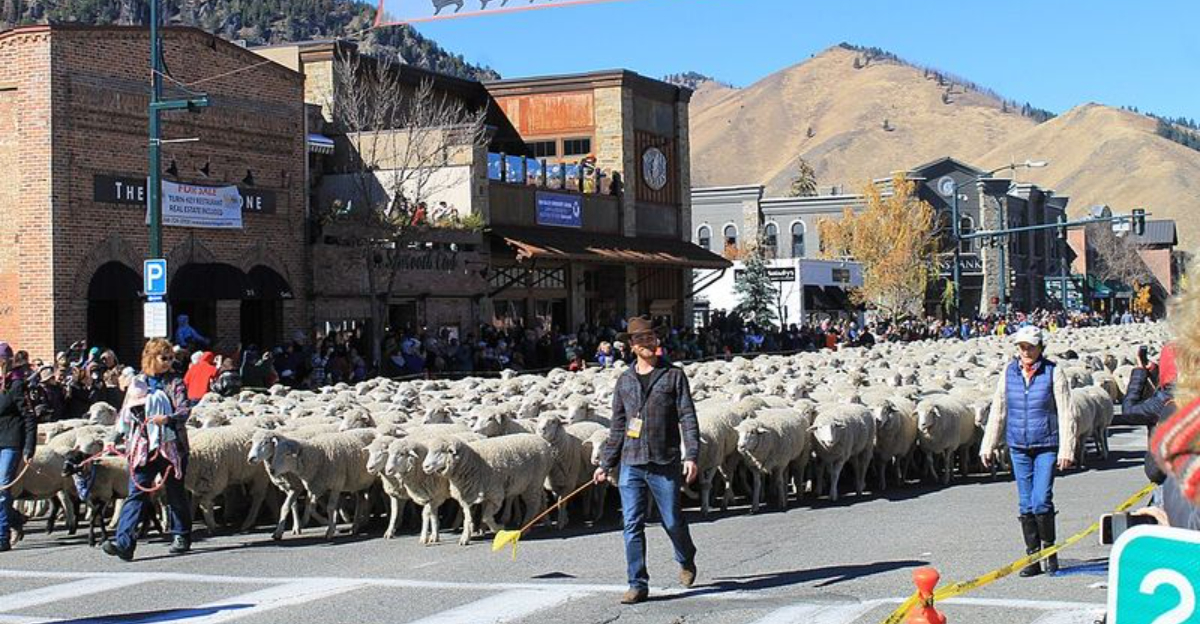
For a few glorious minutes, traffic has four legs and absolutely no respect for lane markings. Hooves clatter over pavement while spectators crowd the sidewalks, watching an age-old migration roll straight through town.
The surrounding events stretch the celebration well beyond the parade, but nothing quite prepares first-timers for seeing an entire street disappear beneath a moving blanket of wool.
Forget leaf peeping for a moment.
Idaho has sheep peeping, and October 7 cannot get here soon enough.
Claim A Main Street Spot Before 1,200 Sheep Come Through Town
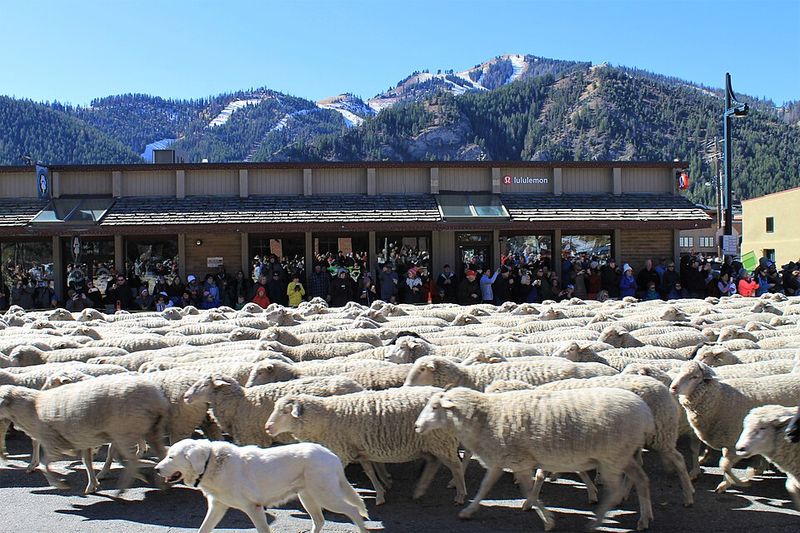
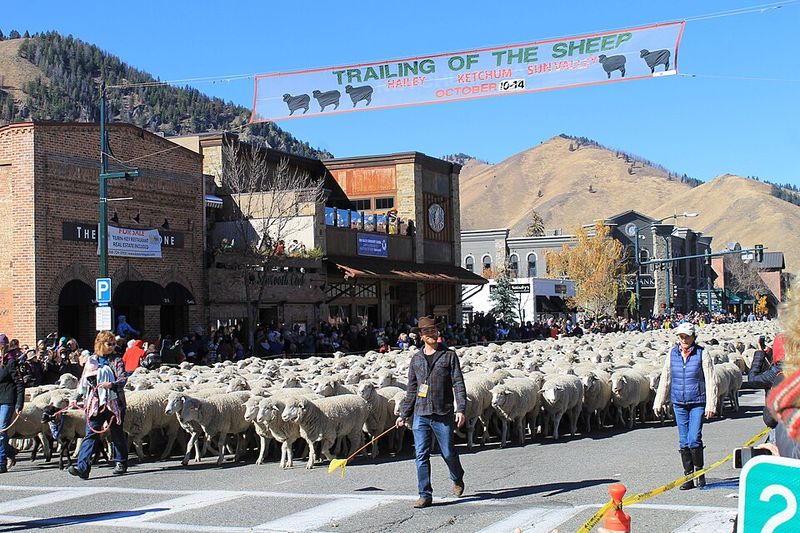
The festival’s signature moment arrives at noon on Sunday, October 11, when approximately 1,200 sheep move down Main Street in Ketchum during the Big Sheep Parade.
Ranching families and herders accompany the flock as it continues toward winter pasture, while historic sheep wagons and other festival participants add to the procession.
Spectators are asked to stay on the curb while the animals pass and to avoid sudden movements or loud voices that could disturb the flock.
Dogs are not permitted along the parade route, even if they are normally comfortable around crowds, so pets need to stay elsewhere for this part of the weekend.
Arriving early is sensible because the parade is one of the festival’s biggest draws and central Ketchum becomes busy before the sheep appear. A warm layer is also useful for an October morning in the mountains.
Once the procession begins, the focus stays exactly where it should: on a working band of sheep moving through downtown rather than on an ordinary staged parade.
You Can Walk Behind The Flock Once The Parade Passes
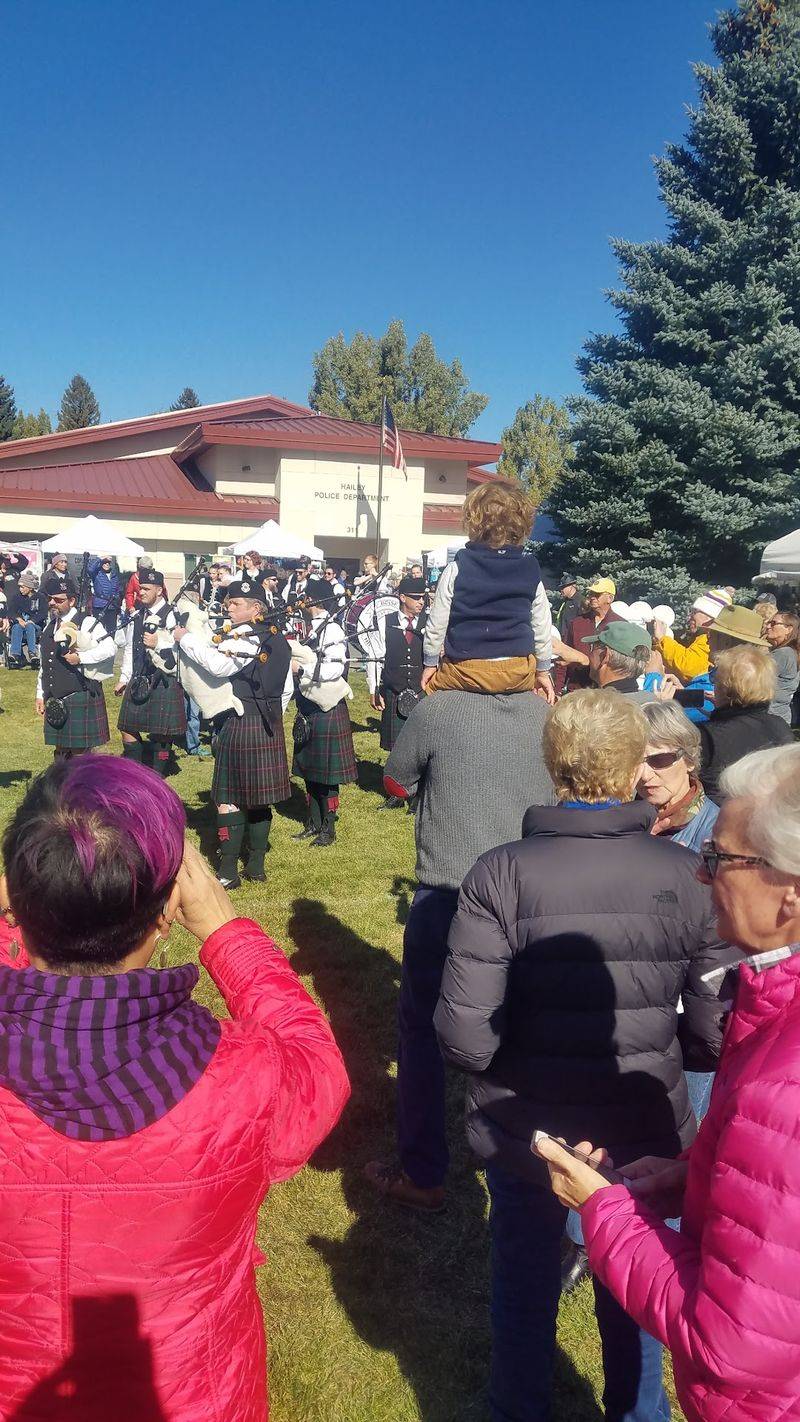
The experience does not have to end as soon as the last sheep clears Main Street. Festival organizers invite spectators to walk behind the flock and continue with the ranching families as the animals make their way toward a resting place south of town.
Visitors need to remain behind the sheep rather than moving among them, leaving enough space for the herders and working dogs to manage the animals safely.
That simple guideline makes it possible to see how the procession continues beyond the most public section of the route while keeping the flock comfortable.
The walk also gives Sunday’s spectacle more context. These sheep are not brought downtown only for a festival appearance; their movement reflects seasonal trailing practices that have shaped the Wood River Valley for generations.
Comfortable closed shoes are a sensible choice for anyone planning to continue beyond the center of Ketchum.
Instead of ending abruptly when the official parade passes, the experience carries on for visitors who want a closer look at the tradition the festival was originally created to celebrate.
Watch Working Sheepdogs Show Exactly How Much Skill Herding Takes
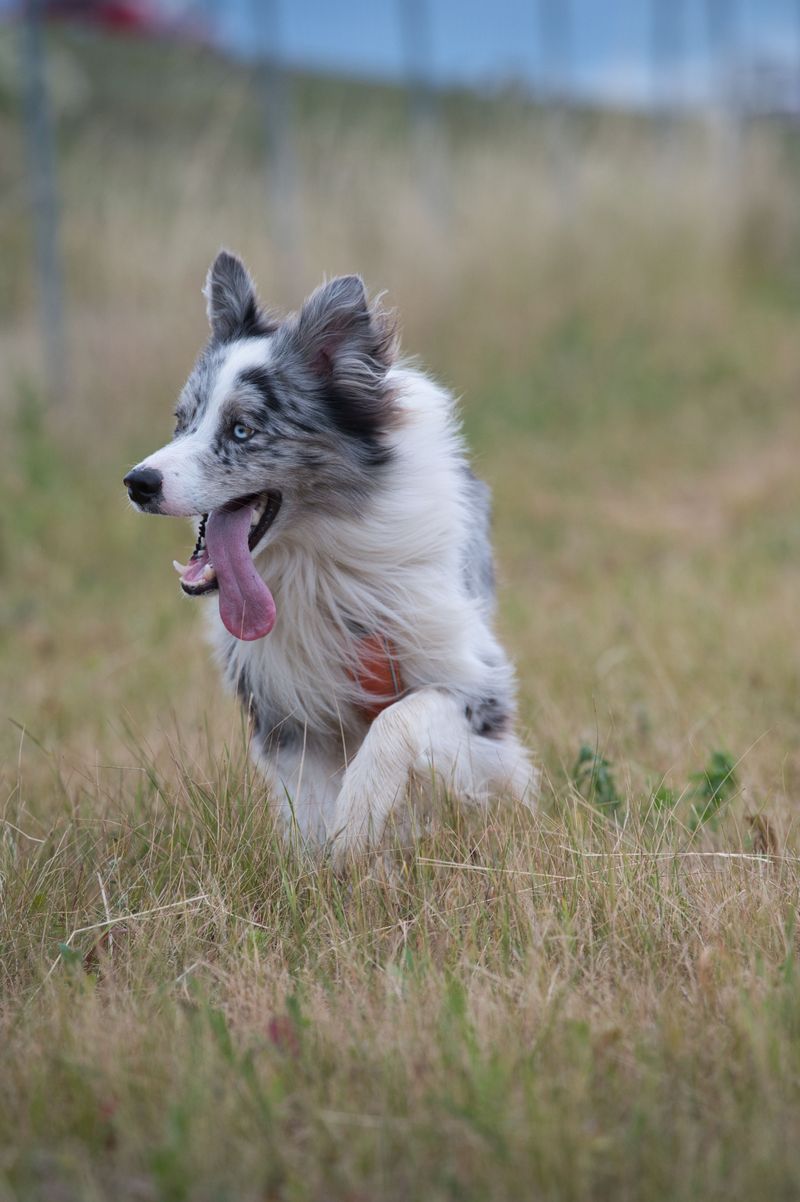
Some of the weekend’s most impressive ranching skills are on display at the Championship Sheepdog Trials at 2400 Buttercup Road in Hailey.
The 2026 competition runs October 9 and 10 from 9 a.m. to 5 p.m., followed by a final day on October 11 from 9 a.m. to 2 p.m.
Approximately 81 border collies and their handlers are expected to compete in the United States Border Collie Handlers Association-sanctioned event.
Each dog works closely with its handler while guiding sheep through different parts of the course. Tasks may include gathering the flock from a distance, moving it across the field, separating designated sheep, and guiding them into a pen.
Handlers rely heavily on whistles and voice commands, making the communication between person and dog one of the most interesting parts to watch.
Spectators should bring lawn chairs because seating is not provided, and there is a short walk from the parking area to the field.
Unlike Sunday’s downtown parade, leashed dogs are permitted at the trials.
See Historic Sheep Wagons Up Close At The Folklife Fair
Saturday shifts the focus toward ranching history and traditional skills at the Sheep Folklife Fair, held from 10 a.m. to 4 p.m. at Roberta McKercher Park in Hailey. Admission is free, and authentic sheep camps are among the historical displays visitors can examine during the day.
These compact mobile shelters became closely associated with herders spending extended periods away from town while working with sheep across wide stretches of Idaho range.
Ben Oneida and his family have helped preserve that history for years, with Oneida bringing restored sheep camps to the fair since 2011.
His family’s connection to the industry reaches back to his great-grandfather’s sheep operation near Shoshone, and he and two of his sons have restored numerous camps.
Agricultural organizations and traditional demonstrations expand the story beyond the wagons themselves, showing how ranching shaped everyday work in the region.
The setting makes the history feel practical rather than distant, giving visitors useful context before Sunday’s parade brings 1,200 sheep through the middle of Ketchum.
Learn How Basque Culture Became Part Of Idaho’s Ranching Story
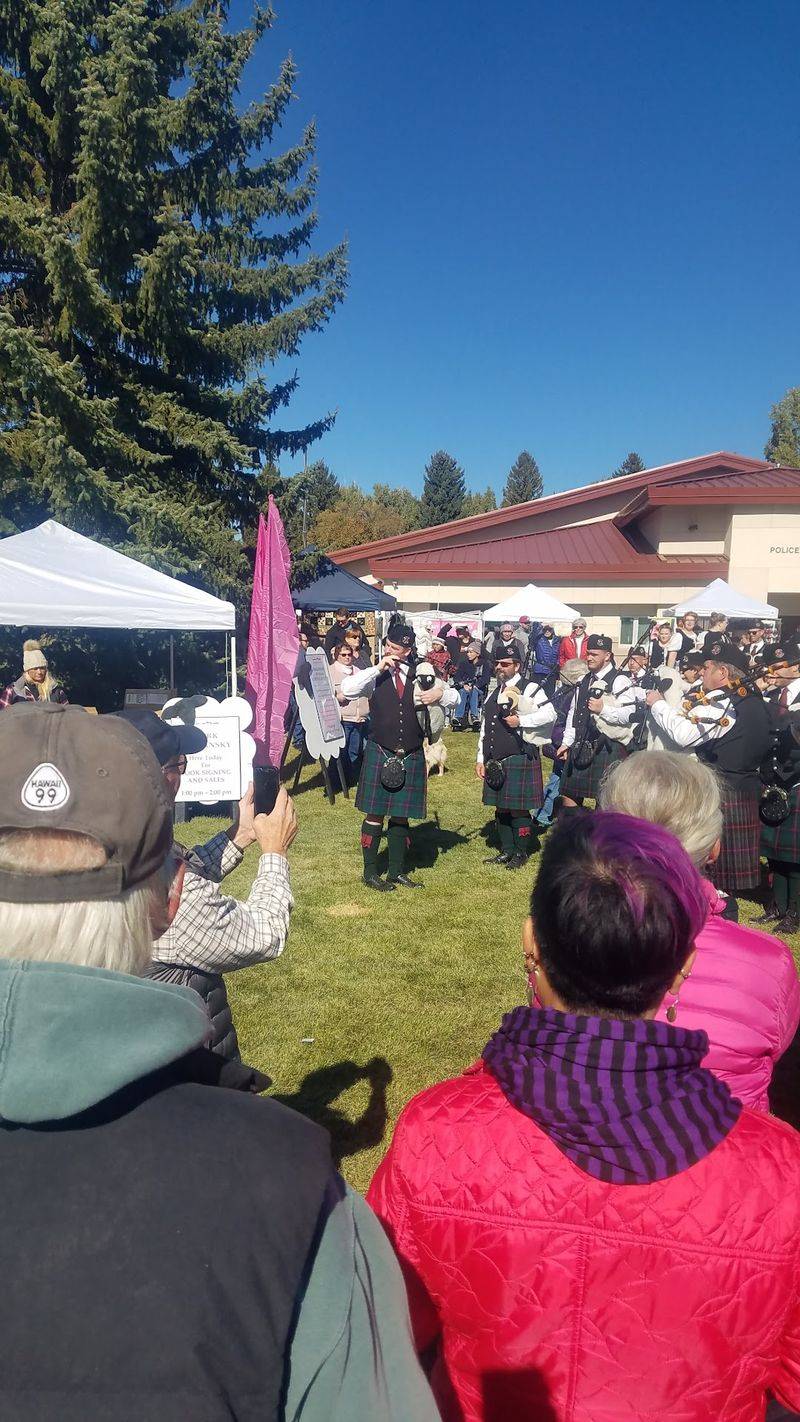
Basque culture became closely connected with Idaho’s sheep industry during the late 19th and early 20th centuries, when many immigrants arriving from the Basque Country found work as sheepherders.
Their influence became an important part of the state’s ranching history and remains visible in communities across Idaho today.
The Trailing of the Sheep Festival highlights that heritage through performances and cultural programming rather than treating it as a footnote.
At the 2026 Sheep Folklife Fair, the Oinkari Basque Dancers are scheduled to perform, continuing the Boise-based group’s tradition of preserving and sharing Basque dance since its founding in 1960.
Traditional music accompanies the performances, with instruments such as the txistu and button accordion adding another connection to Basque culture.
Other groups appearing during the festival represent communities that also played roles in western sheepherding.
Together, these performances help explain how immigration influenced the people, customs, and working traditions surrounding Idaho’s sheep industry.
By Sunday, the sight of the flock on Main Street carries more meaning after learning about the communities connected to that history.
Browse Wool Crafts And Watch Traditional Skills In Action
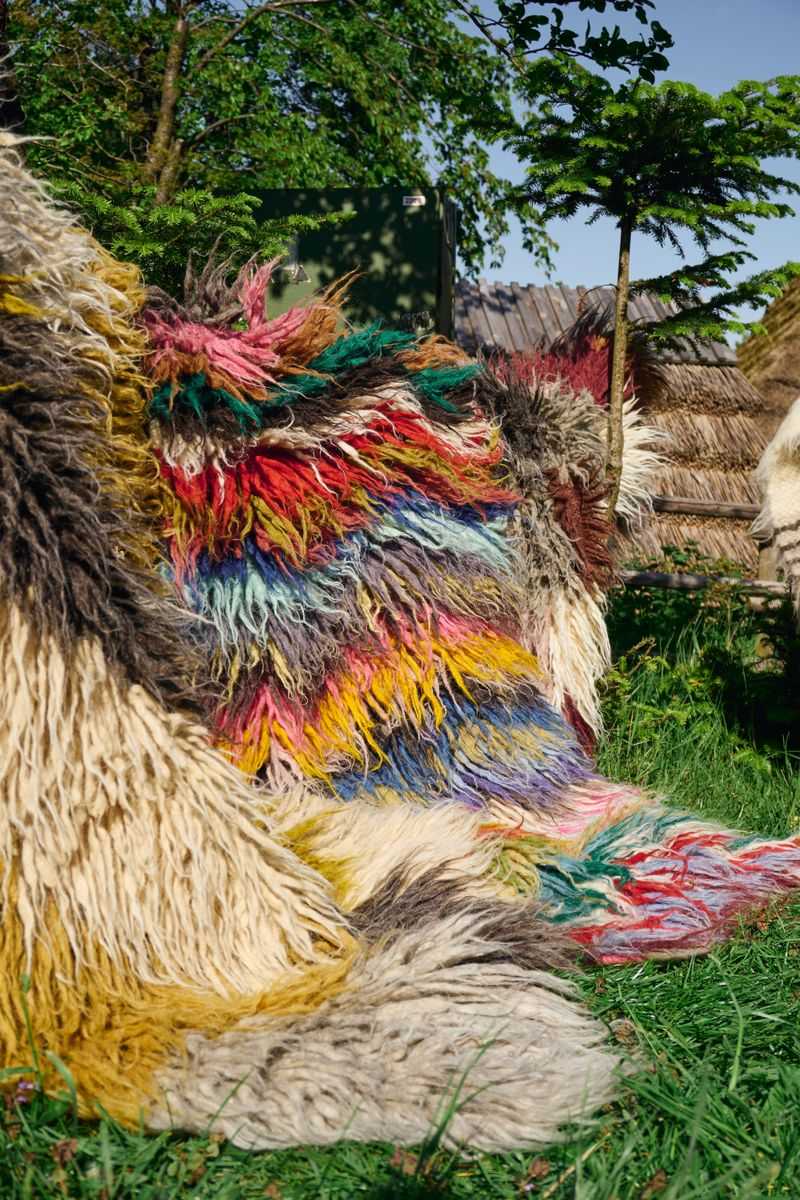
Fiber arts take on a major role at the Sheep Folklife Fair, where more than 80 vendors are expected to offer handmade goods and products tied to sheep, ranching, and regional craftsmanship.
Wool items appear alongside lanolin soaps and lotions, pottery, quilts, and other handmade pieces, while demonstrations show some of the traditional skills behind the finished products.
Sheep shearing is scheduled about every 30 minutes from 10 a.m. through 3:30 p.m., giving visitors several opportunities to watch the process during the day. Artisans also demonstrate spinning and weaving, helping connect raw fleece with the textile work that follows.
Those interested in trying fiber arts themselves can look beyond the Saturday fair to the festival’s Wool Fest program.
The 2026 schedule includes workshops focused on techniques such as needle felting, wet felting, knitting, spinning, fiber preparation, and natural-dye projects.
Classes vary in length and require advance registration. Together, the demonstrations, vendors, and workshops make wool an important part of the festival rather than simply another souvenir theme.
Make A Full Weekend Of Music Food And Sheep-Ranching Traditions
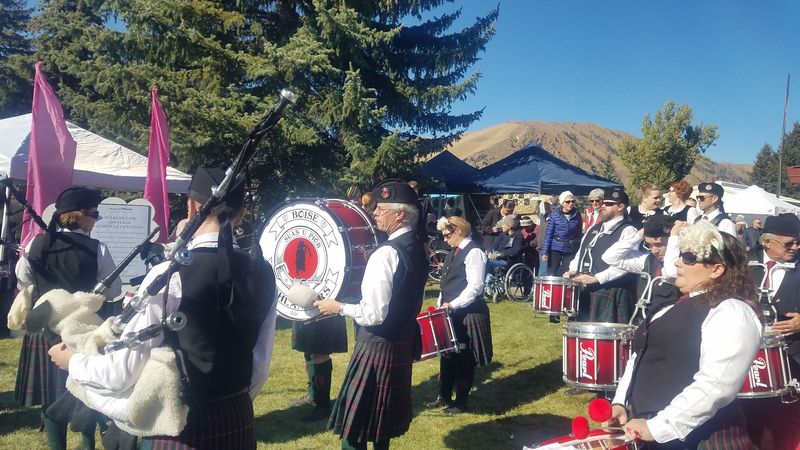
The festival schedule stretches far beyond livestock events, making it easy to fill several days without repeating the same experience.
Culinary programming includes cooking classes and Farm to Table dinners, while Lamb Fest takes place Saturday from 11 a.m. to 4 p.m. at Roberta McKercher Park.
Participating chefs and restaurants prepare dishes using American lamb, with confirmed 2026 offerings including tacos, sliders, tortas, pizza, curry, and soup. Cultural performances add another dimension throughout the weekend.
Basque and Peruvian groups are among those scheduled, while additional traditional musicians and dancers appear during the Folklife Fair and other events.
Storytelling and educational programs explore the people and customs connected with western sheep ranching, giving the weekend more depth than a single parade could provide.
The variety also creates an easy rhythm for visitors spending more than one day in the Wood River Valley. A morning might center on sheepdog trials, while the afternoon shifts toward food, crafts, or performances.
By Sunday, those pieces come together around the 1,200-sheep procession through Ketchum.
Stay For The Big Sunday Parade That Turns Downtown Into A Moving Ranch
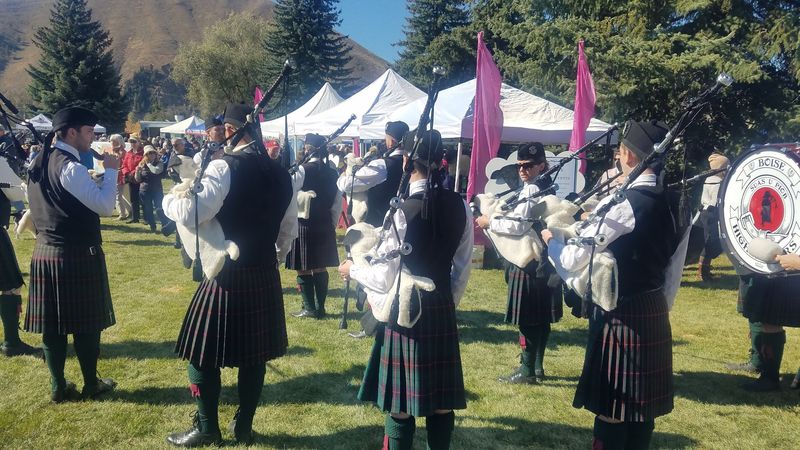
The final day begins before the sheep reach Main Street. The Happy Trails Closing Party runs from 10 a.m. to 3 p.m. at Ketchum Town Square, with live music, food, and festival vendors creating a gathering place both before and after the noon parade.
When the Big Sheep Parade begins, approximately 1,200 animals move through downtown with ranching families and herders, while historic sheep wagons and other festival participants join the procession.
What makes the moment especially unusual is its connection to an active seasonal tradition.
The flock continues toward winter pasture rather than appearing only for the downtown event. That working tradition adds context after several days focused on ranching, working dogs, fiber arts, and Idaho’s sheep industry.
Once the parade has passed, visitors can return to Town Square for the remainder of the closing party or follow behind the flock as permitted.
It is a fitting ending for a festival built around more than 150 years of sheep-ranching history in the Wood River Valley.