11 Georgia Hiking Trails That Lead To Historic Ruins, Forgotten Relics, And Old Structures
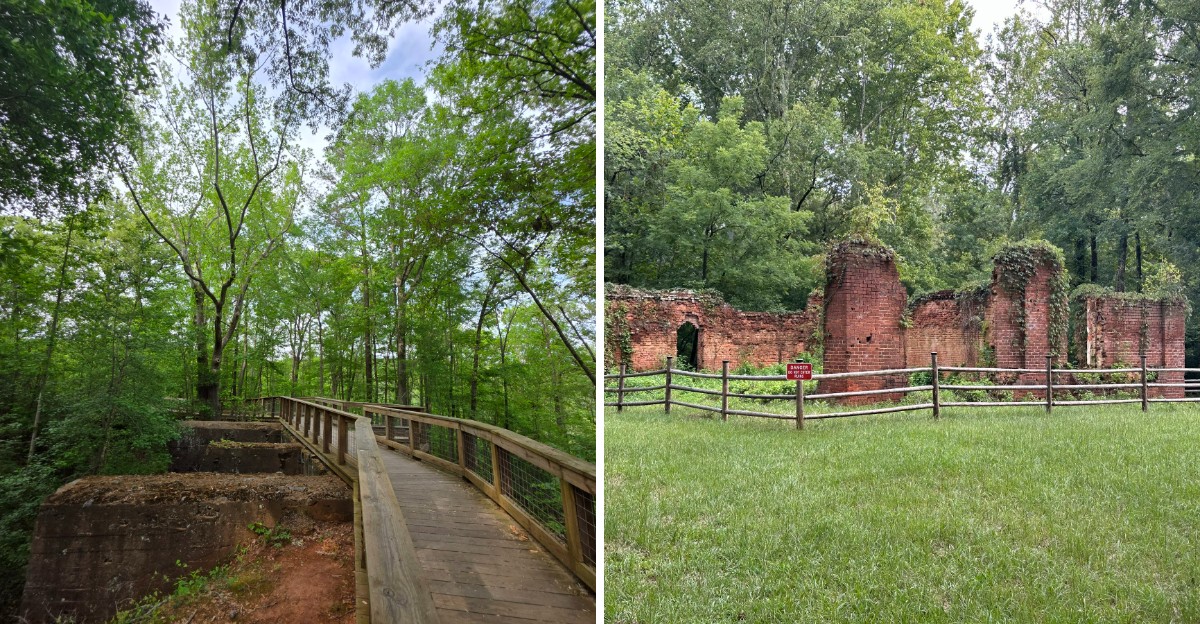
A brick textile mill that Union troops burned in 1864 later landed a role in a Hunger Games movie. That’s a strange career path for a pile of old walls, and I love it.
The ruins stand five stories tall beside a rushing creek. Elsewhere in Georgia, a mysterious rock wall zigzags across a mountaintop, and nobody knows for sure who stacked it.
Some estimates place it more than 500 years back.
Then there’s a 59-room mansion on an island where wild horses wander past crumbling chimneys. A good walk is part of the fun at each stop, and the payoff is history you can touch.
I honestly can’t think of a better reason to lace up your boots. Old stones tell great stories, and the trails below lead straight to them.
So which forgotten relic will you visit first?
1. Sweetwater Creek State Park
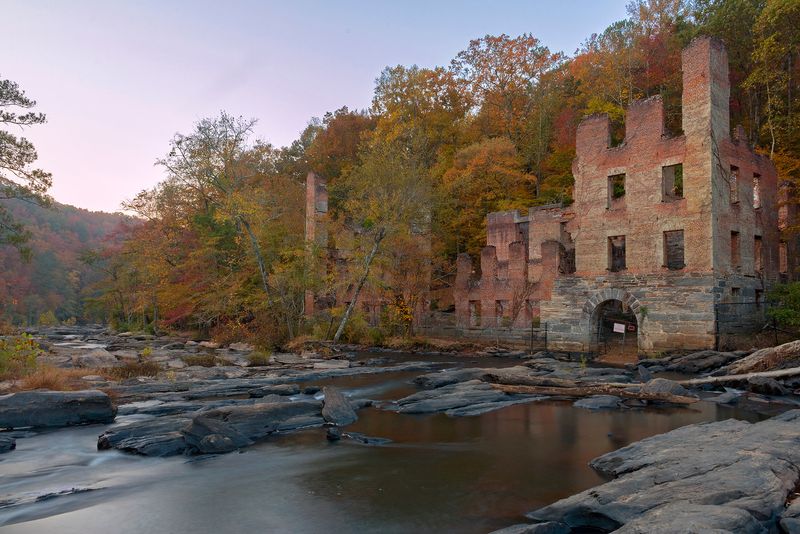
Hollywood found these ruins long before most of us did.
The real story is even better than the movies. The five-story mill started spinning cotton and yarn in December 1849, right beside the whitewater of Sweetwater Creek.
It never operated again after falling into disuse, and no one ever rebuilt it.
Crews braced the walls and repointed the mortar starting in 2016, and the exterior reopened to visitors in 2017.
The Red Trail is your best route for a first visit. It hugs the creek and runs straight to the ruins, but signs warn that it gets rough, with lots of roots and rocks.
Take it slow and watch your feet. The inside of the walls stays off-limits except during guided hikes and special events, so enjoy the view from outside.
Want more miles? The White Trail loops 5.2 miles and passes a rock overhang that Native Americans likely used as shelter for thousands of years.
Save time for the visitor center museum, which displays historical and Native American artifacts. The 215-acre George Sparks Reservoir also draws anglers to its fishing docks, though swimming isn’t allowed.
Address: 1750 Mt Vernon Rd, Lithia Springs, GA 30122
2. Vickery Creek Park
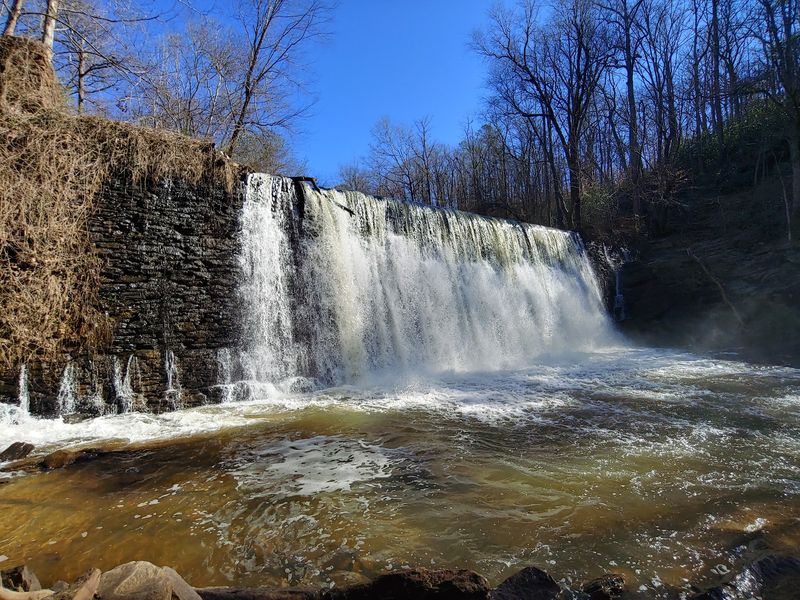
A 30-foot waterfall sounds like nature showing off, but people built this one. A historic dam created Vickery Creek Falls to power the mills of the Roswell Manufacturing Company.
Union forces burned both mills in July 1864. Only the machine shop made it through intact, and stone walls from the old complex still line the trails today.
Fun fact: the creek once had a different name. Locals called it Cedar Creek until the King family arrived in 1834.
Getting to the ruins is half the fun. A covered pedestrian bridge, built in 2005, crosses the creek and links the park to Chattahoochee River National Recreation Area trails.
From there, shaded paths roll through fern-filled woods for several miles. The trails stay friendly for casual walkers but have enough hills to wake up your legs.
One rule matters here. Since August 2024, wading in the creek or around the waterfall has been off-limits, so stick to the marked trails and viewing platforms.
The park opens daily from 7 a.m. to 8 p.m., and parking is free. Dogs are welcome outside, so your four-legged hiking buddy can tag along.
Pack a lunch if you can. Picnic spots and photo-worthy views of the falls make it easy to linger longer than planned.
Address: 95 Mill St, Roswell, GA 30075
3. Sope Creek Paper Mill Ruins
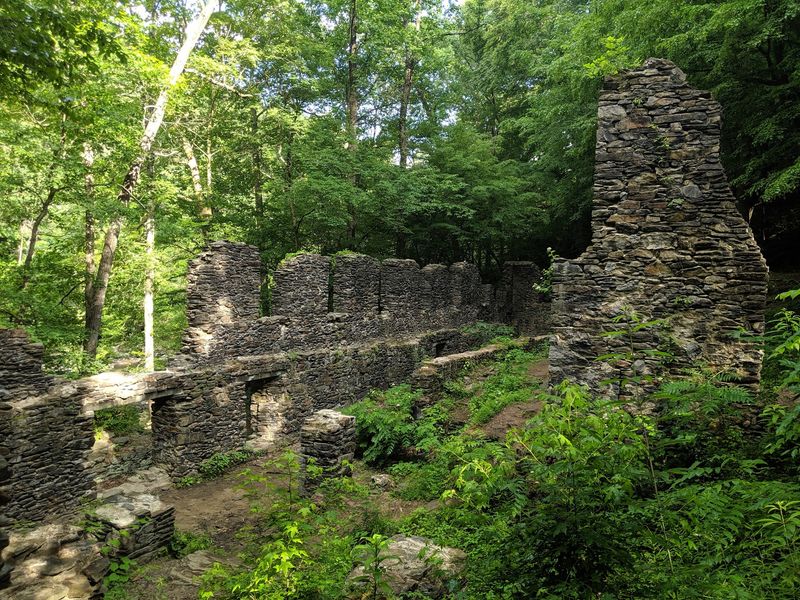
Paper doesn’t sound like wartime gear, yet this mill made cartridge paper for Confederate guns. That job put the Marietta Paper Mill squarely in the Union army’s sights.
Construction began in 1853, and production started in 1855. Workers turned linen rags and old cotton into paper sold across the South.
Union troops burned it in July 1864 during the Atlanta Campaign. Owners rebuilt, lost part of it to an accidental fire in 1870, rebuilt again, and finally closed for good in 1902.
Stubborn, right? Today, towering stone walls stand on both sides of Sope Creek, which runs wide and shallow over angular shoals.
The hike in is short and sweet. Trails to the ruins usually run about 1 to 1.5 miles round trip, which makes a good outing with kids.
Want a longer day? The area holds about 6.6 miles of trails, plus links to the Cochran Shoals network, and mountain bikers share many of the paths.
Keep an eye out for Sibley Pond near the trailhead. The glassy water and wildflowers make a calm pause before or after the ruins.
Plan ahead on a couple of details. The main trailhead has no restrooms, and parking requires a Chattahoochee River National Recreation Area pass.
Big things are coming, too. A conservancy is clearing invasive plants now, with professional preservation work on the ruins scheduled for 2027.
Address: Paper Mill Rd SE, Marietta, GA 30067
4. Dungeness Ruins
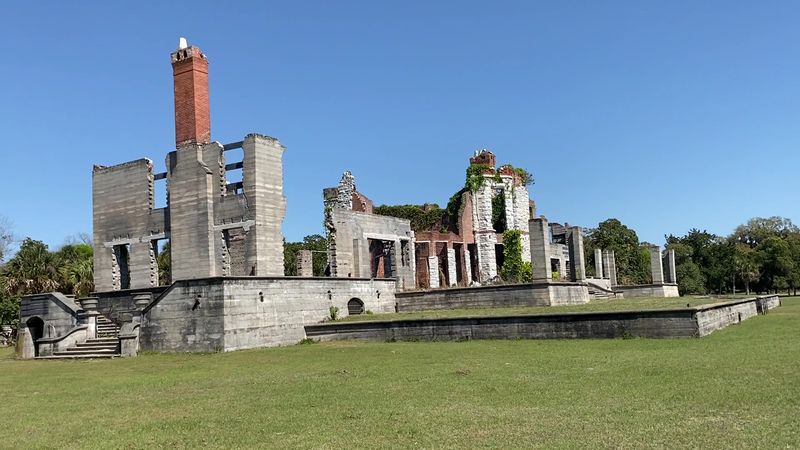
Most mansions don’t come with wild horses in the front yard. At Dungeness, horses roam freely around the brick walls and chimneys of a mansion that burned in 1959.
Thomas Carnegie, younger brother of Andrew Carnegie, and his wife Lucy began building their 59-room Queen Anne style home in 1884. It anchored a fancy winter estate on Cumberland Island.
The family left in the mid-1920s, and fire later claimed the house. Earlier, the site held a 1730s hunting lodge and a four-story tabby mansion that burned in 1866.
Several older pieces still stand. The Tabby House dates to around 1800, and a restored Ice House now serves as a small museum on island history.
Getting there takes some planning. The island is reachable only by ferry, so book ahead and expect a park entry fee for anyone 16 or older.
From the Sea Camp dock, the walk to the Dungeness Historic District runs about 2.5 miles round trip. The Dungeness Loop Trail stretches to 4.3 miles if you want more.
Along the way, you pass maritime forest, marsh, dunes, and beach. Watch for deer, turkeys, armadillos, and osprey between the ruins.
Restrooms and drinking water sit in the Dungeness area, which helps on a long day. Ranger-led walks happen when staffing allows, so ask at the mainland visitor center.
Few Georgia hikes mix salty beach air with Gilded Age history. This one rewards the extra effort.
Address: St Marys, GA 31558
5. Scull Shoals Historic Site
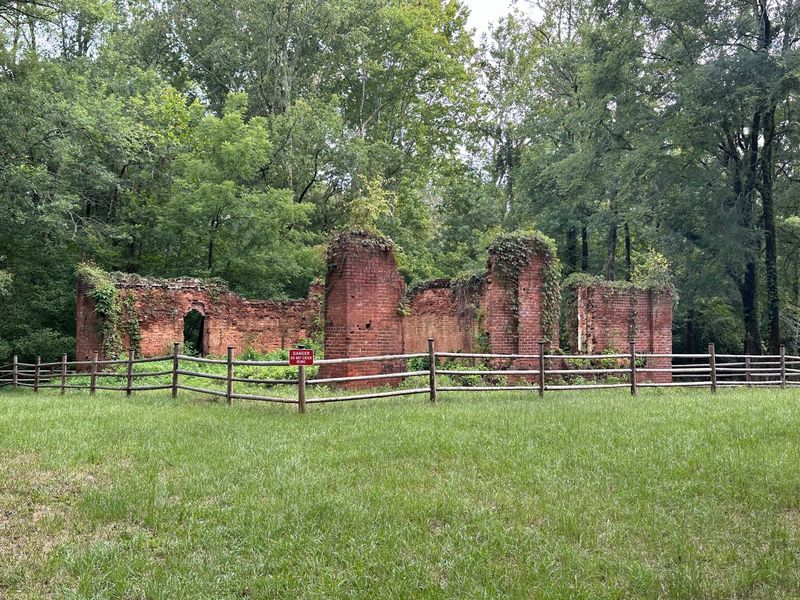
A whole town once stood here, and now the forest has nearly swallowed it. Scull Shoals preserves the ruins of a historic village inside Georgia’s Oconee National Forest.
Don’t expect a polished museum or a gift shop. Expect brick rubble, quiet woods, and a sense that you’ve stumbled onto a secret.
An informational plaque helps you picture the place. It explains where houses and buildings once stood, so the scattered bricks start to make sense.
That’s half the fun. You become the detective, matching old remains to the layout described on the sign.
A gravel road leads to the site, so drive slowly and enjoy the countryside. Once you park, footpaths branch out along the river and through the trees.
Summer brings a catch, though. The paths can get overgrown in the hotter months, so long pants and sturdy shoes are smart choices.
Spring and fall may give you clearer trails and better views of the ruins. Pack bug spray no matter when you go.
Fishing is popular along the water, and the peaceful setting works well for a picnic. Bring your own snacks and supplies, since this spot keeps things simple.
Kids tend to love the treasure-hunt feel. Treat the ruins with care, and leave the bricks exactly where you found them.
Address: Skull Shoals Rd, Watkinsville, GA 30677
6. Fort Mountain State Park
Somebody stacked an 855-foot rock wall across this mountaintop, and nobody knows exactly who. No mortar holds it together, and its zigzag path still puzzles researchers.
Archaeologists have placed its construction anywhere from about 500 to 1500 CE. Cherokee lore credits a group called the Moon-eyed people, which is a pretty great name for a mystery.
Theories range from fortification to ceremony. Either way, you get to walk right up to a relic likely older than any European visit to Georgia.
A second treasure waits nearby. The Civilian Conservation Corps built a four-story stone fire tower here in 1934, and it looks a lot like a tiny castle.
Its wooden top burned in 1971, but the stone was restored in 2014. Look for a heart carved by stonemason Arnold Bailey inside, and note that the tower opens weekend afternoons, weather permitting.
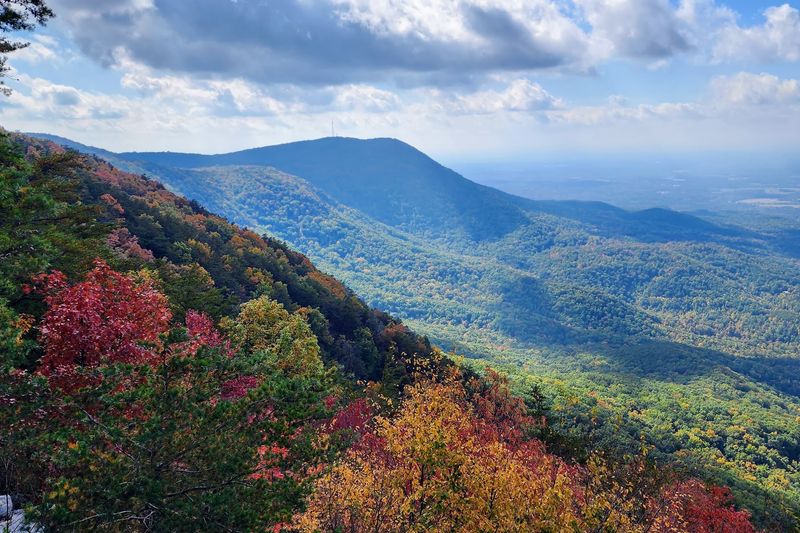
Trails here cover more than 30 miles, from easy lake loops to the tough Gahuti Trail. The West Overlook serves up big valley views, and Lookout Mountain shows up on clear days.
Need a cool-off afterward? The 17-acre lake has a seasonal swimming beach and boat rentals.
Since you sit above 2,500 feet, weather can shift fast. A ParkPass is required, and checking trail updates first saves headaches from mud or fallen trees.
Campers can stay in cottages or campsites, which makes a two-day trip easy. Stables and miniature golf round out the options for families.
Address: 181 Fort Mountain State Park Rd, Chatsworth, GA 30705
7. Cooper’s Furnace Day Use Area
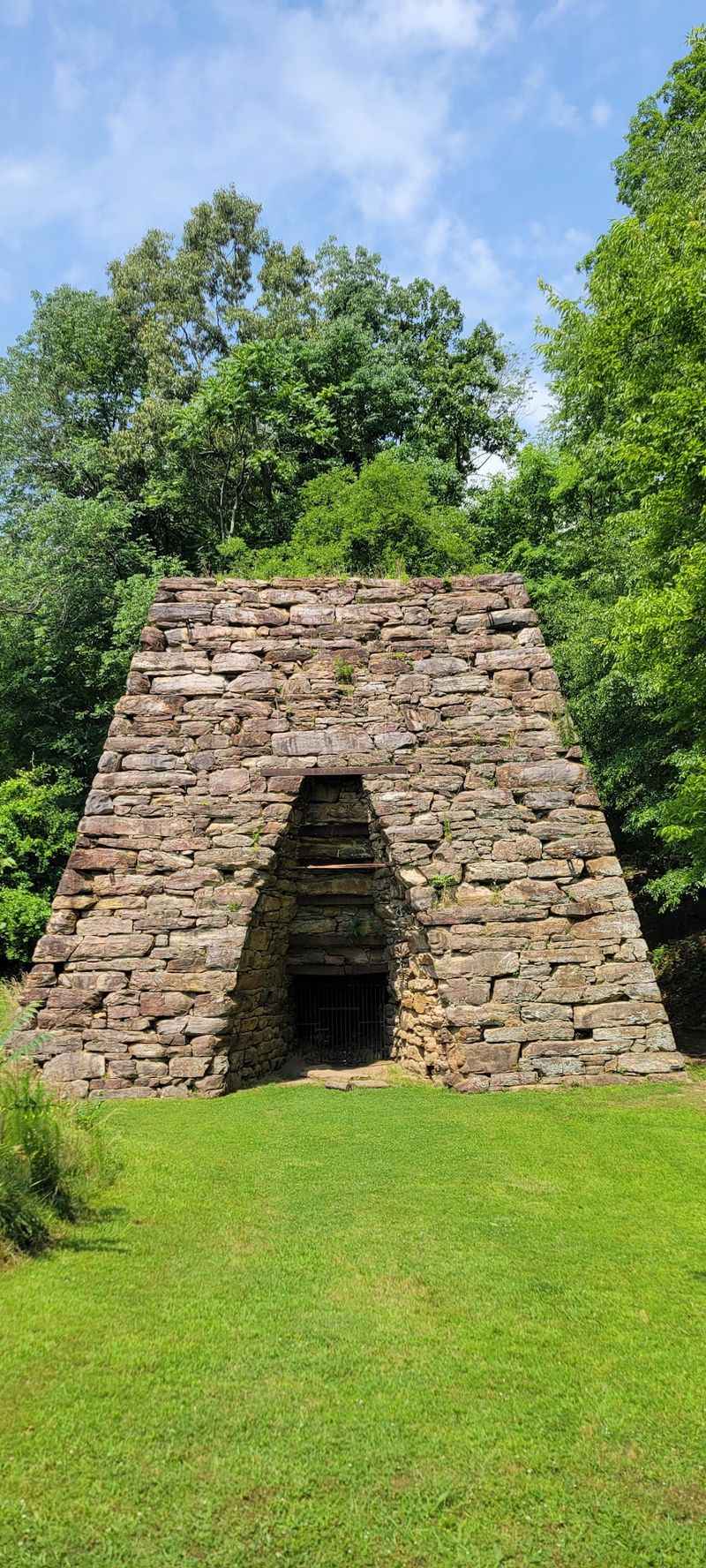
A stone tower in the woods near Cartersville looks almost too sturdy to be real. The 19th-century iron furnace stands as the main survivor of the ironworks that gave this day-use area its name.
Historical markers around the site fill in the backstory. Read them before you start walking, and the old stonework will mean a lot more.
Trails loop around the ironworks structure, so you can view the furnace from several angles. The paths make an easy outing for younger hikers.
Feeling ambitious? Another trail climbs toward the top of the nearby dam, rewarding you with wide views over the water.
The river sits close by, and anglers like to cast a line here. Bring your gear and pick a quiet spot along the bank.
Families will find the setup easy. Covered picnic pavilions come with large charcoal grills, and there’s a playground with slides for the kids.
Game fans get options, too. A volleyball net and horseshoe pits sit near the picnic areas, so lunch can turn into a friendly tournament.
Restrooms and a free parking lot keep logistics simple. Dogs are welcome to join the history lesson.
Hours run from 8 a.m. to 7 p.m. daily. Weekend afternoons see the most visitors, so a weekday trip gives you more elbow room around the furnace.
Industrial history and a cookout rarely fit this neatly into one Georgia afternoon. Few relics come with a grill this close.
Address: 1052 Old River Rd SE, Cartersville, GA 30121
8. High Falls State Park
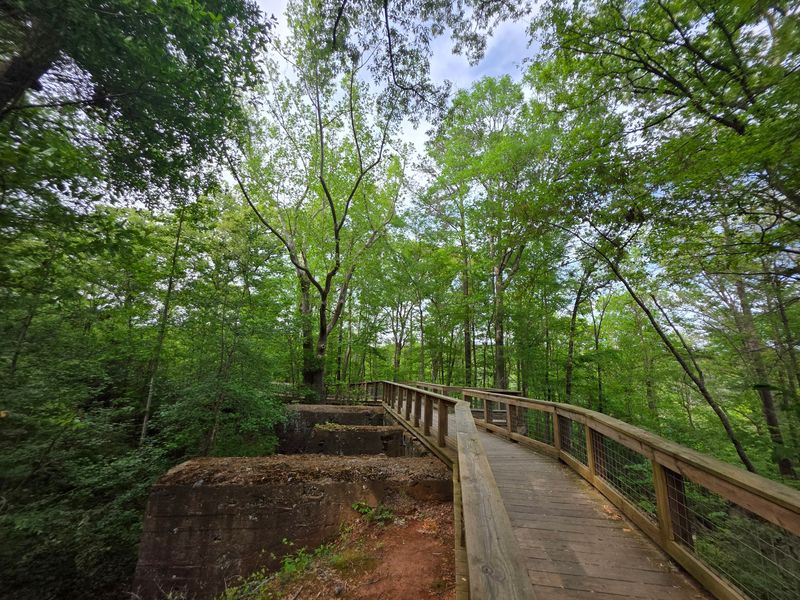
Waterfalls get most of the attention here, but the crumbling bricks deserve a look too. Along the river, the Falls Trail leads to the overgrown remains of an old hydroelectric power plant.
Vines and trees have crept over the brick walls, giving the site a lost-world feel. It’s a great spot for photos, especially with the rushing water nearby.
Be careful if you explore around the ruins. Old masonry can be uneven, so keep kids close and watch your footing.
The cascading falls steal the show on the way. Two trails offer views, one with wooden staircases and the other with a boardwalk.
Count those stairs as your workout for the day. The boardwalk route feels gentler if your legs prefer a calmer pace.
The park spreads across 1,050 acres, so there’s plenty beyond the falls. A lake invites fishing and boating, and campsites let you stretch the visit overnight.
Families can add mini-golf and a pool to the plan. Picnic tables, grills, and a playground make it easy to turn a hike into a full day.
The park opens daily from 7 a.m. to 10 p.m. Saturday afternoons draw the biggest crowds, so mornings or weekdays feel more relaxed.
Dogs are allowed, which is good news for pups who love the sound of moving water. Just pack extra water for both of you.
The park sits just off I-75 between Atlanta and Macon. That makes it an easy road trip stop for a quick dose of history.
Address: 76 High Falls Park Dr, Jackson, GA 30233
9. Wormsloe State Historic Site
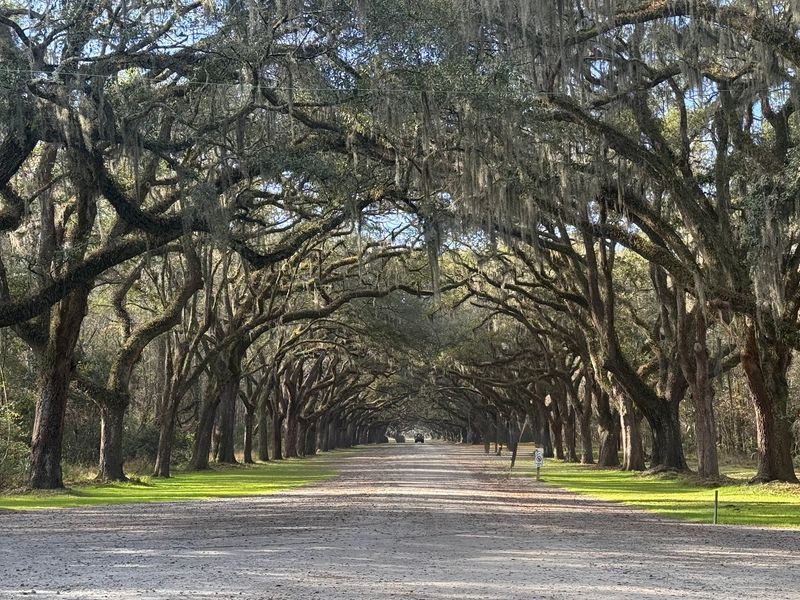
The driveway alone has its own fan club. More than a mile of moss-draped live oaks lines the dirt entrance road, and it feels like a movie set.
Keep going, and history takes over. Wormsloe protects the tabby ruins of an 18th-century colonial estate, the oldest standing structure in Savannah.
Noble Jones, one of Georgia’s early colonists, built the home. Tabby mixes lime, sand, water, and oyster shells, which explains the bumpy, shell-studded walls you’ll spot.
Reaching the ruins takes very little effort. A walk of about 300 yards brings you to the old walls, so even little hikers can make it.
Want more steps? Several marked nature trails wind under the oaks, with an overlook along the way.
The colonial life area shows how settlers lived and worked. A family grave site adds a quiet, thoughtful stop on the route.
Start at the small museum if you like context first. Artifacts and a short film tell the story of the family behind Wormsloe.
The oak avenue makes a stunning photo in soft morning light. Bring a camera, but stay safe and avoid stopping in the middle of the road.
The site opens daily from 9 a.m. to 4:45 p.m. Arrive early, since weekend mornings and afternoons draw bigger crowds.
There’s no restaurant, so eat before or after your visit. A gift shop and restrooms are on site, and the Isle of Hope location keeps it close to downtown.
Address: 7601 Skidaway Rd, Savannah, GA 31406
10. Tallulah Gorge State Park
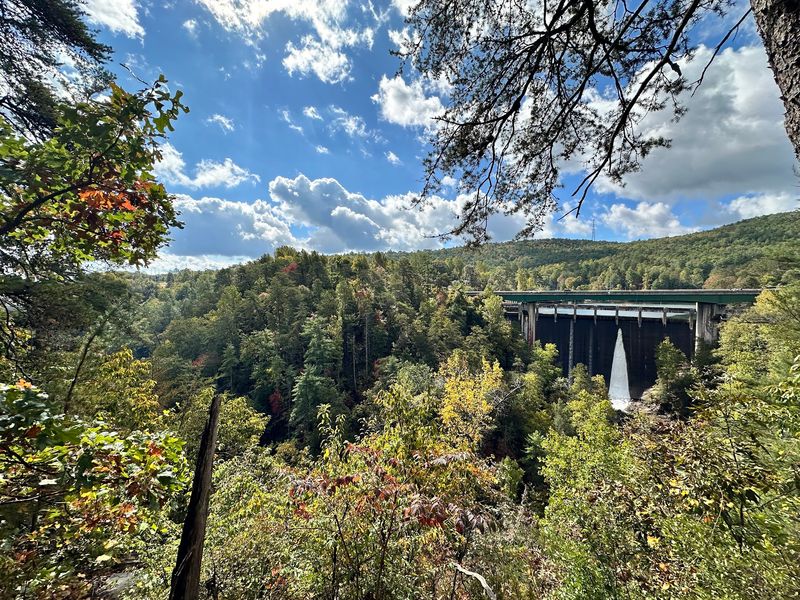
In 1970, a man walked across Tallulah Gorge on a high wire, and the towers from that stunt still stand. Karl Wallenda’s crossing remains one of the most famous moments in the gorge’s history.
Today, those steel tower bases count as relics you can hike past. They sit along the rim trails, overlooking a gorge about 1,000 feet deep.
Another relic takes the form of serious engineering. The Georgia Railway and Power Company built a dam here in 1913, and that structure still shapes the river.
Long before the dam, the area drew crowds as a Victorian resort town. Visitors came for the falls, and you can easily see why.
Rim trails offer multiple lookout points with dramatic views. Many routes stay fairly easy, which makes the scenery doable for most families.
Then comes the suspension bridge, which sways high above the rocks and water. Bring your courage, and maybe skip a big snack beforehand.
Seeking a bigger challenge? Hiking the gorge floor requires a permit, and the number handed out each day is limited, so arrive early.
Waterfalls tumble through the gorge, and the views change around nearly each bend. Expect plenty of stairs on routes that drop toward the bridge.
After all that climbing, the park’s beach offers a place to rest. Picnic tables, grills, and a playground help round out the day.
Address: 338 Jane Hurt Yarn Rd, Tallulah Falls, GA 30573
11. Pickett’s Mill Battlefield State Historic Site
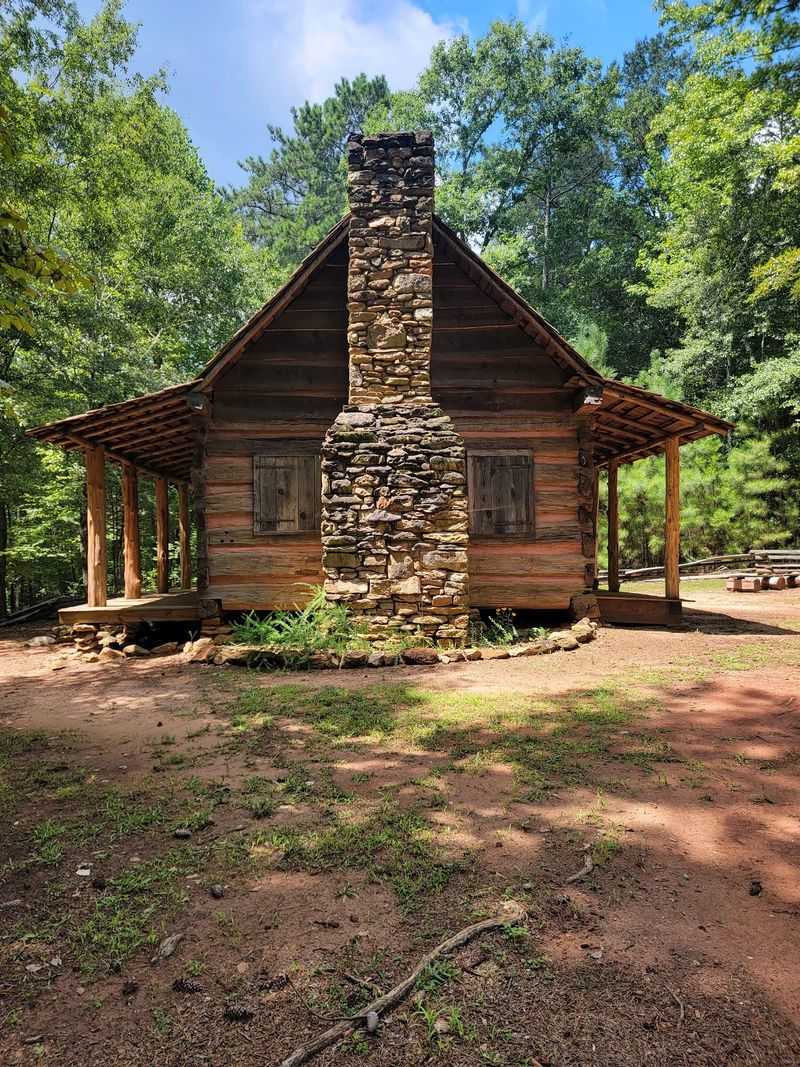
Earthen trenches dug in 1864 still ripple through these woods. The battlefield is known for its remarkable preservation, so the past feels close.
The battle took place on May 27, 1864, during the Atlanta Campaign. Confederate troops pushed back a Union attack here, a rare setback for Sherman’s army as it moved toward Atlanta.
Forested trails of varying difficulty wind across the battlefield. Some routes are easy strolls, while others ask a bit more of your legs.
A restored 19th-century pioneer log cabin offers a peek at daily life. It’s a good reminder that families lived here before and after the fighting.
Before heading out, step into the small museum. It gives helpful background, so the trenches make sense once you see them.
Knowledgeable staff lead guided tours and share insights about the battle. Ask questions, because their stories add a lot to the walk.
The wooded trails offer a peaceful setting for exploring the battlefield. The site is open daily from 9 a.m. to 5 p.m., while the museum operates Friday through Sunday.
Picnic tables and restrooms make it easy to spend a few hours. Dogs are allowed on the trails, so bring a leash and your best four-legged scout.
It’s a fitting final stop on any Georgia history hike. The past here isn’t behind glass, it’s right under your boots.
Address: 4432 Mt Tabor Church Rd, Dallas, GA 30157