This Unique Georgia Museum Lets You Pan For Gems, Touch Megalodon Teeth, And Stargaze Through A 20-Inch Telescope
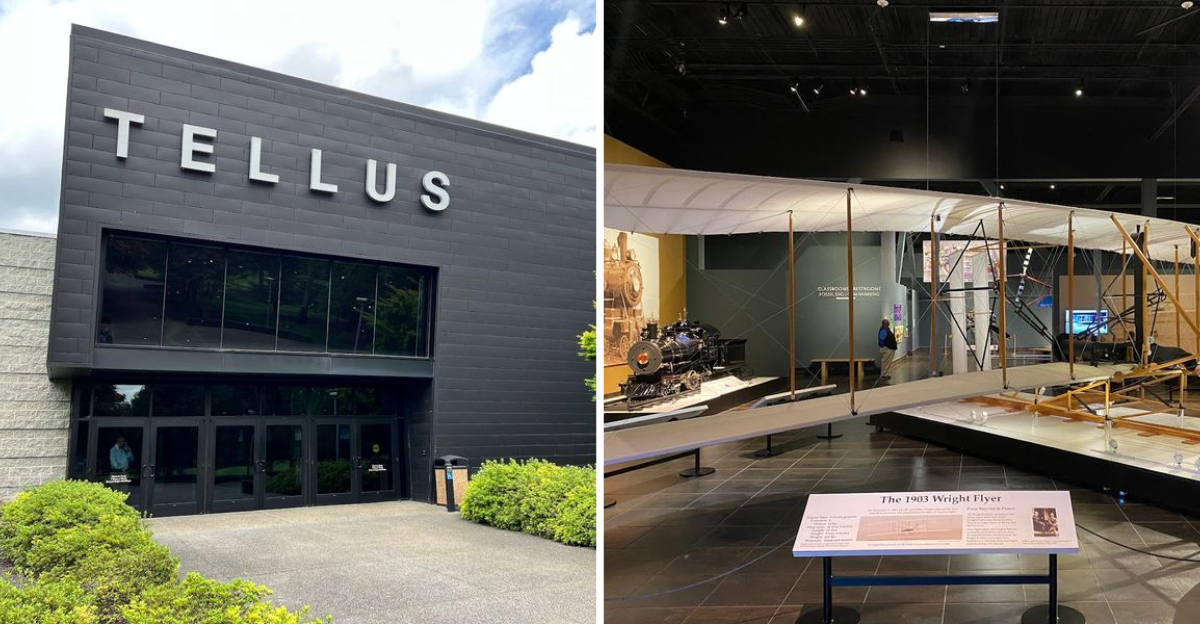
Nestled in Cartersville, Georgia, the Tellus Science Museum is one of those rare places that manages to feel like an adventure every single time you walk through the door.
Whether you are seven years old or seventy, there is something here that will genuinely surprise you, from massive fossil displays to a working observatory open to the public.
Georgia families, school groups, road-trippers passing through on the way to Atlanta or Chattanooga, and curious solo visitors have all discovered that a few hours at Tellus never quite feels like enough.
With a 4.8-star rating from over 1,500 visitors and a reputation as a Smithsonian affiliate, this museum earns every bit of praise it receives.
1. The Weinman Mineral Gallery: A World-Class Rock Collection
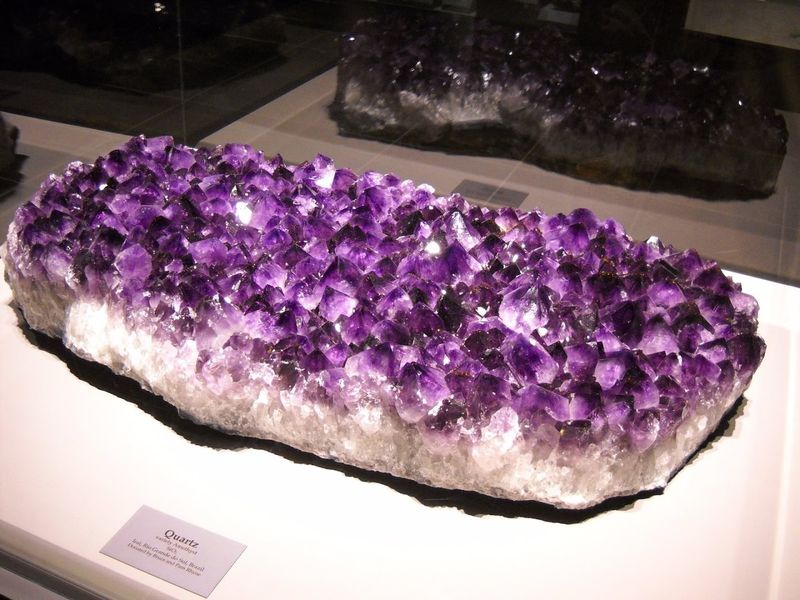
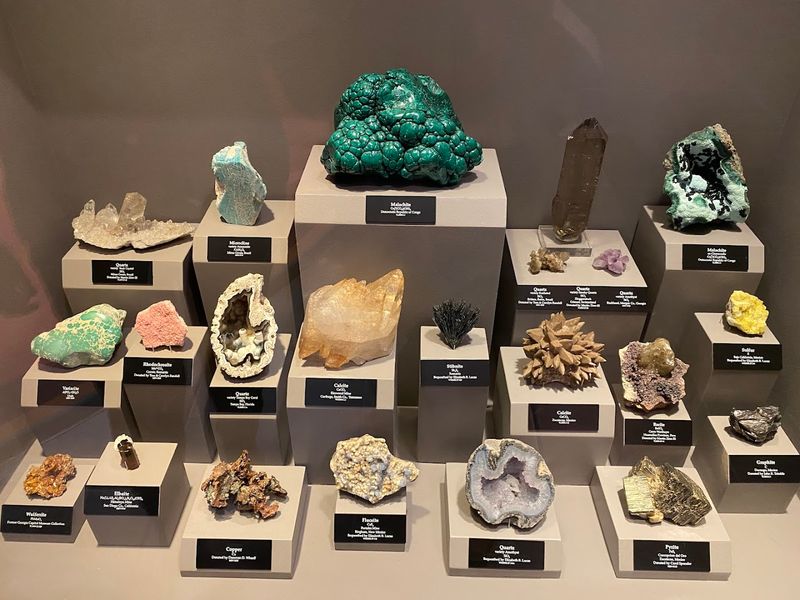
Some museum galleries stop you in your tracks, and the Weinman Mineral Gallery at Tellus Science Museum does exactly that. Located at 100 Tellus Dr, Cartersville, GA 30120, this gallery houses one of the most impressive mineral collections in the entire Southeast.
Thousands of specimens line the displays, including fluorescent rocks that glow brilliantly under ultraviolet light.
Georgia is home to a surprising variety of minerals, and the collection includes many specimens pulled directly from the state’s own geological landscape, making it feel personal and local at the same time.
The lighting and layout are thoughtfully designed so visitors of all ages can appreciate the colors, textures, and formations without feeling rushed. Kids tend to press their noses right up to the glass, while adults often linger longer than expected.
Geology enthusiasts will find the labeling detailed and educational, while casual visitors simply enjoy the visual spectacle of nature’s most dazzling creations on full display.
2. Gem Panning Activity: Sift, Search, And Keep Your Finds
Few activities at any museum create as much pure joy as the gem panning station at Tellus, where visitors actually get to keep what they find. The setup involves scooping a bag of gem-rich sand into a screen sieve and running water over it until colorful stones begin to appear.
Volunteers at the station are enthusiastic and knowledgeable, helping visitors identify each stone they uncover and explaining how those minerals form naturally in the earth.
Children absolutely love the hands-on treasure-hunt feeling, but plenty of adults get just as hooked once the first gemstone catches the light.
Bags of gem sand are available for purchase, and the activity tends to move at a relaxed pace, so there is no pressure to rush through. Many families report spending a surprisingly long stretch of time here.
Taking home a small bag of personally discovered gems makes for a meaningful souvenir that beats anything from a typical gift shop shelf.
3. Fossil Dig Zone: Unearth Prehistoric Bones Yourself
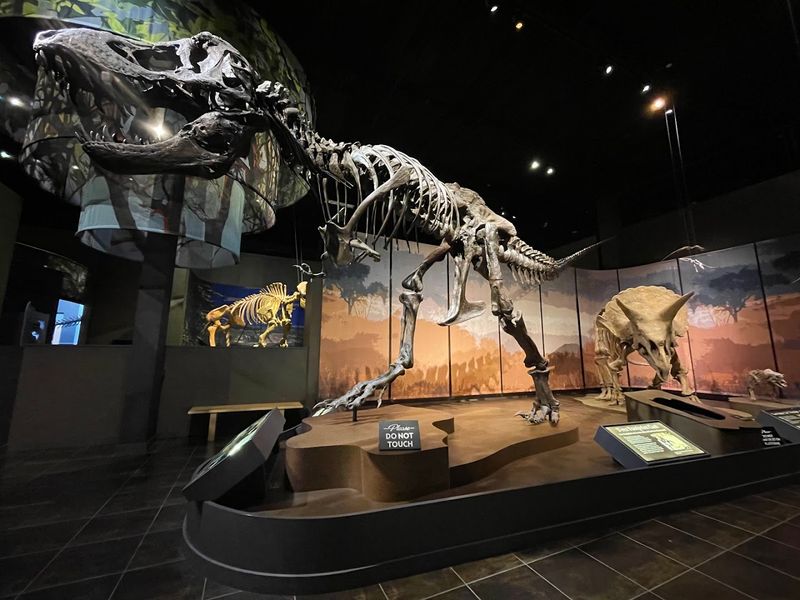
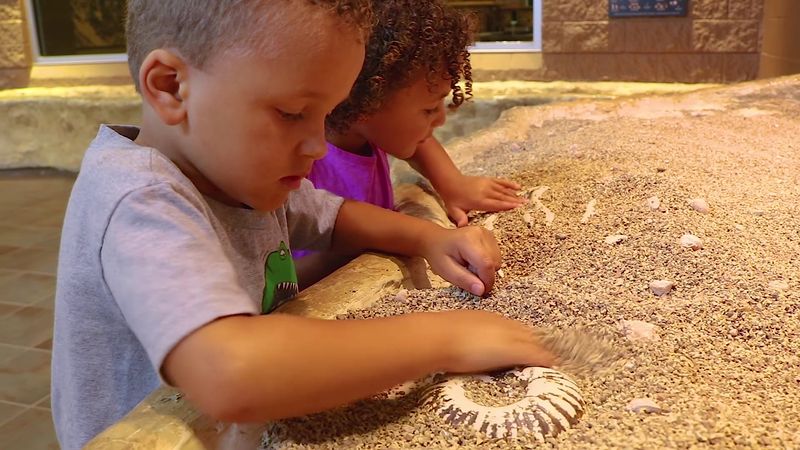
Imagine handing a child a brush and telling them to start digging for dinosaur bones. That is essentially what the fossil dig zone at Tellus Science Museum offers, and the excitement it produces is absolutely genuine.
The station is staffed by friendly volunteers who guide participants through the process and explain what each fossil represents.
Real fossil casts are buried in the dig area, giving participants the satisfying sensation of discovery without damaging irreplaceable specimens.
The activity is designed to be accessible for young children, but older kids and even curious adults find themselves fully absorbed in the careful brushing and sifting process.
One reviewer noted that the fossil dig was the clear highlight of their entire visit, and that the station was not overcrowded during off-peak hours. Arriving on a weekday morning tends to give families more breathing room here.
The combination of physical activity, storytelling, and science makes this one of the most memorable corners of the entire museum.
4. Touching Real Megalodon Teeth: A Jaw-Dropping Encounter
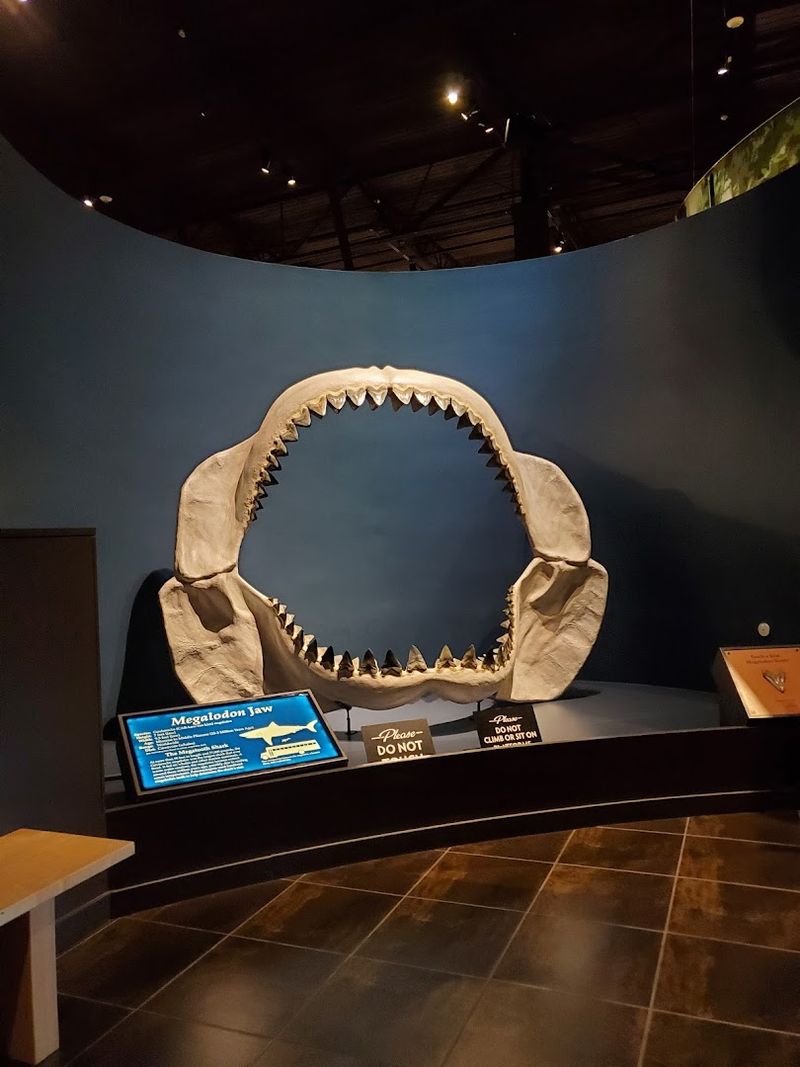
Not many places in Georgia let you put your hand on a tooth the size of a dinner plate, but Tellus Science Museum is one of them. The Megalodon teeth on display here are genuine fossils, and the museum encourages tactile engagement in a way that most institutions shy away from.
Feeling the serrated edge of a tooth that once belonged to the largest shark that ever lived creates an almost instinctive chill. The Megalodon went extinct roughly 3.6 million years ago, and holding a piece of that creature makes the deep past feel suddenly and startlingly real.
Museum staff and signage provide context about the Megalodon’s size, diet, and eventual extinction, so the experience is educational as well as visceral. Children who are fascinated by sharks tend to lose their minds over this exhibit in the best possible way.
Adults who assumed they were done being amazed by natural history often find themselves reconsidering that assumption entirely at this display.
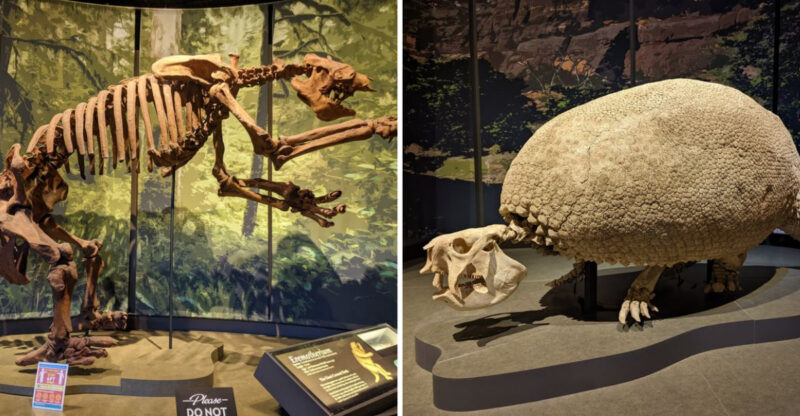
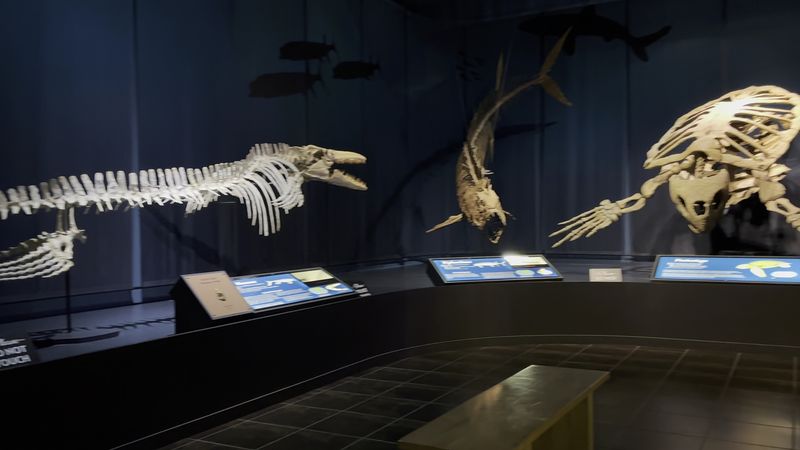
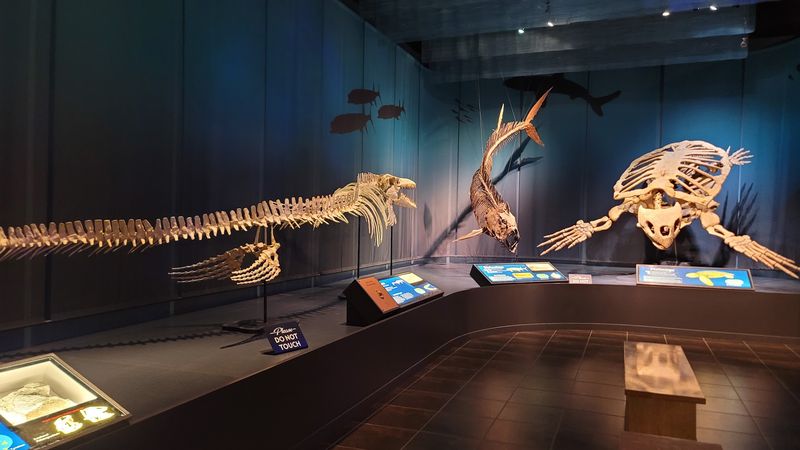
5. The Fossil Gallery: Dinosaurs, Mammals, And Ancient Sea Creatures
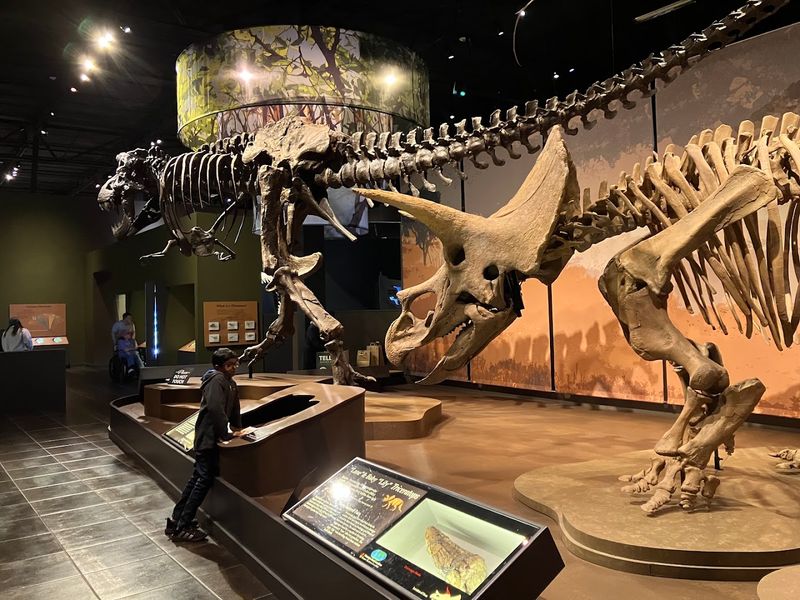
Walking through the fossil gallery at Tellus feels a little like stepping into a different era of Earth’s history entirely.
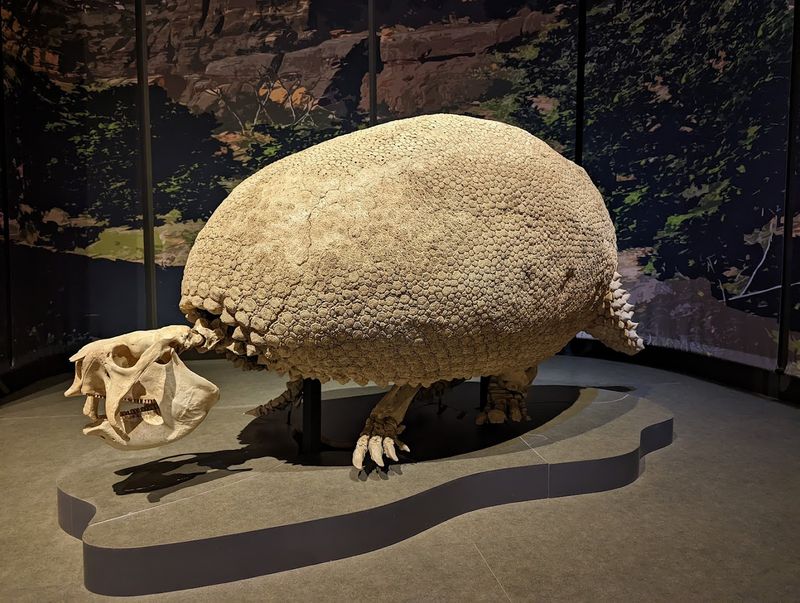
Full skeletal displays, detailed fossil casts, and informative panels guide visitors through millions of years of prehistoric life, from massive dinosaurs to ancient marine creatures and early mammals.
The collection covers a broad timeline, giving visitors a sense of how dramatically life on Earth has changed over deep time. Georgia has its own fascinating fossil history, and the gallery weaves in regional context so the exhibits feel connected to the land visitors are actually standing on.
Bones that can be touched are clearly marked, which is a thoughtful detail that younger visitors especially appreciate. The gallery moves at a natural pace, with enough space between displays that even on busier weekend days it rarely feels cramped.
Families with dinosaur-obsessed children should plan to spend extra time here because the questions tend to pile up fast and happily.
6. The Planetarium: A Full-Dome Digital Sky Experience
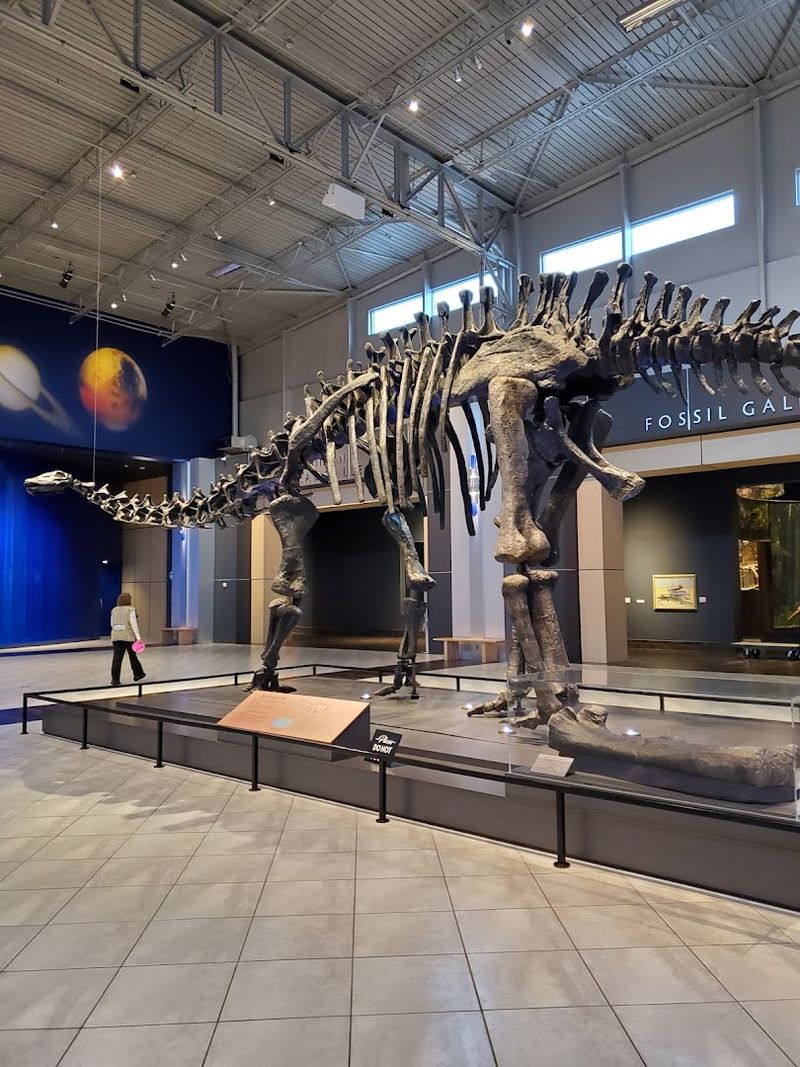
Some planetarium shows are forgettable. The one at Tellus Science Museum is not.
Multiple reviewers have singled out the planetarium as one of the best they have experienced across their travels, praising both the quality of the projection system and the thoughtfulness of the programming.
The full-dome digital format wraps the visuals completely around the audience, creating an immersive sensation that makes looking up feel genuinely like floating beneath an open sky.
Shows rotate regularly and cover topics ranging from the formation of galaxies to the science of volcanoes, so repeat visits offer fresh content.
Seating is comfortable and reclined, which makes the experience relaxing rather than straining. One reviewer mentioned that her daughter talked about the volcano segment all the way through lunch afterward, which says something real about how effectively the show captures young imaginations.
Show times vary by day, so checking the schedule at tellusmuseum.org before arriving helps ensure visitors do not miss the presentation they want most.
7. The Observatory: Stargaze Through A 20-Inch Telescope
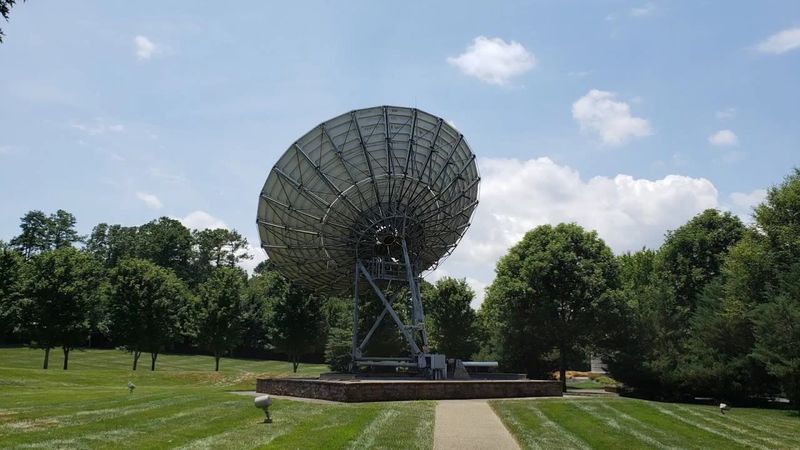
Having a 20-inch research-grade telescope available for public use is genuinely unusual, and Tellus Science Museum offers exactly that through its on-site observatory.
On select evenings, visitors can peer through the telescope and observe planets, star clusters, nebulae, and other celestial objects with clarity that casual backyard stargazing simply cannot match.
The observatory is a feature that sets Tellus apart from nearly every other family science museum in Georgia. Staff members guide visitors through what they are seeing, adding context about distances, compositions, and the science behind the objects in the eyepiece.
One reviewer specifically mentioned that returning for a telescope event was highly appealing, even though she lives two hours away from Cartersville.
Checking the museum’s event calendar ahead of time is strongly recommended because observatory nights have specific scheduling and may require advance planning.
Clear weather is a factor, so having a backup date in mind is a practical move for anyone making a longer drive specifically for the stargazing experience.
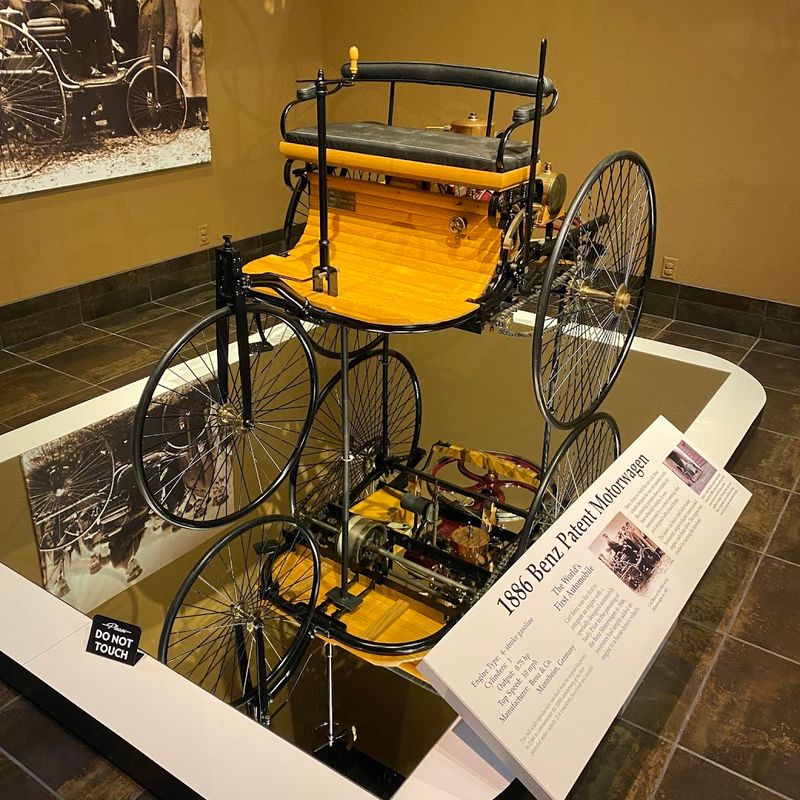
8. The Science In Motion Gallery: Cars, Planes, And Space Vehicles
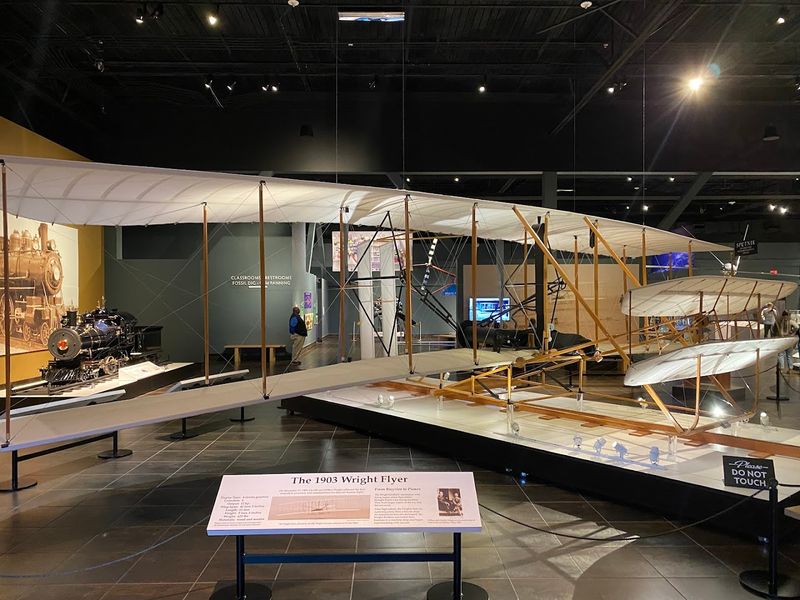
Not every science museum dedicates serious floor space to the history of transportation, but Tellus treats the subject with real respect and depth.
The Science in Motion gallery showcases classic cars, early aircraft, and space vehicles in a way that connects mechanical engineering to the broader story of human curiosity and problem-solving.
Vintage automobiles sit alongside space memorabilia, creating an interesting visual conversation between eras of exploration. The gallery appeals to visitors who might not think of themselves as science enthusiasts but who have always had a soft spot for beautifully designed machines.
One reviewer specifically enjoyed the transportation wing and noted the space memorabilia as a particular highlight.
The displays are well-maintained and the informational panels are written accessibly, so visitors do not need an engineering background to appreciate what they are looking at.
Weekend crowds tend to gather here, but the gallery is spacious enough that navigation stays comfortable. History buffs and car enthusiasts often end up pleasantly surprised by how much they enjoy this section.
9. The Big Backyard: Outdoor Science Fun For Young Visitors
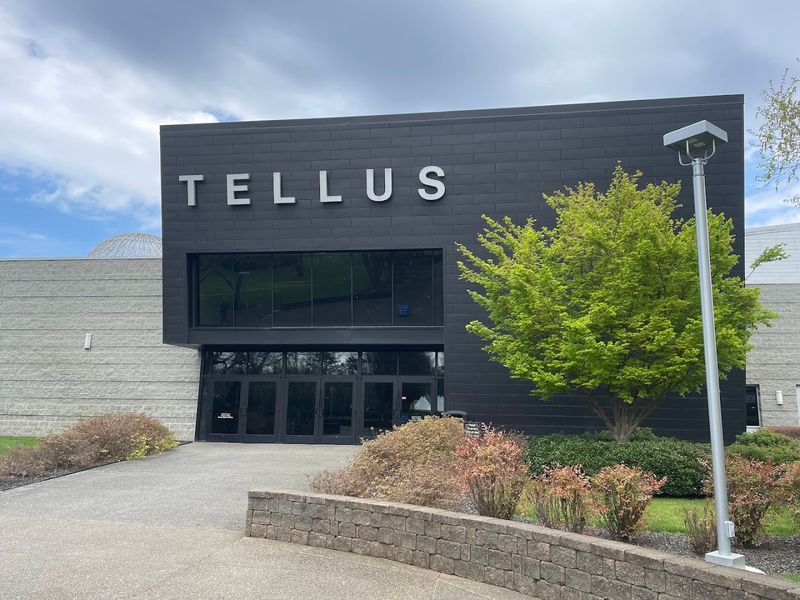
Young children sometimes hit a wall in traditional museum settings, but the Big Backyard area at Tellus was specifically designed with the smallest visitors in mind.
Packed with hands-on activities, sensory experiences, and interactive learning stations, this section functions almost like a children’s museum within the larger museum.
Caregivers with toddlers or preschoolers will appreciate how thoughtfully the space is laid out, with age-appropriate challenges that keep little ones engaged without overwhelming them. The activities connect to real science concepts in ways that feel playful rather than instructional.
One reviewer described the children’s area as a highlight specifically for very young kids, noting that it offered a welcome change of pace from the more display-focused galleries.
The space is stroller-accessible, and the museum overall is single-floor, making navigation easy for families with wheels.
Arriving during weekday morning hours tends to keep the area less crowded, which gives younger children more freedom to explore at their own comfortable pace without competition.
10. The Solar System Walk: Scale Model Of Space In A Park Setting
Understanding the actual scale of our solar system is one of those concepts that sounds simple until you try to visualize it. The Solar System Walk at Tellus Science Museum makes it tangible by laying out scale representations of the planets along an outdoor path set in a park-like environment.
Walking from the Sun to the outer planets gives visitors a physical sense of the enormous distances involved in ways that no classroom diagram can replicate. The experience is quiet, unhurried, and genuinely thought-provoking for visitors of all ages.
The outdoor setting provides a nice change of pace after spending time inside the galleries, and the landscaping makes the walk pleasant regardless of the season. Children who have learned about the solar system in school often get a genuine surprise when they realize just how far apart everything actually is.
Comfortable walking shoes are recommended, and the path is accessible for strollers and wheelchairs, making it easy for everyone in a group to enjoy together.
11. Rotating Special Exhibits: Fresh Reasons To Return Again
One of the smartest things about Tellus Science Museum is that the experience genuinely changes from visit to visit. Rotating special exhibits bring entirely new subject matter into the museum on a regular basis, giving annual members and repeat visitors a compelling reason to come back through the doors.
Past special exhibits have covered topics as varied as space exploration and interactive science experiences, each designed with the same level of hands-on engagement that defines the permanent collection. The Journey to Space exhibit, for example, drew such enthusiastic responses that some visitors ended up purchasing yearly memberships on the spot after attending it.
Checking the current exhibit schedule on tellusmuseum.org before planning a trip is a genuinely useful move, especially if a particular topic is of special interest to someone in the group. Special exhibits sometimes have limited run dates, so timing a visit to catch one before it closes adds an extra layer of excitement and urgency to the planning process.
12. Smithsonian Affiliation: A Museum With Serious Scientific Credentials
Being a Smithsonian affiliate is not a designation that gets handed out casually, and Tellus Science Museum has earned that recognition through the quality and integrity of its collections and programming. The Smithsonian Institution Affiliations program connects museums across the country to one of the world’s most respected scientific organizations.
For visitors, the affiliation is a meaningful signal that the exhibits and information presented at Tellus meet a high standard of accuracy and educational value. It also means the museum has access to resources, traveling collections, and collaborative opportunities that smaller independent institutions simply do not.
Georgia residents often discover the Smithsonian affiliation as a pleasant surprise rather than a known fact before arriving, which tends to deepen their appreciation for what they are experiencing. The museum does not lean heavily on the credential in its marketing, but it matters.
Knowing that the displays have been developed and vetted with genuine scientific rigor adds a layer of confidence for parents and educators bringing groups through the galleries.
13. The Weather Gallery: Hands-On Exploration Of Earth’s Atmosphere
Weather is something everyone experiences every day, but few people truly understand the science behind it. The weather gallery at Tellus Science Museum takes on that gap with interactive exhibits that make atmospheric science genuinely engaging rather than dry or textbook-heavy.
Displays cover topics including storm formation, tornado mechanics, lightning, and the water cycle, with interactive elements that allow visitors to engage physically with the concepts rather than simply reading about them. The hands-on design keeps energy levels high and attention spans intact, especially for younger visitors who learn best by doing.
One reviewer specifically called out the weather gallery as full of interactive elements that kept everyone in the group engaged, which is meaningful praise from a family perspective. Georgia experiences a wide range of weather patterns throughout the year, so the subject matter feels locally relevant and personally relatable for most visitors.
The gallery pairs well with a broader conversation about climate and earth science that continues throughout the rest of the museum’s exhibits.
14. Accessibility And Practical Visitor Comforts
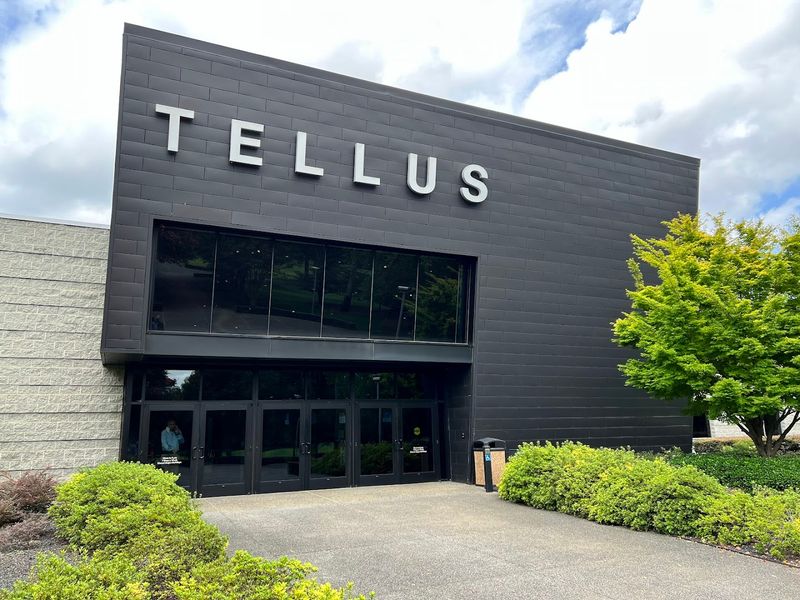
A great museum experience depends heavily on the practical details, and Tellus Science Museum handles the logistics thoughtfully. The entire building is laid out on a single floor, which makes navigation straightforward for visitors using strollers, wheelchairs, or mobility aids of any kind.
Parking is plentiful and easy, which is a genuine relief compared to many urban museum experiences. Restrooms include changing tables and child-height sinks, reflecting the museum’s awareness that families with very young children have specific needs that should be anticipated rather than ignored.
An on-site cafe offers premade sandwiches, chips, and snacks, and there is an outdoor pavilion where families can enjoy their own packed food if preferred. Note that outside food and drink are not permitted inside the museum itself.
The museum is open Tuesday through Sunday from 10 AM to 5 PM, and weekday visits, particularly Wednesday mornings, tend to offer the most relaxed experience with shorter waits and more room to move freely through the galleries.
15. Signed Astronaut Photos And Space Memorabilia: A Human Story Of Exploration
Science becomes most powerful when it connects to real human stories, and the signed astronaut photographs and space memorabilia at Tellus do exactly that. These are not reproductions or generic space posters but actual signed images from real astronauts who pushed the boundaries of what human beings have achieved.
Standing in front of a photo signed by someone who has floated in orbit above the Earth creates a quiet, almost reverential feeling that is hard to manufacture artificially. One reviewer mentioned being genuinely moved by the signed astronaut photos as part of what made the museum feel special and worth returning to.
The memorabilia is woven naturally into the broader space science exhibits rather than isolated in a separate corner, which helps visitors connect the human element to the technical and scientific content around it. For children dreaming of careers in science or space exploration, seeing these artifacts in a Georgia museum makes the possibility feel closer and more real than a screen ever could.