These 10 Stunning Sculpture Gardens In Illinois Turn Art Into An Outdoor Adventure
One Illinois sculpture park sits just an eight-minute walk from a commuter train station.
You can hop off a Metra train and stand beside giant outdoor art before your snack is gone. That detail hooked me right away.
Then I learned that a park down south shows more than 70 sculptures across 80 acres. Another park is filled with steel creations welded by one single artist, including two towers that rise 40 feet tall.
I love that these places skip the velvet ropes and the museum whispers. You get fresh air, prairie grass, shady trails, and art you can admire from any angle you want.
Some spots even swap their sculptures every year or two, so a second trip can feel like a brand new show.
Which one would you visit first?
1. Nathan Manilow Sculpture Park, University Park
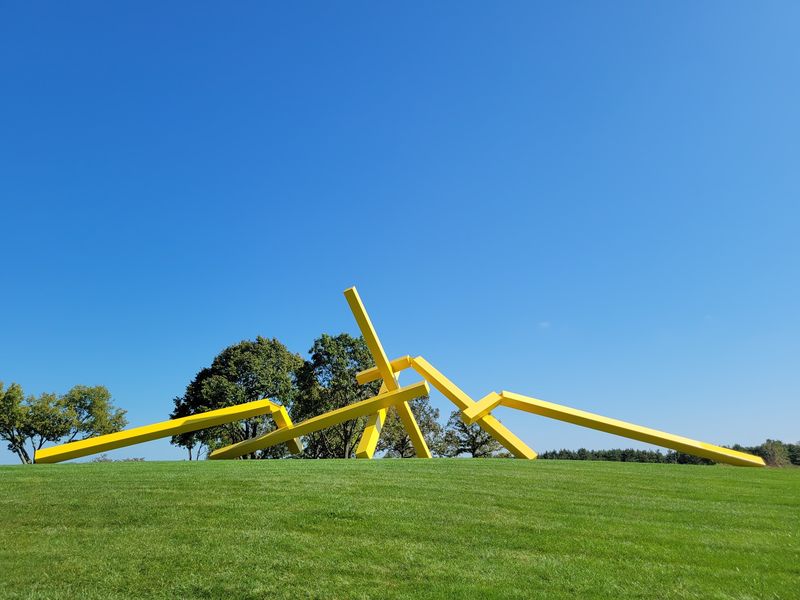
Few art collections let you arrive by train and start your tour on foot. A walk from the University Park Metra station brings visitors toward the first works at Nathan Manilow Sculpture Park, known as theNate.
The collection stands across 100 acres of prairie on the Governors State University campus.
Thirty large-scale sculptures appear against an open landscape of native plants, where the artwork can look completely different as the light and seasons change. It’s an impressive amount of room for metal, stone, and unexpected shapes.
Look for Yes! for Lady Day, assembled from steel beams and part of a railroad tank car. Other pieces explore contrasting materials, including bronze figures and a geodesic dome.
Together they show how Illinois prairie scenery can become part of a sculpture’s design.
Grass paths connect the pieces rather than a continuous paved gallery route. Comfortable walking shoes and an accessible route plan are useful, especially after rain.
A self-guided audio tour provides background about individual works, while the restored prairie gives visitors reasons to pause between them.
The entrance is on the university campus at 1 University Parkway in University Park. Grounds welcome visitors from dawn until dusk throughout the year, with parking available on campus.
2. Skokie Northshore Sculpture Park
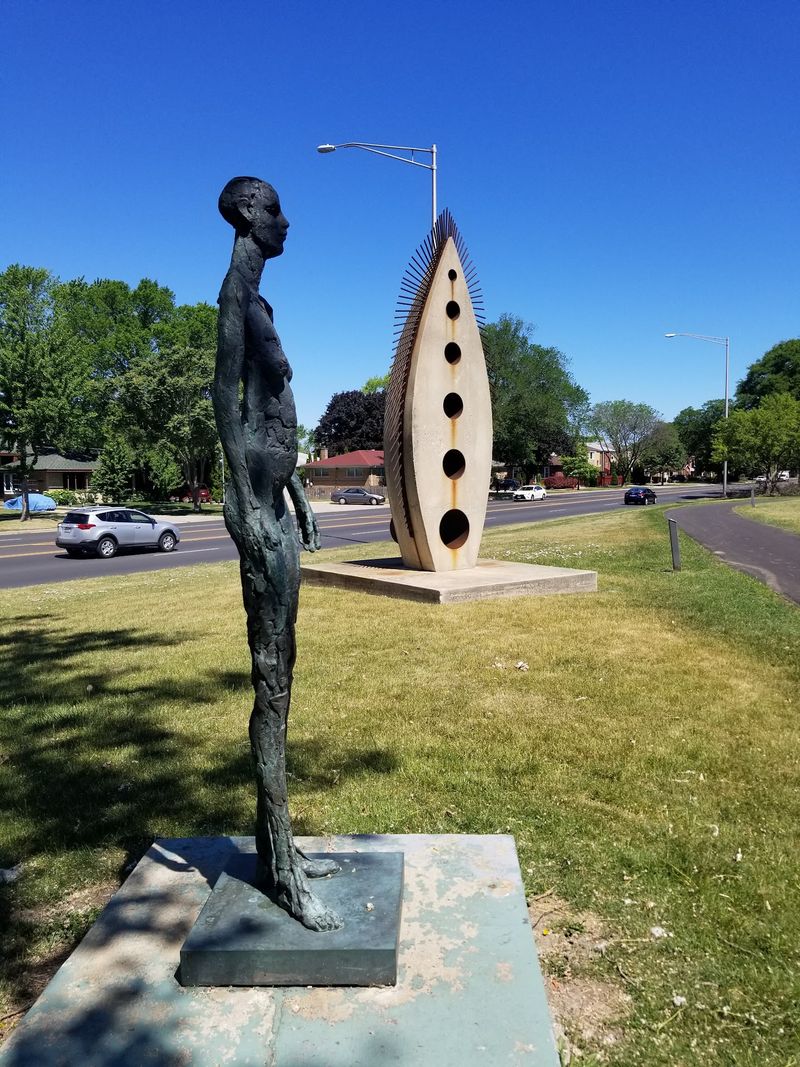
A strip of land beside a waterway became a two-mile outdoor art gallery.
Skokie Northshore Sculpture Park now stretches along the east side of McCormick Boulevard, with more than 60 sculptures distributed among lawns, trees, and landscaped paths.
The project began as a collaboration to improve the corridor beside the North Shore Channel.
What makes it enjoyable today is the steady change in scale and style: one sculpture may tower overhead, while the next rewards a close look at its curves or surface.
Work by artists from different backgrounds gives the walk variety without requiring a traditional museum setting.
The route is divided into four sections, each roughly half a mile long. Visitors can begin near Dempster Street and continue south toward Touhy Avenue, or choose one section for a shorter outing.
Three designated parking areas serve different portions of the path, including a lot near the rowing center off Oakton Street.
Walking, jogging, and cycling are welcome, and the paved route accommodates mobility aids. Dogs can accompany visitors on leashes. Artworks are intended for viewing rather than climbing, leaving the surrounding paths open for everyone.
Admission is available throughout the year, with access permitted from 4:30 a.m. until 11 p.m. This is a particularly easy way to enjoy public art during an ordinary afternoon stroll, with plenty of variety along the route.
3. Wandell Sculpture Garden, Urbana
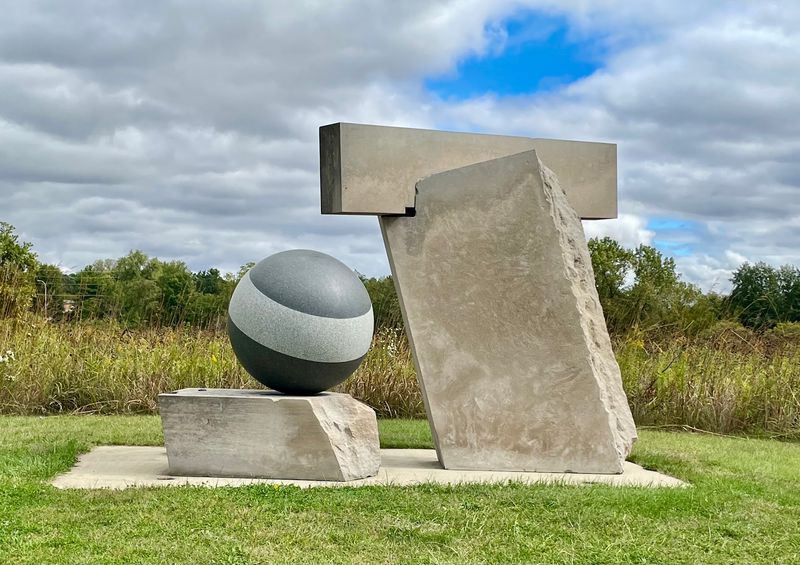
A sculpture walk through an eighty-acre prairie is not an ordinary neighborhood park experience.
Wandell Sculpture Garden occupies part of Meadowbrook Park, where cultivated gardens, tall grasses, and contemporary artworks share a landscape.
The garden was dedicated in 1999 in honor of nursery owners Celia and Willet Wandell. Their family helped create a place that brings art into the public park.
Permanent pieces stand beside works on loan, so the collection develops over time. In July 2026, Evolve and Grow joined the exhibition, adding an arrangement of welded steel, foam, and epoxy.
A smaller loop links the art, while longer paved and unpaved paths continue into the park’s 130 acres.
The trails also reach creek corridors, an herb garden, a sensory garden, and a high overlook across the restored prairie. Young visitors can spend time at PrairiePlay, the park’s extensive playground.
The sculpture garden is open from dawn until dusk. The Meadowbrook Park entrance at 2808 South Race Street in Urbana provides access to parking and the trail system; another parking area lies off Windsor Avenue.
Restrooms generally operate from April through October, with fewer facilities during winter.
4. Goldman-Kuenz Sculpture Park At Cedarhurst, Mt Vernon
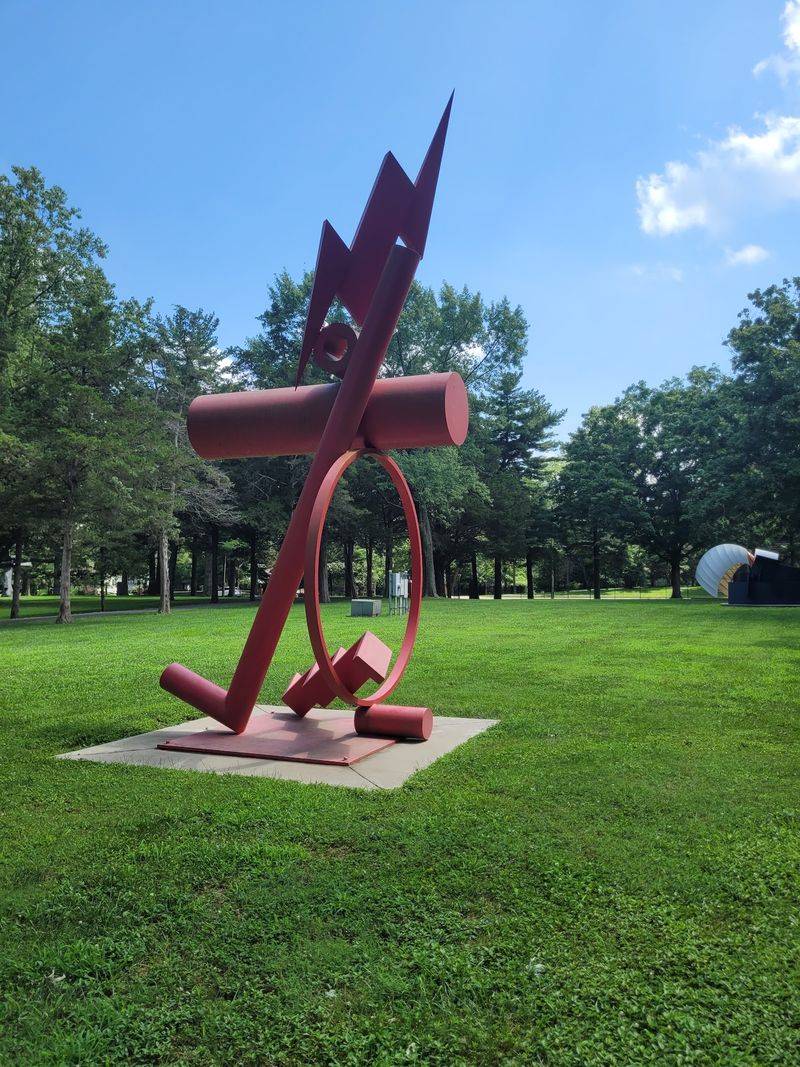
Seventy-three sculptures across 80 acres is a remarkable amount of art for one afternoon.
Goldman-Kuenz Sculpture Park surrounds Cedarhurst Center for the Arts in Mount Vernon, turning the grounds into a substantial outdoor collection.
The story began with a sculpture commission in 1983, followed by the park’s formal opening a decade later.
One particularly memorable piece is Kimball, a horse fashioned from discarded automobile bumpers. Other works use bronze, steel, stone, wood, and concrete to explore everything from recognizable figures to bold geometric arrangements.
Three walking routes guide visitors around the property. A site map helps distinguish the shorter route from longer loops, while individual labels provide opportunities to hear narrated background about the sculptures.
Visitors can also combine the outdoor walk with exhibitions inside the Cedarhurst galleries when those are open.
The arts center is at 2600 Richview Road in Mount Vernon. Park hours are Tuesday through Saturday, 10 a.m. to 5 p.m., and Sunday, 1 to 5 p.m.; the grounds close on Mondays and national holidays.
The collection brings artists with international reputations together with regional makers, giving southern Illinois an unusual mix of artistic voices.
5. Schaumburg Sculpture Park
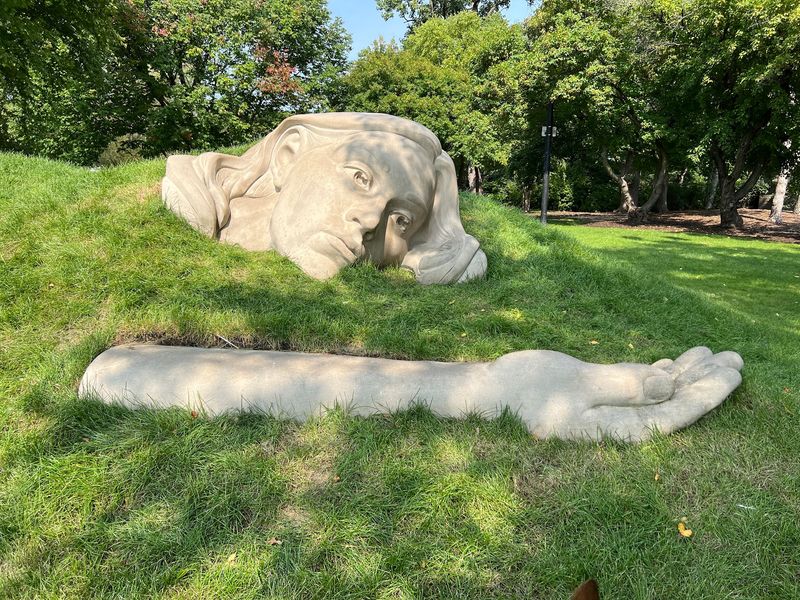
A Greek architect helped transform the grounds behind Schaumburg’s municipal buildings into an outdoor exhibition.
Today, the International Sculpture Park brings ambitious contemporary art to twenty acres of meadows, natural prairie, and wooded paths.
The Chicago Athenaeum and the Village of Schaumburg developed the collection together, with most of the major works installed in the late 1990s.
Their shapes reflect a fascination with abstract geometry and industrial materials. Some pieces stand in open lawns, while others appear through the trees, making the setting part of the encounter.
The sculpture Vineland draws on the appearance of an ancient Viking vessel, using forms that recall a stone arrangement.
Elsewhere, large metal works invite a comparison of angles, shadows, and balance. A walk around one piece can offer more than a quick glance from the path.
Begin behind the Prairie Center for the Arts at 201 Schaumburg Court, where parking is available.
The park is open every day from sunrise until sunset. Paths cross changing terrain near a pond and landscaped grounds, so plan for a relaxed walk rather than a single viewing point.
This suburban destination offers an interesting alternative to a busy shopping afternoon. Bring a little curiosity and allow time to notice how the art changes as it moves from open sunshine into the shade. The meadow provides its own scenery.
6. Allerton Park & Retreat Center, Monticello
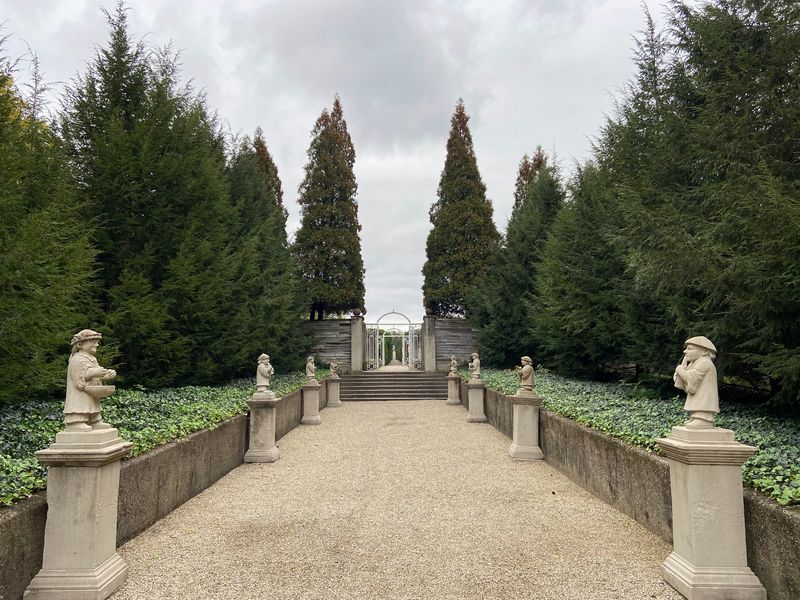
Formal gardens with more than a hundred sculptures and ornaments sound like a grand European estate.
Allerton Park offers that atmosphere in the countryside near Monticello, alongside woodlands and trails that extend far beyond the manicured grounds.
The 1,500-acre property was developed by Robert Allerton and John Gregg Allerton before being given to the University of Illinois in 1946.
Fourteen formal garden areas include statues and other decorative features carefully arranged along hedged paths. Their symmetry creates deliberate views, often ending with a figure or architectural detail.
The Avenue of the Formal Gardens includes paired Primitive Men sculptures, while the Rose Terrace features Sea Maidens standing high above the planting beds.
Each setting creates a different relationship between art, gardens, and the mansion nearby. For visitors who like variety, the natural areas offer miles of forest trails beyond the formal landscape.
The estate is reached by 515 Old Timber Road in Monticello. The grounds are open from sunrise to sunset throughout the year, although special events may affect access to certain rooms or garden spaces. Parking is available near the public areas.
No two walks need to feel quite the same. Changing seasons alter the hedges, flowers, and tree canopy, while the sculptures remain as recognizable landmarks within the carefully arranged garden paths.
7. Mount Saint Mary Park, St. Charles
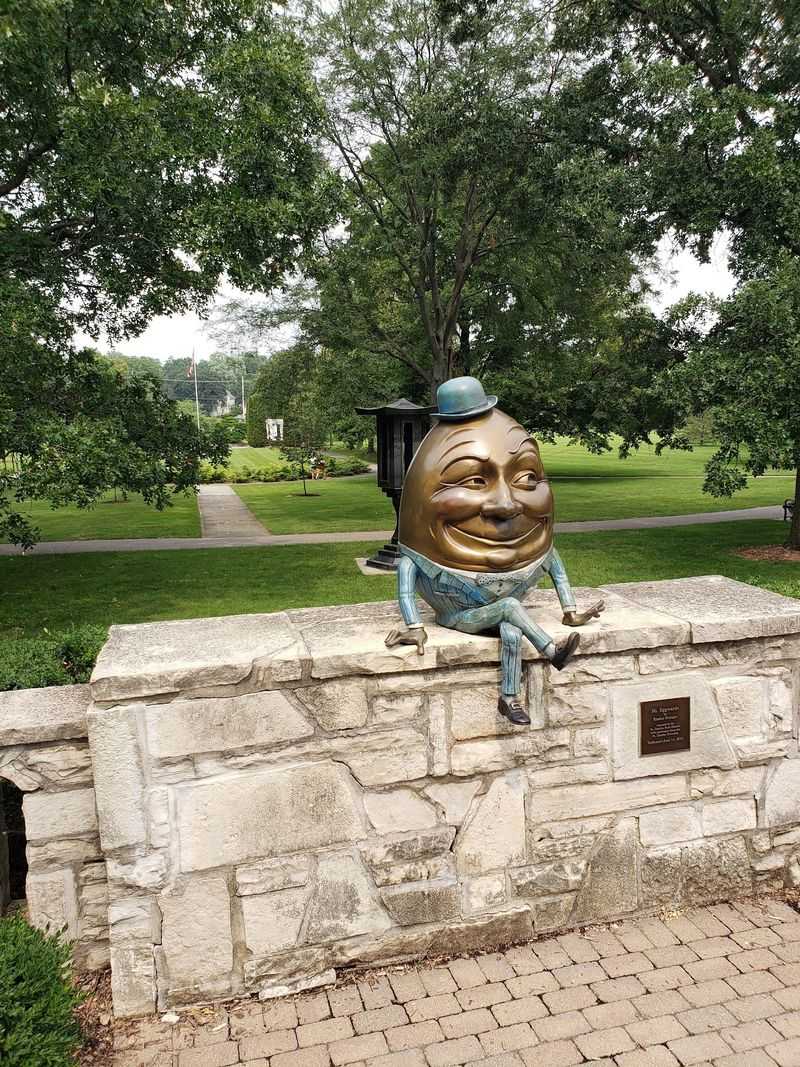
Skateboards, swings, and sculptures share the same riverside park in St. Charles. The setting makes a public art outing easy to combine with a casual walk beside the Fox River.
Sculpture in the Park is a changing outdoor exhibition organized through the St. Charles Park District and its foundation.
New works are selected for display each year, giving familiar paths a different set of artworks to explore. The 2026 exhibition began in June, with an artists’ reception held in August.
The pieces come from makers around the country, and the garden setting encourages visitors to see them from different angles.
The park also has playground areas, walking paths, and space for a picnic. Its location beside the river makes it possible to continue a walk toward downtown, while the open lawns give families room for a leisurely afternoon.
Mt. St. Mary Park can be reached from Prairie Street, east of Route 31 in St. Charles. The location sits on the west bank of the Fox River, with nearby access to downtown streets and riverside paths.
The public exhibition is available during ordinary park access, with occasional events bringing additional activity.
It is a particularly enjoyable combination of artwork and everyday recreation, where new sculptures give regular visitors something fresh to discover. Even a short riverside visit can be rewarding.
8. West Street Sculpture Park, Galena
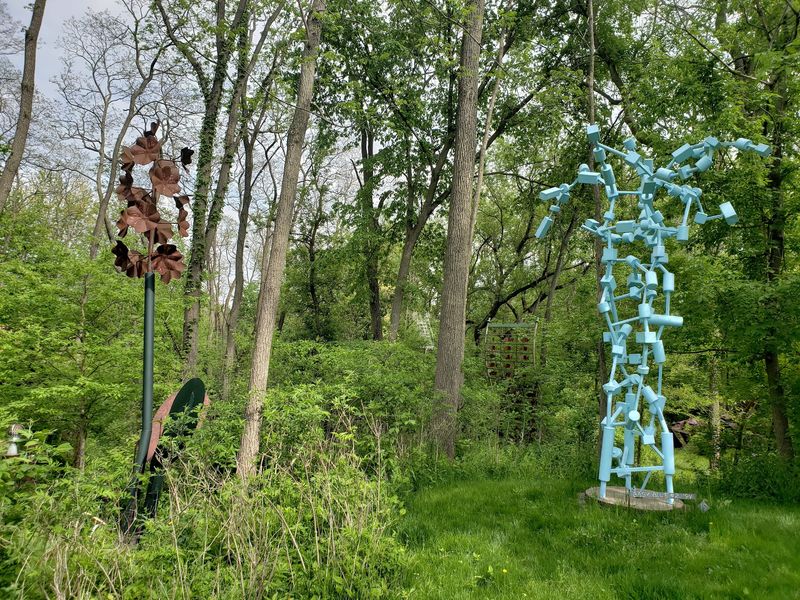
One artist, one hillside, and an assortment of enormous welded-steel creations.
West Street Sculpture Park feels unlike a formal gallery, with whimsical objects appearing among trees and along a small ravine.
Artist John Martinson developed the two-acre site beside his Galena studio. His sculptural pieces often transform salvaged steel into surprising shapes, inviting a second look at familiar industrial material.
More than thirty works have appeared across the grounds, including playful moving elements and towering constructions. Each piece has its own character rather than belonging to a single uniform collection.
The park provides a self-guided map near its entrance, and signs identify individual artworks. Visitors can follow paths through the wooded terrain, take time beside the sculptures, and enjoy the occasional humorous detail.
Some works have interactive features, but visitors should follow posted instructions rather than assume every piece is suitable for climbing.
Find the entrance at 620 South West Street in Galena. The park is open from dawn until dusk year-round, with a small parking area and street access.
A picnic table offers a place for a short break; there are no public restroom facilities within the sculpture grounds.
The artist’s studio sits nearby, though meeting him is not guaranteed. It is the playful character of the metalwork, surrounded by woodland, that makes the visit memorable.
9. Peoria Illinois Sculpture Walk
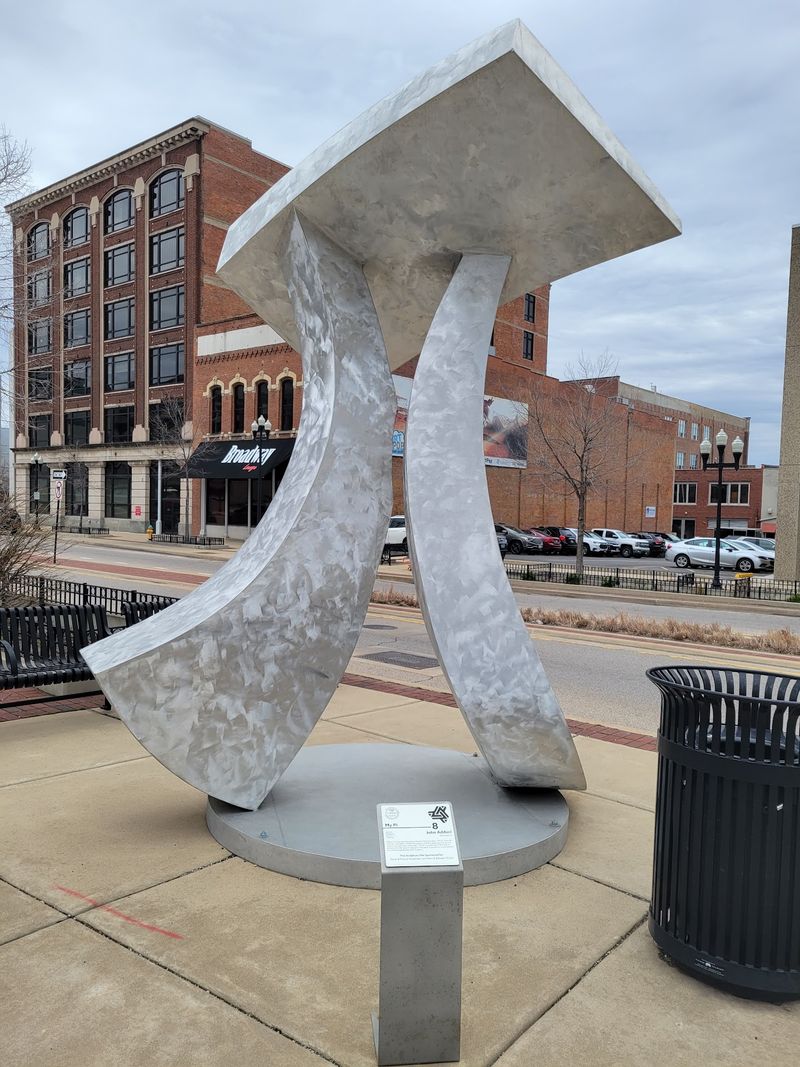
Who says a sculpture garden needs grass? Peoria puts large works of contemporary art along a downtown street, turning an ordinary walk into a shifting public exhibition.
Sculpture Walk Peoria stretches along Southwest Washington Street in the Warehouse District, beginning near the Peoria Art Guild and continuing toward the Riverfront Museum.
The current exhibition opened in May 2026 and features eight large sculptures chosen through a juried process. The artworks remain through the 2026–2028 cycle, when another selection can refresh the route.
Unlike a traditional garden, the setting is urban. Sculpture forms appear beside sidewalks, buildings, and street crossings, encouraging visitors to notice the relationship between art and the city.
The pieces can be enjoyed at one’s own pace without following a scheduled gallery tour. An interpretive guide provides information about the works and their makers.
Begin near the Peoria Art Guild at 203 Harrison Street before joining the sculptures on Washington Street.
Nearby public parking is subject to posted limits, and pedestrian crossings should be used when moving between sites. The outdoor exhibition remains viewable beyond the guild’s indoor gallery hours.
This is an approachable introduction to Illinois public art for visitors who enjoy a short city walk.
The route can fit between other downtown activities, with each sculpture adding a different moment of surprise. Nearby galleries make a natural companion stop.
10. Sculpture Garden Of Oakton Park, Skokie
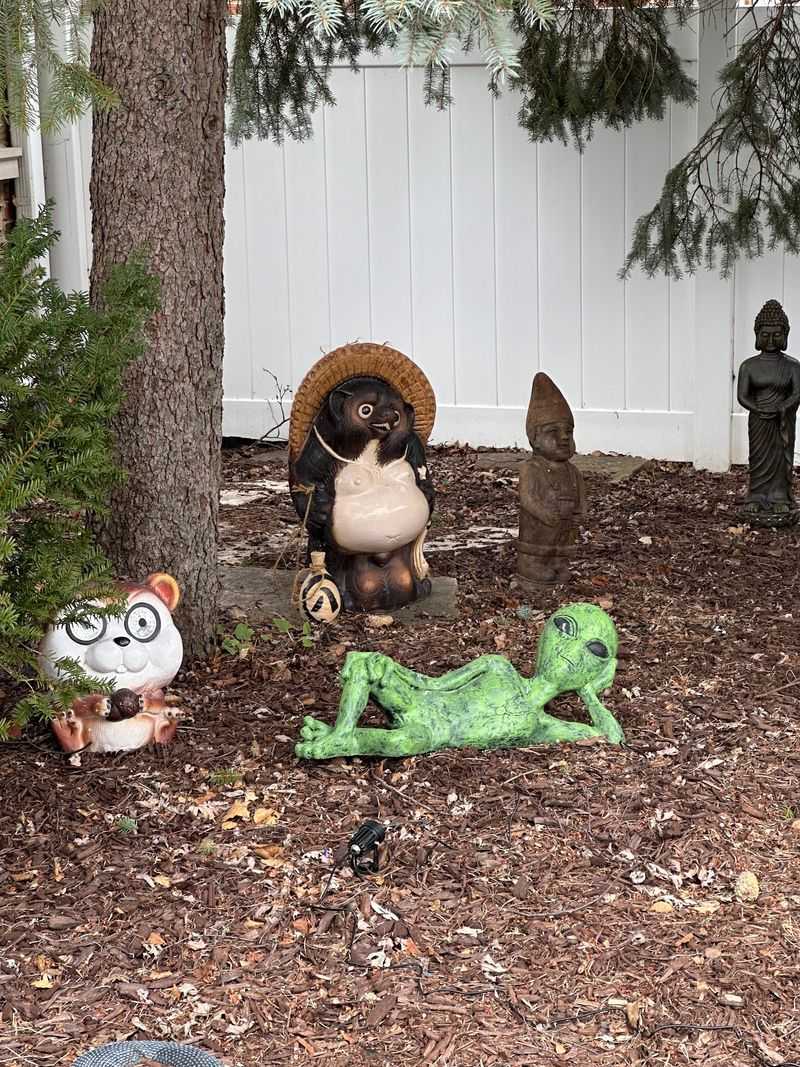
A public library with an outdoor sculpture collection makes an unexpectedly pleasant art stop.
The Barrington Area Library surrounds its building with garden areas where plants, paths, seating, and artworks sit together in a thoughtfully arranged space.
The sculpture garden was inaugurated in 1997 with seven works, expanding the library’s cultural offerings beyond shelves and galleries.
The collection includes Ascendere, a wooden sculpture built from layered forms, and Quality Time, a compact stoneware piece that focuses on human relationships. Other works combine concrete with steel, or assemble found metal objects into new shapes.
Look for Versare, constructed from recycled metal components, and X-tras, a stainless-steel work exploring the form of the letter X.
Little Arbor draws on young pine trees and architectural forms, adding another interpretation of the garden surroundings. Each work has a label, allowing visitors to connect unusual materials with the finished piece.
The library stands at 505 North Northwest Highway in Barrington. Visitors are welcome to explore the gardens, take a seat with a book, or enjoy a quiet outdoor break.
Library opening hours are Monday through Friday, 9 a.m. to 9 p.m., Saturday 9 a.m. to 5 p.m., and Sunday 1 to 5 p.m.
Smaller than the state’s sprawling sculpture parks, this setting offers a different reward: art encountered naturally during an everyday library visit.