Northern Michigan Destination Ranks Among The Midwest’s Best For A Memorable Getaway
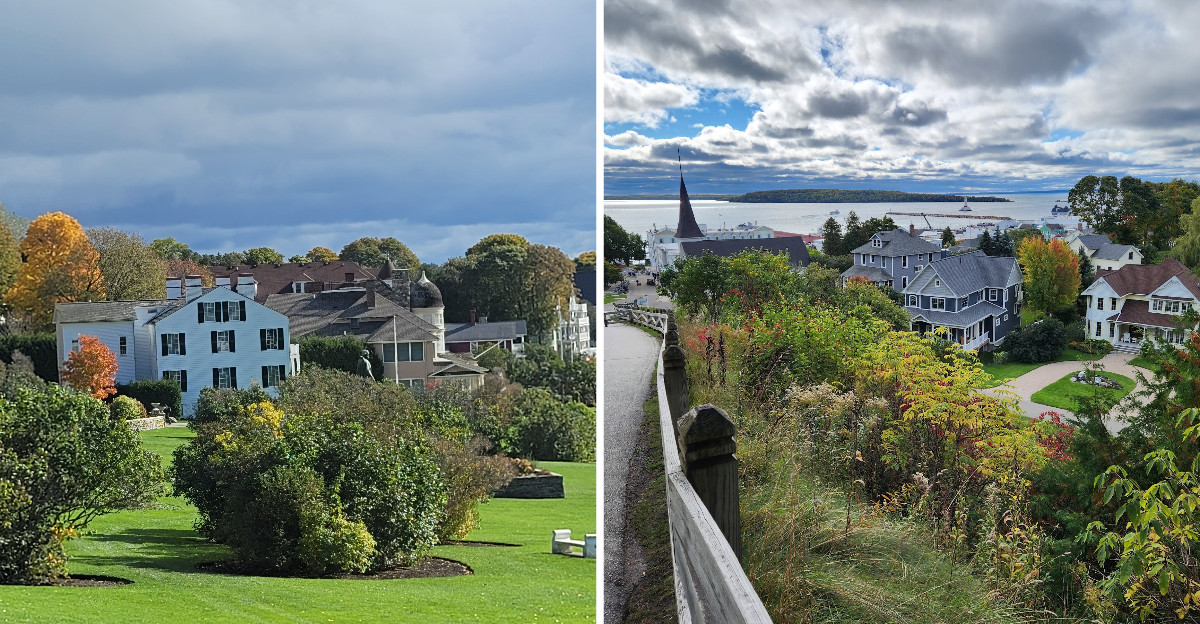
Nearly 10 tons of butter arrive on one small Michigan island each year, mostly to become fudge.
That statistic sounds ridiculous enough to carry the whole story. Somehow, it does not.
Cars disappear from the equation here. Bikes, walking, and horses take over, even along a shoreline road that officially counts as a state highway.
History adds another surprise. A centuries-old fort overlooks the island, while a natural limestone arch rises above the water nearby.
And just when the place seems impossible to squeeze any more into, there is a hotel porch stretching longer than two football fields.
Fudge, horses, history, strange roads, and oversized landmarks somehow share the same small patch of land. That combination is what made me want to keep digging.
The Car-Free Island Where Horses Still Rule The Road
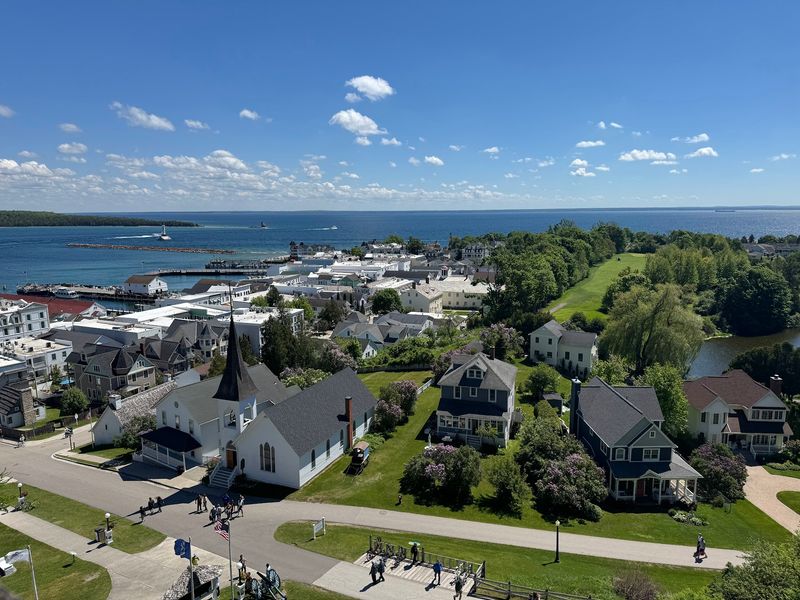
Mackinac Island banned private automobiles in the late nineteenth century, and the custom still shapes daily life. The most familiar street sounds are bicycle bells, rolling carriage wheels, and horses moving past shops.
Ferries depart from Mackinaw City and St. Ignace, with luggage handling available.
Once ashore, walking, bicycles, horse-drawn taxis, and carriage tours take over. Certain service and emergency vehicles are exceptions to the restrictions.
Here’s a fun fact for trivia night. M-185 is an 8.2-mile state highway encircling the island, and it’s the only one in the United States where ordinary motor traffic is prohibited. The road follows Lake Huron past shoreline landmarks.
Downtown bike rentals make the mostly level loop easy to explore. Watch for carriages and pedestrians. Horse-drawn deliveries also make everyday errands look like scenes from another era.
This unusual transportation system is more than a novelty. It makes a Michigan getaway feel noticeably different from the moment you step off the ferry.
Your Sweet Tooth Is About To Have A Very Big Day
Nearly 10 tons of butter roll onto the island annually for fudge making, according to a longstanding local estimate.
Downtown shops can produce thousands of pounds of the sweet treat daily during the busy travel season.
Main Street is lined with confectioners, including Original Murdick’s Fudge, Joann’s Fudge, Ryba’s, and Murray Hotel Fudge Company. Watch cooked fudge being poured onto marble tables and folded into thick, sliceable loaves.
Murdick’s began here in 1887. Chocolate, maple, peanut butter, and other varieties invite a few experiments. The scent of chocolate often reaches the sidewalk before you spot the shop.
The Fall Fudge Festival returned October 2 and 3, 2026, with demonstrations, pumpkin painting, hayrides, and a fudge-themed scavenger hunt. The festivities have passed, but shops remain open seasonally.
If you plan to ride bikes before heading home, pick up fudge closer to ferry departure so your treats can travel without spending the afternoon in a warm bag.
Cannons, Uniforms, And A Fort That Has Seen A Lot
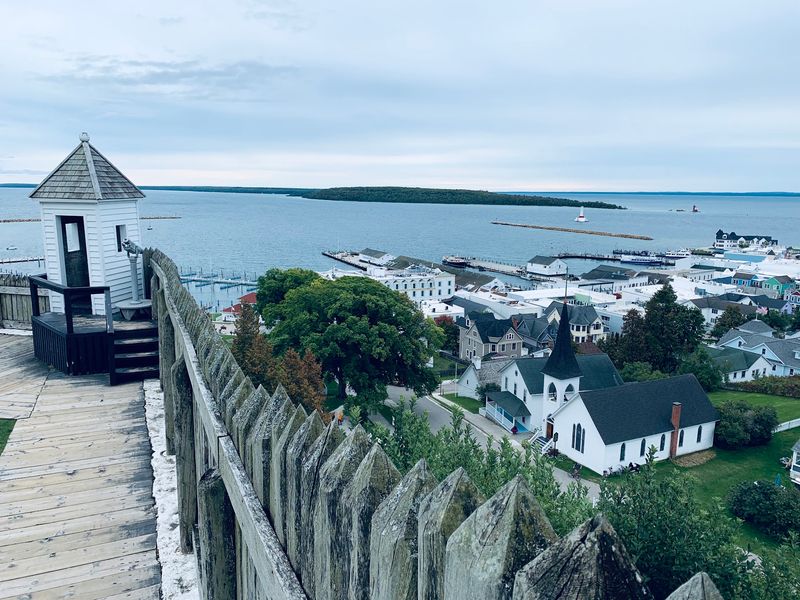
British forces built Fort Mackinac in 1780, and the hilltop buildings still overlook the harbor. Fourteen historic structures survive, including one considered the oldest building in the state.
Furnished rooms explore uniforms, family life, technology, and early tourism. Costumed interpreters demonstrate equipment and explain daily routines.
The fort also changed hands during the events of 1812. Historic rooms show how the fort supported families through changing decades.
Later, it served as headquarters for Mackinac National Park, connecting military history to the island’s early preservation story.
From the bluff, rooftops, ferry docks, and Lake Huron spread out below.
For a second lookout, continue inland to Fort Holmes, reconstructed on the island’s highest point. Its small enclosure recalls another period in the island’s nineteenth-century history and rewards walkers with elevated scenery.
The 2026 season ends October 24, with autumn entry through the North Sally Port. Check demonstration times before arriving.
This Michigan landmark rewards both history enthusiasts and people simply curious about the buildings above the harbor.
Nature Carved Some Seriously Cool Rocks Here
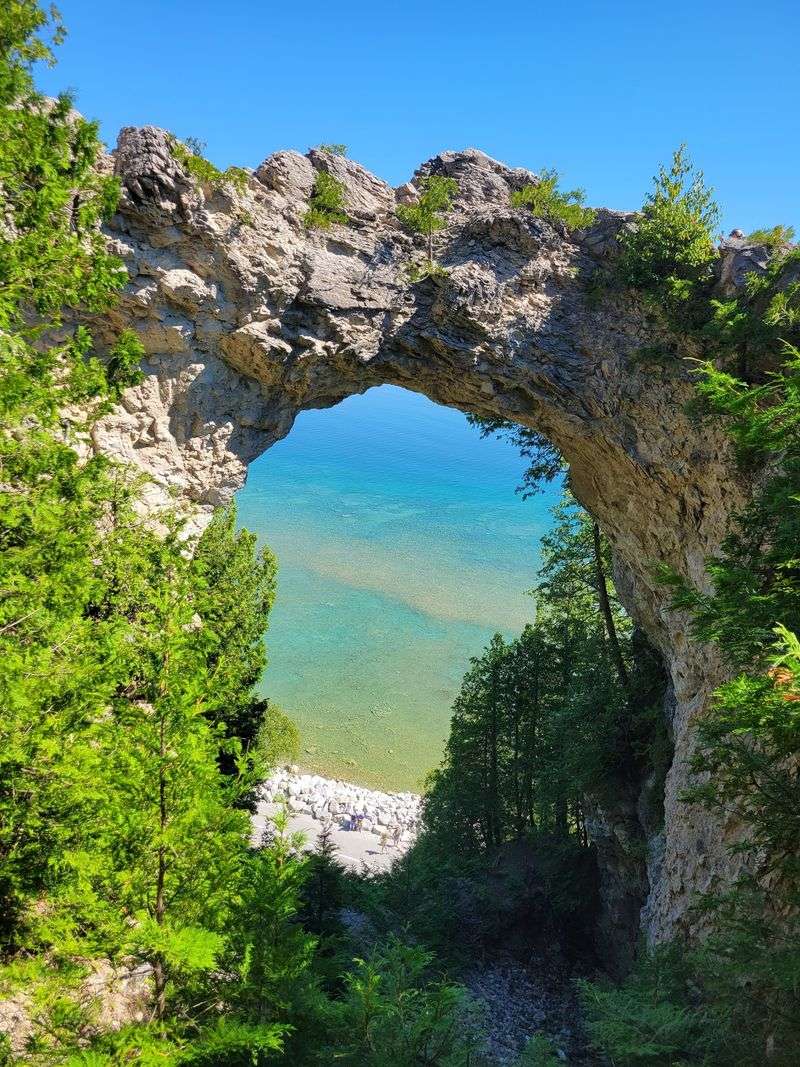
Arch Rock stands roughly 146 feet above Lake Huron, with a natural limestone opening about 50 feet across. Ancient waves and changing lake levels shaped it.
It rises inside Mackinac Island State Park, which protects more than 80 percent of the island.
There are over 70 miles of signed roads and trails, making the wooded interior a substantial contrast to the shops downtown.
The nearby Milliken Nature Center and overlooks face the lake. Beyond the arch, Sugar Loaf is a 75-foot limestone stack rising from the forest.
Other formations include Skull Cave, Devil’s Kitchen, and Crack-in-the-Island. Interior trails climb through forest, while paved routes offer easier shoreline riding.
There’s a remarkable park-history twist, too. Mackinac became the country’s second national park in 1875, then became Michigan’s first state park in 1895. Its forests remain protected.
Bring water and leave time for inland climbs, even if the perimeter bicycle loop feels easy. The best viewpoints often require a short walk away from the paved shoreline road.
Bring Your Best Rocking-Chair Energy To This Famous Porch
Most porches hold a couple of chairs and a potted plant.
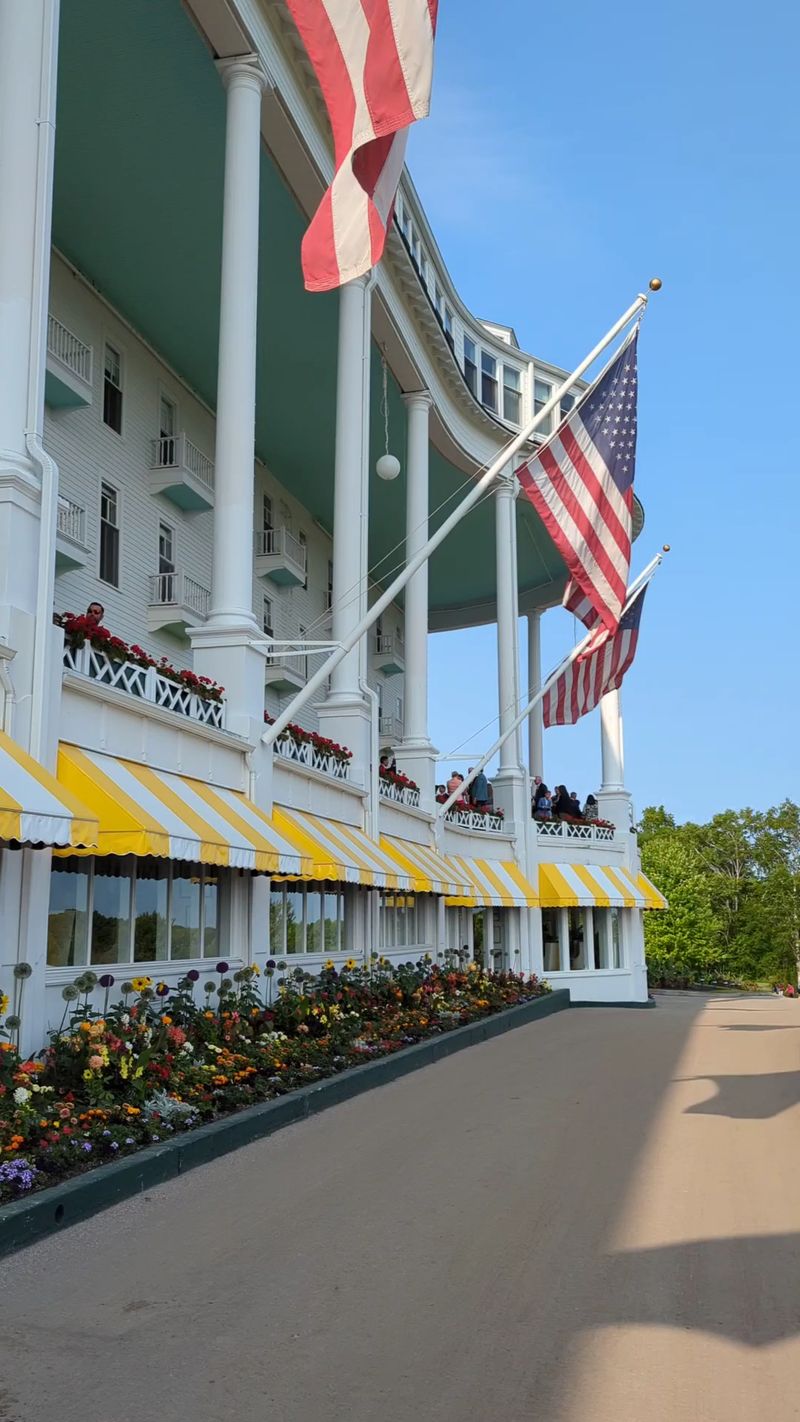
Grand Hotel’s front porch stretches 660 feet, an extraordinary white-columned landmark that has overlooked the Straits of Mackinac since the hotel opened in 1887.
It is billed as the world’s longest porch, lined with rocking chairs. In 2026, the hotel completed major porch restoration work, including attention to its 44 columns and historic roofline.
Those rocking chairs face the water and encourage a pleasantly slower afternoon. The grounds deserve a stroll of their own. Flowerbeds hold more than 150 varieties of blooms, while the Secret Garden changes with the seasons.
The annual Mackinac Policy Conference brings statewide discussions here. In October 2026, the hotel also placed first among Midwest resorts in a national travel publication’s annual readers’ awards.
Non-overnight guests can explore the property through a separate visitor admission, subject to opening dates and private-event restrictions.
That access isn’t automatic, so check arrangements before heading up the hill. A porch this long deserves time for more than a quick photograph.
Small Museums With Surprisingly Big Stories
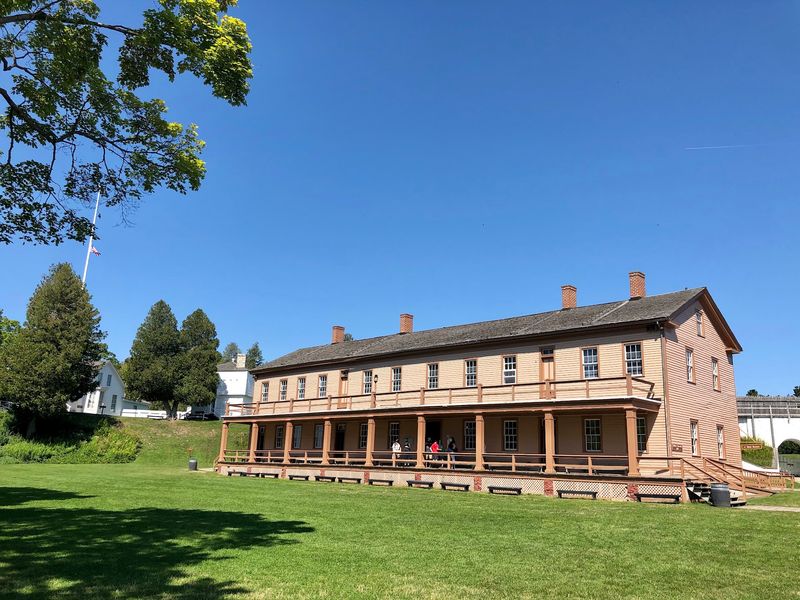
A working blacksmith shop is not something most vacations include.
On Mackinac Island, the Benjamin Blacksmith Shop uses demonstrations to show how ironwork supported daily life during the nineteenth century.
The Biddle House hosts a Native American museum exploring Anishinaabek history and the home’s association with Agatha Biddle. Indigenous communities have gathered on the island for centuries.
The Richard and Jane Manoogian Mackinac Art Museum showcases works connected with the region, while the American Fur Company Store and Dr. Beaumont Museum examines island commerce and early medical history.
McGulpin House preserves an even earlier example of island domestic architecture. Together, the collections connect everyday trades, domestic routines, and commerce across centuries.
These sites are modest in scale, so visiting several can reveal very different aspects of Mackinac’s past without covering much ground. Period rooms reveal details beyond the exhibits.
Most of these museums operate on short summer schedules. Their 2026 seasons had ended by October, although Fort Mackinac remained open later into the month.
Plan them for a warmer-season return rather than expecting every door to be open in autumn.
Plenty To Eat After All That Pedaling
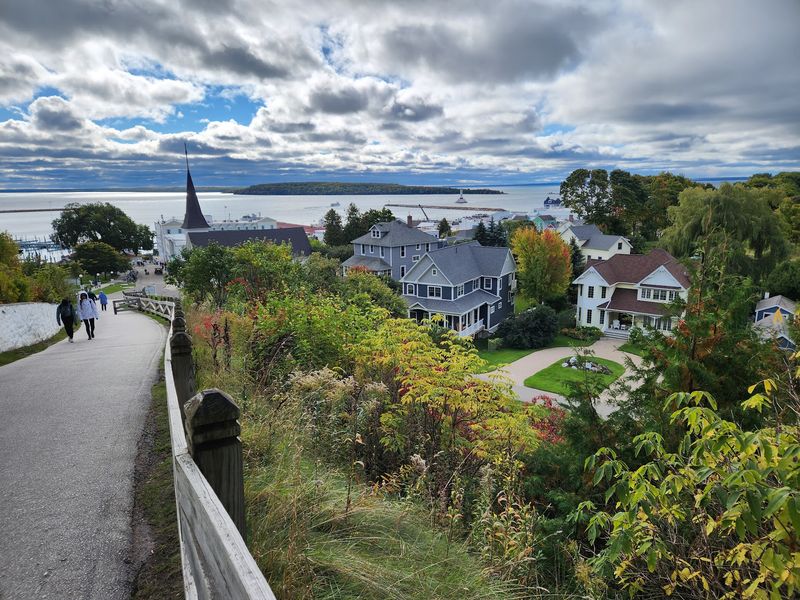
Fudge can’t be dinner every night, no matter how hard you try. Thankfully, the island has everything from quick breakfasts to more leisurely waterfront meals.
The Pancake House has served visitors since 1963, turning out pancakes, waffles, and eggs on Main Street.
Its dining room is attached to Ryba’s fudge shop, which makes the transition from breakfast to dessert almost comically easy.
Yankee Rebel Tavern serves regional American cooking in the historic district, including sandwiches, salads, and fresh fish.
At Island House Hotel, the 1852 Grill Room offers a more polished dining experience with views toward the harbor. The restaurant’s 2026 season runs through October 25.
Seabiscuit Café adds an equestrian theme, appropriate for a place where horses remain part of the everyday streetscape.
Dining rooms range from quick counters to elegant tables overlooking the harbor. For a lighter lunch, Twist ‘N Sprouts offers wraps, salads, and smoothies. Autumn brings changing hours and seasonal closings.
After cycling past shoreline rocks, find an outdoor table and watch carriages pass, weather permitting.
Stay The Night And The Island Feels Like Yours
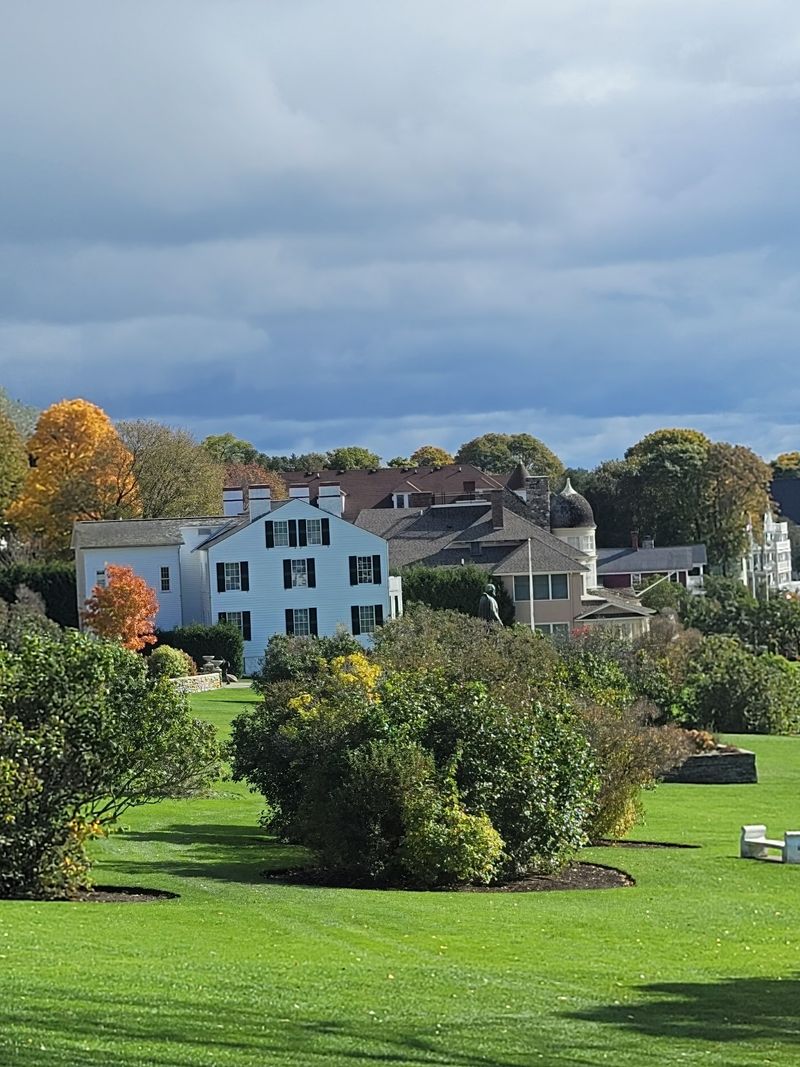
More than 1,600 guest rooms are spread across the island, in hotels, resorts, bed-and-breakfast inns, condos, cottages, and vacation homes.
There are no large chain hotels, and the range of historic buildings is part of the appeal.
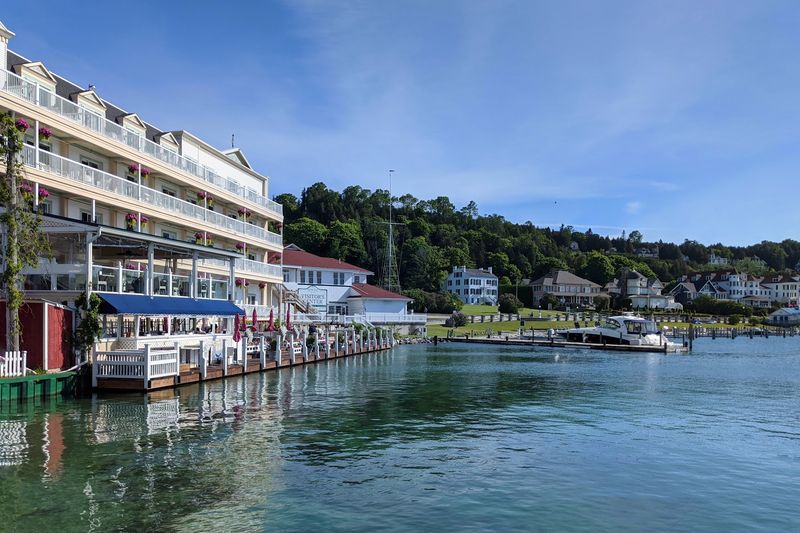
Island House Hotel stands at 6966 Main St, while Main Street Inn and Suites occupies 7408 Main St. Chippewa Hotel Waterfront, Murray Hotel, and Hotel Iroquois offer other central options.
Away from the busiest streets, Inn at Stonecliffe and Harbour View Inn provide different surroundings for an extended stay. Choose carefully: downtown bustle differs considerably from quieter lodging on the bluffs.
Staying overnight changes the rhythm. Ferry crowds thin in the evening, leaving quieter streets for a shoreline walk. In the morning, explore before day-trip arrivals.
Most hotels operate May through October, many closing around October 25 in 2026. A few remain open in winter, with limited services.
Make reservations ahead during summer and festival weekends, and ask how luggage reaches your room from the dock. For a longer Michigan escape, the overnight hours may be the most memorable part of the entire trip.