This Nebraska Museum Displays 2 Giant Mammoths That Died With Their Tusks Locked In Battle
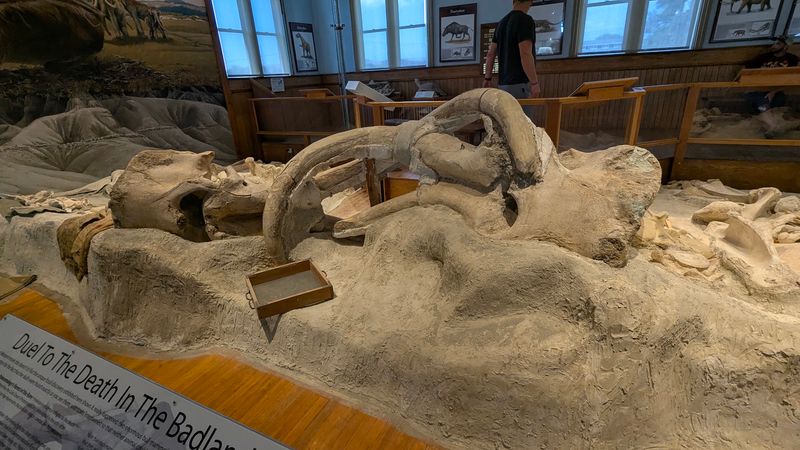
Two bull mammoths shoved tusk against tusk on the western Nebraska plains, and they never pulled apart again. Their bones stayed tangled together for roughly 10,000 to 12,000 years.
Now you can stand a few feet away and see exactly how they ended up.
The pair weren’t mismatched rivals either. Each giant stood about 13 feet tall and weighed close to 10 tons.
They were about the same age, too, which probably explains why neither one backed down.
I love that this discovery never left home. The bones were found just a short drive from where they’re displayed today.
A college student spotted the site back in 1962.
The building holding them has its own past, and the exhibit has a surprising third character. I can’t imagine a better excuse for a summer drive west.
Ready to meet them?
An Old Army Theater Guarding Ice Age Giants
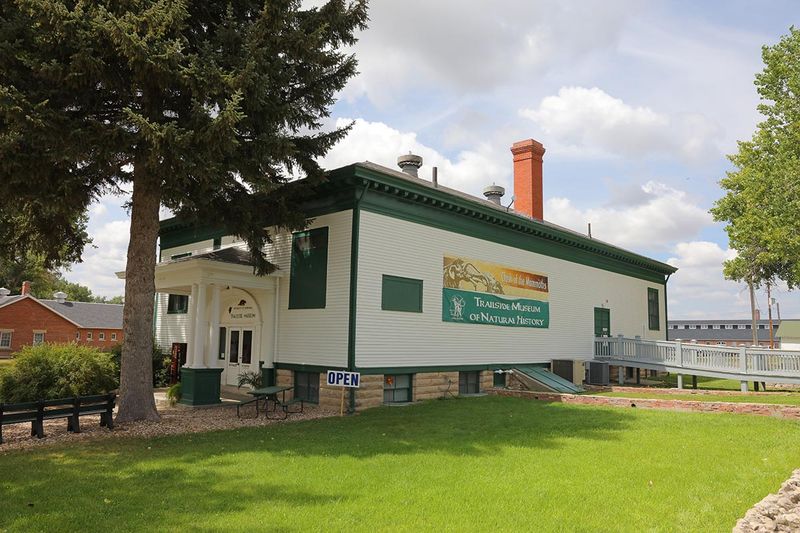
Out in the far northwest corner of the state, the University of Nebraska State Museum’s Trailside Museum of Natural History sits inside Fort Robinson State Park. It’s about three miles west of Crawford, right along U.S.
Route 20.
The museum is part of the University of Nebraska State Museum family. That connection matters, because the star exhibit came straight out of university fieldwork.
The building itself is a bit of a time capsule. It’s the old Army Theatre, which once served Fort Robinson as a performance space and gymnasium.
So you get two layers of history at once. There’s the fort’s past on the outside and Ice Age Nebraska waiting on the inside.
Fort Robinson is a big, scenic park with plenty to explore. The Trailside Museum gives that landscape a much deeper backstory, stretching back thousands of years.
It works nicely as a centerpiece for a park day. You can pair it with the fort’s historic sites and still have time for the scenery.
Honestly, a theater makes sense for this place. The headliners have been performing the same dramatic scene for over ten thousand years.
Two Bulls Who Refused To Back Down
Ten tons against ten tons. That was the matchup when two Columbian mammoth bulls squared off on the high plains of what’s now western Nebraska.
Both animals were around 40 years old and stood about 13 feet tall. Scientists believe the clash was a musth battle, a contest over mating rights.
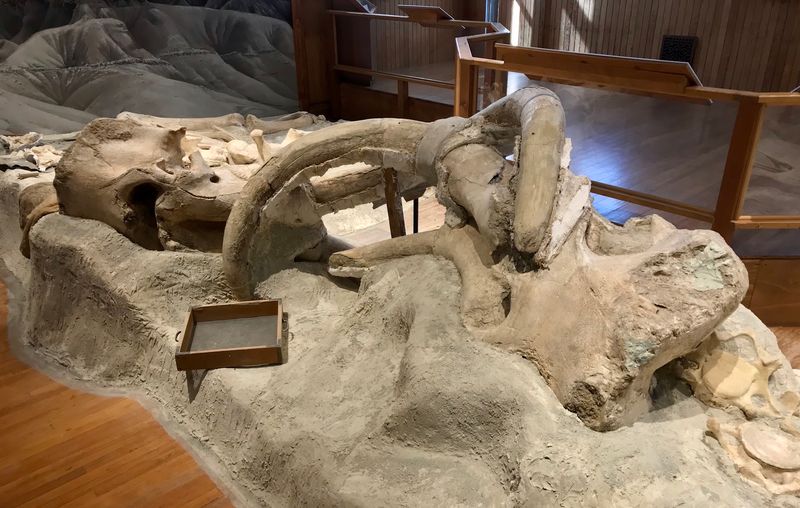
Somewhere in the shoving, their curved tusks hooked together. One bull went down, and it pulled the other down with it.
They stayed that way, locked tight, for roughly 10,000 to 12,000 years. That’s a long time to hold a grudge, even for a mammoth.
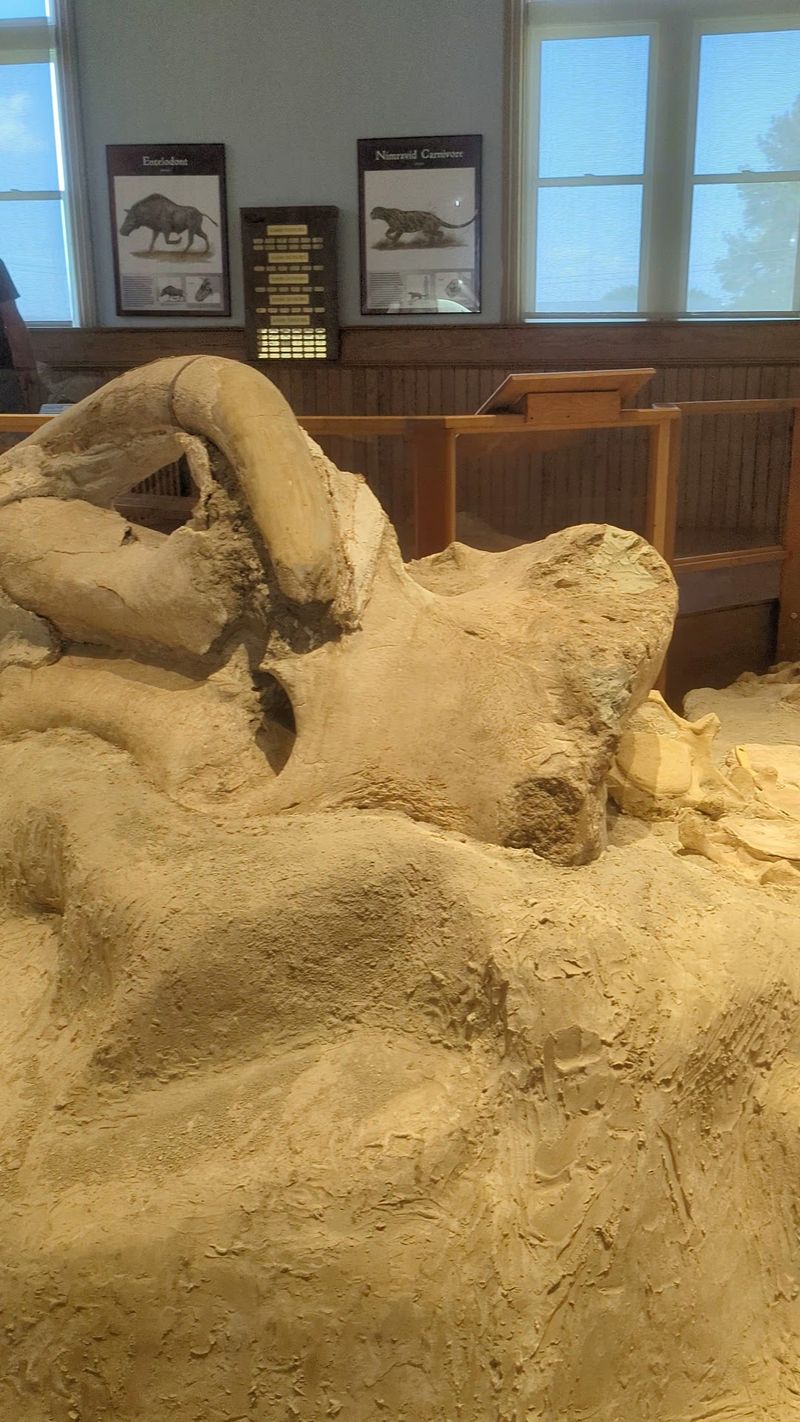
The exhibit is called “Clash of the Mammoths,” and it shows the actual fossilized remains. You aren’t looking at casts or guesses here.
The display is arranged to replicate the original dig site. That helps you read the scene almost like a crime board, minus the yellow tape.
Finds like this are incredibly rare. Fossils usually show how an animal lived, but this one freezes a single, very specific moment in time.
You can trace the tusks with your eyes and see exactly where the trouble started.
A 21-Year-Old Student And A 1962 Discovery
Mike Voorhies was just 21 when he made the find of a lifetime. In 1962, the University of Nebraska-Lincoln senior was leading a University of Nebraska State Museum crew in the area.
His team uncovered the tangled mammoths in western Nebraska. Most college seniors are happy just to finish a term paper.
Here’s the part I really love. The fossils were found only about 13 to 15 miles from the museum’s current spot.
That makes the display a genuine homecoming. These giants traveled a shorter distance after the dig than many families drive for groceries.
Voorhies went on to a long career in paleontology. Still, this early discovery remains one of the most dramatic finds tied to the university.
The story gives the exhibit a very Nebraska feel. It’s a local landscape, a state university crew, and a student who happened to look in the right place.
When you stand in front of the bones, that history adds weight. Someone young and curious changed what we know about these ancient animals.
It might inspire a future paleontologist in your own back seat.
The Tiny Coyote Nobody Expected
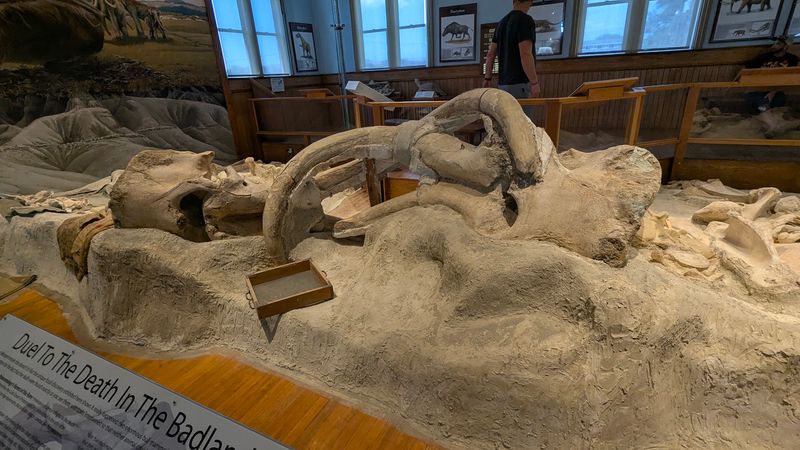
Every great drama needs a surprise twist. In this one, the twist is a flattened skull belonging to an Ice Age coyote.
It turned up beneath one of the mammoth bodies during the excavation. Nobody planned on a supporting cast member, but there it was.
Scientists have a couple of ideas about how it got there. The coyote may have been caught when the giants toppled, or it may have been scavenging later.
Either way, it was clearly in the wrong spot at the wrong time. Being small and nosy next to twenty tons of mammoth is a risky combination.
That little skull adds a lot to the story. It reminds you that the plains were busy with other animals during the Ice Age.
Kids especially tend to latch onto details like this one. It turns a big, abstract scene into something they can puzzle over.
Spend a minute looking for it when you visit. The mammoths grab all the attention, but the coyote quietly steals a share of the spotlight.
I’d call it the most famous bystander in Nebraska prehistory.
Brushstrokes That Bring The Clash Back To Life
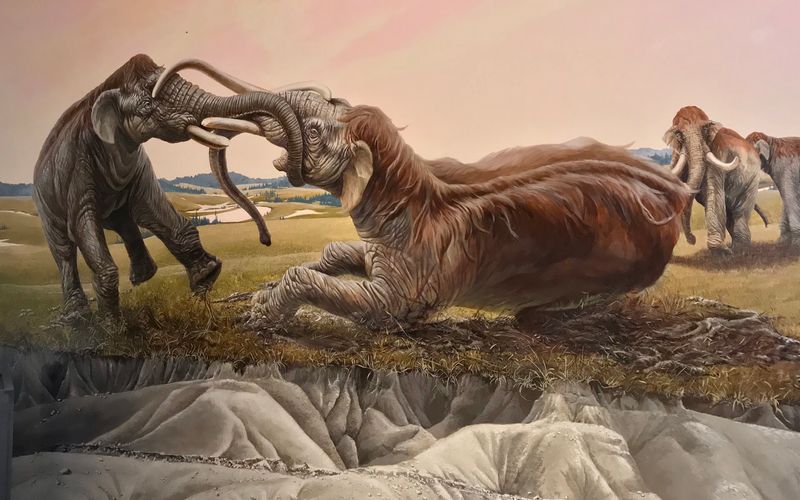
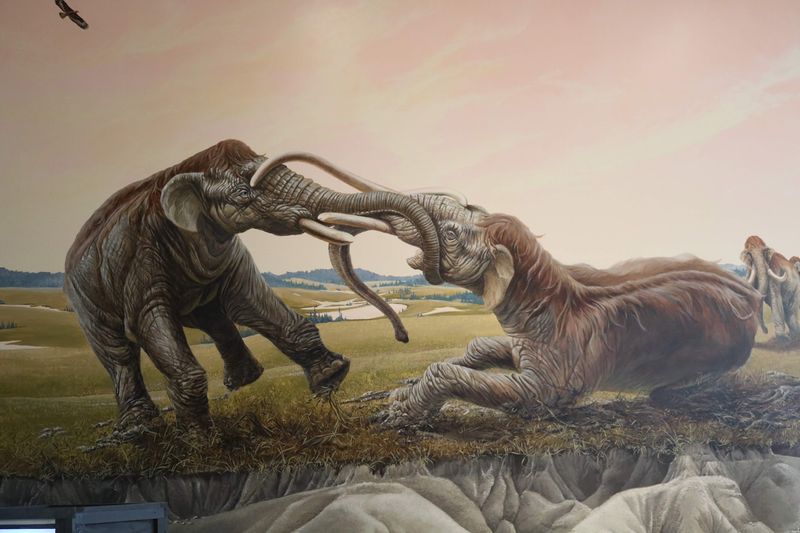
Bones tell you what happened. A mural shows you how it might have looked.
Nebraska artist Mark Marcuson painted a striking scene of the two mammoths mid-struggle. It hangs with the exhibit and gives the fossils a vivid backdrop.
The pairing works really well. You can glance at the skeletons, then look up and see muscle, fur, and motion.
That back-and-forth helps your brain fill in the gaps. Suddenly the arrangement of bones makes more sense, and the scale feels real.
I like that a Nebraska artist interpreted a Nebraska discovery. It keeps the whole exhibit rooted in the place where the story unfolded.
The mural is also great for younger visitors. Not every kid can picture a living mammoth from a pile of fossils, but a painting does the heavy lifting.
There’s a short video at the museum, too, which adds another way into the story. Between the art, the film, and the fossils, you get the full picture.
Take a photo of the mural before you leave. It makes a great reminder of what you saw.
More Ice Age Neighbors Worth Meeting
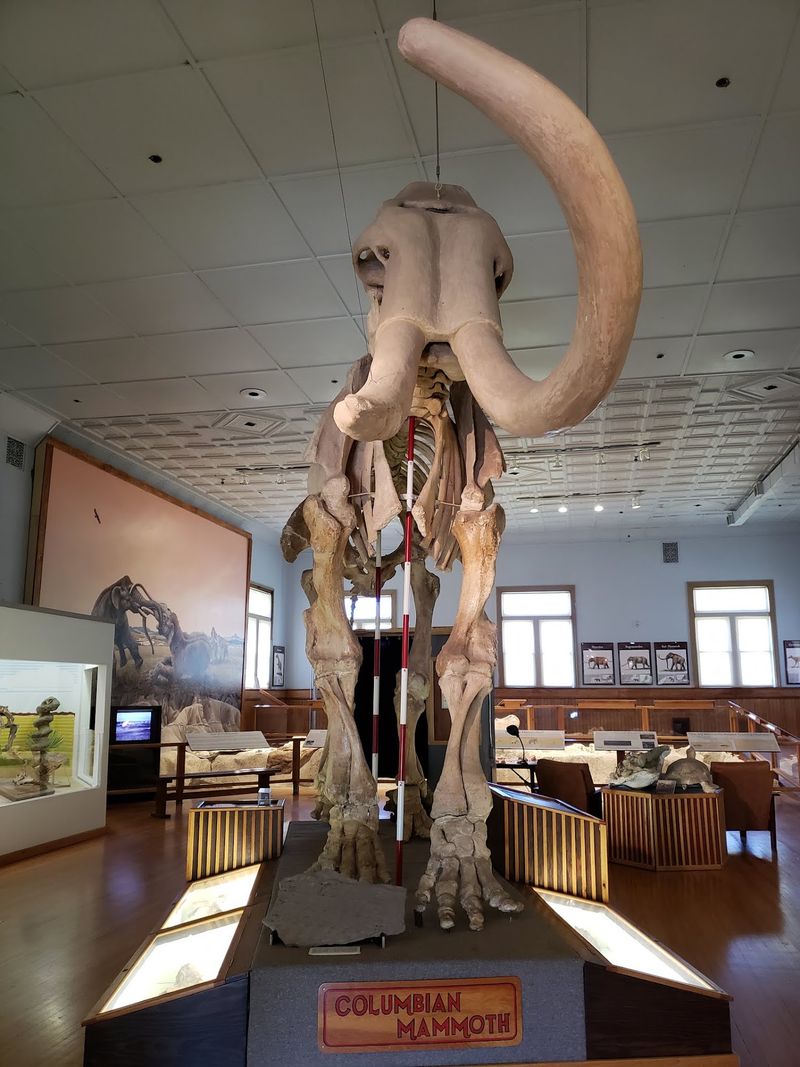
The battling bulls get top billing, but they aren’t alone. The museum also features displays on other Ice Age mammals that roamed the Great Plains.
A towering mammoth skeleton stands in the space, and it’s an impressive sight. Craning your neck up toward those tusks is half the fun.
The other exhibits help you understand the bigger ecosystem. Mammoths shared this region with a whole cast of creatures during the Ice Age.
That context makes the main event even richer. You start to see the plains as a crowded, wild place rather than an empty one.
There’s also a lighter exhibit called Poop & Paws. It focuses on animal clues, which is exactly the kind of thing kids giggle about and remember.
The building is compact, so you can see a lot without a marathon walk. Some folks breeze through quickly, while curious readers can linger much longer.
Plan on taking your time if you love reading every panel. The amount of information packed inside this small space is surprisingly generous.
It’s a solid primer on Nebraska’s deep past.
Rock Layers That Read Like A Diary
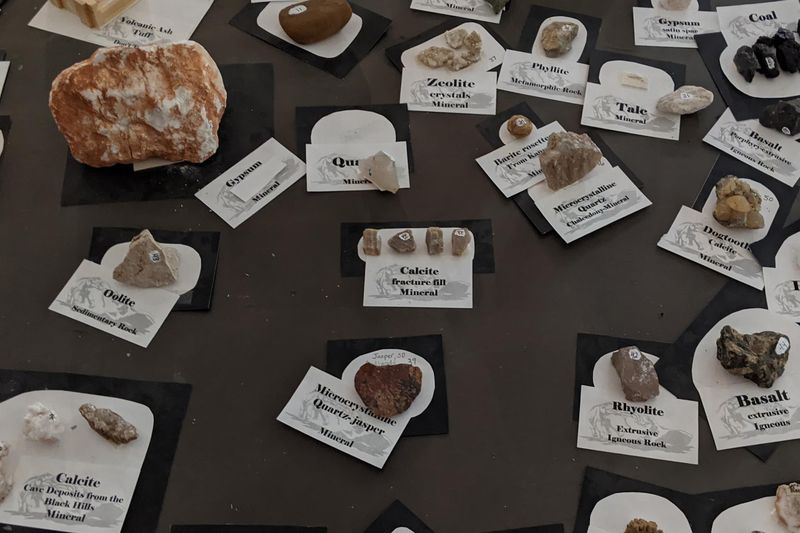
Western Nebraska keeps its secrets in stone. The museum’s geology displays show the rock layers that hold the region’s fossils.
Each layer represents a chapter of time. Read them from bottom to top, and you’re basically flipping through Nebraska’s oldest diary.
This section explains why the area is such fertile ground for discoveries. The right rocks preserve the right bones, and western Nebraska has plenty of both.
It’s a nice bridge between the landscape outside and the fossils inside. After this, the buttes and ridges around Fort Robinson look a little different.
The museum also covers the plants and animals living in Nebraska today. That ties ancient history to the wildlife you might spot on your drive.
I appreciate that connection between past and present. It keeps the visit from feeling like a dusty lesson and turns it into a story still unfolding.
Geology fans will enjoy lingering here. Even casual visitors can pick up a fun fact or two to share in the car later.
You may never look at a road cut the same way again.
Sandbox Fossil Digs For Budding Scientists
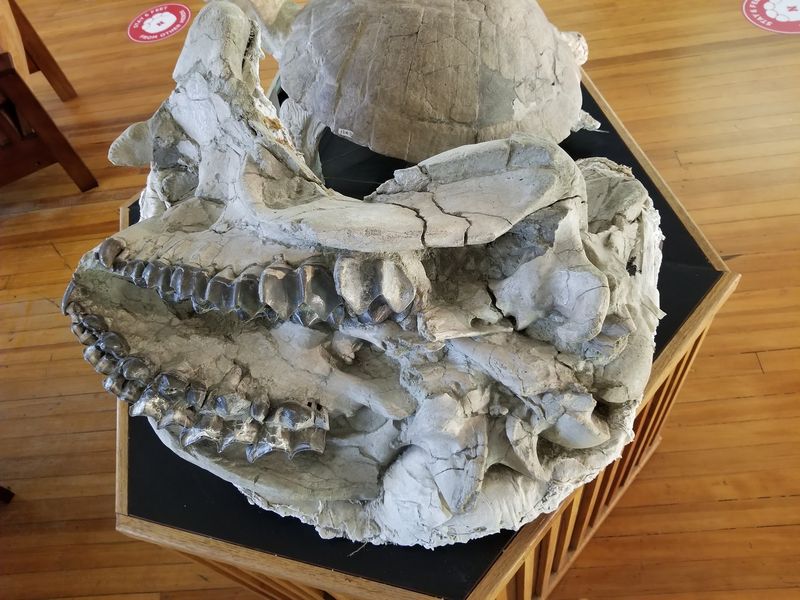
Little hands want to touch everything. The Encounter Center actually lets them.
Kids can dig for fossils in a sandbox, color at activity tables, and handle real fossil specimens. It’s hands-on science without the long field season.
That shift from looking to doing makes a big difference. A child who brushes sand off a bone remembers it far longer than a label.
The space works for anyone young at heart, too. Grown-ups have been known to sneak a turn at the sandbox when nobody’s watching.
The museum has even hosted a birthday party for a two-year-old. That tells you the staff welcomes families of all ages.
It’s a smart stop if your crew needs a break from reading exhibits. Ten minutes of digging can recharge everyone for round two with the mammoths.
For families visiting Fort Robinson, this corner may be the highlight. It turns a museum visit into a small adventure your kids can brag about.
Who knows, you might be raising the next 21-year-old who finds a mammoth.
Souvenirs With A Purpose In The Rock Shop
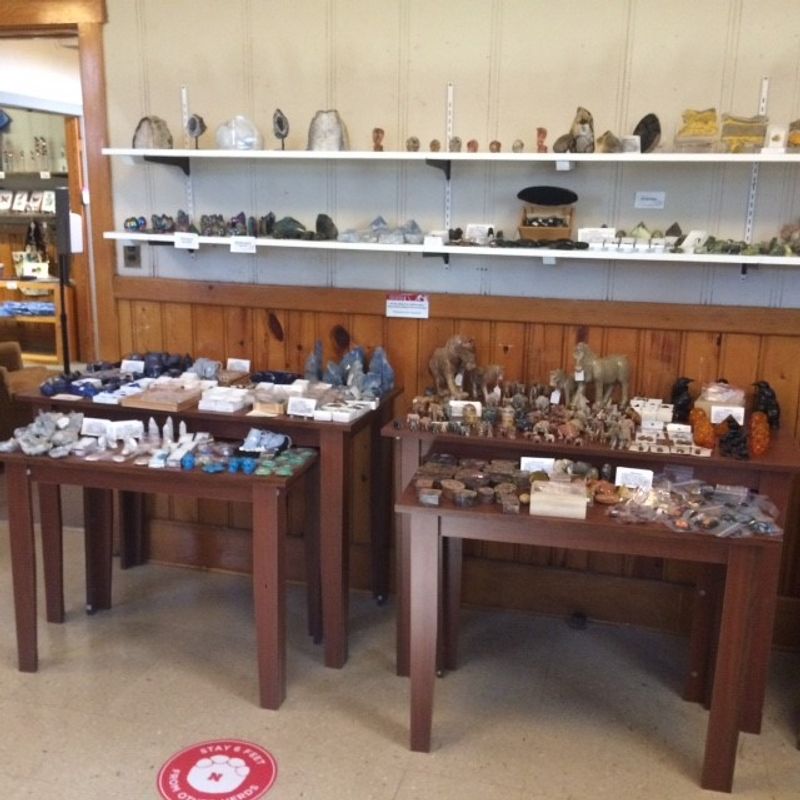
Polished stones, science toys, and dinosaur books are hard to resist. The Souvenir & Rock Shop stocks all of that and more.
You’ll find natural history gifts, rocks, books, and museum memorabilia. It’s an easy place to grab a keepsake from your trip west.
Here’s what makes a purchase feel even better. All proceeds support the museum’s exhibits and programming.
So that geode in your kid’s pocket is helping future visitors. Not many souvenirs can claim that kind of good deed.
The shop is known for being friendly to family budgets. Small treasures make great rewards after a long day at the park.
Rock hounds of any age will enjoy browsing. Some pieces connect neatly to the geology exhibits you just explored.
I’d budget a few minutes here before heading out. Rushing past might mean a disappointed backseat for the next hundred miles.
A small mammoth figurine on the dashboard also makes excellent company. It keeps the story going long after you leave Fort Robinson behind.
Timing Your Trip To Fort Robinson Right
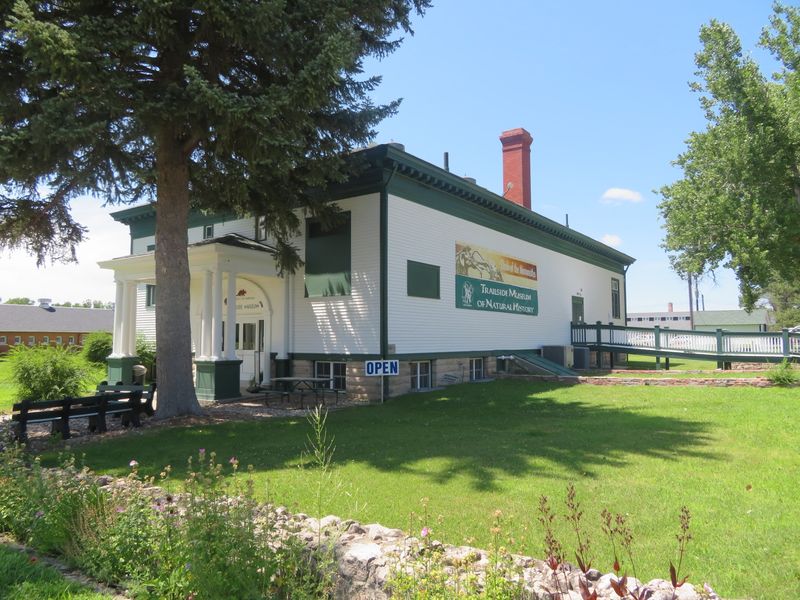
Mark your calendar before you gas up. The museum opens seasonally, generally April through October.
It typically welcomes visitors Wednesday through Sunday, with daily hours during the peak summer months. Checking the official schedule first is always smart.
You’ll find it at 3200 US-20, Crawford, NE 69339. It sits inside Fort Robinson State Park, so a Nebraska State Park Permit is required.
Museum admission is separate from the park permit. Both are reasonable, making this an affordable outing for families.
Parking includes a few museum spots on the north side of the building. A larger Nebraska Game & Parks lot sits to the west, where your permit must be displayed.
Service animals are welcome inside. Pets and emotional support animals aren’t permitted, so plan ahead if your dog is riding along.
Allow enough time to explore at your own pace. Some visitors finish quickly, while others happily spend a couple of hours reading everything.
The rest of Fort Robinson deserves time too. Make it a full day, and the long drive pays off nicely.
Why These Locked Tusks Earn A Spot On Your Nebraska List
Some road trips need a reason. Two mammoths frozen mid-shove is a pretty good one.
The University of Nebraska State Museum’s Trailside Museum of Natural History offers something you rarely get anywhere. You see a single prehistoric moment preserved exactly as it ended.
Add the student discovery, the coyote twist, and the hometown setting. Suddenly a small building holds a very big Nebraska story.
Families get hands-on fun, rock lovers get a shop to browse, and history buffs get Fort Robinson right outside. Everyone leaves with something to talk about.
I believe places like this make you proud of where you live. These giants walked the same ground you drove across to see them.
It’s compact, affordable, and easy to pair with a bigger day out. The northwest corner of Nebraska rarely disappoints anyone willing to make the trip.
So plan your visit during the open season. Bring curious kids, a camera, and maybe a little patience for the rock shop.
Those tusks have waited thousands of years. They can wait for your next free weekend.